Artwork
Gartz, Dietrich von
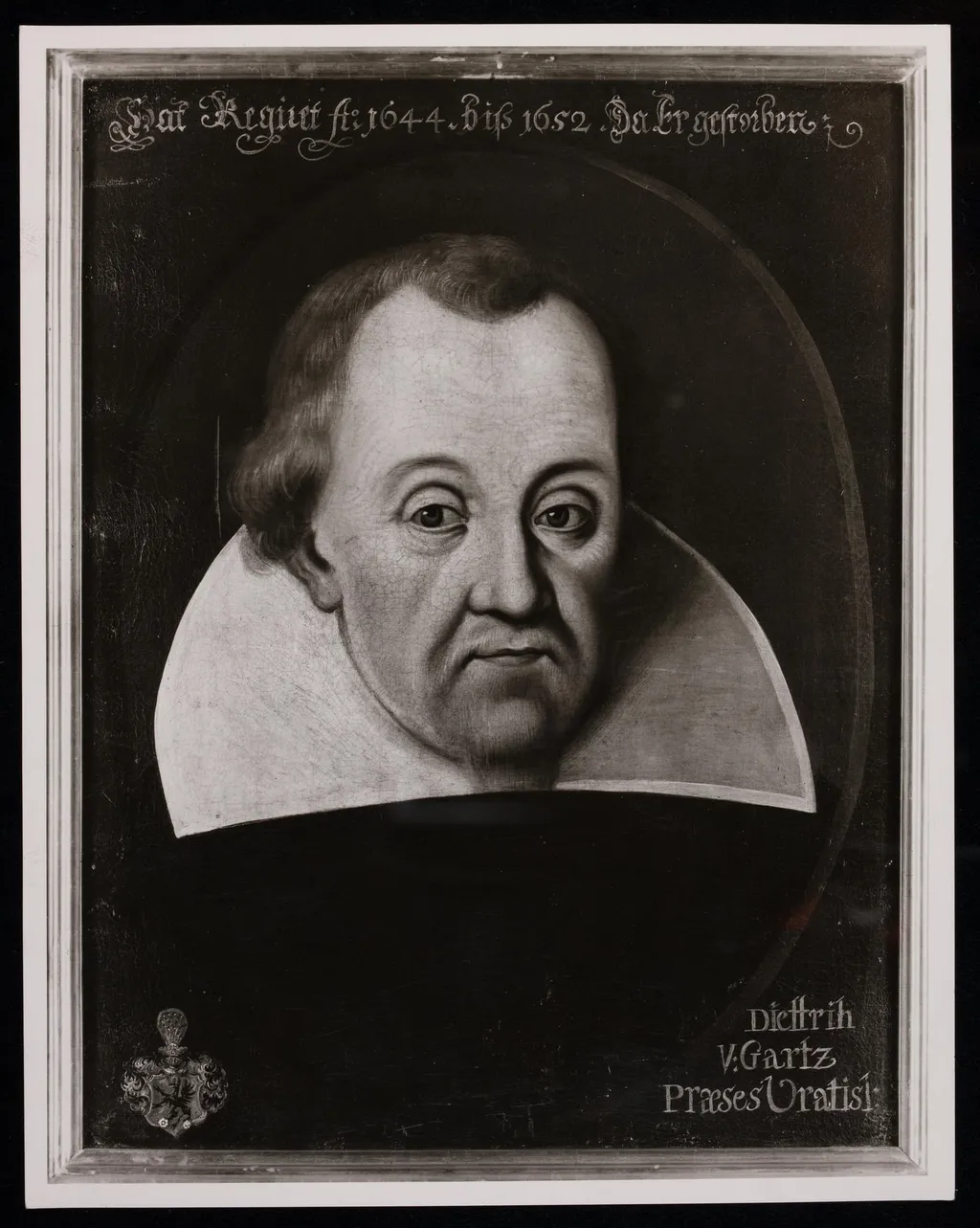
Gartz, Dietrich von is an unspecified painting by Rudolf (czynny we Wrocławiu 1933-1947), fot. Jagusch. It dates from 1945 and is held in the collection of the Library of the Wroclaw University. This black-and-white photograph, taken in 1945 by Rudolf Jagusch, depicts a historical portrait of Dietrich von Gartz.
About this work
This is a black-and-white portrait of a serious-looking man with curly hair and a white ruff collar.
This is a black-and-white portrait of a serious-looking man with curly hair and a white ruff collar. His face is round, and he’s staring straight ahead with a neutral expression. The background is plain and dark, making his face stand out.
The text around the painting says “Dietrich von Gartz” and mentions a time period (1644–1652). The small crest in the corner looks like a family symbol.
Next, look up chiaroscuro to see how artists use light and shadow like this.
Overview
This black-and-white photograph, taken in 1945 by Rudolf Jagusch, depicts a historical portrait of Dietrich von Gartz. Originally created between 1644 and 1652, the image was likely a painted likeness later reproduced photographically. It is preserved in the collection of the Museum of Ethnography, where it serves as a visual record of early modern German nobility.
Subject & Meaning
Dietrich von Gartz, a member of the German minor nobility, is portrayed with solemnity and composure. His direct gaze and restrained expression convey status and dignity, typical of portraiture from the mid-17th century. The inclusion of a family crest suggests an emphasis on lineage and inherited identity, reinforcing social standing through visual symbolism.
Technique & Style
The photograph captures the original painting’s use of strong contrasts between light and shadow, a technique associated with chiaroscuro. The dark, unadorned background isolates the figure, drawing attention to the texture of his ruff collar and the volume of his face. The rendering emphasizes form over detail, reflecting the conventions of early Baroque portraiture.
History & Provenance
The original painted portrait dates from 1644–1652, likely commissioned by the Gartz family. Rudolf Jagusch photographed it in 1945, preserving its appearance during a period of cultural disruption in Germany. The photograph became part of the Museum of Ethnography’s collection, where it functions as a documentary artifact rather than an artistic object in its own right.
Context
Portraits like this were common among German nobility during the Thirty Years’ War, serving as markers of identity amid political instability. The ruff collar and heraldic emblem reflect enduring aristocratic customs, even as the region endured economic and religious upheaval. Such images were often displayed in family homes or ancestral halls to assert continuity.
Legacy
Though the original painting’s current location is unconfirmed, Jagusch’s 1945 photograph ensures its survival in institutional archives. As a reproduced image, it now circulates as a historical reference, offering insight into the visual language of early modern German elites and the ways their identities were preserved through photography in the 20th century.
Artist & collection
Artist
Rudolf (czynny we Wrocławiu 1933-1947), fot. Jagusch
Rudolf Jagusch worked in Wrocław between 1933 and 1947. He made photographs of city scenes and portraits during those years. His surviving prints show shopfronts, street corners, and local figures in…
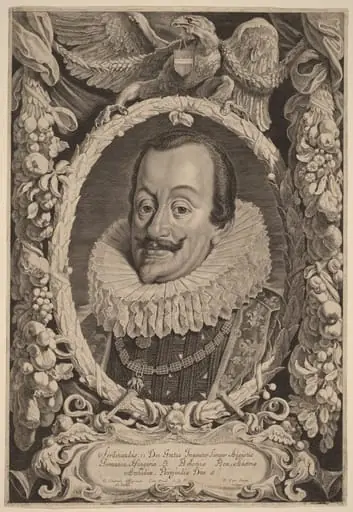 Ferdinand II
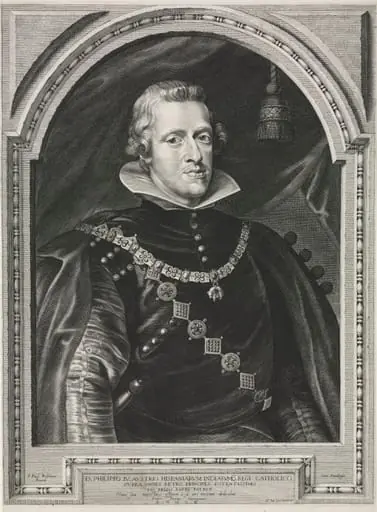 Portrait of Philip IV
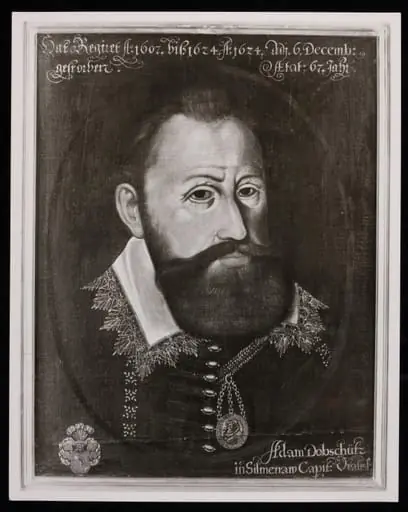 Dobschütz, Adam von
 Wolfgang-Wilhelm, Count of Pfalz-Neuburg and Duke of Julich-Berg
 Frederick V, Count Palatine
 Charles I, King of England
 Portrait of Florentius Schoonhoven, Poet in Latin, Burgomaster of Gouda
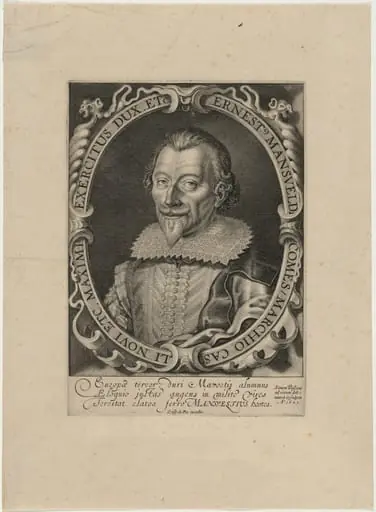 Ernest, Count of Mansfeld
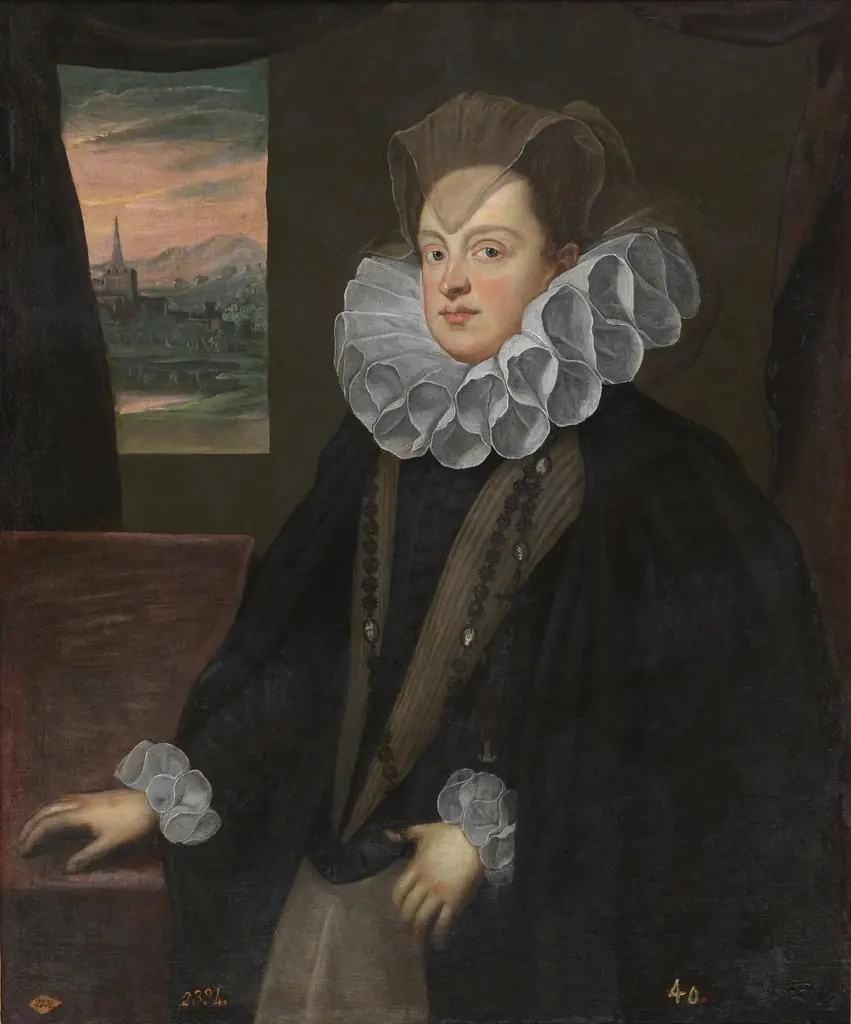 Eleanor de' Medici, Duchess of Mantua
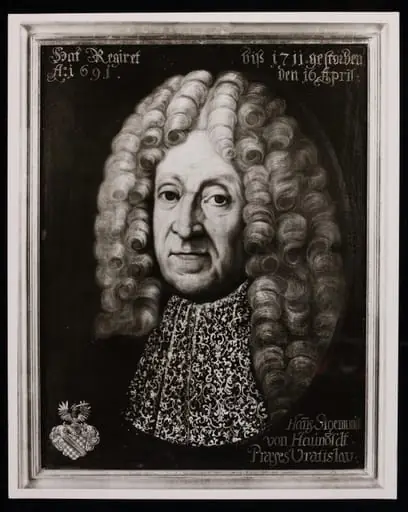 Haunoldt, Hans Sigismundt von