Artwork
Portrait of Charles V with a Dog
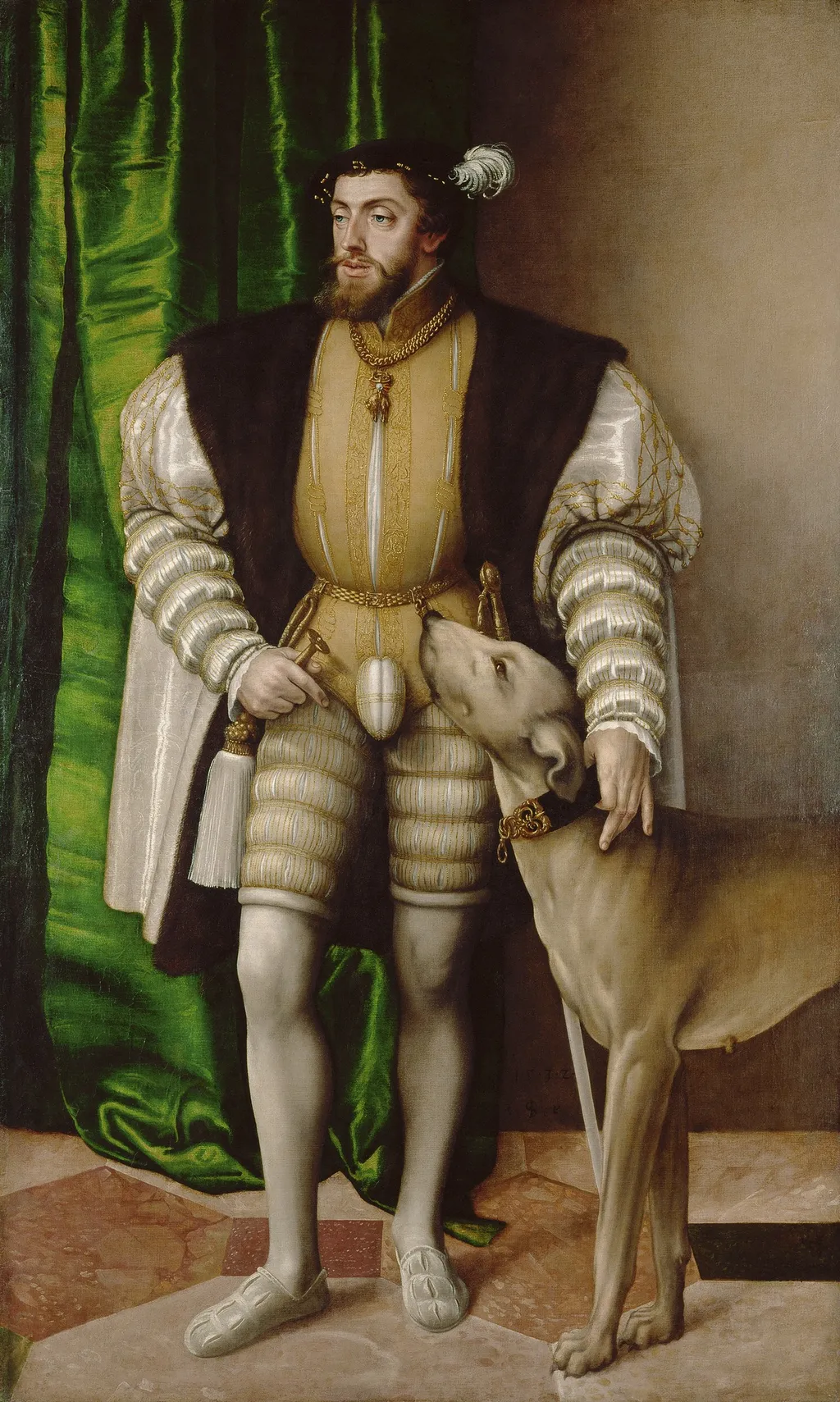
Portrait of Charles V with a Dog is an oil painting by the Mannerist artist Jakob Seisenegger. It dates from 1532 and is held in the collection of the Kunsthistorisches Museum.
About this work
Subject & Meaning
The painting depicts Emperor Charles V in full-length pose, accompanied by a female English hunting dog.
The painting depicts Emperor Charles V in full-length pose, accompanied by a female English hunting dog. The emperor wears a silver half-length fur-lined cloak, white high-collared shirt, brown doublet embroidered with silver brocade, breeches, black hat with white feather, and white stockings and shoes. This attire combines courtly refinement with military power, projecting imperial authority in Italy.
Symbolically, the absence of the collar of the Order of the Golden Fleece is notable; instead, Charles wears a twisted gold chain with the order's pendant, an unusual substitution. The gold belt supporting sword and dagger further emphasizes his martial status.
The dog carries specific significance: Seisenegger identified it as a female English breed, suggesting deliberate iconographic choice beyond mere companion animal. The hunting dog may symbolize loyalty, nobility, and the emperor's active, virile nature.
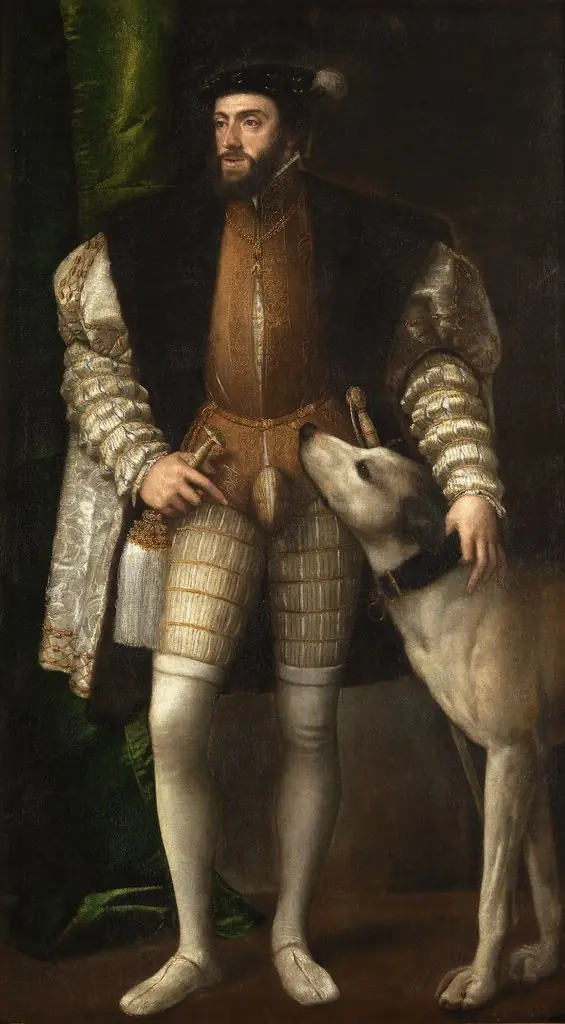
The composition served as direct model for Titian's 1533 version, which the emperor preferred. Seisenegger's naturalistic approach was judged insufficiently idealized for imperial representation, prompting the commission that transformed the portrait's interpretation.
Technique & Style
The work is an oil painting executed on canvas, measuring 203.5 cm in height and 123 cm in width. It was created by Jakob Seisenegger in 1532 and classified as a portrait. The painting depicts Emperor Charles V standing beside a hunting dog, rendered in a naturalistic style that combines courtly and military elements of his attire, including a silver mantle with fur lining, a high-collared white shirt, a brown brocaded jerkin, black plumed hat, and white shoes and hose.
The composition features a green curtain backdrop, a tiled floor, and an artificial architectural setting, with a gold belt supporting a sword and dagger whose hilts are gilded and fitted with scabbards. Seisenegger’s use of oil on canvas and his precise rendering of texture and detail exemplify the techniques of early Northern Renaissance portraiture, while the inclusion of symbolic attributes such as the non-Tobias chain of the Order of the Golden Fleece underscores imperial authority.
History & Provenance
Jakob Seisenegger painted the Portrait of Charles V with a Dog in 1532, creating one of five full-length portraits of the emperor he produced between 1530 and 1532. The 1532 work is signed and dated with the intertwined monogram "IS" located at the center bottom between the emperor and the dog. Charles V found the painting too naturalistic and was dissatisfied with it.
Consequently, during a stay in Bologna in 1533, the emperor commissioned Titian to paint a new version of the portrait, paying him 500 ducats for the replacement.
The painting has been housed in the Kunsthistorisches Museum in Vienna since 1868.
Context
Seisenegger’s 1532 portrait entered the Kunsthistorisches Museum, Vienna in 1868 and exemplifies the transitional moment between late Gothic naturalism and Renaissance court portraiture. Contemporary accounts report that Charles V judged the work too literal, prompting him to commission Titian in Bologna the following year for a more idealized rendering, paid at 500 ducats. Seisenegger’s series of full-length effigies of the emperor between 1530 and 1532 helped codify a new imperial iconography that fused courtly splendor with martial bearing, evident in the brocaded doublet, gold-buckled sword, and hunting dog as symbols of both refinement and dominion.
Titian’s 1533 reworking directly engaged Seisenegger’s model, stripping away narrative detail to heighten the emperor’s hieratic presence. The painting’s reception thus pivots on a dialectic between empirical likeness and dynastic representation that shaped Habsburg portraiture in the decades that followed.
Legacy
The work's primary historical significance lies in its role as the direct model for Titian's 1533 portrait of Charles V. Although the painting was reportedly deemed too naturalistic by the emperor, prompting him to commission a new version from Titian in Bologna, Seisenegger's composition established a novel typology for imperial representation. Between 1530 and 1532, Seisenegger produced five full-length portraits of the emperor, integrating courtly elements like the silver cape with military attire to project a blend of refinement and power. Titian subsequently adapted this foundation, transforming the composition by stylizing the imperial figure and simplifying the pictorial space.
The inclusion of a specific English female hunting dog, as noted by the artist in a 1535 letter, further defined the iconography of the emperor's dominion.
Overview
Jakob Seisenegger, an Austrian painter active in the early sixteenth century, executed an oil portrait in 1532 that presents the Holy Roman Emperor Charles V accompanied by a large dog. The work, now part of the Kunsthistorisches Museum’s holdings in Vienna, exemplifies Seisenegger’s role as a court artist for the Habsburg dynasty.
Artist & collection
Artist
Jakob Seisenegger (1505–1567) was an Austrian portrait painter who was the court painter of Ferdinand I, Holy Roman Emperor.

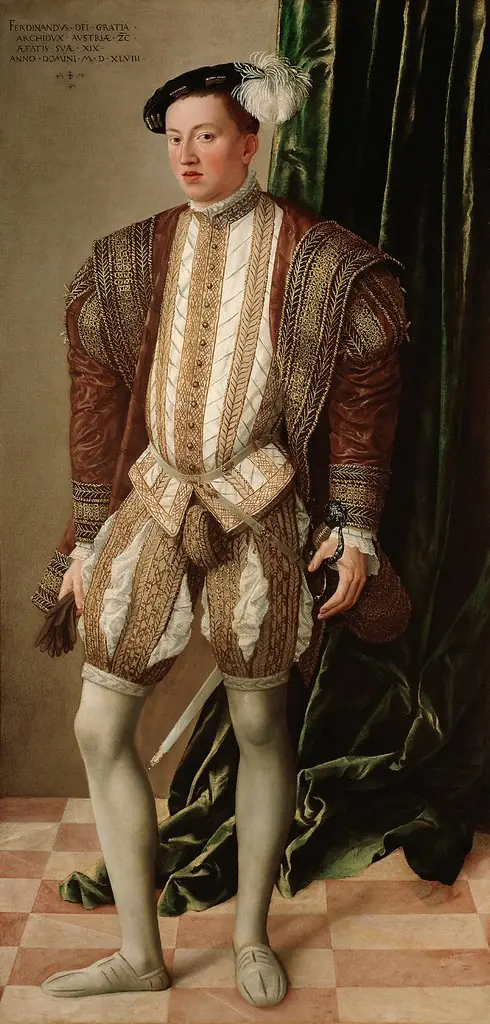
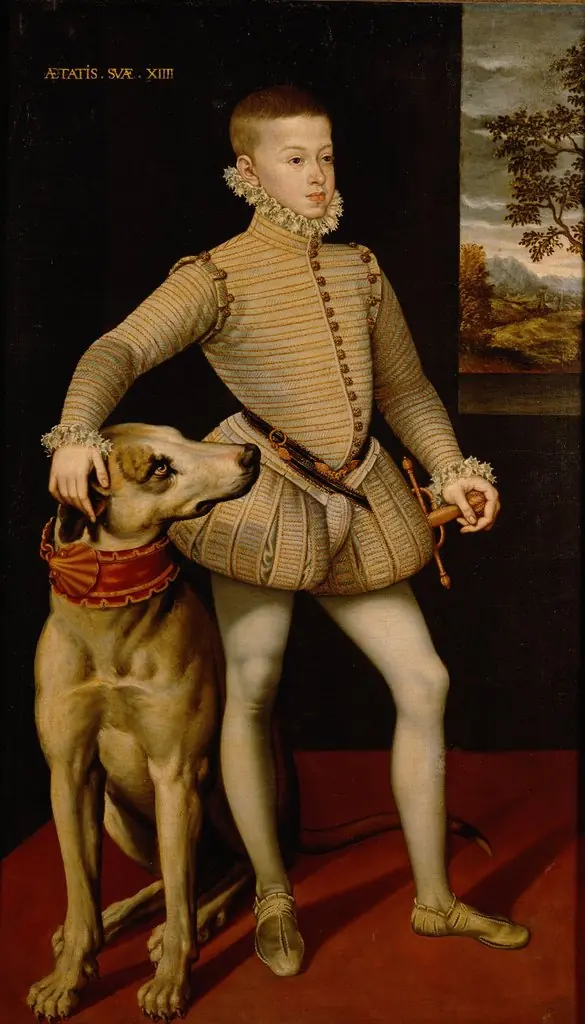 Erzherzog Albrecht VII. (1559-1621) im Alter von 14 Jahren mit einer Dogge, in ganzer Figur
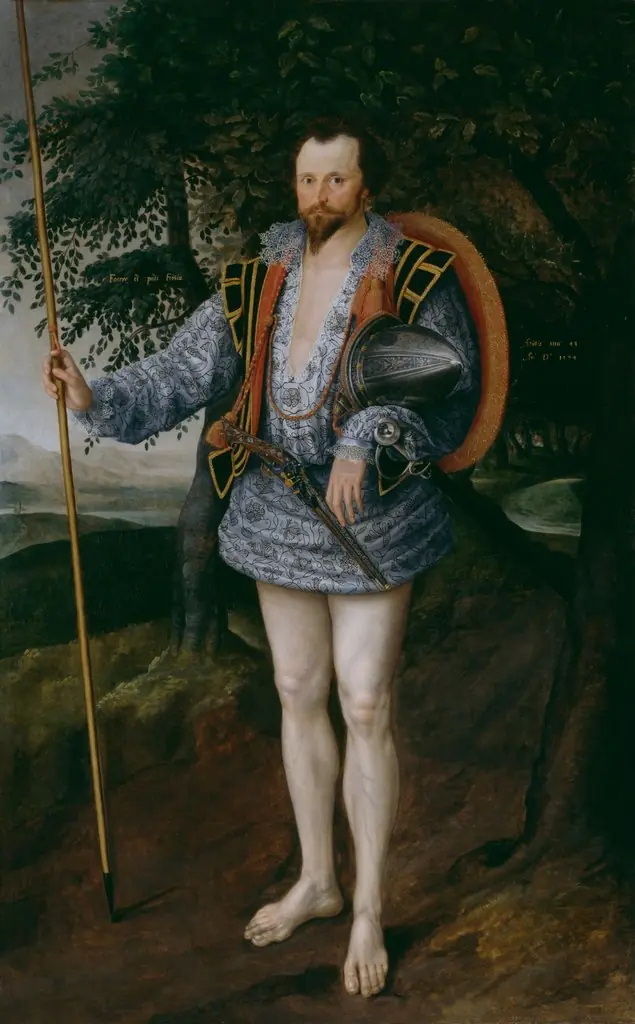 Portrait of Captain Thomas Lee
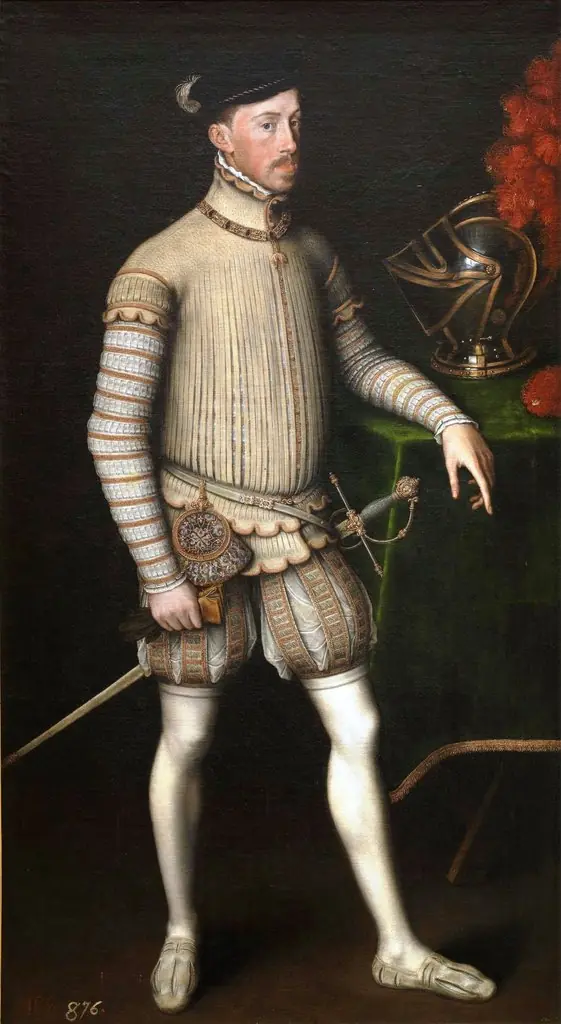 Emperor Maximilian II
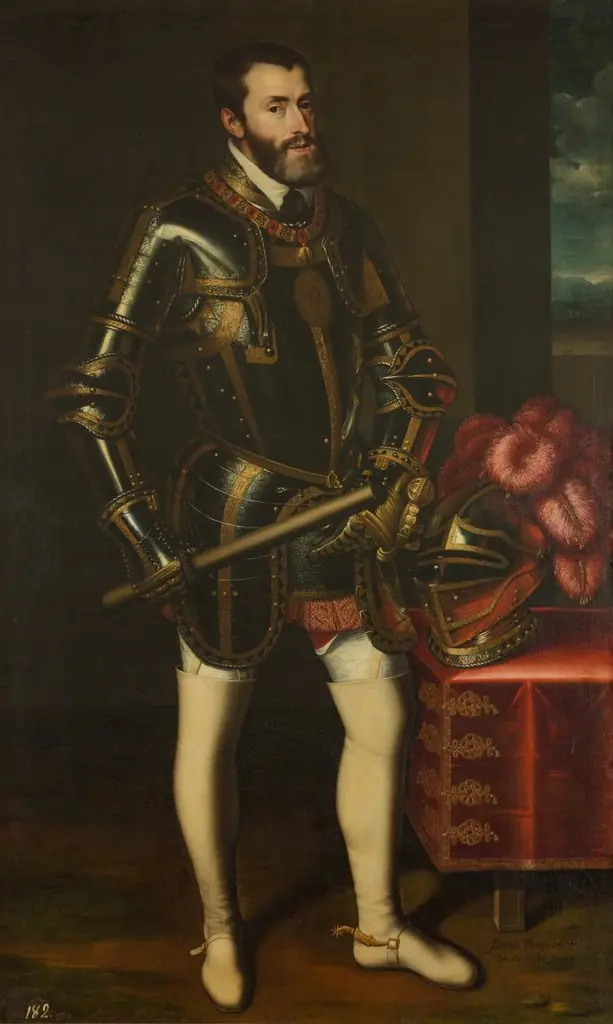 The Emperor Charles V
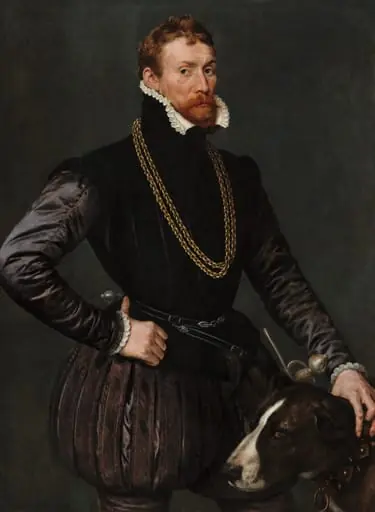 Portrait of a Gentleman
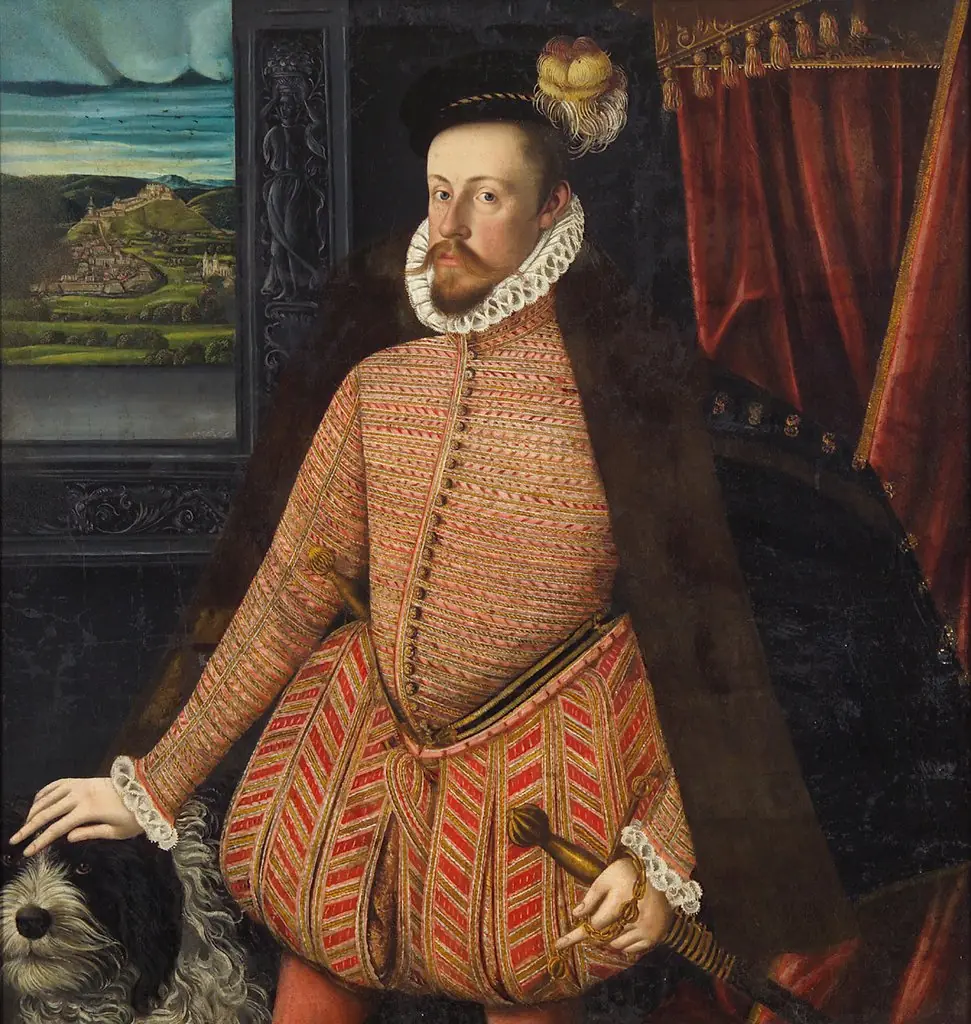 Erzherzog Karl II. (1540-1590) mit dem Blick auf Graz, Kniestück
 Don Juan de Austria
 Portrait of Ludovico Madruzzo
 Portrait of Pier Maria Rossi di San Secondo