Artwork
Portrait of Charles V with a Dog
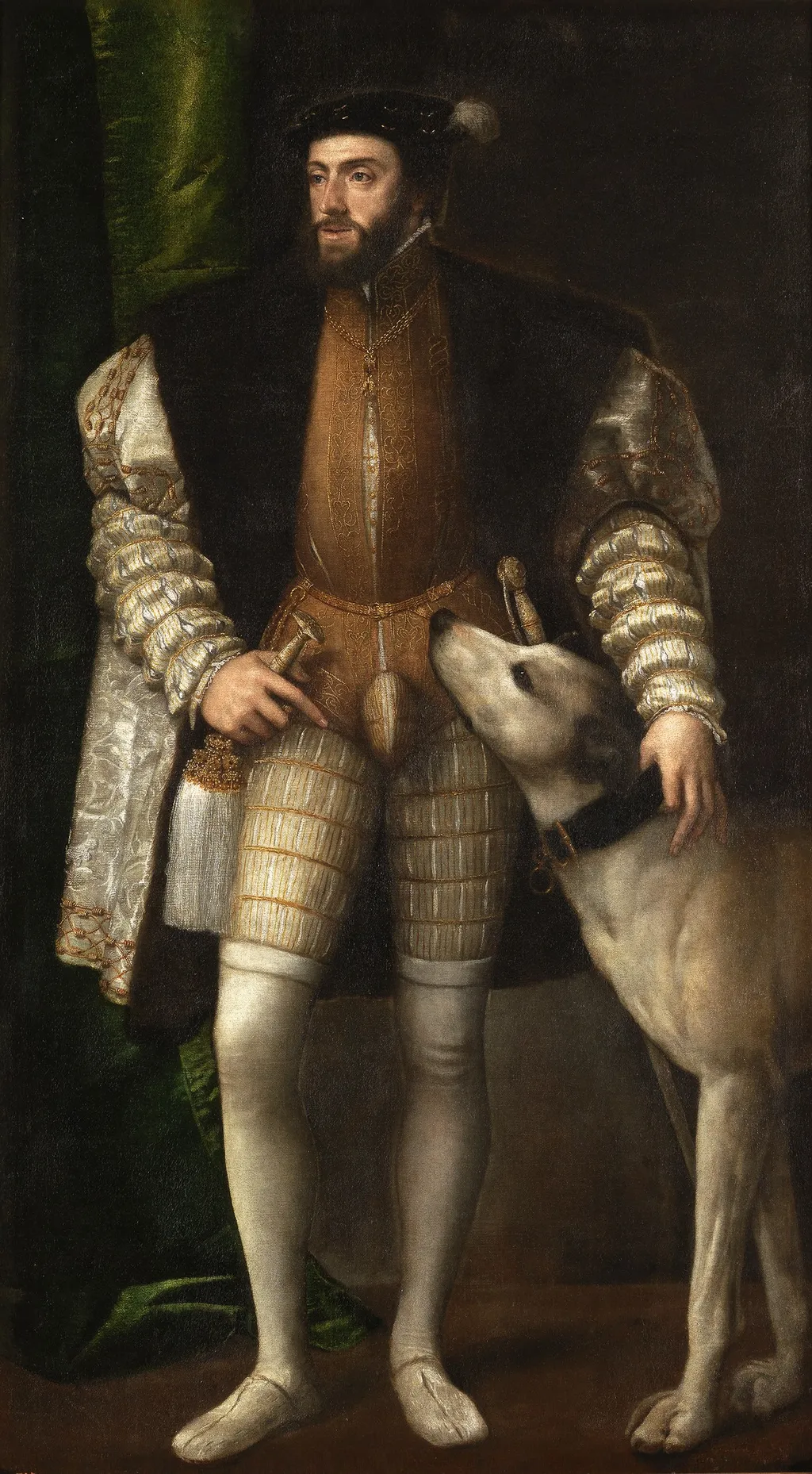
Portrait of Charles V with a Dog is an oil painting by the Mannerist artist Titian. It dates from 1533 and is held in the collection of the Museo del Prado.
About this work
This is a portrait by Titian of Charles V, the Holy Roman Emperor. It shows him with a hunting dog. The painting dates from 1533.
It’s a formal royal portrait meant to highlight power and prestige. The dog adds a softer, personal touch to the stiff monarch. The work has stayed in Spain since the 1500s.
Look up more portraits by Titian.
Subject & Meaning
These iconographic elements combine to convey imperial power, authority, and the ruler’s control over both warfare and the natural world.
The painting shows Charles V, Holy Roman Emperor, in full‑length portrait, holding a sword and wearing the Order of the Golden Fleece, with a hunting dog at his side. The dog, identified as a hunting breed, functions as a symbol of the emperor’s mastery over nature and his skill as a hunter, while the sword and the Golden Fleece reference martial authority and chivalric rank. A green curtain and simplified background focus attention on the figure and underscore his sovereign presence.
These iconographic elements combine to convey imperial power, authority, and the ruler’s control over both warfare and the natural world.
Technique & Style
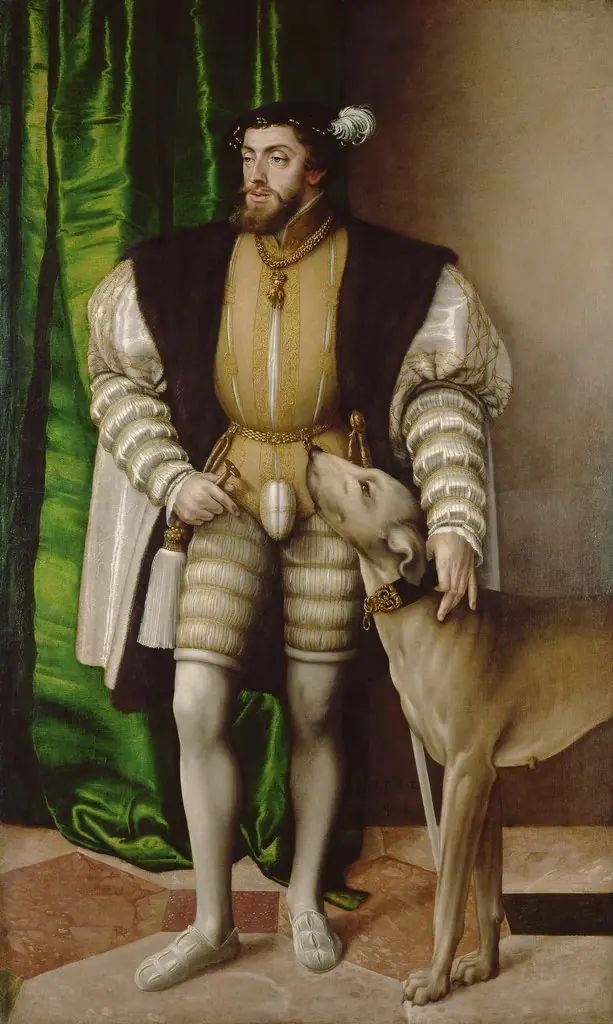
The work is executed in oil on canvas (approximately 194 × 112.7 cm). Titian reinterprets a 1532 portrait of Charles V by Jakob Seisenegger, transforming the composition: the emperor’s fur mantle is enlarged, the doublet shortened, his gaze is raised and the horizon lowered so that he fills the picture space and moves toward the viewer. The background is simplified and rendered in warmer tones, creating a more monumental and psychologically penetrating presence. This reinterpretation later influenced Goya’s 1799 depiction of Charles IV in hunting dress.
History & Provenance
Created in 1533, the painting was commissioned by Charles V from Titian during the emperor's stay in Bologna, replacing a 1532 portrait by Jakob Seisenegger that had dissatisfied its subject. Titian received 500 ducats for the work, which reinterpreted Seisenegger's composition to stylize the emperor's figure. While some scholars argue Seisenegger's work relied on a prior model by Titian, documentation supports Seisenegger's precedence.
The work passed from the imperial collection into the Spanish royal collection. It is recorded in the inventories of the Madrid Alcázar by 1600. Philip IV of Spain later gifted it to Charles I of England, but following the king's execution and the auction of his belongings, the painting was repurchased by its former Spanish owners. It ultimately entered the Museo del Prado in 1821.
The painting is held at the Museo del Prado in Madrid, having entered the museum in 1821 from the Spanish royal collection. It had been documented in Spain since at least 1600, when it was recorded in the inventories of the Alcázar Palace in Madrid. Philip IV of Spain later presented it to Charles I of England, but following the king's execution and the auction of his goods, the portrait returned to Spain through repurchase by its former owners.
The work has been referenced in catalogues associated with exhibitions held at the Museo del Prado and the Museo de Santa Cruz in Toledo. These include the 2003 Prado exhibition catalogue Tiziano, edited by Miguel Falomir, and Sylvia Ferino-Pagden's study "La imagen ideal y 'natural' del poder: los retratos de Carlos V por Tiziano," published in the 2000–2001 Toledo exhibition catalogue Carolus.
Context
The portrait entered Spanish royal collections after Charles V’s death and has been held by the Museo del Prado since the early 19th century, grounding its canonical place in Spanish court portraiture.
Scholars emphasize Titian’s transformation of Jakob Seisenegger’s 1532 likeness, recasting the emperor’s presence through deliberate stylization. By enlarging the fur mantle, lowering the horizon, and pushing the figure forward into simplified space, Titian heightened Charles’s stature and psychological authority. This approach aligned with Venetian ideals of idealized nobility and set a new standard for Habsburg portraiture.
The work later influenced Francisco de Goya’s 1799 Charles IV in Hunting Dress, demonstrating its enduring impact on the genre across two centuries.
Legacy
Titian's 1533 portrait established a new standard for imperial iconography by transforming a naturalistic model into a stylized, monumental image of authority. By simplifying the background, raising the horizon line, and enlarging the fur wrap, the artist created a composition that emphasized the Emperor's dominance and psychological presence. This specific visual language exerted a direct and notable influence on later Spanish royal portraiture.
Most significantly, the work served as a primary inspiration for Francisco de Goya's 1799 painting, Charles IV in his Hunting Clothes, which adopted similar compositional elements and the motif of the ruler with a hunting dog to convey regal stature.
Overview
This oil painting, created in 1533 by Titian, depicts Charles V, the Holy Roman Emperor. The work presents the monarch in a formal setting, accompanied by a hunting dog, a detail that subtly balances the emperor's imposing presence. It serves as a significant example of royal portraiture from the Renaissance period.
Artist & collection
Artist
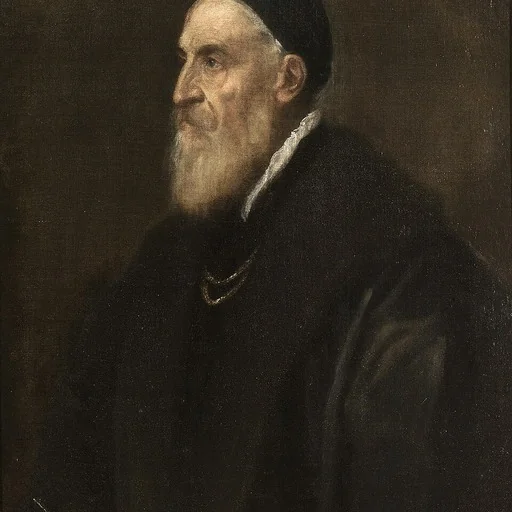
Tiziano Vecellio (Italian:; c. 1488/1490 – 27 August 1576), Latinized as Titianus, hence known in English as Titian ( TISH-ən), was an Italian Renaissance painter. The most important artist of Renaissance Venetian…

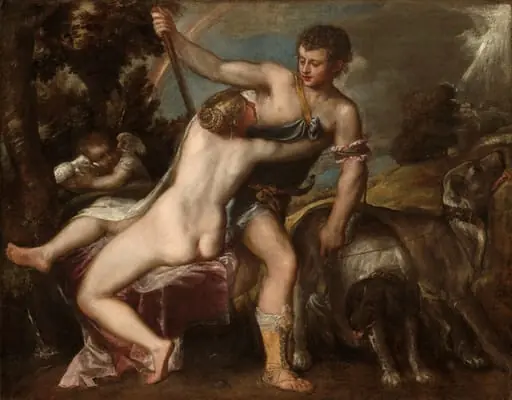
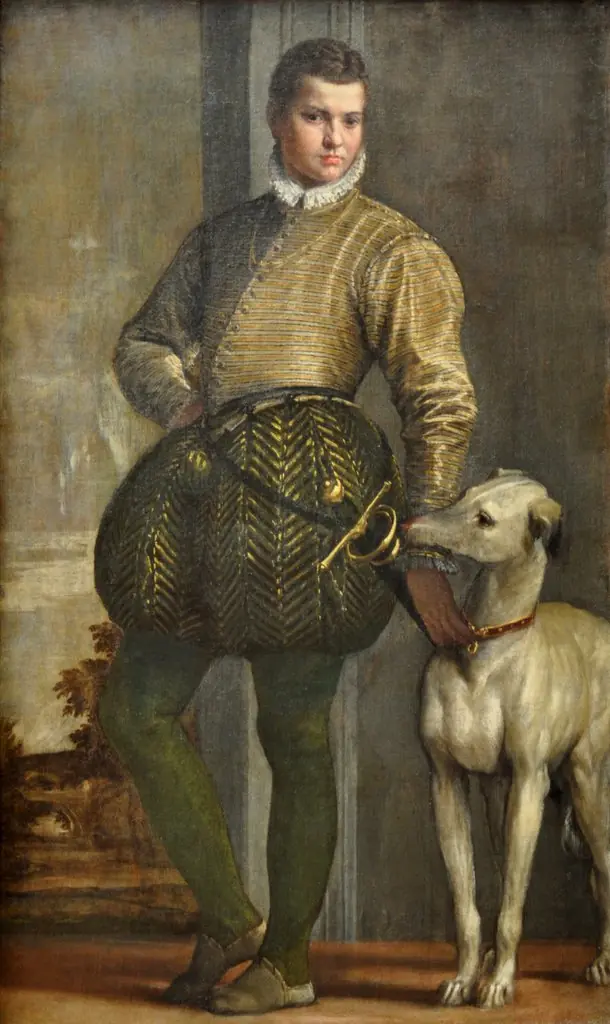 Boy with a Greyhound
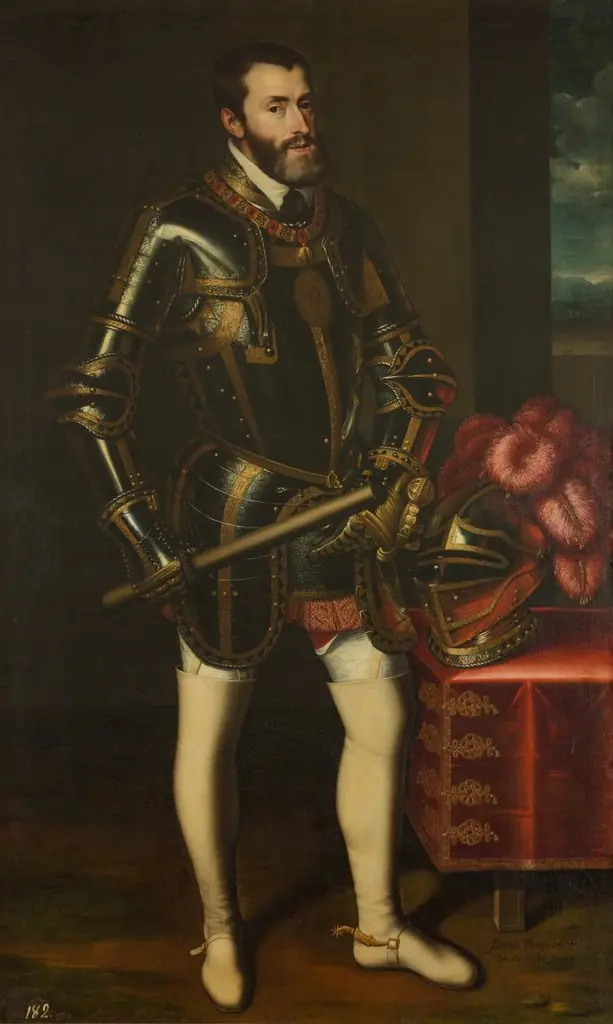 The Emperor Charles V
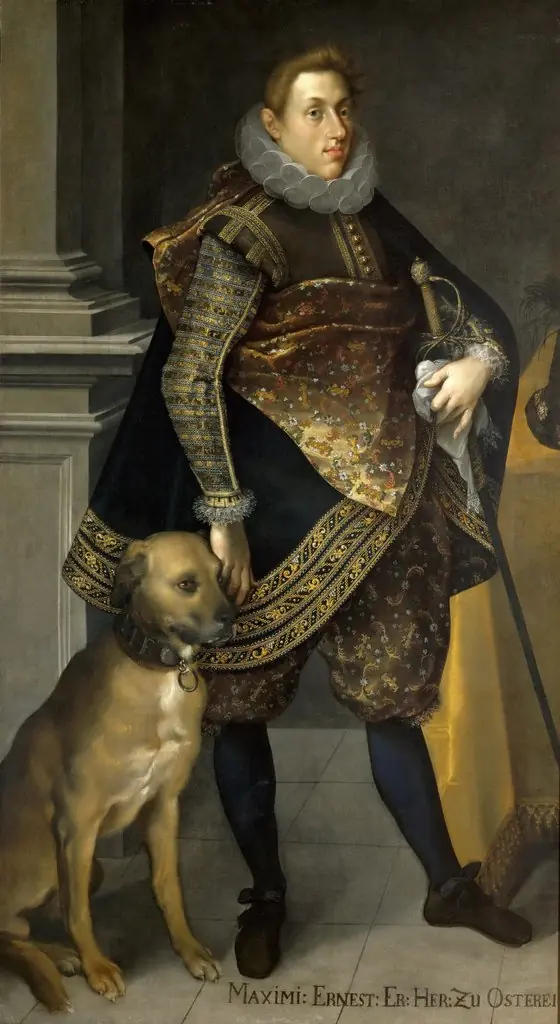 Erzherzog Maximilian Ernst (1583-1616) mit Jagdhund
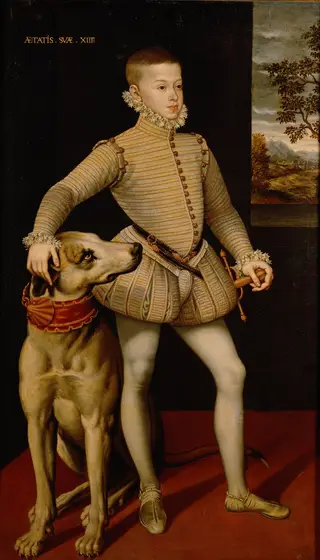 Erzherzog Albrecht VII. (1559-1621) im Alter von 14 Jahren mit einer Dogge, in ganzer Figur
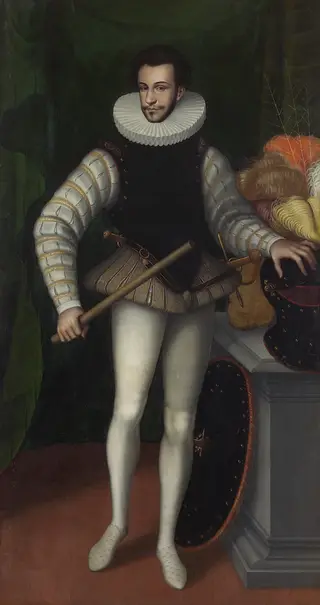 Herzog Francois von Alencon und Anjou (1555-1584)
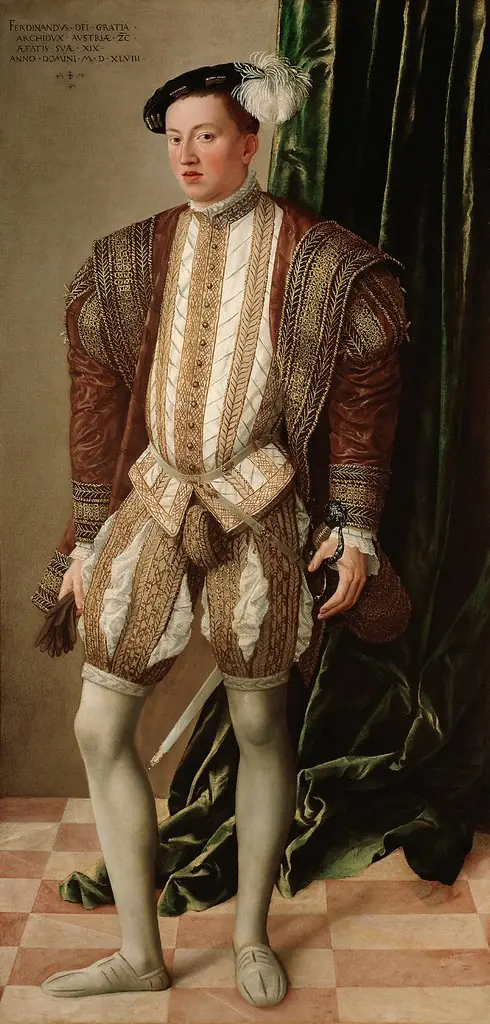 Erzherzog Ferdinand von Tirol (1529-1595)
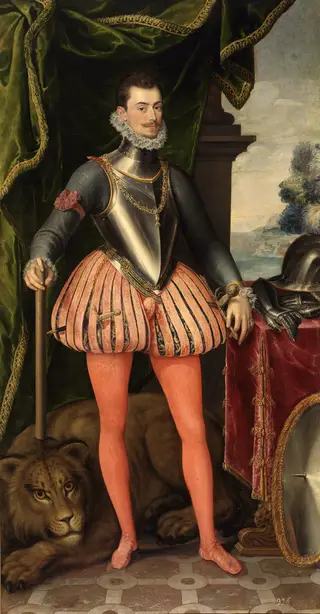 Don Juan de Austria
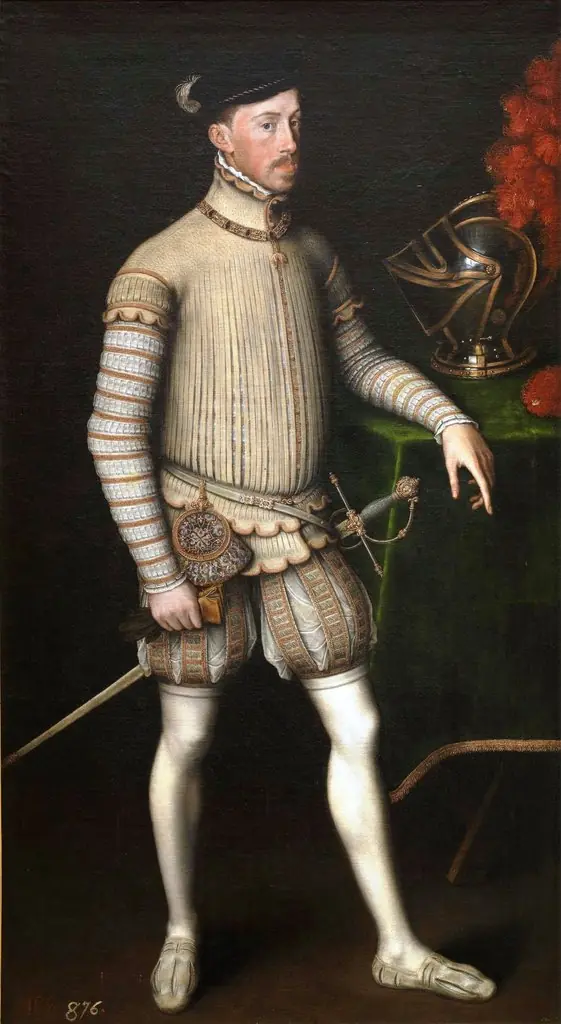 Emperor Maximilian II