Artwork
Portrait of Pier Maria Rossi di San Secondo
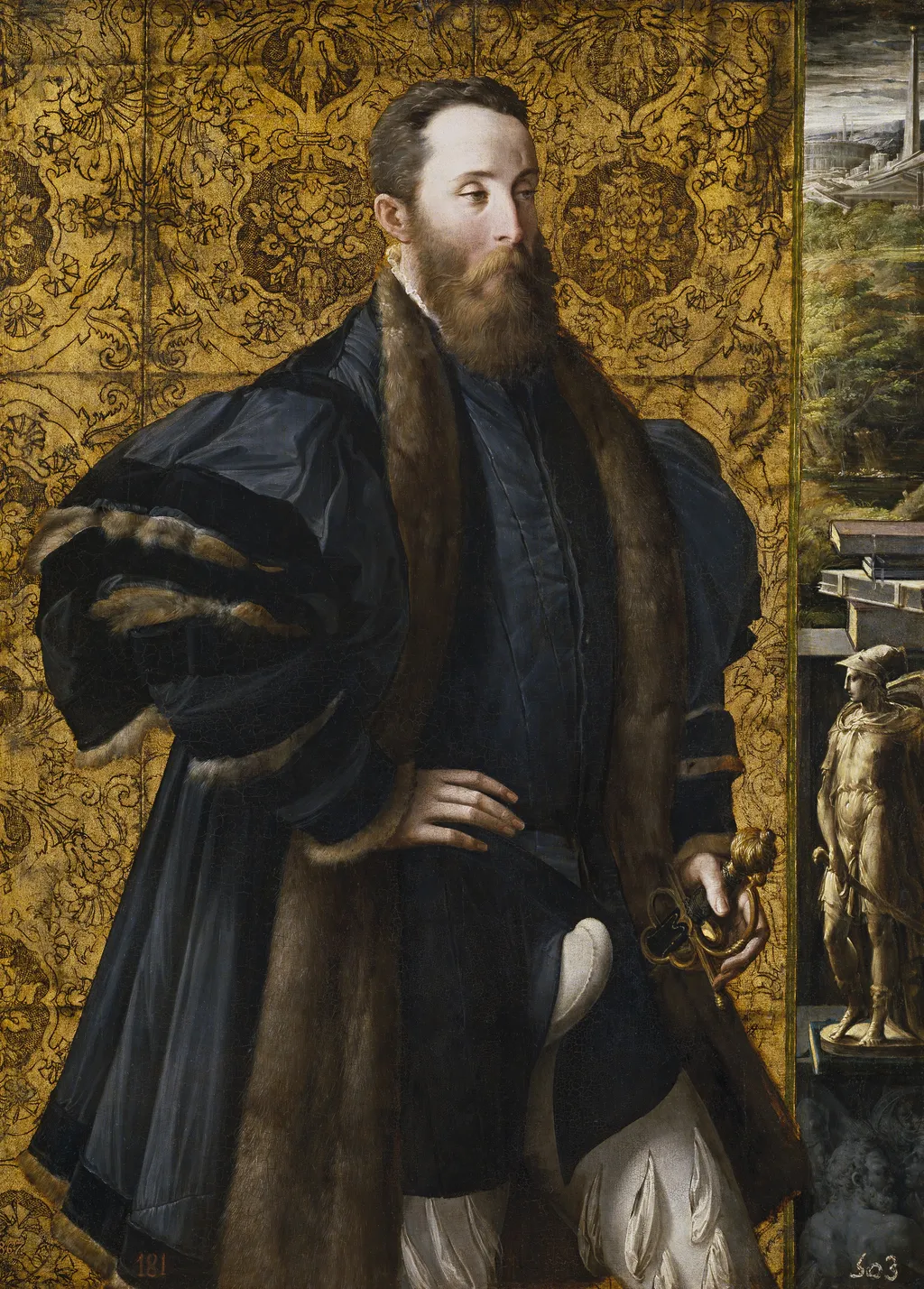
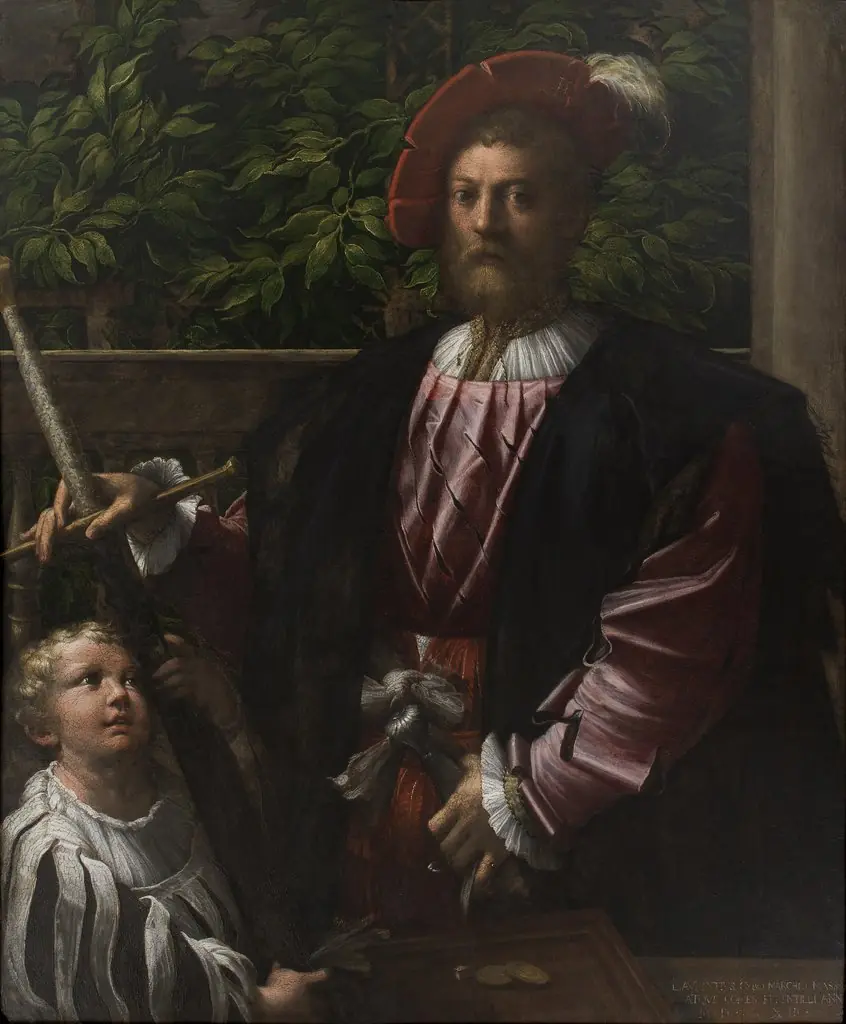
Portrait of Pier Maria Rossi di San Secondo is an oil painting by the Mannerist artist Parmigianino. It dates from 1535 and is held in the collection of the Museo del Prado. Executed in the mid‑1530s, this oil on canvas portrays Pier Maria Rossi, the Count of San Secondo, in a formal pose.
About this work
Subject & Meaning
His hand rests on the hilt of a sword, while his gaze is directed to the right, ideally engaging with the companion portrait of his wife, Camilla Gonzaga.
The painting depicts Pier Maria III de' Rossi, Count of San Secondo, standing in a proud, hieratic pose that alludes to his military career. His hand rests on the hilt of a sword, while his gaze is directed to the right, ideally engaging with the companion portrait of his wife, Camilla Gonzaga. He is dressed in contemporary French-style fashion, including a fur-lined black jacket and padded codpiece, set against a backdrop of precious gold damask fabric.
Surrounding iconography elucidates the Count's personal interests and political allegiances. A statue of Mars, the Roman god of war, echoes his martial stance, while an ancient bas-relief signifies his role as an art collector. Books included in the composition reference his literary pursuits and correspondence with the poet Pietro Aretino. One volume bears the inscription "Imperio," symbolizing Rossi's service to Emperor Charles V at the time of execution. A landscape featuring a city rich in monuments, possibly Rome, appears in the background.
Technique & Style
The work is executed in oil paint on panel, measuring 133 × 98 cm, and is classified as a portrait painting. Parmigianino renders the count standing before a precious gold-damask cloth backdrop, dressed in a long fur-lined dark jacket and matching waistcoat over a white shirt and white "French-cut" trunk hose with a padded codpiece. The hieratic pose, one hand on the hip, the other resting on the sword hilt, conveys military bearing, while the sitter's gaze is directed to his right, toward the pendant portrait of his wife. To the right, beyond a curtain, a landscape opens onto a cityscape rich in monuments (ideally Rome). A statue of Mars with the elongated proportions characteristic of Parmigianino's style echoes the count's stance, accompanied by an antique bas-relief signaling his collecting interests and books alluding to his literary correspondence with Pietro Aretino. One volume bears the inscription "Imperio," referencing his service to Emperor Charles V.
History & Provenance
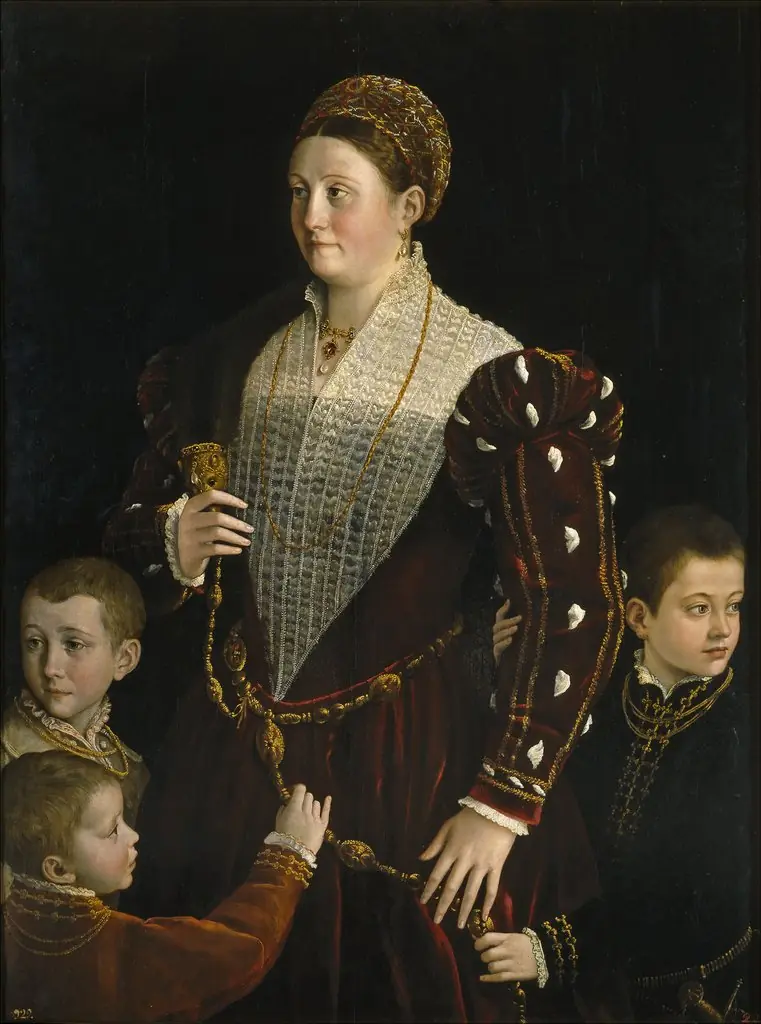
The Portrait of Pier Maria Rossi di San Segundo was created by Parmigianino around 1535-1539, as indicated by the date inscribed in its metadata and supported by stylistic analysis and archival records. It was commissioned by Pier Maria III de' Rossi, Count of San Segundo, reflecting his military status and patronage of the arts. The work entered the Spanish royal collection in 1664 through diplomatic channels involving the Rossi family's territorial dispute with the Farnese of Parma, a process documented in 17th-century inventories of the Royal Alcazar of Madrid, which first listed it as a portrait of the 'count of San Sigundo.' Its provenance traces back to the Medici and later the Spanish crown, with documented ownership transitions tied to these political negotiations. The painting remains housed in the Museo del Prado in Madrid, where it is displayed alongside its pendant, Portrait of Camilla Gonzaga and Her Three Sons, though the latter's attribution remains less certain. The painting Portrait of Pier Maria Rossi di San Secondo by Parmigianino is held in the Museo del Prado in Madrid, Spain. Its inventory number is not specified in the provided sources. The work was recorded in the 1686 inventory of the Royal Alcázar of Madrid as a portrait of the count of San Segundo. It entered the Spanish collection in 1664 following diplomatic support from King Philip IV to the Rossi family. The portrait is dated to around 1535-1539 based on the subject’s age and Vasari’s account of Parmigianino’s stay at Pier Maria’s court. It forms a pendant with Portrait of Camilla Gonzaga and Her Three Sons, though the latter’s attribution remains uncertain.
Context
Parmigianino's portrait is a significant example of Italian Mannerism, showcasing the artist's characteristic elongated forms, particularly visible in the included statuette of Mars. Art historians like Giorgio Vasari documented that Parmigianino took refuge at Pier Maria's court during tensions in Parma, a note that has been crucial for dating the work. Scholarship has focused on the portrait's complex iconography, which synthesizes the count's military career, antiquarian interests, and literary pursuits, while the "Imperio" inscription reflects his service to Emperor Charles V. The painting's historical and artistic value is underscored by the existence of numerous early copies, some of which were historically mistaken for originals. Additionally, while this portrait is firmly attributed to Parmigianino, its pendant depicting Camilla Gonzaga and their children remains of more uncertain attribution among scholars.
Legacy
The painting and its pendant inspired numerous old copies over the centuries. Two such copies, once housed at San Secondo and mistaken by the scholar Ireneo Affò for the originals, were donated in 1810 by Count Rossi to Moreau de Saint Méry; the version of the count's portrait near the statue of Mars bears the inscription "Imperio," which is absent from Parmigianino's original. The work's identification with Pier Maria III de' Rossi was established in 1896 by Ricci, who matched the 1686 Royal Alcázar inventory entry with a 1630 note by the sitter's descendant Federico I de' Rossi recalling a portrait by Parmigianino also described by Carrari. Its arrival in Spain in 1664, purchased through an intermediary for Philip IV from the marchese di Serra's collection, secured its place in the Spanish royal collections that eventually passed to the Museo del Prado, where it remains a key reference for Parmigianino's portraiture and Mannerist style.
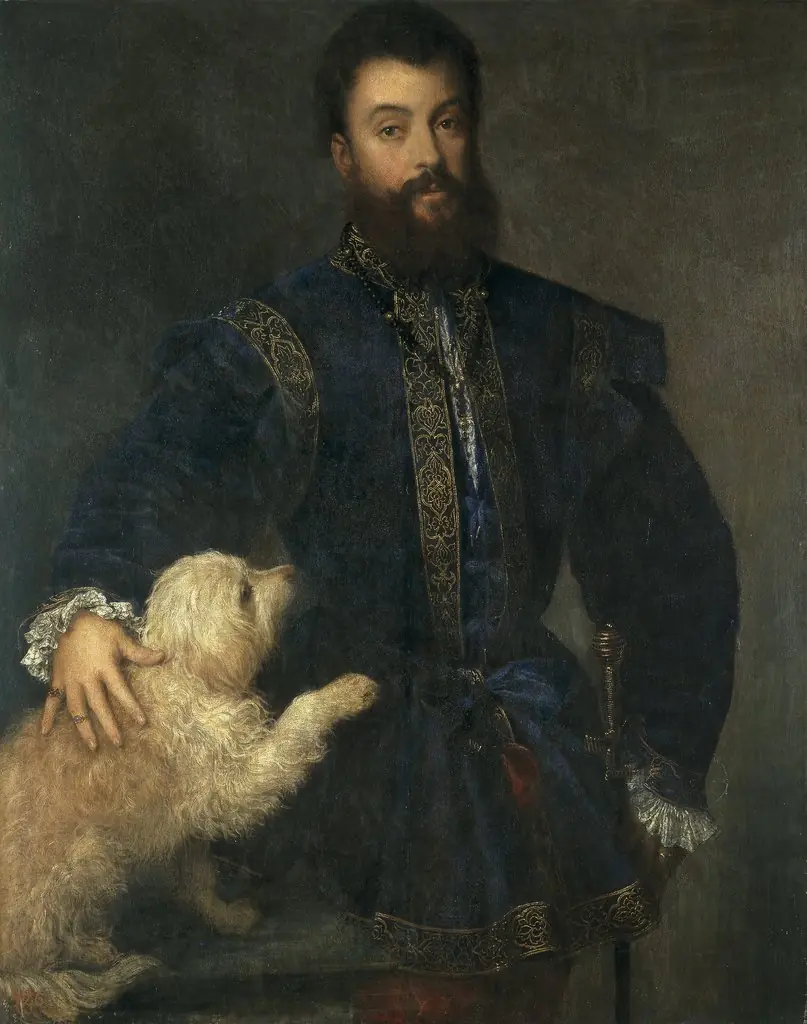
Own this work as a print
Artist & collection

Artist
Girolamo Francesco Maria Mazzola (11 January 1503 – 24 August 1540), also known as Francesco Mazzola or, more commonly, as Parmigianino (UK: US: Italian:; "the little one from Parma"), was an Italian Mannerist painter…

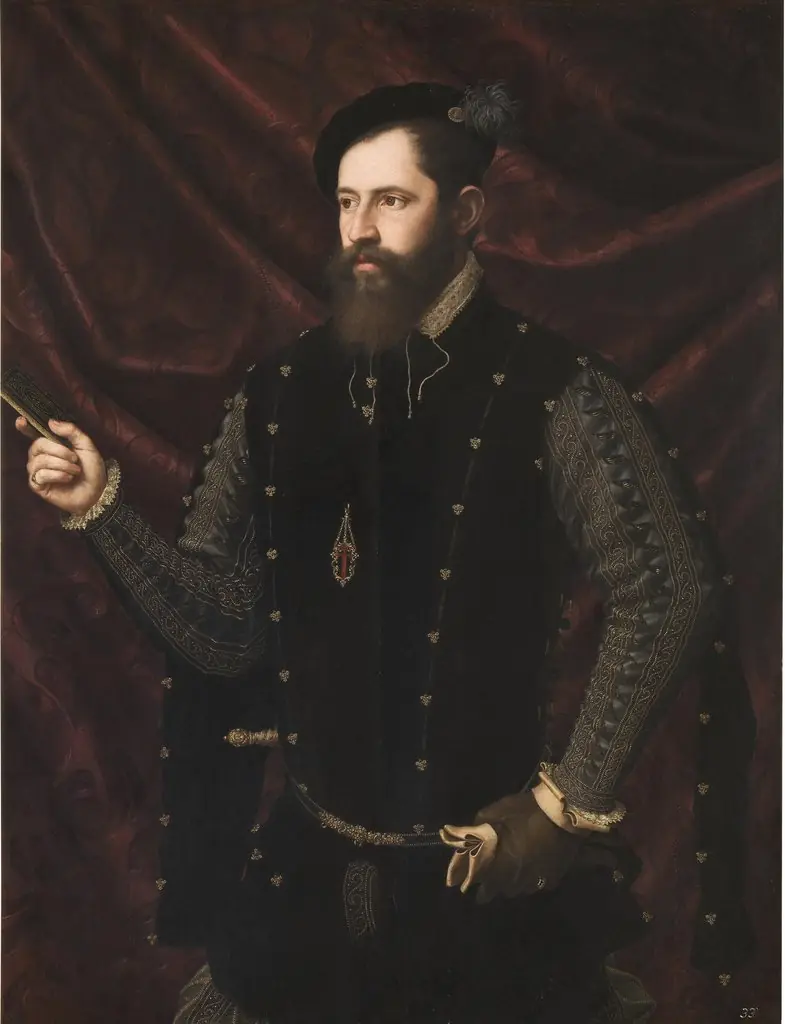 Portrait of a Knight of the Order of Santiago
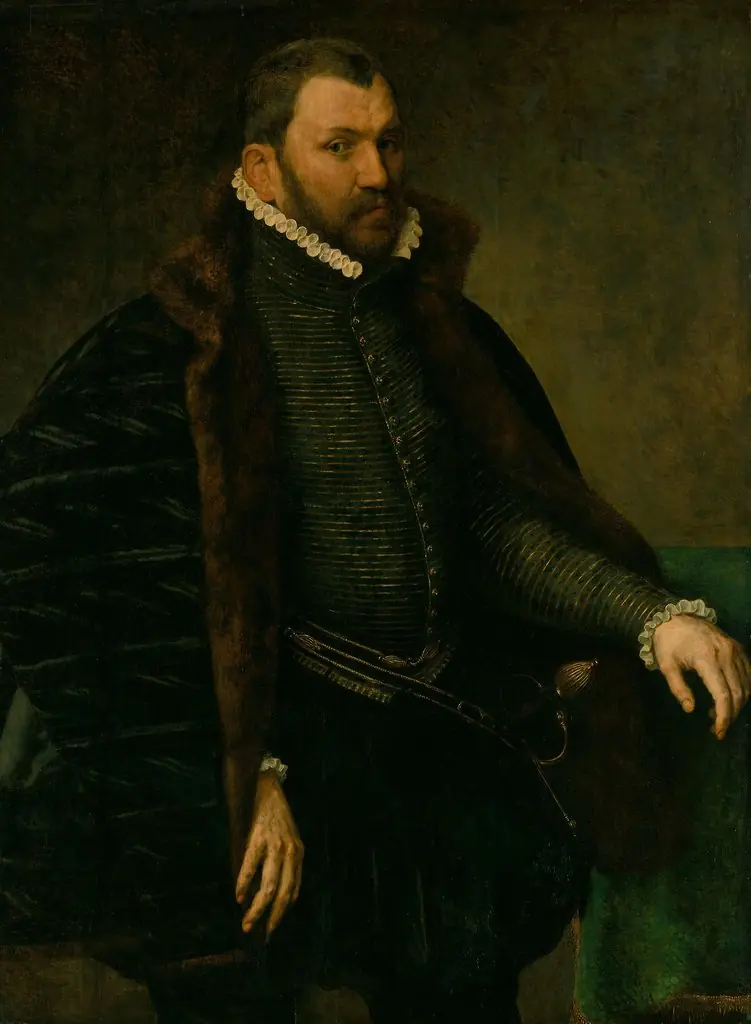 Portrait of a Man
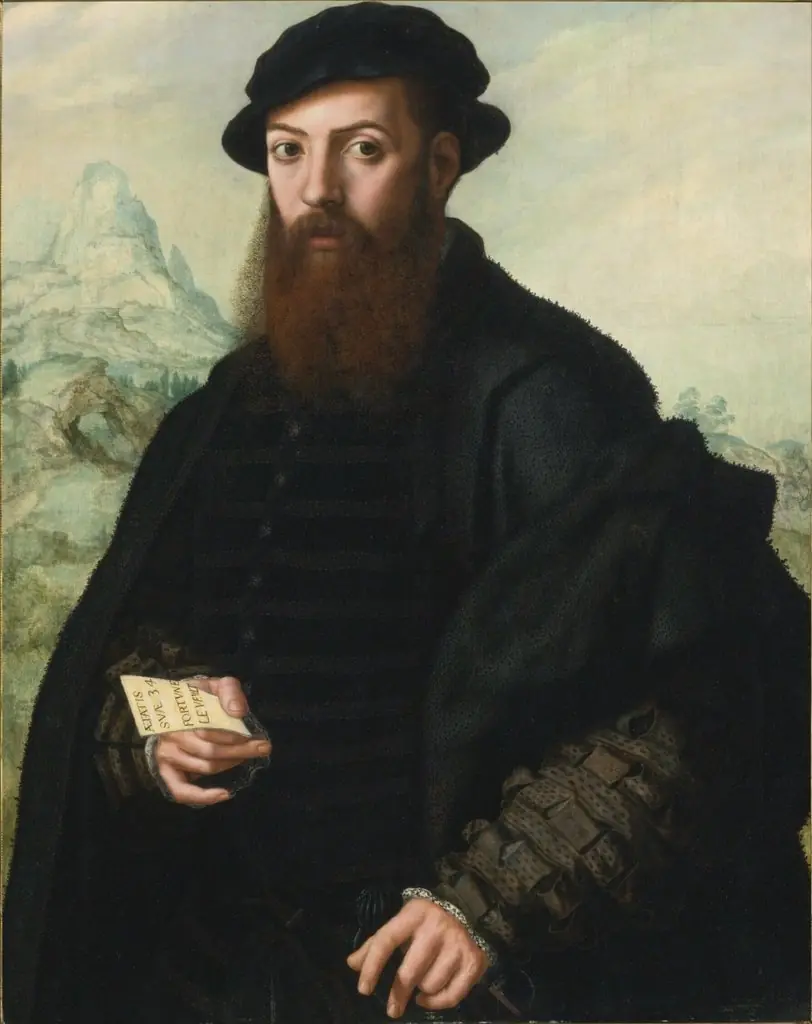 Portrait of a bearded man, aged 34, before an extensive landscape
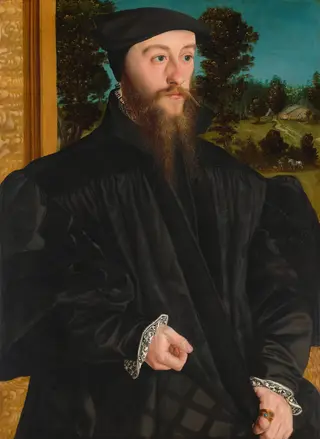 A Member of the Fröschl Family
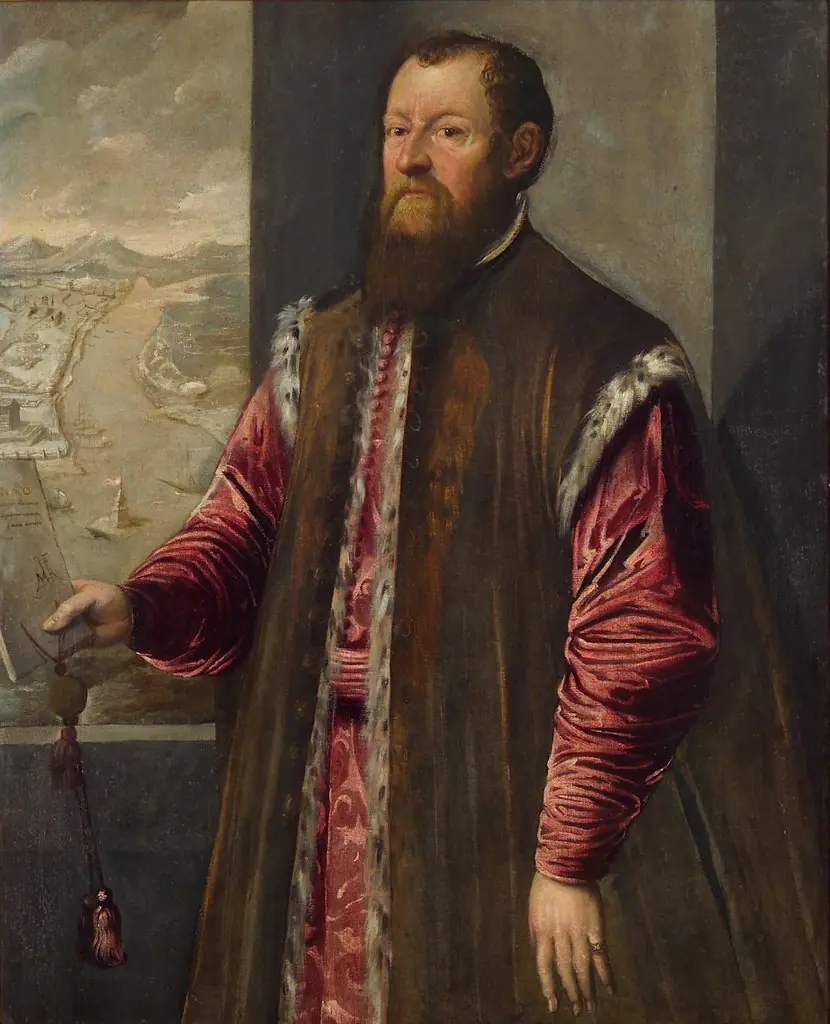 Portrait of Marcantonio Barbaro (1518-1595) as ambassador to Constantinople
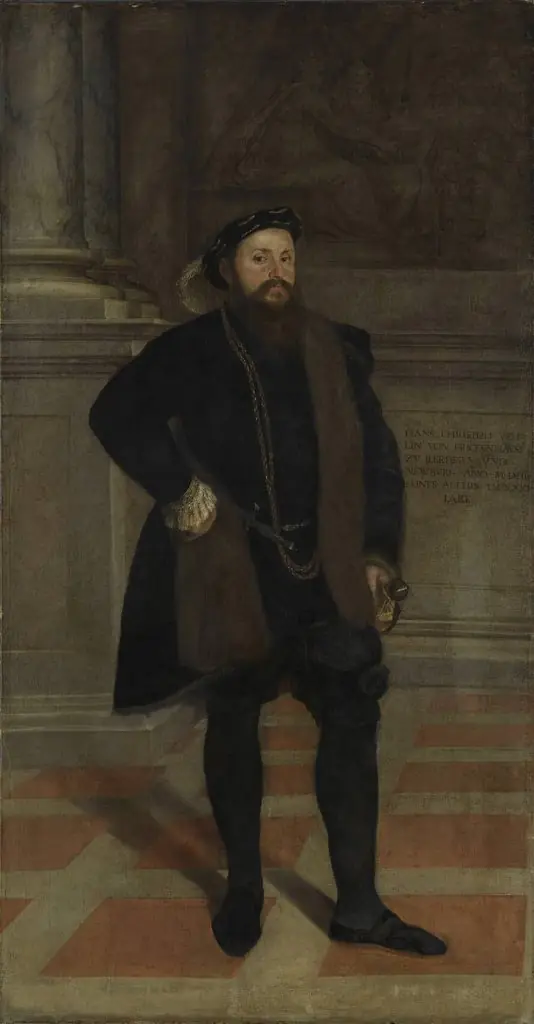 Hans Christoph I. Vöhlin von Frickenhausen (1522-1576)
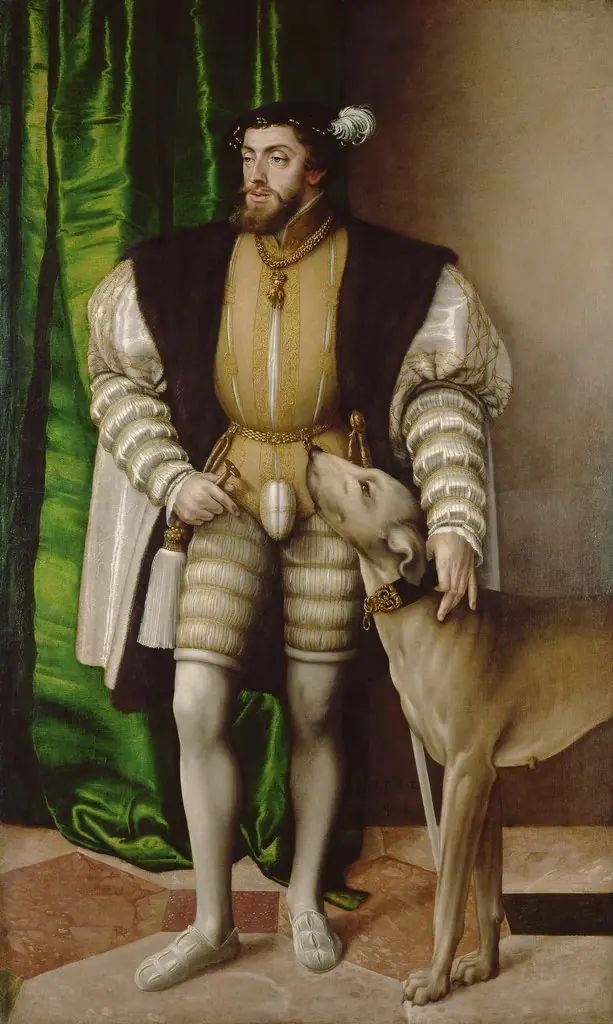 Portrait of Charles V with a Dog
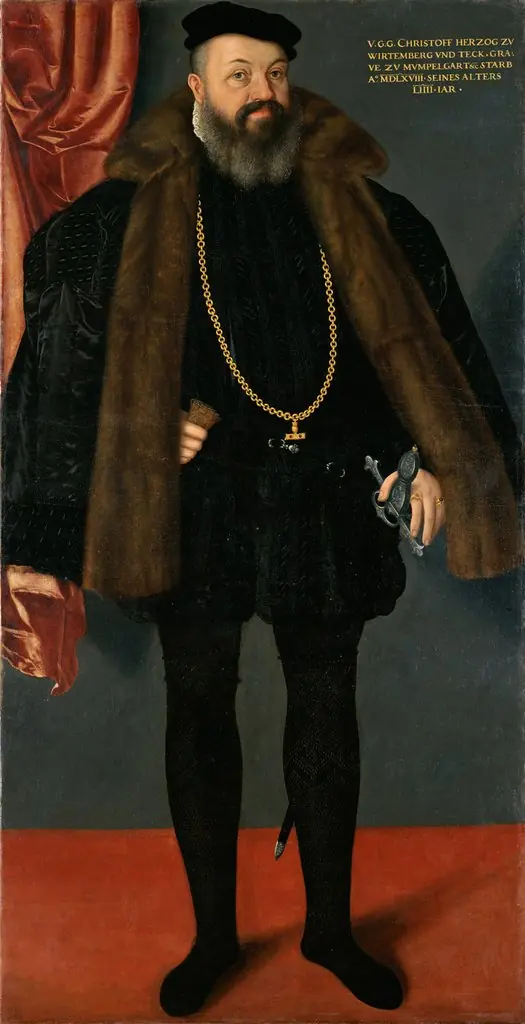 Herzog Christoph von Württemberg (1515-1568) in spanischer Tracht
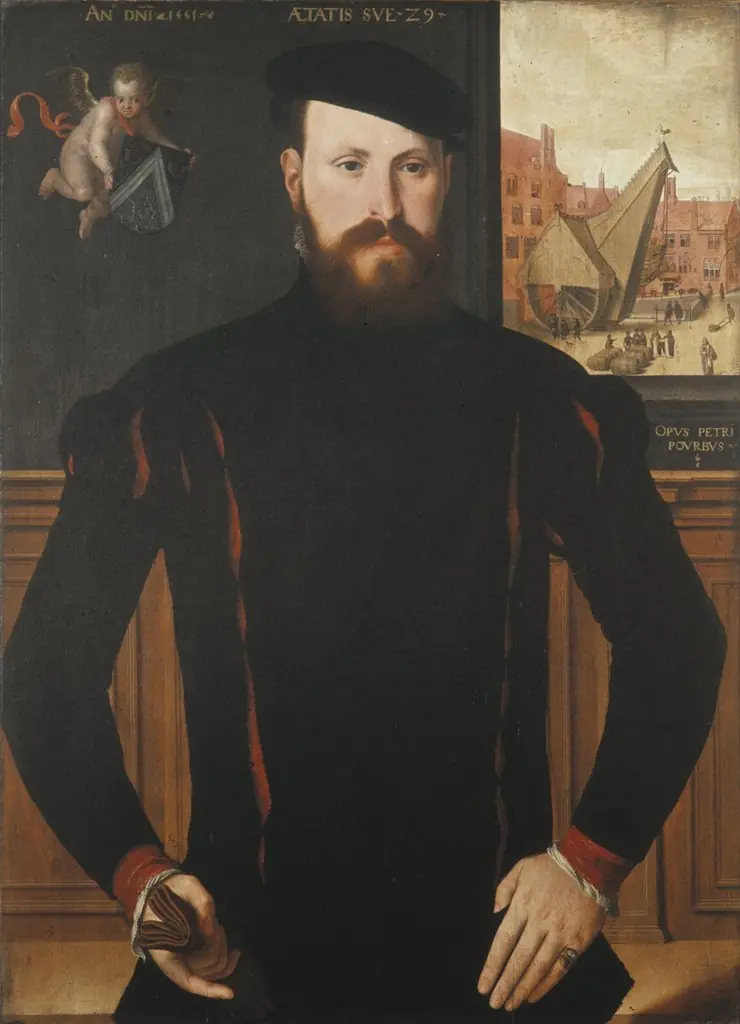 Portrait of Jan van Eyewerve
 Portrait of Duke Christoph von Württemberg (1515-1568) in Spanish costume
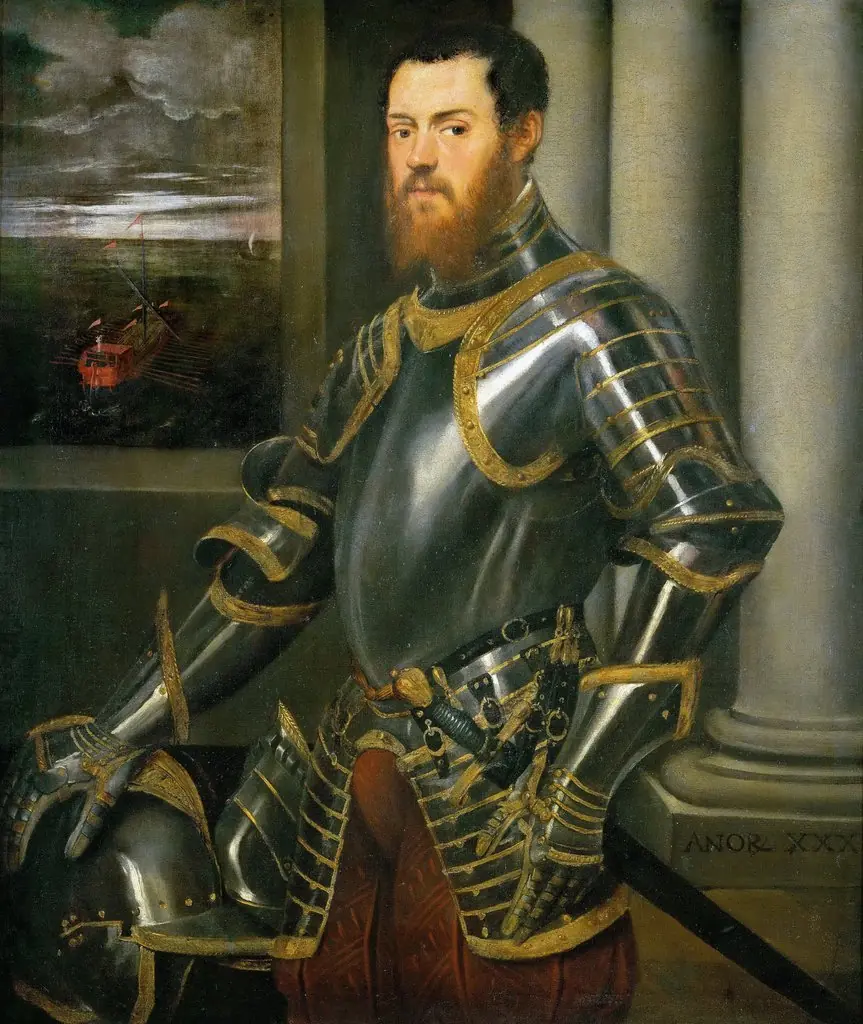 Young man in a gold-decorated suit of armour
- Portrait of Federico II Gonzaga