Artwork
Wall Street, Half Past Two, October 13, 1857
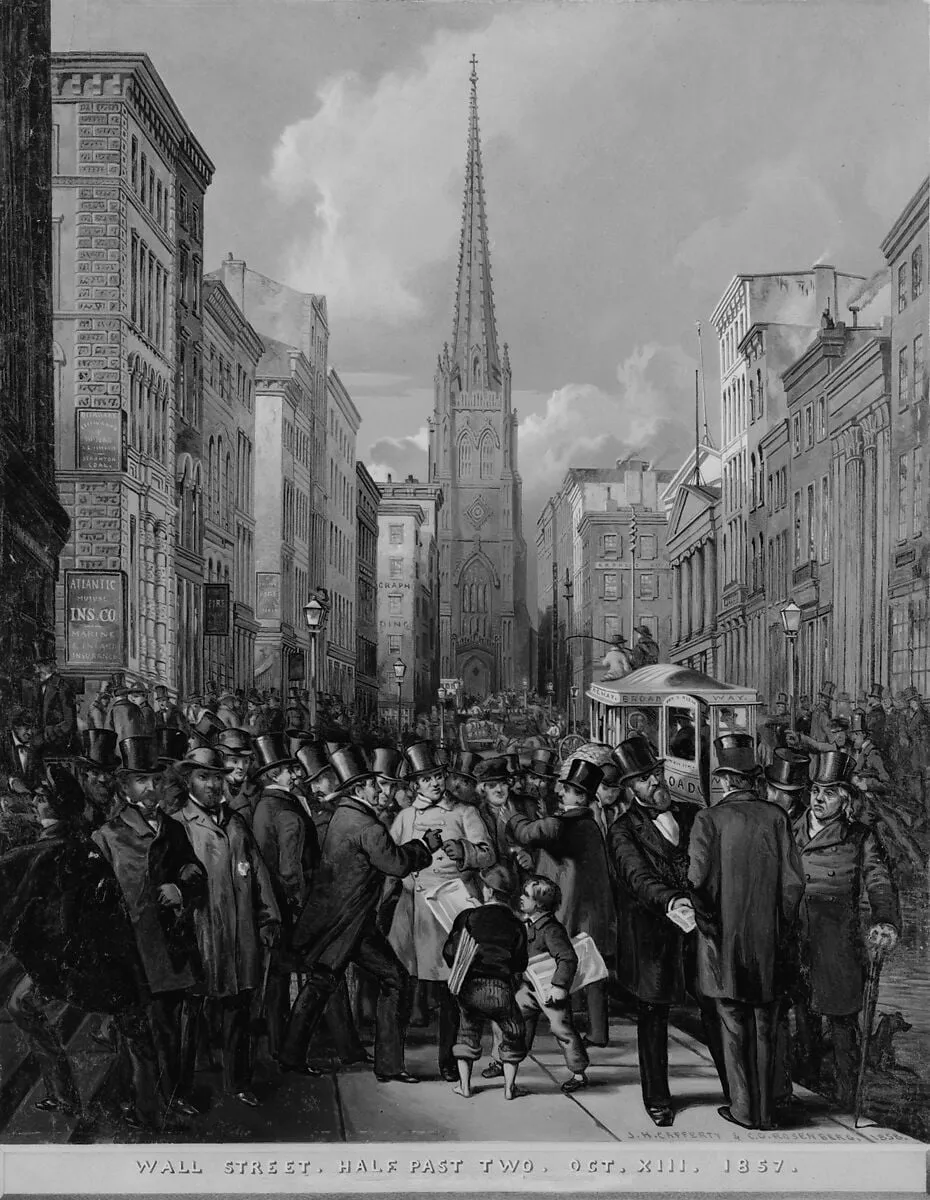
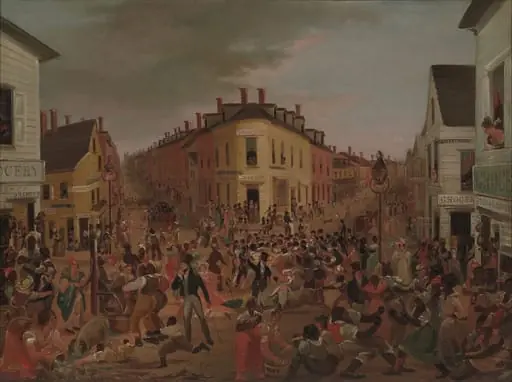
Wall Street, Half Past Two, October 13, 1857 is an oil painting by the American Folk Art artist James H. Cafferty. It dates from 1857 and is held in the collection of the Metropolitan Museum of Art. This painting depicts a bustling New York street scene at what appears to be rush hour.
About this work
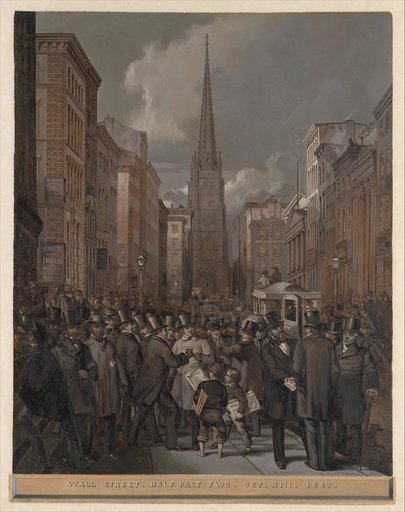
Men in top hats, women in bonnets, horses, and carriages crowd a New York street below tall brick buildings under a gray sky. James H. Cafferty showed Wall Street as a real, working place rather than a backdrop. The date in the title marks the day the market crashed in 1857, and the scene was painted quickly, almost like news.
Technique & Style
The artist employs the oil medium to depict a dense urban scene, capturing specific formal qualities of a crowded street, buildings, and the city environment.
James H. Cafferty's 1857 cityscape, Wall Street, Half Past Two, October 13, 1857, is executed in oil paint applied to a paper support. The work measures approximately 43.5 cm in height and 35.9 cm in width. As an oil-on-paper piece, the medium suggests a portable format distinct from traditional canvas paintings of the era.
The artist employs the oil medium to depict a dense urban scene, capturing specific formal qualities of a crowded street, buildings, and the city environment. The handling of the paint allows for the representation of the chaotic energy associated with the financial panic of 1857, focusing on the interplay between the architectural structures and the mass of figures within the street setting.
History & Provenance
The work Wall Street, Half Past Two, October 13, 1857 is dated 1857 by its creators, James H. Cafferty and Charles G. Rosenberg, and depicts a scene from Wall Street on that specific date.
It entered the collection of the Metropolitan Museum of Art, where it remains located, as indicated by the museum’s records. The painting’s dimensions are recorded as 43.5 cm in height and 35.9 cm in width. No details of an external commission or early ownership chain are provided in the cited sources.
James H. Cafferty's 1857 oil on paper painting, Wall Street, Half Past Two, October 13, 1857, is held in the collection of the Metropolitan Museum of Art in New York. The work is classified within The American Wing and depicts a cityscape featuring a crowd, buildings, and streets. While the specific inventory or accession number is not provided in the available records, the piece is cataloged under the museum's holdings with dimensions of 43.5 cm in height and 35.9 cm in width.
The provided sources do not contain details regarding a specific exhibition history or past loan records for this artwork, limiting the historical record to its current institutional location and physical attributes.
Context
Wall Street, Half Past Two, October 13, 1857, by James H. Cafferty and Charles G. Rosenberg, occupies a distinctive place in 19th-century American art as an early, finely observed urban scene. Scholars have noted its documentary precision, capturing the financial district’s atmosphere on the eve of the Panic of 1857, a rare contemporaneous depiction of an economic crisis in visual art. While Cafferty was primarily known for landscapes, this collaboration highlights his versatility and engagement with modern urban life, aligning with broader trends in antebellum genre painting that favored narrative detail over idealized vistas.
Though not widely reproduced in canonical surveys, the work has drawn attention for its historical specificity and technical execution, offering insight into mid-century New York’s social and architectural fabric. Its inclusion in the Metropolitan Museum of Art underscores its significance as a material record of a pivotal moment in American capitalism.
Overview
This painting depicts a bustling New York street scene at what appears to be rush hour. Men in formal attire and women in bonnets navigate the thoroughfare alongside horse-drawn carriages, all set against a backdrop of tall brick buildings under an overcast sky. The work is notable for its specific depiction of a significant urban location on a pivotal date, capturing a moment of both everyday life and historical consequence.
Subject & Meaning
This painting marks an early instance of Wall Street being portrayed as a tangible, active urban environment rather than a generic setting. The precise date in the title, October 13, 1857, is crucial, as it corresponds to the day a major stock market crash occurred. The artwork thus captures the financial district at a moment of historical economic upheaval, imbuing the everyday scene with deeper resonance.
Artist & collection
Artist
James Henry Cafferty (1819 to 1869) was an American genre, portrait, and still-life painter active in New York City.

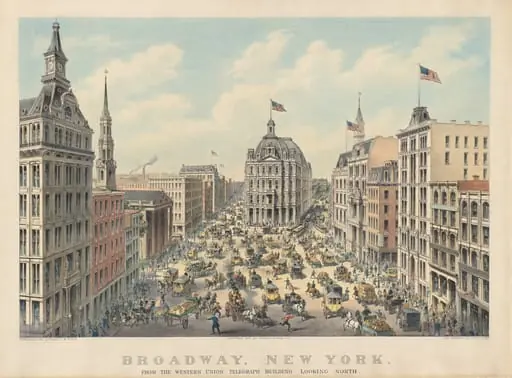
- Broadway, New York: From the Western Union Telegraph Building Looking North
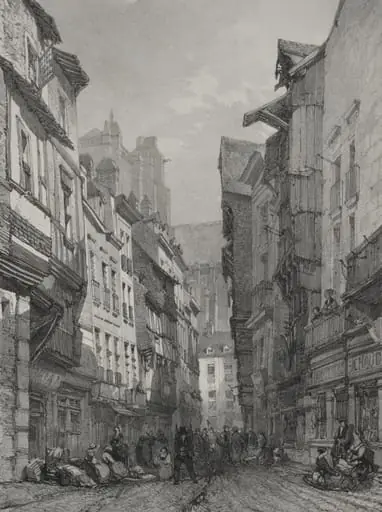 Voyages pittoresques et romantiques dans l'ancienne France. Bretagne: Grande rue vieille à Nantes
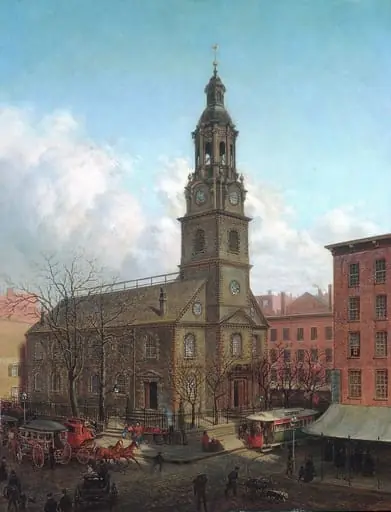 The North Dutch Church, Fulton and William Streets, New York
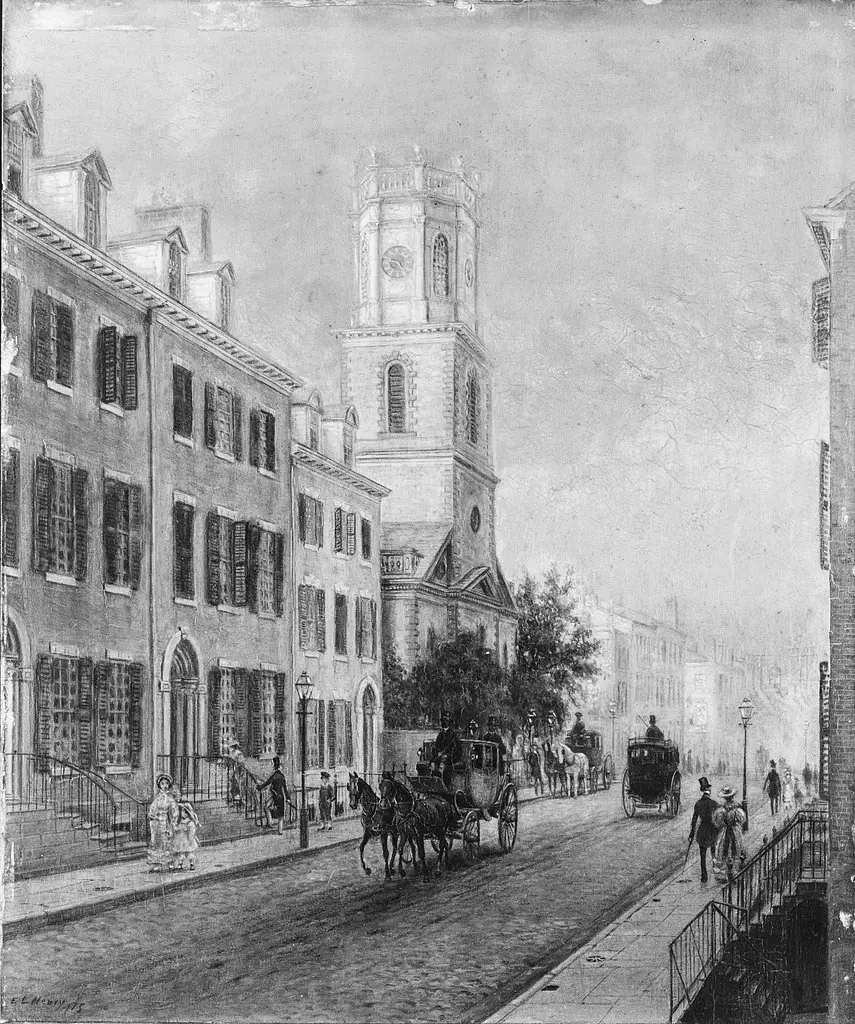 Saint George's Church, New York
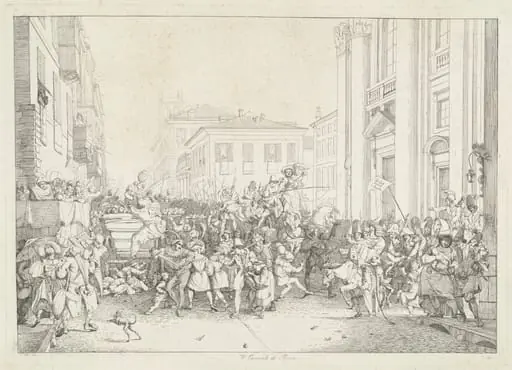 Il Carnevale di Roma (Carnival in Rome)
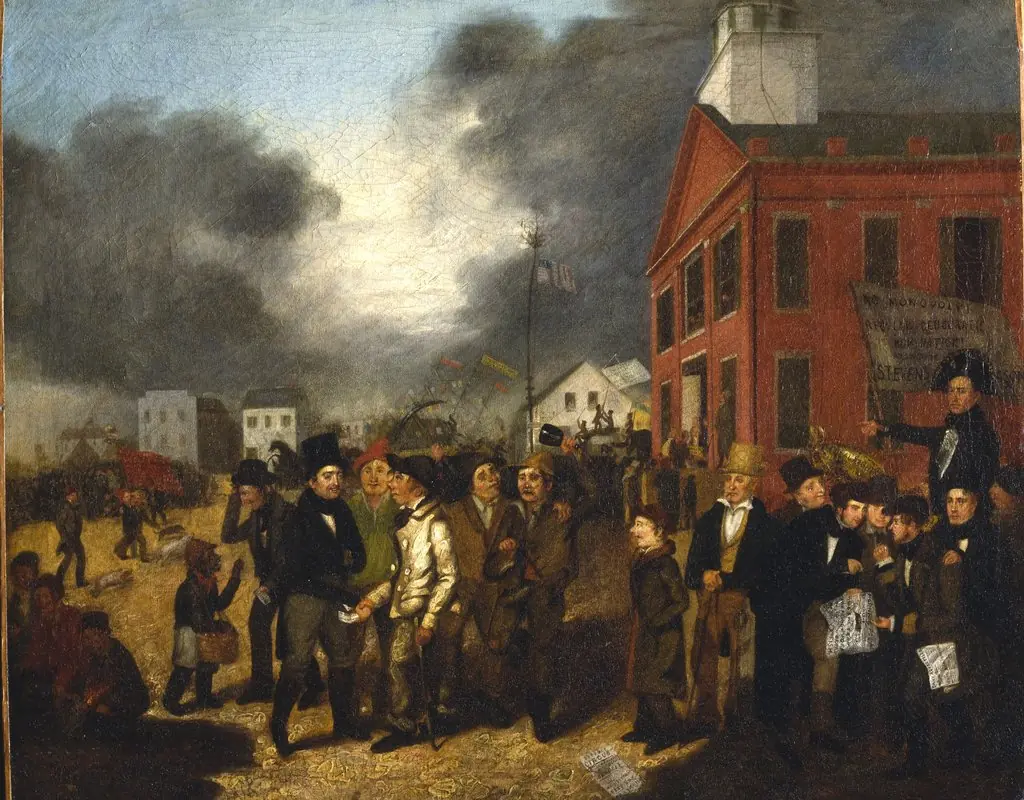 First State Election in Detroit, Michigan, 1837
 Bois du Monde: Les troubles du quartier Latin
 The Living Stream at London Bridge - On the Bridge
 Great Sumter Meeting in Union Square, New York, April 11, 1863
 St. Stephen's Cathedral in Vienna (1832 version)
 The Railway: The Sunday Excursion
 Place Saint-Germain-des-Prés, Paris