Artwork
Benjamin Chew Wilcocks
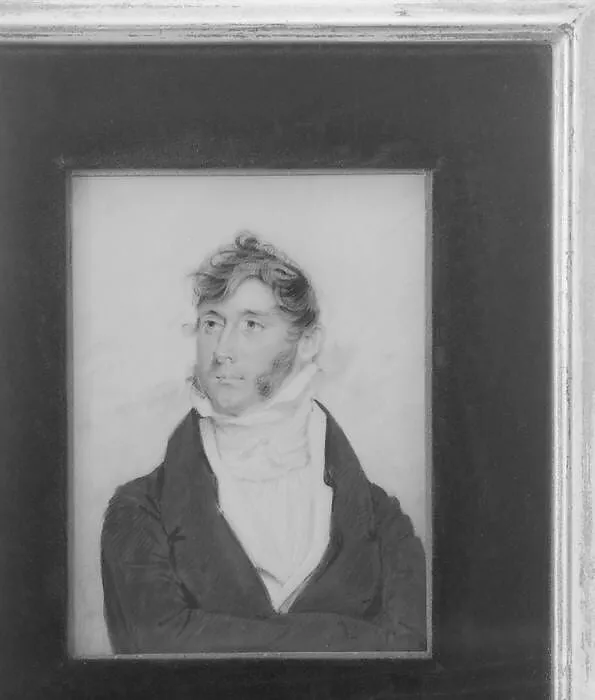
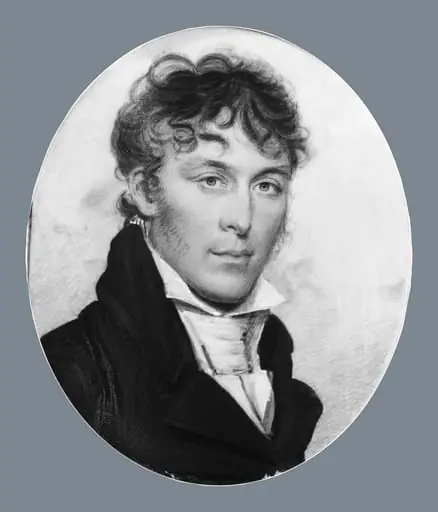
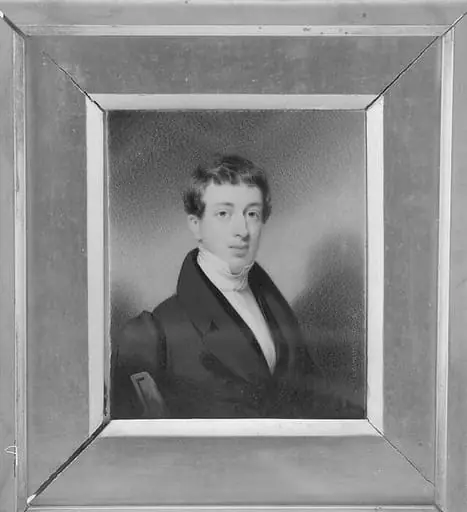
Benjamin Chew Wilcocks is a watercolor painting by the American Folk Art artist Benjamin Trott. It dates from 1810 and is held in the collection of the Metropolitan Museum of Art.
About this work
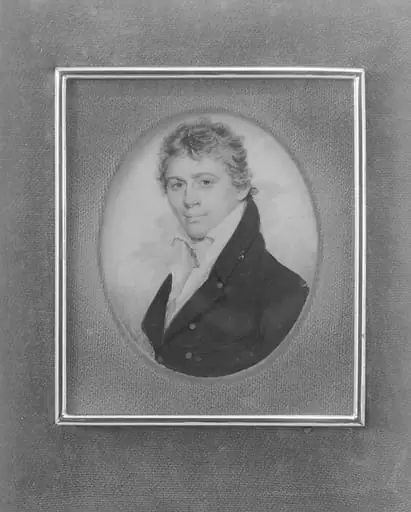
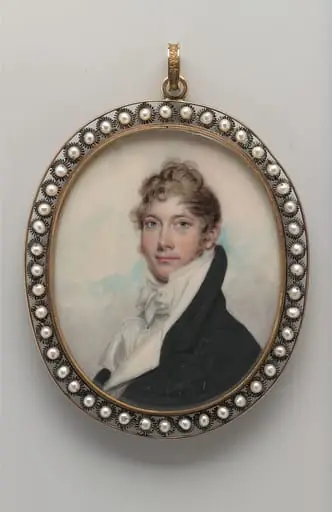
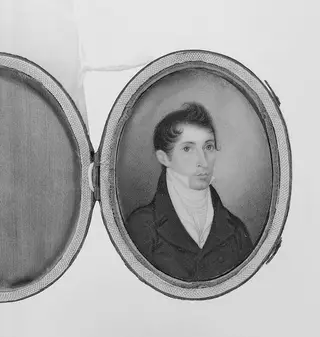
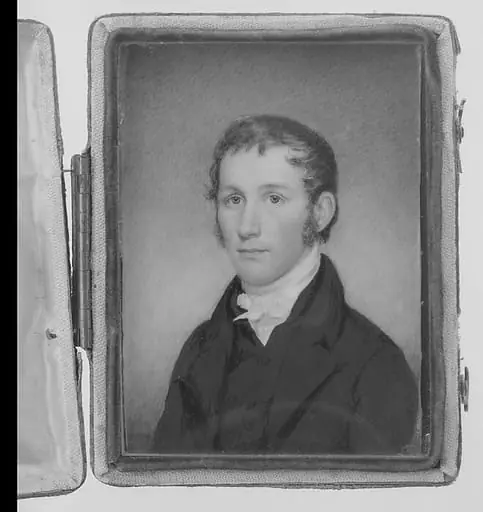
Benjamin Chew Wilcocks looks straight out, his face softly lit, his dark coat built from tiny strokes of watercolor on ivory. Miniatures like this, painted by Benjamin Trott in 1810, were made to be carried, much like a wallet photo today. Thin washes of color, layered up, give it depth without heavy lines.
Subject & Meaning
The sitter's identity is the core subject, with the image serving to commemorate Wilcocks himself rather than to convey a broader symbolic meaning.
The miniature portrays Benjamin Chew Wilcocks as a single male sitter in a conventional portrait format, presenting him bust-length in the small-scale format typical of early nineteenth-century watercolor-on-ivory likenesses. As a personal portrait, the work functions primarily as a record of the individual's likeness rather than as an allegorical or narrative composition, and the sources do not indicate the inclusion of symbolic attributes, emblems, or iconographic devices beyond the standard conventions of genteel male portraiture. The sitter's identity is the core subject, with the image serving to commemorate Wilcocks himself rather than to convey a broader symbolic meaning.
History & Provenance
The work is held in the Metropolitan Museum of Art, specifically in The American Wing, classified as a portrait. It is a watercolor on ivory painted in 1810 depicting Benjamin Chew Wilcocks. The sources record the museum's collection and location but do not provide an explicit inventory or accession number.
No exhibition history is documented in the cited references. Thus the provenance information limited to its current holding and classification.
Overview
This miniature portrait depicts Benjamin Chew Wilcocks, rendered in watercolor on ivory by artist Benjamin Trott in 1810. The subject, dressed in a dark coat, gazes directly forward, his face softly illuminated. Trott's meticulous application of tiny watercolor strokes on the ivory surface contributes to the luminous quality of the sitter's skin, characteristic of this intimate form of portraiture.
Context
Intended for personal possession, this small-scale portrait served a function similar to contemporary wallet photographs. Such miniatures were designed to be portable keepsakes, allowing individuals to carry the likenesses of loved ones or important figures with them. This practice underscored the personal and sentimental value placed on these finely detailed artworks during the early 19th century.
Technique & Style
Benjamin Trott employed watercolor on ivory, a common medium for miniatures, to create this detailed portrait. His technique involved layering thin, translucent washes of color, a method known as glazing. This careful application allowed the artist to build subtle depth and form without relying on strong outlines or heavy pigmentation, resulting in a delicate and refined aesthetic.
Artist & collection

Artist
Benjamin Trott (c. 1770, in Boston – 27 November 1843, in Baltimore) was an American painter who specialized in portrait miniatures.