Artwork
Benjamin Daniel Greene
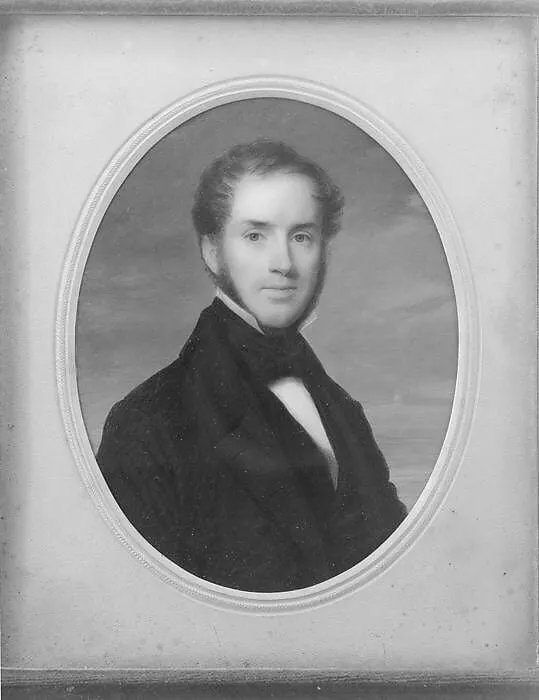
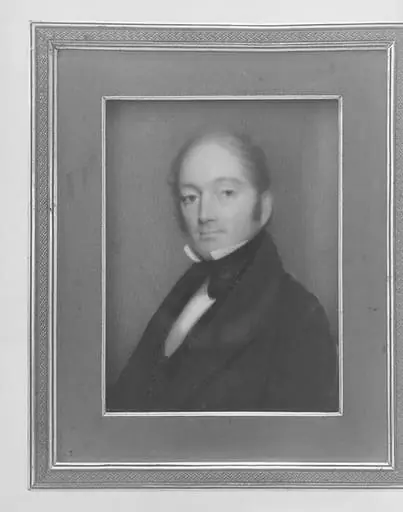
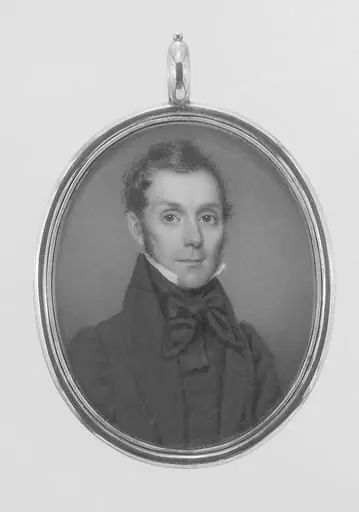
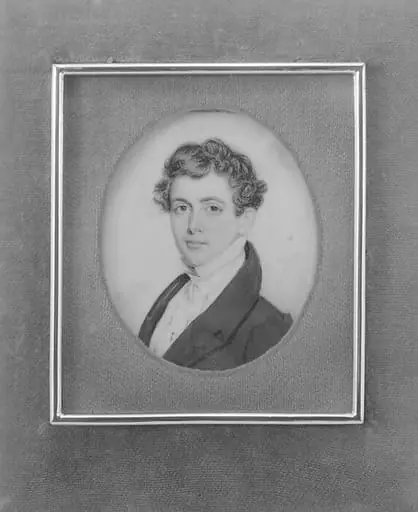
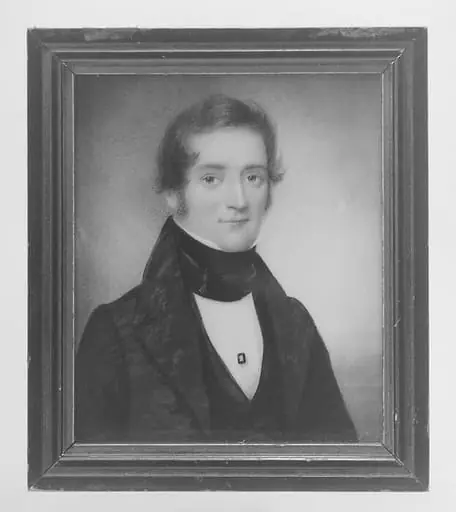
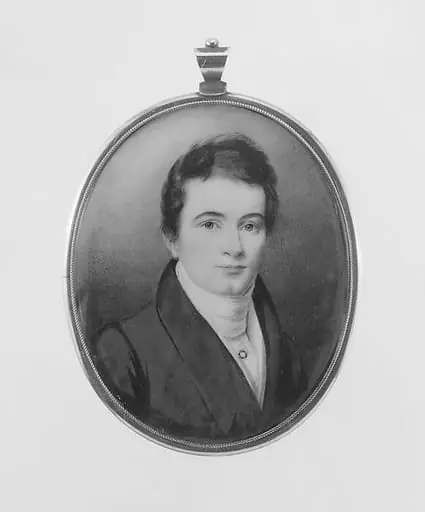
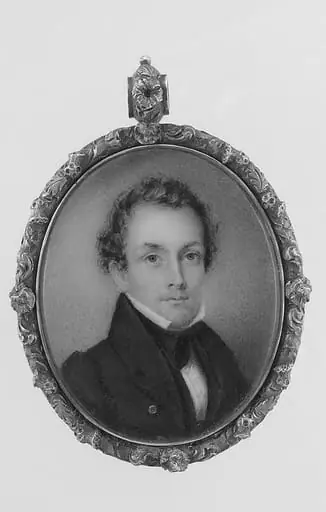
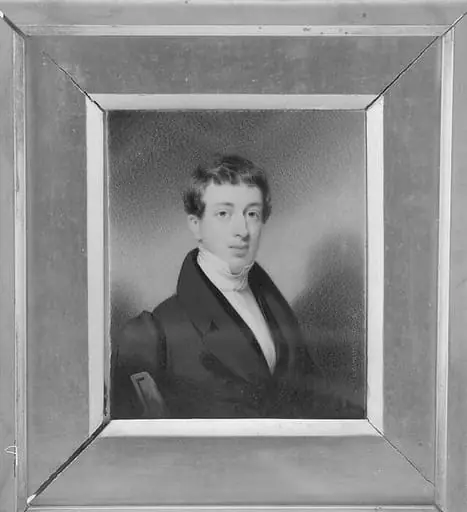
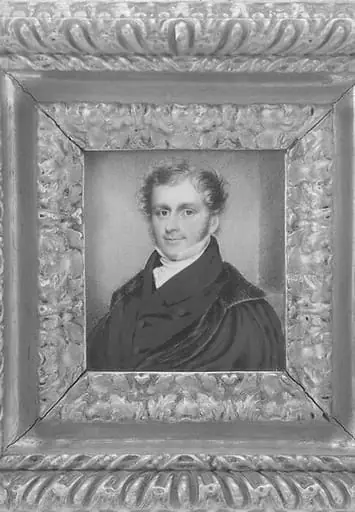
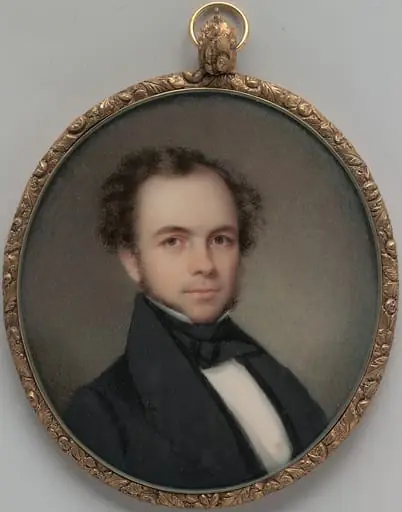
Benjamin Daniel Greene is a watercolor painting by the American Folk Art artist Henry I. Brown. It dates from 1848 and is held in the collection of the Metropolitan Museum of Art.
- Accession no.
- 2006.235.19
- Credit line
- Dale T. Johnson Fund, 2006
About this work
Subject & Meaning
As a portrait, the piece functions to record the individual's appearance and, by extension, his identity within the visual culture of mid-19th-century America.
The work titled 'Benjamin Daniel Greene' is a watercolor portrait painted by Henry I. Brown in 1848. It portrays a man identified by the title, indicating that the sitter's name is the subject of the image. As a portrait, the piece functions to record the individual's appearance and, by extension, his identity within the visual culture of mid-19th-century America.
The painting is part of The American Wing collection at the Metropolitan Museum of Art, where it is classified as a portrait genre work. No additional iconographic symbols are documented; the meaning derives from the conventional purpose of portraiture to document and dignify the sitter.
Technique & Style
Benjamin Daniel Greene is a watercolor on ivory portrait painted by Henry I. Brown in 1848. The work, measuring roughly 10.8 × 8.3 cm, belongs to The American Wing collection at the Metropolitan Museum of Art and is categorized as a portrait of a man. Its execution features fine linear detail and muted tonal transitions characteristic of 19th-century watercolor on ivory.
History & Provenance
The work titled "Benjamin Daniel Greene" was executed in 1848 by Henry I. Brown as a watercolor on ivory portrait, measuring 10.8 × 8.3 cm. It entered the collection of the Metropolitan Museum of Art, where it is catalogued within The American Wing as a portrait genre work. No documentation of a commission or prior owners is provided in the available records; the museum's provenance simply notes its presence in the institution's holdings.
Overview
This watercolor portrait, titled Benjamin Daniel Greene, was created by Henry I. Brown in 1848. Executed on a small ivory support, it presents a direct likeness of a man. The artwork exemplifies the detailed craftsmanship characteristic of miniature painting during the mid-19th century, serving both as a personal memento and a record of individual appearance.
Context
During the 1800s, miniature portraits like this one held significant personal value. Their small scale made them ideal for intimate display, often set into lockets, brooches, or small frames to be carried or worn as jewelry. These objects served as cherished keepsakes, allowing individuals to keep the image of family members or friends close, especially when separated by distance.
Artist & collection
Artist
Henry I. Brown was an American portrait painter active in the mid-19th century, recorded roughly between 1837 and 1851. He worked in the small-scale portrait format common in the period, and his portrait of Benjamin…