Artwork
Don Lorenzo Bellavita, famoza dentista
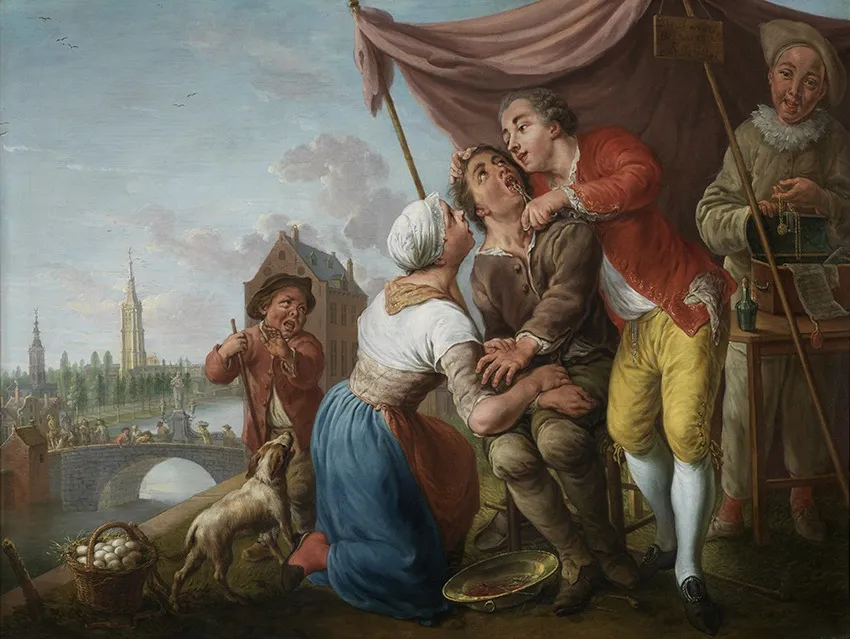
Don Lorenzo Bellavita, famoza dentista is an oil painting by the Rococo painting artist Jan Anton Garemyn. It dates from 1795 and is held in the collection of the Groeningemuseum.
About this work
Subject & Meaning
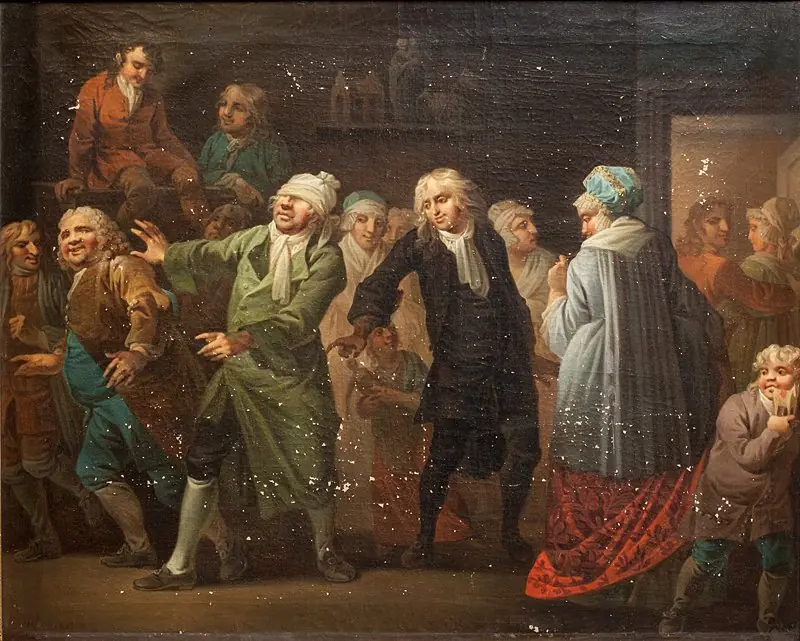
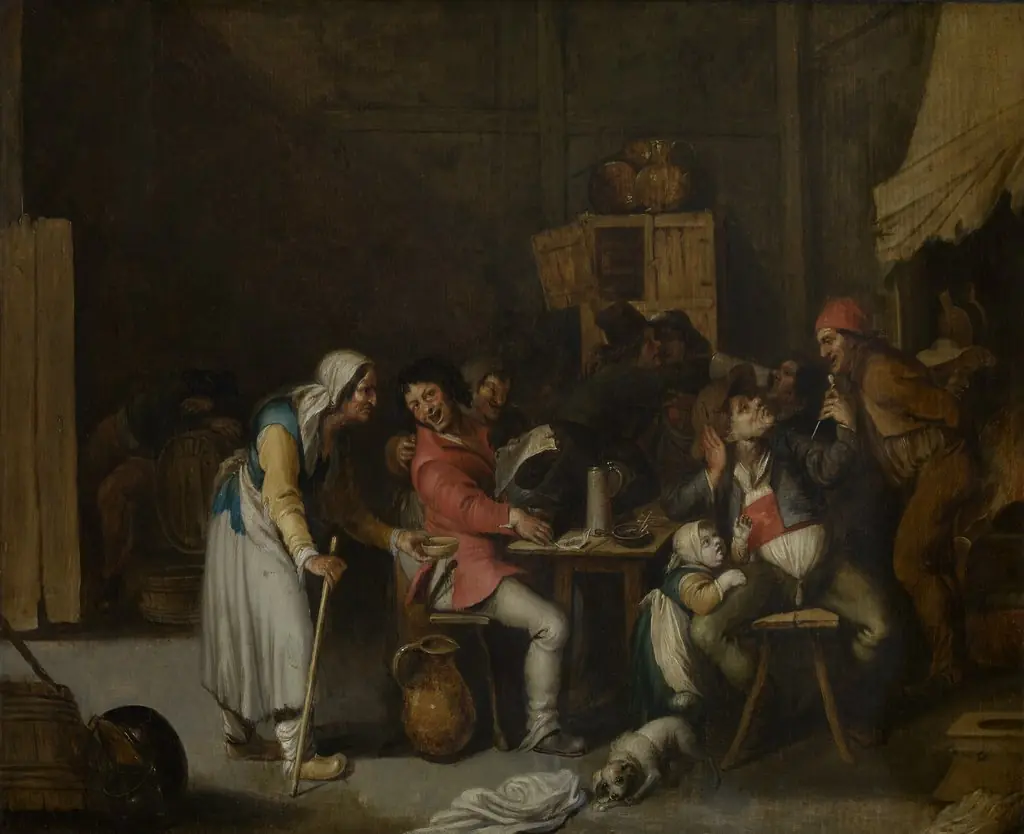
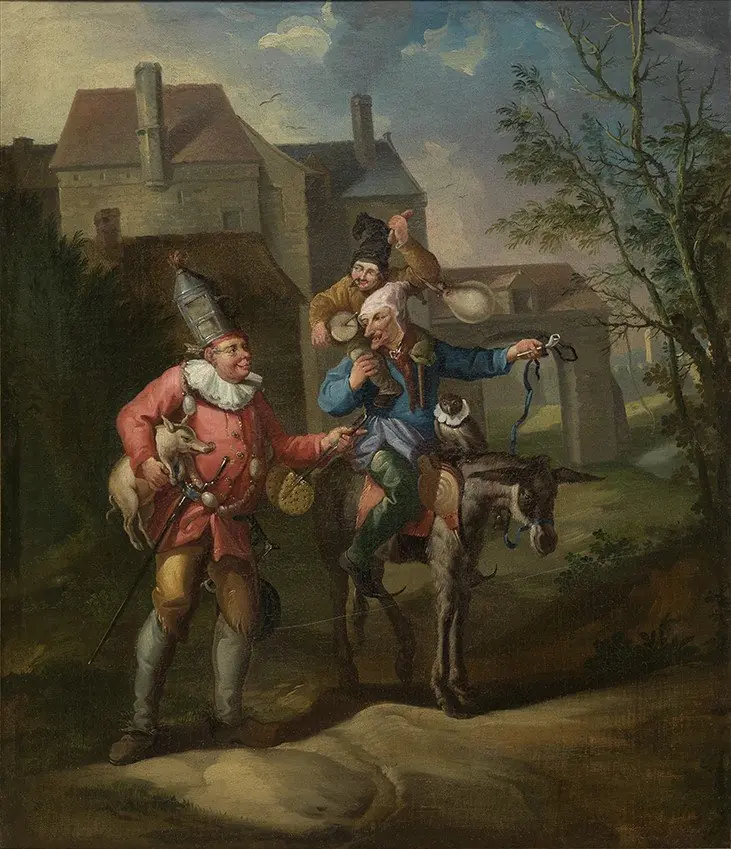
Don Lorenzo Bellavita, famoza dentista presents a bustling street scene in Bruges populated by a dentist, a man, a woman, and a dog.
Don Lorenzo Bellavita, famoza dentista presents a bustling street scene in Bruges populated by a dentist, a man, a woman, and a dog. The setting is anchored by recognizable local landmarks, including the Eekhout Abbey, the Dijver, and the Church of Our Lady, alongside houses, trees, clouds, and birds that frame the urban environment.
At the narrative center, a basket containing eggs serves as the focal prop tied to the traveling dentist's trade, functioning as a visual marker of his itinerant profession. The combination of named historical figures, everyday bystanders, and a domestic animal in a recognizable cityscape suggests the work operates as a genre portrait, blending caricature with topographical observation to memorialize the eccentric practitioner within the fabric of late-eighteenth-century Bruges.
The title's reference to a "famous dentist" frames the scene as a character study, using the recognizable architecture and street life of Bruges to situate the subject within a specific civic and cultural milieu.
Technique & Style
Jan Anton Garemyn executed Don Lorenzo Bellavita, famoza dentista in 1789 using oil paint as the medium. The painting measures 84.4 cm in height and 111.3 cm in width. Stylistically, the composition is a populated genre scene featuring a dentist, a man, a woman, and a dog in the foreground.
The background integrates architectural and landscape elements, specifically depicting Eekhout Abbey, the Dijver, a house, and the Church of Our Lady in Bruges, all set beneath a sky with clouds, birds, and trees. Additional still-life details within the scene include a basket and an egg.
History & Provenance
The painting was created in 1789 by Jan Anton Garemyn. It depicts a dentist scene including a man, a woman, a dog, and various symbolic elements associated with Bruges. The work measures 84.4 cm in height and 111.3 cm in width and is executed in oil paint.
Overview
Jan Anton Garemyn’s 1795 oil painting, Don Lorenzo Bellavita, famoza dentista, captures a lively street tableau in Bruges. Executed in the Rococo style, the work presents a bustling urban scene framed by recognizable local architecture, including the Church of Our Lady, the Dijver bridge, and the former Eekhout Abbey.
Context
The inclusion of the Church of Our Lady, the Dijver bridge, and the ruins of Eekhout Abbey situates the scene firmly within Bruges’ historic centre. By depicting ordinary citizens amid familiar landmarks, Garemyn reflects the Enlightenment‑era interest in daily life and the city’s own civic pride.
Artist & collection
Artist
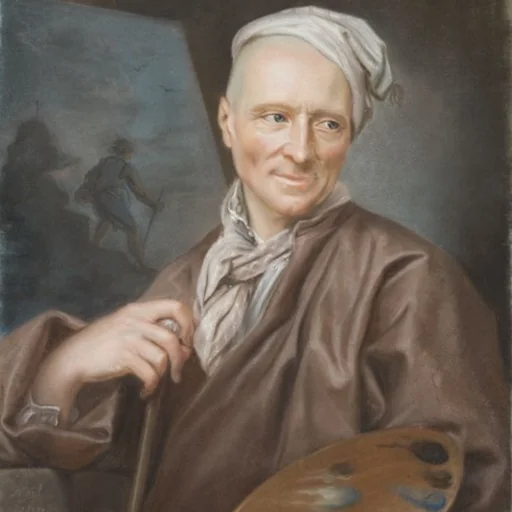
Jan Anton Garemijn or Jan Anton Garemyn (15 April 1712, Bruges – 23 June 1799, Bruges) was a Flemish painter and engraver and draftsman.