Artwork
The Fortune Teller
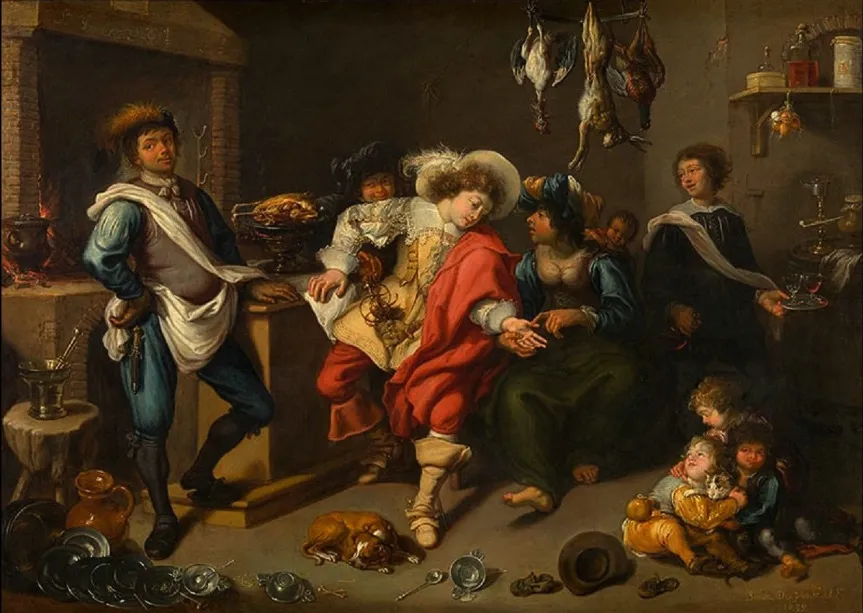
The Fortune Teller is an oil painting by the Flemish Baroque painting artist Simon de Vos. It dates from 1639 and is held in the collection of the Royal Museum of Fine Arts Antwerp.
About this work
Subject & Meaning
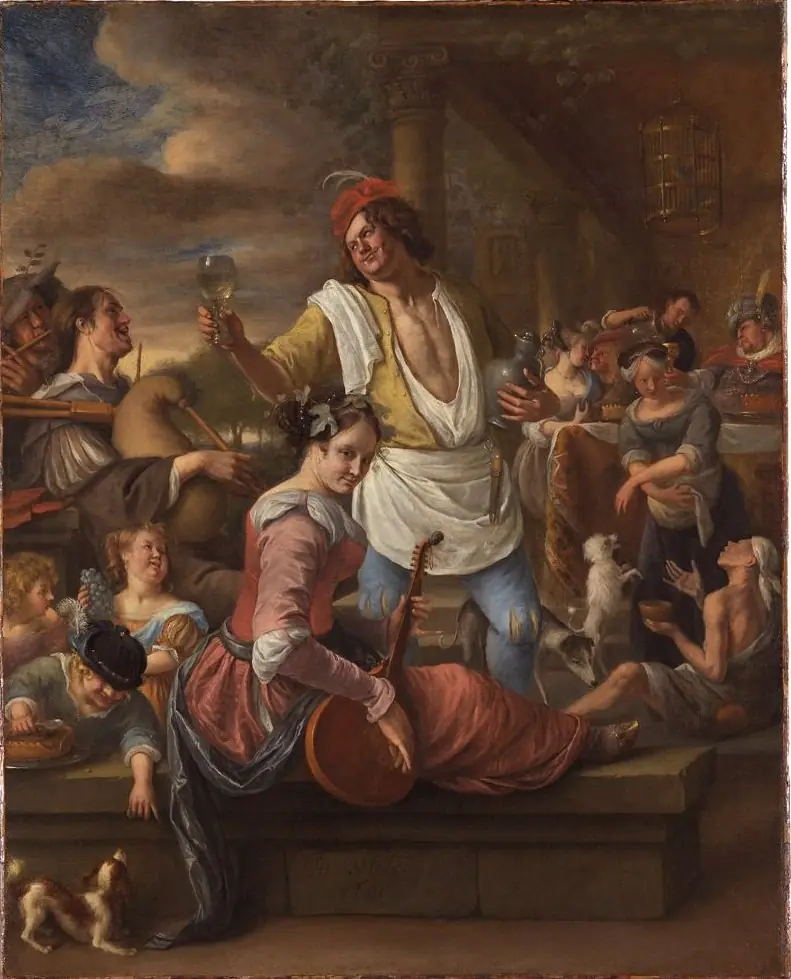
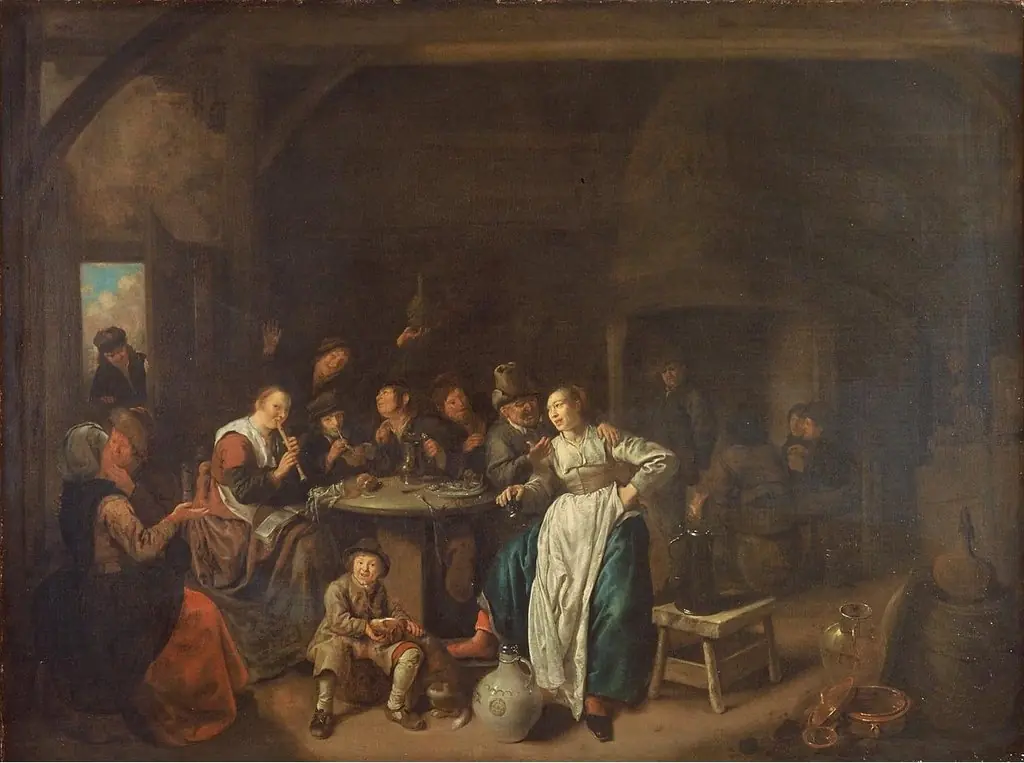
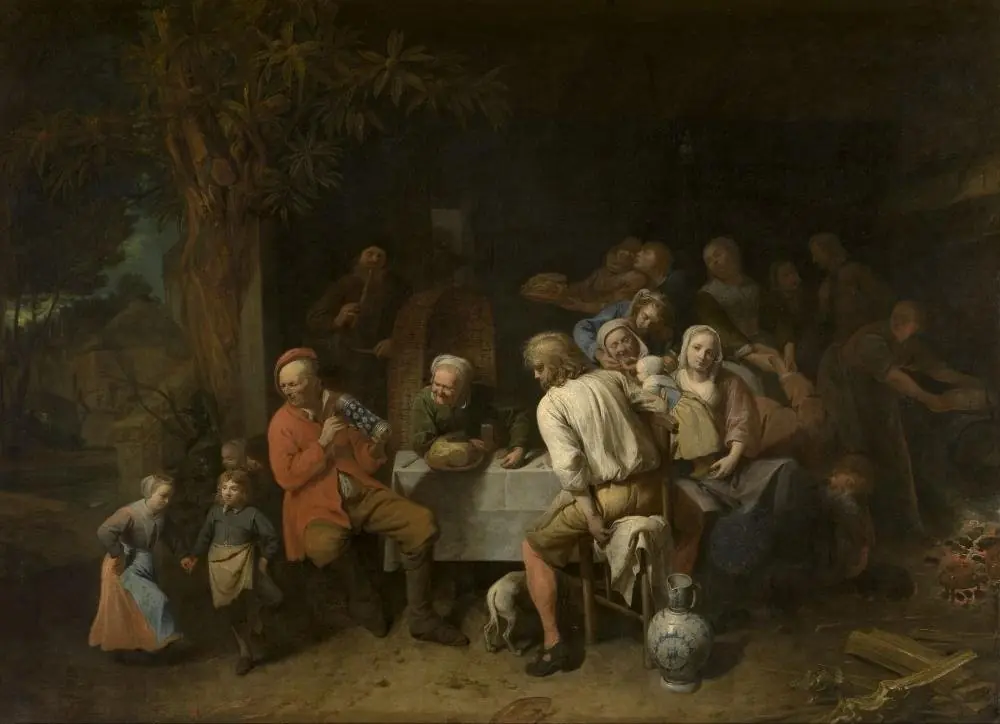
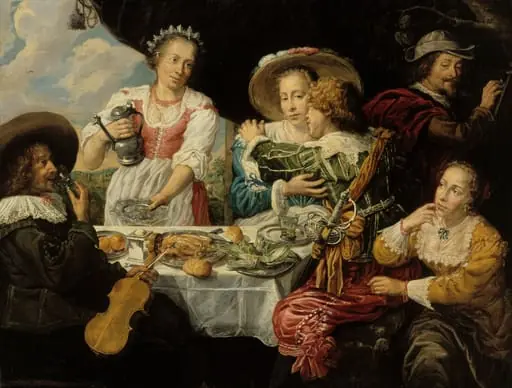
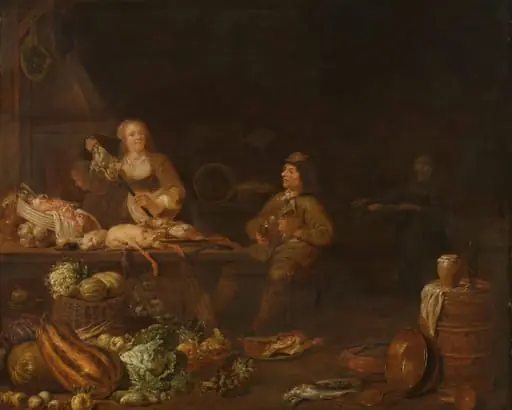
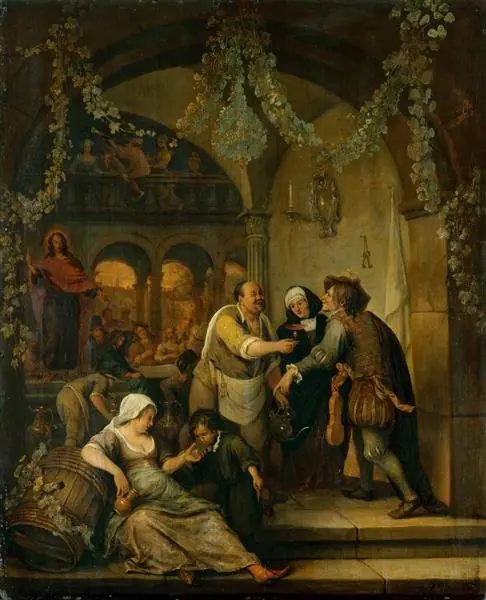
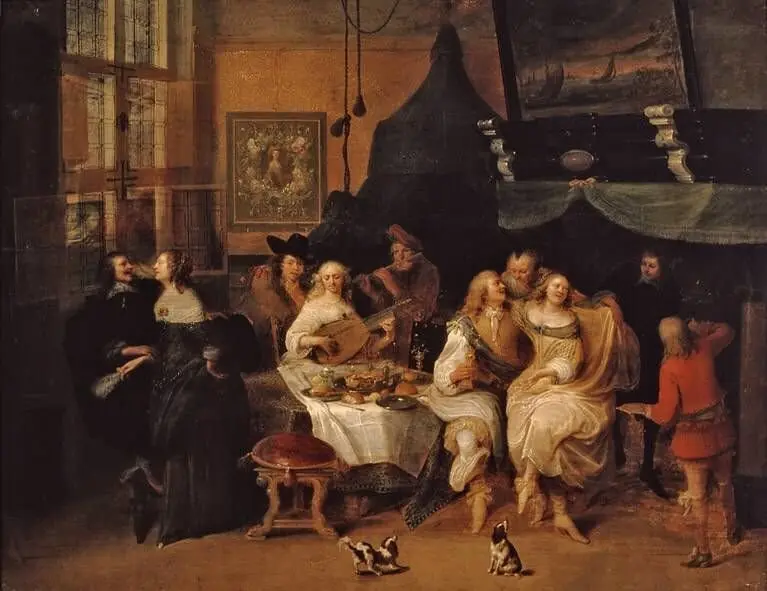
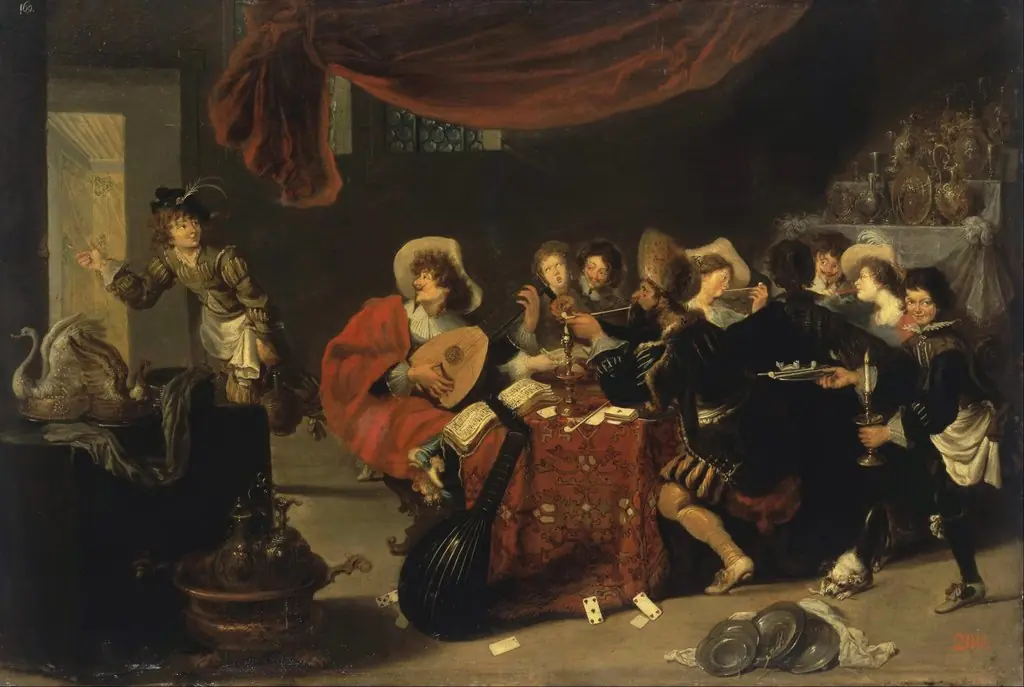
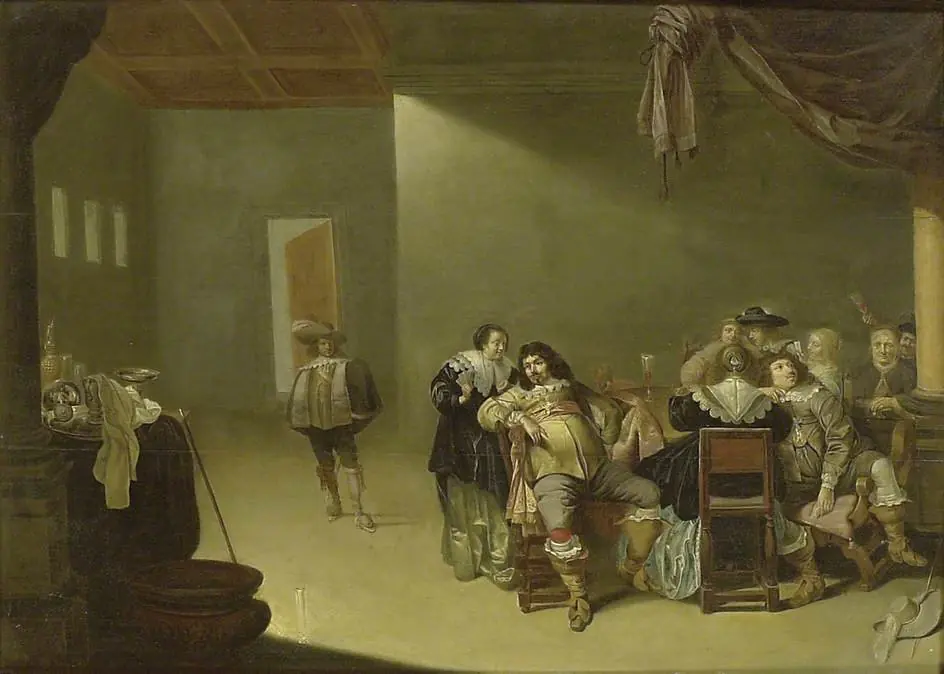
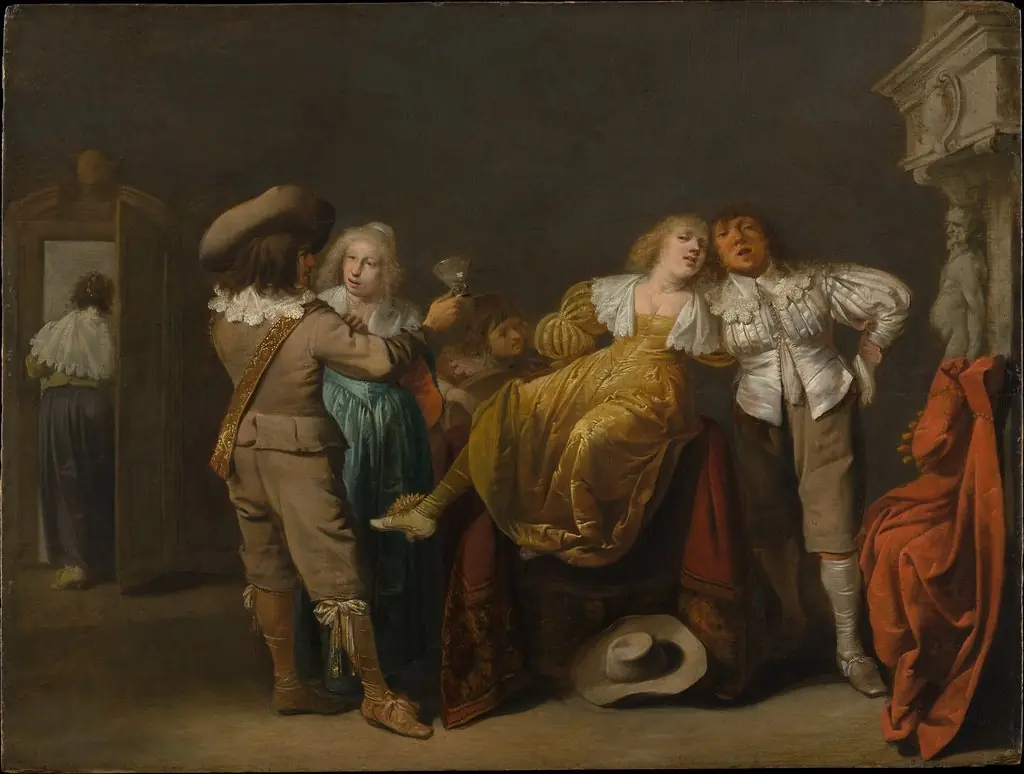
The painting depicts a fortune-telling scene set in an inn, populated by soldiers, men, women, and a child.
The painting depicts a fortune-telling scene set in an inn, populated by soldiers, men, women, and a child. Fortune-telling imagery of this kind, rendered as genre art, typically carried moralizing undertones in seventeenth-century Flemish painting, presenting the act of divination as a social transgression or a moment of deception in which a soldier is gulled by a woman. The inclusion of a child alongside the adults heightens the everyday, street-level character of the encounter, while the inn setting frames the exchange as a transient, low-life episode rather than a private consultation.
Together, these elements transform the work into a commentary on credulity, trickery, and the mingling of social classes, themes that Simon de Vos treated repeatedly in his small-scale cabinet pictures on copper.
Technique & Style
The Fortune Teller is an oil painting executed on copper support in 1639 by the Flemish artist Simon de Vos. The work measures 44.5 cm in height by 69 cm in width and depicts a scene of fortune-telling involving a soldier, a woman, a child, and an inn setting. Its formal qualities reflect the genre painting style characteristic of 17th-century Flemish art, rendered with fine brushwork on a small copper panel.
History & Provenance
The Fortune Teller is a 1639 painting executed on copper by the Flemish artist Simon de Vos. It entered the collection of the Royal Museum of Fine Arts Antwerp, part of the Vlaamse Kunstcollectie, where it is classified as a genre scene. The work depicts a soldier consulting a fortune-teller in an inn, reflecting genre themes common in 17th-century Flemish art, and measures 44.5 cm in height and 69 cm in width. The available sources do not provide a specific accession number or a detailed exhibition history.
Legacy
Simon de Vos's The Fortune Teller, painted on copper in 1639, became emblematic of genre scenes depicting fortune-telling within tavern interiors, influencing later artists who explored similar themes of moral allegory and everyday life. Its presence in the Royal Museum of Fine Arts Antwerp's collection has ensured continued public visibility, cementing its reputation as a representative example of Flemish Baroque genre painting. The work's technical use of oil on copper and its compositional details, such as the inclusion of a fortune-telling woman and a curious child, have been cited in scholarly discussions of Baroque visual culture, though specific later artistic influences are not documented in the provided sources.
Overview
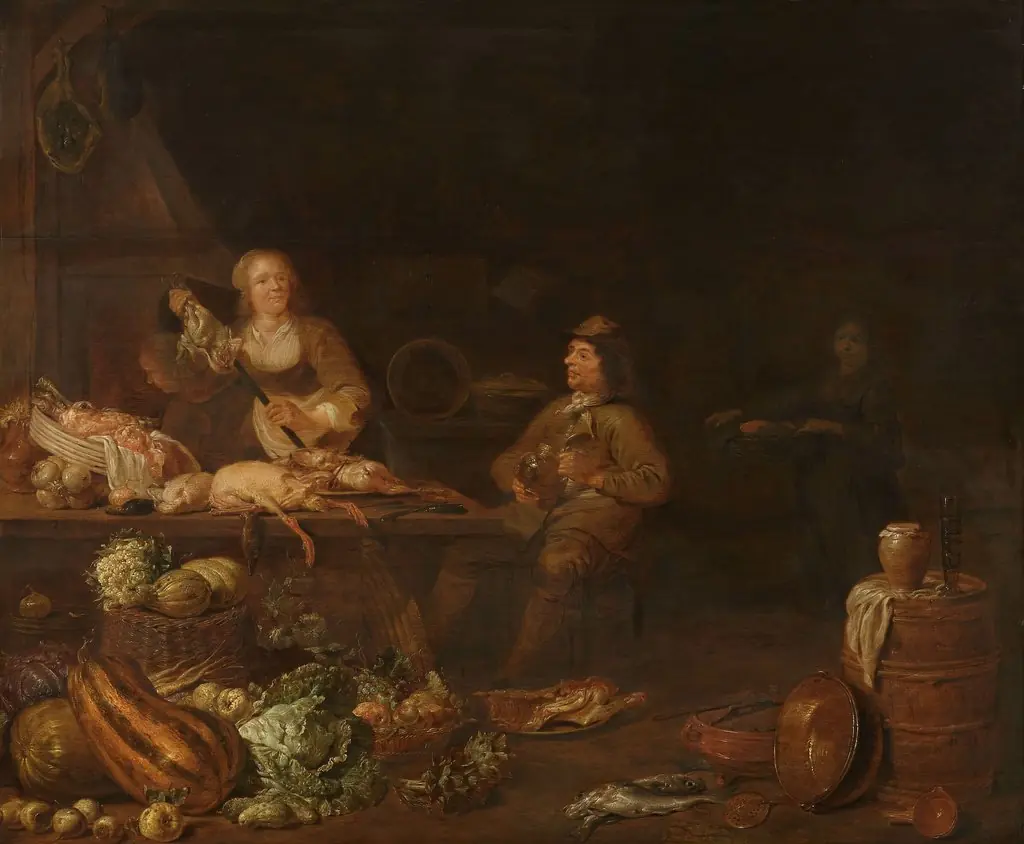
Simon de Vos’s The Fortune Teller (1639) is a compact genre painting executed on copper. The work depicts an interior tavern scene where a seated woman, likely a fortune‑teller, holds a child while a small group of onlookers gathers around her. The composition is dense, with domestic details such as a glowing hearth, hanging game, and scattered household items, creating a vivid snapshot of everyday life in a 17th‑century Flemish setting.
Context
Fortune‑telling was a popular pastime in 17th‑century Flemish towns, often performed in inns and market squares. De Vos’s depiction aligns with contemporary genre conventions that documented quotidian activities, while also reflecting the period’s fascination with the occult and the social mingling of different classes within public spaces.
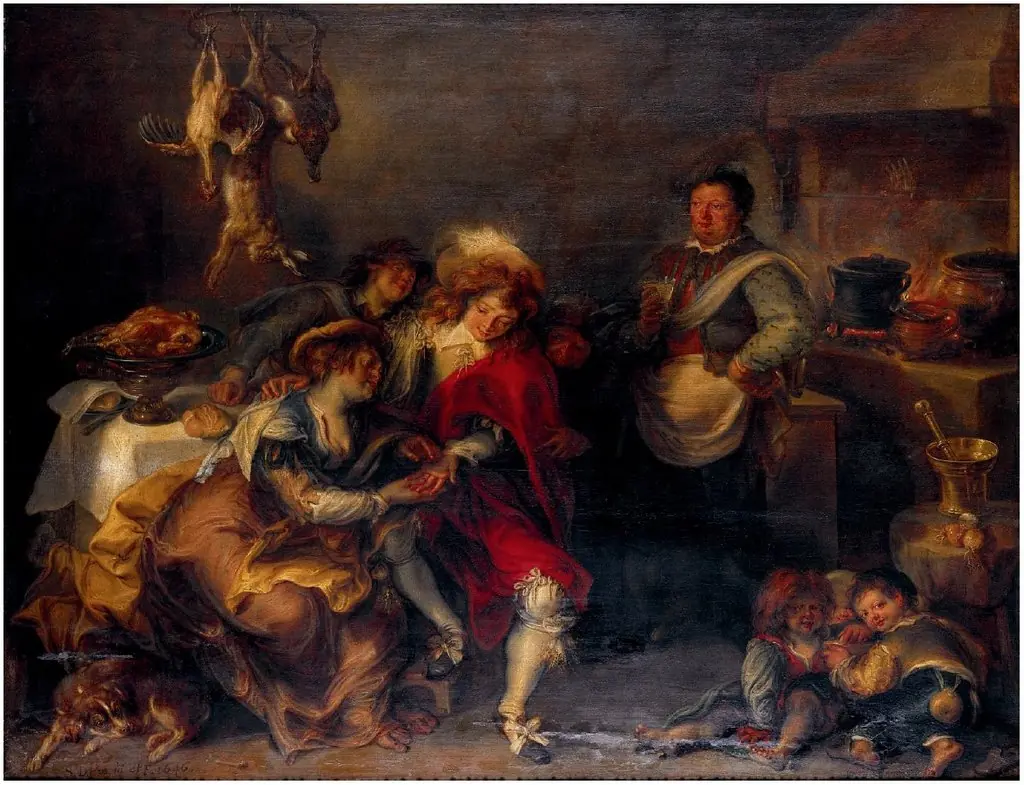
Artist & collection
Artist
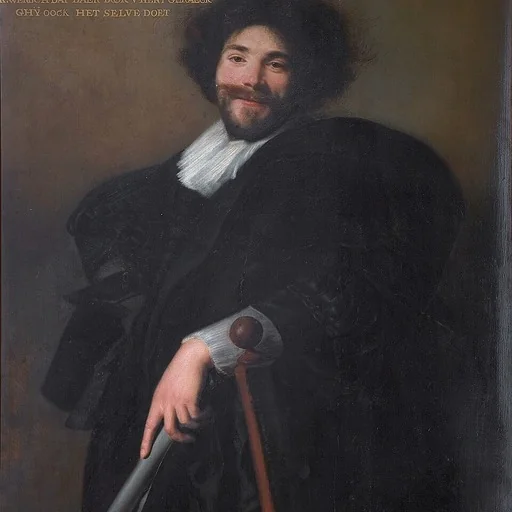
Simon de Vos (20 October 1603 – 15 October 1676) was a Flemish painter, draughtsman and art collector.