Artwork
A Pass in the Apennines
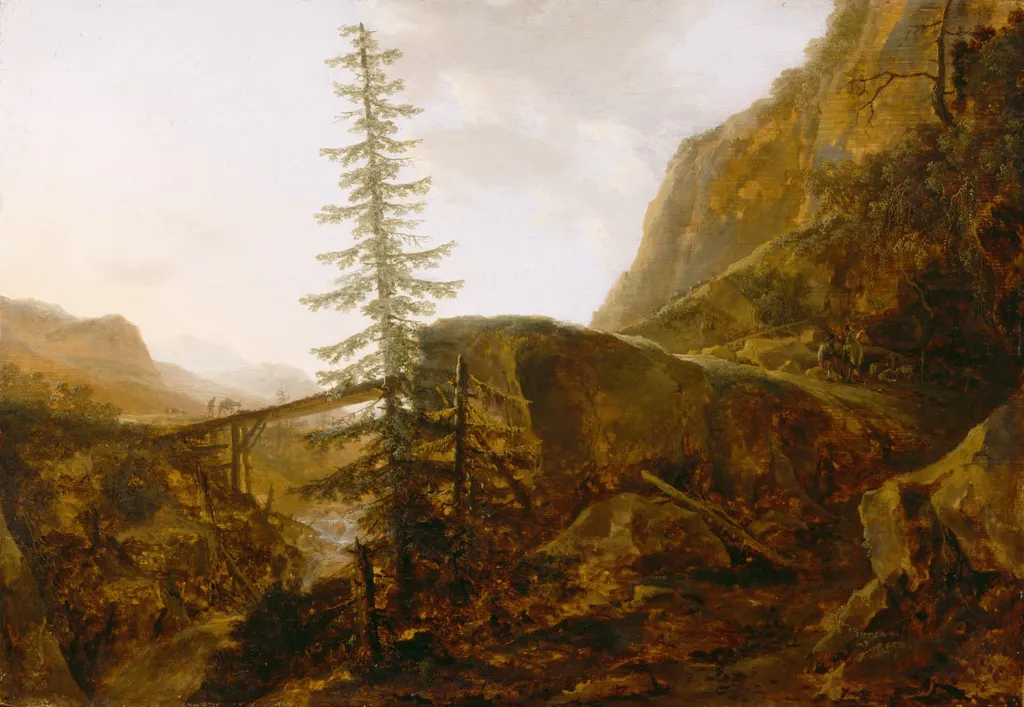
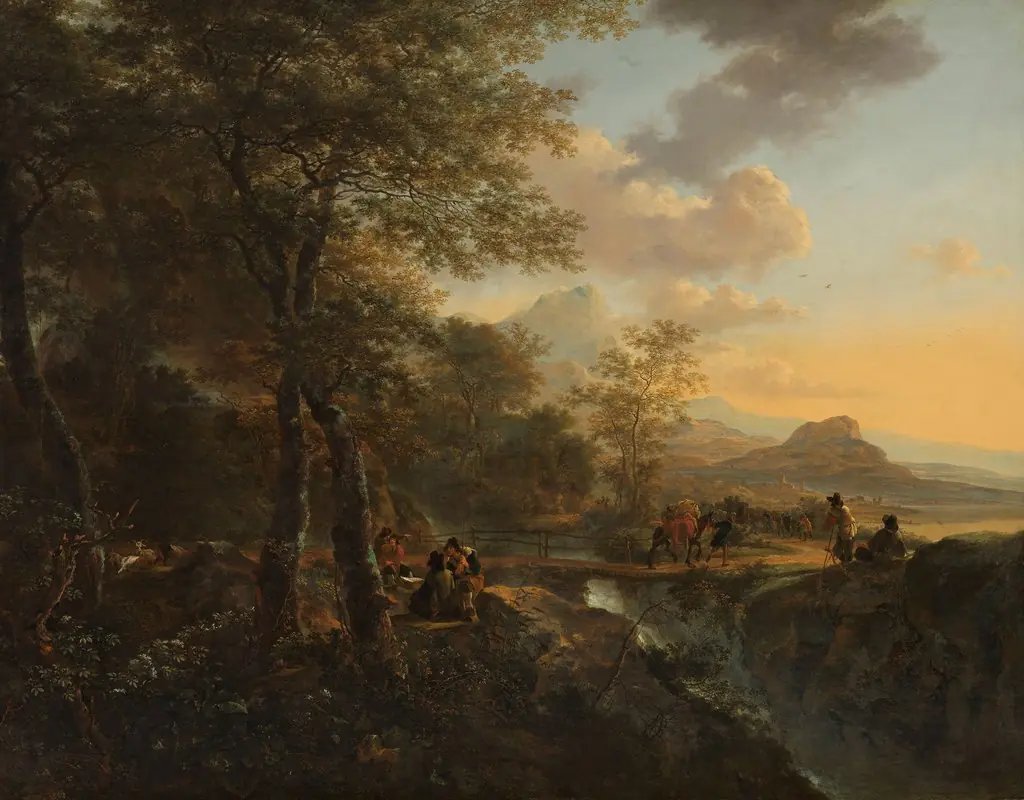
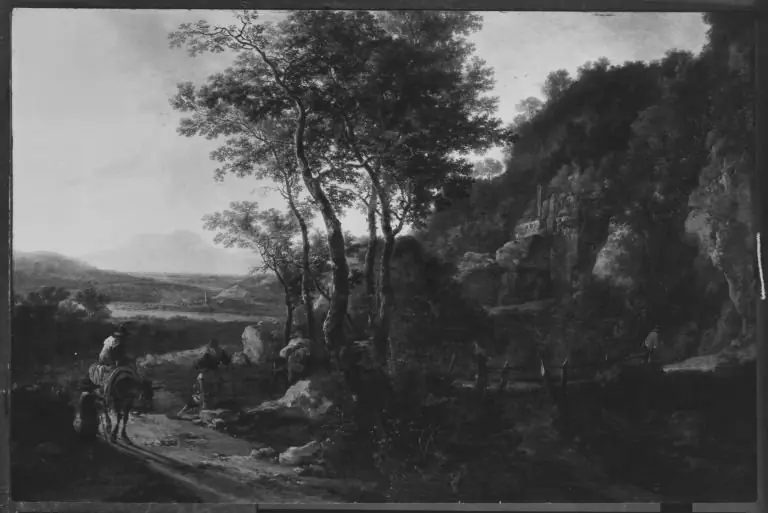
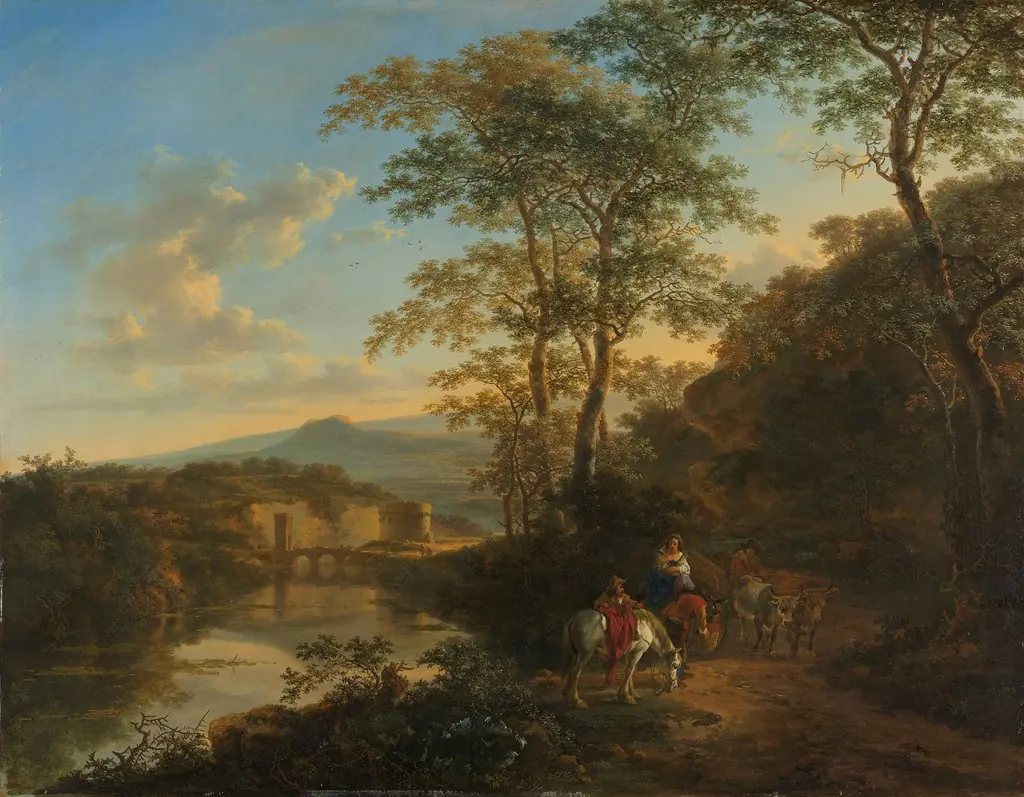
A Pass in the Apennines is an oil painting by the Dutch Golden Age artist Jan Both. It dates from 1639 and is held in the collection of the Detroit Institute of Arts.
About this work
Subject & Meaning
As a work in the landscape genre, the piece represents the grandeur and challenge of the mountainous environment rather than a specific narrative event.
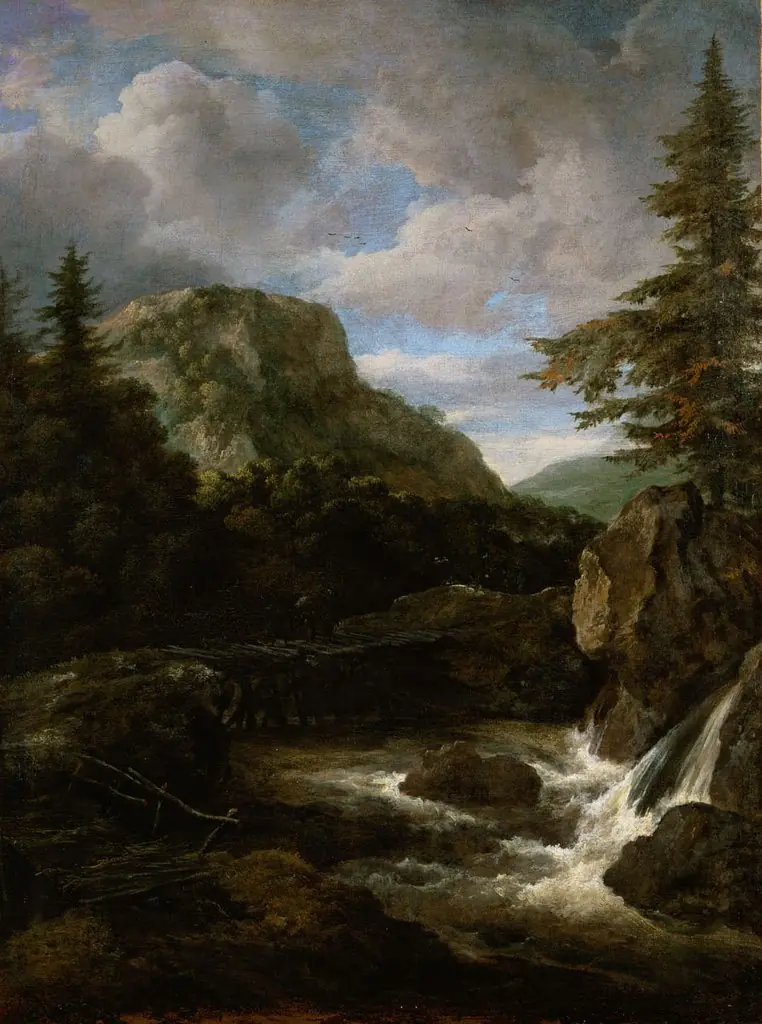
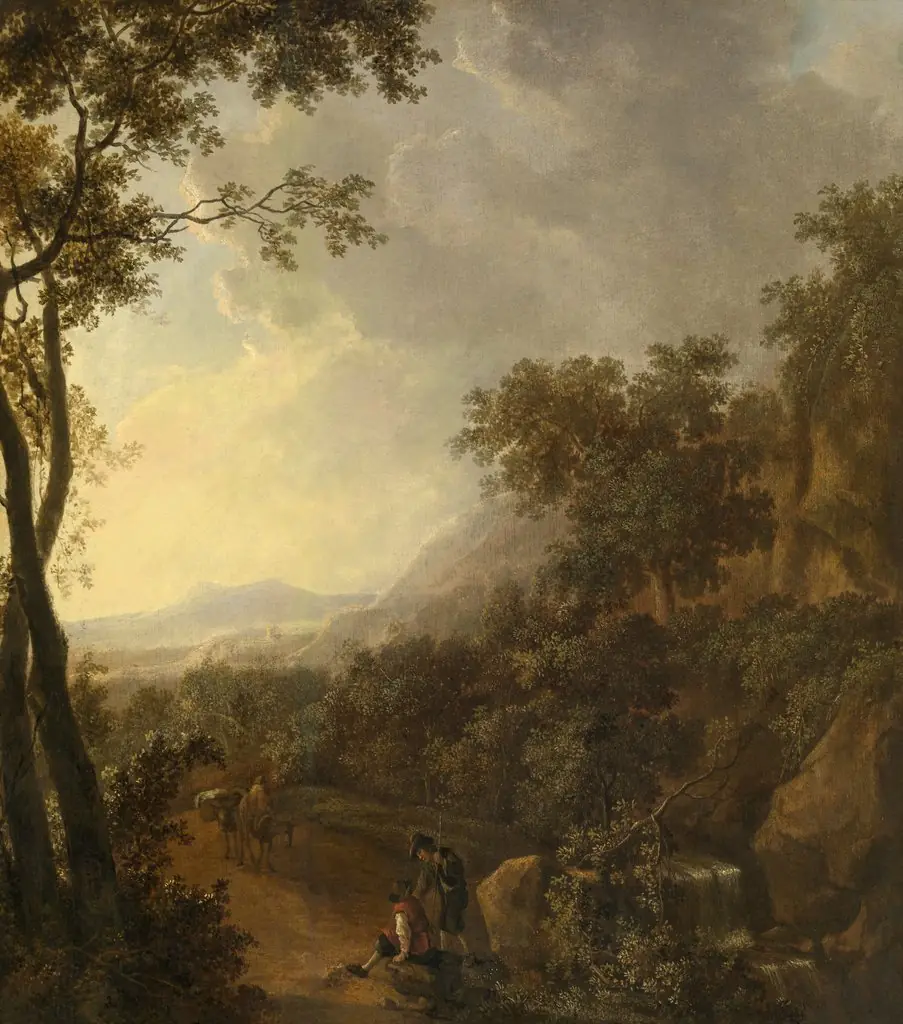
The painting depicts a dramatic mountain pass within the Apennines, characterized by rugged cliffs and a cascading waterfall. A stone bridge spans a chasm, serving as a focal point around which travelers navigate the difficult terrain. The composition includes specific natural elements such as pine trees that frame the scene and emphasize the wildness of the Italian landscape.
As a work in the landscape genre, the piece represents the grandeur and challenge of the mountainous environment rather than a specific narrative event. The inclusion of figures traversing the pass highlights the human experience of journeying through such imposing natural formations.
Technique & Style
Executed in oil paint on an oak panel, this landscape measures 41.9 by 59.7 centimeters. The composition depicts a rugged mountain pass in the Apennines, featuring specific natural and man-made elements such as a cliff, a waterfall, and a bridge. A lone traveler and a pine tree are integrated into the scene, emphasizing the scale of the surrounding terrain.
While one record attributes the work solely to Jan Both with a date of 1639, other documentation lists both Jan Wils and Jan Both as creators and suggests an inception year of 1655.
Legacy
The painting's influence is noted through its inclusion in the Detroit Institute of Arts collection, where it remains on public view. Its reputation as a significant example of 17th-century landscape painting continues to be highlighted in scholarly discussions of Dutch Baroque art, particularly for its atmospheric treatment of terrain. The work's legacy is anchored in its provenance and material history, documented through its acquisition and conservation within the museum's holdings.
Overview
Jan Both’s 1639 oil painting, A Pass in the Apennines, presents a tranquil mountain landscape dominated by a narrow bridge spanning a steep gorge. The composition balances towering cliffs, a solitary pine, and a soft, golden illumination that suffuses the scene. The work is part of the Detroit Institute of Arts’ collection, offering a quiet glimpse of an Italian pass rendered through Both’s characteristic eye for atmosphere.
History & Provenance
Painted in 1639, A Pass in the Apennines reflects Both’s period of work after his travels in Italy, when he adopted the Italianate landscape idiom. The painting entered the Detroit Institute of Arts’ holdings in the 20th century, where it remains on display as an example of Northern European artists interpreting the Italian countryside.
Own this work as a print
Artist & collection

Artist
Jan Dirksz Both was a Dutch painter, draughtsman, and etcher, who made an important contribution to the development of Dutch Italianate landscape painting.