Artwork
Italianate Landscape with Wooden Bridge
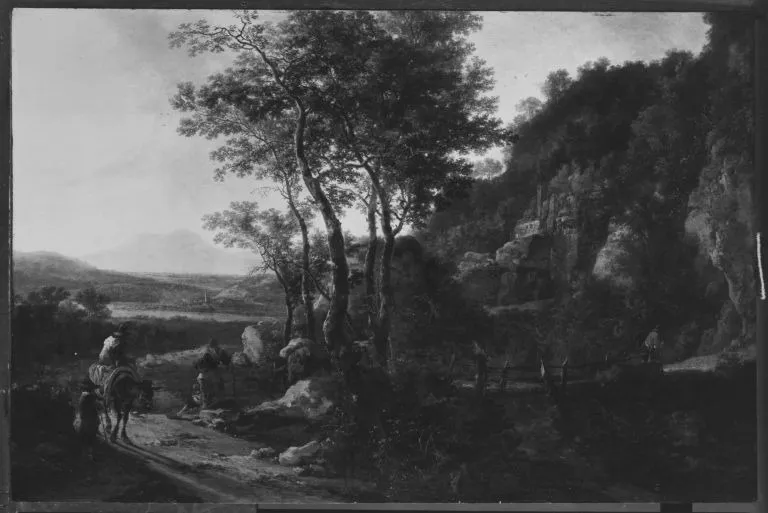
Italianate Landscape with Wooden Bridge is an oil painting by the Dutch Golden Age artist Jan Both. It dates from 1645 and is held in the collection of the Alte Pinakothek.
About this work
Subject & Meaning
As a landscape painting, the subject matter focuses on the harmonious integration of these human and animal elements within a constructed natural environment.
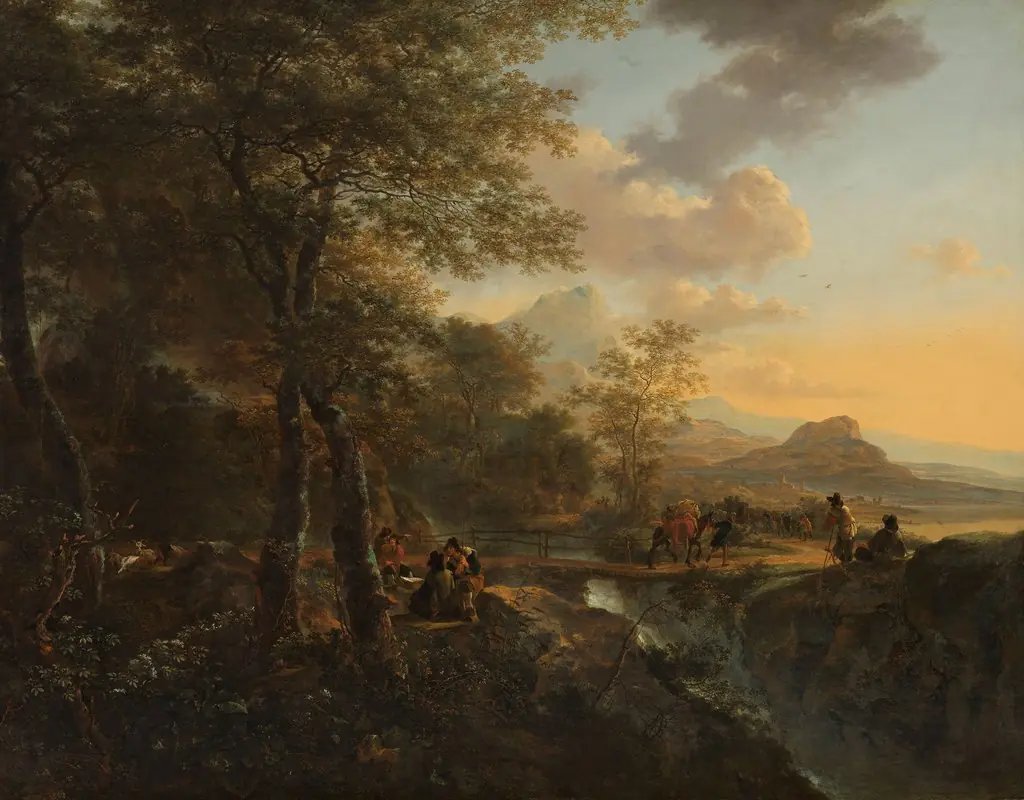
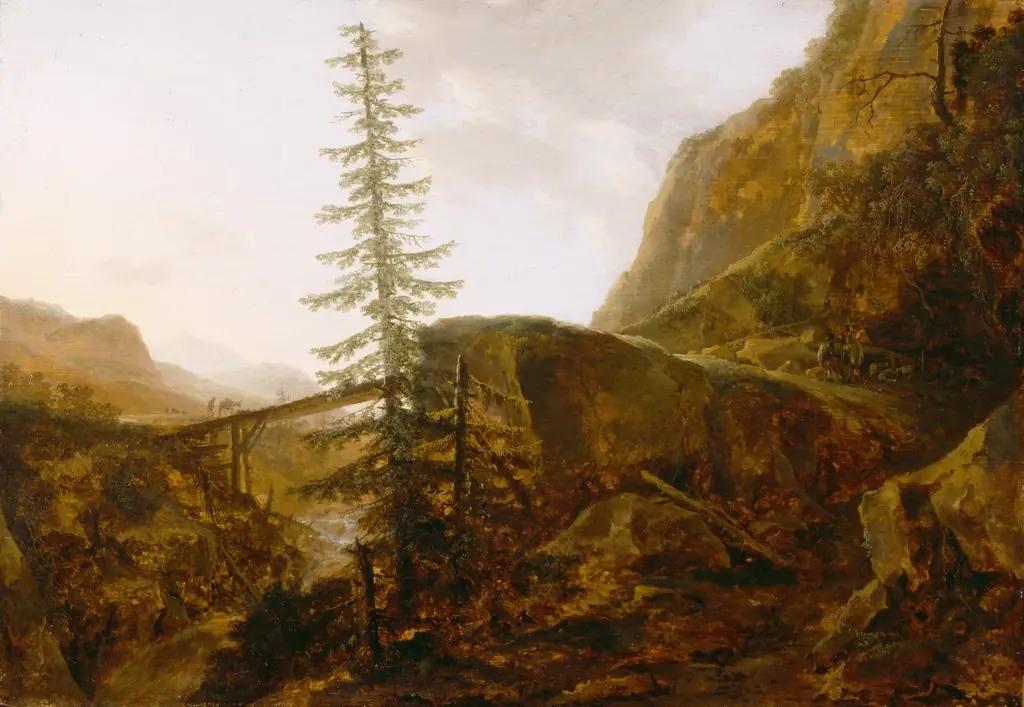
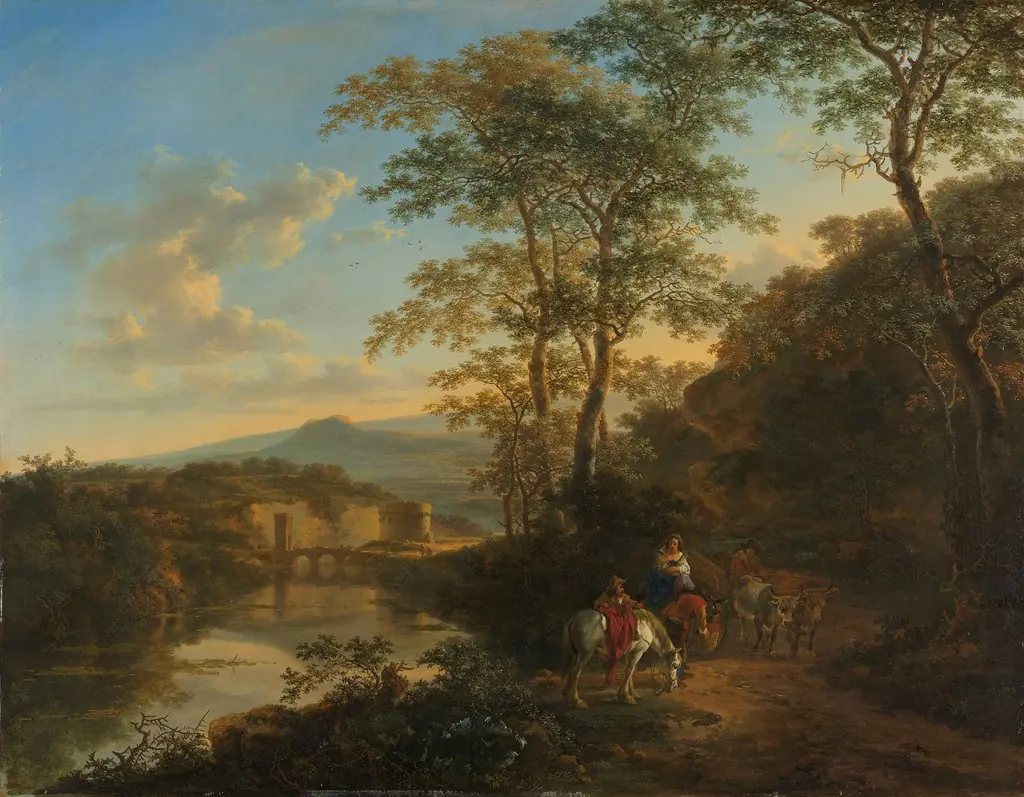
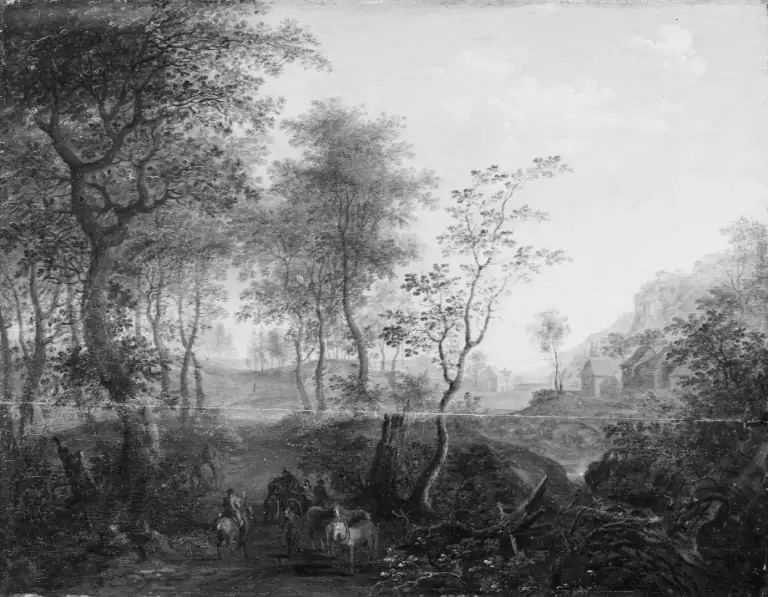
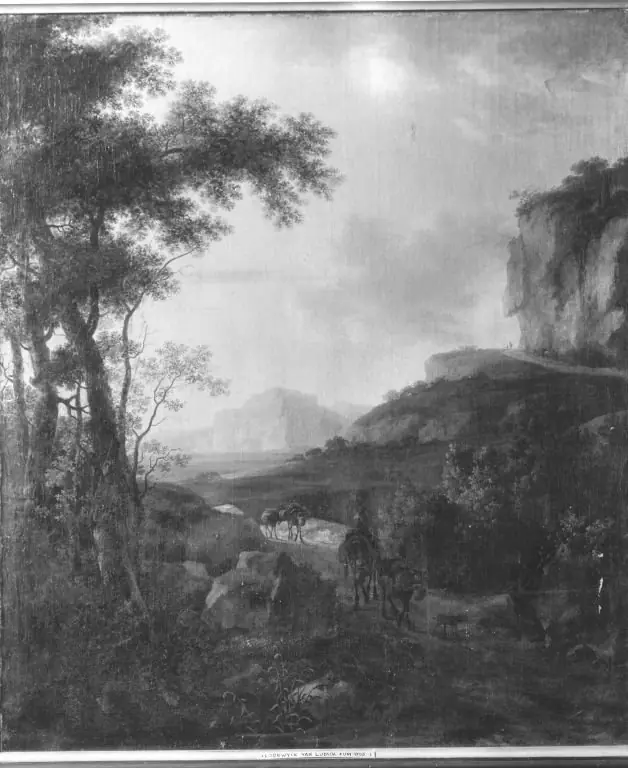
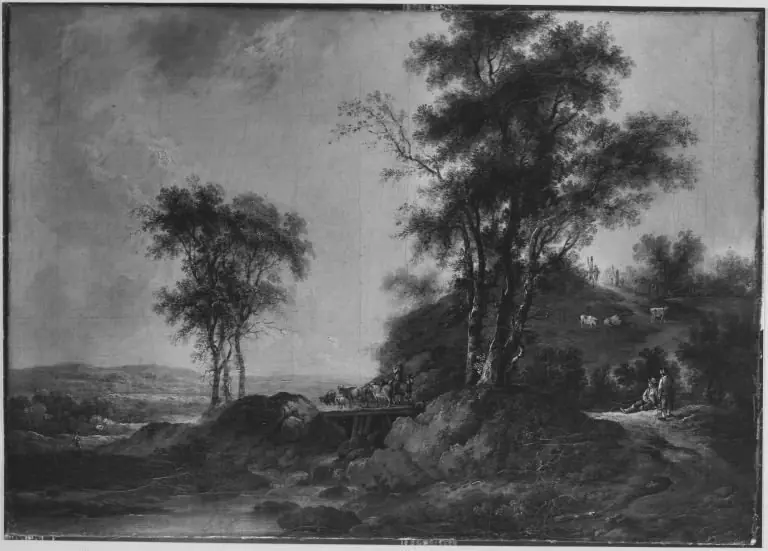
The work depicts an Italianate landscape scene featuring a wooden footbridge as a central architectural element. The composition includes specific figures traversing the setting, identified as a man and a mule. As a landscape painting, the subject matter focuses on the harmonious integration of these human and animal elements within a constructed natural environment.
The imagery reflects the artist's engagement with the Italianate style, characterized by the inclusion of rustic infrastructure and travelers within a pastoral context.
Technique & Style
The work is executed in oil paint on wooden panel, a medium that supports fine detail and atmospheric depth characteristic of the Italianate landscape tradition. Both employs delicate brushwork to render foliage and sky, while the wooden bridge serves as a compositional anchor that guides the viewer’s eye through the scene. The handling of light emphasizes a warm, sunlit ambience, reinforcing the idealized setting of the genre. These formal choices reflect the artist’s synthesis of Dutch realism with the tonal harmony of Italian scenery.
History & Provenance
Italianate Landscape with Wooden Bridge was painted by Jan Both in 1645, executed in oil on panel, a support and medium consistent with his Dutch Italianate output of that period.
The work entered the collection of Johann Wilhelm von der Pfalz, the Elector Palatine, and subsequently passed into the Electoral Gallery in Düsseldorf. It is now held by the Alte Pinakothek in Munich as part of the holdings of the Bavarian State Painting Collections, where the painting remains on view.
No specific commission, patron, or acquisition date is documented in the available sources beyond this successive ownership from the Palatine court to the Bavarian state collections.
Italianate Landscape with Wooden Bridge is held by the Alte Pinakothek in Munich. According to Wikidata records, the painting belongs to the museum's collection and is associated with the Johann Wilhelm von der Pfalz collection, the Electoral Gallery Dusseldorf, and the broader Bavarian State Painting Collections, indicating a provenance that traces from the Düsseldorf electoral holdings into the present-day Bavarian state institution.
The work is catalogued as an oil-on-panel landscape measuring 76.3 cm in height by 114.8 cm in width, dated 1645. No specific inventory or accession number is provided in the available sources, and no exhibition history is documented beyond its current placement within the Alte Pinakothek's holdings.
Legacy
Jan Both's Italianate Landscape with Wooden Bridge (1645) influenced later landscape painters through its harmonious integration of naturalistic detail and idealized classical scenery. The work's compositional balance and atmospheric effects were emulated by artists in the Dutch Golden Age who followed Both's Romanizing approach to landscape painting. Its presence in the Alte Pinakothek's collection has ensured continued scholarly attention to Both's role in shaping European landscape traditions.
Overview
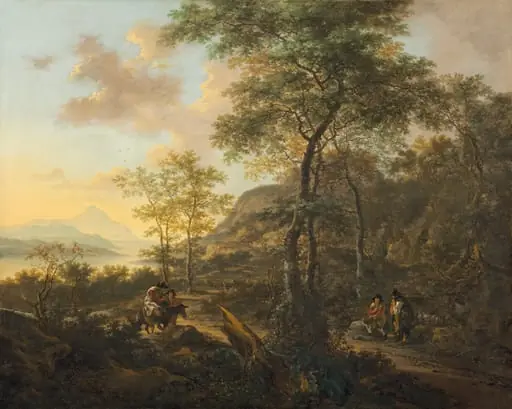
Jan Both’s oil painting, dated 1645, presents a tranquil rural vista typical of the Italianate landscape tradition. A narrow, winding track leads the eye past a solitary rider on a mule, accompanied by a horse, toward a modest wooden bridge spanning a gentle stream. Tall trees flank the path, while distant hills and a rugged outcrop frame the horizon, creating a balanced composition of land and sky.
Artist & collection

Artist
Jan Dirksz Both was a Dutch painter, draughtsman, and etcher, who made an important contribution to the development of Dutch Italianate landscape painting.