Artwork
Italian Landscape with a Draughtsman
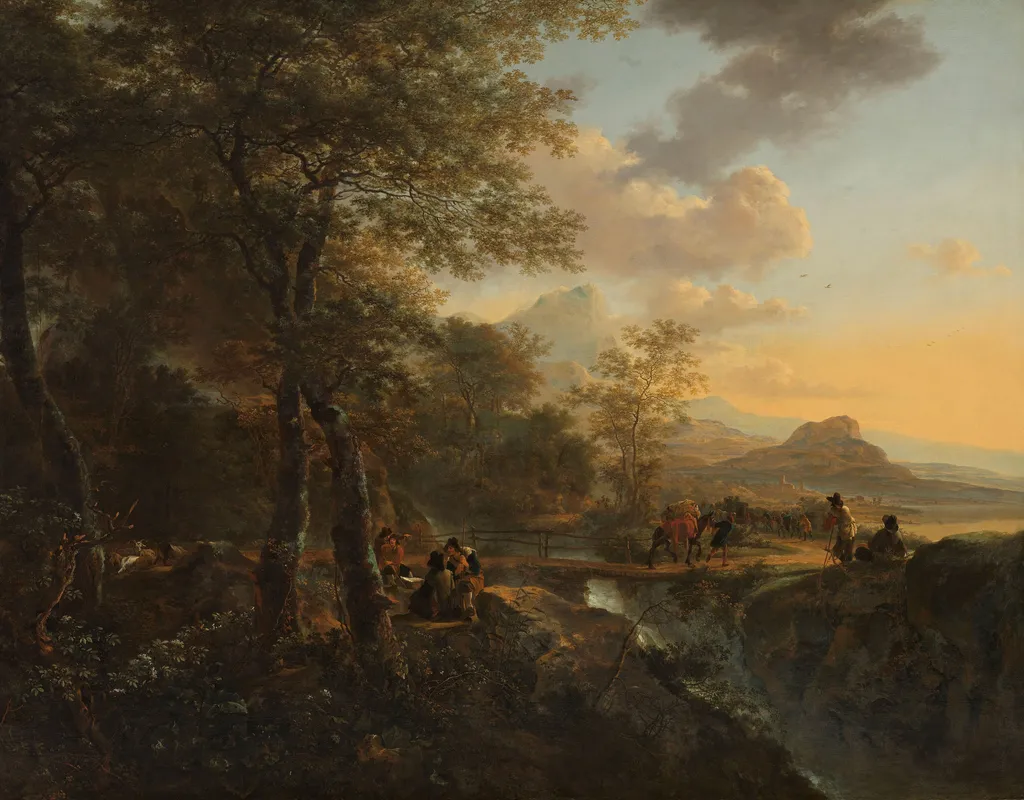
Italian Landscape with a Draughtsman is an oil painting by the Dutch Golden Age artist Jan Both. It dates from 1650 and is held in the collection of the Rijksmuseum.
About this work
Subject & Meaning
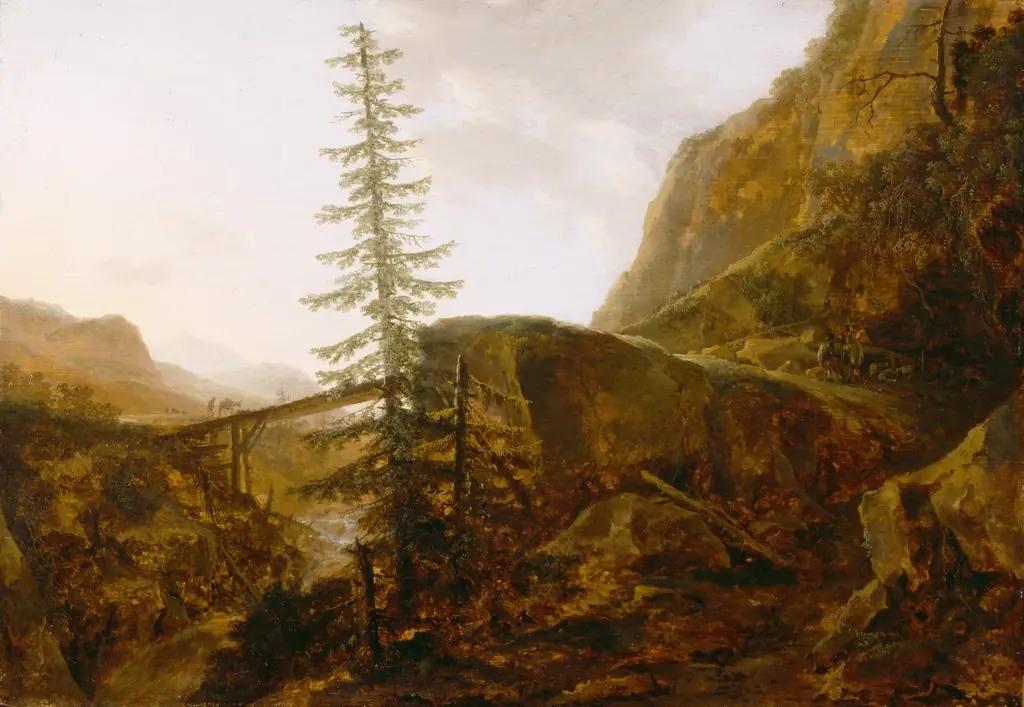
The painting depicts an idealized Mediterranean landscape featuring a rocky foreground, a waterfall, and a distant mountain panorama connected by a bridge.
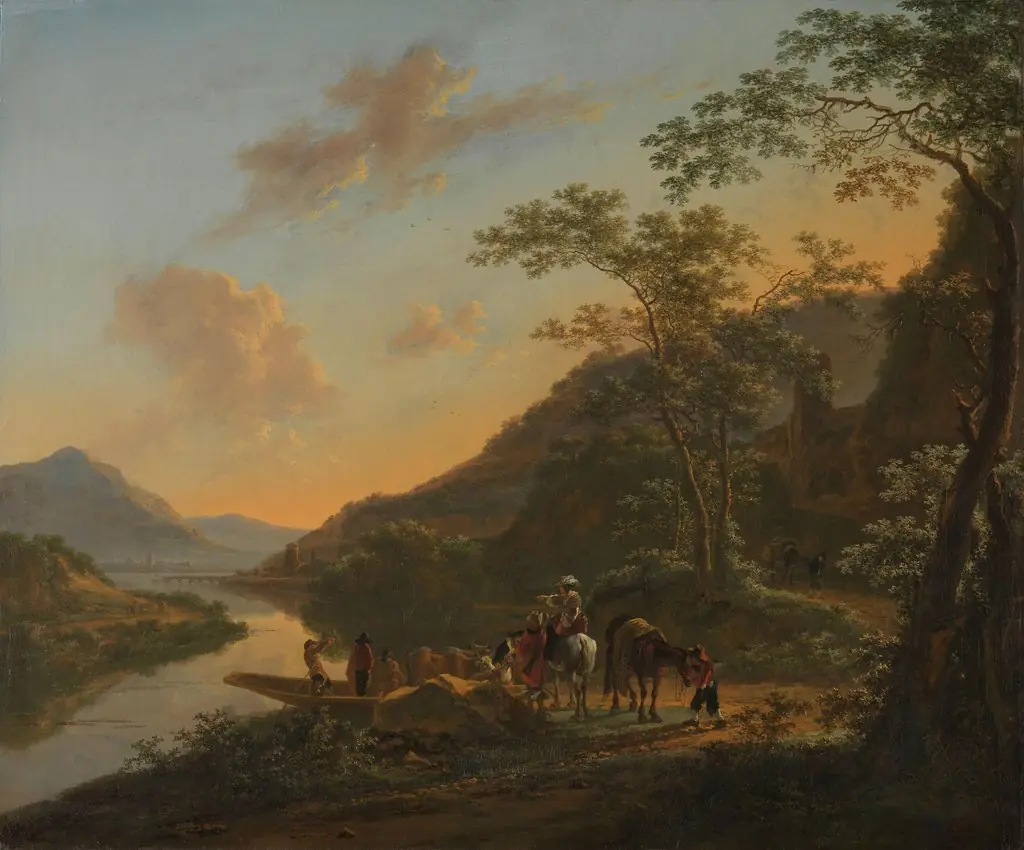
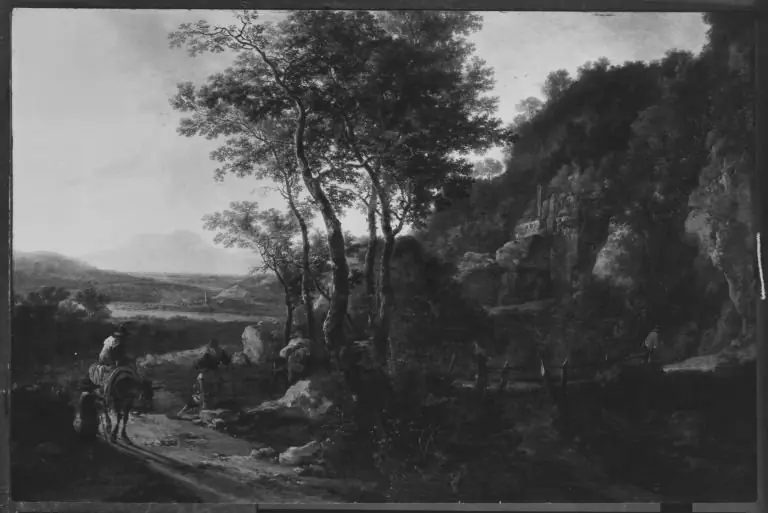
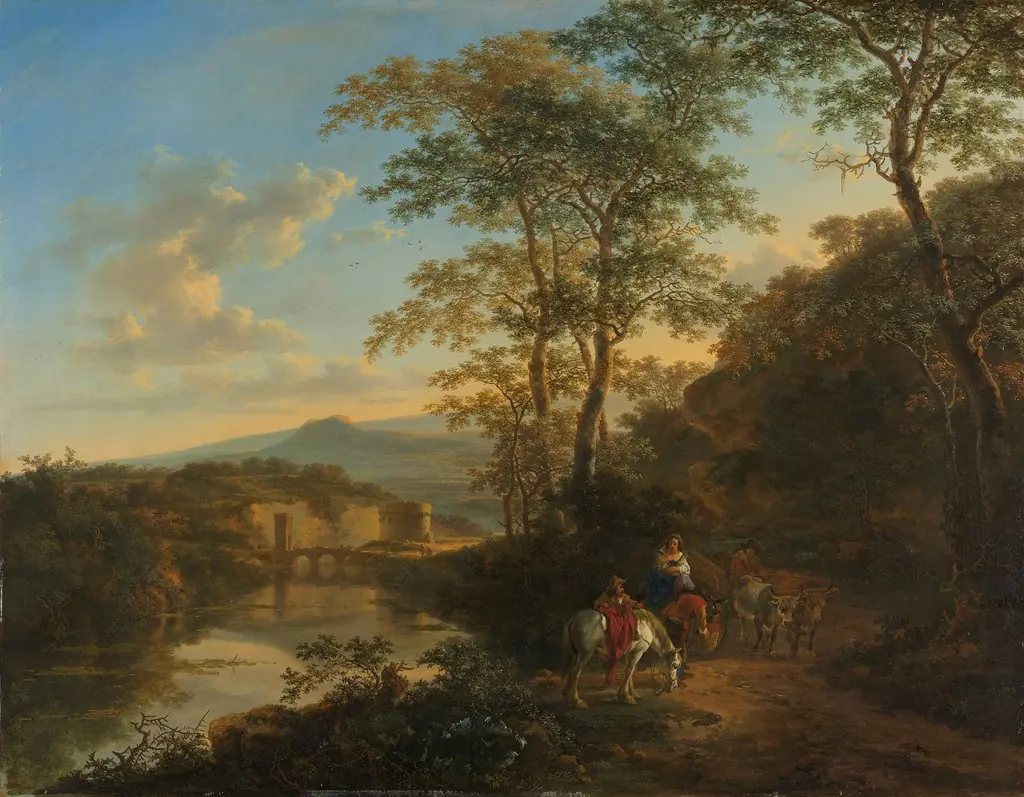
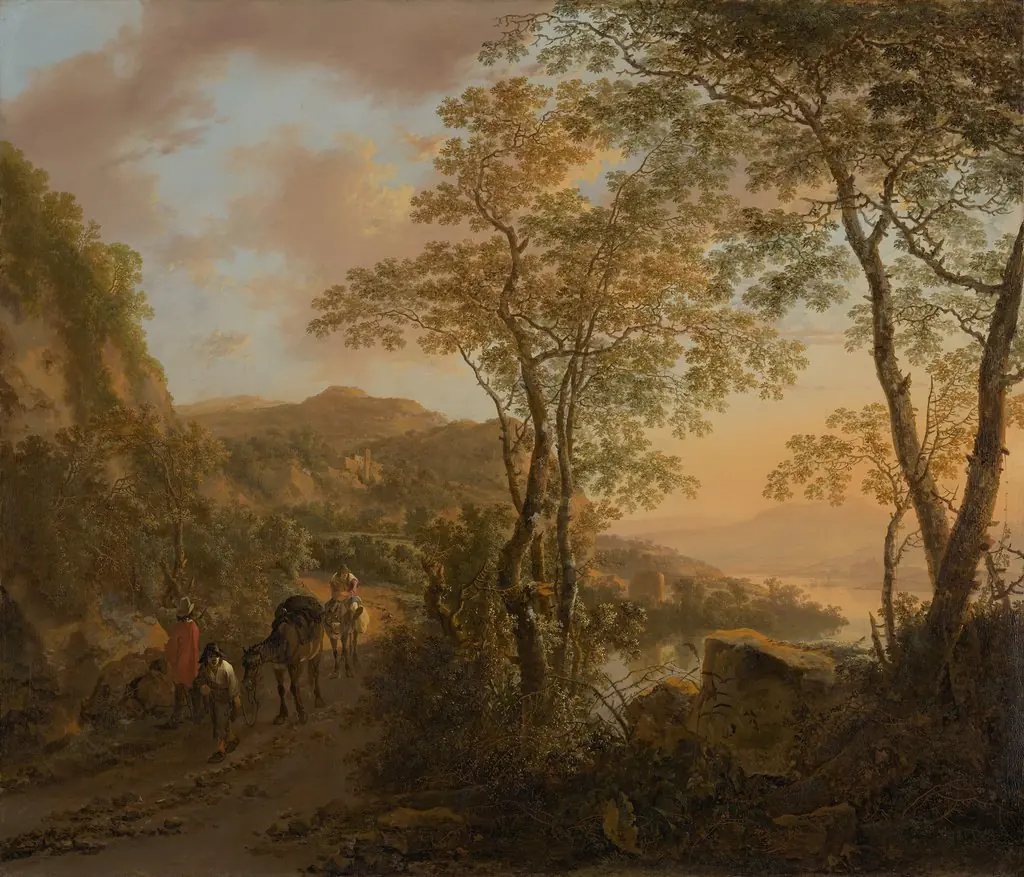
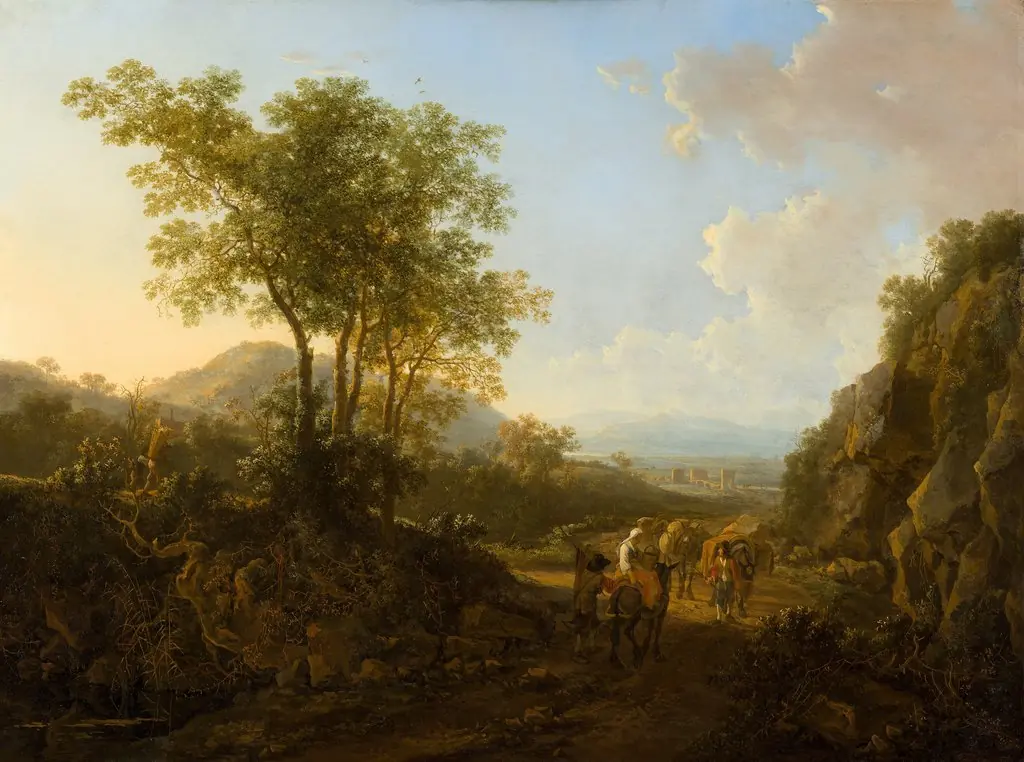
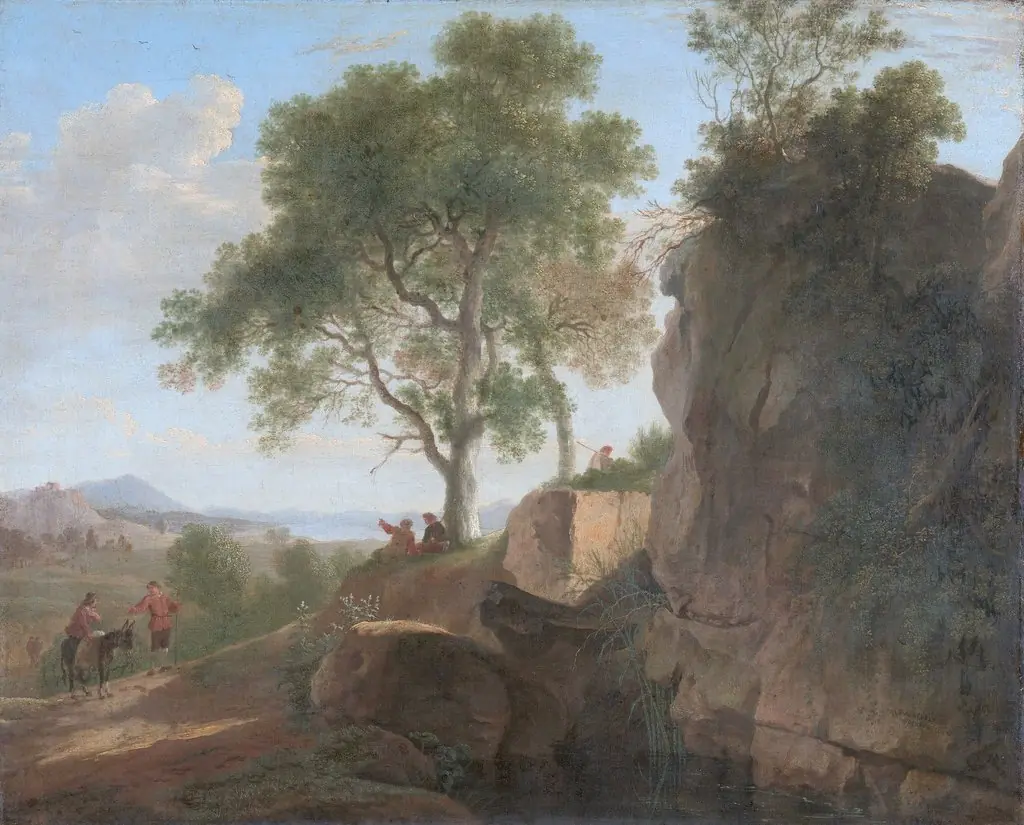
The painting depicts an idealized Mediterranean landscape featuring a rocky foreground, a waterfall, and a distant mountain panorama connected by a bridge. Travelers with mules, including one carrying a sedan chair, traverse the scene, while three large trees frame the composition. A central narrative element involves a draughtsman seated on rocks with his back to the viewer, illuminated by a sunbeam on his sketchbook, accompanied by two curious shepherds.
This figure likely reflects the artist's own travel experiences in Italy, serving as a meta-commentary on the act of artistic observation. The work embodies the Italianist tradition, contrasting the detailed, shadowed vegetation on the left with the hazy, sun-drenched expanse on the right to evoke the warmth and grandeur of the southern light. Unlike many contemporaries, the artist omits classical ruins, focusing instead on the imposing power of nature and the allure of a distant, dreamlike world for the Dutch bourgeoisie.
Technique & Style
Jan Both's Italian Landscape with a Draughtsman is executed in oil paint on canvas, measuring 187 by 240 centimeters. Created around 1650 in Utrecht, the work exemplifies the Italianist style through its depiction of a Mediterranean landscape bathed in warm, golden light. The composition balances a detailed, dark, and backlit rocky foreground on the left with a hazy, sun-drenched mountain panorama on the right, separated diagonally by a waterfall and connected by a bridge.
This contrast highlights the artist's focus on atmospheric effects and the interplay of light and shadow. While the landscape itself is the primary subject, the painting includes small figures, such as a draughtsman sketching on rocks, whose stoffering may have been executed by assistants like Cornelis van Poelenburch or Nicolaes Knüpfer, a common practice for Both.
History & Provenance
Italian Landscape with a Draughtsman is an oil painting on canvas measuring 187 × 240 cm, executed circa 1650–1652;. Jan Both, a Dutch Italianate landscape painter, created the work after his stay in Italy from about 1638 to 1646 and likely painted it in his Utrecht studio shortly before his death in 1652. The painting entered the collection of Adriaan van der Hoop, later passing to the Rijksmuseum and the Amsterdam Museum, and was displayed in the Bentvueghels exhibition.
Its provenance thus traces from the artist’s studio to van der Hoop’s ownership and then to institutional holdings.
Jan Both's Italian Landscape with a Draughtsman is held in the collection of the Rijksmuseum in Amsterdam. The work forms part of the Adriaan van der Hoop collection and is currently displayed in hall 2.17 of the museum. Its specific inventory or accession number is not provided in the available sources.
The painting was included in the exhibition titled The Bentvueghels. A Notorious Art Society in Rome, which highlighted the activities of Dutch artists in Italy. This exhibition history underscores the work's significance within the context of the Italianisanten movement.
Context
Italian Landscape with a Draughtsman, painted by Jan Both in 1650, exemplifies the Dutch Italianate trend in which landscape painters traveled to Italy to capture Mediterranean light and terrain.
The work was owned by Adriaan van der Hoop and was shown in the exhibition The Bentvuegals, indicating contemporary interest among Dutch collectors and art societies.
Scholars regard the painting as one of Both’s finest achievements, using it to illustrate the synthesis of Dutch technique with Italian atmospheric effects, and it remains a key reference in studies of 17th‑century landscape painting.
Overview
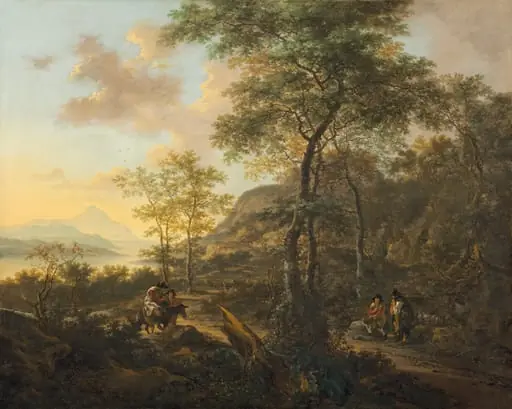
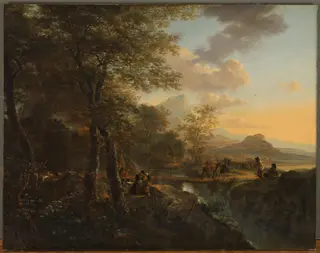
Jan Both's Italian Landscape with a Draughtsman, an oil painting created around 1650, captures a tranquil forest scene at dusk. The composition features a winding path, a small stream, and distant figures on mules, all illuminated by the warm, fading light of the setting sun. This work is held in the collection of the Rijksmuseum, representing a significant example of the artist's Italianate landscapes.
Own this work as a print
Artist & collection

Artist
Jan Dirksz Both was a Dutch painter, draughtsman, and etcher, who made an important contribution to the development of Dutch Italianate landscape painting.