Artwork
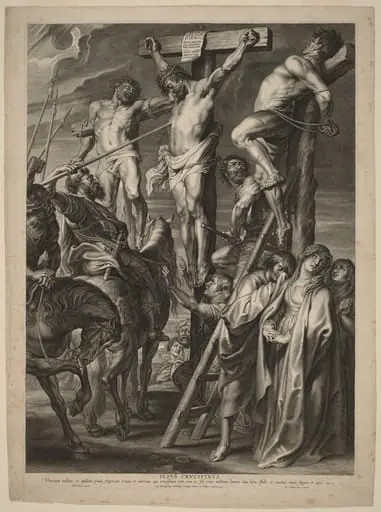
Christ Crucified between Two Thieves
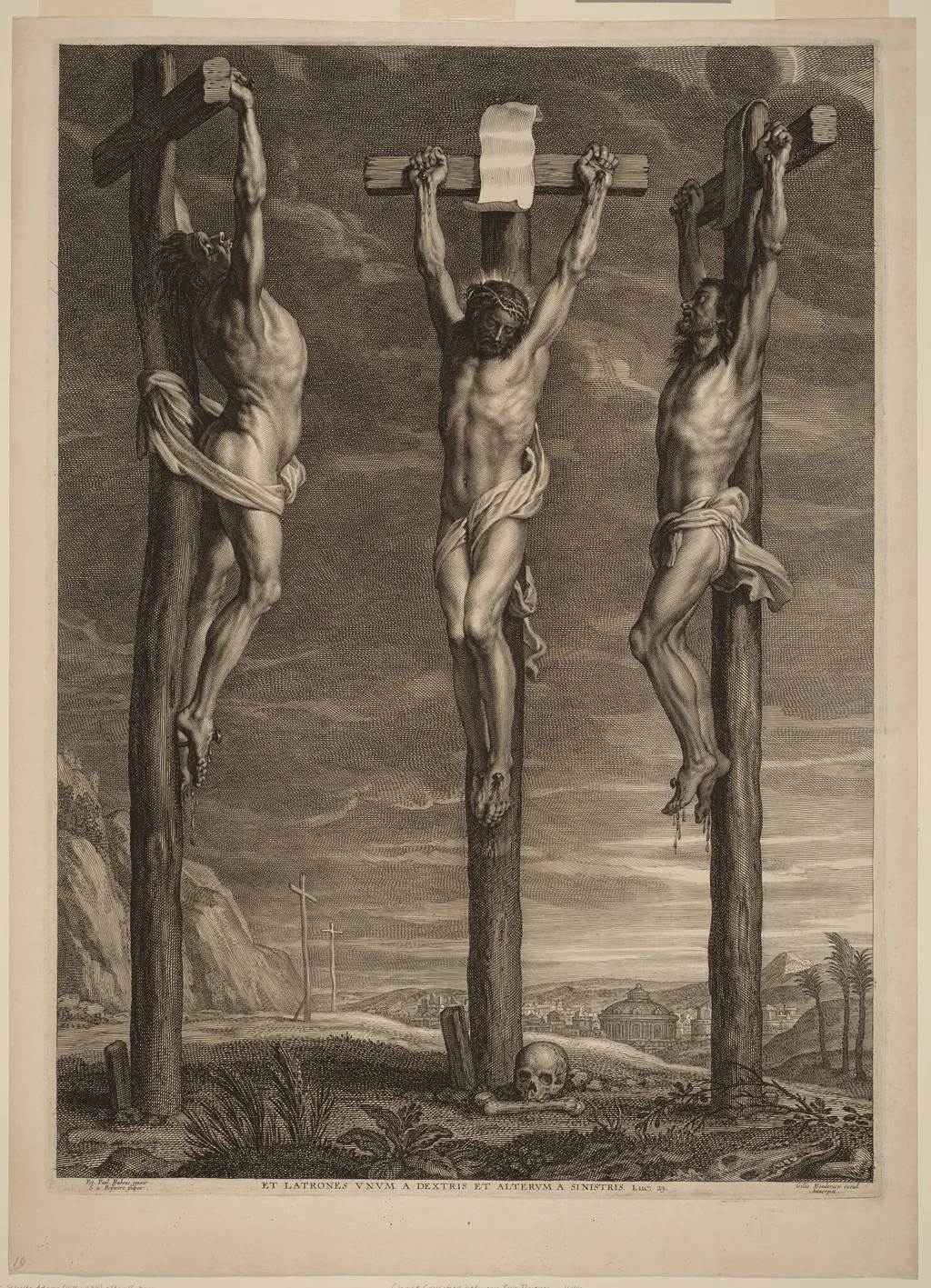
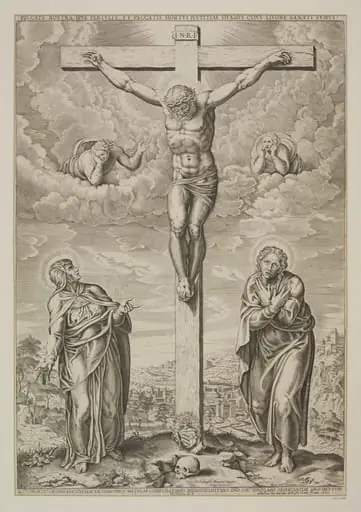
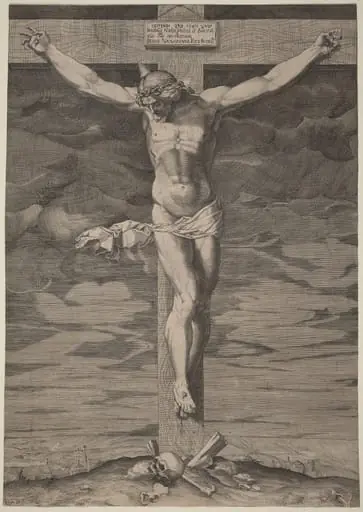
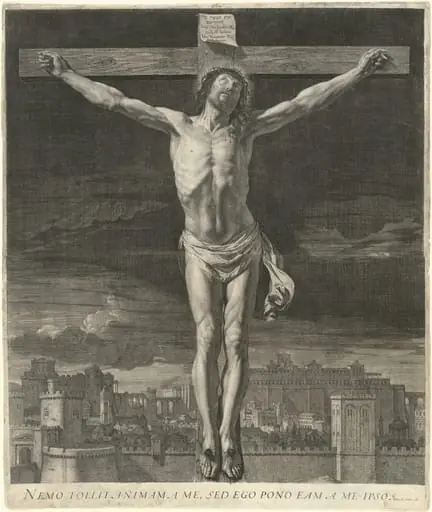
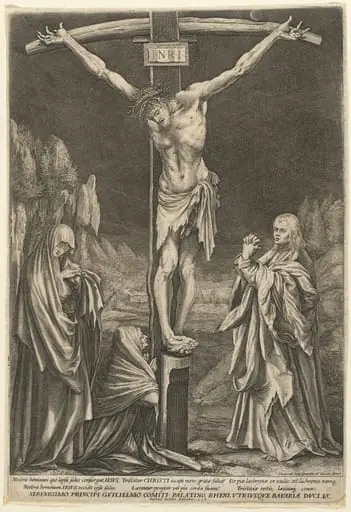
Christ Crucified between Two Thieves is an ink print by the Baroque artist Schelte Adams Bolswert. It dates from 1644 and is held in the collection of the National Gallery of Art. Created circa 1644, this engraving on laid paper presents the biblical crucifixion scene with Christ flanked by two thieves.
- Inscription
- Inscribed:lower left in plate: Pet. Paul. Rubens pinxit / S. à Bp;swert ssculpsit; lower center in plate: ET LATRONES UNUM A DEXTRIS ET ALTERUM A SINISTRIS. Luc. 23.; lower right in plate: Gillis Hendericx excud. / Antwerpiae.; by later hand, lower center in graphite: 19; lower right verso in graphite: 190 D
About this work
Overview
Created circa 1644, this engraving on laid paper presents the biblical crucifixion scene with Christ flanked by two thieves.
Created circa 1644, this engraving on laid paper presents the biblical crucifixion scene with Christ flanked by two thieves. The composition centers on the central figure, whose outstretched arms and modest loincloth draw the viewer’s focus, while the two companions on either side are shown in contorted poses that convey acute anguish. The overall tone is somber, reinforced by a dark, indistinct background.
Subject & Meaning
The work belongs to the religious genre, illustrating the moment of Christ’s execution alongside the two criminals sentenced to die beside him. By emphasizing the stark contrast between the central, composed figure and the suffering of the surrounding men, the image underscores themes of sacrifice, redemption, and the human response to divine suffering.
Technique & Style
Executed as an engraving, the image relies on fine incised lines to render texture and chiaroscuro on laid paper, a common support in the mid‑seventeenth century. The artist’s handling of light and shadow creates a dramatic depth characteristic of Baroque visual language, while the precise detailing reflects the reproductive purpose of the print.
History & Provenance
The piece was produced by Schelte Adamsz. Bolswert, a Frisian engraver who spent most of his career in Antwerp. Employed in Peter Paul Rubens’s workshop, Bolswert specialized in translating paintings by Rubens and Anthony van Dyck into prints, thereby extending the reach of their compositions throughout Europe.
Context
Emerging during the height of the Baroque period, the engraving aligns with contemporary religious art that sought to evoke emotional involvement and spiritual reflection. Its dark atmospheric background and vivid depiction of suffering echo the Counter‑Reformation’s emphasis on dramatic, affective imagery to inspire devotion.
Own this work as a print
Artist & collection
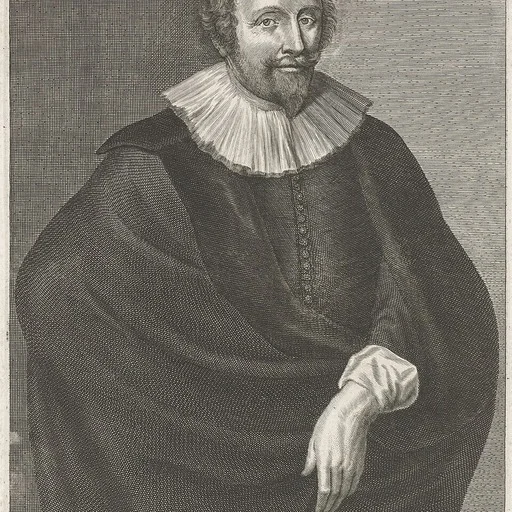
Artist
Schelte a Bolswert or Schelte Adamsz. Bolswert (c. 1586 – 1659) was a Frisian engraver who worked most of his career in Antwerp where he was one of the lead engravers in Rubens' workshop. He is known for his…