Artwork
Landschap
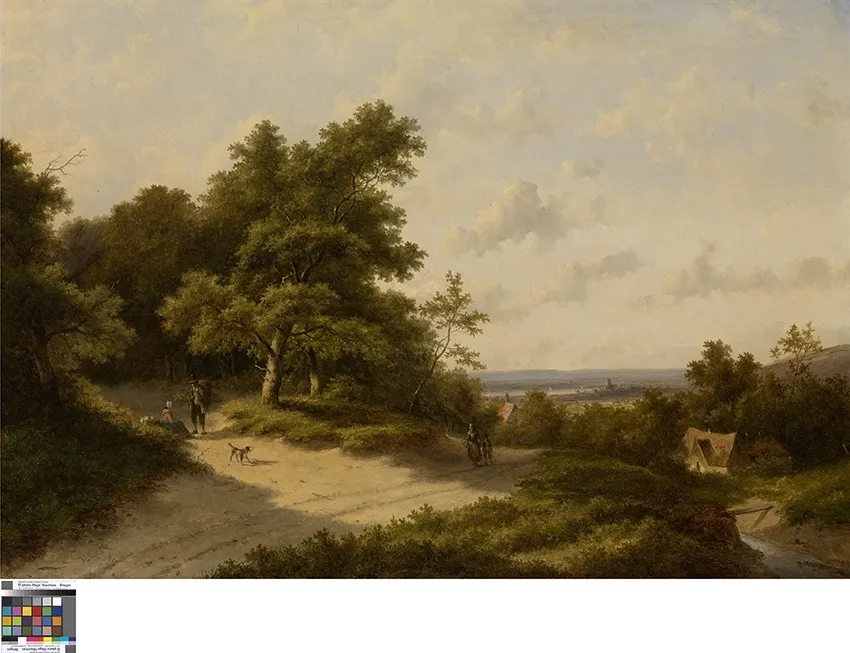
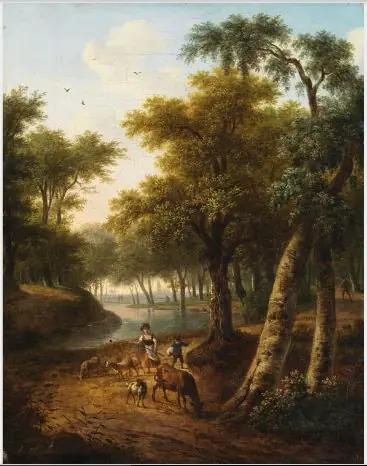
Landschap is an oil painting by the Rococo painting artist Jan Evert Morel. It dates from 1769 and is held in the collection of the Groeningemuseum.
About this work
Subject & Meaning
These elements combine to depict a specific moment of interaction between humanity and the wooded countryside, characteristic of the landscape genre.
Jan Evert Morel's 1769 oil painting presents a landscape scene featuring a forest setting traversed by a dirt road. The composition includes a house and a tree as prominent structural elements within the natural environment. Human figures are present in the form of a child and another individual, accompanied by a dog, suggesting a narrative of rural life or travel.
These elements combine to depict a specific moment of interaction between humanity and the wooded countryside, characteristic of the landscape genre.
Technique & Style
Landschap is an oil painting on canvas created by Jan Evert Morel in 1769. The work measures 65 cm in height and 91 cm in width and depicts a tree, house, dog, child, human, dirt road, and forest.
The painting is executed in oil paint on canvas, reflecting the medium and support typical of 18th-century Dutch landscape works. Its formal qualities include a naturalistic rendering of rural elements and a balanced composition that emphasizes atmospheric depth.
History & Provenance
Landschap was created by Jan Evert Morel in 1769, executed in oil paint on canvas. The work entered the collection of the Groeningemuseum, where it is held today. No further details regarding commission, intermediate ownership, or acquisition circumstances are documented in the available sources.
Landschap by Jan Evert Morel is held in the collection of the Groeningemuseum, where it is part of the museum's holdings of landscape paintings. The work, an oil on canvas measuring 65 by 91 cm, was produced in 1769 and entered the Groeningemuseum's collection as documented in its institutional records.
No specific exhibition history is recorded in the available sources for this painting.
Overview
This 1769 oil painting by Jan Evert Morel presents a tranquil rural scene. A winding dirt road serves as the central motif, flanked by dense foliage on one side and an expansive vista on the other. The composition balances intimate foreground details with a distant, hazy horizon, evoking a sense of depth and openness within a confined landscape format.
Context
Morel’s landscape reflects the 18th-century European interest in pastoral scenes, where nature was often idealized as a serene retreat from urban life. Such works appealed to collectors seeking depictions of orderly, picturesque environments. The inclusion of human figures and modest structures aligns with the period’s preference for narratives that blended natural beauty with quiet human presence.
Legacy
While not among the most widely recognized works of its era, Morel’s painting exemplifies the technical and aesthetic concerns of late Baroque landscape painting. Its attention to light and atmosphere prefigures later developments in plein-air techniques. Housed in a public collection, it contributes to the broader understanding of 18th-century Dutch and Flemish landscape traditions.
Artist & collection

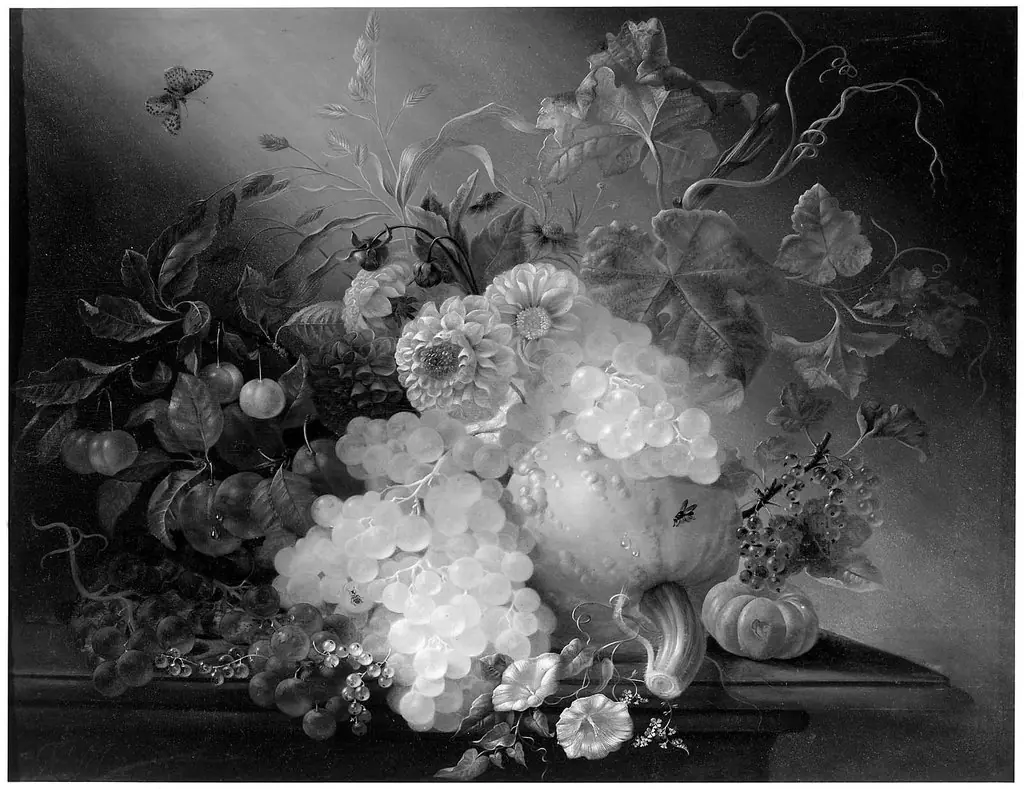
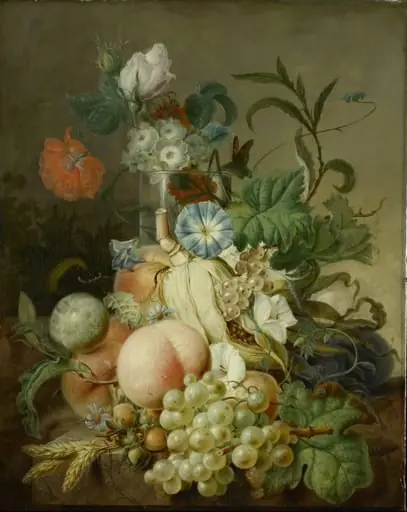
- Maisematutkielma, kopio Albert Flammin mukaan
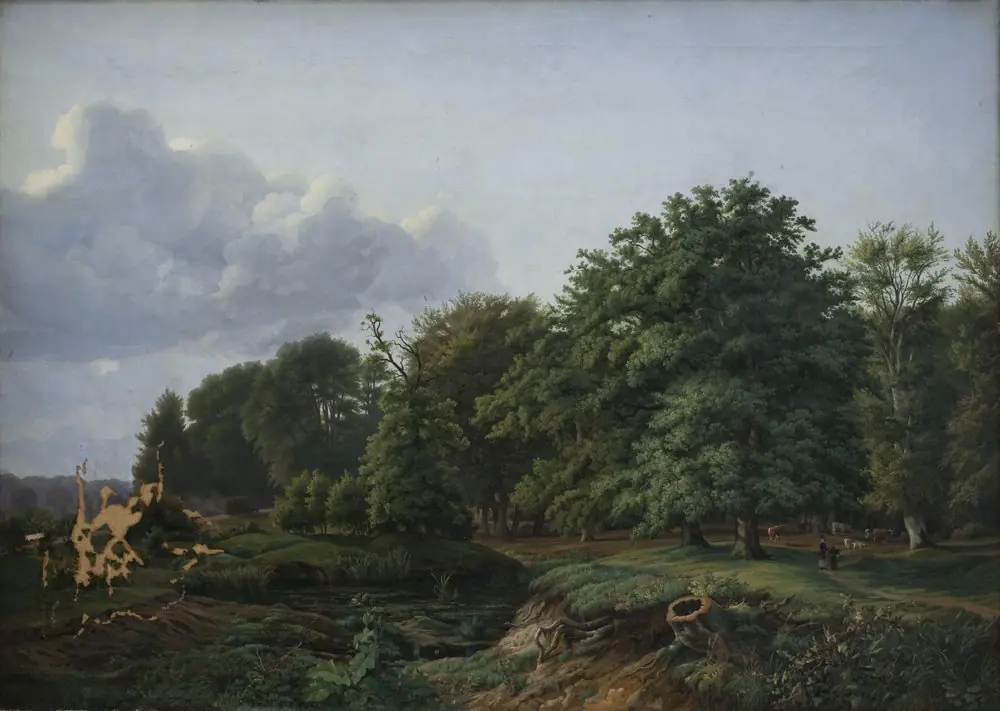 A Forrest near Hellebæk in the North of Zealand. Afternoon.
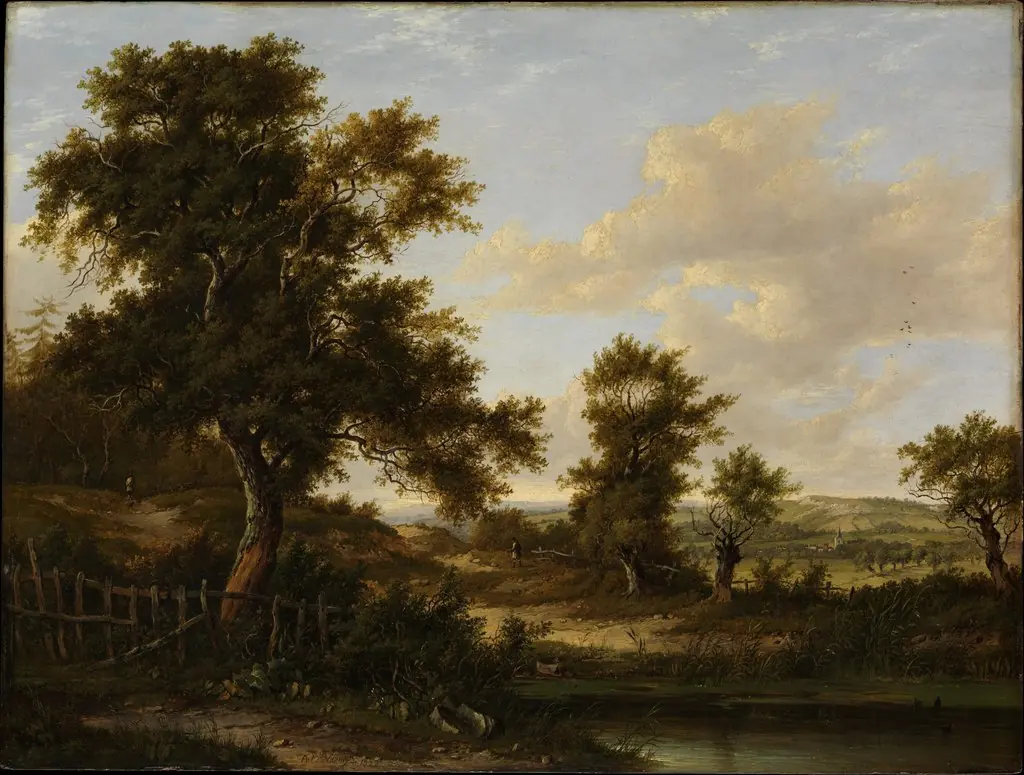 Near Penshurst, Kent
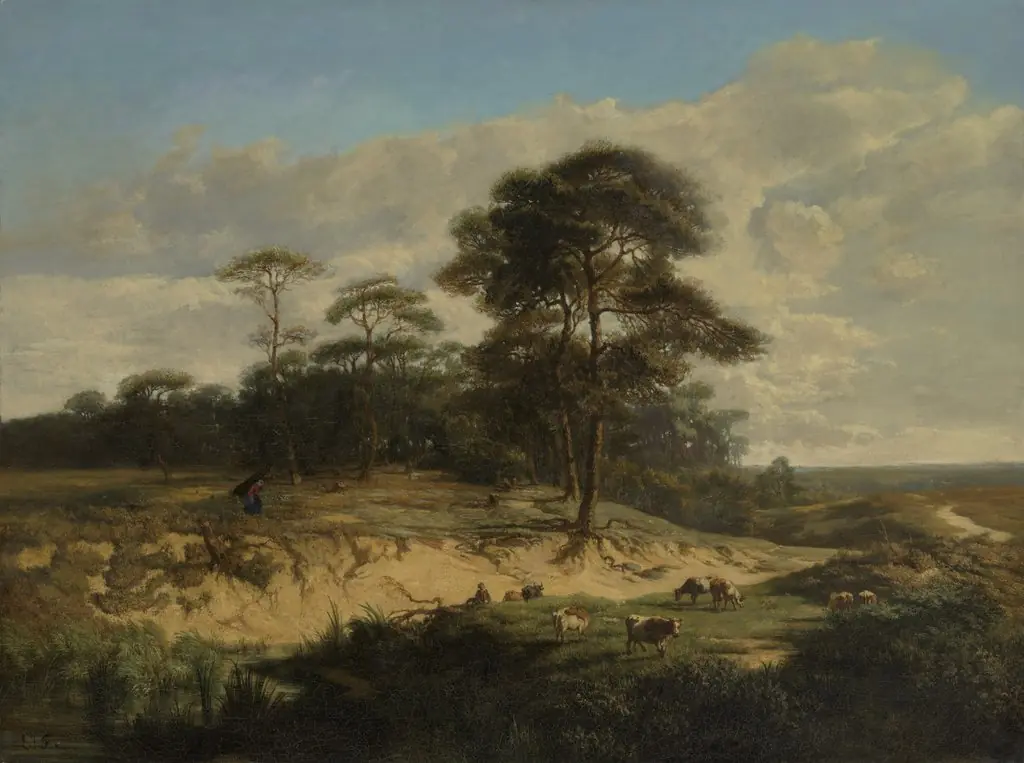 Landscape near Kalmthout
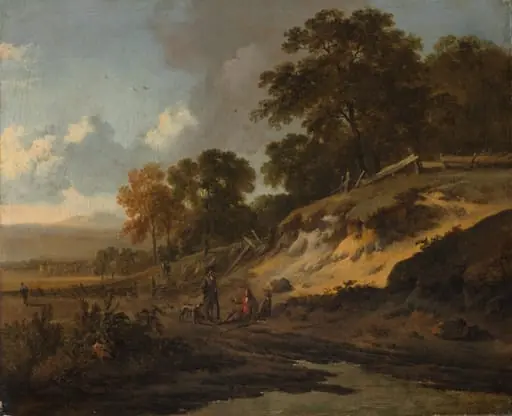 Landscape with Hunters
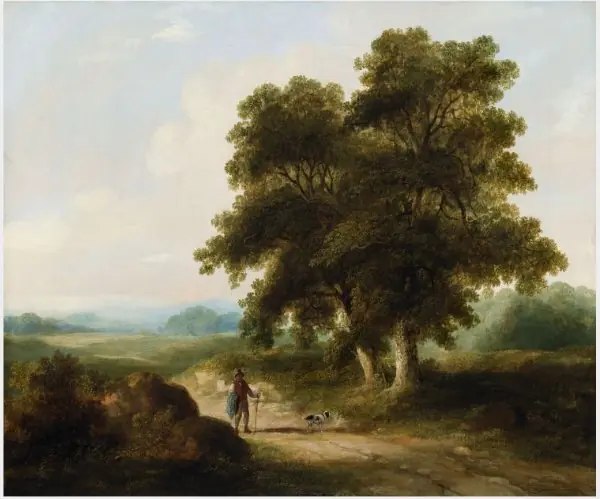 A Landscape, Homeward Bound
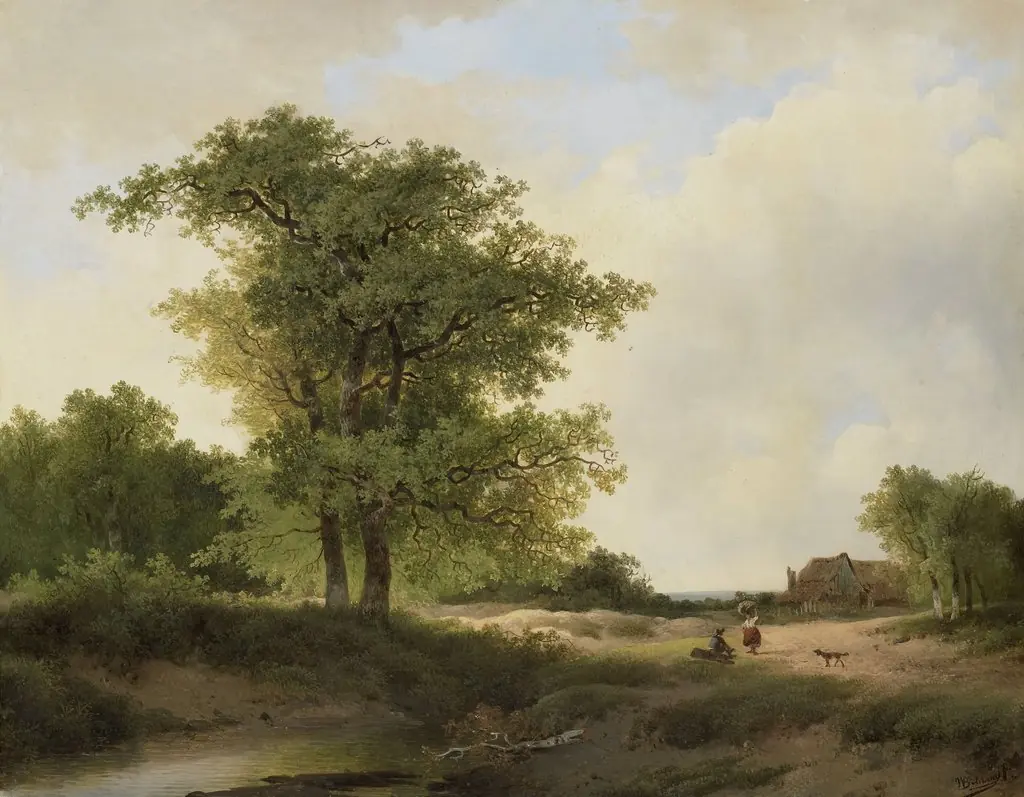 Landscape with Farmstead
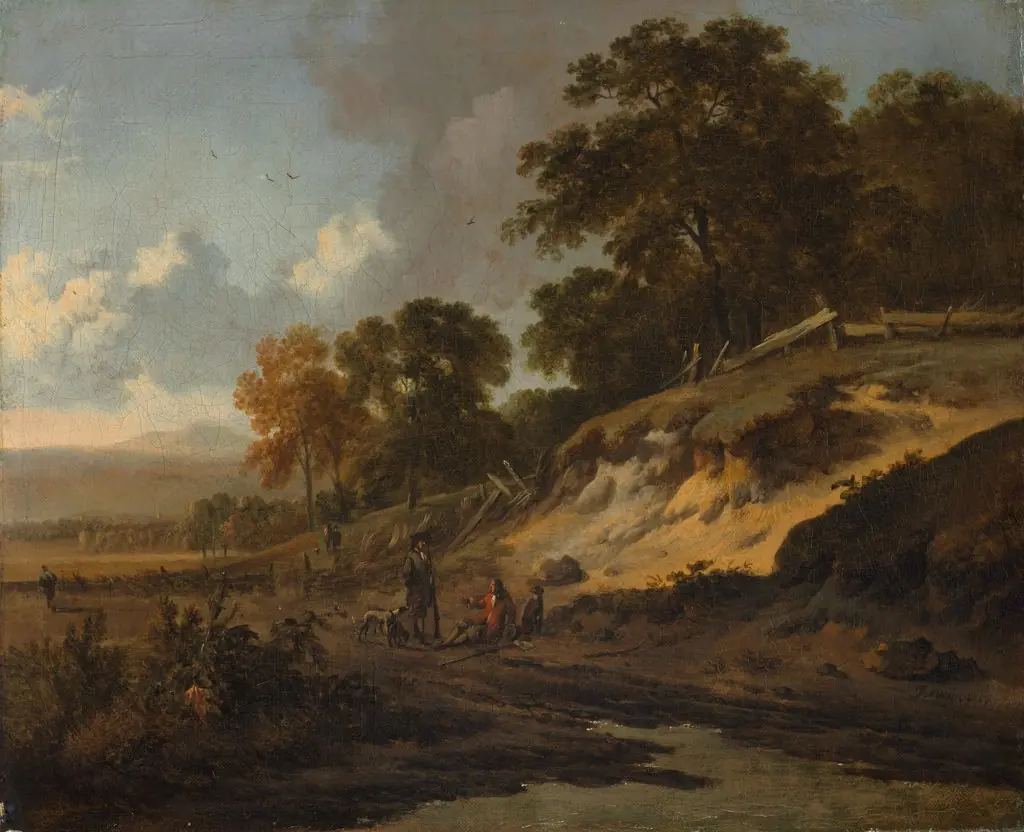 Landscape with Hunters
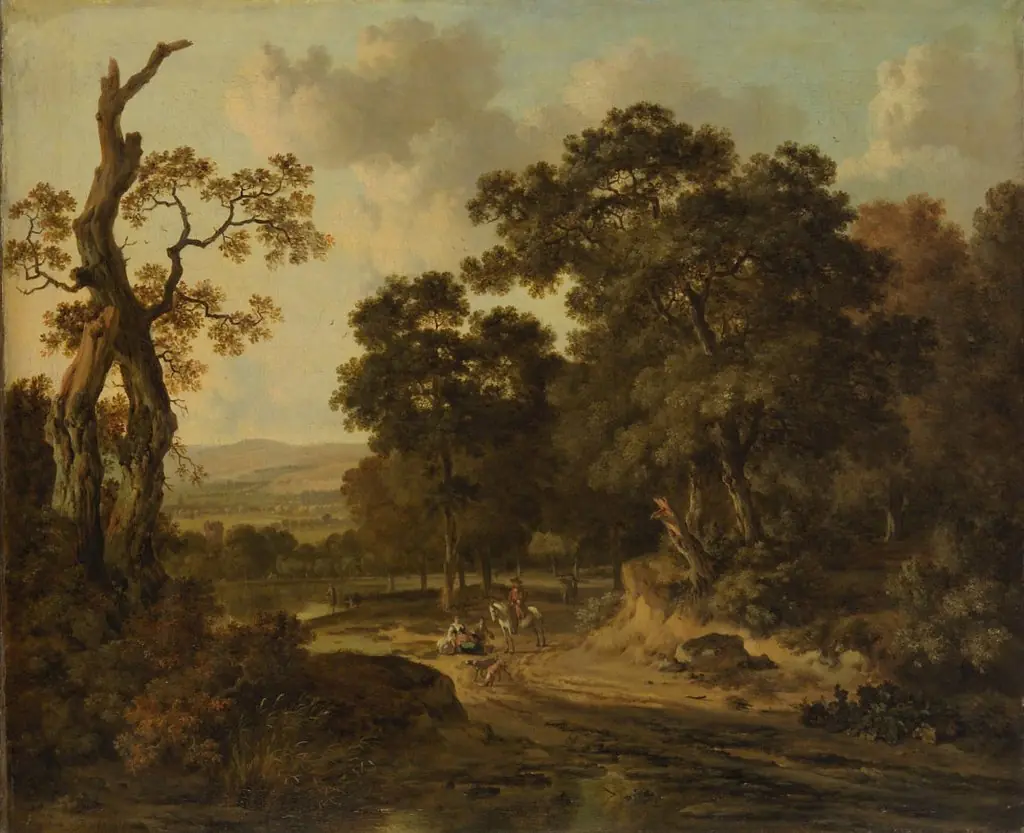 Waldeingang
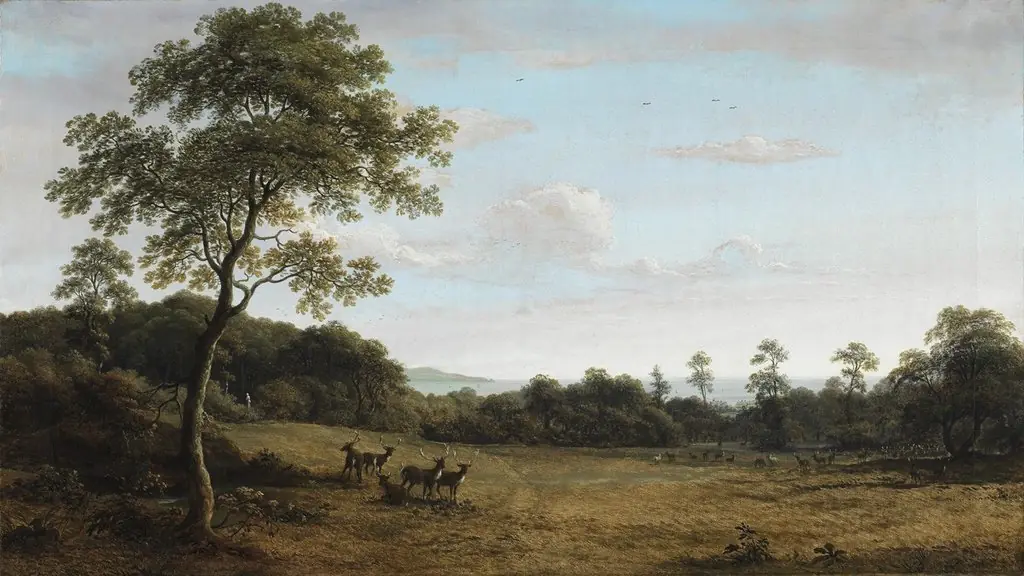 View in Mount Merrion Park
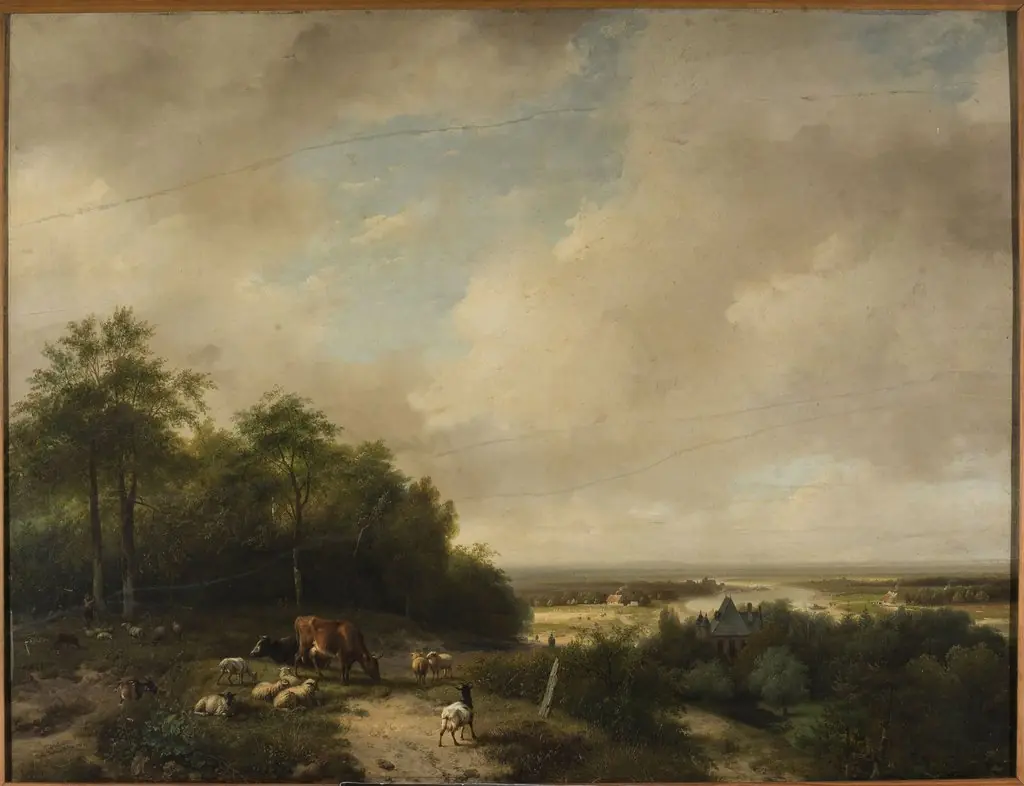 Landscape with a herd at the forest edge
 A Landscape