Artwork
The Chassé Division at the Battle of Waterloo
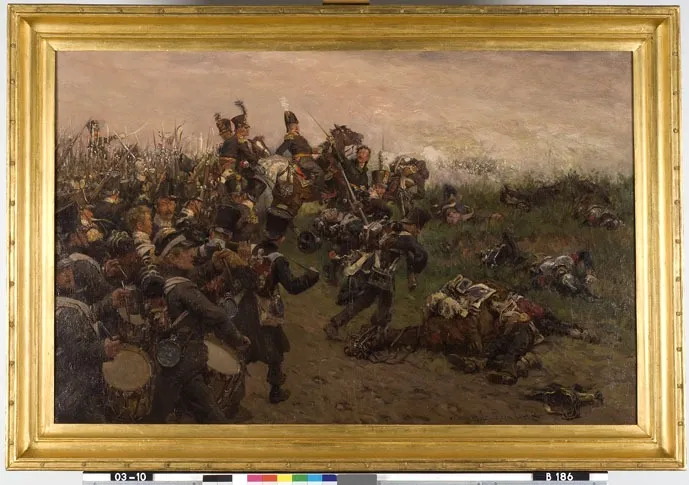
The Chassé Division at the Battle of Waterloo is an oil painting by the Impressionist artist Jan Hoynck van Papendrecht. It dates from 1902 and is held in the collection of the Rijksmuseum.
About this work
Technique & Style
As a piece classified within the history painting genre, the artist employed traditional oil techniques to render the military subject matter.
Executed in 1902, this history painting by Jan Hoynck van Papendrecht utilizes oil paint applied to a canvas support. The work measures 104 cm in height and 159 cm in width, presenting a substantial horizontal format typical of large-scale battle scenes. As a piece classified within the history painting genre, the artist employed traditional oil techniques to render the military subject matter.
The physical composition relies on the standard combination of pigment and fabric, characteristic of late nineteenth- and early twentieth-century Dutch academic art.
History & Provenance
The Chassé Division at the Battle of Waterloo was painted by Jan Hoynck van Papendrecht in 1902, executed in oil paint on canvas. The work was created as a history painting depicting the Dutch-Belgian division commanded by General David Hendrik Chassé during the 1815 engagement.
The painting is held in the collection of the Rijksmuseum and is also part of the Cultural Heritage Agency of the Netherlands Art Collection, with its current location recorded as the Rijksmuseum depot RCE. No further details regarding its commissioning, intermediate ownership, or acquisition history are documented in the available sources.
The painting is held in the collection of the Rijksmuseum in Amsterdam, where it is part of the Cultural Heritage Agency of the Netherlands Art Collection and is kept at the depot of the Rijksdienst voor het Cultureel Erfgoed (RCE). No accession number is recorded in the available sources.
No exhibition history is documented in the provided sources.
Context
The Chassé Division at the Battle of Waterloo is a 1902 oil painting by Jan Hoynck van Papendrecht that exemplifies Dutch history painting of the period, depicting the 1815 cavalry charge of the Chasseurs à Cheval during the Battle of Waterloo. Executed in oil on canvas, the work measures 104 cm in height by 159 cm in width and is housed in the Rijksmuseum's depot of the Cultural Heritage Agency of the Netherlands, reflecting its institutional significance within Dutch national heritage collections. Its creation during the late nineteenth century situates it within the broader European academic painting tradition, where military subjects were frequently employed to commemorate historical events through dramatic narrative composition and precise historical detail.
The painting's enduring presence in a state-managed collection underscores its recognized value as both an artistic achievement and a cultural artifact of Dutch historical consciousness.
Scholarly attention has focused on the work's technical execution and its role within van Papendrecht's oeuvre as a leading figure in Dutch military art, though specific critical assessments of its initial reception remain less documented than its material and provenance details. The painting is classified within the history_painting genre, consistent with 19th-century conventions for grand narrative works that engaged with national military heritage, and its composition demonstrates the academic emphasis on historical accuracy combined with Romanticized martial valor characteristic of the period's official war commemoration practices.
Overview
Jan Hoynck van Papendrecht’s 1902 oil canvas, The Chassé Division at the Battle of Waterloo, belongs to the Rijksmuseum’s collection. The work belongs to the history‑painting tradition and reflects the artist’s lifelong focus on military subjects. Executed at the height of the Impressionist era, it combines a documentary approach with a painterly handling of light and movement.
Subject & Meaning
The composition captures a moment of intense combat during the 1815 Battle of Waterloo. Infantry and cavalry are intermingled amid a chaotic melee; some riders charge, foot soldiers press forward, while others lie prone on the muddy ground. The scene emphasizes the disorder and physical strain of warfare rather than heroic idealisation, inviting viewers to confront the harsh reality of 19th‑century battle.
Artist & collection
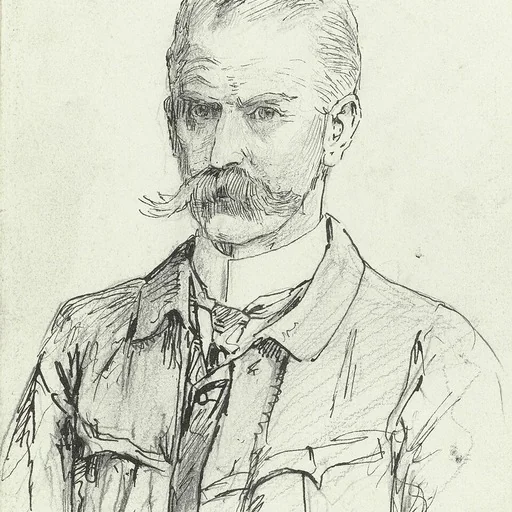
Artist
Jan Hoynck van Papendrecht (18 September 1858 – 11 December 1933) was a Dutch painter and illustrator who specialised in military art.

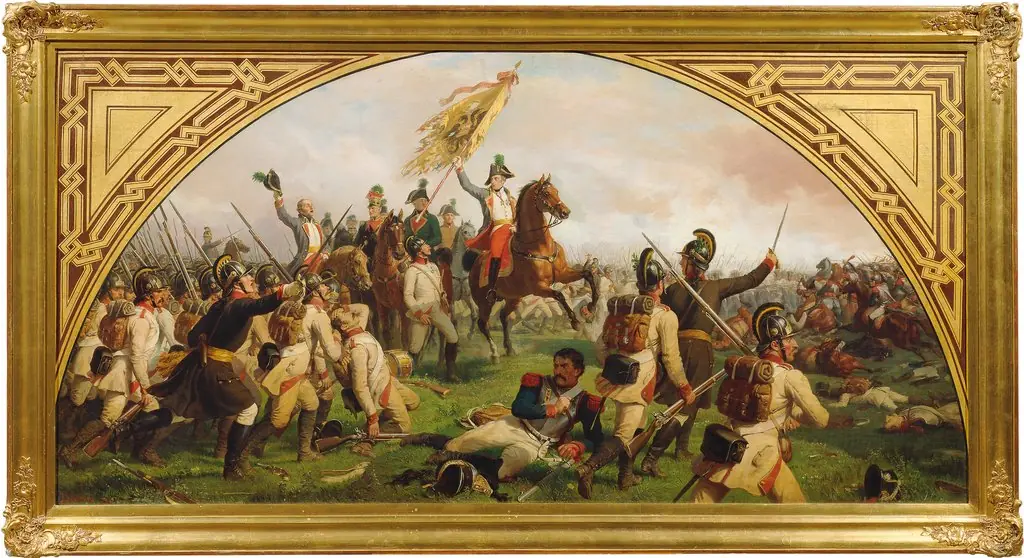 Archduke Karl of Austria at the Battle of Aspern
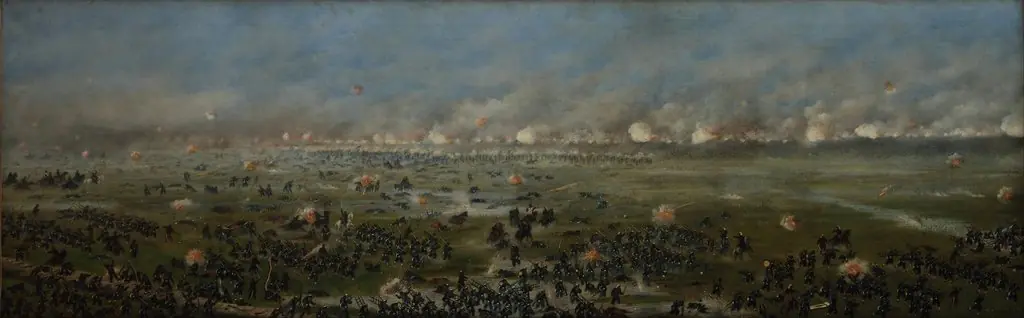 Asalto de la tercera columna argentina a Curupaytí
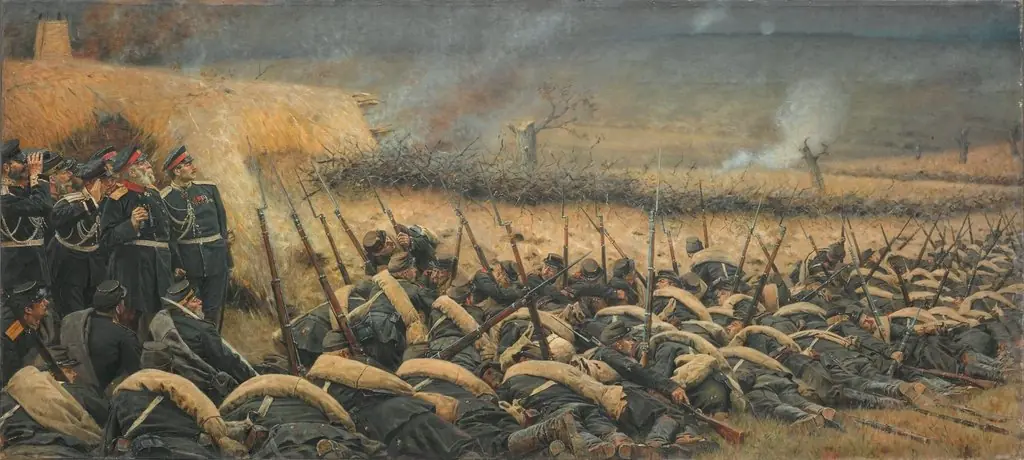 Before the attack. At Plevna
 Urmărire după luptă
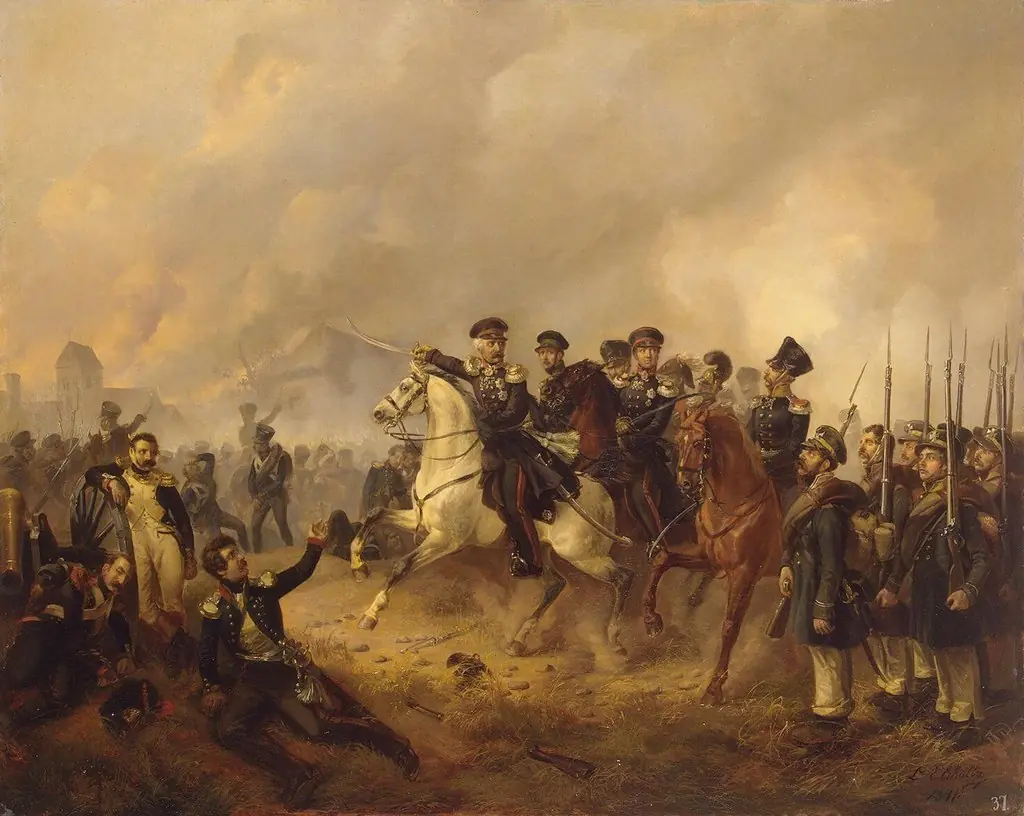 Marshal Blucher on the Battlefield
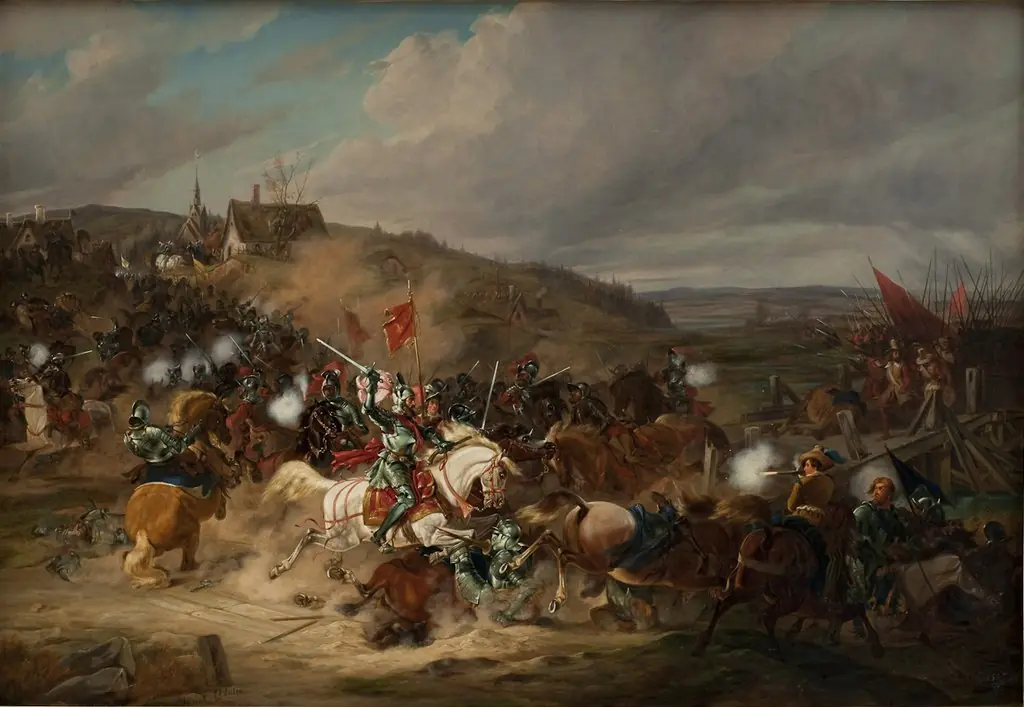 Daniel Rantzau bemægtiger sig Tureby Bro i Skåne under Syvårskrigen 1563-1570
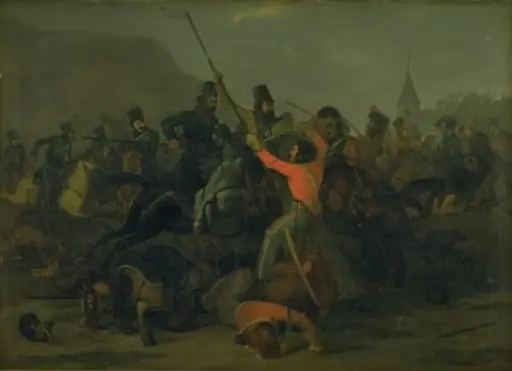 Oberst Boncke Bönnichsens fald den 6. december 1813 under en fægtning mellem jyske dragoner og kosakker
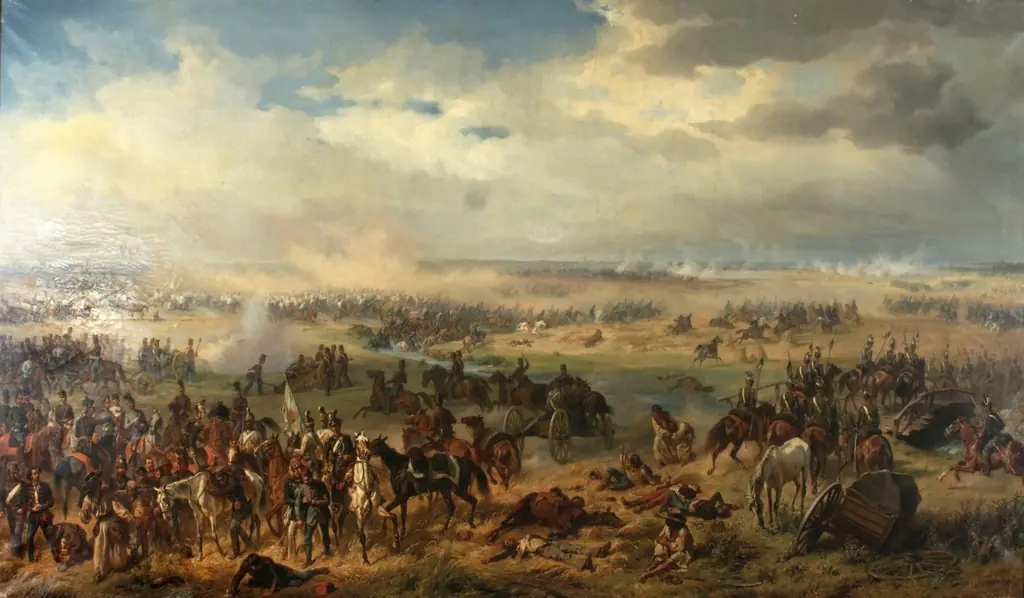 Die Schlacht bei Temesvár
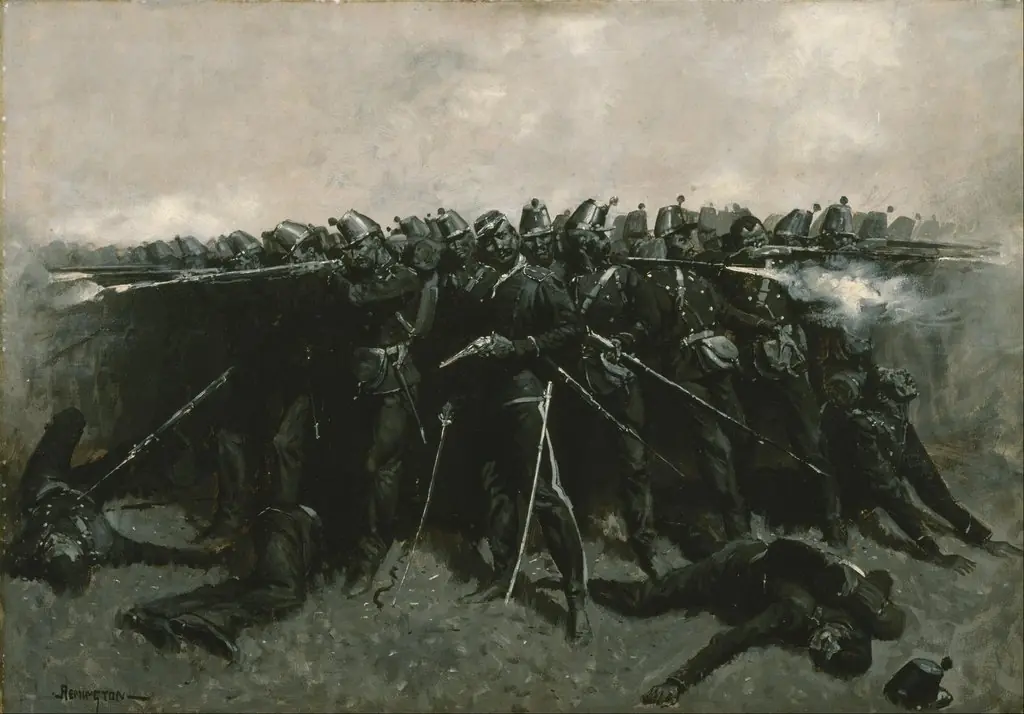 The Infantry Square
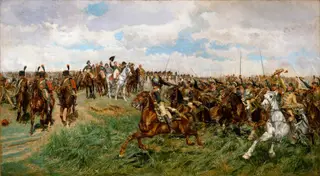 1807, Friedland
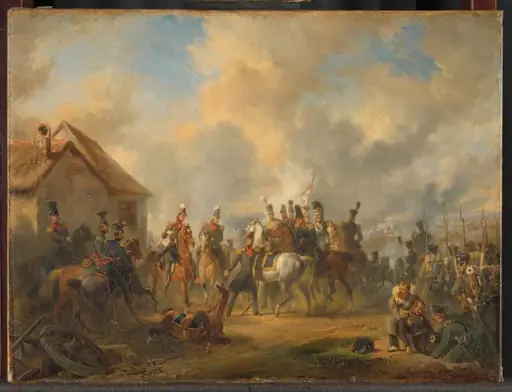 De Slag bij Bautersem, gedurende de Tiendaagse Veldtocht
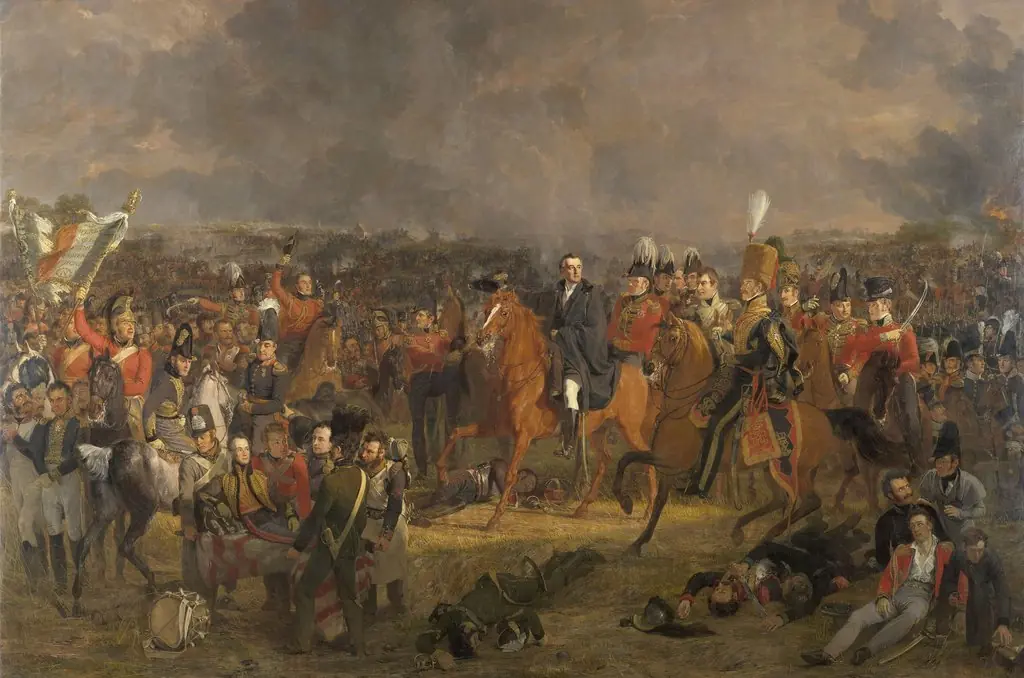
- The Battle of Waterloo