Artwork
The Battle of Waterloo
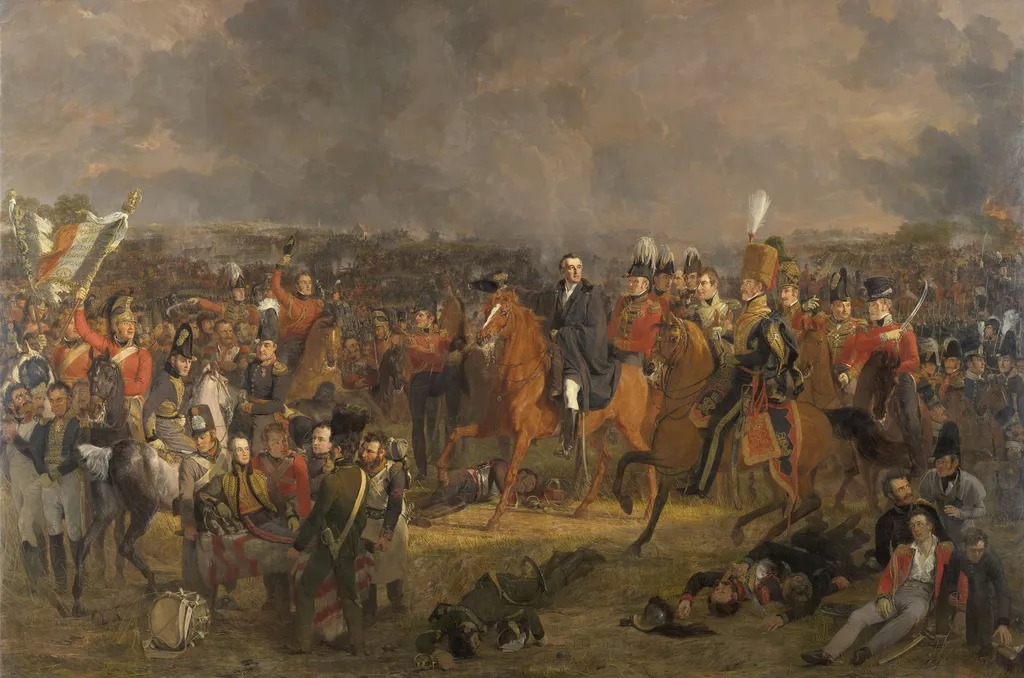
The Battle of Waterloo is an oil painting by Jan Willem Pieneman. It dates from 1824 and is held in the collection of the Rijksmuseum.
About this work
The Duke of Wellington helped him out, even let him set up a studio in his house and posed for his portrait.
This painting shows a big history scene by Dutch artist Jan Willem Pieneman. It’s about the Battle of Waterloo in 1815 when Napoleon’s army lost for good. The artist focused on the Allied commanders, especially the Duke of Wellington.
Pieneman went to London to paint it. The Duke of Wellington helped him out, even let him set up a studio in his house and posed for his portrait.
Look up the Rijksmuseum next.
Subject & Meaning
The painting depicts the Battle of Waterloo of 18 June 1815, the decisive engagement that ended Napoleon's French Empire and the Napoleonic Wars, and is classified as a history painting focused on the Allied side. The composition centers on the Duke of Wellington, shown mounted on his horse Copenhagen, at the moment a mounted messenger arrives with news that Prussian forces under Blücher are approaching to join the fight. In the lower left, the Prince of Orange lies wounded on a stretcher.
Surrounding Wellington are other senior Allied commanders, including Lord Uxbridge, Rowland Hill, and Miguel Ricardo de Álava, while in the background the battle continues. To the left, British cavalrymen of the 2nd (Royal North British) Dragoons and 1st (Royal) Dragoons raise captured French Imperial Eagles. The work thus serves as a commemorative celebration of the Allied coalition, British, Dutch, Belgian, and Hanoverian King's German Legion forces, that defeated Napoleon.
The figures depicted include William II of the Netherlands, Arthur Wellesley (1st Duke of Wellington), Christian Friedrich Wilhelm von Ompteda, and Sir George Cooke.
History & Provenance
Jan Willem Pieneman completed this history painting in 1824 following nearly three years of labor. The artist began preparatory work in early 1820 and traveled to London in February 1821, where he established a temporary studio at Apsley House with the Duke of Wellington's assistance. Although initially intended for Wellington, the work was purchased for 40,000 guilders by King William I of the Netherlands as a gift for his son, the Prince of Orange.
Following its completion, the massive canvas toured London, Brussels, and Ghent, with a dedicated pavilion constructed in Hyde Park for its 1825 exhibition. The painting later became a centerpiece of the Museum of Living Dutch Masters in Haarlem before transferring to the Rijksmuseum in Amsterdam in 1885, where it remains the collection's largest work.
Completed in 1824, the painting was acquired by King William I for 40,000 guilders as a gift to his son, the Prince of Orange. Following its completion, the work toured London, where it was displayed in a specially constructed pavilion in Hyde Park from May 1825 for approximately ten months. It was subsequently exhibited in Brussels, Ghent, and Amsterdam.
Originally housed for an extended period at the Museum of Living Dutch Masters in Haarlem, the canvas was transferred in 1885 to the newly established Rijksmuseum in Amsterdam. There, measuring over five by eight meters, it remains the largest piece in the collection and is permanently installed in the Hall of Waterloo on the first floor. In 2015, the artwork served as the centerpiece for the exhibition "Eyewitnesses of Waterloo" at the Rijksmuseum.
During the 1940 German invasion of the Netherlands, the massive canvas was too large to transport and was rolled up for safekeeping.
Context
Contemporary audiences praised the monumental canvas for its dramatic portrayal of the Allied victory and its technical ambition, leading to a public showing in a Hyde Park pavilion in 1825 that attracted large crowds before the work traveled to Brussels and Ghent. The painting was later acquired by the Prince of Orange and entered the Rijksmuseum, where it remains the largest piece in the collection. Scholars such as Reynolds (2022) and Wellesley (2014) interpret it as a key example of Dutch history painting that blends patriotic narrative with detailed portraiture, while Thompson (1999) highlights its role in the post‑Napoleonic cultural memory.
Pieneman’s extensive preparatory studies and his collaboration with Wellington underscore the work’s place within his broader ambition to document national triumphs.
Legacy
Upon its completion, the painting achieved immediate public acclaim, necessitating the construction of a dedicated pavilion in Hyde Park for its 1825 London exhibition. This display proved highly popular, drawing large crowds before the work toured Brussels and Ghent. Historically, the canvas served as a centerpiece for the Museum of Living Dutch Masters in Haarlem until its transfer to the Rijksmuseum in 1885, where it remains the collection's largest holding.
The work's legacy includes its central role in the 2015 Rijksmuseum exhibition commemorating the battle's bicentenary. While the original resides in Amsterdam, smaller versions and preparatory studies survive at Apsley House and Cirencester Park, the latter gifted to Lord Bathurst. The painting's physical history also includes its forced rolling for storage during the 1940 German invasion of the Netherlands, highlighting its status as a significant cultural asset.
Overview
Jan Willem Pieneman, a Dutch artist, completed his large-scale oil painting, The Battle of Waterloo, in 1824. This historical work commemorates the pivotal engagement of June 18, 1815, which saw the decisive defeat of Napoleon's forces. The battle marked the conclusive end of the Napoleonic Wars and the collapse of the French Empire, a momentous event captured through Pieneman's detailed depiction.
Own this work as a print
Artist & collection

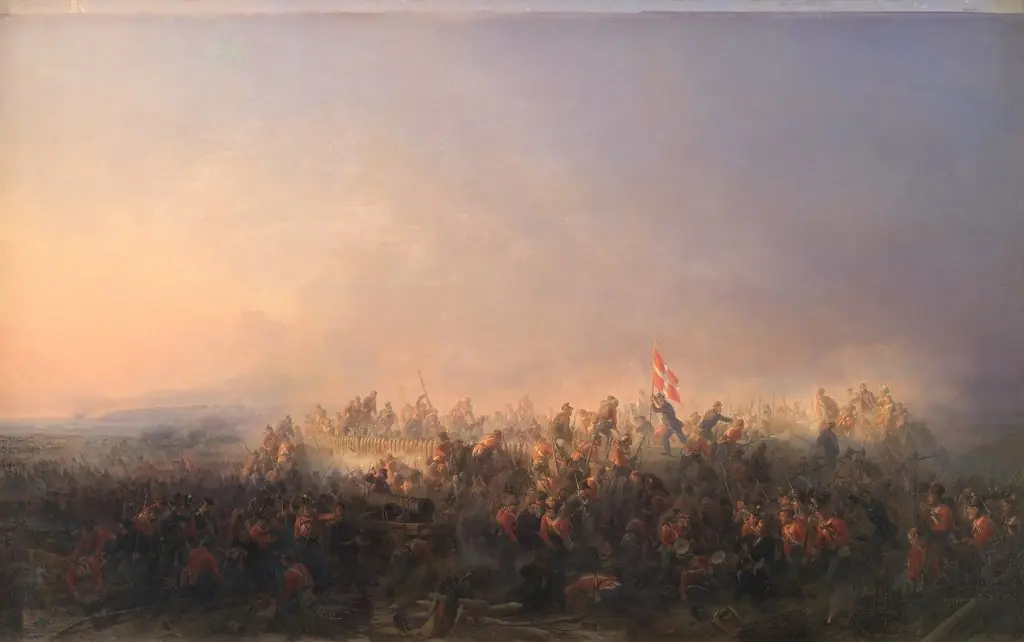 Slaget ved Fredericia den 6. juli 1849
 1807, Friedland
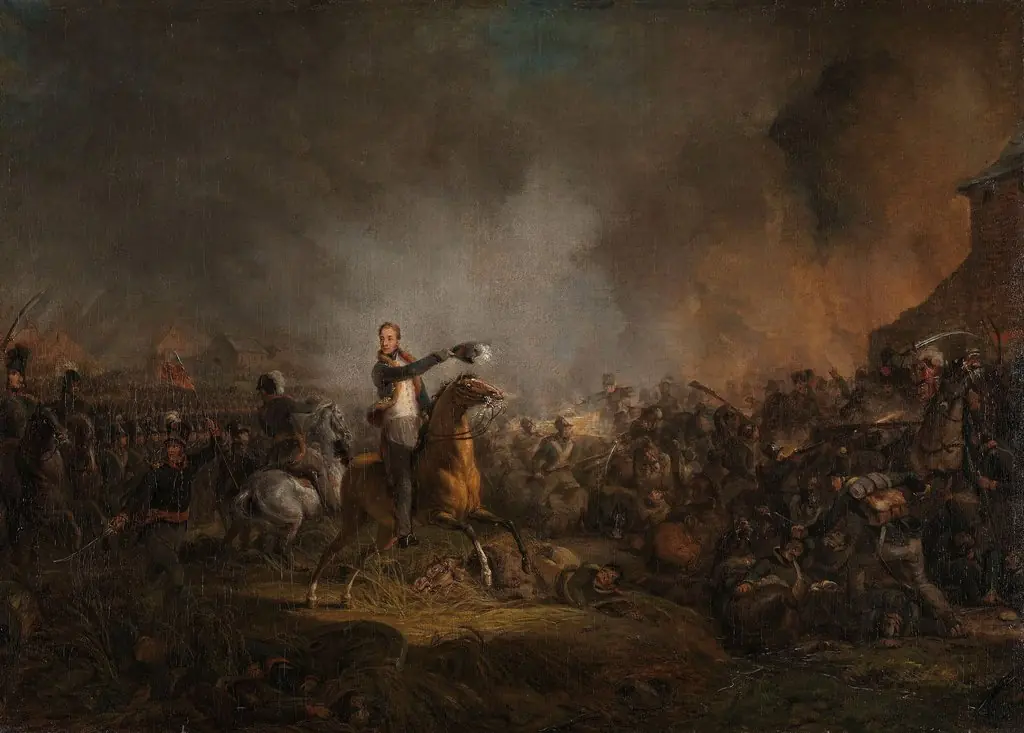 The Prince of Orange at Quatre Bras, 16 June 1815
 Slaget ved Fredericia den 6. juli 1849
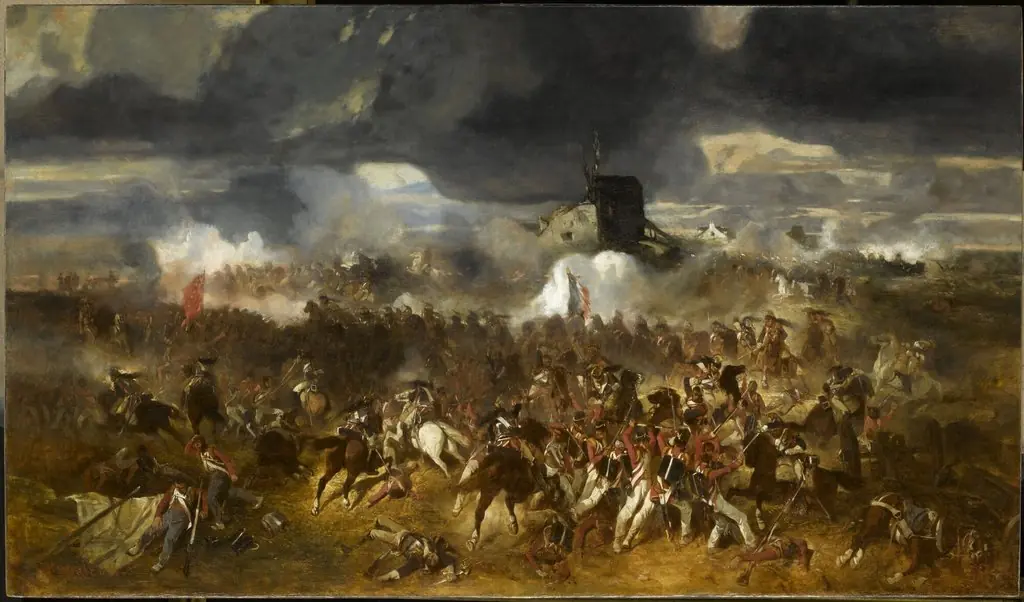 Bataille de Waterloo, 18 juin 1815
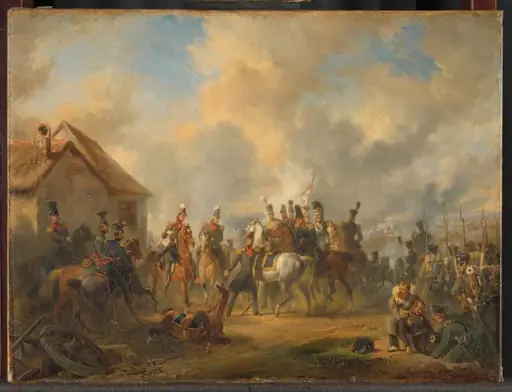 De Slag bij Bautersem, gedurende de Tiendaagse Veldtocht
 Carga de caballería - Serie Usos y Costumbres de Buenos Aires
 Marshal Blucher on the Battlefield
 The Thin Red Line