Artwork
The Adoration of the Magi
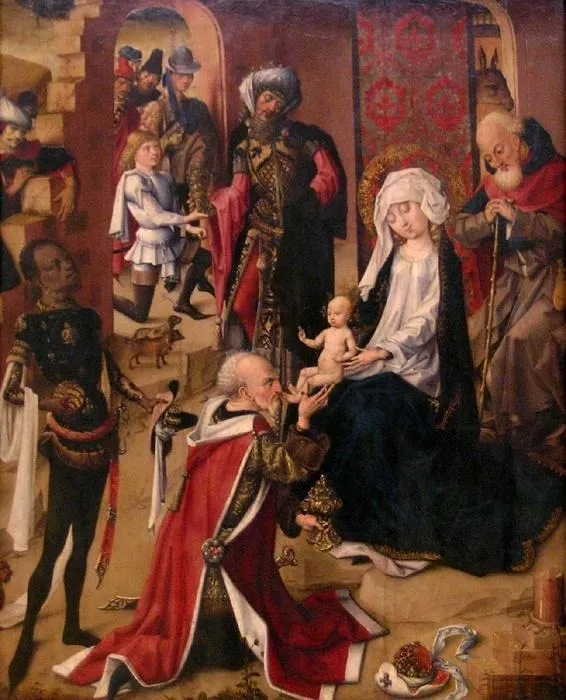
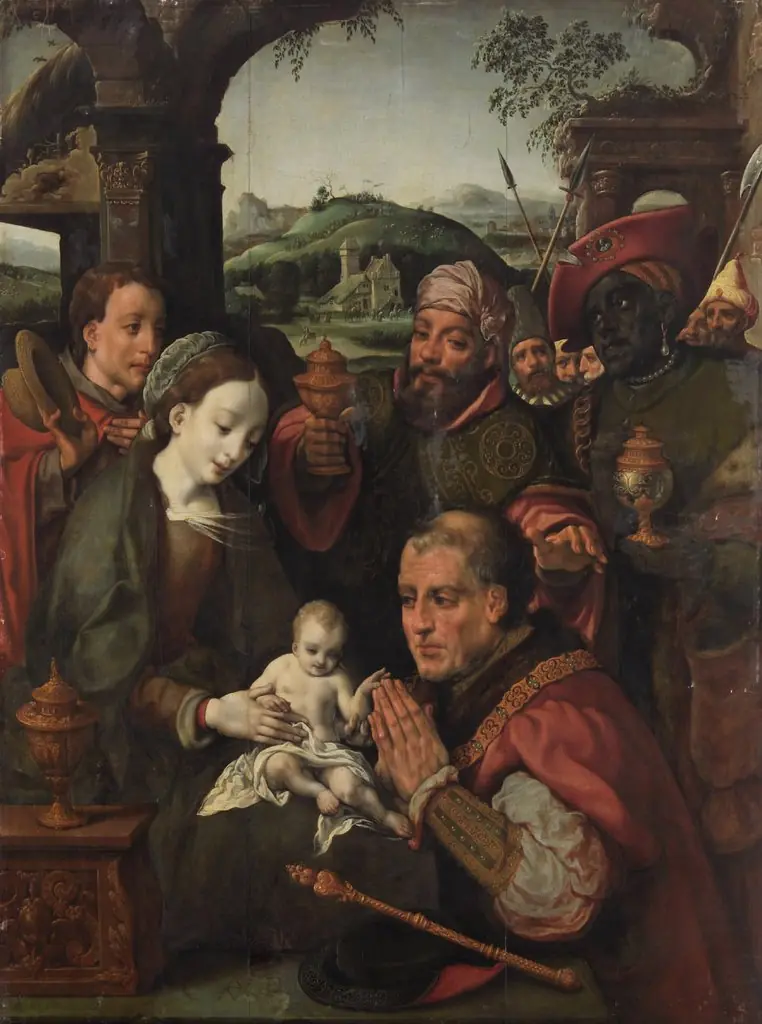
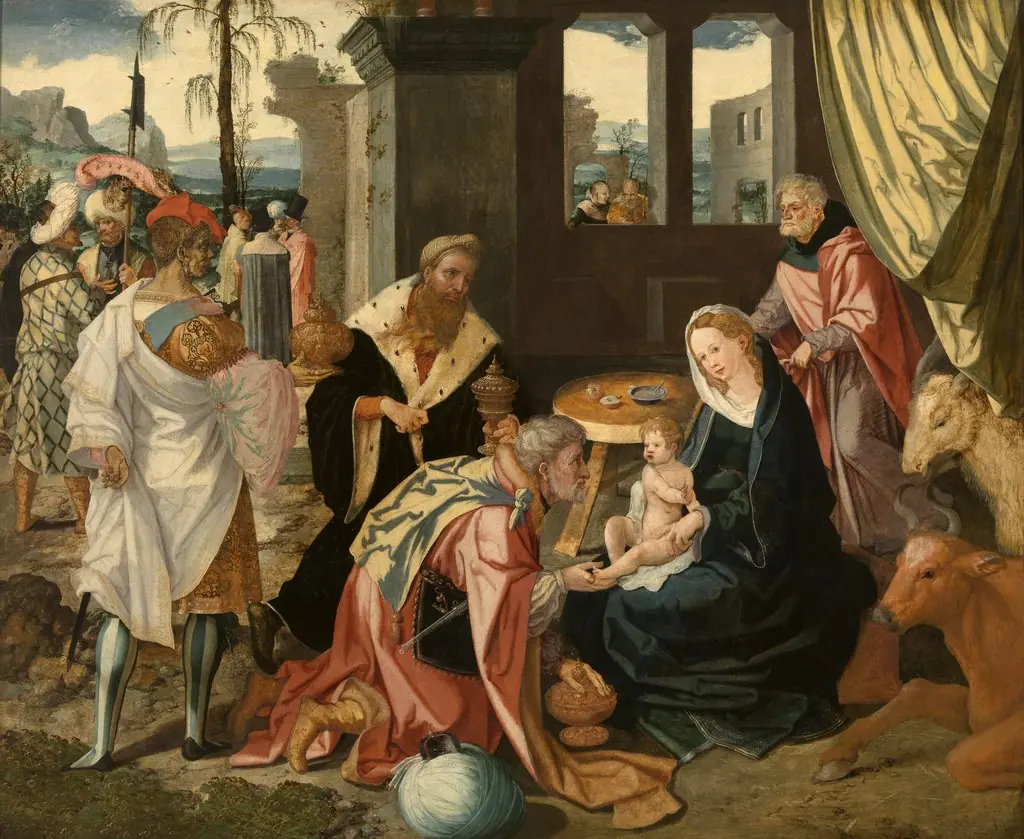
The Adoration of the Magi is an oil painting by the Mannerist artist Master of the Saint Bartholomew Altarpiece. It is held in the collection of the Bavarian State Painting Collections. The panel, executed in wood around 1550, presents a traditional Adoration of the Magi scene.
About this work
Subject & Meaning
The painting depicts the Adoration of the Magi, a central theme in Christian art showing the three Magi paying homage to the Christ Child.
The painting depicts the Adoration of the Magi, a central theme in Christian art showing the three Magi paying homage to the Christ Child. The main subject centers on the Christ Child, the focal point of the magi's veneration. As a religious work from the mid-16th century, the imagery draws on established iconographic traditions of the Nativity cycle, emphasizing the revelation of Christ's divinity to the Gentiles through the magi's recognition of his kingship.
Technique & Style
Executed in 1550, this religious panel painting utilizes oil paint applied to a wood support. The work measures 80.3 cm in height and 65.7 cm in width. Attributed to the Master of the Saint Bartholomew Altarpiece, the composition focuses on the Adoration of the Magi, specifically depicting the Christ Child as the central subject. The piece is currently held within the Bavarian State Painting Collections at the Alte Pinakothek.
History & Provenance
The Adoration of the Magi is held in the collection of the Bavarian State Painting Collections and is displayed at the Alte Pinakothek. The work, created around 1550 by the Master of the Saint Bartholomew Altarpiece, is an oil painting on wood depicting the Christ Child and the adoration of the Magi. While the piece is part of this major German museum's holdings, the provided records do not list a specific inventory number or detail any past or current exhibition history for this particular panel.
Context
The Adoration of the Magi, painted circa 1550 by the Master of the Saint Bartholomew Altarpiece, exemplifies late Renaissance religious art within the German school. Its composition and devotional focus reflect evolving artistic approaches to biblical narratives in the mid-16th century. The work is housed in the Bavarian State Painting Collections at the Alte Pinakothek in Munich, where it remains part of the permanent display of Old Master paintings.
Scholarship emphasizes its significance as a key example of the Master's output, particularly in the context of altarpiece painting traditions in Bavaria.
Overview
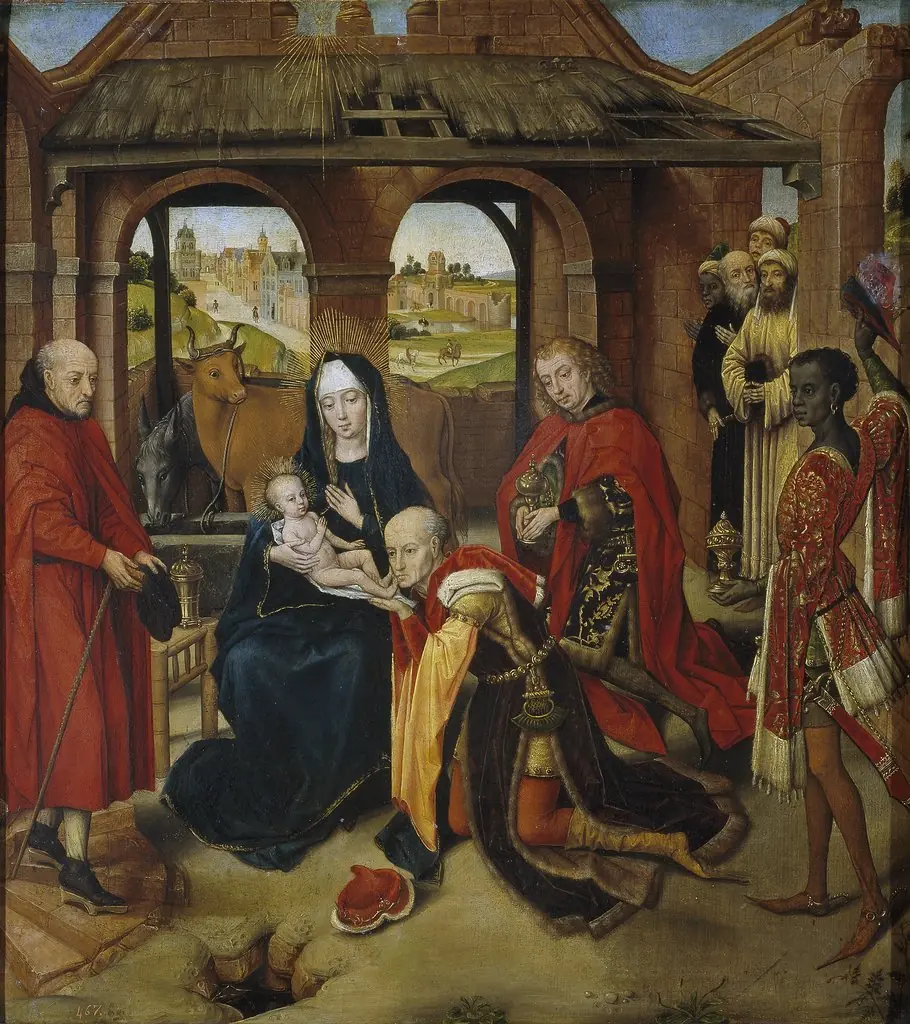
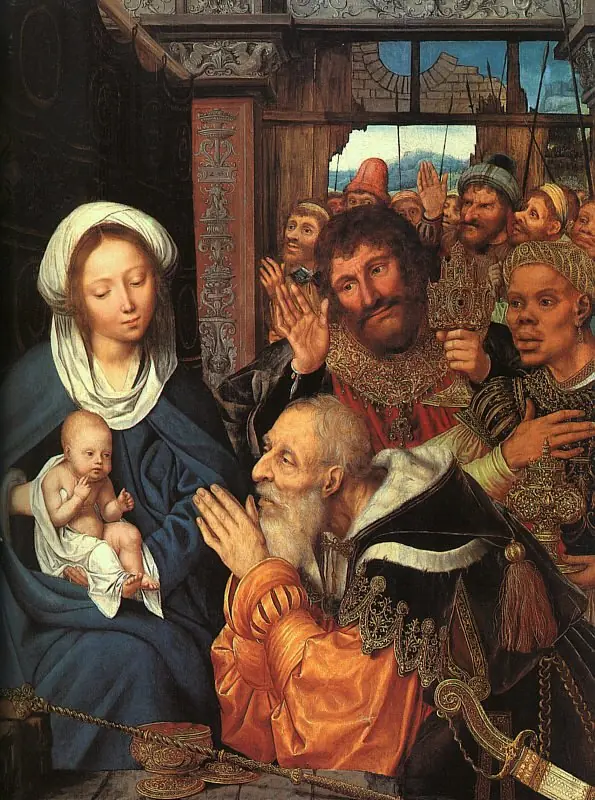
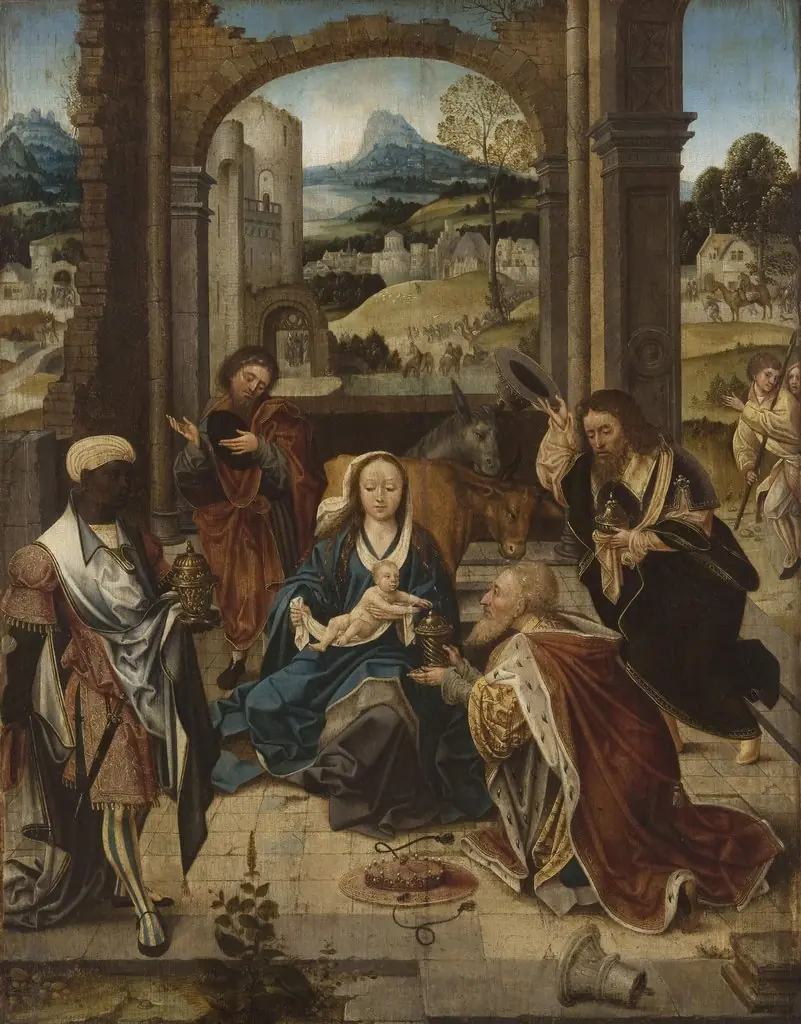
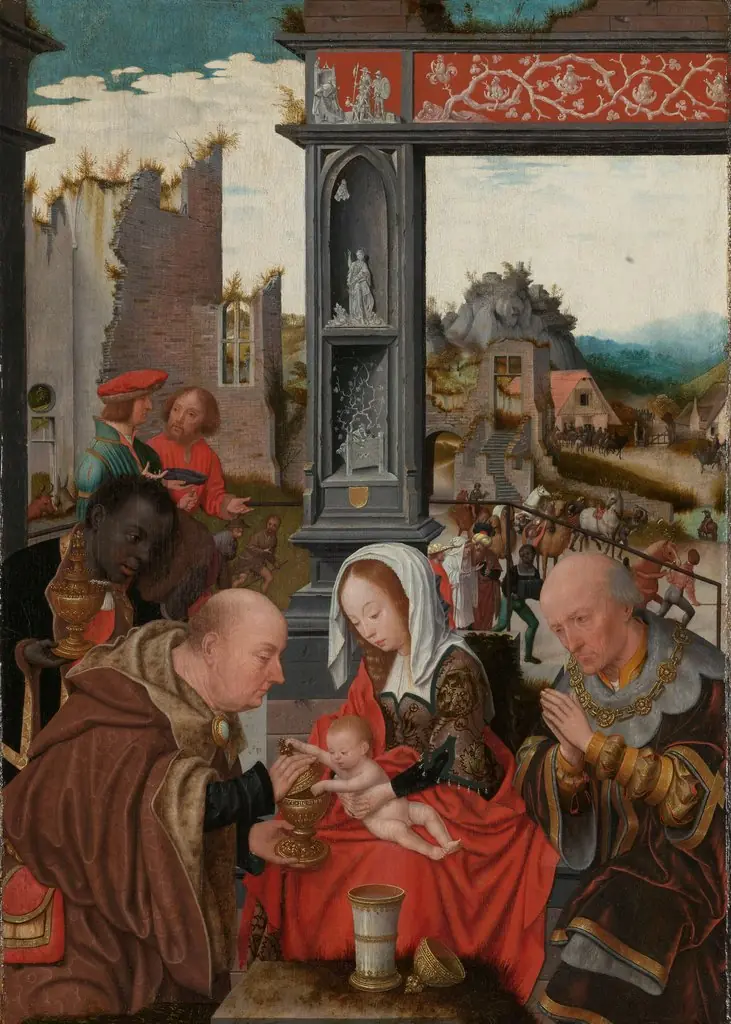
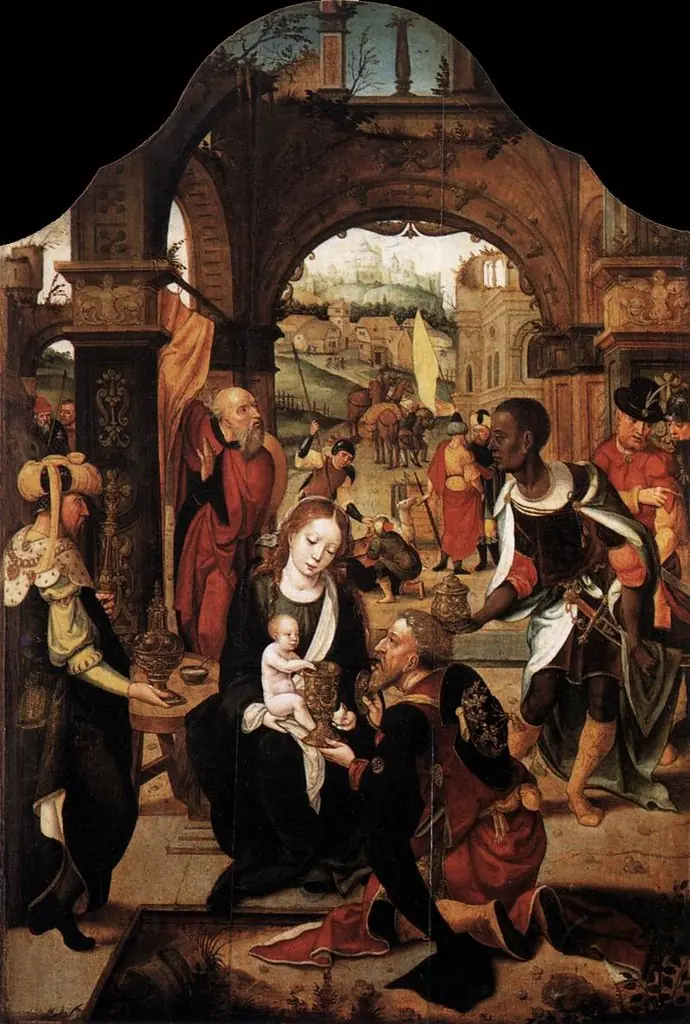
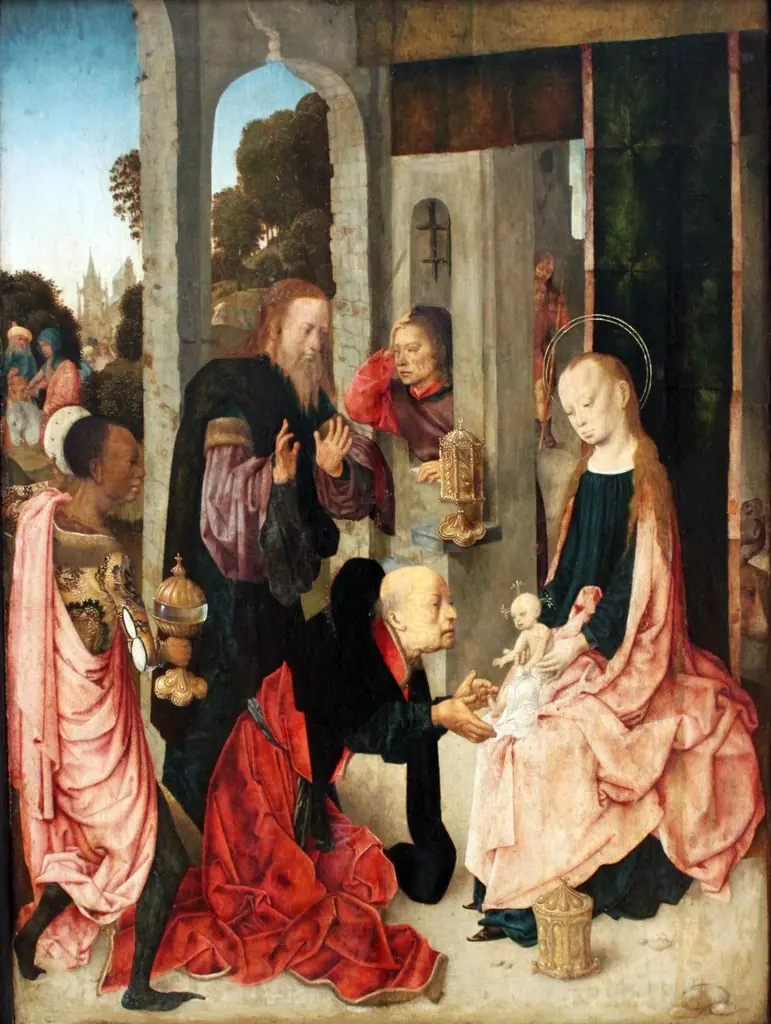
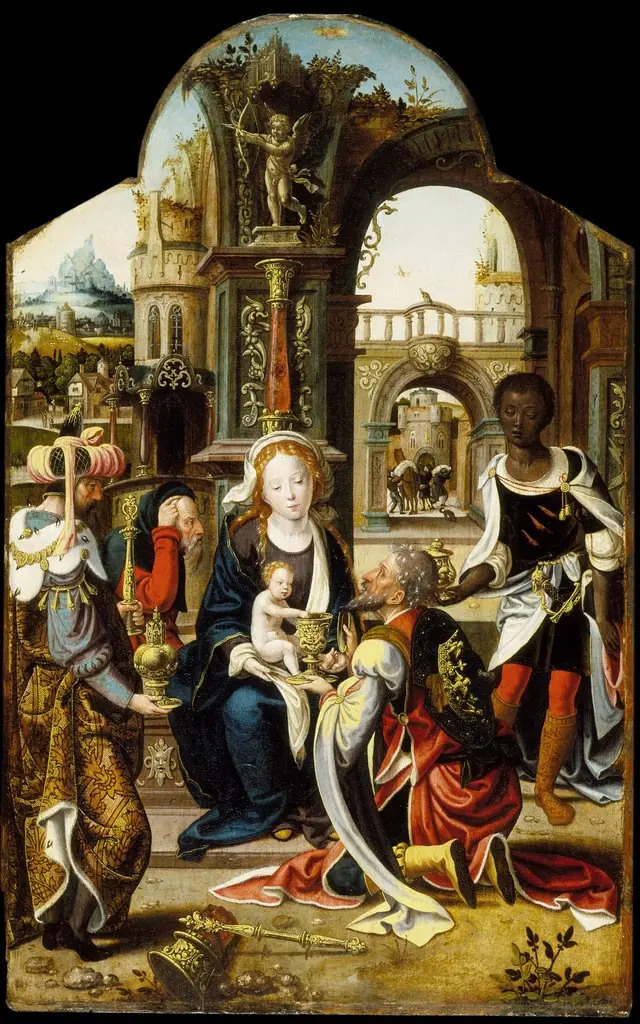
The panel, executed in wood around 1550, presents a traditional Adoration of the Magi scene. Central to the composition is a woman cradling an infant, surrounded by three male figures in varied attire, set within an interior rich with textiles and gilded details. The work is part of the Alte Pinakothek’s holdings.
Artist & collection
Artist
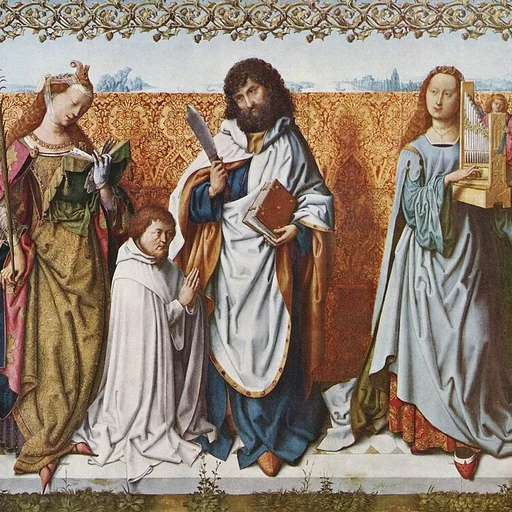
Master of the Saint Bartholomew Altarpiece
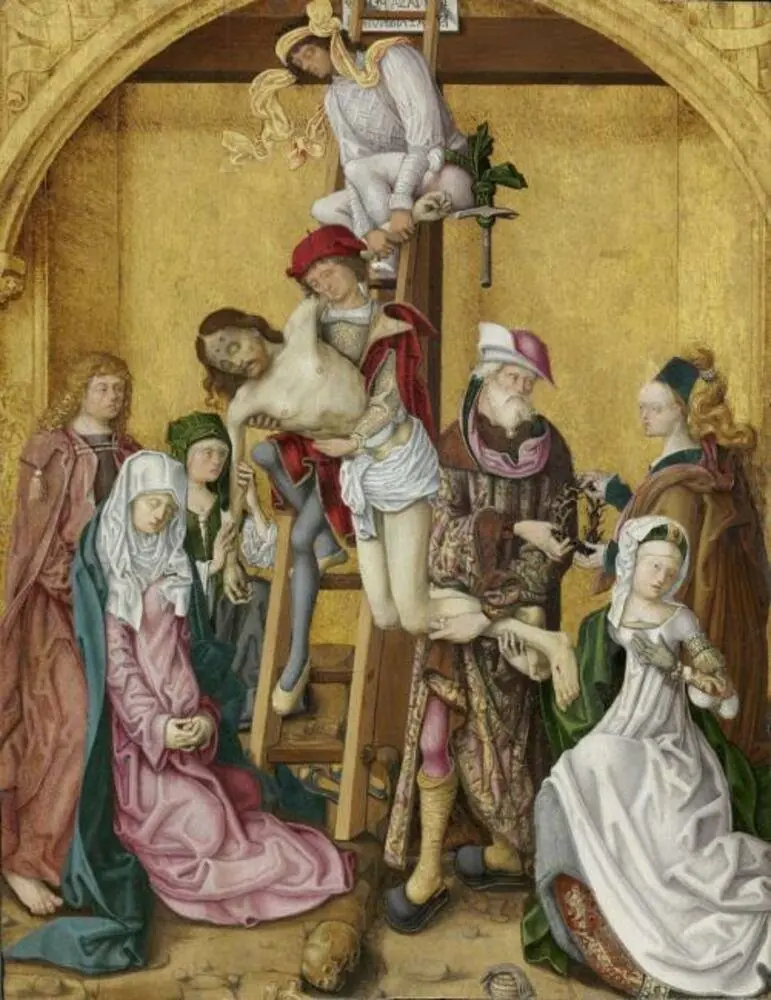
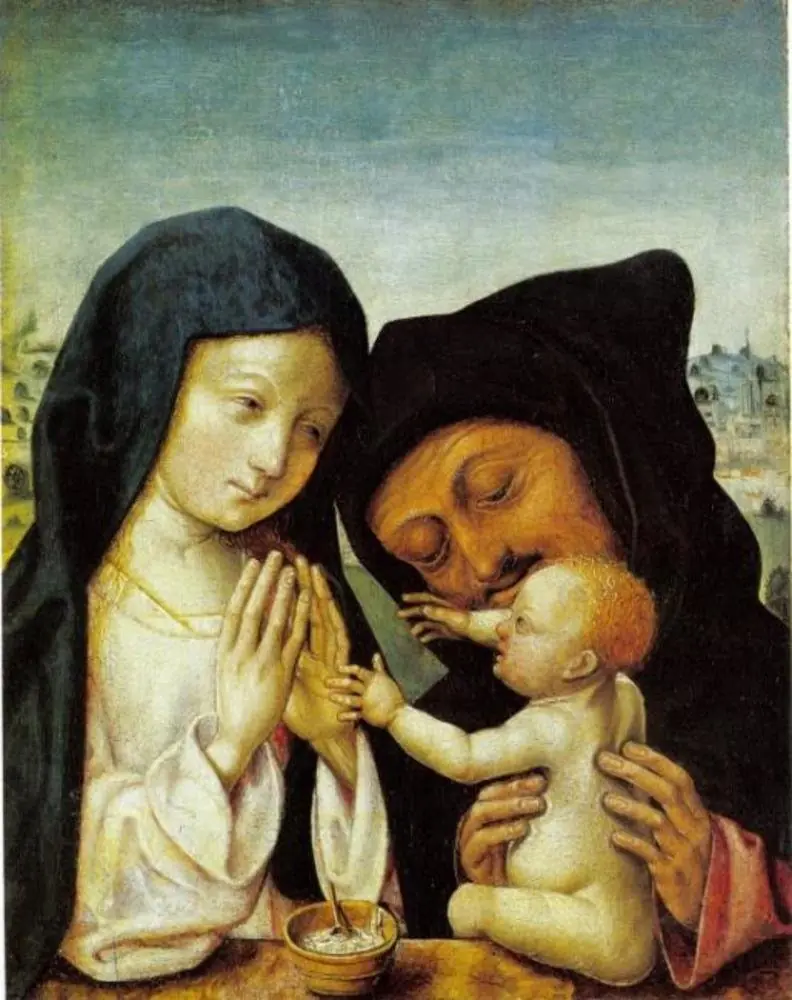
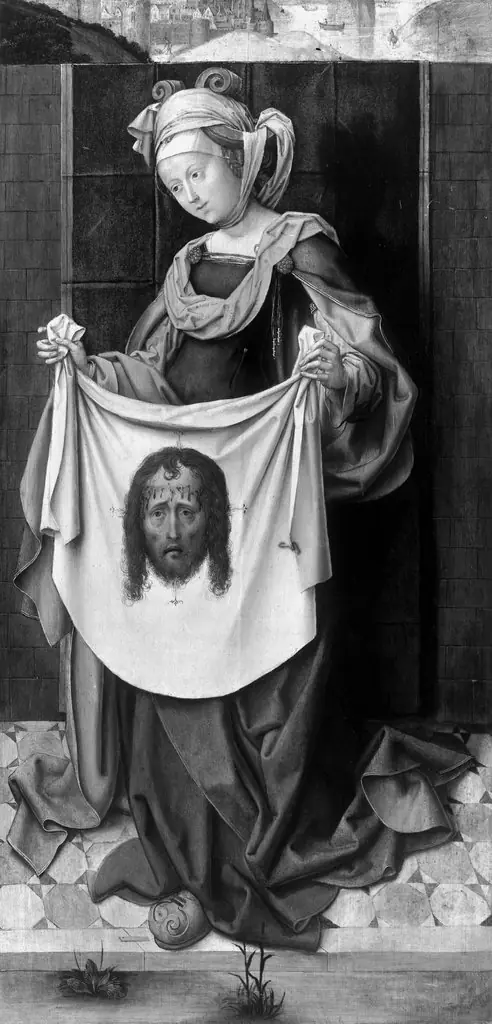
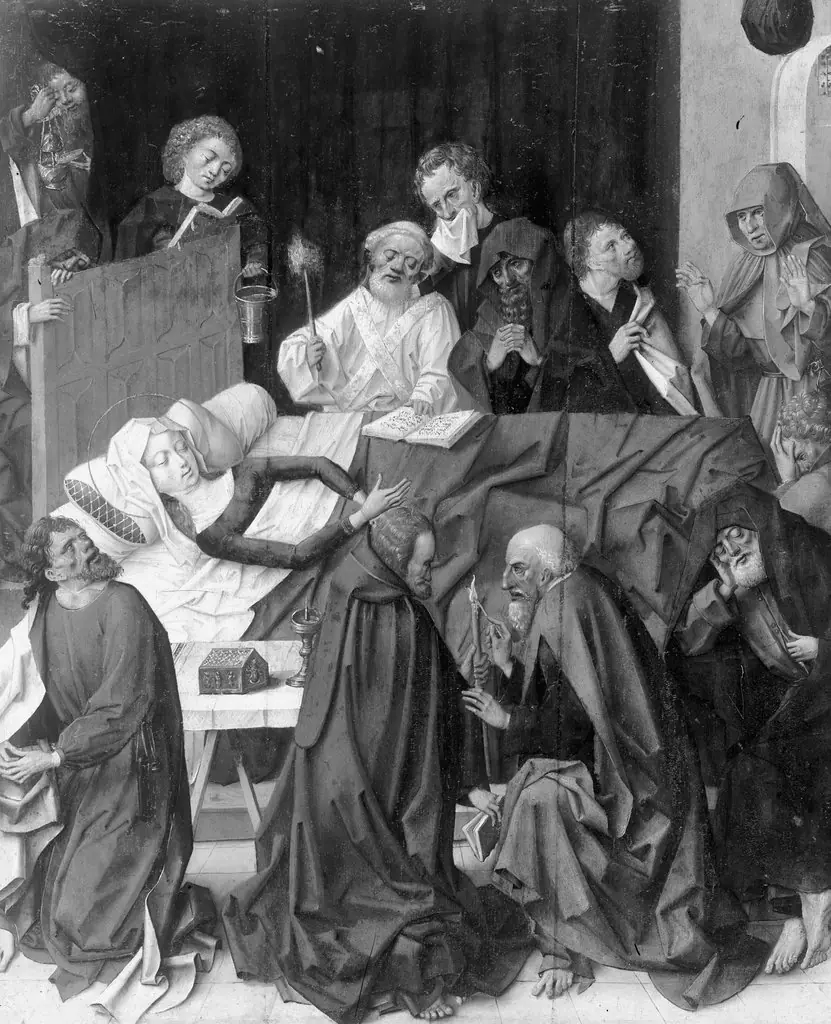
The Master of the Saint Bartholomew Altarpiece (sometimes called the Master of the Saint Bartholomew Altar) was an Early Netherlandish painter active in Germany, mostly Cologne, between 1475/1480 and 1510.