Artwork
The Adoration of the Magi
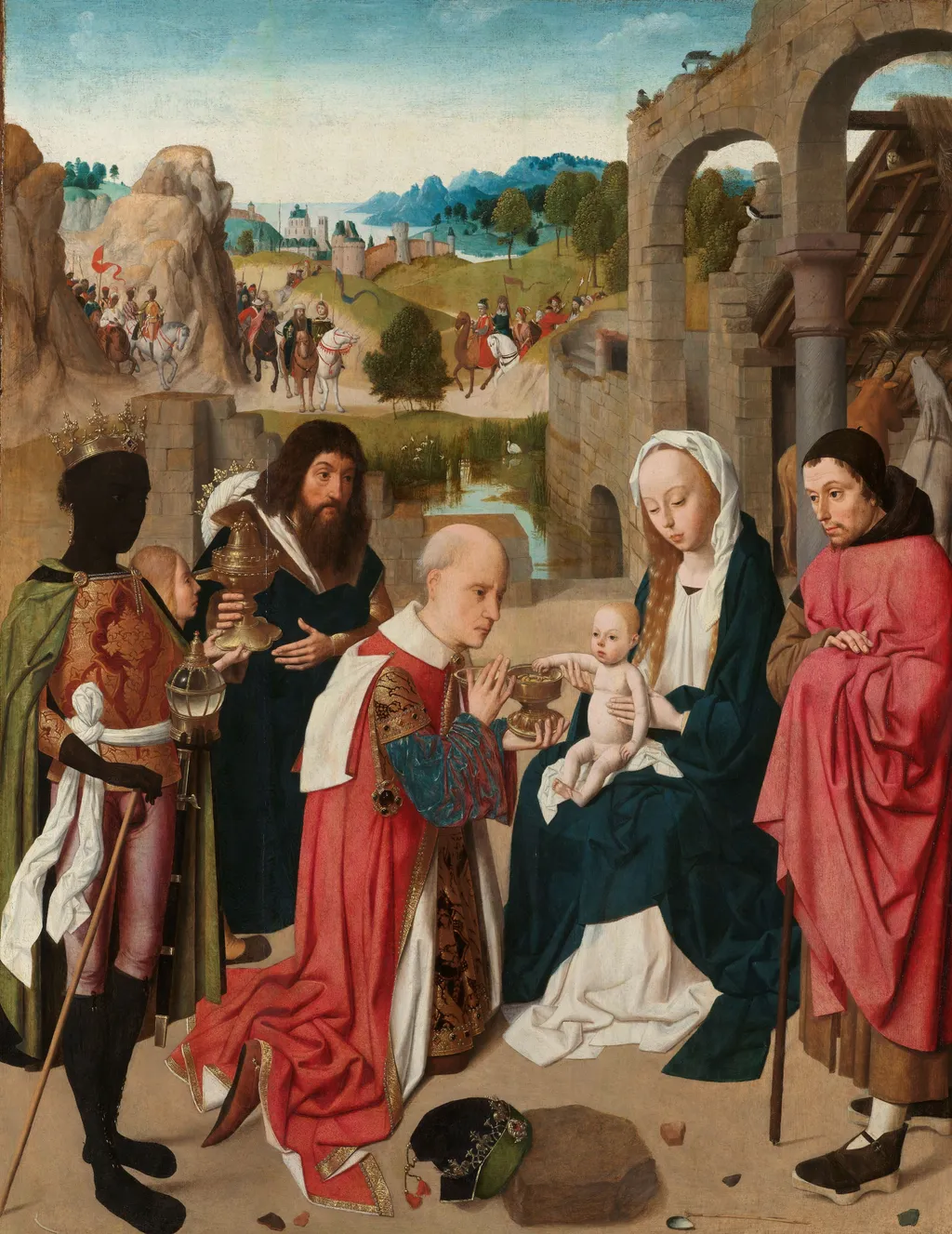
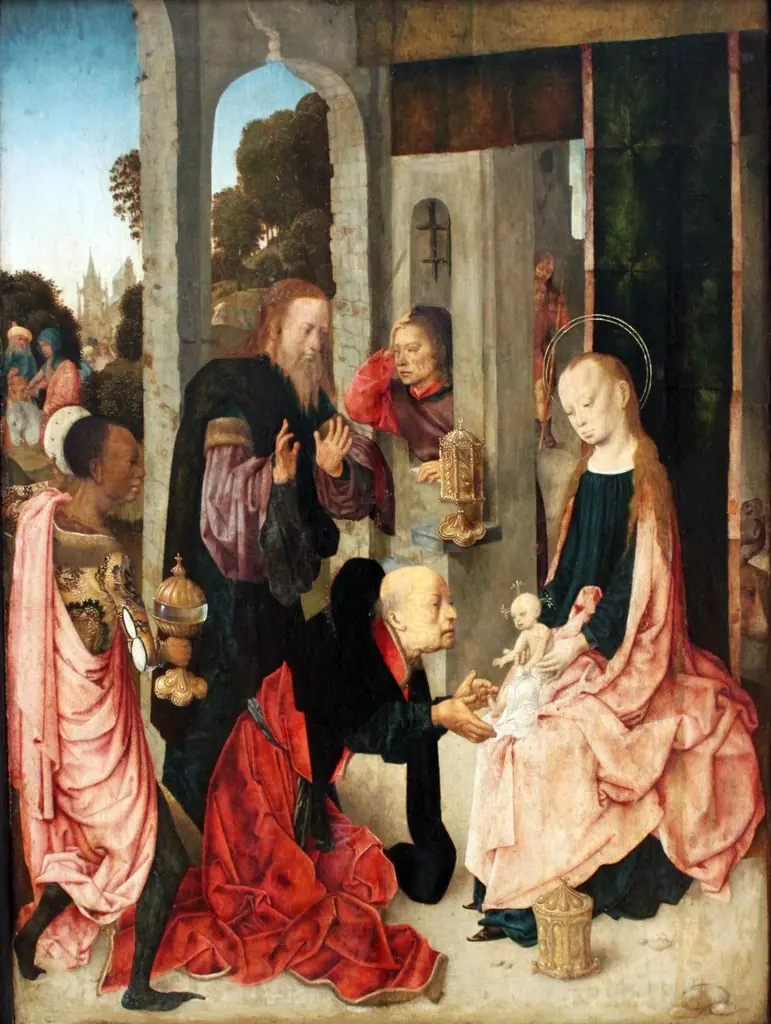
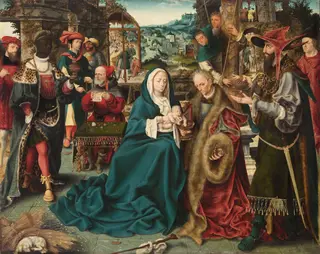
The Adoration of the Magi is an oil painting by the Northern Renaissance artist Geertgen tot Sint Jans. It dates from 1490 and is held in the collection of the Rijksmuseum.
About this work
Subject & Meaning
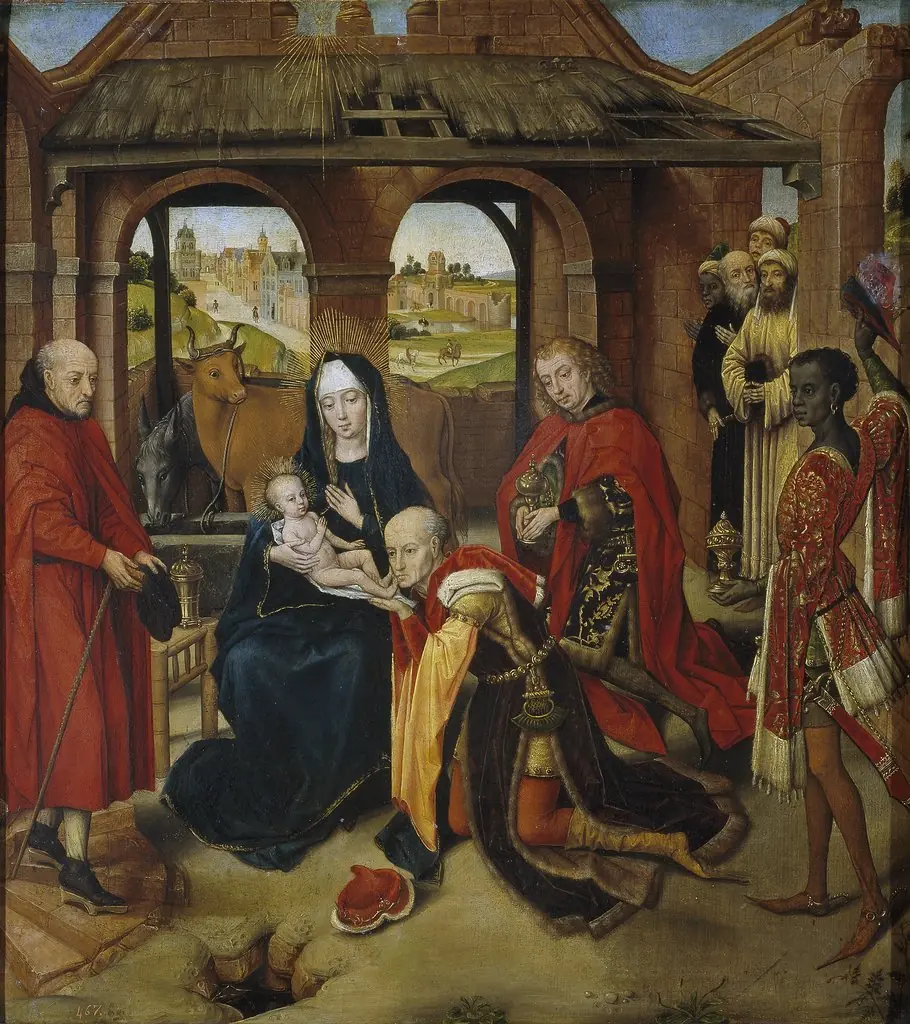
Melchior kneels to offer gold coins, having removed his crown, while Caspar prepares frankincense with his crown dangling behind him.
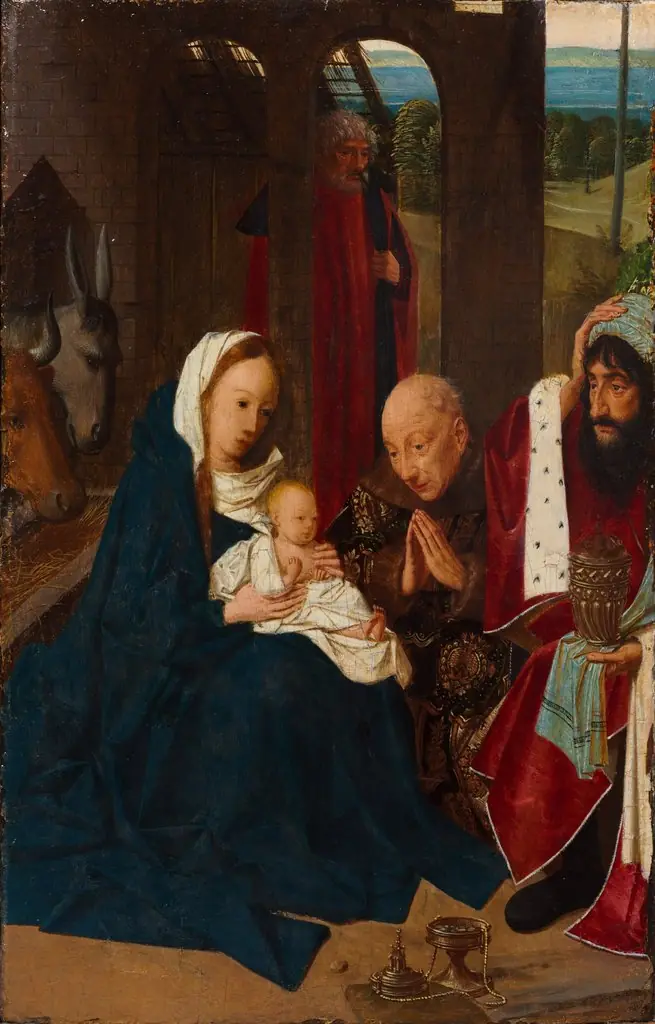
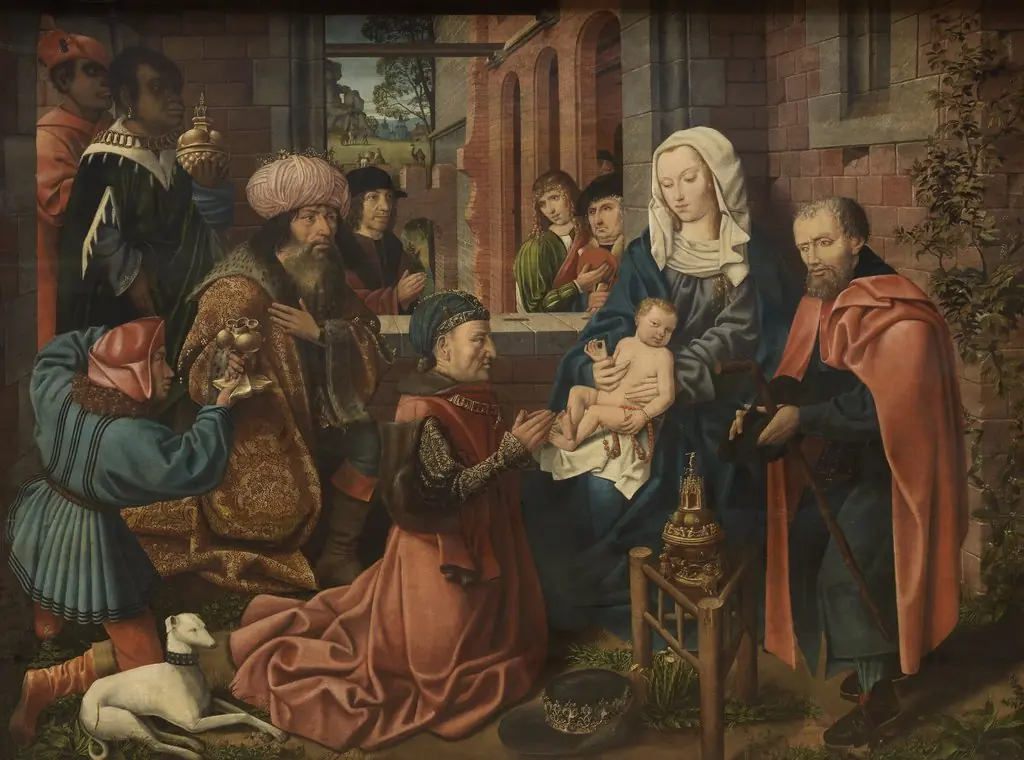
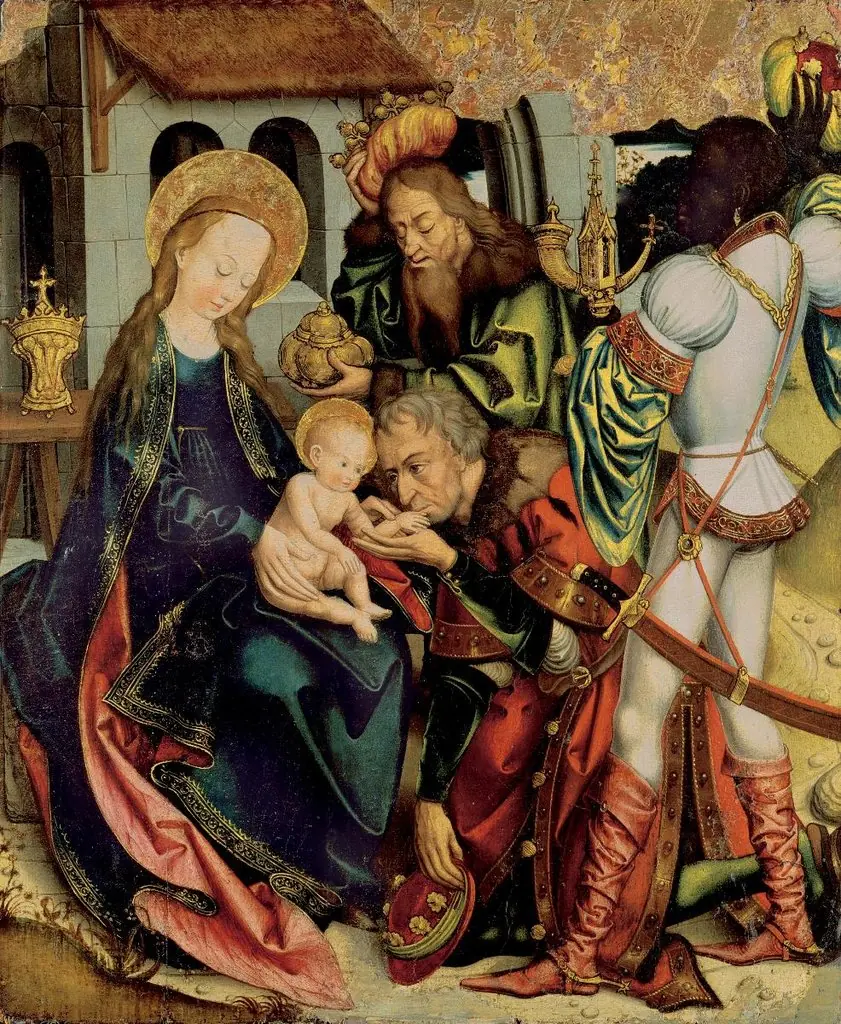
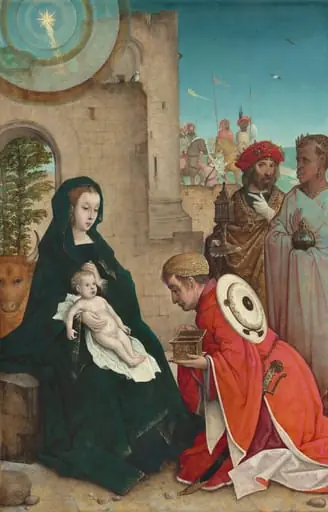
Created circa 1480–1485, this panel depicts the biblical Adoration of the Magi, featuring the Holy Family alongside the three kings presenting their traditional gifts. Melchior kneels to offer gold coins, having removed his crown, while Caspar prepares frankincense with his crown dangling behind him. Balthasar, portrayed with dark skin to signify African origins, retains his crown and holds myrrh.
The composition uniquely illustrates the magi twice: prominently in the foreground and again as miniature figures in the background, representing their arrival from Europe, Africa, and Asia. Technical analysis of the underdrawing reveals an iconographic anomaly; Melchior's European retinue was originally painted with him riding a horse, later changed to a dromedary. This adjustment is unusual, as camels typically symbolized Balthasar's Ethiopian journey, suggesting a deliberate or experimental shift in representing the continents.
History & Provenance
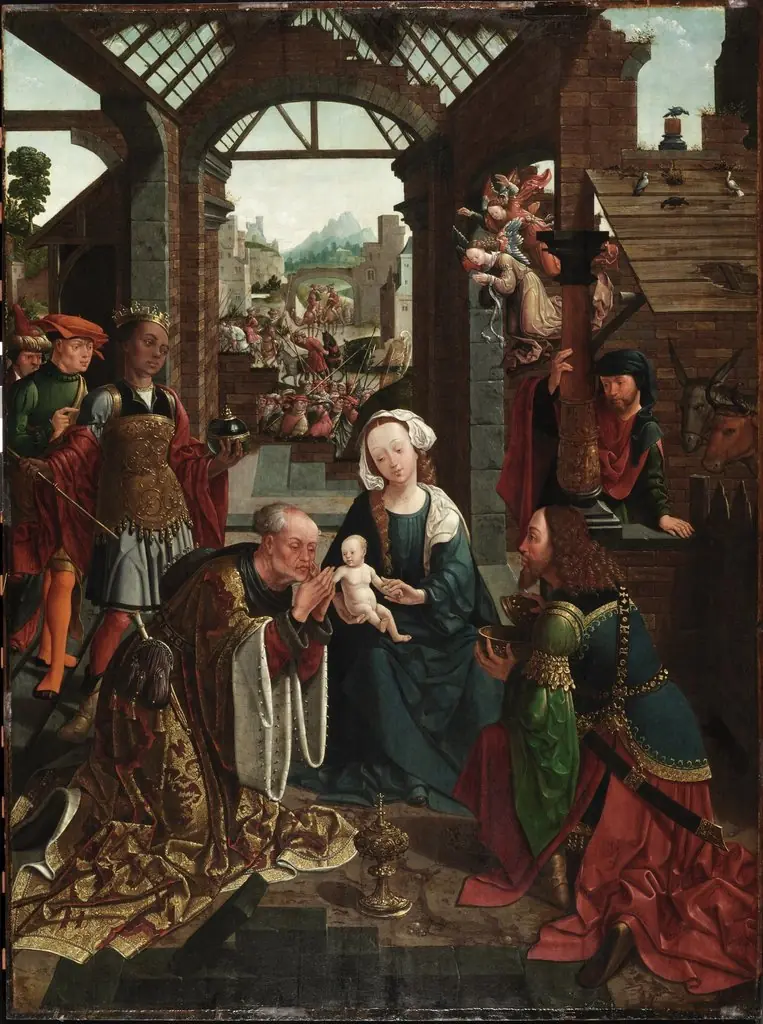
The Adoration of the Magi is an oil-on-panel work by the Haarlem-based painter Geertgen tot Sint Jans, created circa 1480–1485 in Haarlem. The painting belongs to a group of three Adoration compositions attributed to Geertgen on stylistic grounds, all of which derive from a lost or surviving prototype by Hugo van der Goes in Berlin. Documentation of the work's ownership chain extends only as far back as its acquisition in 1904.
Earlier provenance prior to that purchase is not recorded in the available sources. The panel was once held by Willem Hekking before entering the Rijksmuseum collection in Amsterdam, where it is currently displayed in hall 0.1. No commission or original patron is identified in the surviving documentation.
The Adoration of the Magi is held in the collection of the Rijksmuseum, Amsterdam, where it is displayed in hall 0.1. Its museum inventory number is SK-A-2150. The painting's provenance is only documented from its purchase in 1904; it was acquired by Willem Hekking.
The work has been exhibited at the Rijksmuseum as part of its permanent collection, with its record accessible through the museum's website. No specific temporary exhibitions are documented in the provided sources.
Context
Scholarship situates Geertgen tot Sint Jans’s Adoration of the Magi within the late fifteenth-century Haarlem school, noting its stylistic dialogue with Hugo van der Goes’s Berlin panel. The painting’s dual depiction of the Magi, once in the foreground and again in miniature retinues, has been read as a visual meditation on global Christendom and the integration of African, European, and Asian spaces. Technical analysis, including x-radiography, reveals underdrawing revisions, such as the change from horse to dromedary for Melchior’s retinue, which some scholars interpret as intentional iconographic recalibration rather than correction.
The work is one of three attributed versions, underscoring its role in defining Geertgen’s late style and its place among Northern Renaissance depictions of the subject. Its acquisition by the Rijksmuseum in 1904 marks its modern institutional recognition.
Overview
Geertgen tot Sint Jans created The Adoration of the Magi, an oil painting on panel, around 1480–1485. This work depicts the biblical narrative of the Magi's visit to the Christ Child, a popular subject in Northern Renaissance art. The composition brings together various figures and a detailed background, characteristic of the period's narrative approach to religious themes.
Technique & Style
Geertgen tot Sint Jans employed oil paint to achieve a luminous quality in The Adoration of the Magi. The artist utilized smooth, layered applications of paint, particularly glazing, to create rich, glowing colors and subtle transitions in shadow. Light strategically illuminates the figures' faces and drapery, enhancing their forms and contributing to the overall depth and visual texture of the scene.
Own this work as a print
Artist & collection
Artist
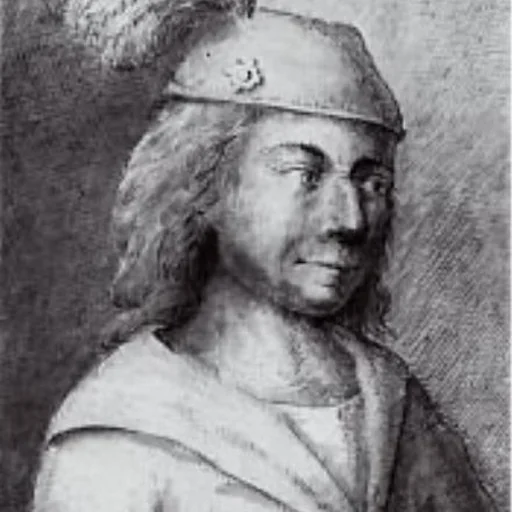
Geertgen tot Sint Jans (c. 1465 – c. 1495), also known as Geertgen van Haarlem, Gerrit van Haarlem, Gerrit Gerritsz, Gheertgen, Geerrit, Gheerrit, or any other diminutive form of Gerald, was an Early Netherlandish…