Artwork
Portrait of an African Man (Christophle le More?)
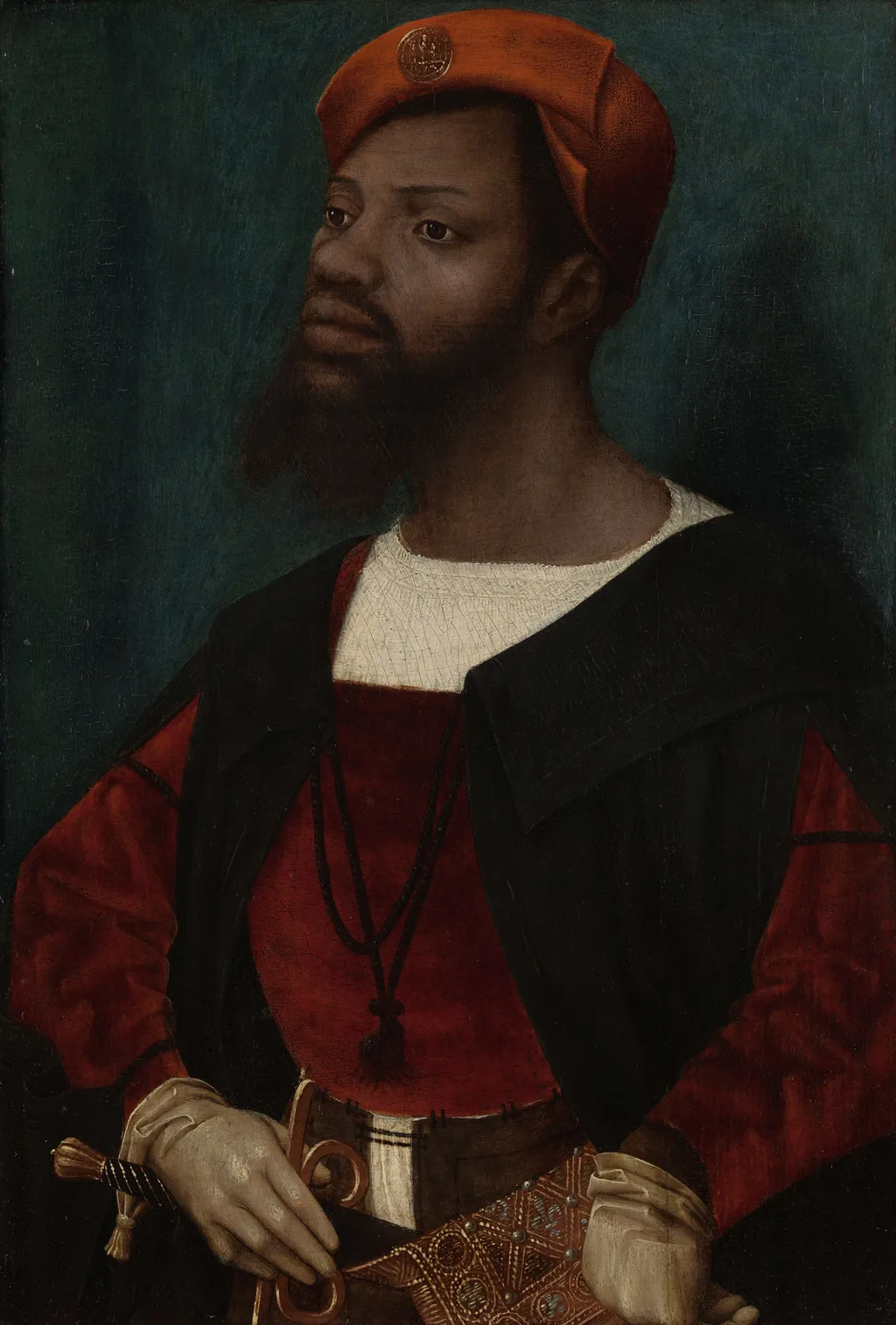
Portrait of an African Man (Christophle le More?) is an oil painting by the Northern Renaissance artist Jan Mostaert. It dates from 1520 and is held in the collection of the Museum Boijmans Van Beuningen.
About this work
Subject & Meaning
His confident posture, slightly raised chin, calm gaze, and leftward-turned three-quarter view, signals status and self-assurance.
The painting depicts a black man in European court dress, shown in half-length against a blue-green background. His confident posture, slightly raised chin, calm gaze, and leftward-turned three-quarter view, signals status and self-assurance. He wears an orange-red beret bearing a pilgrim badge of the Virgin, a white ruffled shirt, a deep red doublet, and a black mantle with slashed sleeves laced with black cords.
His accessories include thin white leather gloves with tasseled wrists, a sword, and an embroidered pouch with a fleur-de-lis.
The subject's identity remains debated. The Rijksmuseum proposes he may be Christophle le More, a black archer in the Habsburg emperor Charles V's guard, citing the Halle pilgrim badge as possible evidence. Others associate him with Margaret of Austria's court in Mechelen, or suggest Spanish or Portuguese origins based on insignia.
Art historian Kate Lowe argues he is a nobleman or visitor to the Mechelen court, given his posture and clothing.
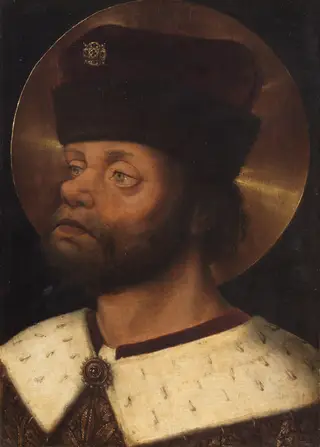
An alternative interpretation by Marie-José Govers identifies him as Saint Maurice, the Theban Roman soldier, citing the sword, gemstone-studded belt, and goatskin gloves as attributes of importance. However, curator Esther Schreuder disputes this, noting the sword is a generic soldier's symbol and that Saint Maurice is traditionally depicted with a holy spear. The small scale of the painting suggests a personal portrait rather than a devotional image.
Technique & Style
The portrait is executed in oil paint on an oak panel, measuring approximately 30.8 cm in height by 21.2 cm in width. The work depicts a half-figure of a man in three-quarter view, wearing European dress of the early 16th century, including a red wams, a black mantle with slashed sleeves bound by braided cords, and gloves of thin white leather. He holds a richly decorated sword with a belt pouch embroidered with floral motifs and a French lily, and his red beret bears a pilgrim badge of the Virgin.
The painting’s formal qualities include a self-assured posture, calm gaze, and a dark brown face with a short beard, while the technical execution reflects Jan Mostaert’s characteristic style, aligning closely with other attributed portraits in brushwork and composition. The work is dated to around 1520–1526 based on dendrochronological analysis, and its handling of clothing and armor details demonstrates contemporary Northern Renaissance portrait conventions.
History & Provenance
Dendrochronological analysis of the oak panel indicates the painting was created after 1520, with a more plausible date of 1526 or later, fitting the 1525–1530 range generally attributed to Jan Mostaert. The work remained undocumented until 1920, when art dealer Tomás Harris acquired it, likely from a Spanish source. Harris commissioned an attribution from Max Friedländer based on a photograph, which identified the artist as Mostaert.
The painting subsequently passed to Hans Wendland in 1924, then to Galerie Fischer, and was sold to Sir Thomas Barlow in 1934. After Barlow's death, his son Basil Stephen Barlow inherited the piece, which was later loaned to Kenwood House from 1998 to 2003. In 2004, it moved to dealer Robert Noortman before the Rijksmuseum purchased it for €600,000 in June 2005 with support from the Rembrandt Foundation.
Following the acquisition, the work was temporarily housed at the Museum Boijmans Van Beuningen during Rijksmuseum renovations before its return to Amsterdam in September 2021.
The painting is held in the Rijksmuseum Amsterdam, accessioned as part of its permanent collection.
It was acquired by the Rijksmuseum in June 2005 from dealer Robert Noortman with support from the Rembrandt Foundation for €600,000. Between 2005 and 2021, the work was displayed at Museum Boijmans Van Beuningen during renovations at the Rijksmuseum and returned to the latter in September 2021.
Its exhibition history includes public display at Museum Boijmans Van Beuningen in 1936 and subsequent appearances in Dutch and British venues prior to 2005, as well as inclusion in the traveling exhibition “Black is beautiful: Rubens to Dumas” and “Remember Me.”
Context
Jan Mostaert's portrait is widely recognized by scholars as potentially the earliest surviving independent painting of a specific Black man in European art, distinguishing it from earlier stereotypical depictions of biblical figures like Saint Maurice or Balthazar. While the subject's identity remains debated, leading theories identify him as Christophle le More, a Black archer in the service of Emperor Charles V, or a nobleman within the court of Margaret of Austria. Art historians such as Jan Piet Filedt Kok and Mareike de Winkel emphasize its unique status as the only independent portrait of a Sub-Saharan African from the late Middle Ages and Renaissance to survive.
The work has also sparked modern discourse regarding the historical origins of the figure Zwarte Piet. Although some scholars, like Marie-José Govers, have argued for a religious identification as Saint Maurice to reflect contemporary Catholic-Protestant tensions, this view is contested by curators who note the painting's small format aligns more closely with personal portraiture than altarpiece iconography.
Legacy
The painting is recognized as the earliest surviving independent portrait of a specific Black man in European art, distinguishing it from earlier stereotypical depictions of biblical figures like Saint Maurice. Its historical significance was first highlighted by scholar Friedrich Winkler in 1959, who noted its unique character. In modern discourse, the work has influenced debates regarding Dutch cultural history; in 2013, museum director Wim Pijbes cited the figure's proud demeanor and attire as evidence tracing the origins of the Zwarte Piet folklore to the 16th century.
This interpretation prompted scholar Marie-José Govers to publish a counter-argument in 2014, proposing the subject was actually Saint Maurice to refute the folklore connection. The portrait continues to hold a prominent place in exhibitions addressing race and representation, including the 2011 show "Black is beautiful: Rubens to Dumas."
Overview
Jan Mostaert’s oil painting, commonly titled Portrait of an African Man, dates from the mid‑1520s, likely between 1525 and 1530. Executed in the Northern Renaissance style, the work presents a single figure of African descent rendered with careful attention to facial features and attire. It stands out in early modern European art for its rare focus on an individual black subject rather than a symbolic or allegorical representation.
Own this work as a print
Artist & collection
Artist
Jan Mostaert (c. 1475 – 1552/1553) was a Dutch Renaissance painter who is known mainly for his religious subjects and portraits. One of his most famous creations was the Landscape with an Episode from the Conquest of…

 Christ Shown to the People
 Landscape with a Scene of the Conquest of America
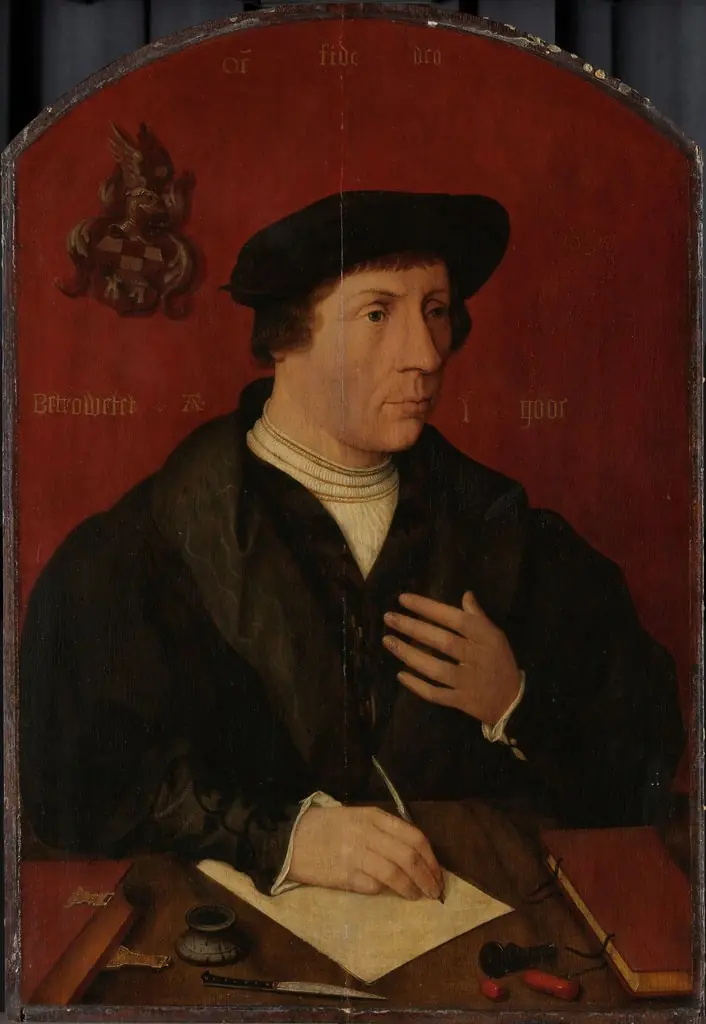 Portrait of a man
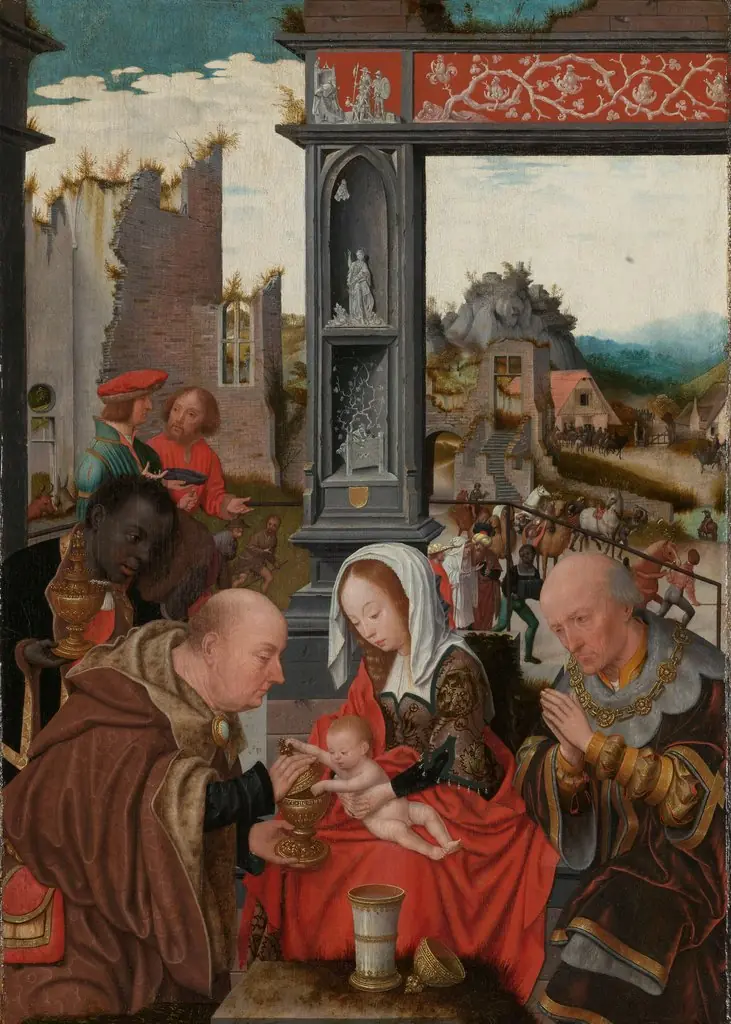 The Adoration of the Magi
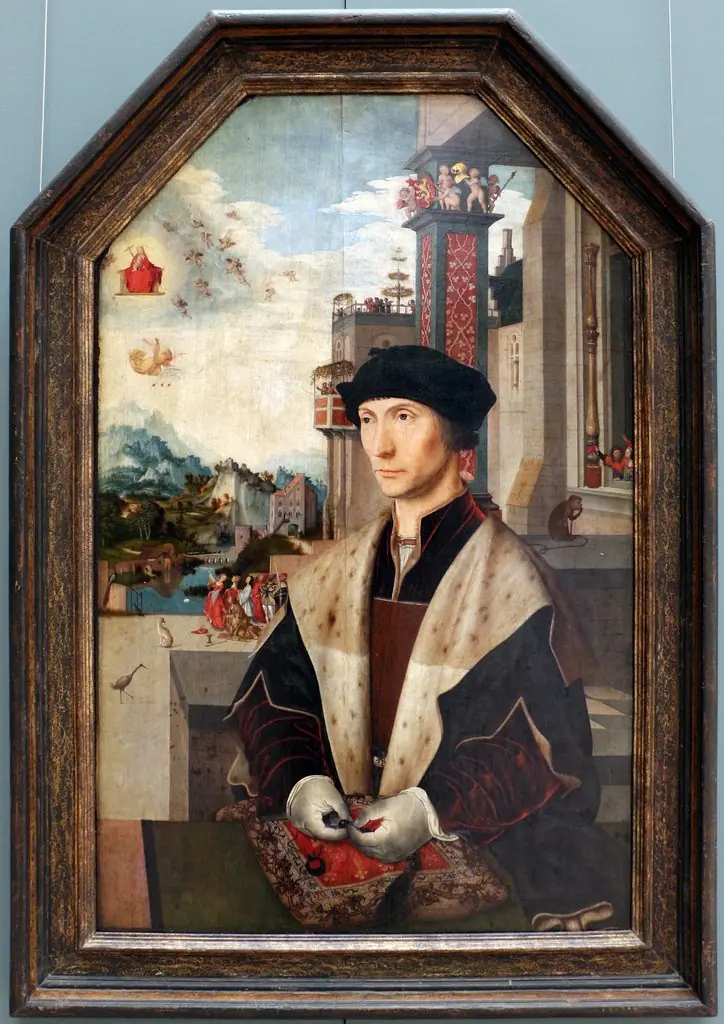 Portrait of the knight Abel van Coulster (1477-1548), representative to the Hof van Holland in 1512
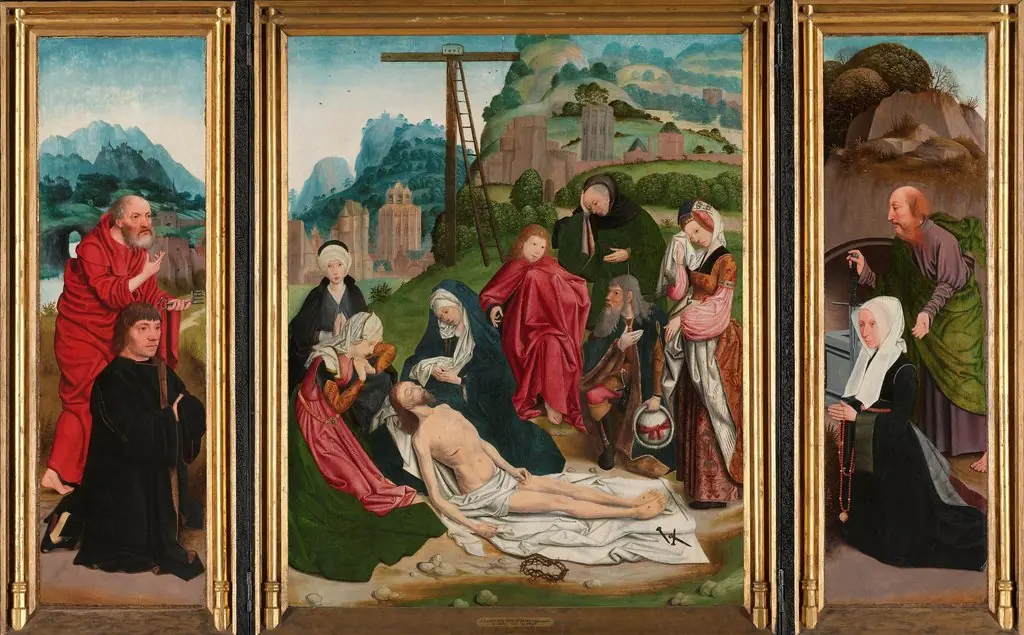 Triptych with the Lamentation (centre panel), the donor with St Peter (inner left wing), the donor’s wife with St Paul (inner right wing) and the donors’ coats of arms (outer wings)
 A Woman
 Portrait of a Man
 Saint Maurice
 King Caspar
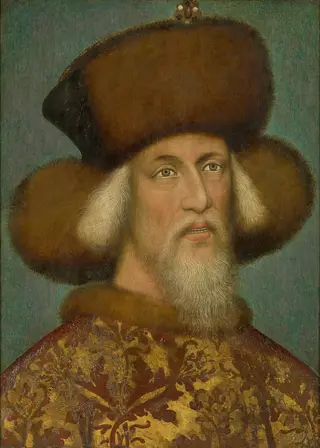 Portrait of Sigismund of Luxemburg
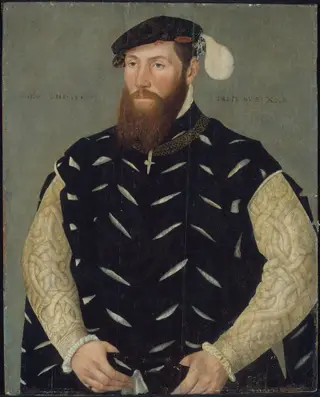 Sir William Butts
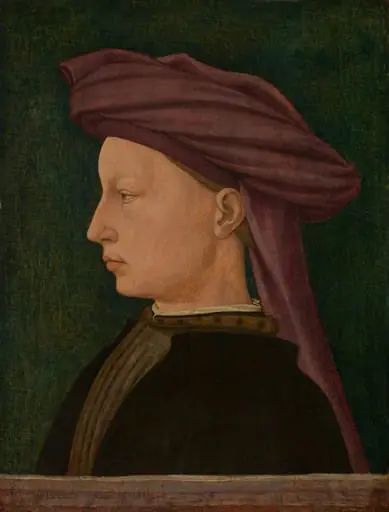 Profile Portrait of a Young Man
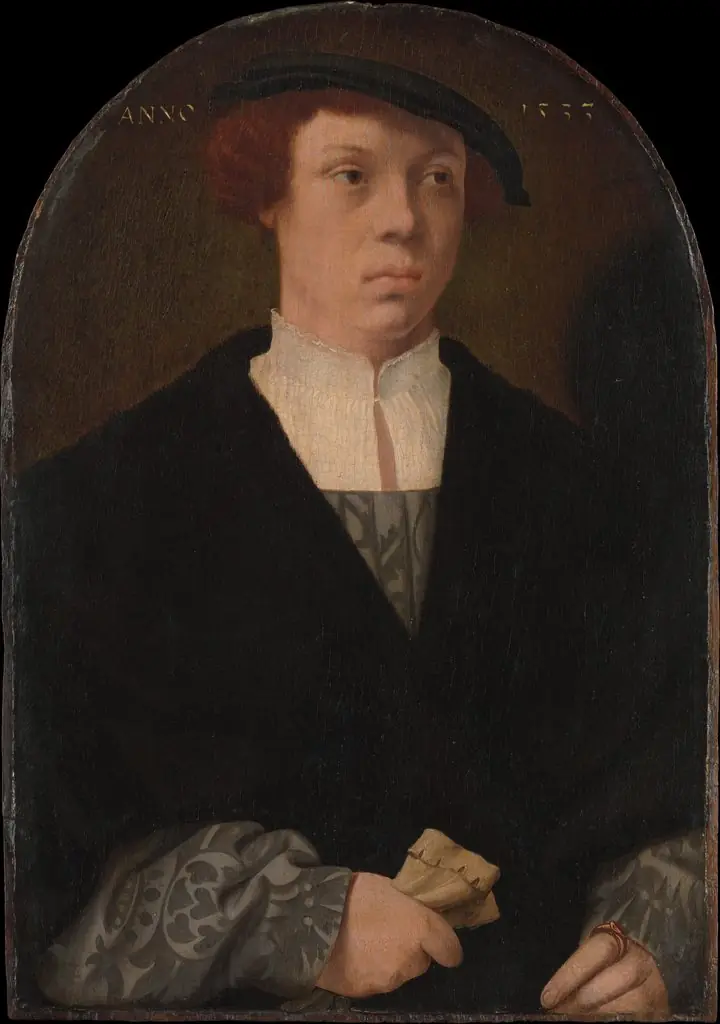 Portrait of a Man
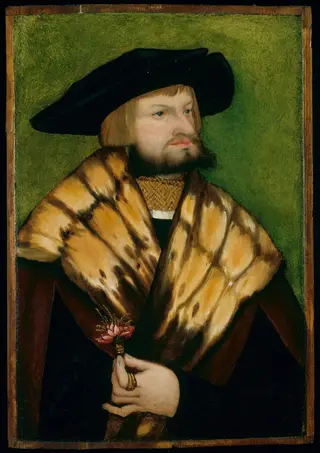 Portrait of Leonhard Fuchs
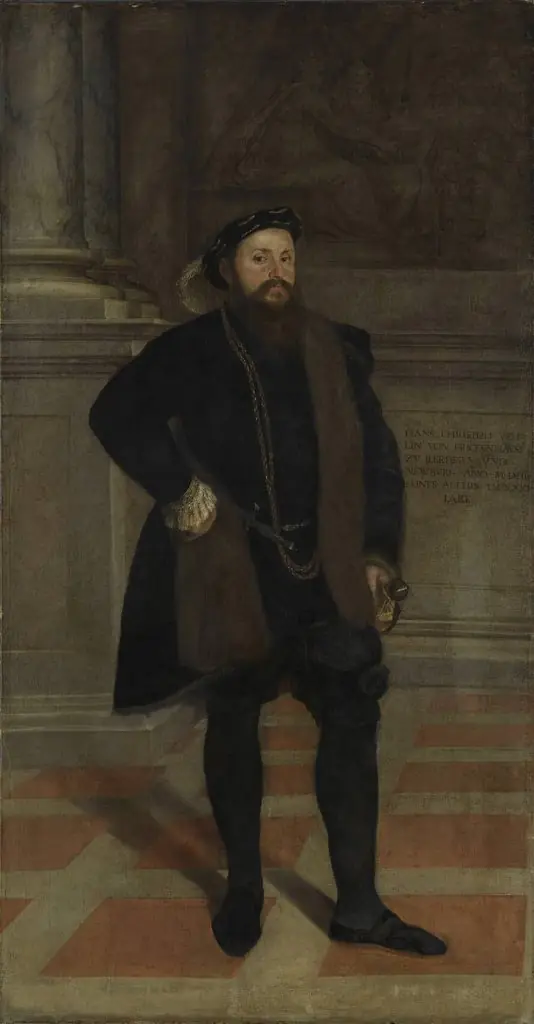 Hans Christoph I. Vöhlin von Frickenhausen (1522-1576)
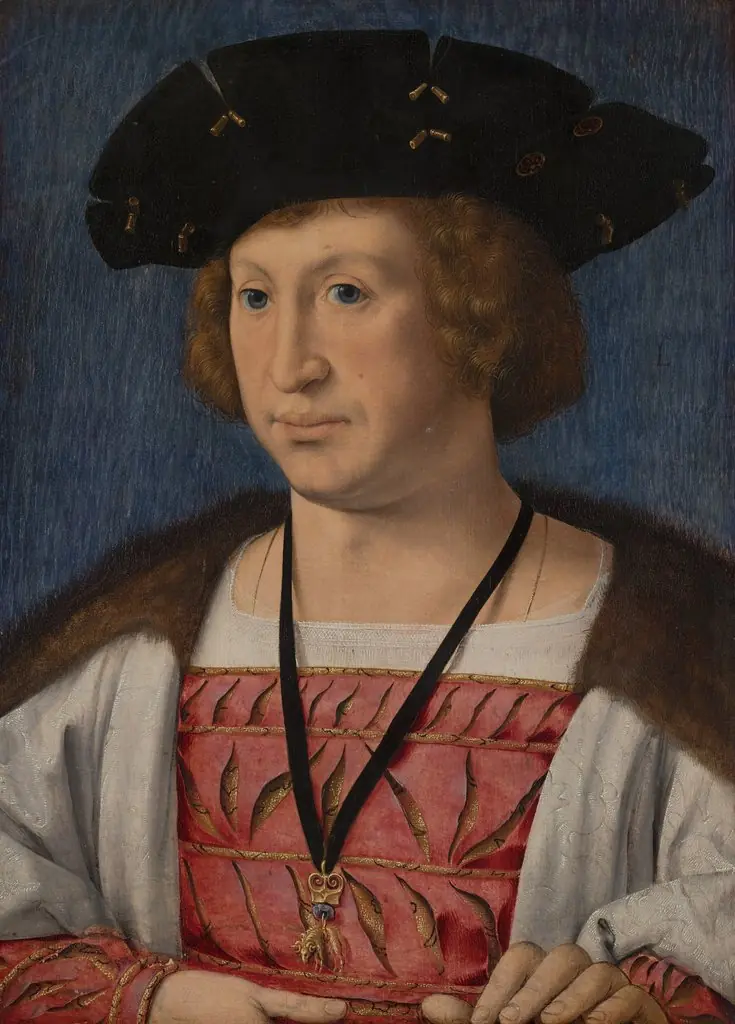 Portrait of Floris van Egmond (1469-1539), Count of Buren and Leerdam
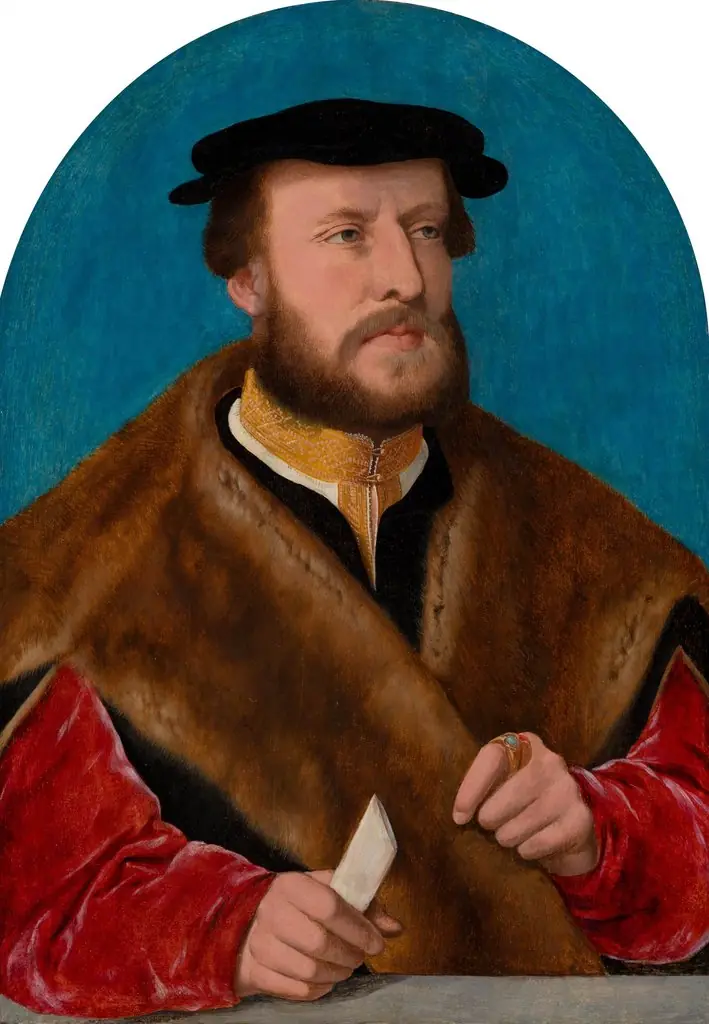 Portrait of Jakob Omphalius
- Portrait of an African Man (Christophle le More?)