Artwork
Untitled
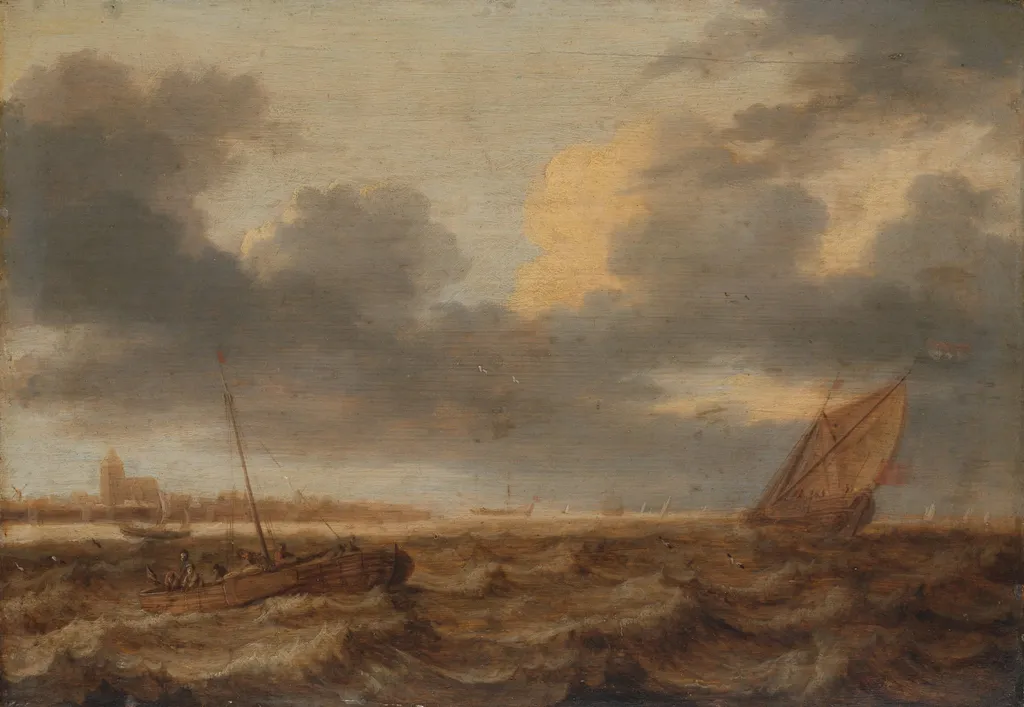
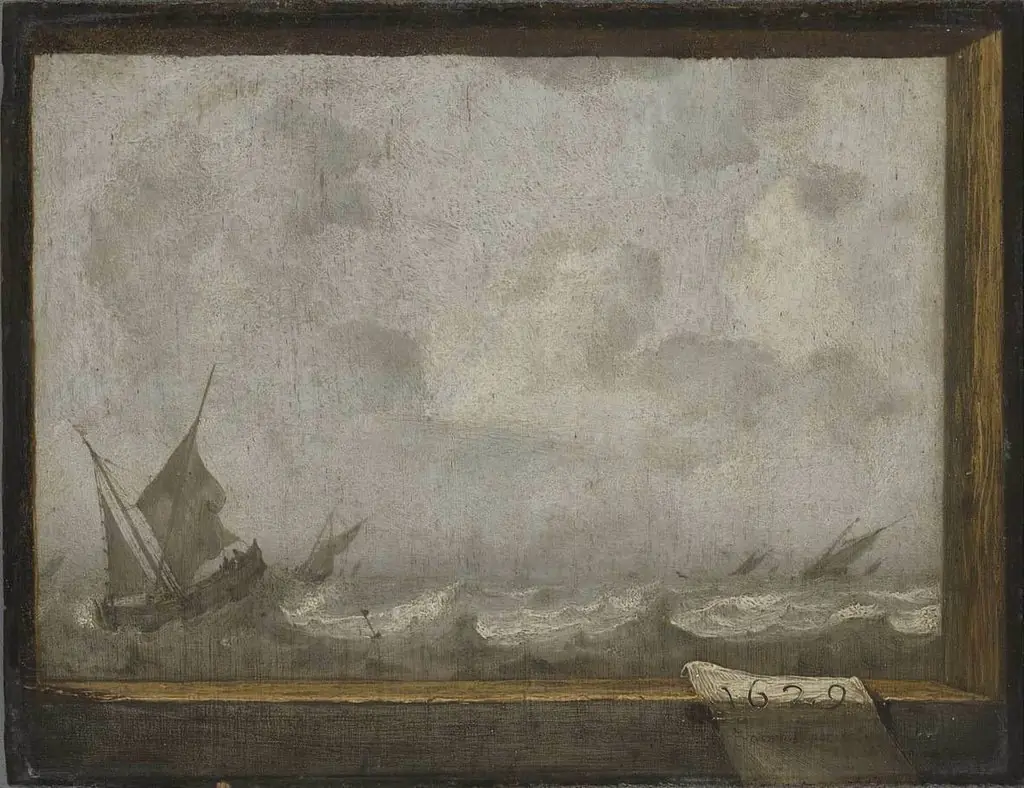
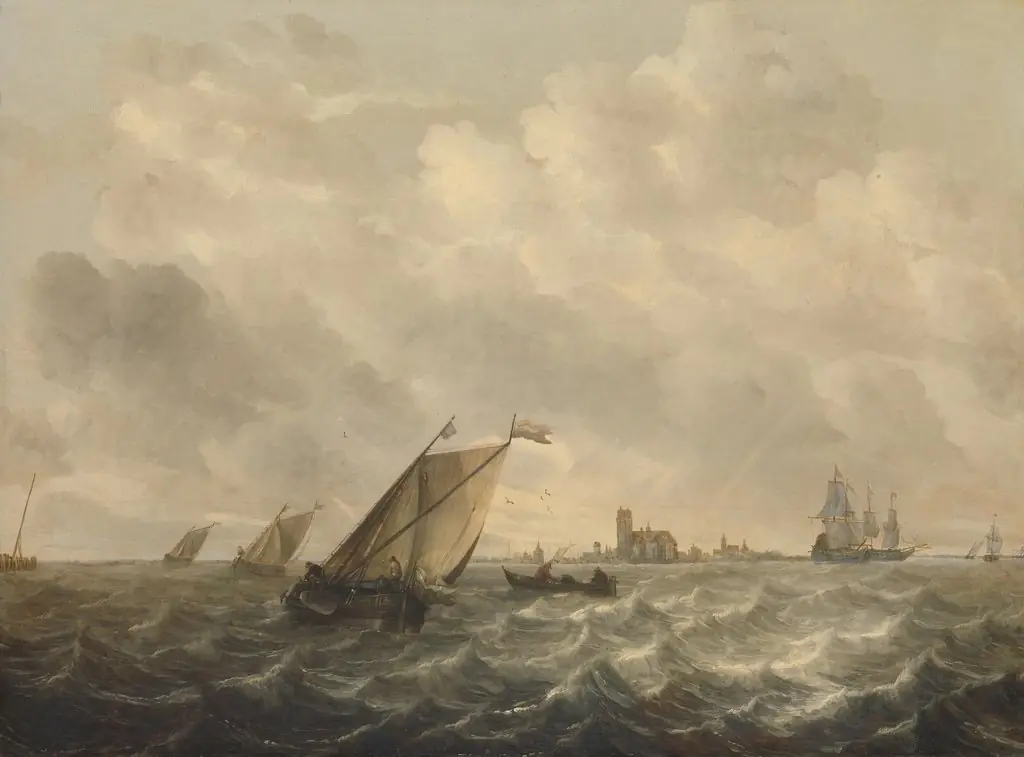
Untitled is an unspecified painting by the Dutch Golden Age artist Jan Porcellis. It dates from 1630 and is held in the collection of the Rijksmuseum.
About this work
Technique & Style
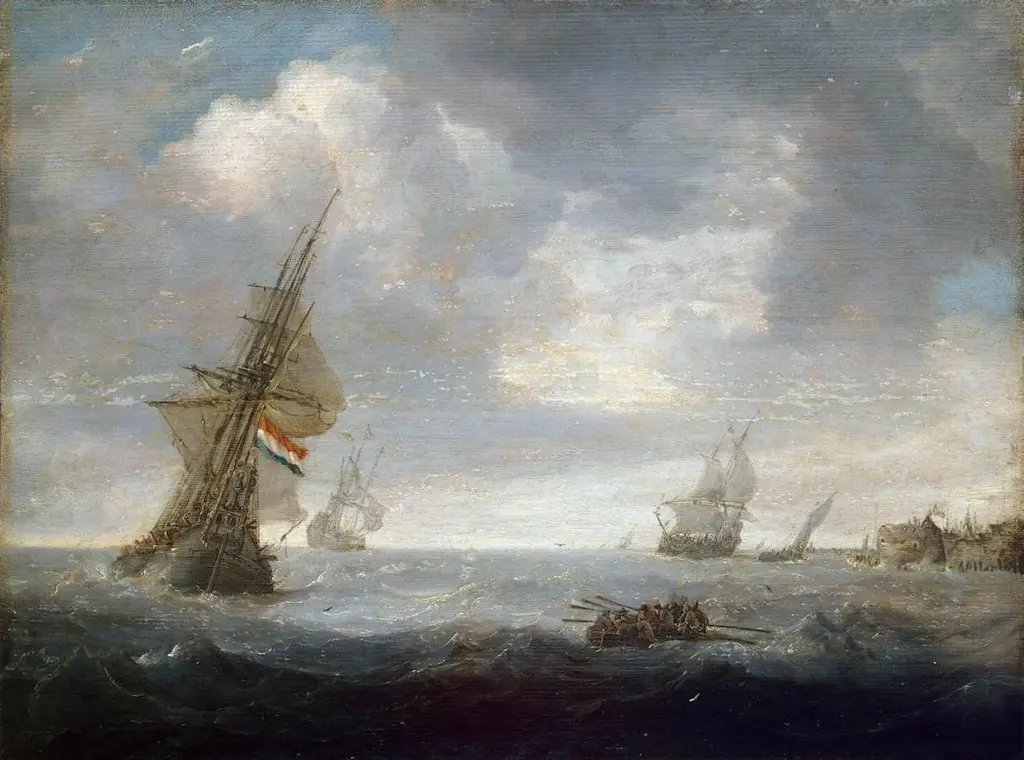
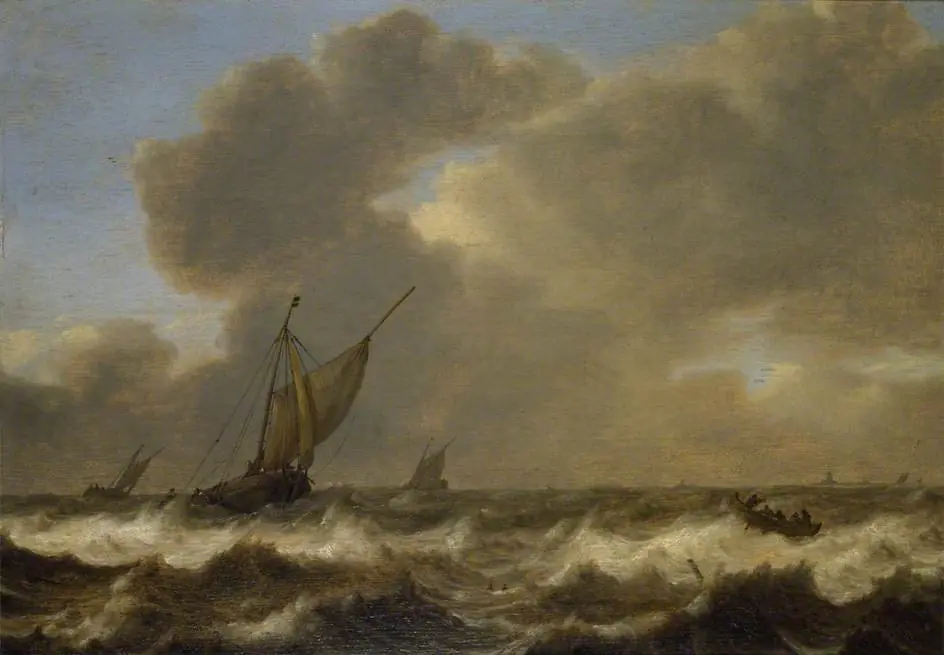
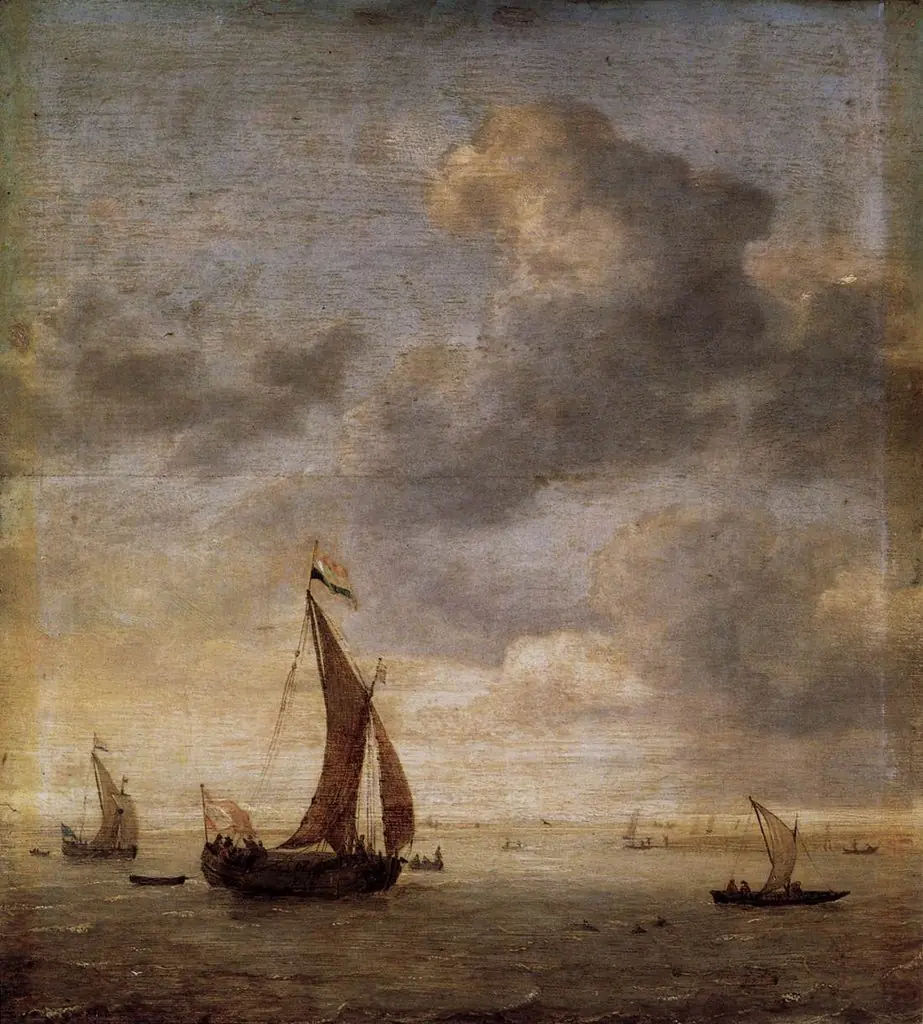
Jan Porcellis's marine paintings, executed in oil on wood panels (specifically oak in some documented works), are characterized by a monochromatic palette and a tonal approach that prioritizes atmospheric effects over detailed narrative. His technique involves a subtle handling of light, utilizing grey, hazy atmospheres to blur horizons and project mottled sunlight onto water and land, creating a sense of ambiguity regarding specific locations. Stylistically, Porcellis shifted away from the theatrical depiction of ship grandeur, instead focusing on the vastness of sea and sky where vessels appear as small, solid elements within a dominant natural environment. This formal simplicity, often featuring overcast skies and rough waters, marked a decisive transition in the genre, emphasizing the changing weather and the fragility of human presence against the elements rather than historical or dramatic maritime events.
Context
Jan Porcellis pioneered a shift in Dutch marine painting by moving away from the grand, celebratory depictions of ships toward a more tonal and atmospheric approach. His works, characterized by overcast skies, rough seas, and simplified compositions, emphasized the subtle interplay of light, weather, and space, influencing later tonal landscape painters such as Jan van Goyen and Salomon van Ruysdael. This stylistic evolution, noted for its emotional depth and naturalism, positioned Porcellis as a transitional figure between early realism and the tonal phase in 17th-century marine art. His innovations in depicting maritime scenes with greater psychological nuance and compositional restraint were recognized by contemporaries and later scholars as foundational to the genre's development.
Legacy
This tonal approach laid the groundwork for later Dutch marine painting.
Jan Porcellis's marine paintings are credited with initiating a decisive transition in Dutch marine art, shifting the genre from depictions of ship grandeur in historical settings to atmospheric scenes dominated by sea and sky, overcast weather, and rough waters. This tonal approach laid the groundwork for later Dutch marine painting.
His influence extended to a circle of pupils and followers, including Simon de Vlieger, Willem van Diest, Hendrick van Anthonissen, and Hans Goderis, as well as his son Julius Porcellis. Collectors of the stature of Jan van de Capelle, who held sixteen of his works, Rembrandt van Rijn, and Peter Paul Rubens acquired his paintings, underscoring his contemporary prestige. Porcellis was regarded during his lifetime as one of the most prominent painters of the Dutch Golden Age, and his stylistic innovations continued to shape the marine tradition after his death.
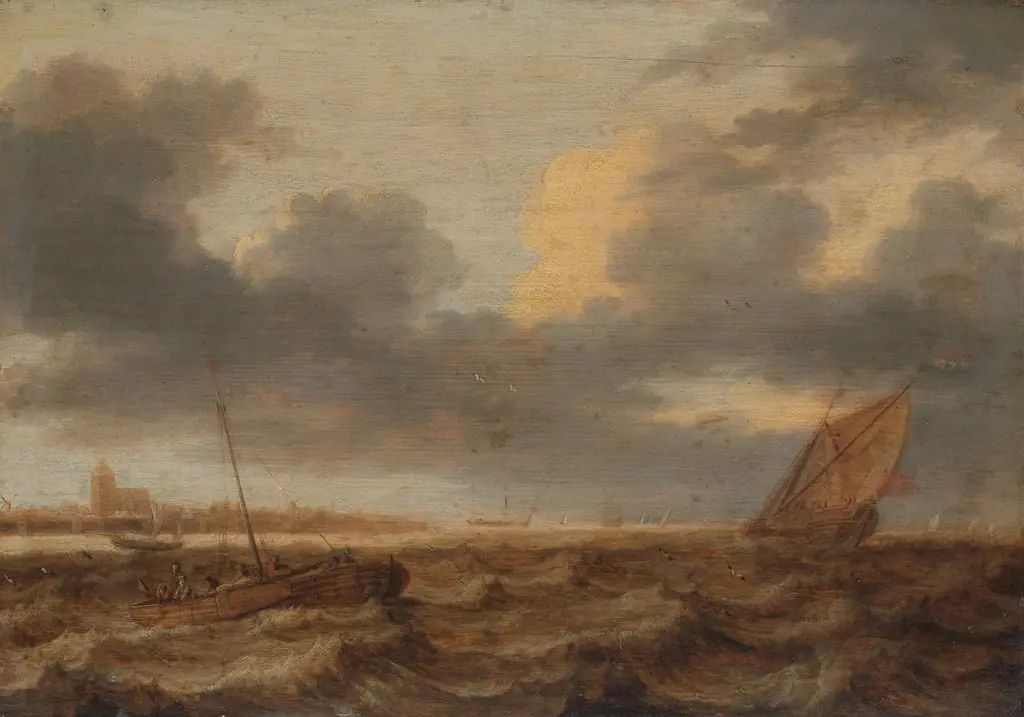
Own this work as a print
Artist & collection
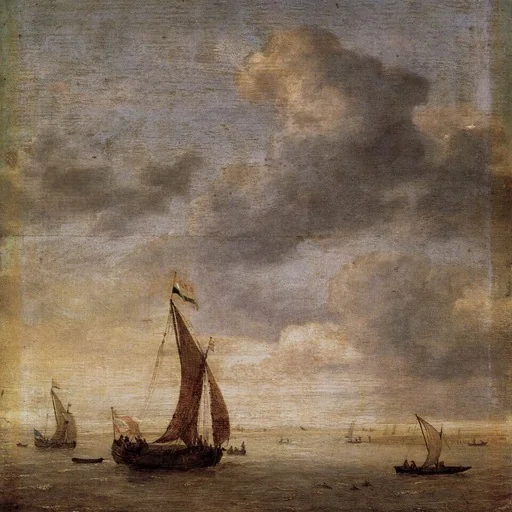
Artist
Jan Porcellis (1580/84 Ghent – 29 January 1632 Zoeterwoude) was a Dutch marine artist in the seventeenth century.

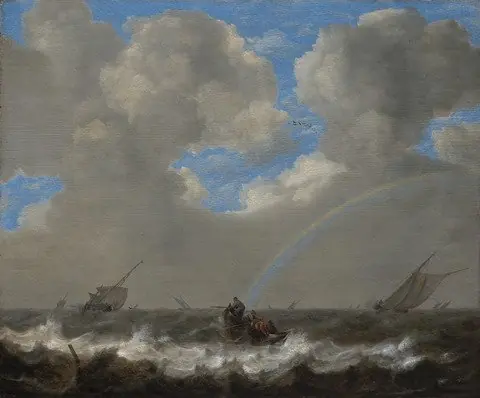
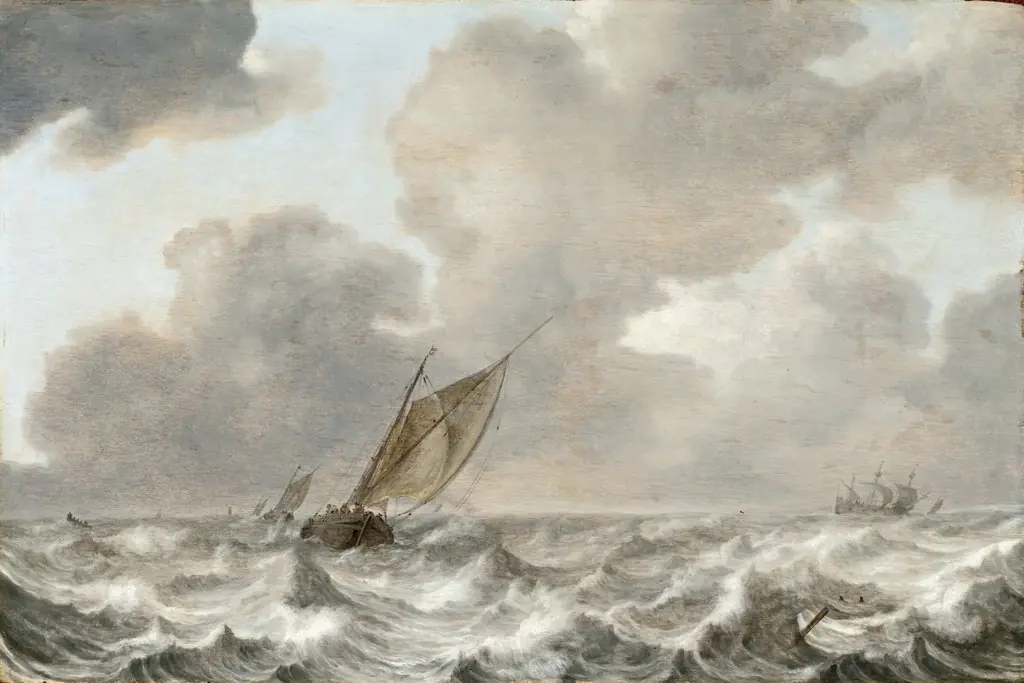
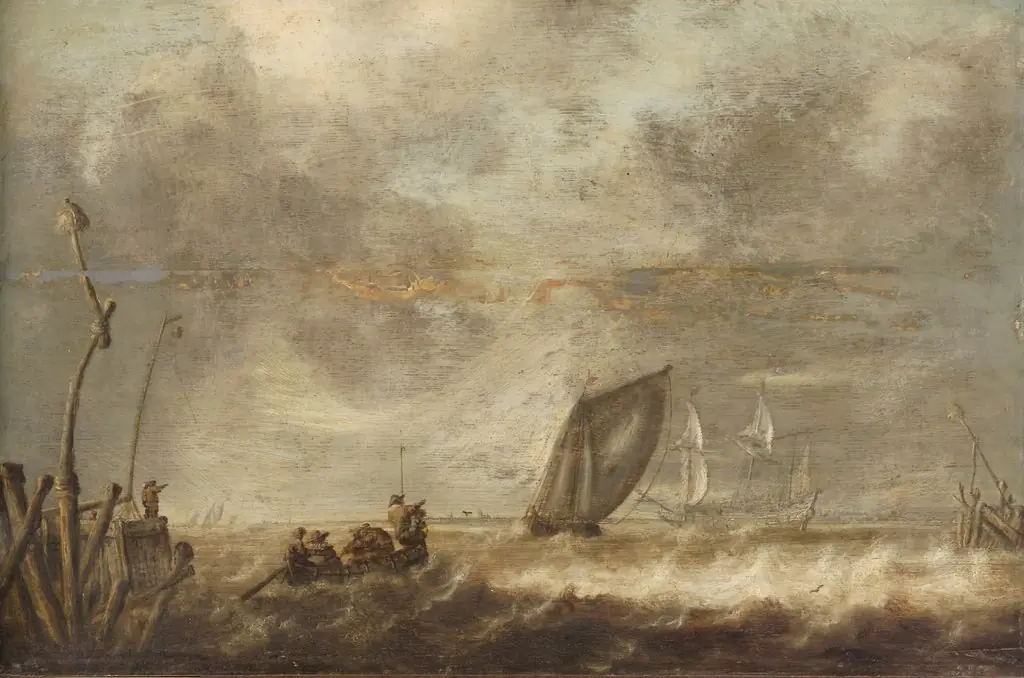
 Ships near a pier
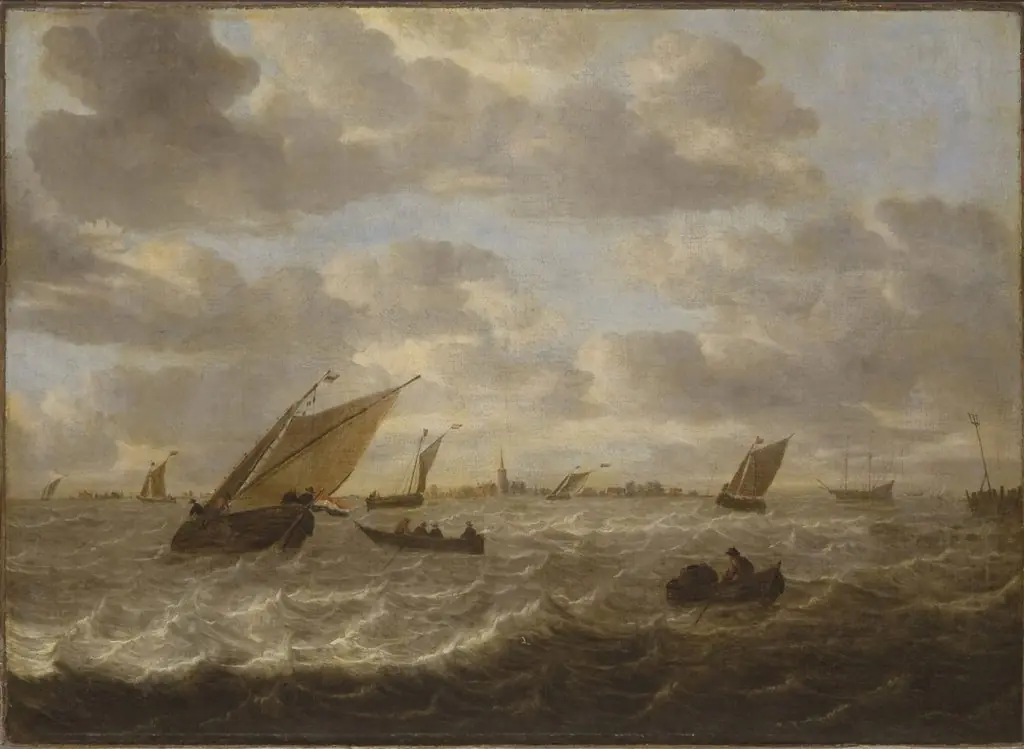 Marine with a Rough Sea
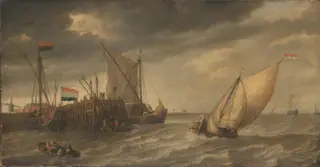 Travellers Disembarking at a Jetty on the Scheldt in Strong Winds
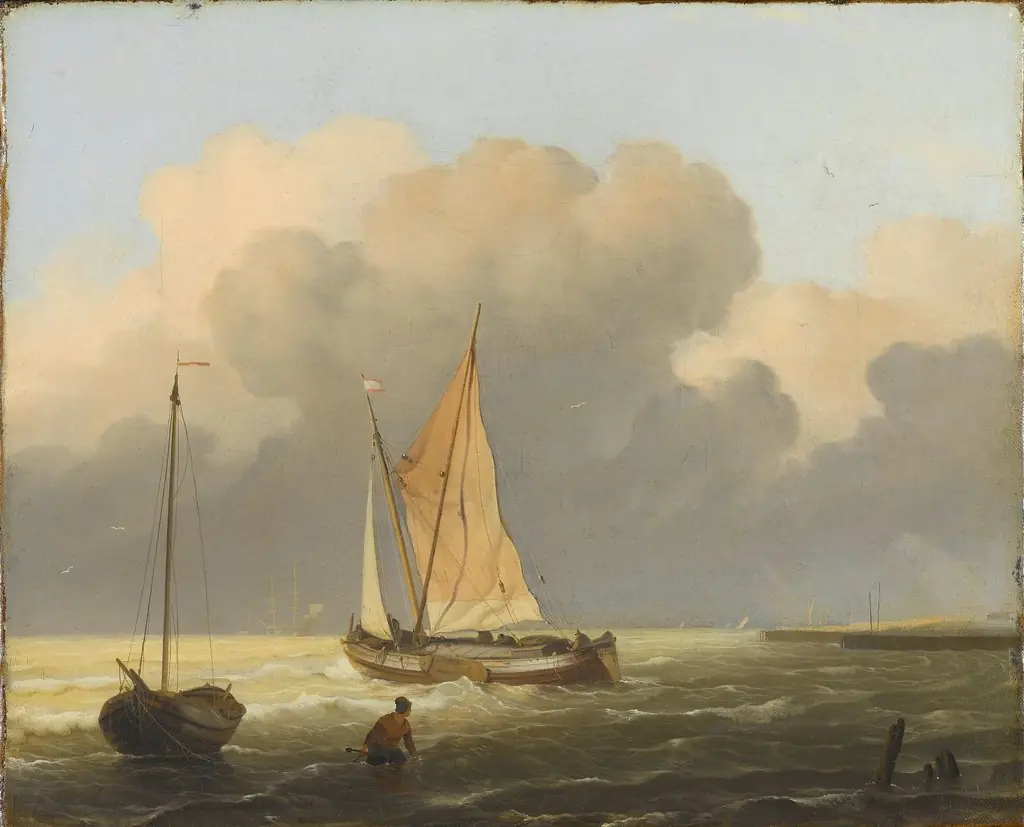 Seas off the coast, with a spiritsail barge
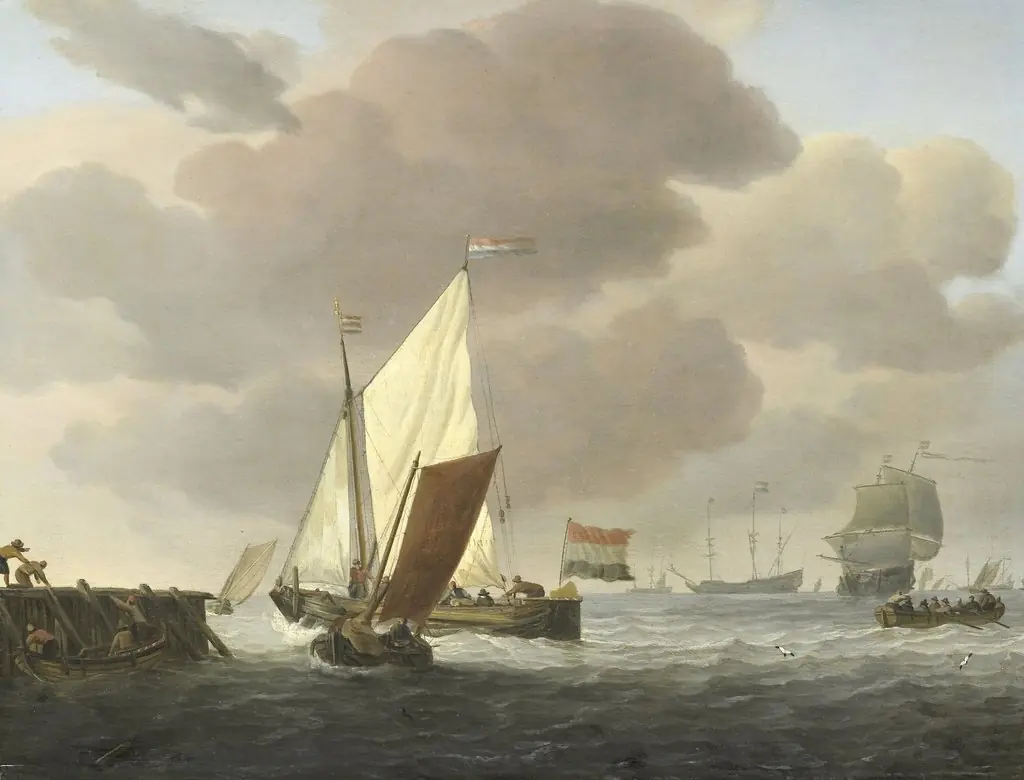 Ships near the shore in a stiff breeze
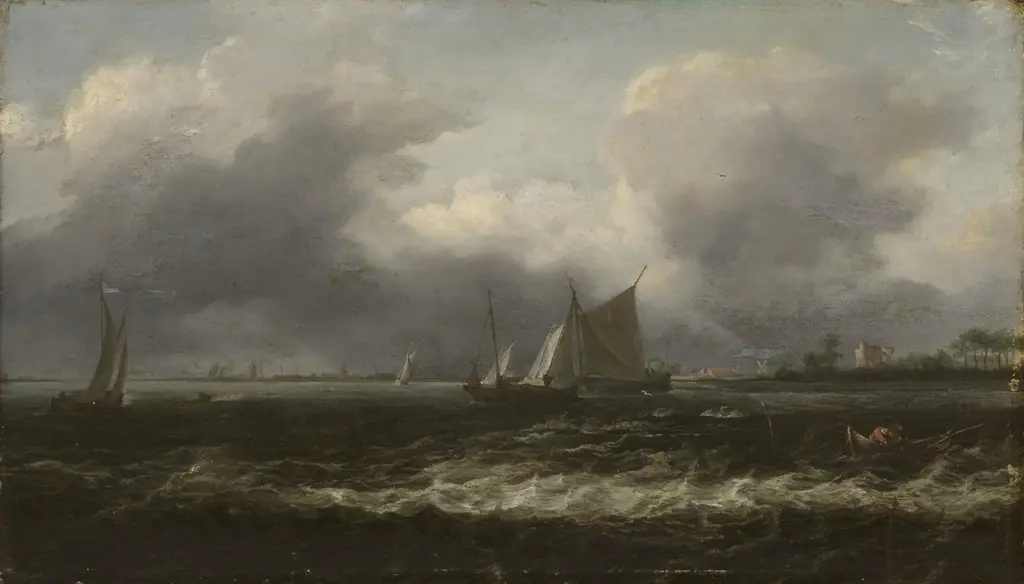 Rough Sea
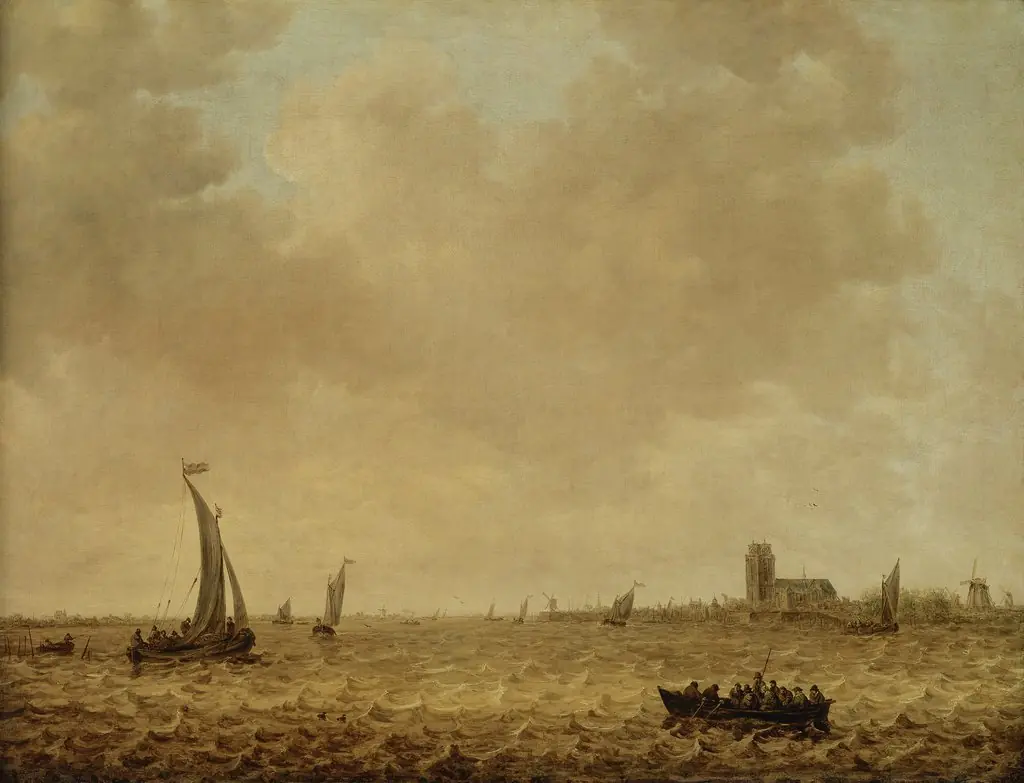 View of Dordrecht from the Oude Maas
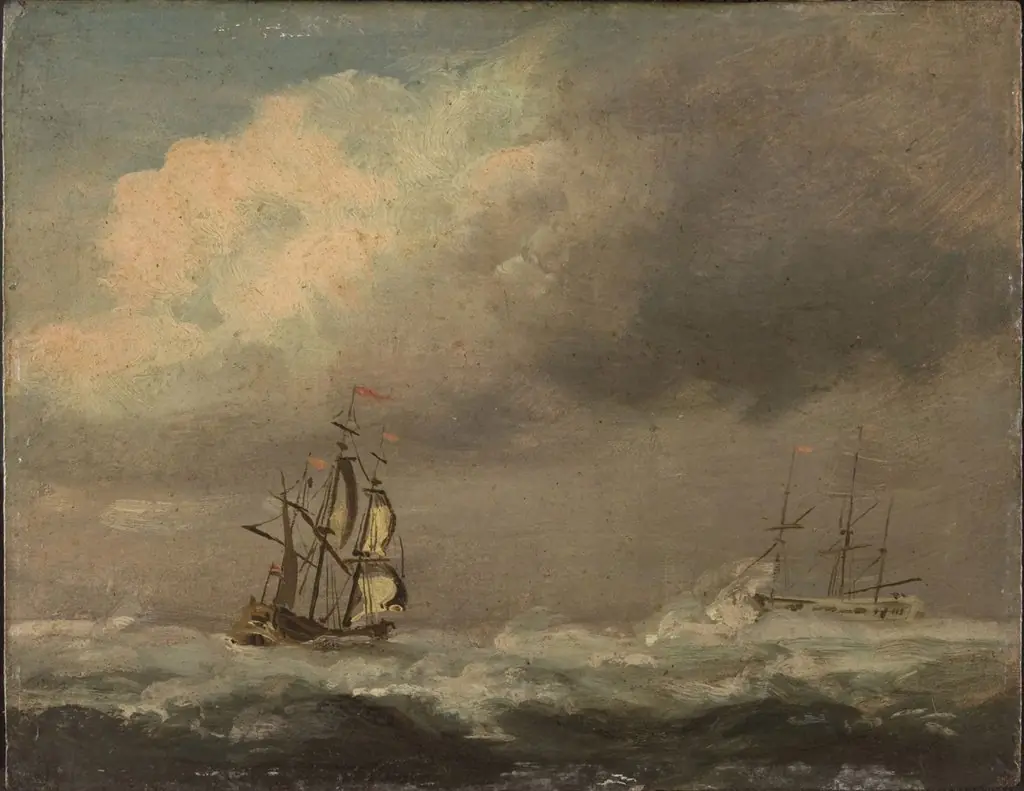 Marine
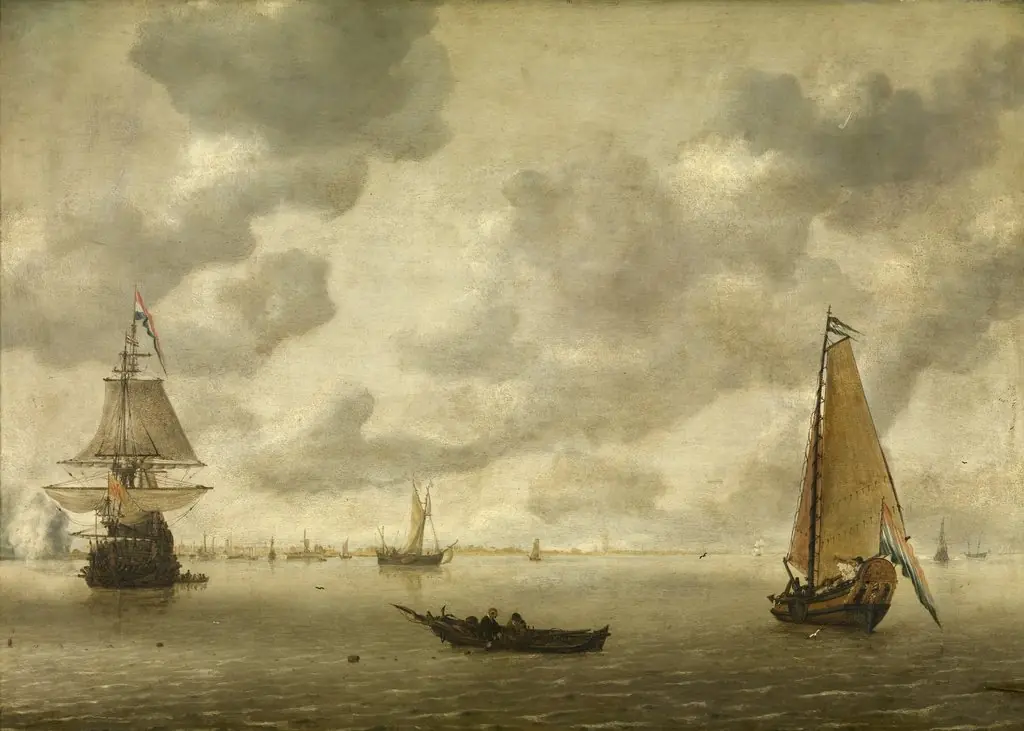 Dutch ships in a harbour firing salute
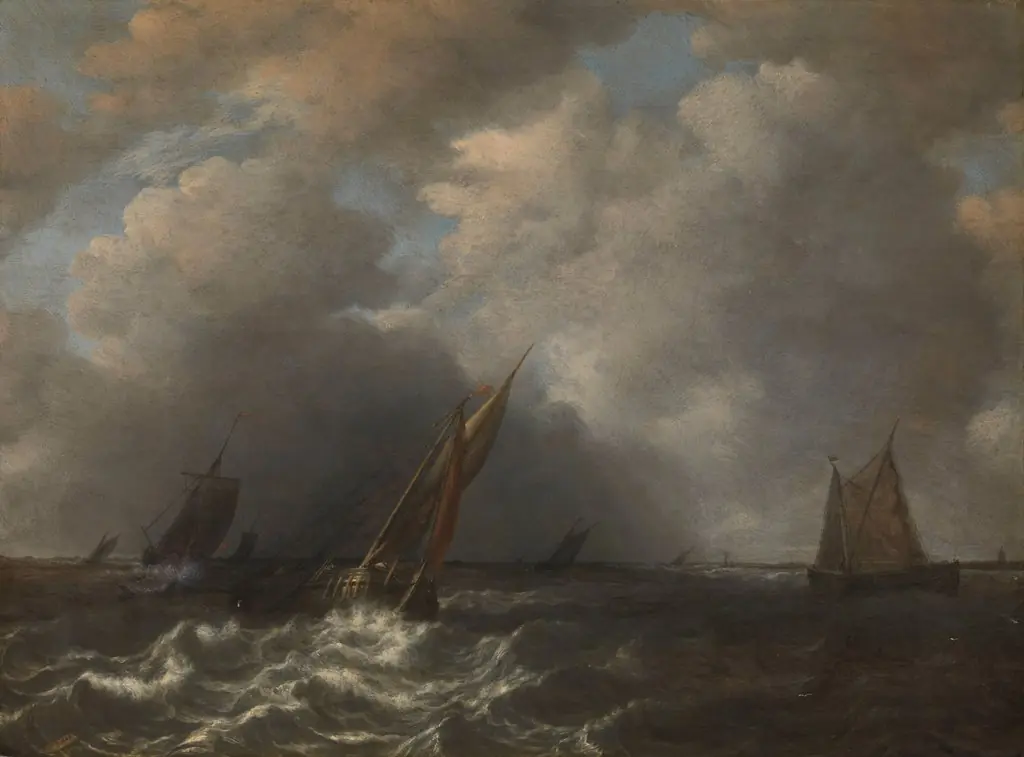 Storm on the Meuse River
 River view