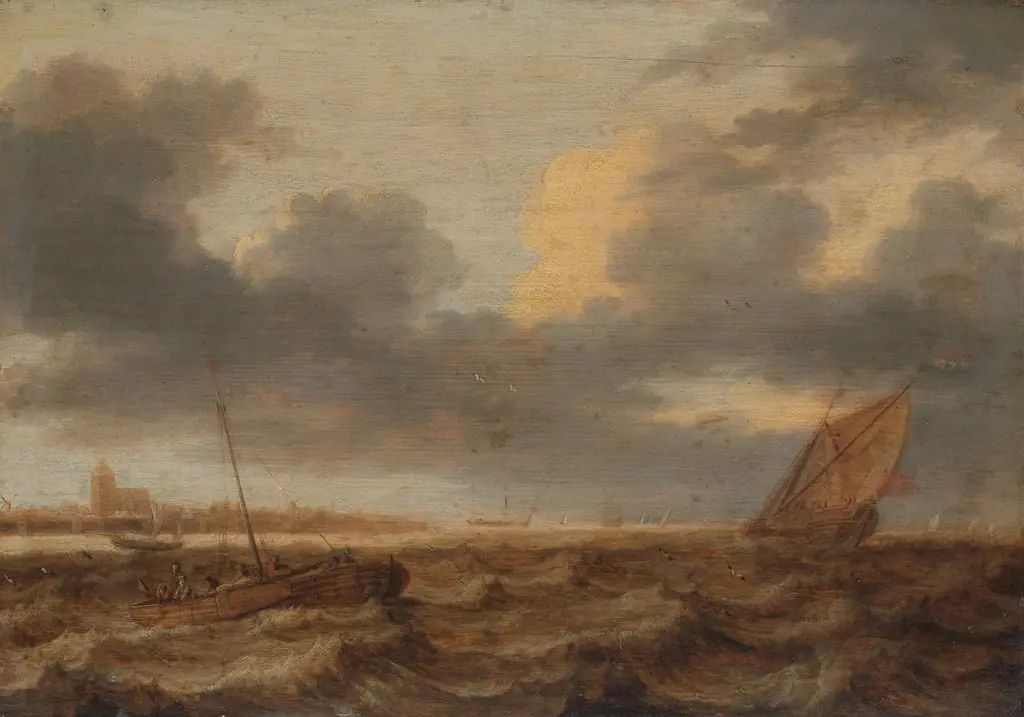
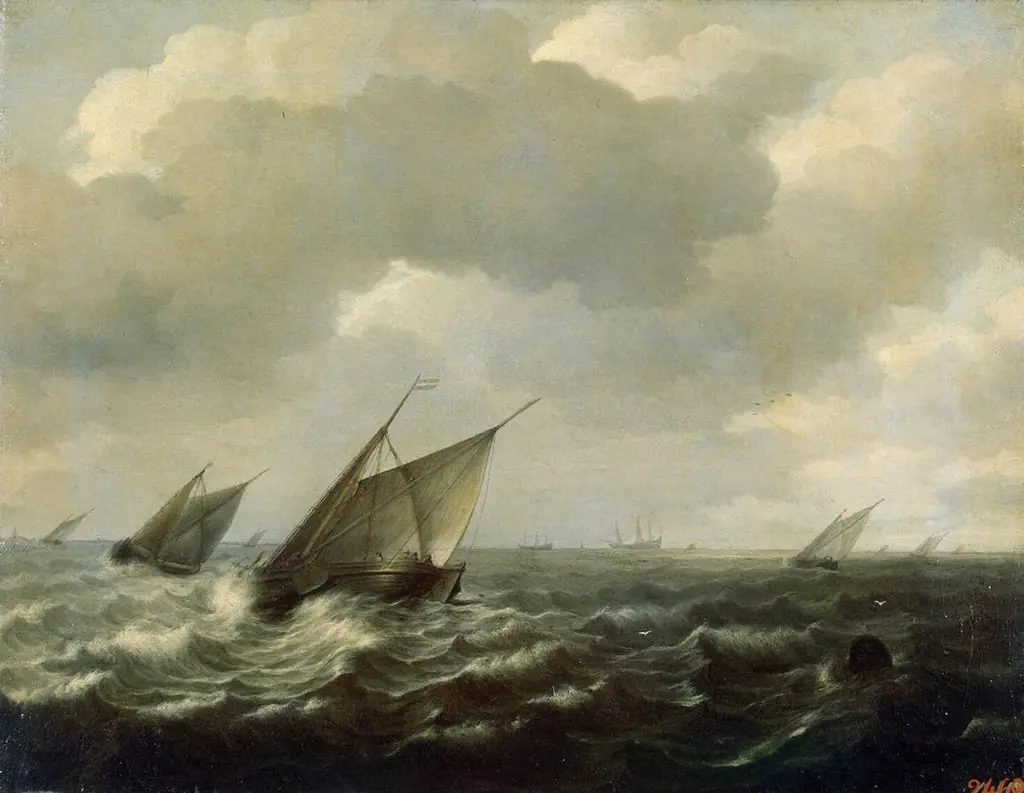
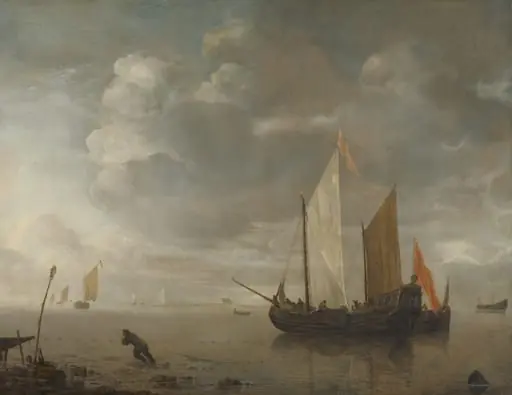
Artwork
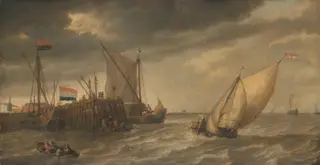
Travellers Disembarking at a Jetty on the Scheldt in Strong Winds
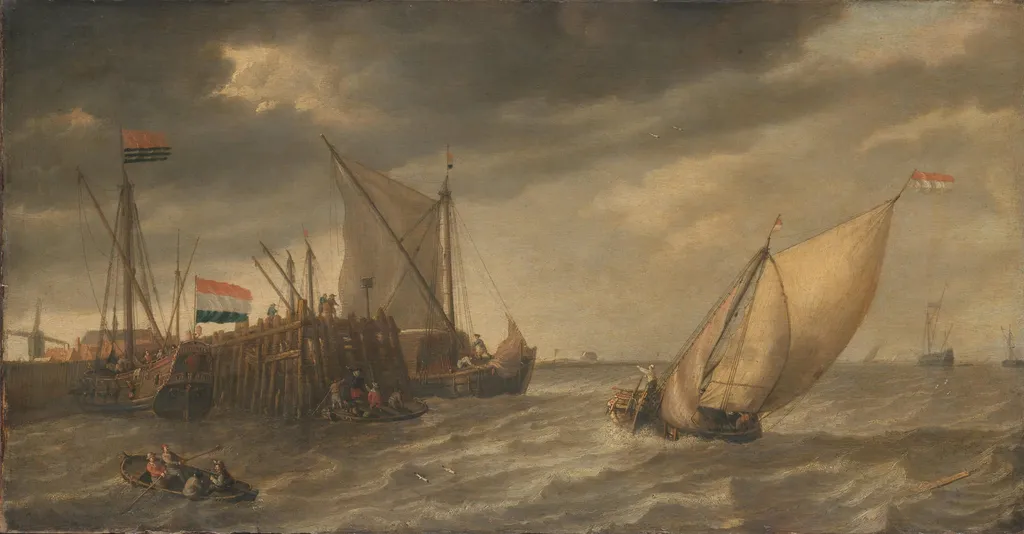
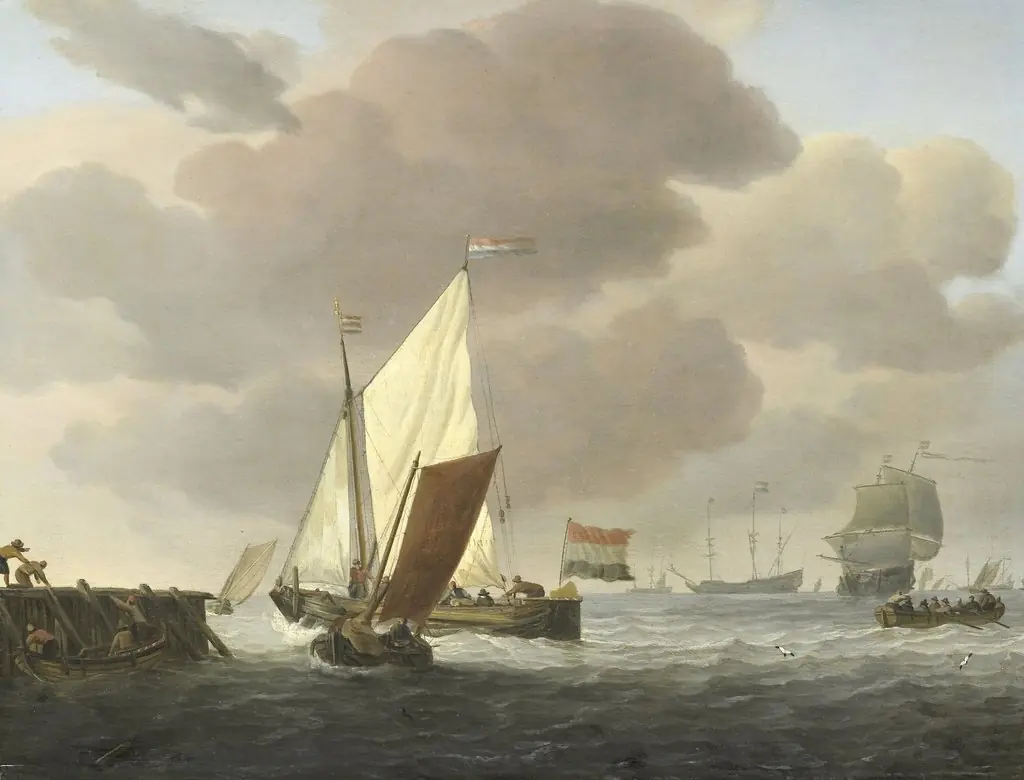
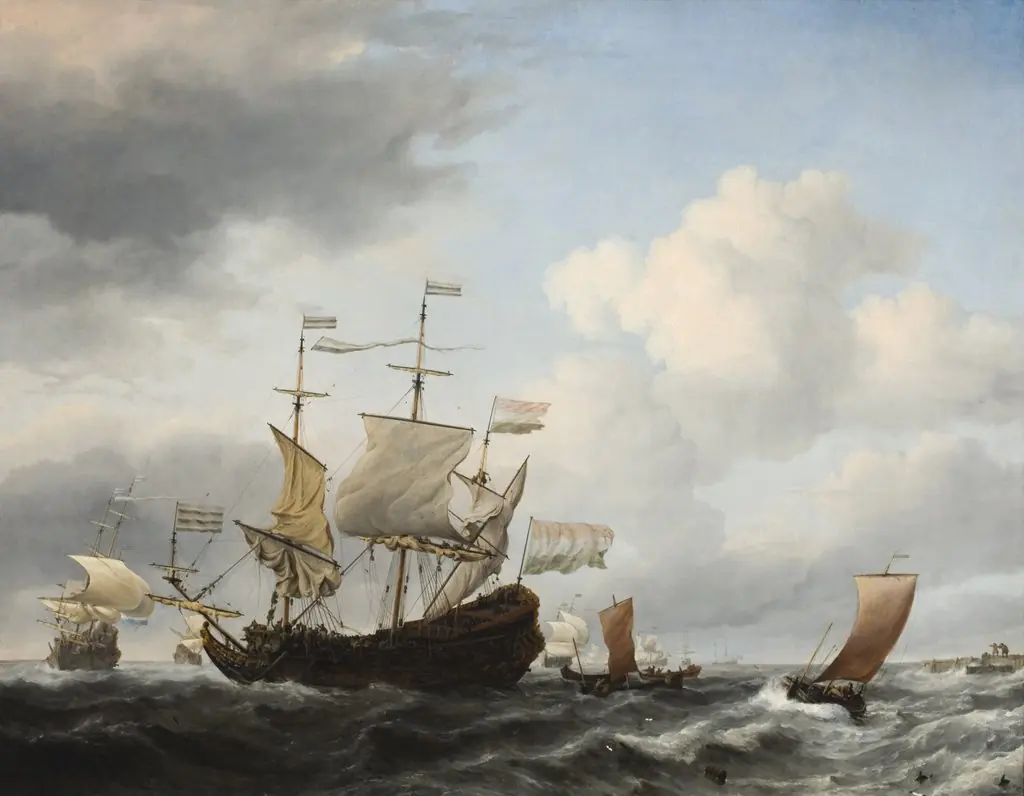
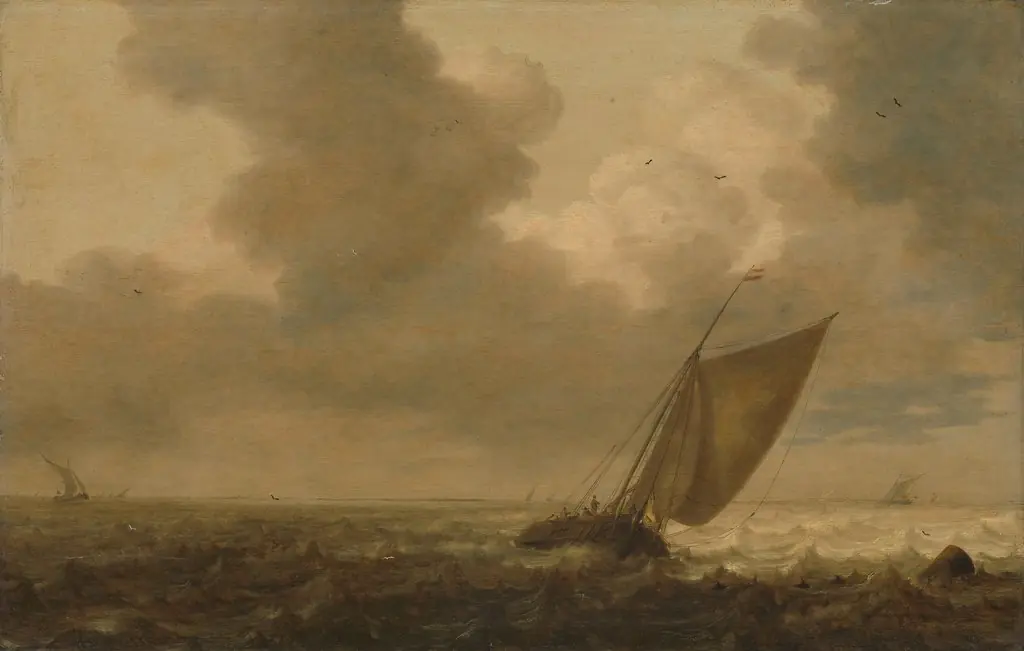
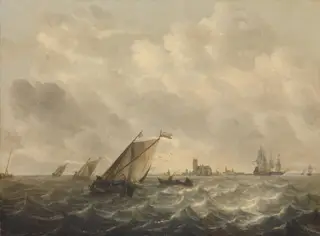
Travellers Disembarking at a Jetty on the Scheldt in Strong Winds is an unspecified painting by the Flemish Baroque painting artist Bonaventura Peeters the Elder. It dates from 1635 and is held in the collection of the Rijksmuseum. The work portrays a bustling river scene on the Scheldt, where travelers alight from small vessels onto a wooden jetty amid a fierce gale.
About this work
Subject & Meaning
It depicts a maritime scene with figures on a dock under adverse weather, reflecting the marine genre characteristic of 17th-century Flemish Baroque art.
The painting shows travellers disembarking at a jetty on the Scheldt river during strong winds. It depicts a maritime scene with figures on a dock under adverse weather, reflecting the marine genre characteristic of 17th-century Flemish Baroque art. The composition emphasizes the movement and vulnerability of humans against nature, a recurring theme in Peeters' work that often combined realistic observations of coastal locations with dramatic atmospheric effects.
The subject aligns with Peeters' specialization in marine art, where he portrayed storms, shipwrecks, and port activities, using detailed renderings of clouds, waves, and vessels to convey both narrative and emotional intensity. His works frequently incorporated symbolic elements related to seafaring life and the transient nature of human endeavors.
The painting's setting on the Scheldt near Antwerp connects to Peeters' documented practice of depicting real Flemish ports and river scenes, while the dynamic weather conditions exemplify his technical focus on capturing the sublime power of the sea.
The work reflects broader Baroque-era interests in natural drama and human interaction with elemental forces, positioning it within the artistic dialogue of the Flemish school during the mid-1600s.
Context
Bonaventura Peeters the Elder is recognized as a leading marine artist in the Low Countries during the first half of the 17th century, operating within the Flemish Baroque movement. His work, including Travellers Disembarking at a Jetty on the Scheldt in Strong Winds, reflects the broader artistic evolution of the era, shifting from the tonal palette of early Dutch landscape painting to the stronger colors of Italianate classicism. Peeters specialized in depicting actual locations along the North Sea and the Scheldt, contributing to a tradition where Flemish and Dutch artists simultaneously explored maritime subjects.
His oeuvre, characterized by dramatic storms, serene ports, and detailed ship portrayals, aligns with the flourishing of marine art known as zeekens in the 17th-century Dutch Golden Age. Scholars note that his focus on specific harbors and shipping scenes distinguishes him as a key figure who bridged regional styles and catered to a growing international taste for both realistic and exotic maritime views.
Legacy
Bonaventura Peeters the Elder's marine scene Travellers Disembarking at a Jetty on the Scheldt in Strong Winds established a template for tempestuous riverine compositions that later artists emulated in their own harbor and coastal works. His dramatic treatment of weather and shipping influenced European marine painters throughout the 17th century, particularly in Dutch and Flemish circles where his storm effects informed the tonal strategies of later specialists such as Jan van Goyen and Willem van de Velde the Younger, who adopted his method of rendering volatile skies and precarious vessel arrangements. Contemporary records note that the painting's vigorous depiction of the Scheldt's currents contributed to the genre's evolving reputation for narrative intensity, and museum inventories from the 18th century onward frequently cite Peeters as a benchmark for maritime drama, underscoring his lasting impact on the visual vocabulary of naval art across Northern Europe.
Overview
The work portrays a bustling river scene on the Scheldt, where travelers alight from small vessels onto a wooden jetty amid a fierce gale. The composition captures the turbulence of the water and the urgency of the figures as they brace against the wind.
Technique & Style
Executed in the Flemish Baroque idiom, the painting employs a muted palette of grays and blues to convey the overcast sky and frothy water. Vigorous brushwork renders the wind‑blown trees and rippling surface, while careful modeling of light on the figures and structures creates a sense of depth and immediacy.
History & Provenance
The artist’s identity remains unknown; no signature or documented attribution accompanies the canvas. The piece is believed to have been produced by an observer familiar with the Scheldt’s daily conditions, suggesting a local origin in the 17th‑century Flemish region.
Artist & collection

Artist
Bonaventura Peeters (I) or Bonaventura Peeters the Elder (23 July 1614 – 25 July 1652) was a Flemish painter, draughtsman and etcher.