Artwork
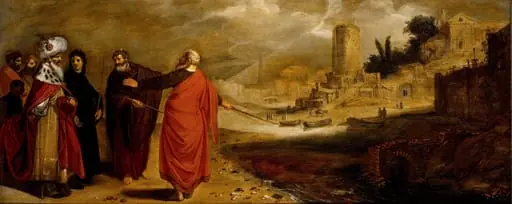
Aaron changing the water of the river into blood
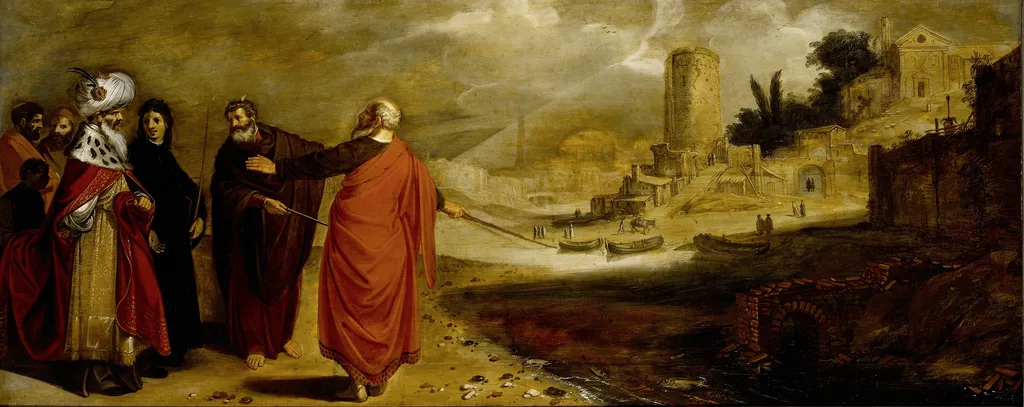
Aaron changing the water of the river into blood is an oil painting by the Early Baroque Italian artist Jan Pynas. It dates from 1610 and is held in the collection of the Rijksmuseum.
About this work
Technique & Style
Aaron changing the water of the river into blood is executed in oil paint on panel, a combination typical of early seventeenth-century Dutch cabinet pictures.
Aaron changing the water of the river into blood is executed in oil paint on panel, a combination typical of early seventeenth-century Dutch cabinet pictures. The work is a horizontal composition, measuring 70.5 cm in height by 170.8 cm in width, giving it a pronounced landscape-like format suited to a narrative scene of religious character. Dated to 1610, the painting reflects Jan Pynas's handling of the medium in small-scale religious works of the period, with the panel support allowing for the detailed figural treatment associated with his early Amsterdam production.
History & Provenance
Jan Pynas executed the oil painting Aaron changing the water of the river into blood in 1610. The work was created on a wooden panel measuring 70.5 cm in height and 170.8 cm in width. While specific details regarding the original commission or the immediate ownership chain following its creation are not provided in the available records, the painting is currently held within major Dutch cultural institutions.
It forms part of the collections associated with the Rijksmuseum, the Cultural Heritage Agency of the Netherlands, and the Rembrandt House Museum.
The work is held at the Rijksmuseum, where it is part of the Cultural Heritage Agency of the Netherlands Art Collection and the Rembrandt House Museum collection. Its accession or inventory number is not specified in the provided sources. The painting has been exhibited at the Rijksmuseum, including in displays of Dutch and Flemish paintings from the 17th century, and has appeared in exhibitions focusing on Rembrandt and his circle. It is listed in the Rijksmuseum's collection records as accession number SK-A-2662.
Context
The work is classified as a religious painting created in 1610 using oil on panel, reflecting the devotional artistic climate of early Dutch Baroque. It measures 70.5 by 170.8 cm and belongs to the collection of the Rijksmuseum, which holds it alongside related works from the Rembrandt House Museum and the Cultural Heritage Agency of the Netherlands Art Collection. The painting has been discussed in scholarship as an example of Pynas' early experimentation with narrative transformation in biblical scenes, situating it within the broader trajectory of Dutch religious art that emphasized emotive realism and symbolic detail. Its provenance and material characteristics have been documented in major art historical references.
Legacy
The painting's religious subject and early 17th-century execution established it as a notable example of Dutch Golden Age biblical art within religious painting traditions. Its presence in major institutional collections at the Rijksmuseum and Rembrandt House Museum has contributed to scholarly recognition of Pynas's role in transitional religious art genres. The work's material characteristics and dimensions recorded in museum documentation support its classification as an oil on panel religious work from 1610.
Overview
Jan Pynas’s 1610 oil on canvas, titled Aaron Changing the Water of the River into Blood, depicts a biblical episode in which a figure in vivid red robes appears to transform a river’s flow into a crimson hue. The composition gathers several onlookers in elaborate dress along a riverbank, while a distant castle and small vessels occupy the hazy background.
Subject & Meaning
The central figure is identified as Aaron, the priest of Israel, performing the miracle recorded in the Book of Numbers. His gesture suggests the moment the water turns red, symbolizing divine judgment and the plagues inflicted upon Egypt. The surrounding spectators, dressed in luxurious attire, emphasize the dramatic impact of the supernatural act on both the faithful and the indifferent.
Artist & collection

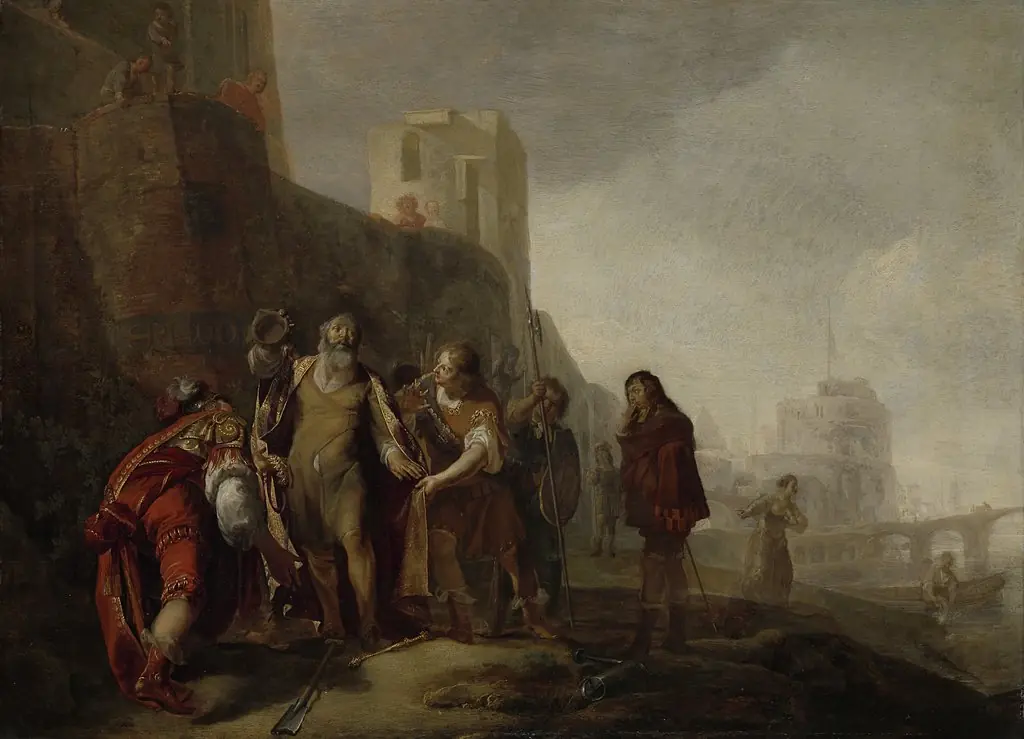 The legates of Alexander the Great investing the gardener Abdalonymus with the insignia of the kingship of Sidon
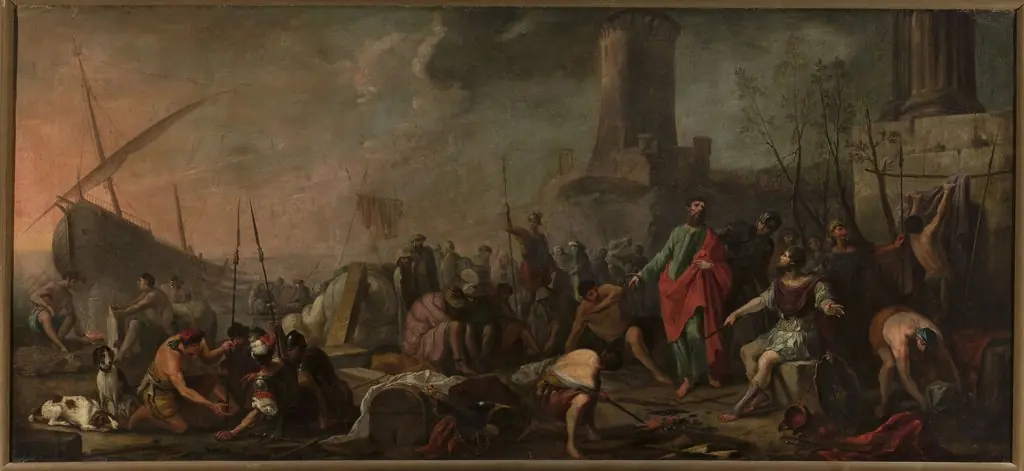 St. Paul on Malta
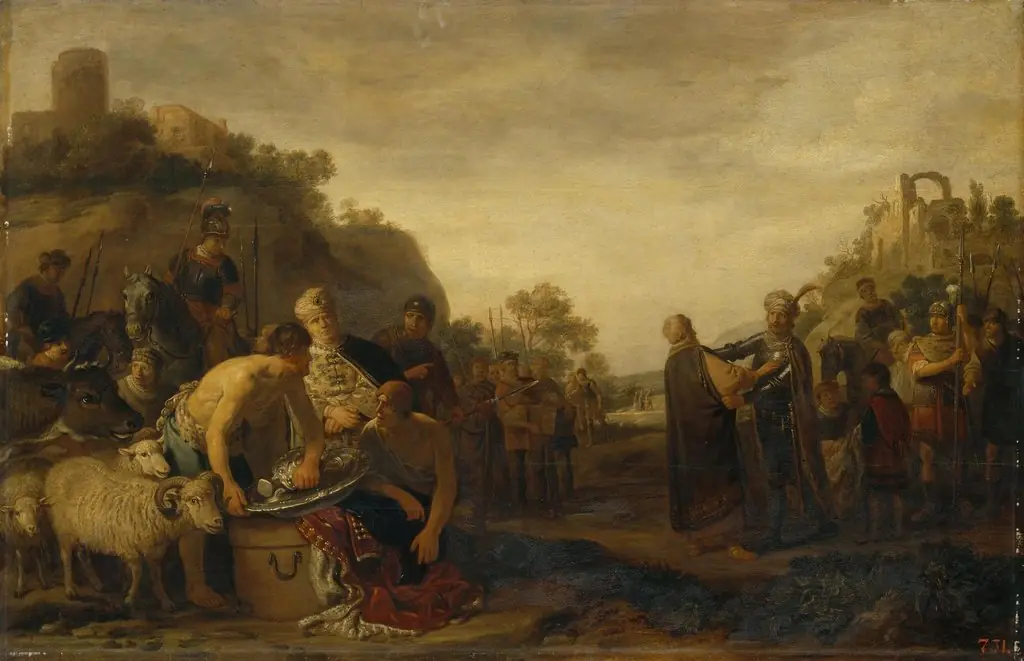 Samuel and Saul
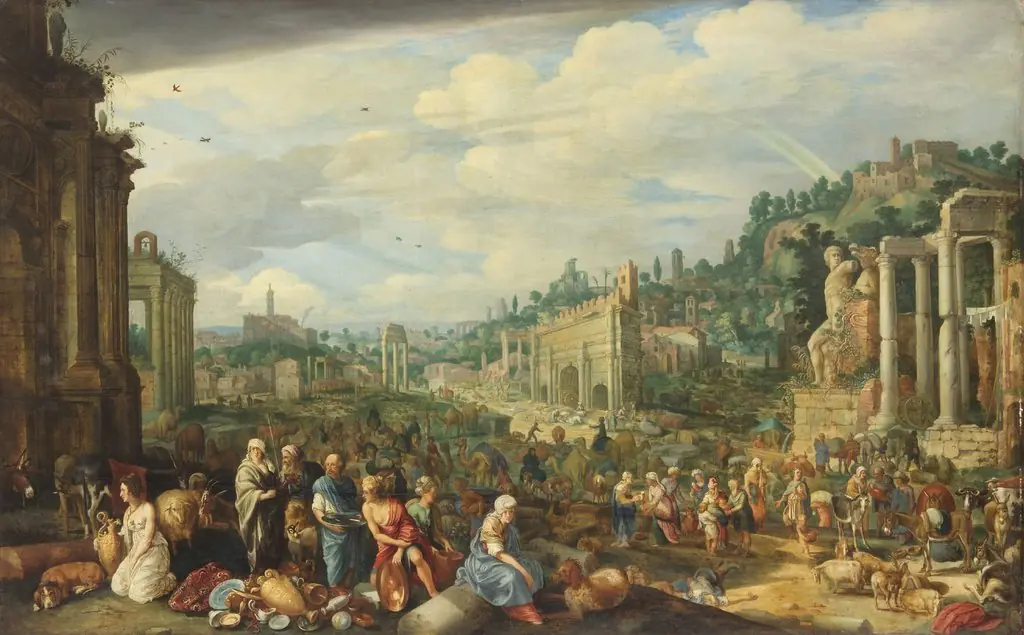 Ansicht des Campo Vaccino in Rom (Aufbruch der Israeliten aus Ägypten)
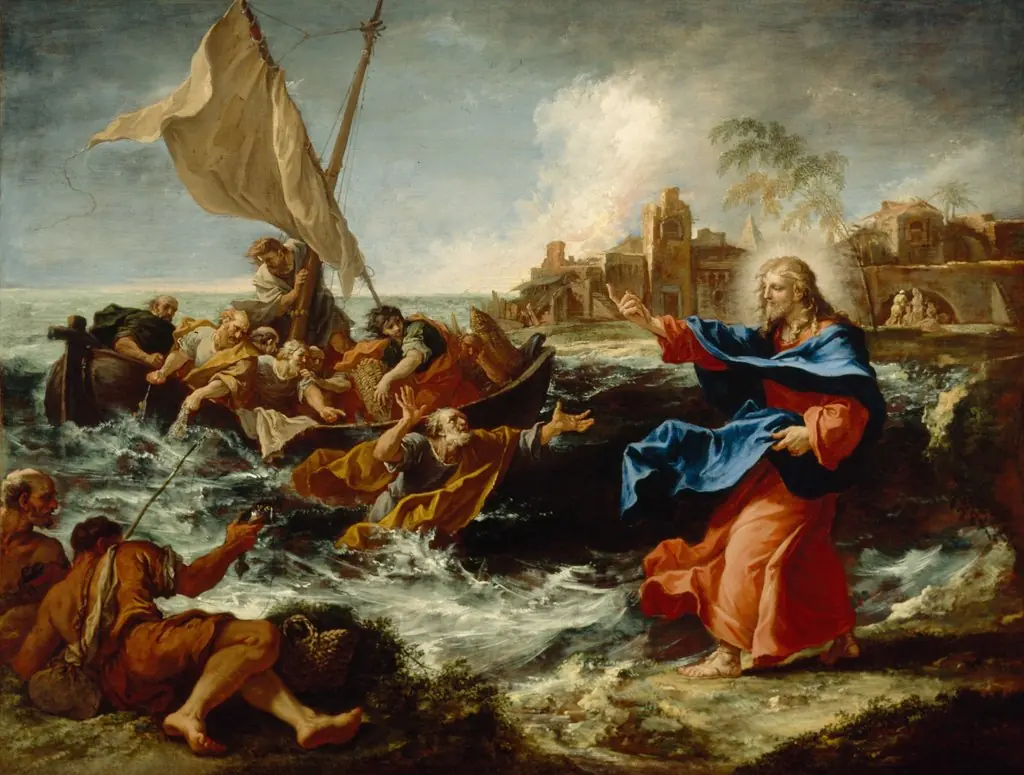 The Miraculous Draught of Fishes
 Indische Könige huldigen Alexander dem Großen
 The Construction of the Tower of Babel
 Gideon Checks His Army
 Mountainous Landscape
- Moses and Aaron Changing the Rivers of Egypt to Blood