Artwork
Dredging in the Woluwe
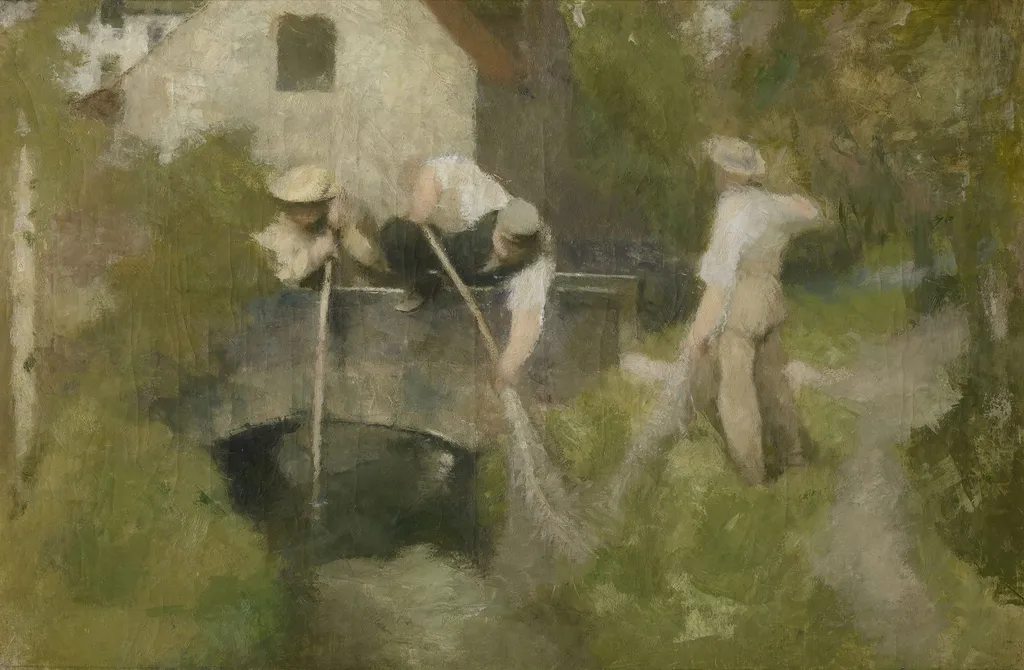
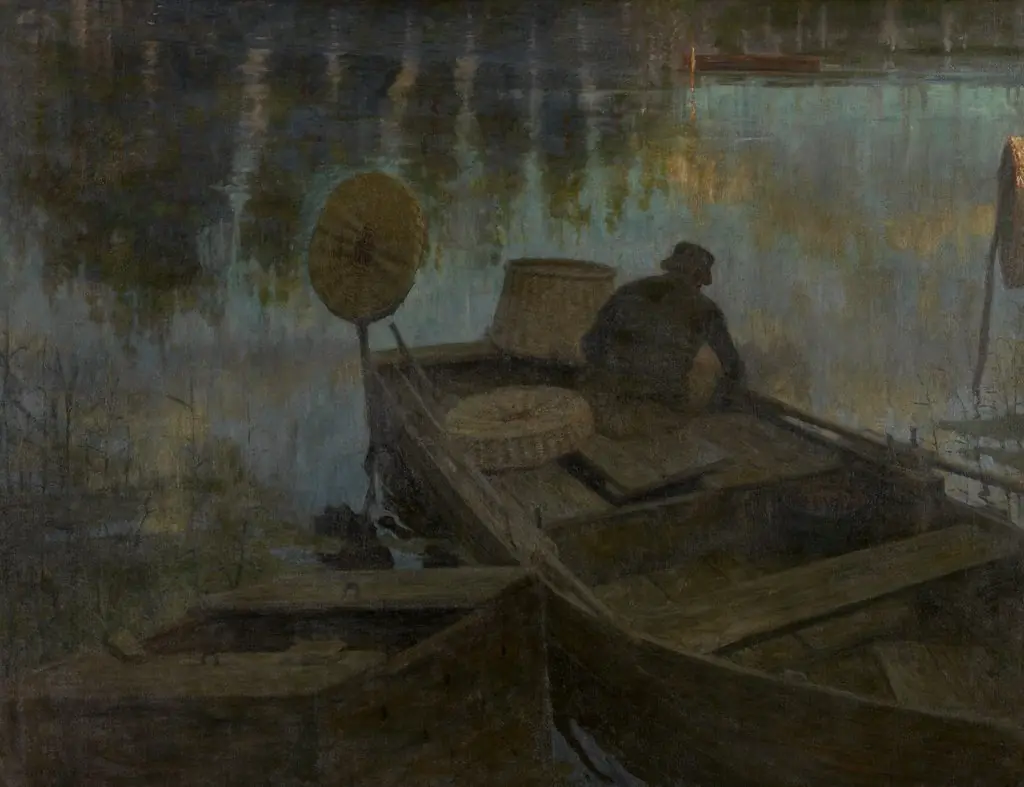
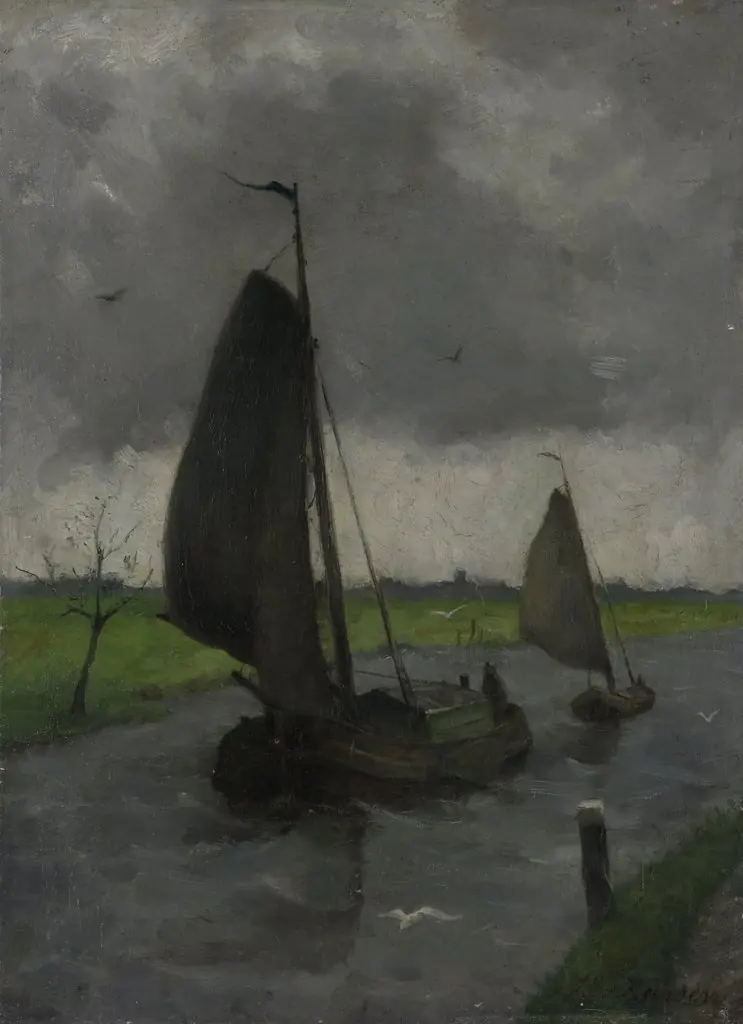
Dredging in the Woluwe is an oil painting by the Impressionist artist Jan Stobbaerts. It dates from 1898 and is held in the collection of the Royal Museum of Fine Arts Antwerp.
About this work
Subject & Meaning
Dredging in the Woluwe depicts a scene of dredging activity along the Woluwe, a waterway associated with the Brussels region.
Dredging in the Woluwe depicts a scene of dredging activity along the Woluwe, a waterway associated with the Brussels region. The work portrays the industrial labor of clearing or deepening the river, presenting this everyday engineering task as the central subject of a landscape composition. By framing dredging operations as a landscape motif, the painting transforms a utilitarian municipal activity into a subject worthy of artistic attention, reflecting late nineteenth-century interest in modernizing infrastructure and the changing relationship between the countryside and encroaching urban and industrial development around Brussels.
The choice of the Woluwe as setting situates the scene within a specific, identifiable locality, lending the depiction a documentary quality alongside its painterly treatment. As a landscape, the work balances the natural character of the waterway with the human intervention of dredging, suggesting the period's negotiation between rural environment and the practical demands of a growing city.
Technique & Style
Dredging in the Woluwe is an oil painting executed on canvas, depicting the Woluwe River in Brussels during a dredging operation. The work shows a landscape with figures and machinery engaged in river maintenance, rendered in a naturalistic style characteristic of late 19th-century Belgian landscape painting. The composition emphasizes atmospheric effects and precise topographical detail, reflecting the artist's interest in industrial activity within a natural setting.
The painting measures 47 cm in height and 71 cm in width, confirming its scale as a modest yet detailed canvas work.
History & Provenance
The painting Dredging in the Woluwe was created in 1896 by Jan Stobbaerts, an artwork classified as a landscape painting executed in oil on canvas. It entered the collection of the Royal Museum of Fine Arts Antwerp shortly after its creation, where it remains on display in Antwerp, Belgium.
The painting Dredging in the Woluwe by Jan Stobbaerts, created in 1896, is held in the collection of the Royal Museum of Fine Arts Antwerp. It was accessioned under the museum's holdings and has been part of their exhibition displays, including a presentation in the gallery of 19th‑century Belgian landscapes.
The work measures 47 cm in height and 71 cm in width and is classified as an oil‑on‑canvas landscape painting.
Overview
Created in 1898, Dredging in the Woluwe is an oil painting by Belgian artist Jan Stobbaerts. The work records a modest scene of river maintenance along the Woluwe, showing laborers at work amid a muted, natural setting. It is part of the collection of the Royal Museum of Fine Arts in Antwerp.
Context
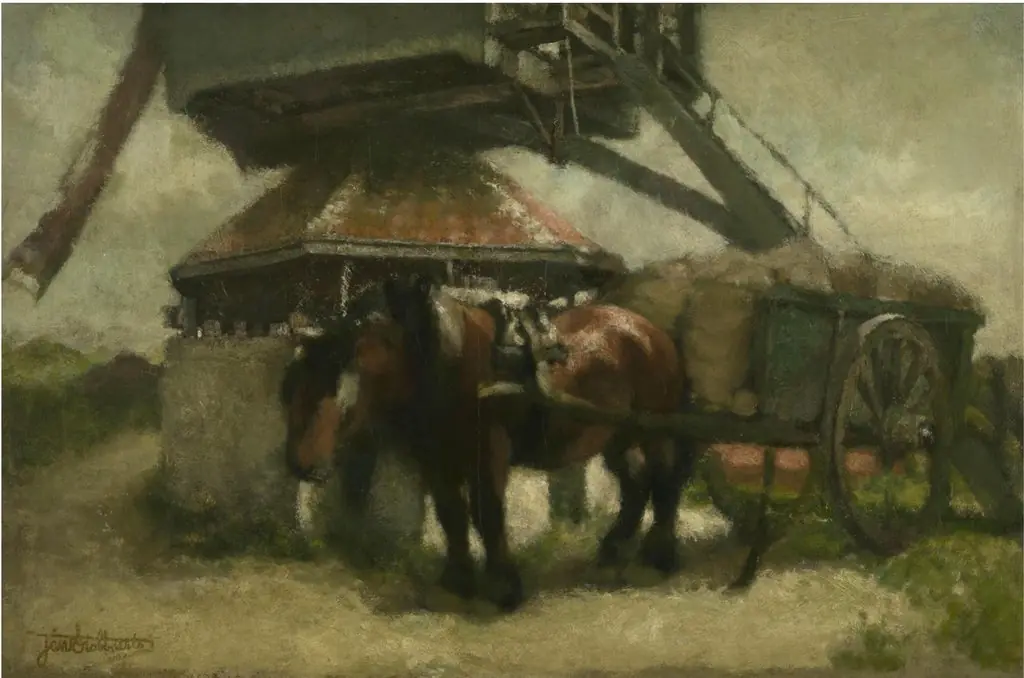
Active in the late nineteenth century, Stobbaerts contributed to Belgian Realism and a locally rooted Impressionism. His preference for dark studio tones and direct observation of commonplace subjects positioned him within a movement that sought to portray modern life without idealization.
Own this work as a print
Artist & collection
Artist
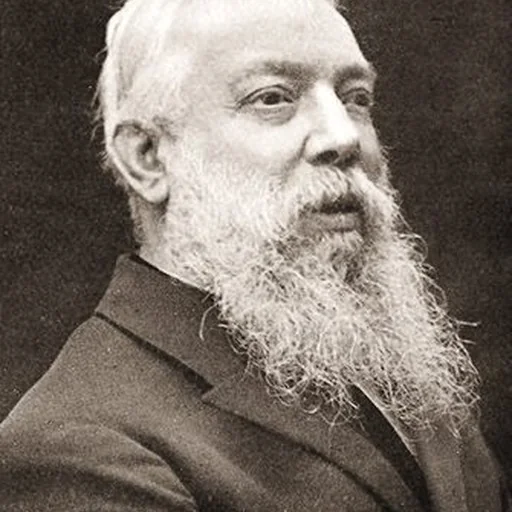
Jan Stobbaerts or Jan-Baptist Stobbaerts (18 March 1838 – 25 November 1914) was a Belgian painter and printmaker.