Artwork
The Ropewalk in Edam
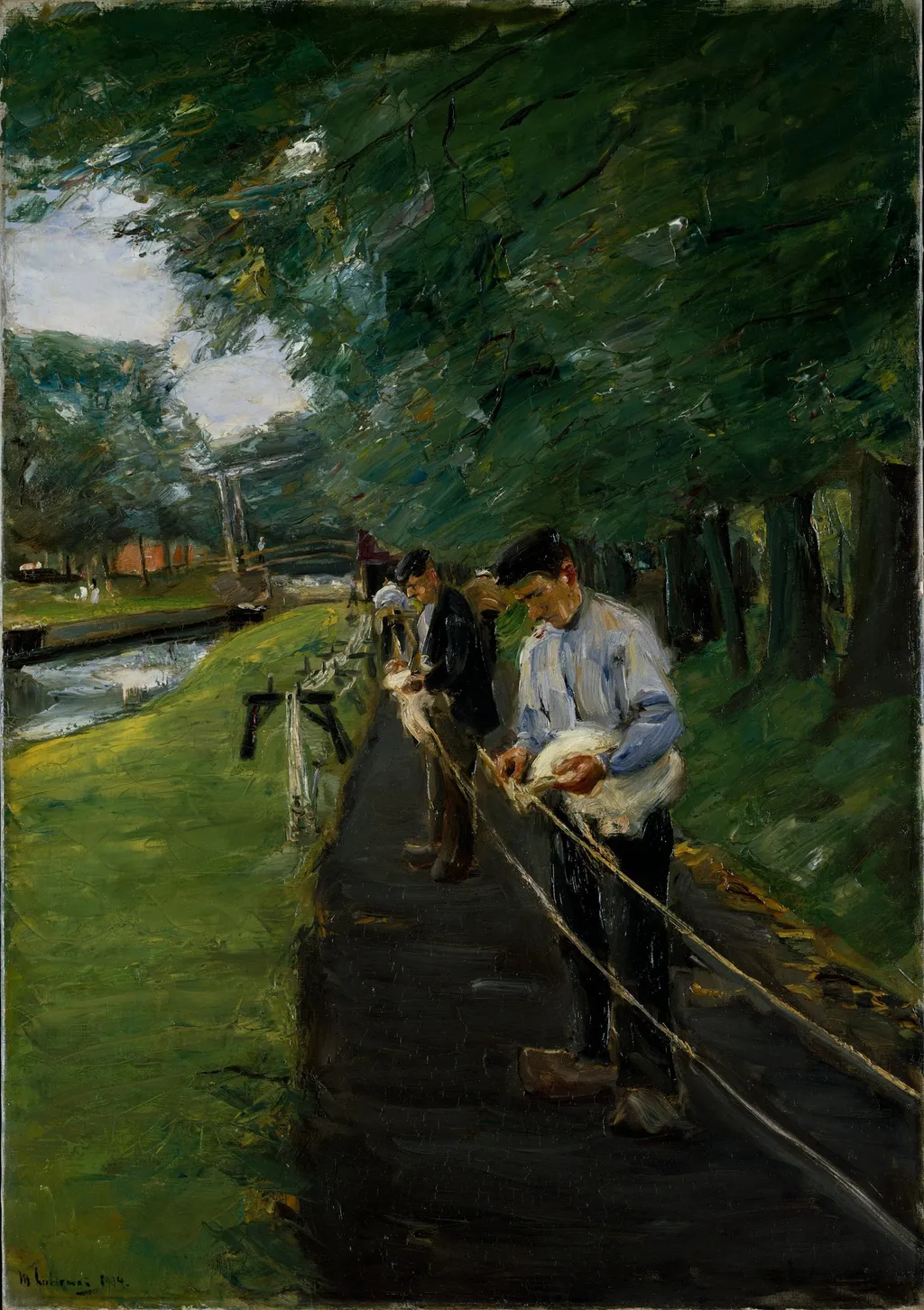
The Ropewalk in Edam is an oil painting by the Impressionist artist Max Liebermann. It dates from 1904 and is held in the collection of the Metropolitan Museum of Art.
About this work
Subject & Meaning
The iconography focuses on the intersection of industry and nature, representing the manual labor required in this trade.
Painted in 1904, Max Liebermann's work visually documents a specific labor scene set within a wooded environment. The composition features a tree and a forest backdrop, establishing the outdoor setting of a ropewalk in Edam. Central to the imagery is the depiction of a man engaged in work, highlighting the physical act of rope making.
The iconography focuses on the intersection of industry and nature, representing the manual labor required in this trade. By capturing a worker amidst the trees, the painting serves as a record of early twentieth-century craftsmanship and the everyday reality of industrial processes situated in natural landscapes.
Technique & Style
Created in 1904, The Ropewalk in Edam is an oil painting executed on a canvas support. The work measures 101 centimeters in height and 71.1 centimeters in width. As a product of Max Liebermann's practice, the piece utilizes oil paint to depict a scene containing trees, a man, and a forest setting associated with labor.
The painting is currently held within the collection of the Metropolitan Museum of Art. While specific handling details or current conservation status are not detailed in the available records, the medium and dimensions confirm its classification as a standard-sized oil-on-canvas work from the early 20th century.
History & Provenance
The Ropewalk in Edam is an oil‑on‑canvas painting by Max Liebermann, executed in 1904. According to the artist’s catalogue entry, the work was completed that year and originally portrayed a ropewalk scene with a tree, a man, a forest and laborers. The painting entered the collection of the Metropolitan Museum of Art, where it remains on view; its accession records confirm acquisition by the museum, though specific purchase details are not disclosed.
The work’s material composition, oil paint on canvas, matches contemporary early‑twentieth‑century practices, and its dimensions (approximately 101 × 71.1 cm) are documented in the museum’s catalogue. No evidence of a later commission or subsequent ownership changes beyond the museum’s stewardship is recorded.
Max Liebermann's 1904 oil painting, The Ropewalk in Edam, is held in the collection of the Metropolitan Museum of Art in New York. The institution serves as the current location for the work, which measures 101 by 71.1 centimeters. While the artwork's inclusion in the museum's holdings is established, the provided records do not specify a particular accession or inventory number, nor do they detail any specific past exhibitions or loan history for this piece.
Overview
Max Liebermann's oil painting, The Ropewalk in Edam, completed in 1904, captures a moment of manual labor in a natural environment. This work exemplifies the German artist's consistent engagement with scenes from contemporary life, often focusing on the dignity and rhythm of everyday work. The composition offers a tranquil yet dynamic portrayal of its subject.
Context
A prominent figure in German art at the turn of the 20th century, Max Liebermann was instrumental in introducing Impressionist principles to Germany. His artistic development included studies in Weimar, Paris, and the Netherlands, where he was exposed to various European art movements. After extensive travel and training, he established his studio in Berlin in 1884, becoming a key proponent of modern painting.
Own this work as a print
Artist & collection
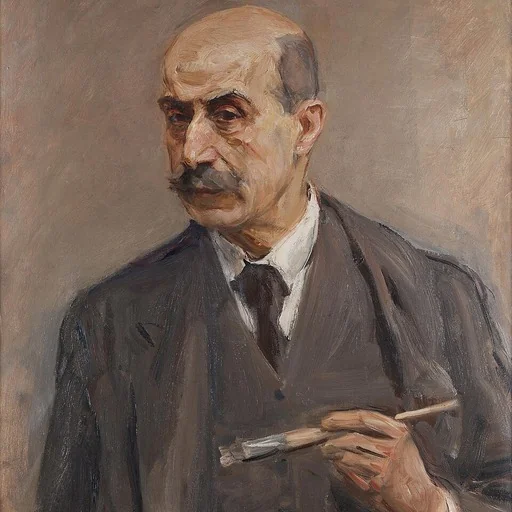
Artist
Max Liebermann (20 July 1847 – 8 February 1935) was a German painter and printmaker, and one of the leading proponents of Impressionism in Germany and continental Europe.

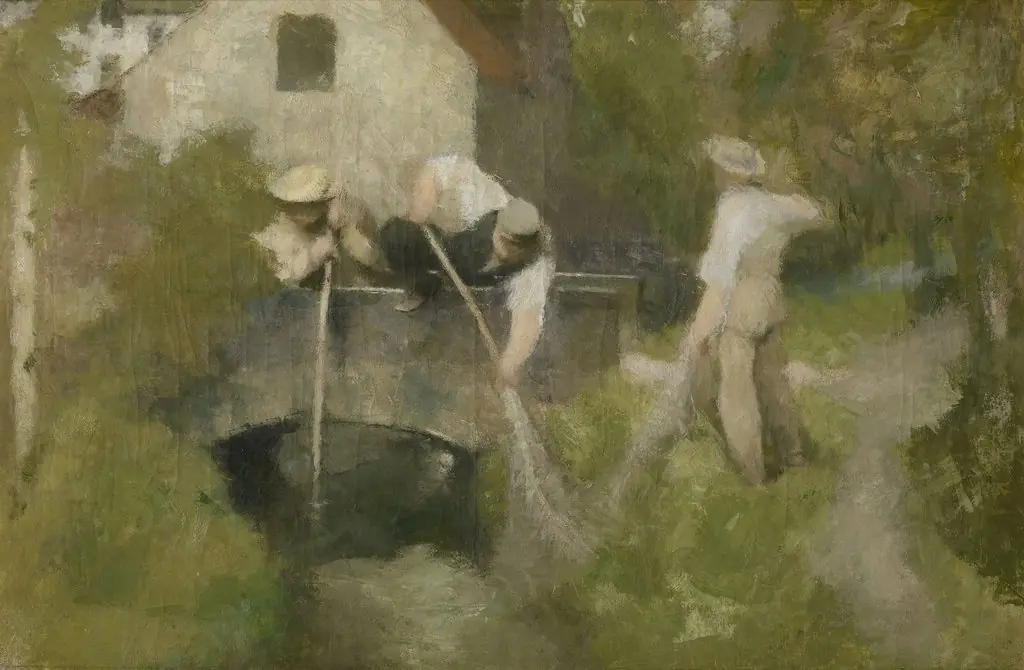 Dredging in the Woluwe
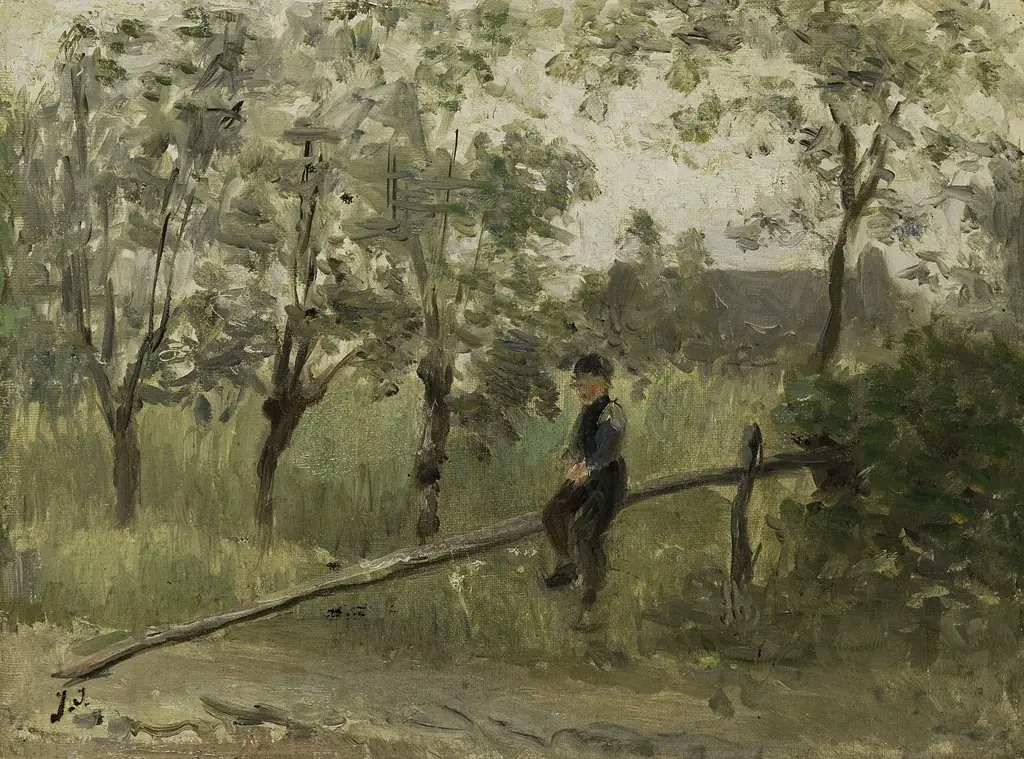
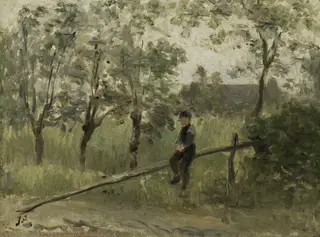 Country Boy on a Pole Barrier
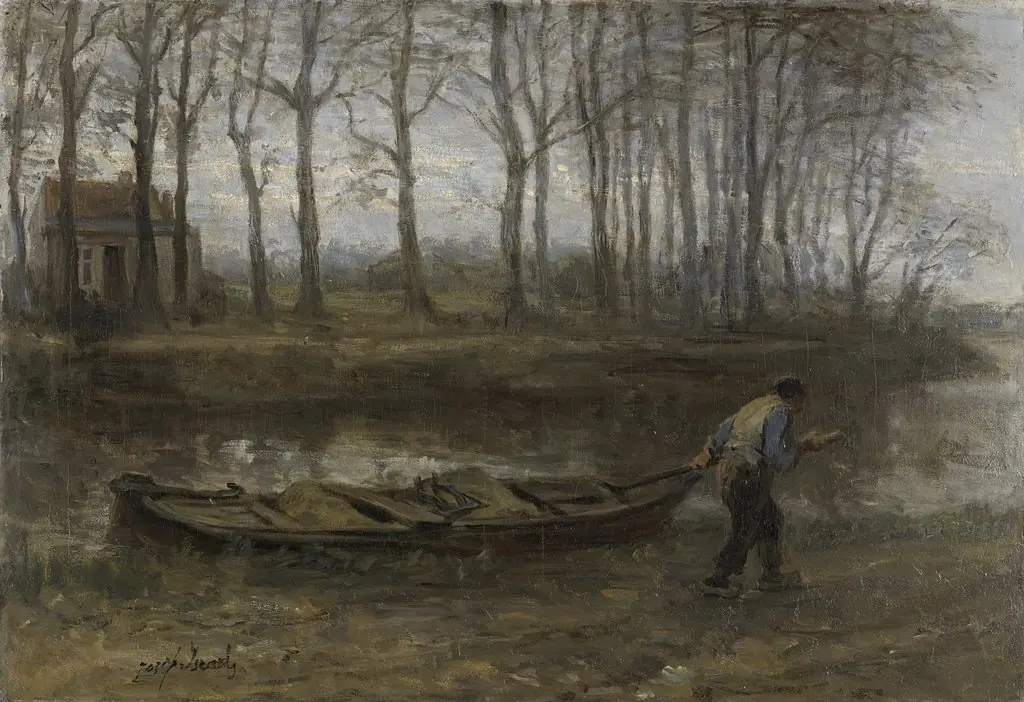 The Sand Bargeman
 Barges at Pontoise
 Banks of the Seine, Bougival
 Country Boy on a Pole Barrier
 Au bord de l'étang (The Pond)
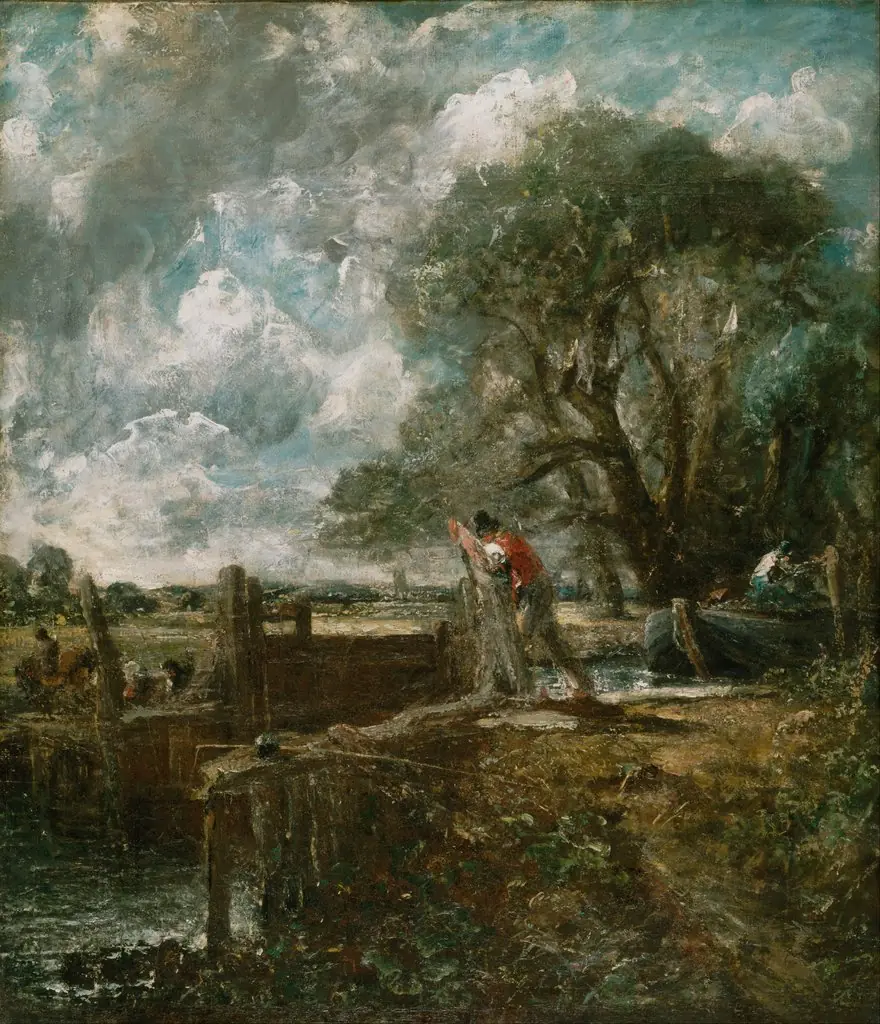 Sketch for A Boat Passing a Lock
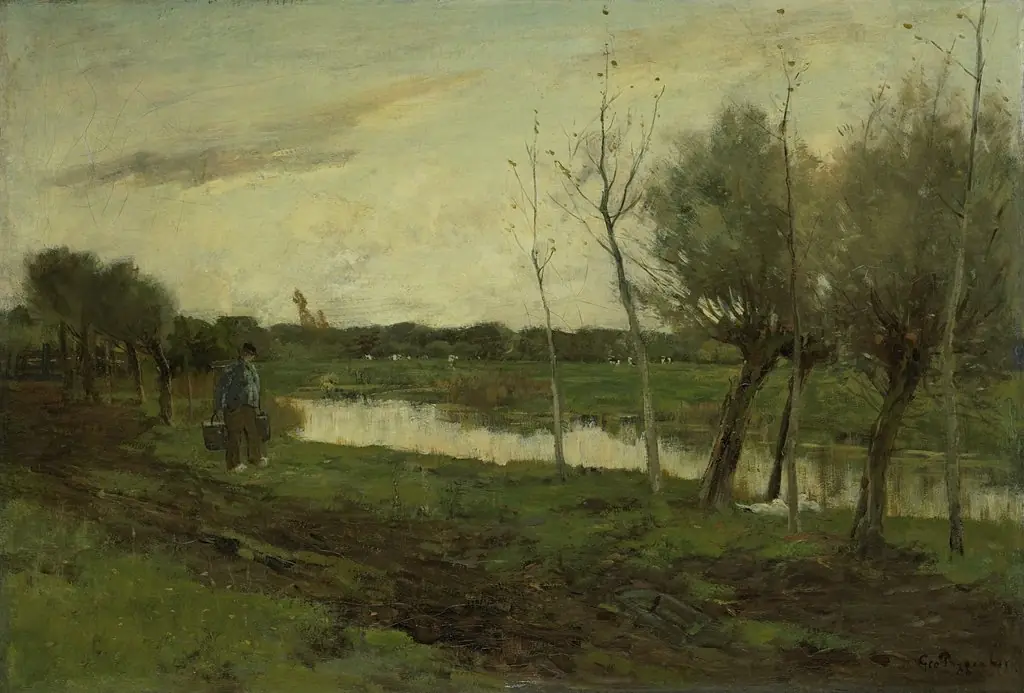 Landscape with canal
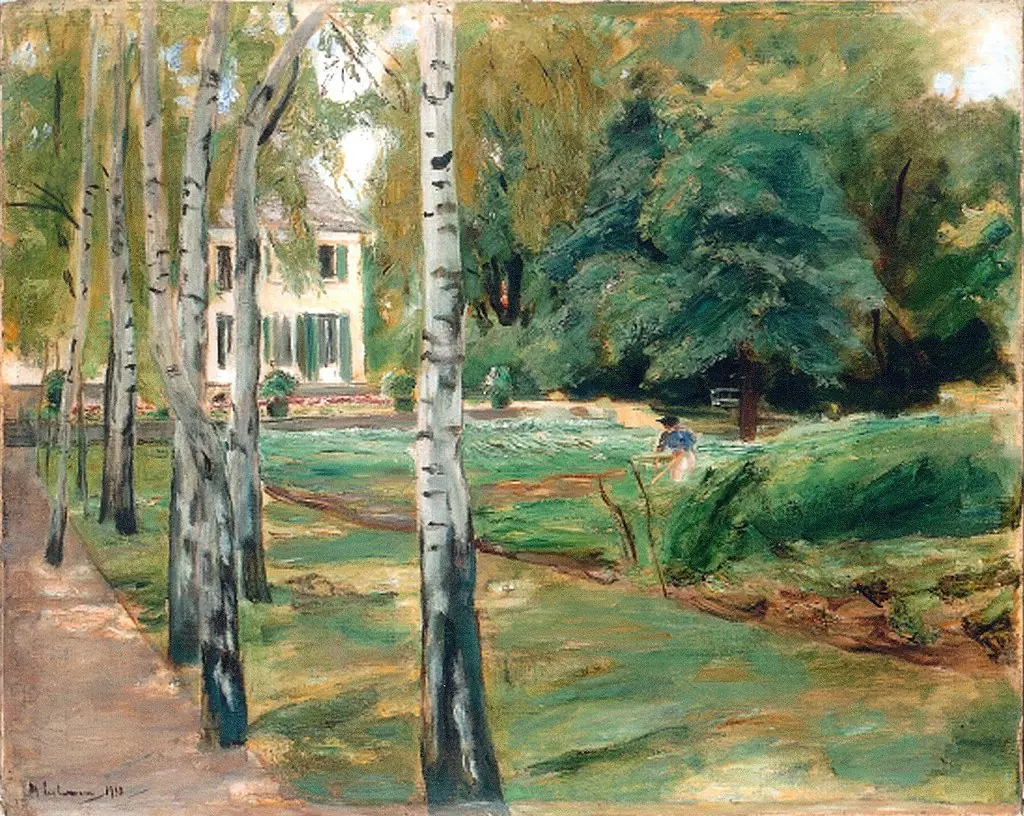 The Avenue of Birches in the Wannsee garden to the West
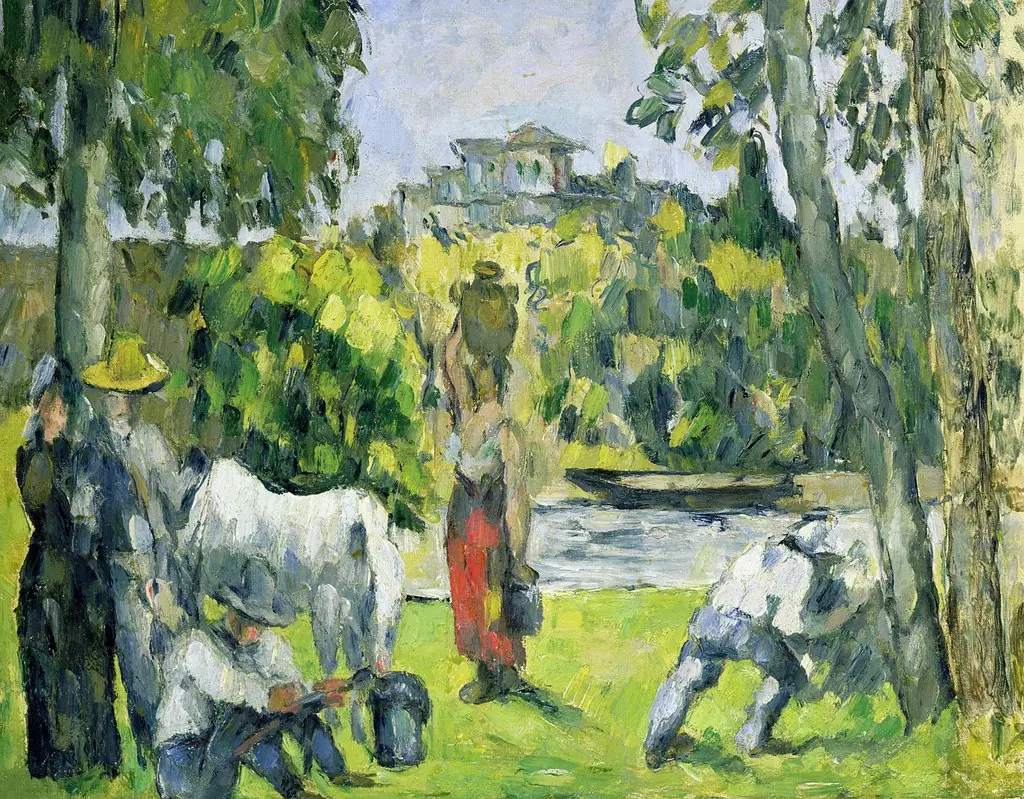 La vie des champs
- The Bridge