Artwork
Interieur met drie vrouwen
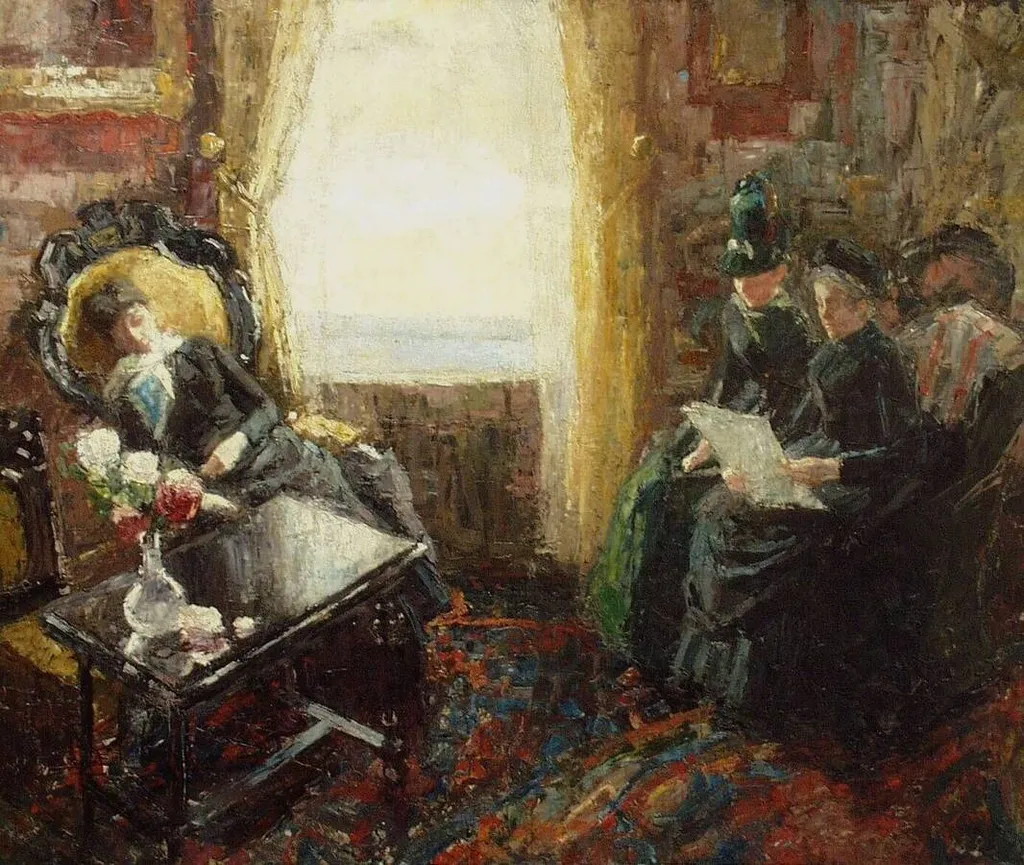
Interieur met drie vrouwen is an unspecified painting by the Post-Impressionist artist Jan Toorop. It dates from 1893 and is held in the collection of the Kröller-Müller Museum.
About this work
Overview
Executed during a transitional phase in Toorop's career, the work reflects his engagement with Dutch Impressionism and early Symbolism.
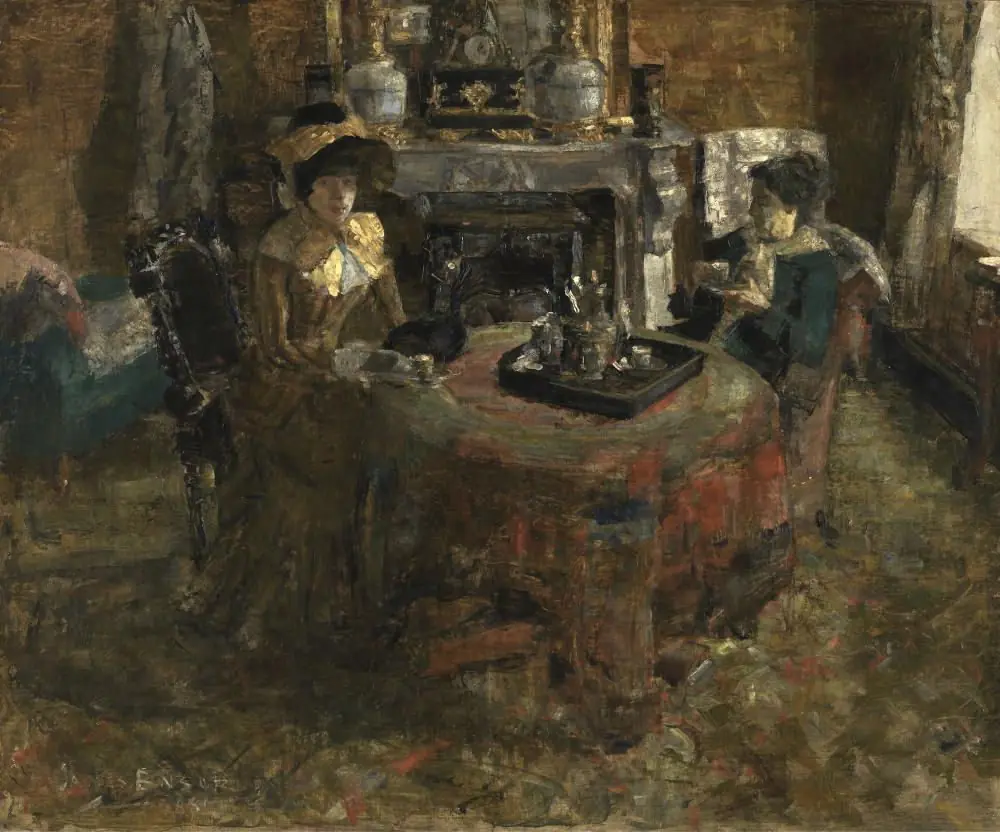
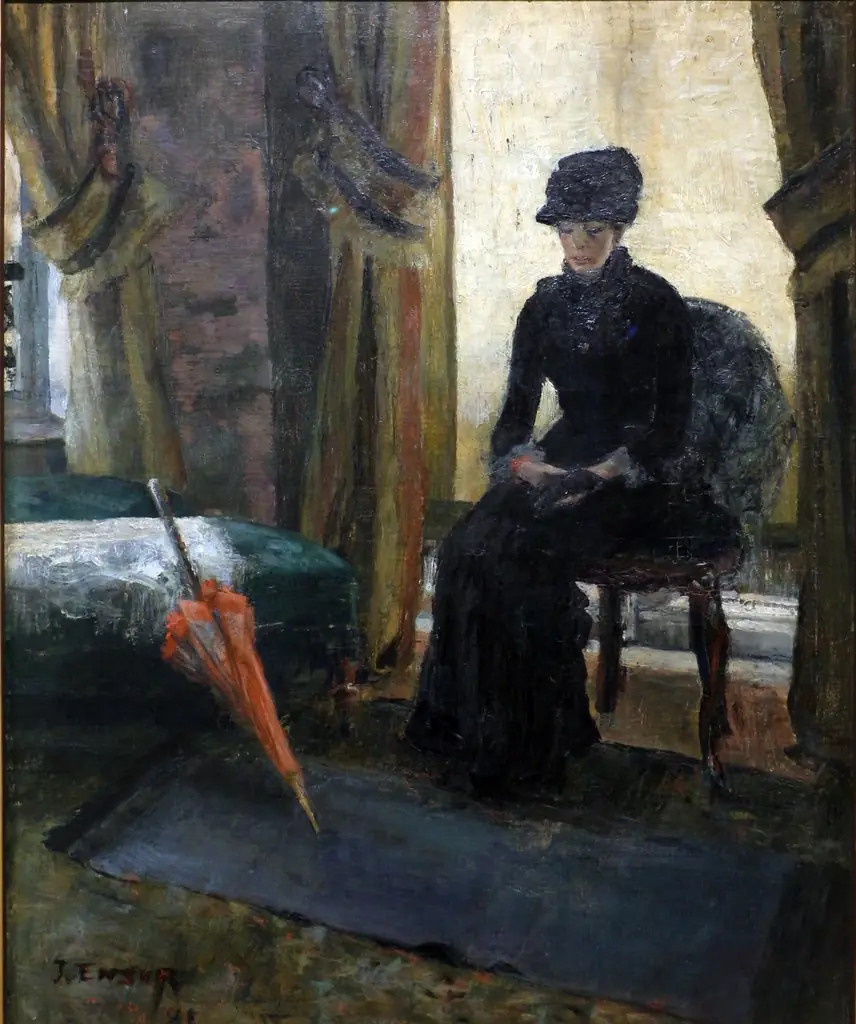
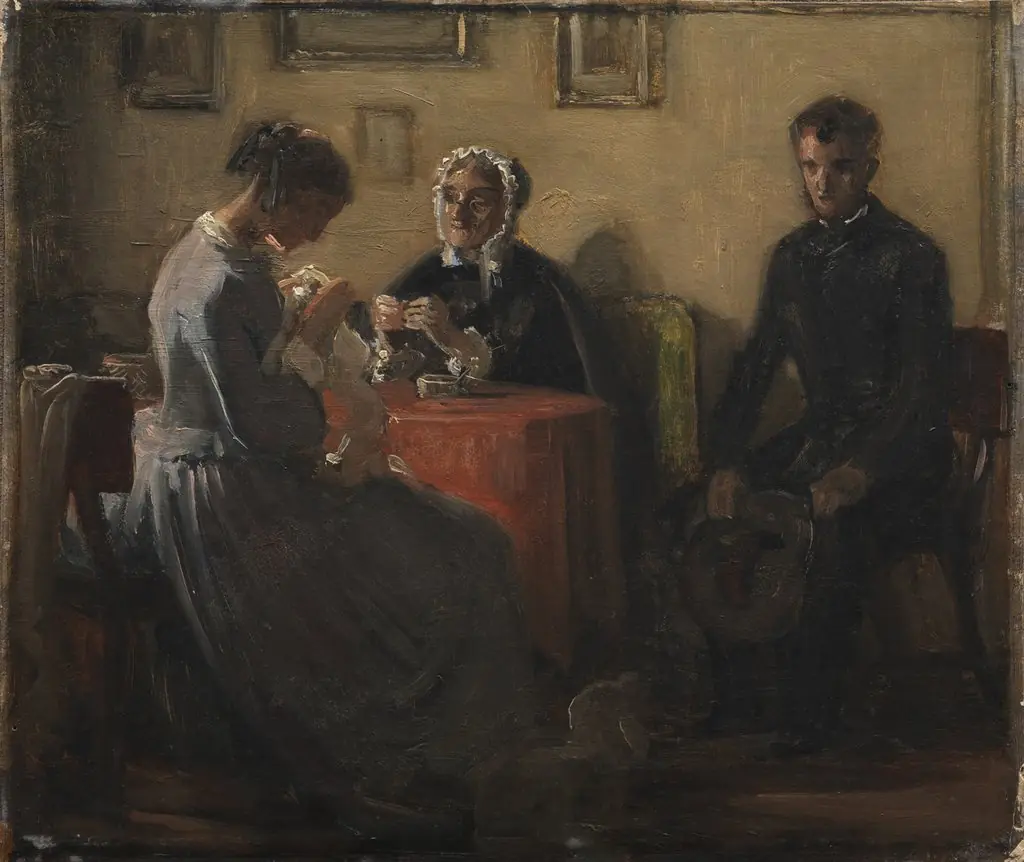
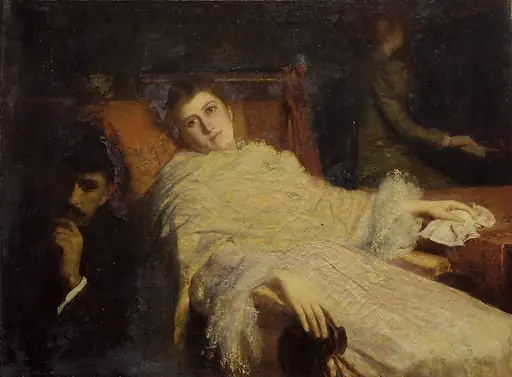
Interieur met drie vrouwen (Interior with Three Women), painted by Jan Toorop in 1893, depicts a quiet domestic scene featuring three women seated within a sparsely furnished room. The composition centers on the figures, who are dressed in dark, somber attire that contrasts with the bright light filtering through a large window draped with white curtains. A colorful rug anchors the floor space, adding a touch of pattern to the otherwise muted palette.
One figure is engaged in reading, while the others appear in repose, creating a mood of stillness and introspection. Executed during a transitional phase in Toorop's career, the work reflects his engagement with Dutch Impressionism and early Symbolism. The brushwork balances naturalistic observation with a slightly stylized approach, characteristic of the artist's exploration of light and atmosphere before his full immersion in the linear, decorative aesthetics of Art Nouveau.
This painting exemplifies Toorop's ability to infuse ordinary interior scenes with psychological depth and a sense of narrative ambiguity, marking a significant moment in his development as a leading figure in late 19th-century Dutch art.
Subject & Meaning
The three figures, dressed in dark garments, occupy a quiet domestic space. One woman is absorbed in a book, suggesting contemplation or study, while the others engage in a subdued interaction. The presence of flowers on the table and the muted décor hint at a refined, perhaps middle‑class, domestic environment typical of late‑19th‑century European interiors.
Technique & Style
Toorop renders the scene with a softened focus, allowing forms to blend into one another in a slightly hazy manner. The palette is restrained, dominated by subdued tones with occasional accents of red and blue in the rug and clothing. This approach reflects the artist’s interest in Symbolist atmospherics and a departure from strict realism.
History & Provenance
Created in 1893, the painting entered the collection of the Kröller‑Müller Museum, a major repository of Dutch modern art. Its acquisition history is documented through the museum’s records, confirming its status as a representative example of Toorop’s late‑period interior works.
Context
During the 1890s Toorop was exploring Symbolist themes and experimenting with tonal subtlety, moving away from the more decorative Art Nouveau motifs of his earlier career. This interior aligns with contemporary European interests in private, contemplative spaces, echoing similar subjects by artists such as James McNeill Whistler and Pierre Bonnard.
Artist & collection

Artist
Johannes Theodorus "Jan" Toorop was a Dutch painter who worked in various styles, including Symbolism, Art Nouveau, and Pointillism. His early work was influenced by the Amsterdam Impressionism movement.