Artwork
The Witch (Night Piece)
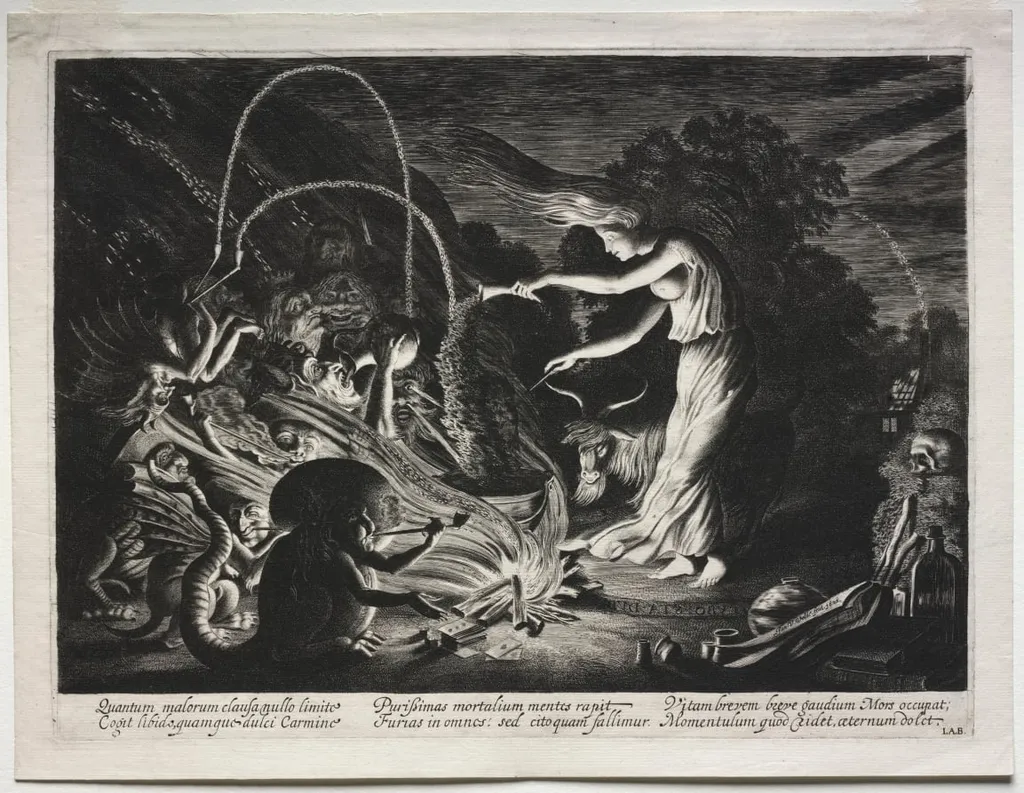
The Witch (Night Piece) is a print by the Baroque artist Velde, Jan van de, II. It dates from 1626 and is held in the collection of the Cleveland Museum of Art. This nocturnal print captures a witch engaged in ritualistic preparation within a marked circle on the earth.
- Accession no.
- 1943.635
- Credit line
- Mr. and Mrs. Lewis B. Williams Collection
About this work
Overview
The scene blends occult symbolism with theatrical absurdity, suggesting a commentary on superstition as much as a depiction of it.
This nocturnal print captures a witch engaged in ritualistic preparation within a marked circle on the earth. Surrounded by distorted, animated creatures, she pours substances into a flaming cauldron. The scene blends occult symbolism with theatrical absurdity, suggesting a commentary on superstition as much as a depiction of it.
The composition is dense with movement and odd detail, creating a tone that is both ominous and darkly humorous.
Subject & Meaning
The central figure, a bare-chested sorceress, performs a rite within a protective circle, a common motif in early modern magical texts meant to contain supernatural forces. Her actions, mixing ash from a demon’s anus and pouring from a horn, draw from folkloric and alchemical traditions. The grotesque creatures, grinning and gesturing, imply a world where magic is not purely terrifying but also absurd, perhaps reflecting contemporary skepticism toward witchcraft beliefs.
Technique & Style
The print employs fine, swirling lines to render texture and motion, with dramatic contrasts between light and shadow enhancing the sense of fire and smoke. The figures are rendered with exaggerated, almost caricatured features, emphasizing their otherworldly nature. The intricate patterning of the circle and the chaotic arrangement of creatures create a rhythmic, decorative surface that balances the scene’s unsettling subject matter.
History & Provenance
Created in the early 17th century, the print likely circulated among collectors interested in the occult, natural philosophy, or satirical imagery. Its style aligns with Northern European traditions of grotesque and fantastical printmaking. Though its maker remains unidentified, its iconography suggests familiarity with contemporary treatises on magic and demonology, possibly produced in the Netherlands or Germany.
Context
During the 1600s, witch trials and magical lore dominated public discourse across Europe. Yet alongside fear, there was also fascination and satire. This print reflects a cultural moment where the supernatural was both feared and mocked.
The inclusion of comic grotesques and theatrical staging suggests the artist may have been critiquing popular beliefs, using fantasy to question the credibility of witchcraft narratives.
Legacy
The print contributed to a visual vocabulary of witchcraft that influenced later artistic and literary depictions. Its blend of horror and humor anticipated Romantic-era treatments of the occult and informed 19th-century illustrations of magic. Though not widely known today, it stands as a nuanced artifact of early modern attitudes, neither wholly credulous nor entirely dismissive, but complexly engaged with the mysteries of the night.
Artist & collection
Artist
Jan van de Velde the younger (1593 – c. 1 November 1641) was a Dutch Golden Age painter and printmaker, mostly of animal, landscape and still-life subjects. He was the son of Jan van de Velde the Elder and the father of…

- The Flight into Egypt (Night)
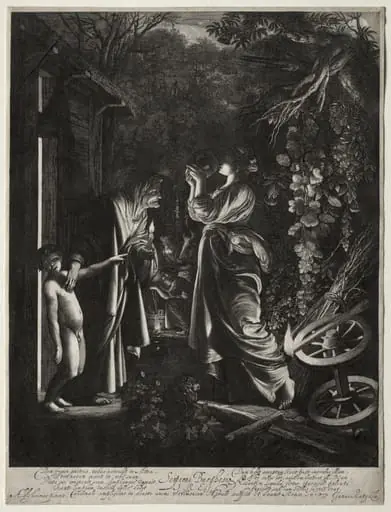 The Mocking of Ceres
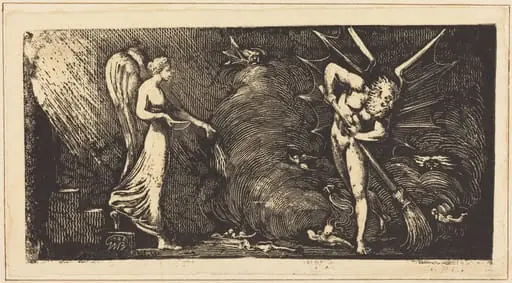 The Man Sweeping the Interpreter's Parlor
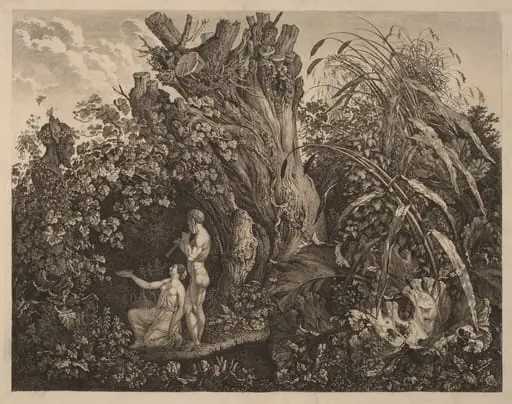 An Offering to Pan
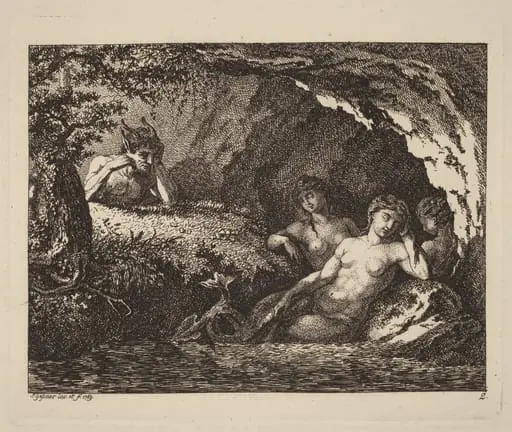 Three Sleeping Sprites with a Satyr
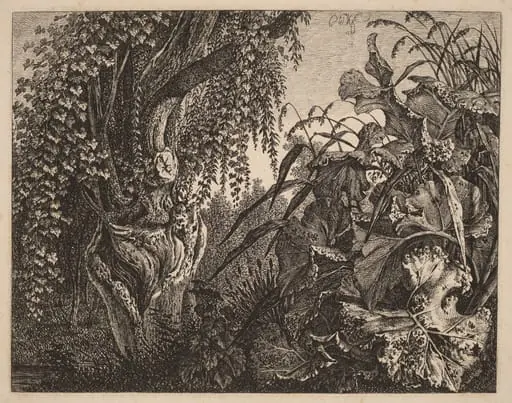 A Thicket; a Gnarled Willow Tree at Left, a Thicket of Vegetation at Right
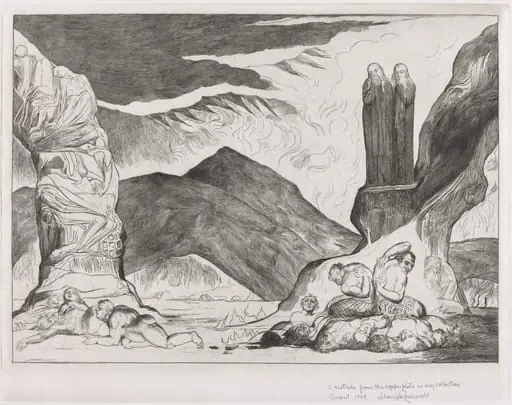 The Circle of the Falsifiers: Dante and Virgil Covering their Noses because of the stench
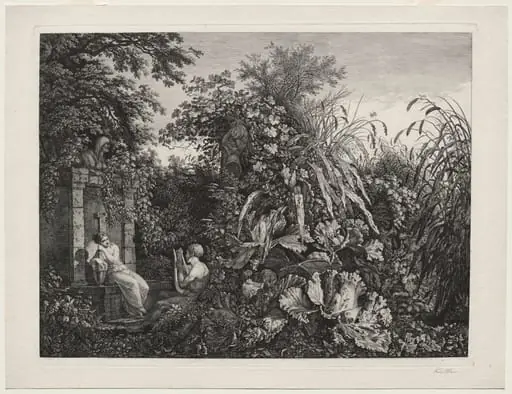 Youth Playing a Lyre to a Maiden by a Fountain
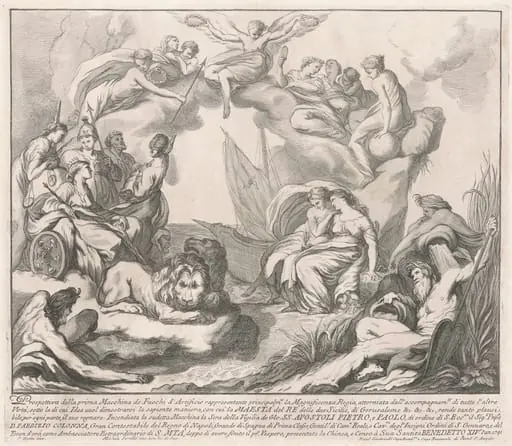 The Prima Macchina for the Chinea of 1741: Allegory of Regal Magnificence
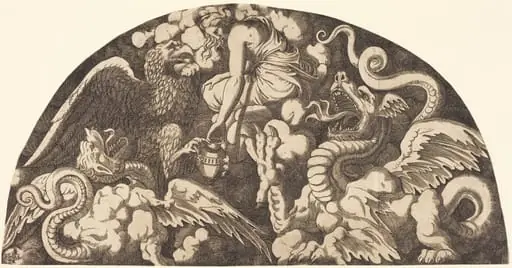 Jupiter Bringing Water of the Styx to Psyche
 The Flight into Egypt
 Scenes of Witchcraft: Morning