Artwork
Abraham's Parting from the Family of Lot
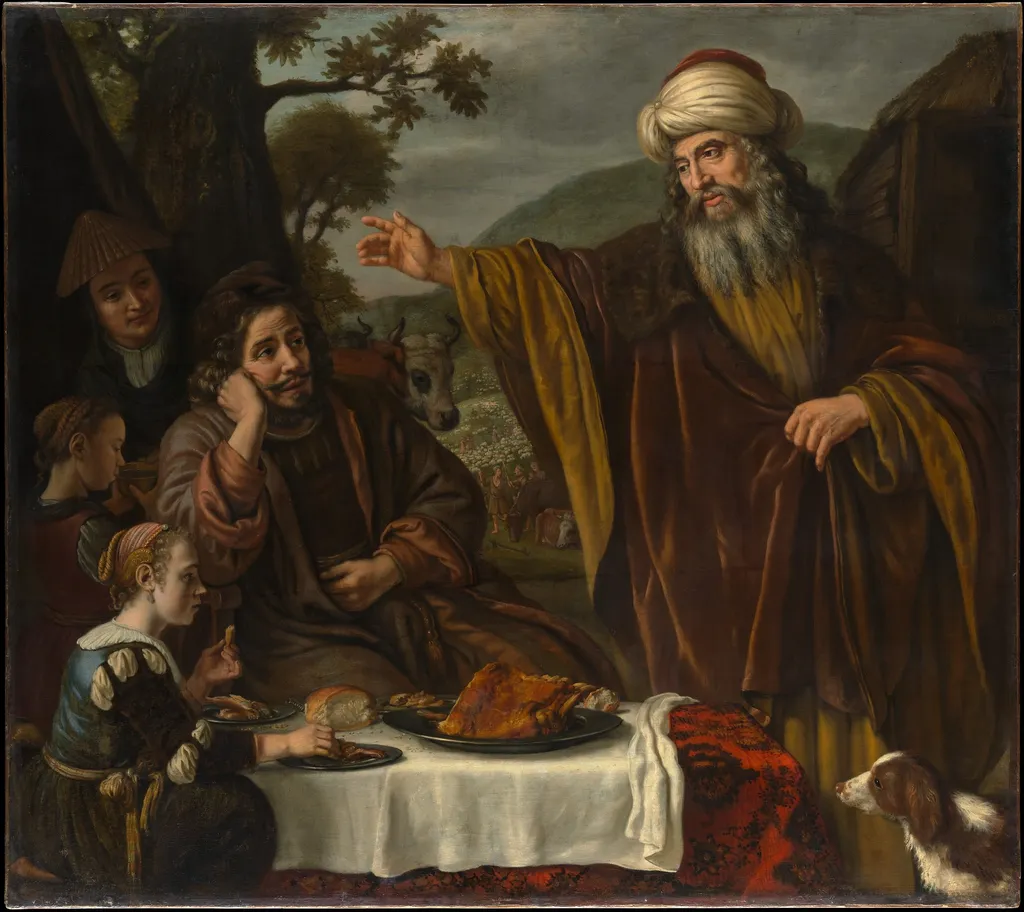
Abraham's Parting from the Family of Lot is an oil painting by the Dutch Golden Age artist Jan Victors. It dates from 1650 and is held in the collection of the Metropolitan Museum of Art.
About this work
The scene, painted in oil on canvas around 1655–65, captures the familial tension just before Lot departs for Sodom.
In a rare biblical treatment from Genesis 13, Jan Victors shows Abraham urging his nephew Lot to separate their households and herds to end the quarrel among their shepherds. For decades the Metropolitan Museum of Art catalogued the large canvas as Jacob and Laban until the German art historian Volker Manuth corrected the identification in 1987. The scene, painted in oil on canvas around 1655–65, captures the familial tension just before Lot departs for Sodom.
Subject & Meaning
The painting depicts the biblical story from Genesis 13, where Abraham and Lot separate to resolve a land dispute. Depicted are Abraham, Lot, his wife, and his daughters, along with a dog and food items, suggesting a meal or farewell feast. The scene, typical of Dutch Golden Age religious art, focuses on the moment of parting, emphasizing familial bonds and divine guidance.
The inclusion of everyday details like food and a dog adds a genre-like quality, grounding the sacred narrative in contemporary Dutch life. The work thus represents both the literal biblical event and the moral lesson of trusting in God's provision and separation for the sake of peace.
Technique & Style
The painting is executed in oil paint on canvas, measuring 147.3 × 165.4 cm. This medium and support are typical of 17th-century Dutch painting, consistent with the work's 1650 date and Jan Victors' practice. No additional details about the artist's handling or the painting's condition are provided in the available sources.
History & Provenance
This painting was created by Jan Victors in 1650. Its early ownership history is not documented, but by the 19th century it belonged to William T. Blodgett. The work later entered the collection of the Metropolitan Museum of Art, where it remains.
Overview
Jan Victors's painting, Abraham's Parting from the Family of Lot, created between approximately 1655 and 1665, depicts a moment of familial negotiation from the Book of Genesis. Executed in oil on canvas and measuring 147.3 by 165.4 centimeters (58 by 65 1/8 inches), the work is signed by the artist on the right side. It captures Abraham's appeal to his nephew Lot for a peaceful separation of their households, a scene less frequently portrayed in Dutch Golden Age art.
Context
Jan Victors, an Amsterdam-based artist, established himself as an independent history painter during the Dutch Golden Age. Although once considered a pupil of Rembrandt, contemporary scholarship, notably by Eric Jan Sluijter, now positions him as a distinct artistic voice. His choice of this particular biblical narrative, less common among his contemporaries, further highlights his individual approach to religious subjects.
Own this work as a print
Artist & collection
Artist
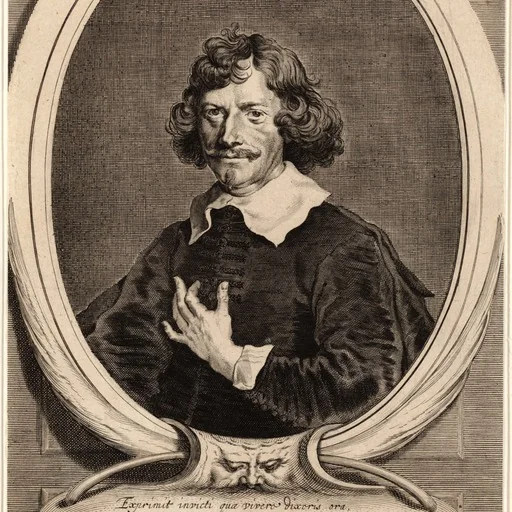
Jan Victors (or Fictor; 1619 – 1676) was a Dutch Golden Age painter mainly of history paintings of Biblical scenes, with some genre scenes.

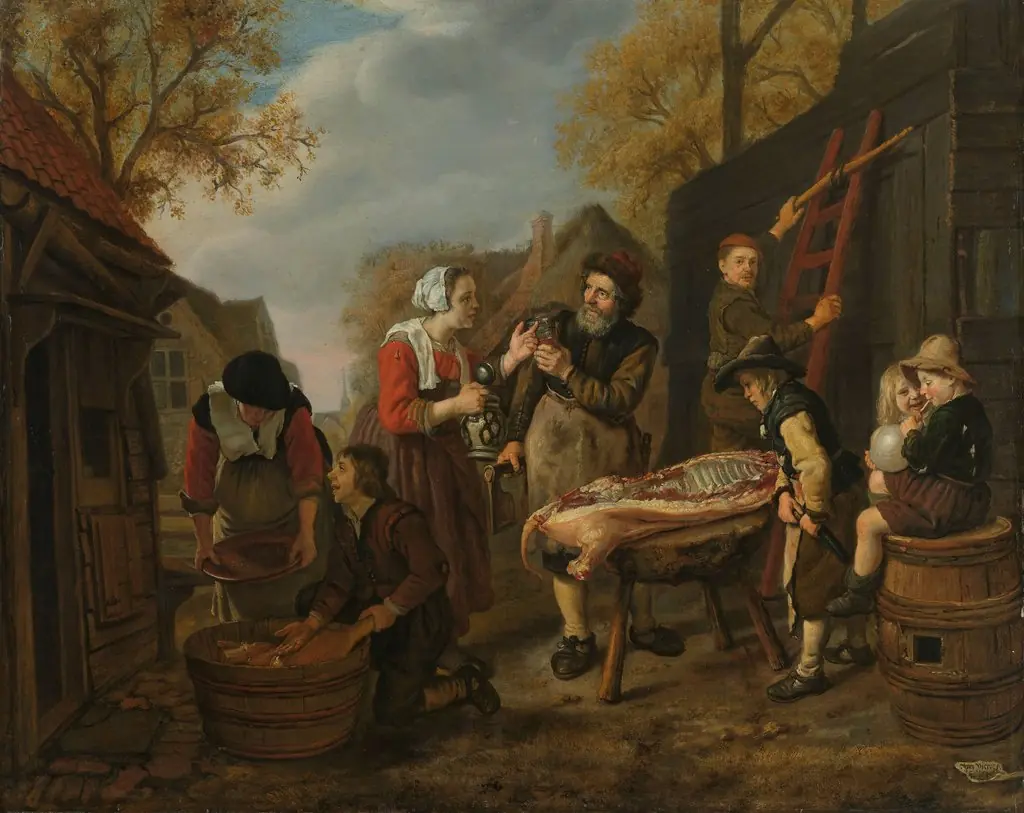
 The Laborer of Gibea Offering Hospitality to the Levite and His Wife
 Daniël décrouvant l'imposture des prêtres de Baäl
 The Magnanimity of Scipio Africanus
 Joosefin verinen viitta
 Historical Scene
 King Solomon Receiving the Queen of Sheba
 Die Taufe des Mohrenkämmerers
 Laban Searching for his Stolen Household Gods
 Predigt Johannes des Täufers
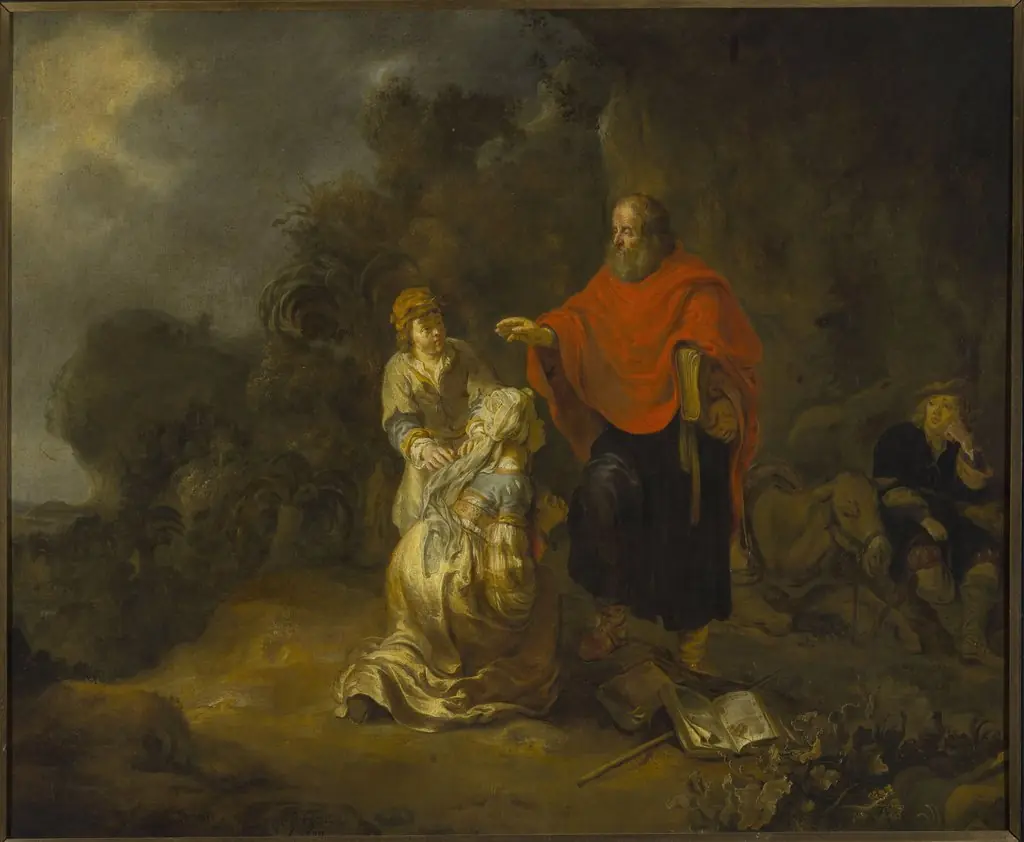 Prophet Elisha and the Shunammite woman on Mt. Carmel
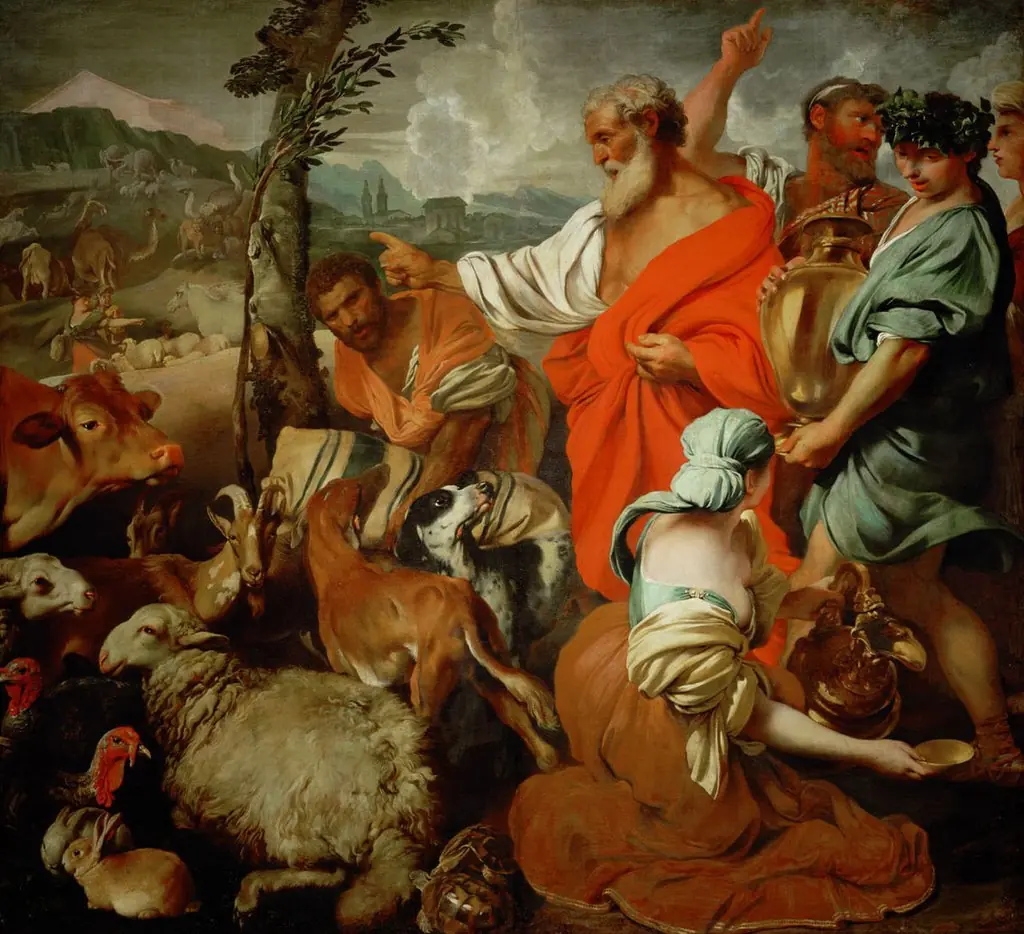 Einzug der Tiere in die Arche Noah
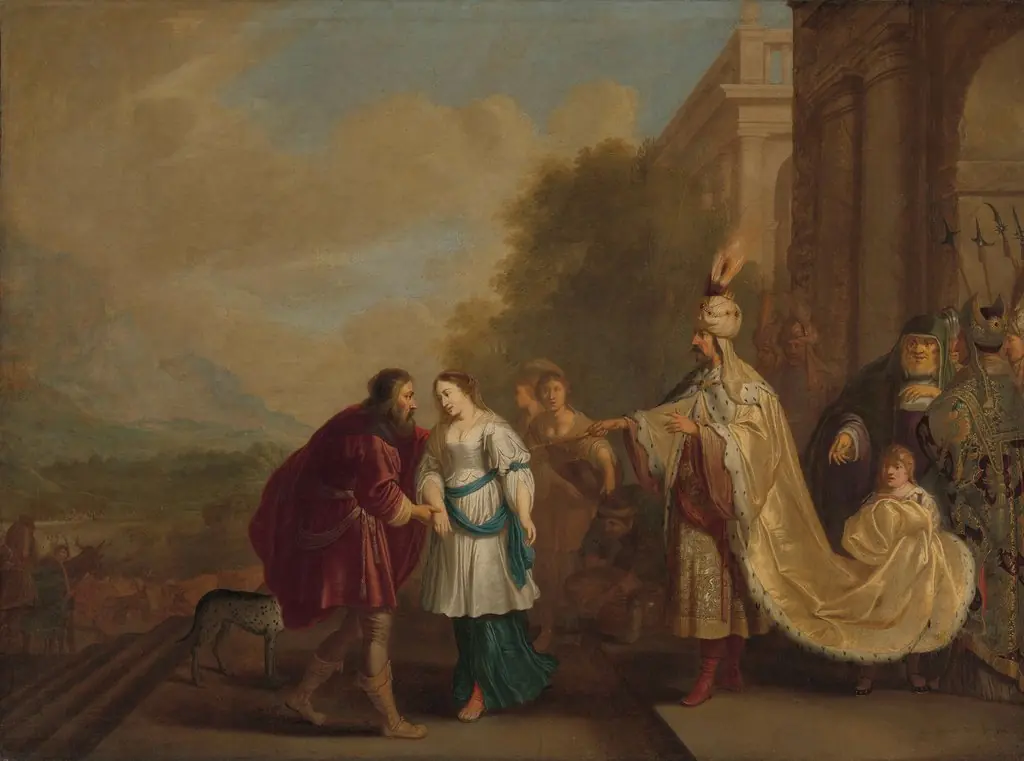
- Pharaoh gives Sarah back to Abraham