Artwork
The Slaughtered Hog
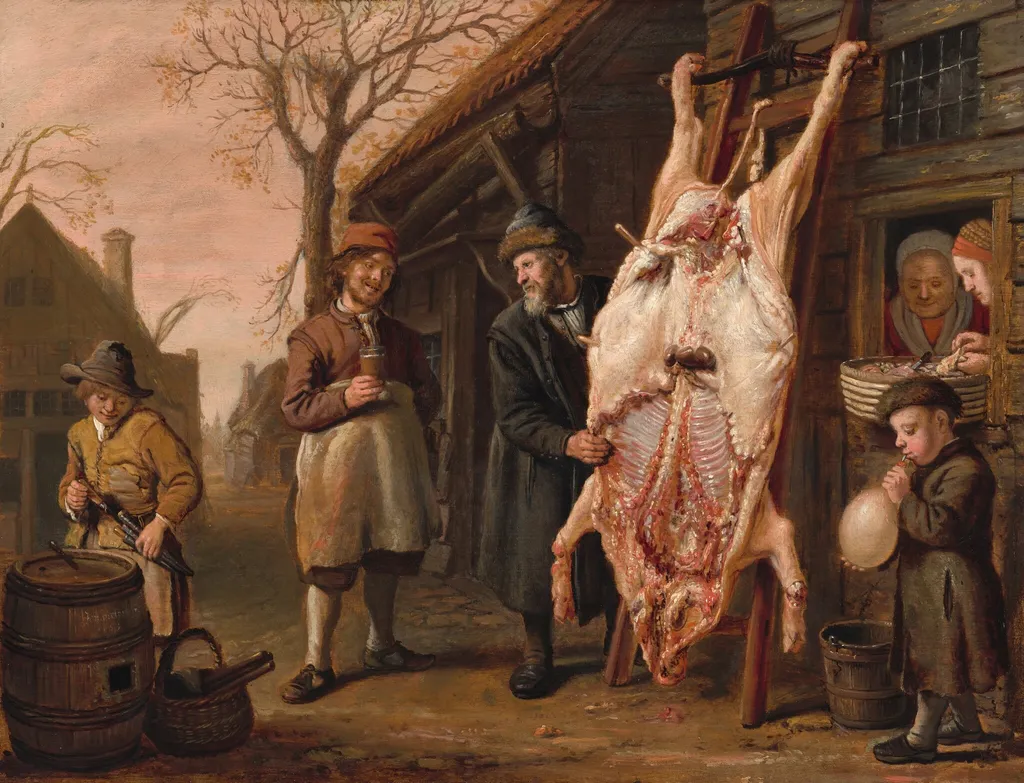
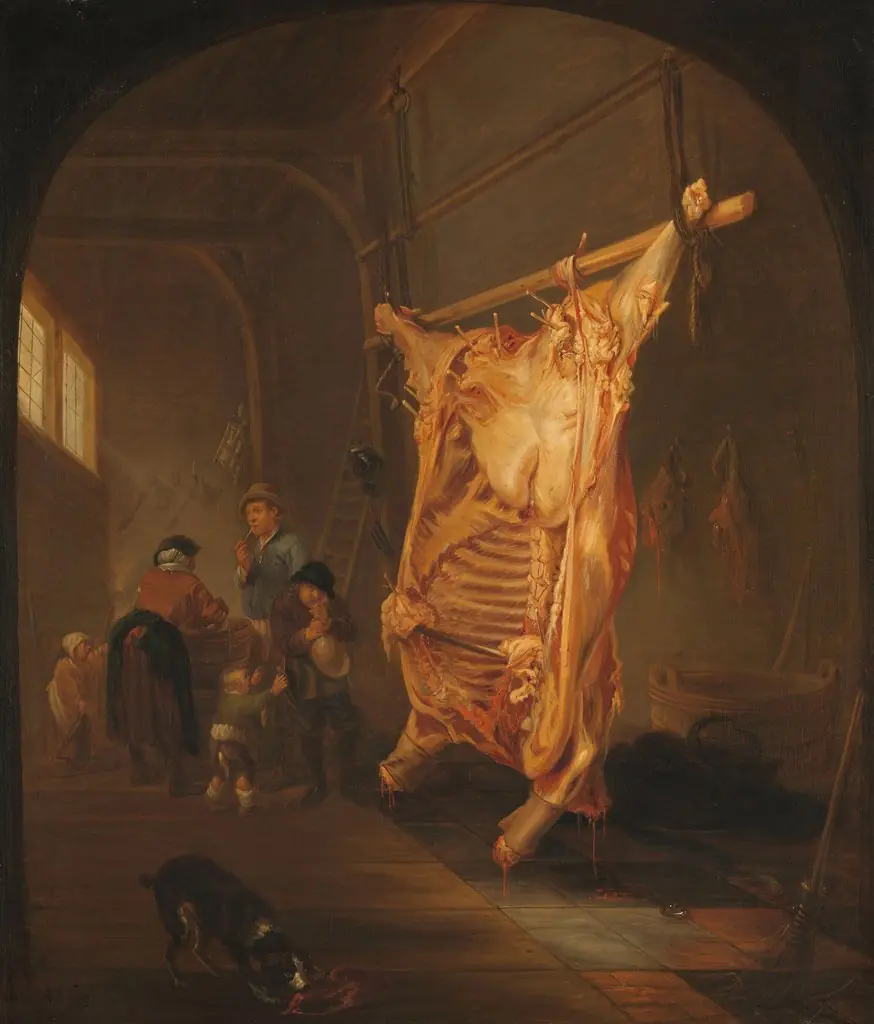
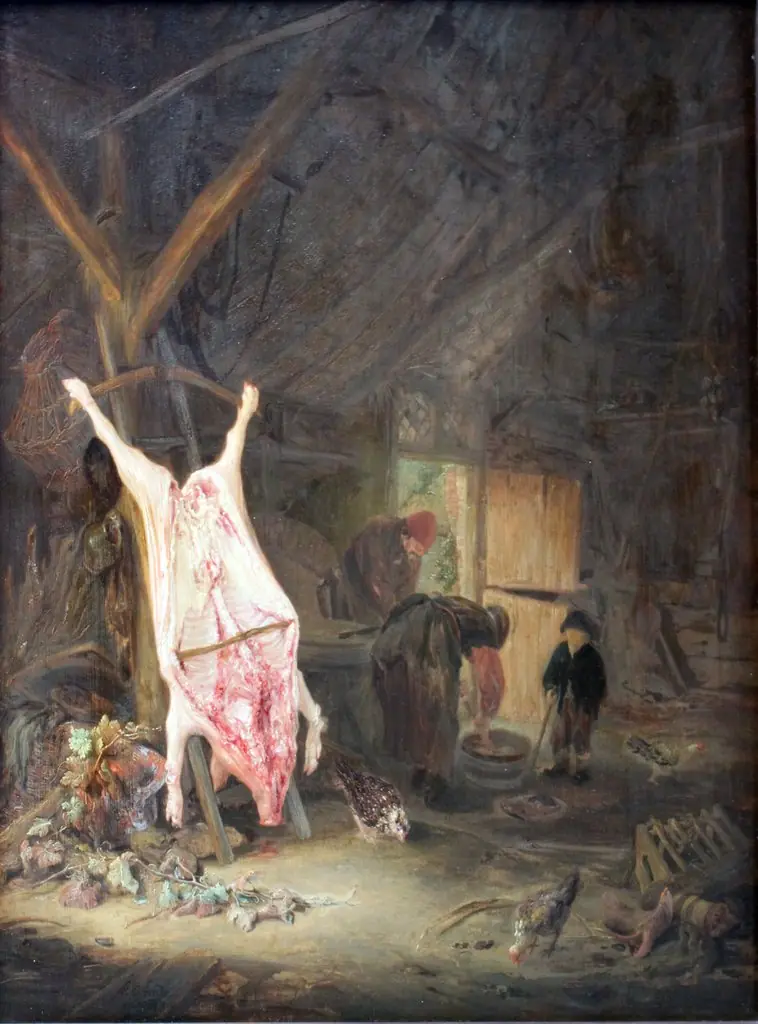
The Slaughtered Hog is an oil painting by the Baroque artist Jan Victors. It dates from 1653 and is held in the collection of the National Gallery of Art.
- Inscription
- Inscribed:lower left on the barrel: Jan.Victors f. 1653
About this work
Technique & Style
As a still life, the piece demonstrates the artist's handling of the medium through the depiction of a butchered animal, a subject typical of the genre.
Created in 1653, The Slaughtered Hog is an oil painting executed on a wooden panel support. The work measures 39 cm in height and 52 cm in width. As a still life, the piece demonstrates the artist's handling of the medium through the depiction of a butchered animal, a subject typical of the genre.
The painting was recovered after being confiscated by Nazi authorities in 1938 and restituted to the original family in 1948 before entering the National Gallery of Art collection.
History & Provenance
Jan Victors created the oil-on-panel painting The Slaughtered Hog in 1653. The work's early ownership chain begins with J.R. Thomas of London, who consigned it to a Christie, Manson & Woods sale in London on November 19, 1920, where it was cataloged as The Butcher and sold for £28.8. It subsequently entered the collection of Dr. Gustav Arens in Vienna.
Following Arens's death, the painting passed by inheritance to his daughter, Lise Arens Haas, and later to her daughter, Eva L. Meigher. During the Nazi era in 1938, the work was confiscated from the Haas residence in Vienna and deposited in the Zentraldepot für beschlagnahmte Sammlungen. It was recovered after World War II and officially restituted to the family in 1948. In 2018, the painting was gifted to the National Gallery of Art in Washington, D.C.
The Slaughtered Hog is held in the collection of the National Gallery of Art in Washington, D.C., where it was accessioned in 2018 as a gift from Eva L. Meigher. The work traces its modern provenance through the Haas family of Vienna and Berkeley, having been confiscated by Nazi authorities in 1938 and restituted in 1948 before passing to Meigher. Prior to the Haas inheritance, the painting was owned by Dr. Gustav Arens and appeared in a London sale at Christie, Manson & Woods in 1920 under the title The Butcher.
The National Gallery of Art does not list any specific exhibition history for this work in the provided sources.
Context
Jan Victors’s _The Slaughtered Hog_ (1653) has been situated within the Dutch Golden Age still-life tradition, particularly the subgenre of kitchen and market scenes that flourished in the mid-seventeenth century. Scholarship emphasizes the painting’s alignment with moralizing vanitas imagery, using the depiction of a slaughtered animal to evoke themes of transience and the fragility of life. The work entered the National Gallery of Art, Washington, in 2018 as a promised gift, anchoring its presence in a major American public collection and facilitating renewed art-historical engagement with Victors’s oeuvre.
The painting’s provenance reflects broader patterns of displacement and restitution during the twentieth century. Confiscated from the Haas family in Vienna in 1938 under Nazi occupation, it was later recovered and returned in 1948, before entering the art market and ultimately the NGA. This trajectory situates Victors’s work within discourses of cultural loss and recovery, linking its reception to post-war restitution narratives.
Overview
Jan Victors’ 1653 oil on panel, The Slaughtered Hog, presents a domestic scene centered on a massive pig carcass suspended by its hind legs. The composition gathers several figures, men in modest attire and a young boy, around the animal, set against a simple wooden structure and a sparsely treed backdrop. The work exemplifies the Dutch Golden Age’s interest in detailed, everyday subjects.
Subject & Meaning
The painting depicts a communal but utilitarian moment of meat preparation, emphasizing the practical aspects of rural life. By focusing on the act of butchery without overt moralizing or religious symbolism, Victors reflects his Calvinist inclination to avoid sacred iconography, instead highlighting ordinary labor and the material world.
Own this work as a print
Artist & collection
Artist
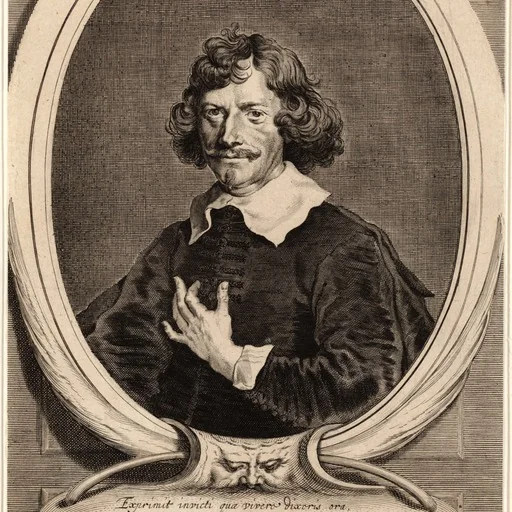
Jan Victors (or Fictor; 1619 – 1676) was a Dutch Golden Age painter mainly of history paintings of Biblical scenes, with some genre scenes.