Artwork
Laban Searching for his Stolen Household Gods
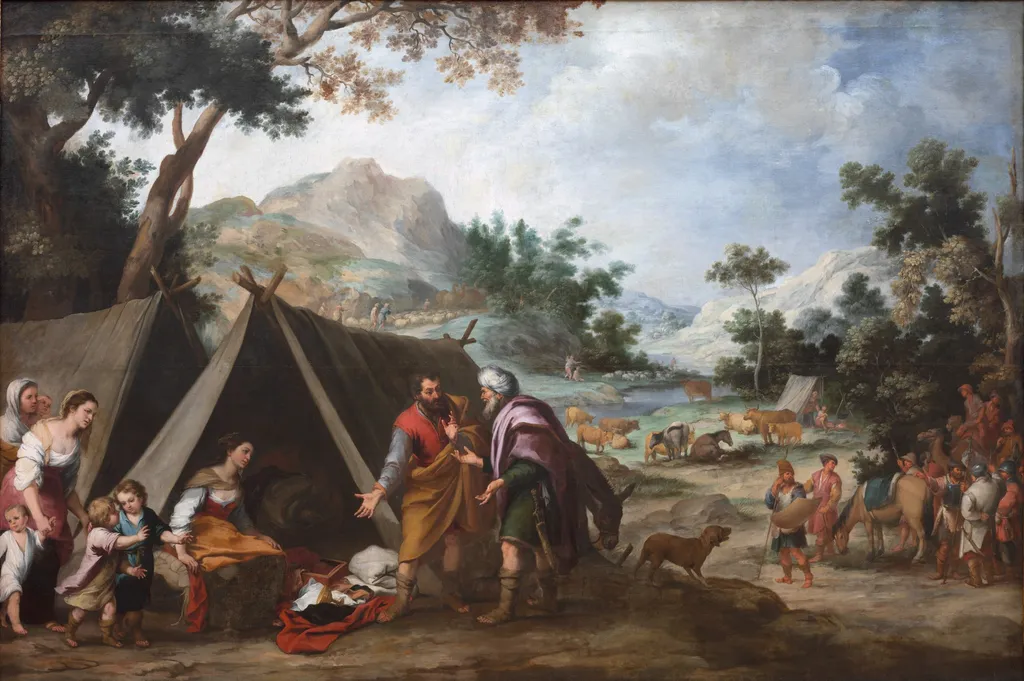
Laban Searching for his Stolen Household Gods is an oil painting by the Spanish Baroque Tenebrist artist Bartolomé Esteban Murillo. It dates from 1665 and is held in the collection of the Cleveland Museum of Art.
About this work
Subject & Meaning
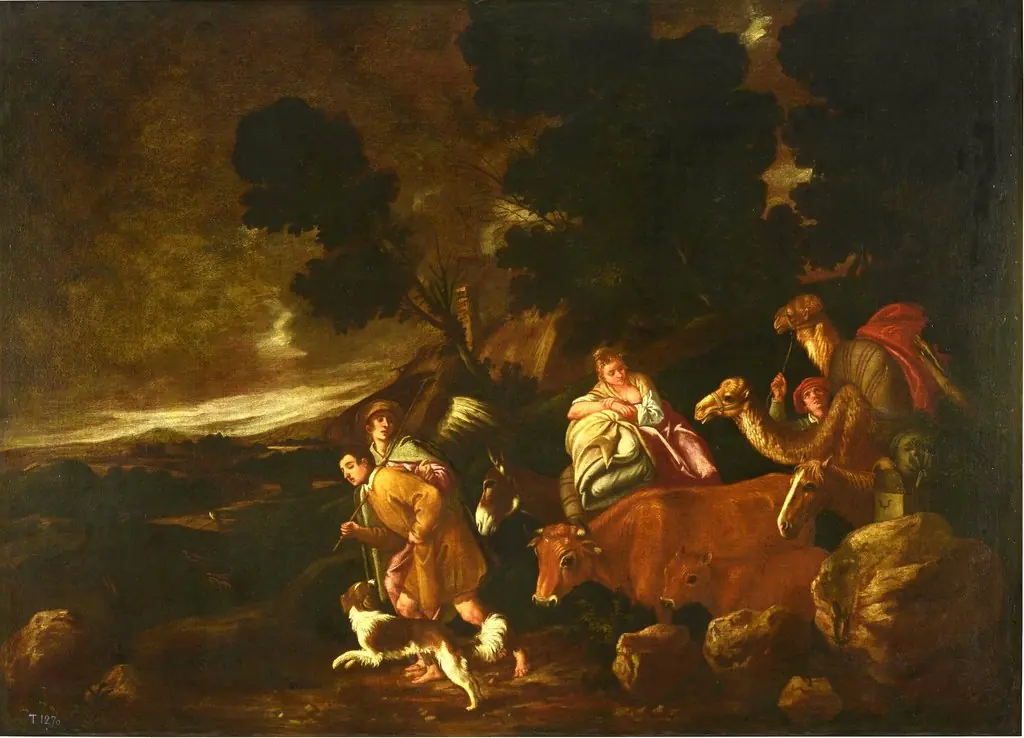
The painting depicts the biblical episode of Laban searching for his stolen household gods, a narrative drawn from Genesis 31.
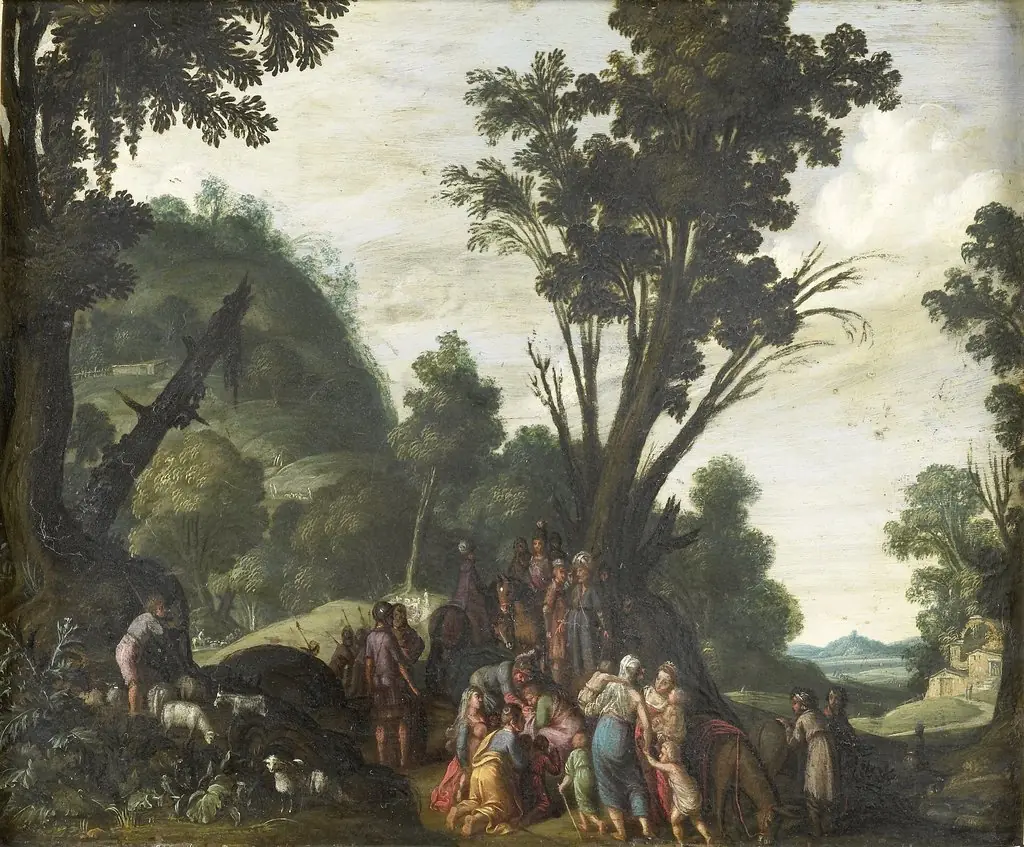
The painting depicts the biblical episode of Laban searching for his stolen household gods, a narrative drawn from Genesis 31. According to the source records, the work shows Laban amid a landscape setting that includes a tree, situating the figures within a natural environment appropriate to the patriarchal story. Classified as religious art, the canvas visualizes a moment of pursuit and accusation from the Old Testament, in which Laban tracks Jacob's household, suspecting him of having taken the teraphim, or domestic idols.
Murillo's treatment frames this scriptural confrontation as a religious subject, with the outdoor setting and tree serving as the principal iconographic elements identified in the documentation. The work thereby represents the broader tradition of seventeenth-century Spanish painters interpreting patriarchal narratives from Genesis as vehicles for moral and devotional reflection.
History & Provenance
The painting Laban Searching for his Stolen Household Gods is dated to 1665, aligning with Murillo’s mature period and the documented year of its creation []. The work entered the collection of the Cleveland Museum of Art in 1965 as accession number 1965.469, following a provenance chain that traces its ownership through Wildenstein & Company, Hugh Grosvenor (2nd Duke of Westminster), and Hugh Grosvenor (1st Duke of Westminster) []. The painting’s commission and early history remain undocumented, but its inclusion in the Cleveland Museum’s holdings reflects a 20th-century dispersal of aristocratic collections, with William Buchanan noted as an intermediary in its transfer [].
Laban Searching for his Stolen Household Gods, painted by Bartolomé Esteban Murillo in 1665, is held in the collection of the Cleveland Museum of Art. The work is identified by the accession number 1965.469, indicating its acquisition by the museum in 1965. Prior to entering the Cleveland collection, the painting passed through several private owners, including William Buchanan, Hugh Grosvenor (1st Duke of Westminster), Hugh Grosvenor (2nd Duke of Westminster), and Wildenstein & Company. The sources do not provide details of specific exhibition venues or dates beyond its current institutional placement.
Overview
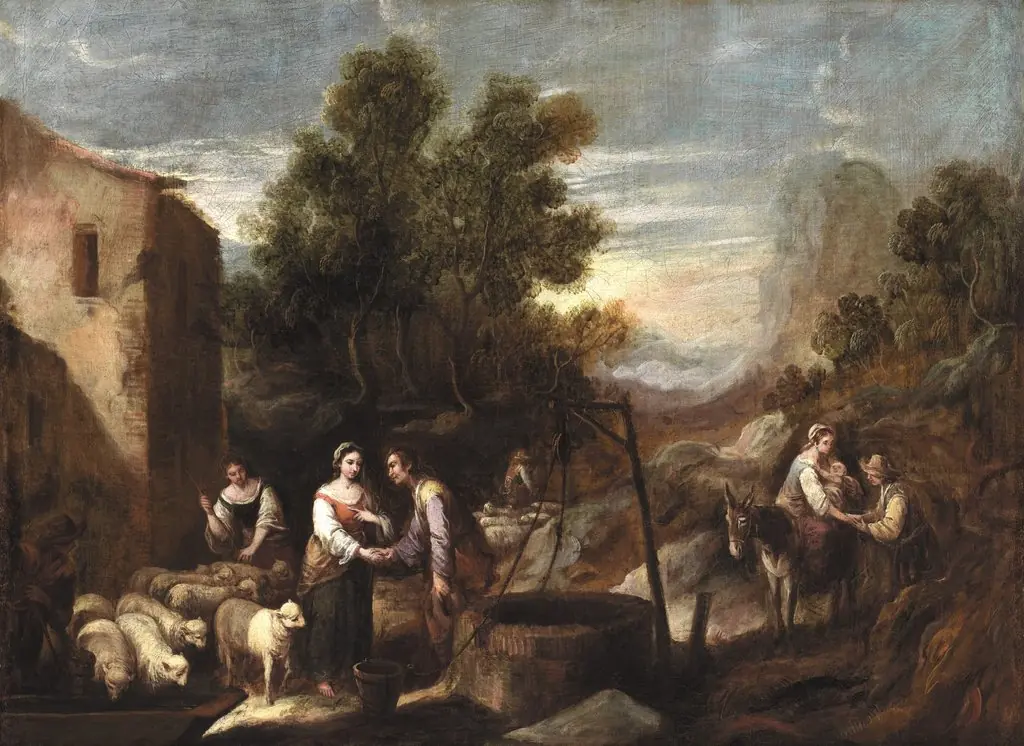
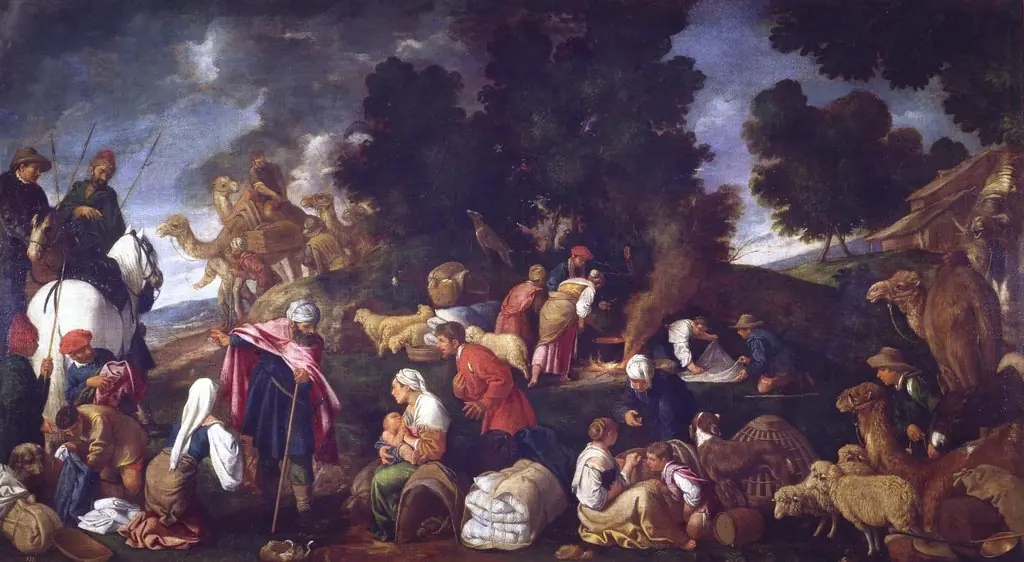
Bartolomé Esteban Murillo's Laban Searching for his Stolen Household Gods, an oil painting from 1665, exemplifies the Spanish Baroque style. This religious work depicts a bustling outdoor scene centered on the biblical figure Laban, set within a shadowed landscape with a prominent tree. The composition features a gathering of people and animals near tents, and the painting is held in the collection of The Cleveland Museum of Art.
Technique & Style
Executed in oil, Murillo's work demonstrates characteristics of the Spanish Baroque, particularly through its use of tenebrism, where dramatic contrasts of light and shadow enhance the scene's emotional depth. The artist, known for both sacred subjects and genre scenes, employs a palette of soft, earthy browns, greens, and blues, punctuated by vibrant reds and yellows in the figures' attire. This approach creates a rich, yet naturalistic, depiction of the biblical event.
Own this work as a print
Artist & collection
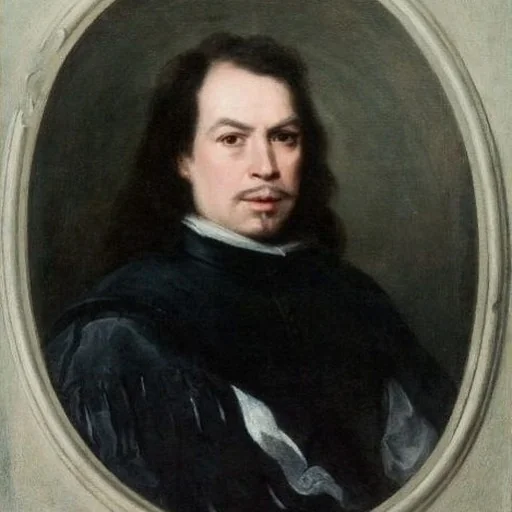
Artist
Bartolomé Esteban Murillo ( mure-IL-oh, m(y)uu-REE-oh, Spanish:; late December 1617, baptised 1 January 1618 – 3 April 1682) was a Spanish Baroque painter.