Artwork
Madonna with child
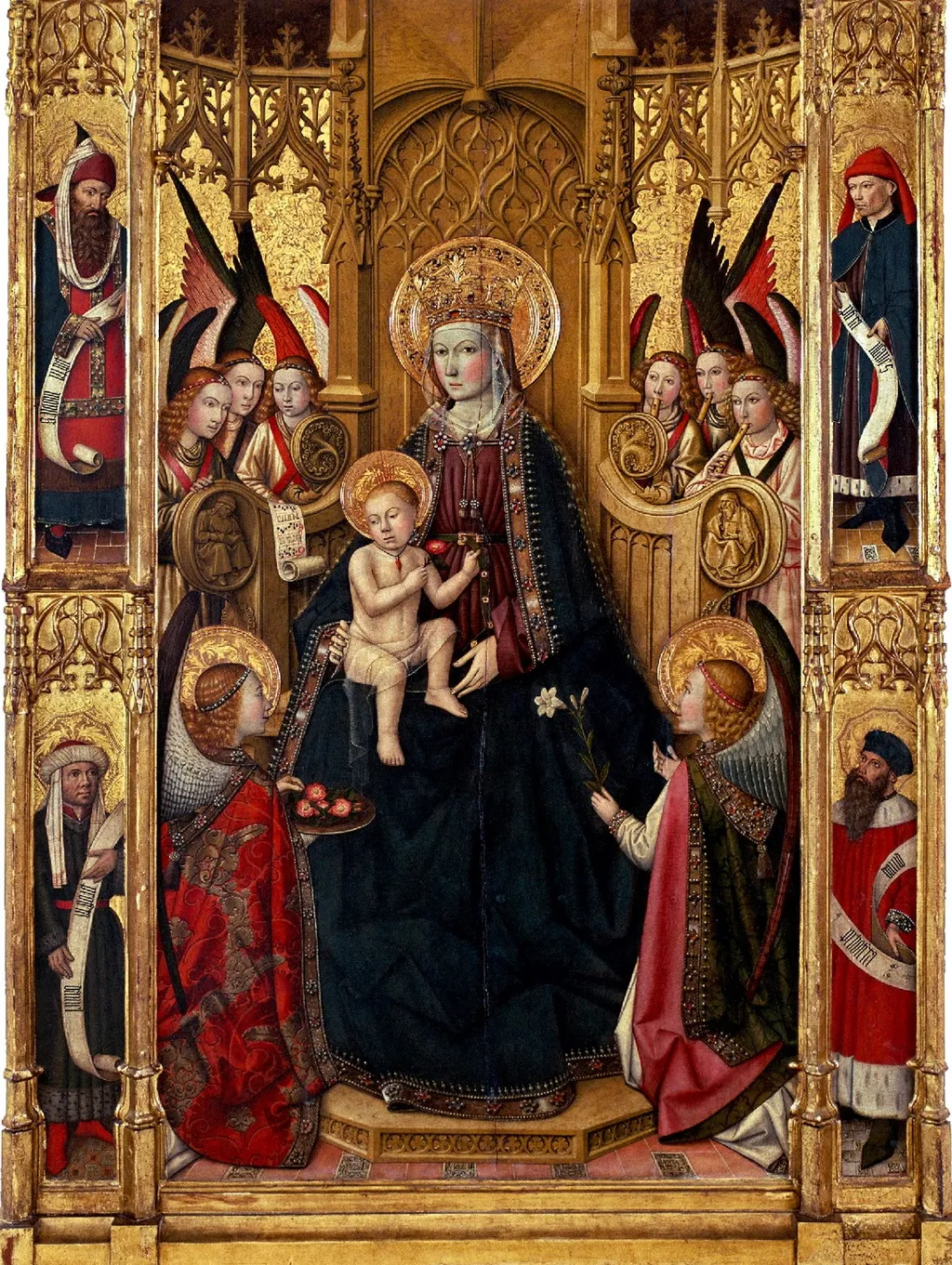
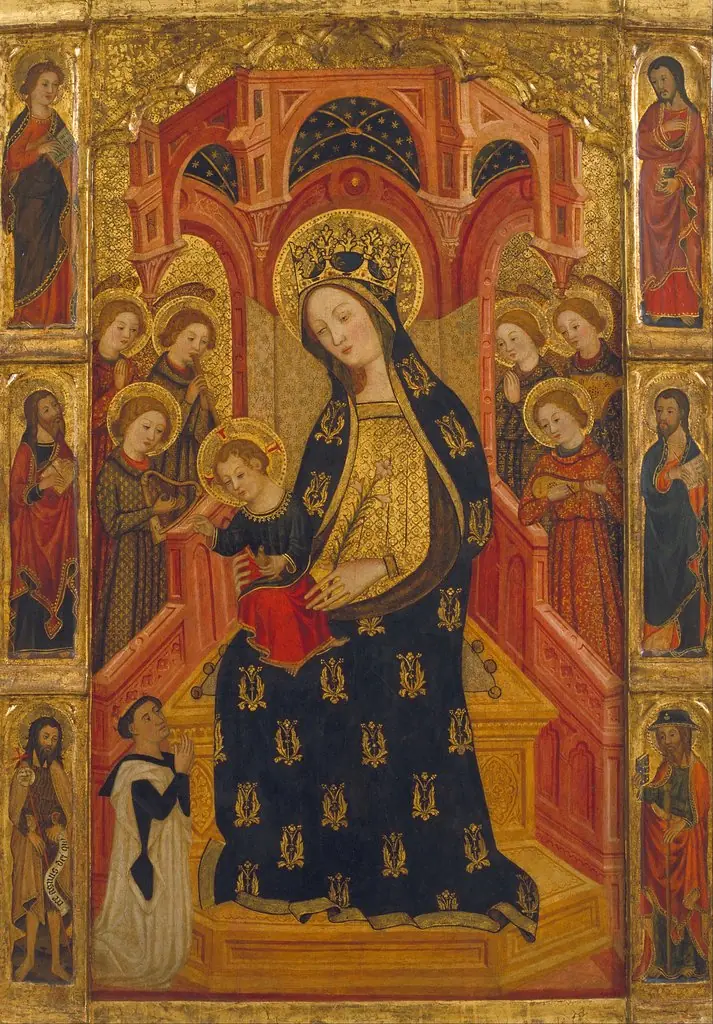
Madonna with child is a tempera painting by the Gothic painting artist Jaume Huguet. It dates from 1450 and is held in the collection of the Museu Nacional d'Art de Catalunya.
About this work
Overview
Though often described as a painting, its surface treatment incorporates textured stucco, blending sculptural depth with painted detail.
Created around 1450 by Jaume Huguet, this stucco-on-panel work portrays the Virgin Mary with the infant Jesus. Though often described as a painting, its surface treatment incorporates textured stucco, blending sculptural depth with painted detail. It belongs to the late Gothic tradition in Catalonia and is part of the collection at the Museu Nacional d'Art de Catalunya, where it reflects regional devotional practices of the mid-15th century.
Subject & Meaning
The Virgin Mary holds the Christ Child, who reaches toward her necklace, suggesting a moment of human tenderness within a sacred context. Surrounding figures, angels and saints, kneel in reverence, their gestures and offerings reinforcing the image’s liturgical function. The composition serves as a focus for prayer, emphasizing Mary’s role as intercessor and the divine nature of her child through intimate yet formalized interaction.
Technique & Style
Huguet employed stucco relief to model robes and architectural elements, enhancing their three-dimensionality before applying tempera paint. Gold leaf covers the throne and halos, creating a luminous, otherworldly backdrop. Fine brushwork renders intricate patterns in clothing and foliage, while the figures’ expressions remain serene and stylized, consistent with Gothic conventions that prioritized spiritual presence over naturalism.
History & Provenance
The work likely originated in a Catalan church or private chapel, commissioned for devotional use during the height of Gothic religious art in the region. It entered the Museu Nacional d'Art de Catalunya in the early 20th century as part of a broader effort to preserve and catalog medieval Catalan artworks. Its survival through centuries of political and religious change underscores its enduring cultural significance.
Context
In mid-15th century Catalonia, religious imagery was central to both public worship and domestic piety. Huguet’s style reflects the influence of Flemish detail and Catalan traditions, merging northern realism with local iconography. This piece aligns with a broader trend of devotional panels that emphasized Mary’s maternal role, responding to growing popular devotion to the Virgin in late medieval Spain.
Legacy
Huguet’s use of stucco and gold in this work influenced subsequent Catalan altarpieces, establishing a visual language that balanced spiritual solemnity with ornate craftsmanship. Though later Renaissance trends favored naturalism, this piece remains a key example of how Gothic aesthetics sustained devotional intensity through material richness and symbolic precision well into the 15th century.
Artist & collection

 Virgin of the Angels
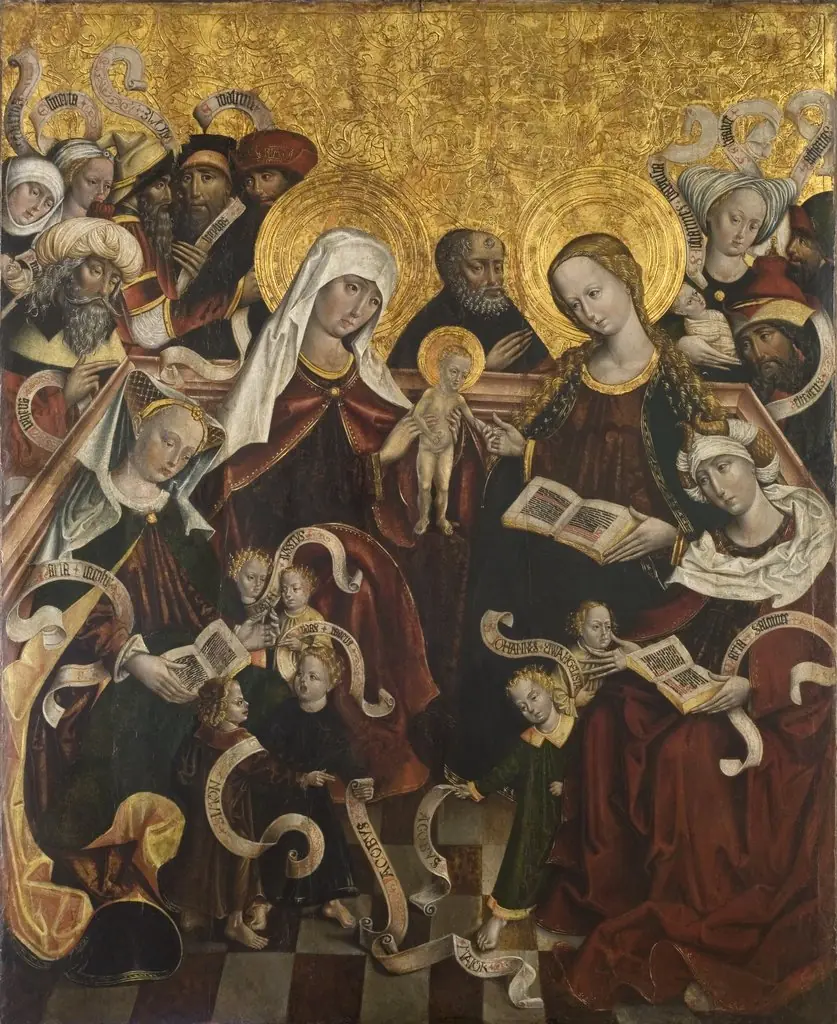 Family of the Virgin Mary, from Ołpiny
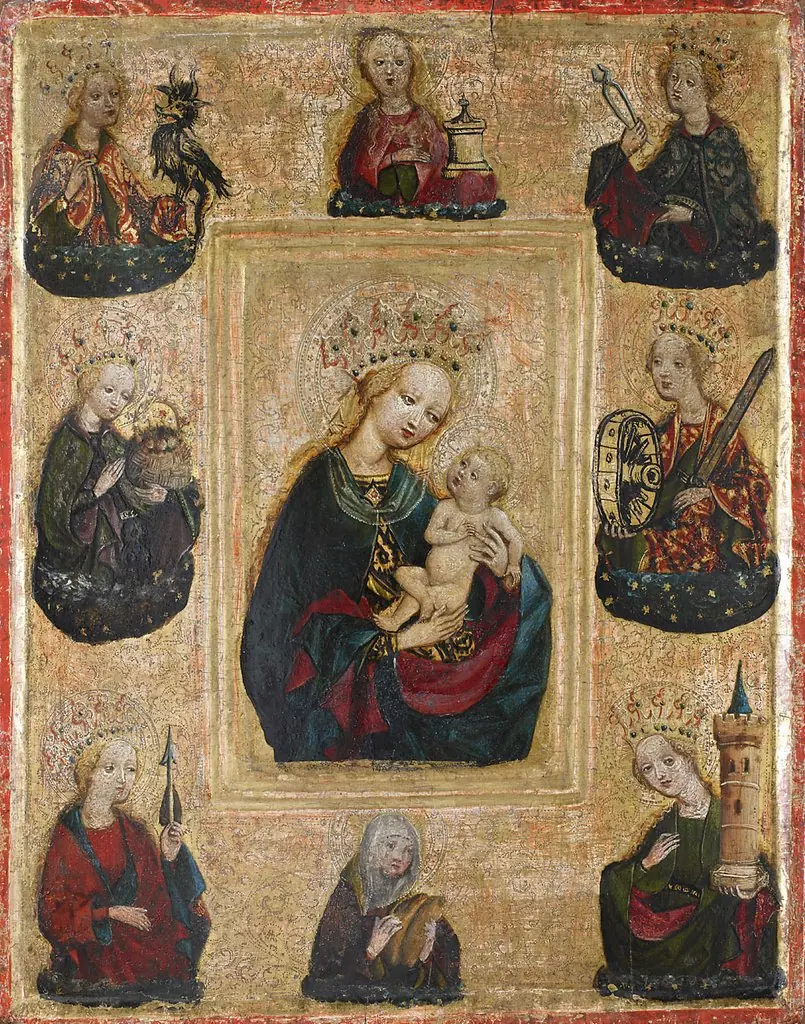 Maria mit Kind
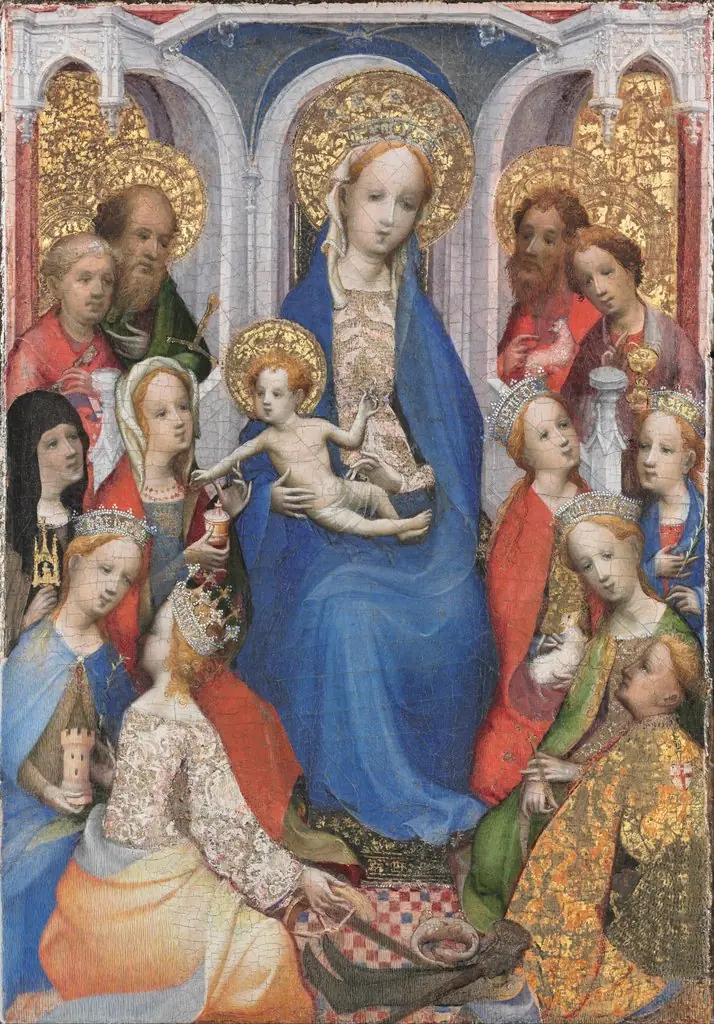 Enthroned Virgin and Child, with Saints Paul, Peter, Clare of Assisi, Mary Magdalene, Barbara, Catherine of Alexandria, John the Baptist, John the Evangelist, Agnes, Cecilia, Margaret of Antioch, and George
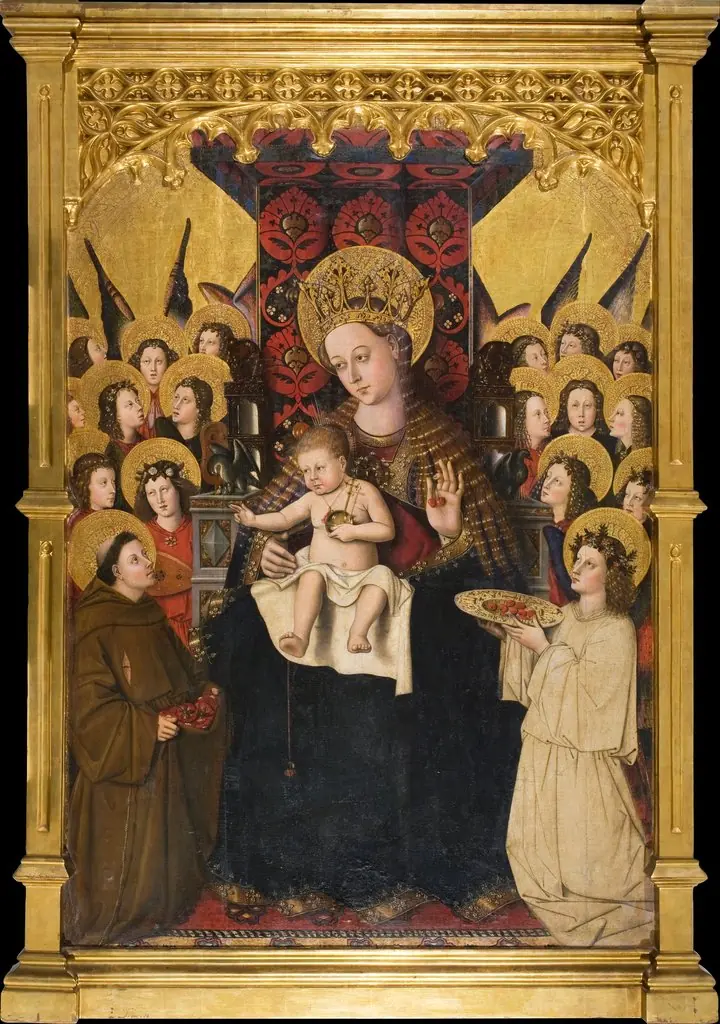 Virgin of the Porziuncola
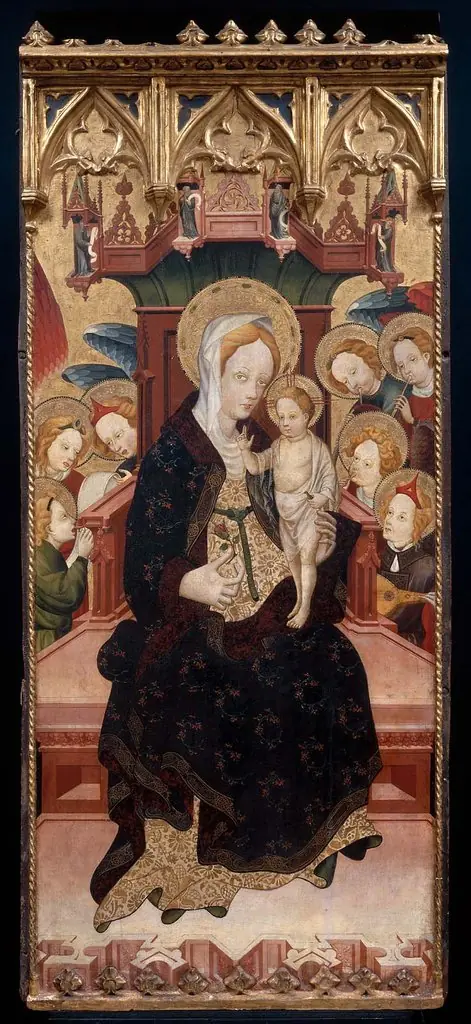 Virgin and Child Enthroned
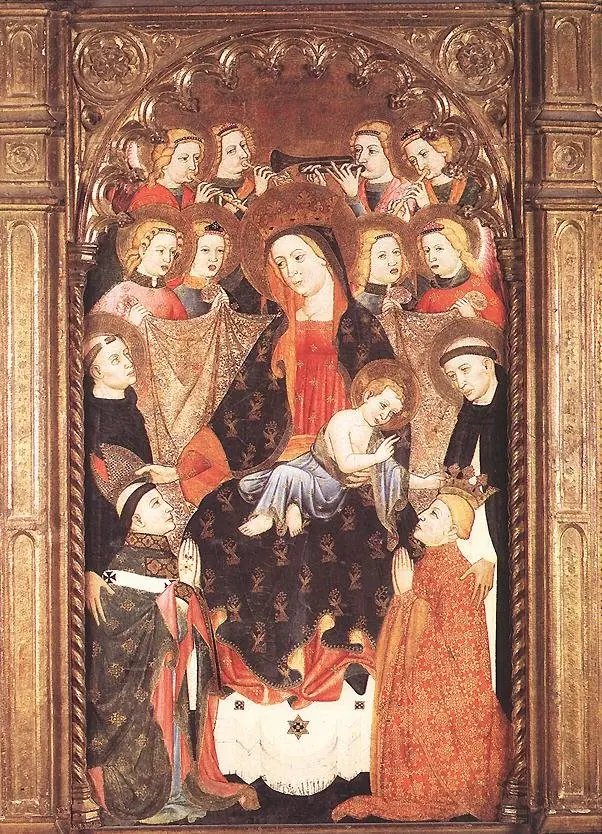 Virgin and Child with Angels and Saints
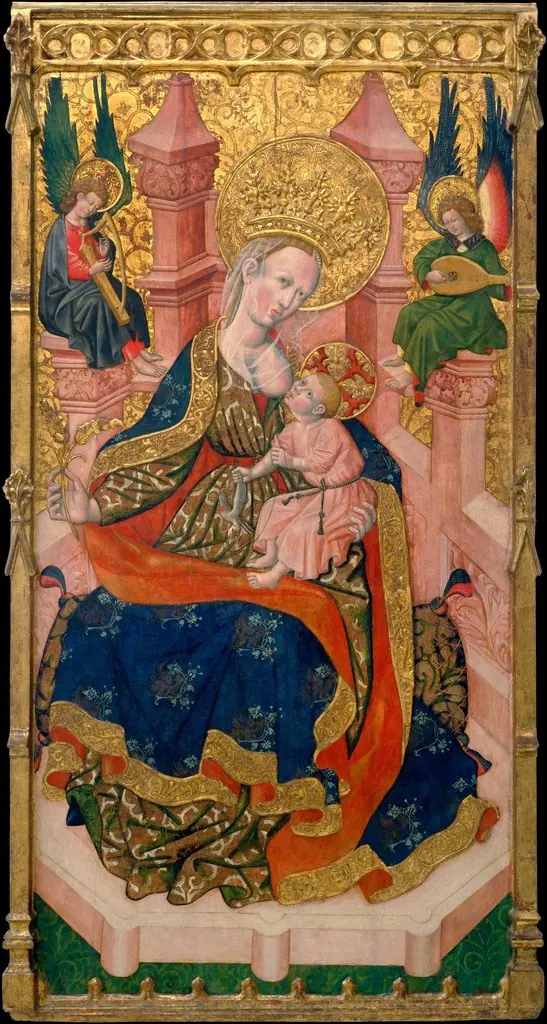 Virgin Suckling the Child
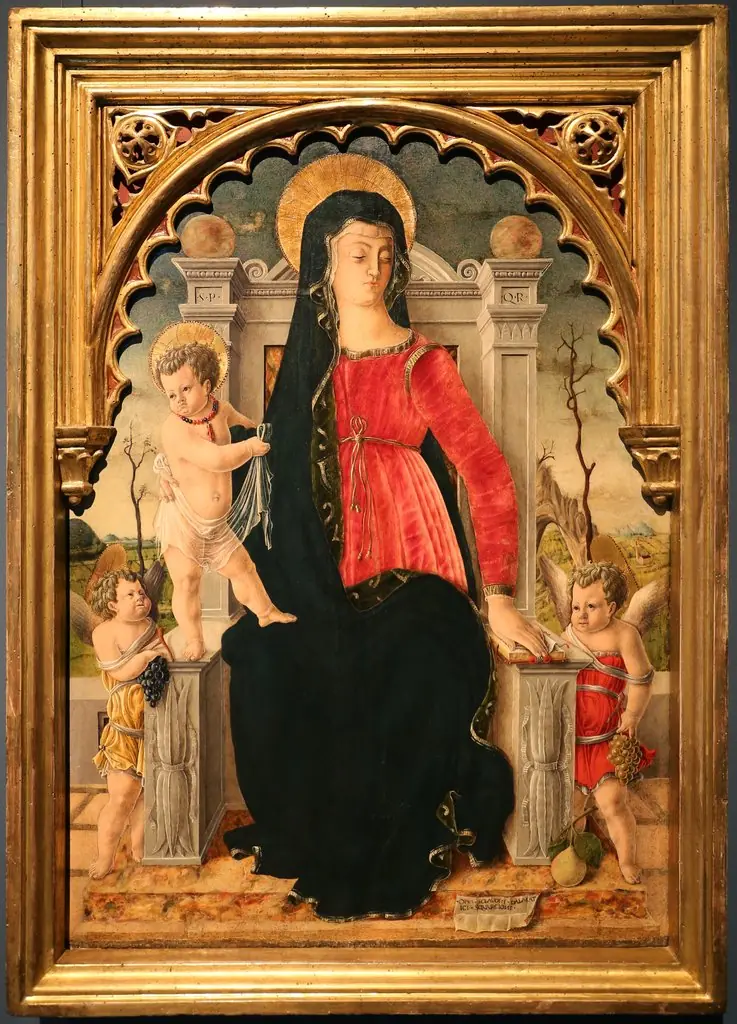 Virgin and Child enthroned with Angels
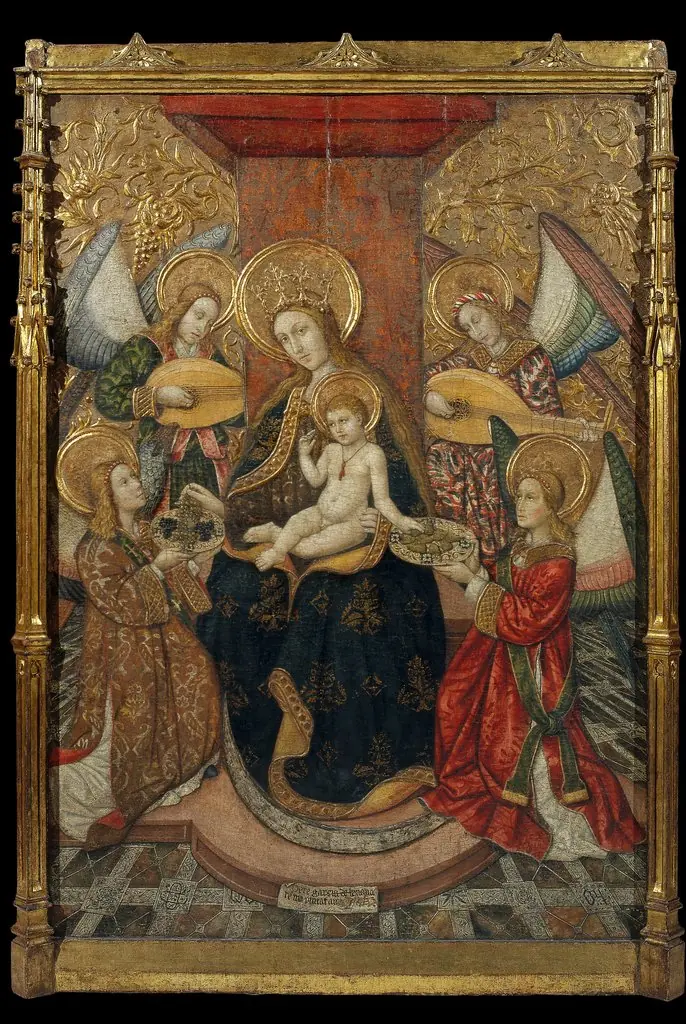 Virgin and Angels