Artwork
Episodes from the Lives of Mary Magdalen and Saint John the Baptist
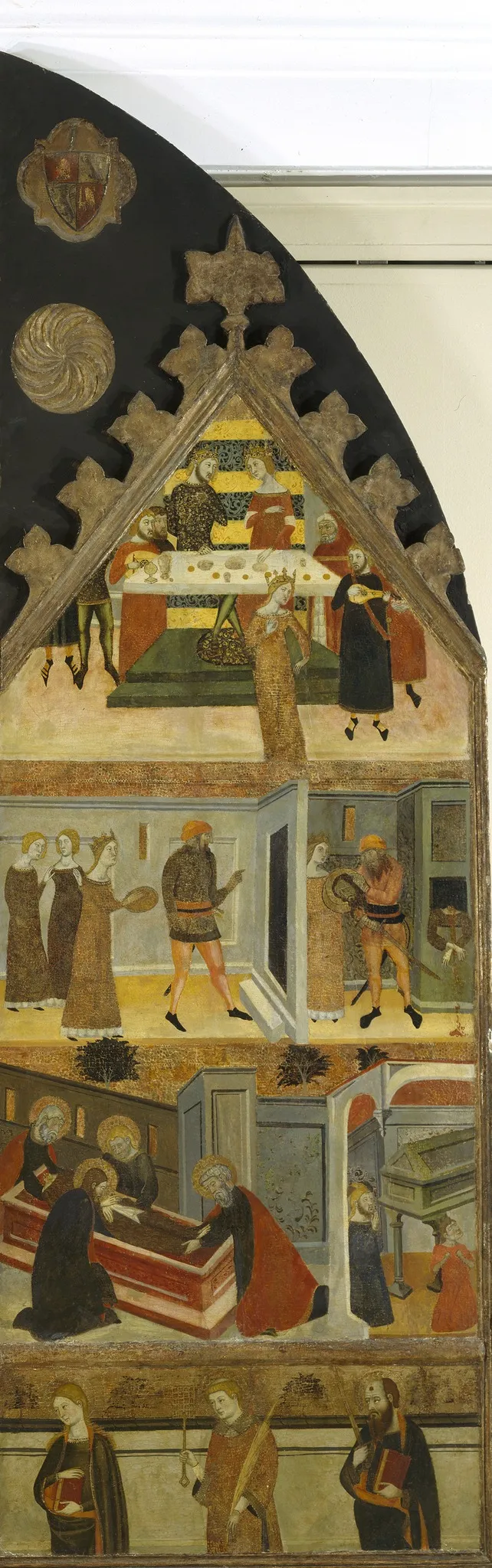
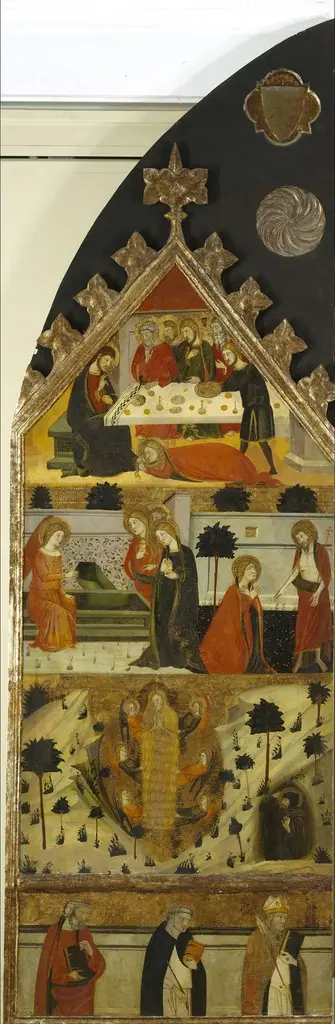
Episodes from the Lives of Mary Magdalen and Saint John the Baptist is a tempera painting by the Byzantine icon painting artist Jaume Serra. It dates from 1356 and is held in the collection of the Museo del Prado.
About this work
Subject & Meaning
This work by Jaume Serra brings together two distinct narrative cycles within a single devotional format, pairing episodes from the lives of Mary Magdalen and Saint John the Baptist. The pairing reflects a common medieval practice of joining saints whose legends emphasized penitence and baptismal themes, presenting them as complementary models of holiness.
The inclusion of a guitar and a lute among the depicted elements suggests musical or contemplative episodes drawn from the saints' legends, instruments that often signaled courtly or hermit settings in Trecento religious painting. The narrow, tall format of the panel is consistent with the wings of a portable altarpiece or a multi-panel ensemble, where each compartment framed a self-contained sacred vignette for veneration.
Technique & Style
The painting's condition is stable, with minor surface wear consistent with its age, and it remains housed in the Museo del Prado collection.
The work is executed in tempera on wooden panel, a technique typical of 14th-century Spanish religious painting. Measuring 280 cm in height and 92 cm in width, the composition depicts Saint John the Baptist alongside symbolic musical instruments, rendered with delicate modeling and gold leaf accents characteristic of Jaume Serra's style. The figures are arranged within a shallow spatial setting, emphasizing spiritual presence over naturalism, while the tempera medium allows for fine detail and luminous coloration.
The painting's condition is stable, with minor surface wear consistent with its age, and it remains housed in the Museo del Prado collection.
History & Provenance
The altarpiece Episodes from the Lives of Mary Magdalen and Saint John the Baptist was created by the painter Jaume Serra. While some records suggest a later inception date around 1400, the authoritative creation date for the work is 1356. Executed in tempera on panel, the piece measures 280 cm in height and 92 cm in width. The work currently resides in the collection of the Museo del Prado in Madrid.
The polyptych Episodes from the Lives of Mary Magdalen and Saint John the Baptist by Jaume Serra is held in the collection of the Museo del Prado, Madrid, where it is recorded under the inventory number P01186. The work entered the museum’s holdings in the nineteenth century as part of the Prado’s historic collection of Spanish and Italian medieval and early Renaissance paintings.
The painting has been included in several exhibitions dedicated to late medieval Iberian art and to the Serra workshop, notably appearing in El arte catalán entre los siglos XII y XV (Barcelona, 1968) and Jaume Serra y la pintura gótica mediterránea (Valencia, 2000).
Overview
Created in 1356 by the Catalan painter Jaume Serra, this tempera panel presents a narrative composition drawn from the lives of Mary Magdalene and Saint John the Baptist. The work is divided into distinct registers, the uppermost bearing a decorative shield and spiral motif, while the central area unfolds a sequence of episodic scenes. It is part of the collection of the Museo del Prado in Madrid.
Context
Serra’s work belongs to a period when Catalan painters were integrating local devotional traditions with broader European iconographic trends. The combination of biblical figures with everyday objects such as musical instruments reflects a didactic intent, making sacred stories accessible to contemporary viewers. The panel’s narrative format aligns with the didactic panels found in churches and private chapels of the time.
Artist & collection
Artist
Jaume Serra was a Catalan painter active in Barcelona during the second half of the fourteenth century, dying around 1395.

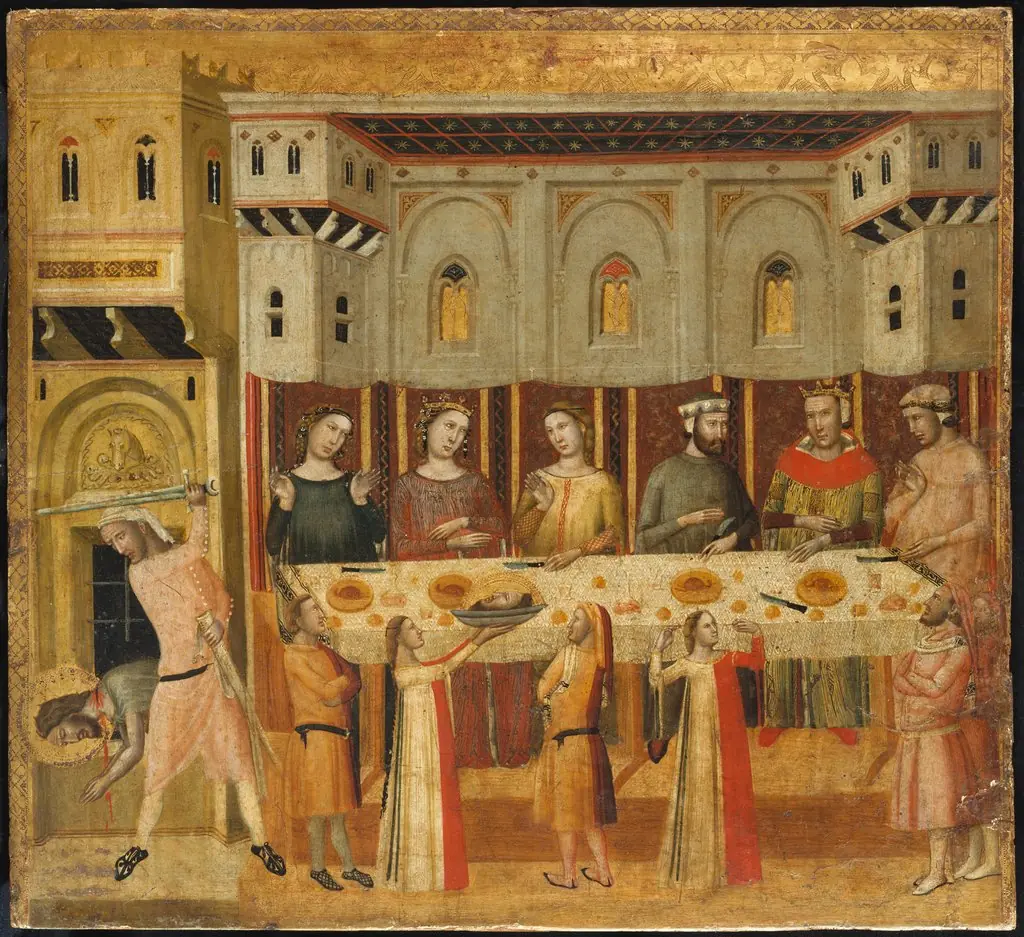 The Feast of Herod and the Beheading of the Baptist
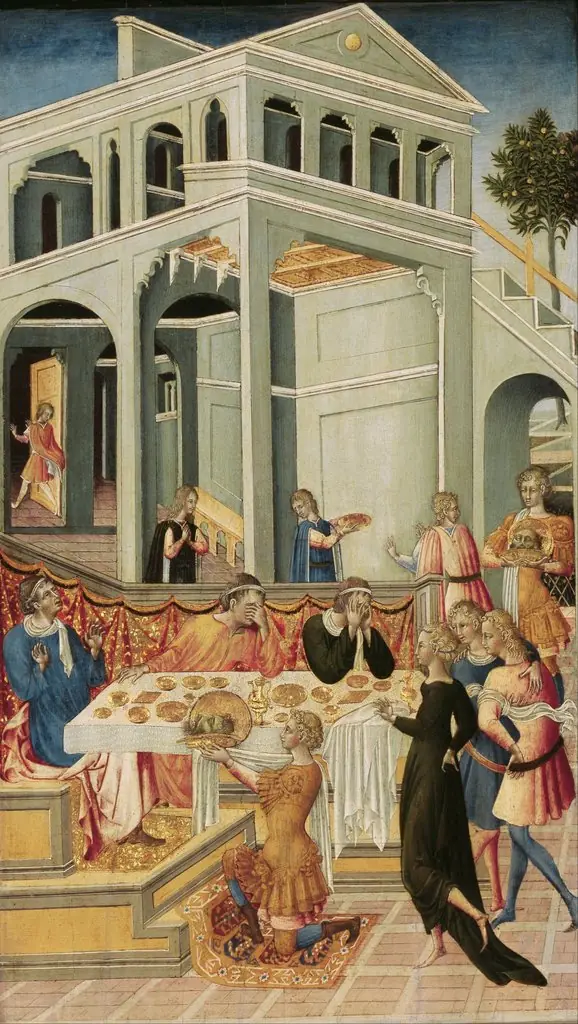 The Head of Saint John the Baptist Brought before Herod
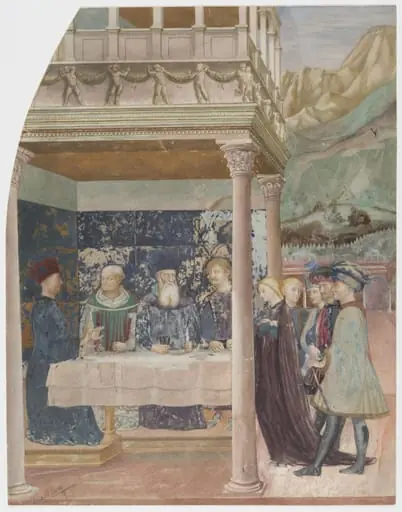 Copy after the painting The Daughter of Herodias before Herod by Masolino in Castiglione d'Olona
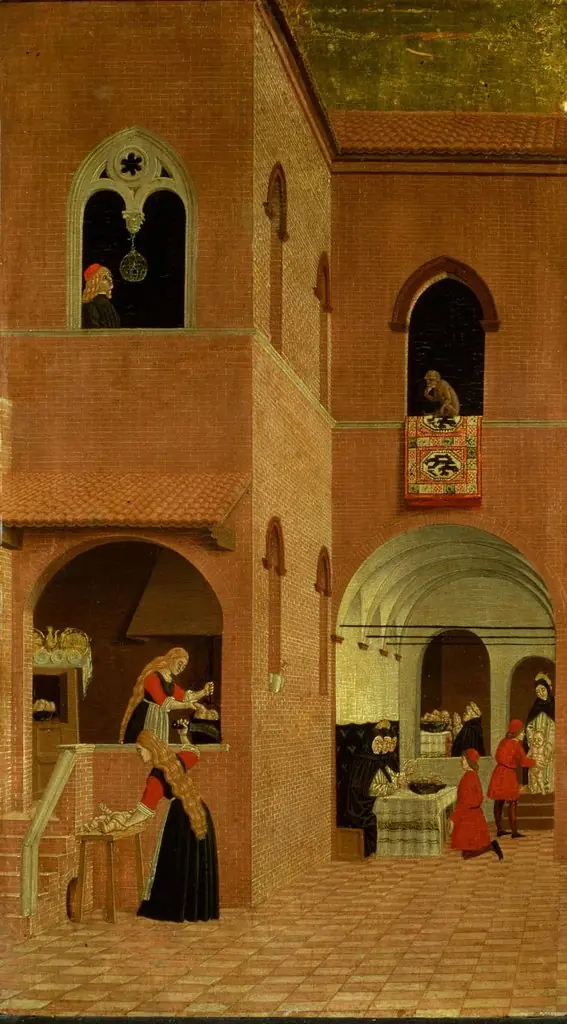 Szene aus dem Leben des Hl. Vinzenz Ferrer: Die Wiedererweckung des von seiner wahnsinnigen Mutter zerstückelten und gebratenen Kindes
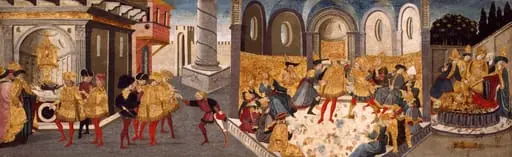 The Assassination and Funeral of Julius Caesar
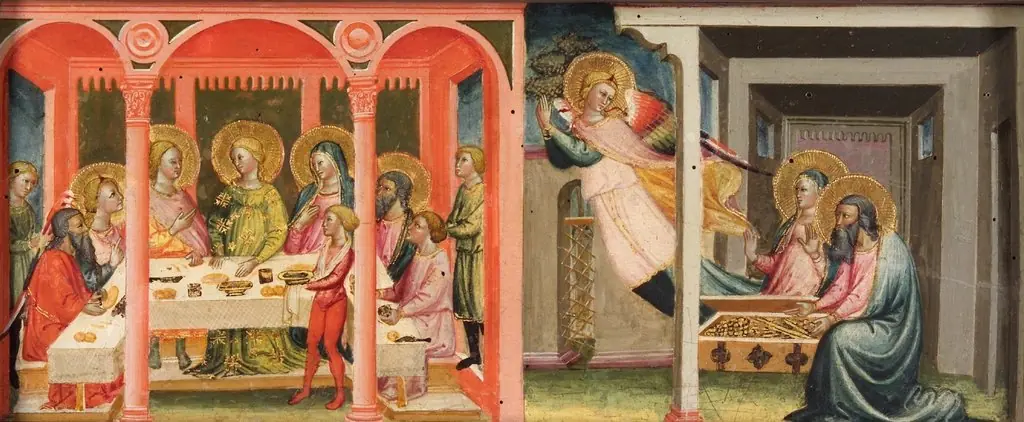 Scenes from the story of Tobias (marriage of Tobias and Sara; the archangel leaves Tobit and Anna)
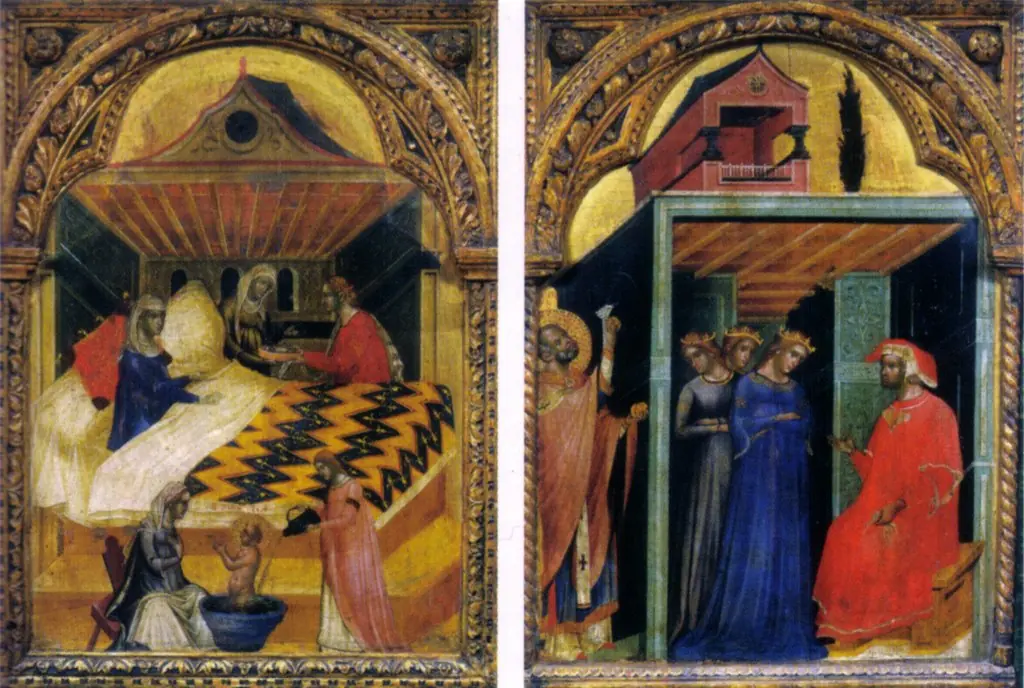 Due storie di san Nicola di Bari
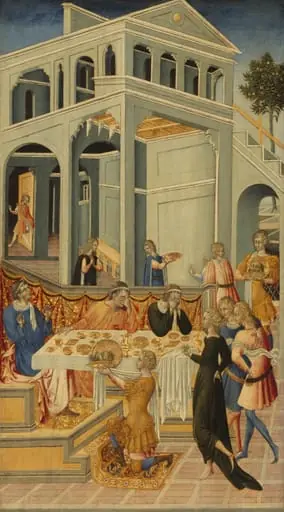 The Head of Saint John the Baptist Brought before Herod
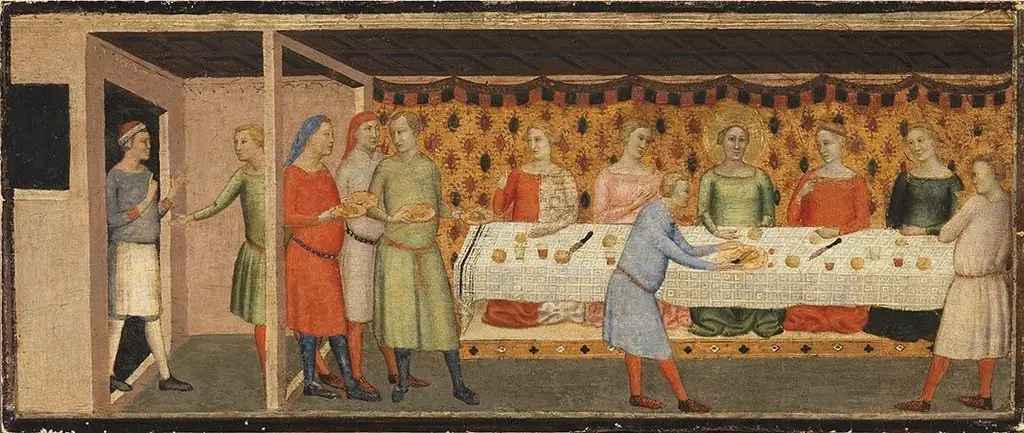 The Wedding Feast of St Cecilia
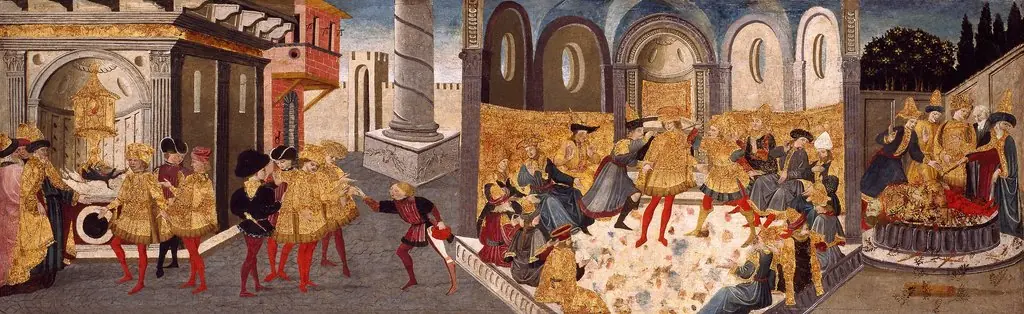 The Assassination and Funeral of Julius Caesar
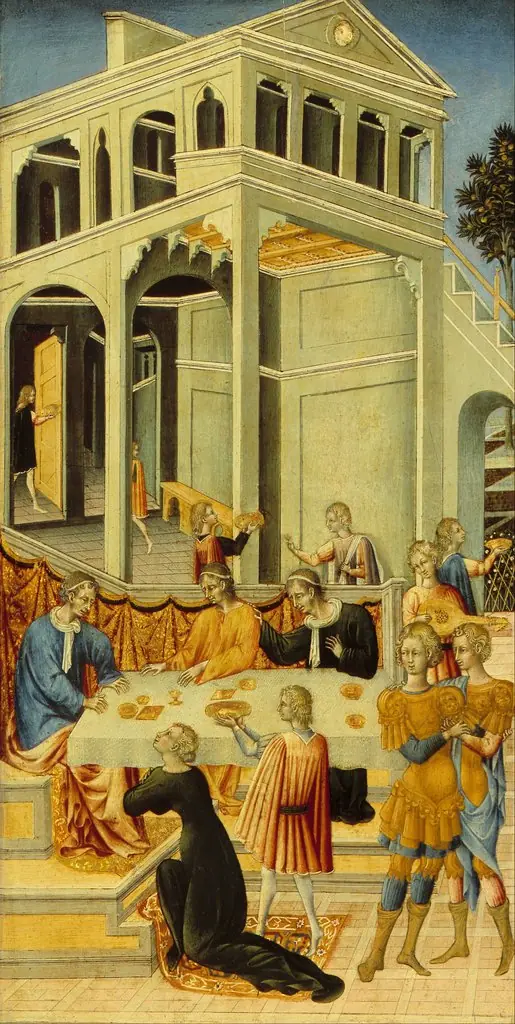 Salome Asking Herod for the Head of Saint John the Baptist
- Episodes from the Lives of Mary Magdalen and Saint John the Baptist