Artwork
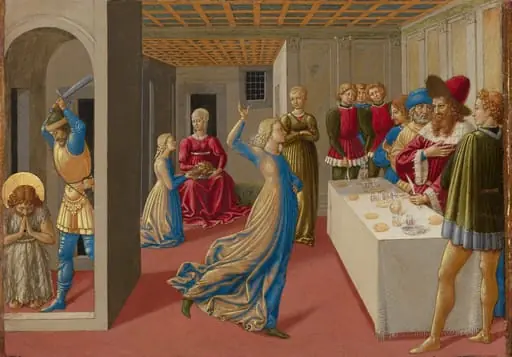
The Feast of Herod and the Beheading of the Baptist
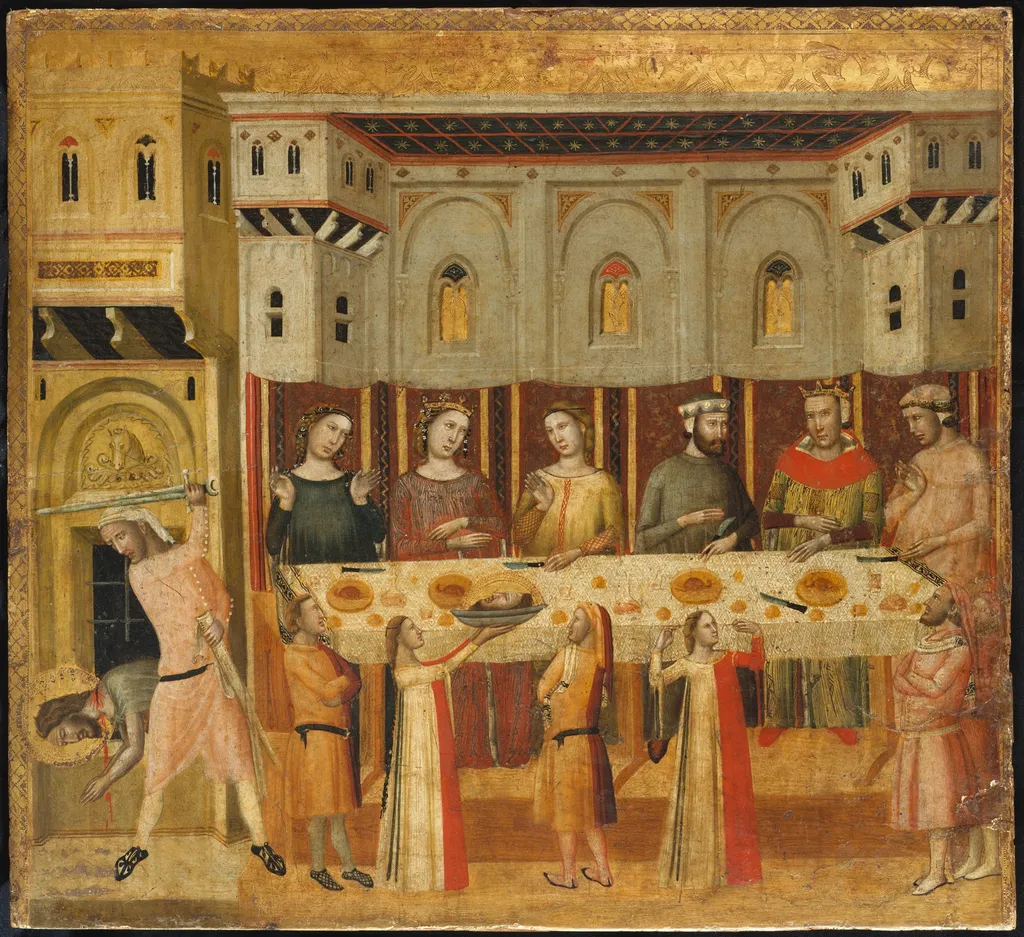
The Feast of Herod and the Beheading of the Baptist is a tempera painting by the Byzantine icon painting artist Master of the Life of Saint John the Baptist. It dates from 1330 and is held in the collection of the Metropolitan Museum of Art.
About this work
Subject & Meaning
Together these elements convey themes of power, betrayal, and prophetic foreshadowing, linking the Old Testament feast to the New Testament’s sacrificial motif.
The painting shows a banquet in King Herod’s court where the execution of John the Baptist unfolds, a scene drawn from the Gospel of Mark. Central figures include Herod seated at a table, Salome dancing before him, and the severed head of John presented on a platter, emphasizing the moment of martyrdom. The inclusion of a woman offering the head underscores the role of female agency in the narrative, while the richly decorated setting and gold leaf highlight the ceremonial context of the feast.
Together these elements convey themes of power, betrayal, and prophetic foreshadowing, linking the Old Testament feast to the New Testament’s sacrificial motif.
Technique & Style
Created circa 1330, this work is executed in tempera and gold and silver leaf on a wood support. The panel measures 44.1 cm in height and 49.8 cm in width. As a religious painting by the Master of the Life of Saint John the Baptist, the piece combines painted narrative elements with metallic embellishments typical of the period's devotional art.
The inclusion of silver leaf alongside gold indicates a deliberate material choice to enhance the visual impact of the depicted scenes, which include the Feast of Herod and the Beheading of John the Baptist. The physical format is a single wooden board serving as the foundation for the tempera application, a standard technique for Italian panel paintings of the early fourteenth century.
History & Provenance
The painting commonly identified as The Feast of Herod and the Beheading of the Baptist was executed circa 1330 by the Master of the Life of Saint John the Baptist. Its support is wood, with surface layers of tempera, gold leaf and silver applied to achieve a richly decorative effect. The composition illustrates two episodes from the narrative of John the Baptist, reflecting a religious context typical of early‑fourteenth‑century devotional art.
The work’s provenance traces a chain from an early appearance in the Galerie Trotti collection, through the private holdings of Philip Lehman, to Robert Lehman, whose bequest brought the piece to the Metropolitan Museum of Art, where it remains on view. Its creation is dated to 1330 based on stylistic analysis and documentary records.
The panel is held by the Metropolitan Museum of Art in New York, where it forms part of the Robert Lehman Collection. According to associated records, the work was previously owned by the Galerie Trotti and by Philip Lehman before entering the Robert Lehman holdings. The painting, executed in tempera, wood, gold leaf, and silver, dates to 1330 and was produced by the Master of the Life of Saint John the Baptist.
The sources do not provide a specific accession number or document a detailed exhibition history for the work at the Metropolitan Museum of Art.
Overview
This painting, titled The Feast of Herod and the Beheading of the Baptist, is rendered on wood. It presents a complex biblical narrative through a two-part composition. The upper register portrays an opulent feast within a grand architectural setting, while the lower section depicts the somber aftermath of a royal decree.
The artwork encapsulates a pivotal moment from the New Testament, combining scenes of lavishness with a stark depiction of execution.
Own this work as a print
Artist & collection
Artist
Master of the Life of Saint John the Baptist
Master of the Life of Saint John the Baptist is a conventional name, or notname, used by art historians for an anonymous medieval painter identified through a series of panel paintings depicting scenes from the life of Saint John the…

 The Head of Saint John the Baptist Brought before Herod
 Saint Reparata before the Emperor Decius
 The Head of Saint John the Baptist Brought before Herod
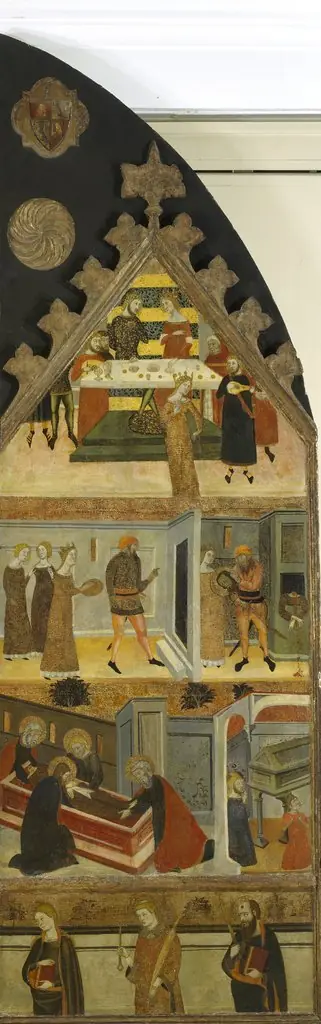 Episodes from the Lives of Mary Magdalen and Saint John the Baptist
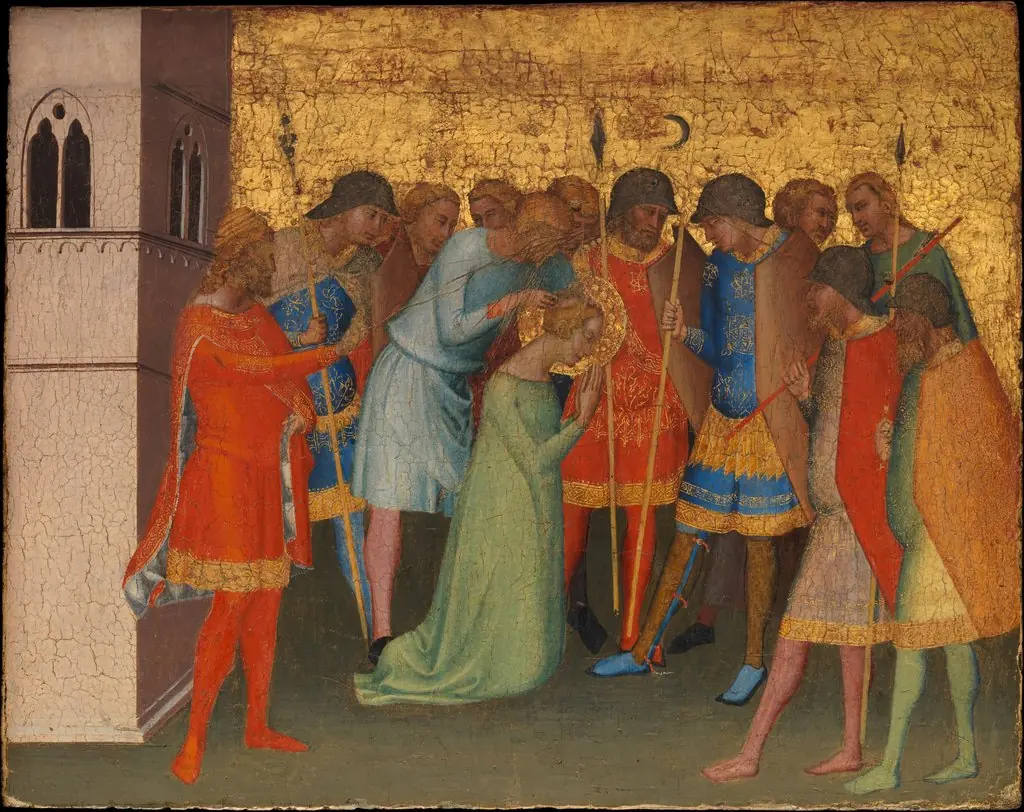 Saint Reparata Being Prepared for Execution
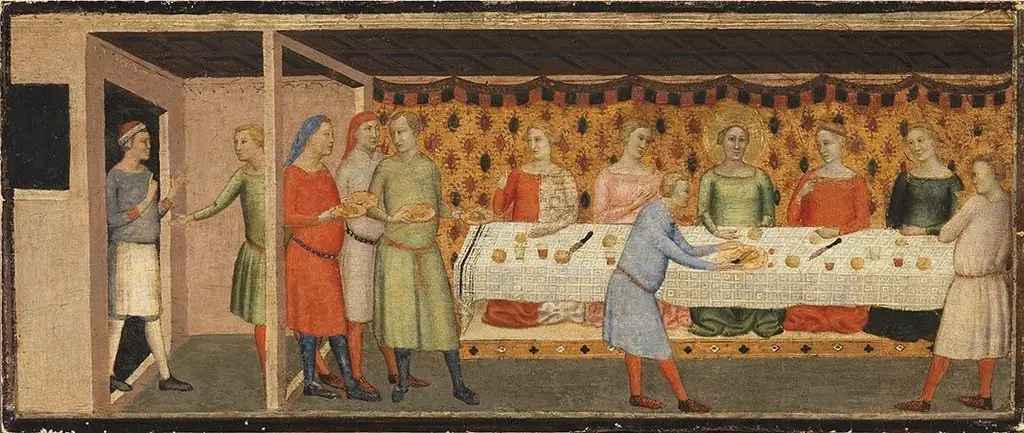 The Wedding Feast of St Cecilia
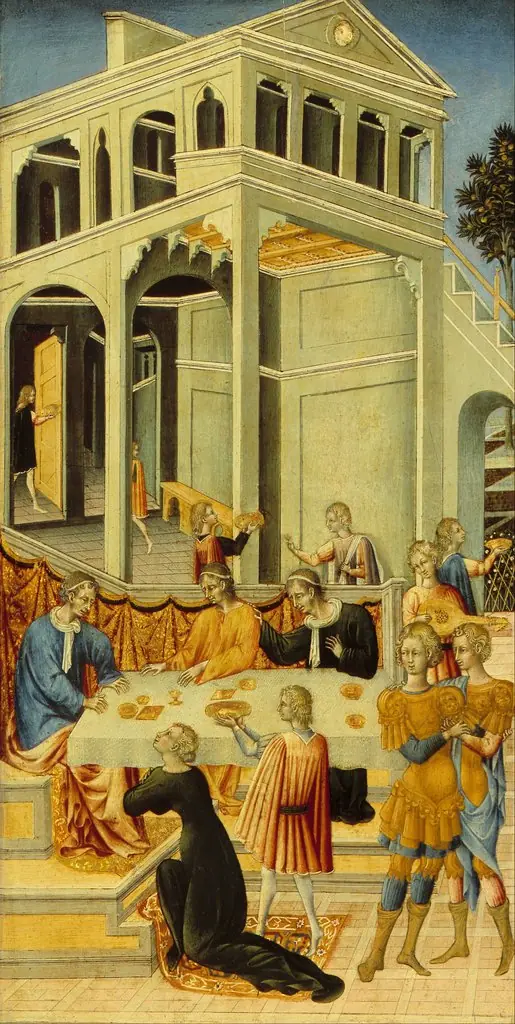 Salome Asking Herod for the Head of Saint John the Baptist
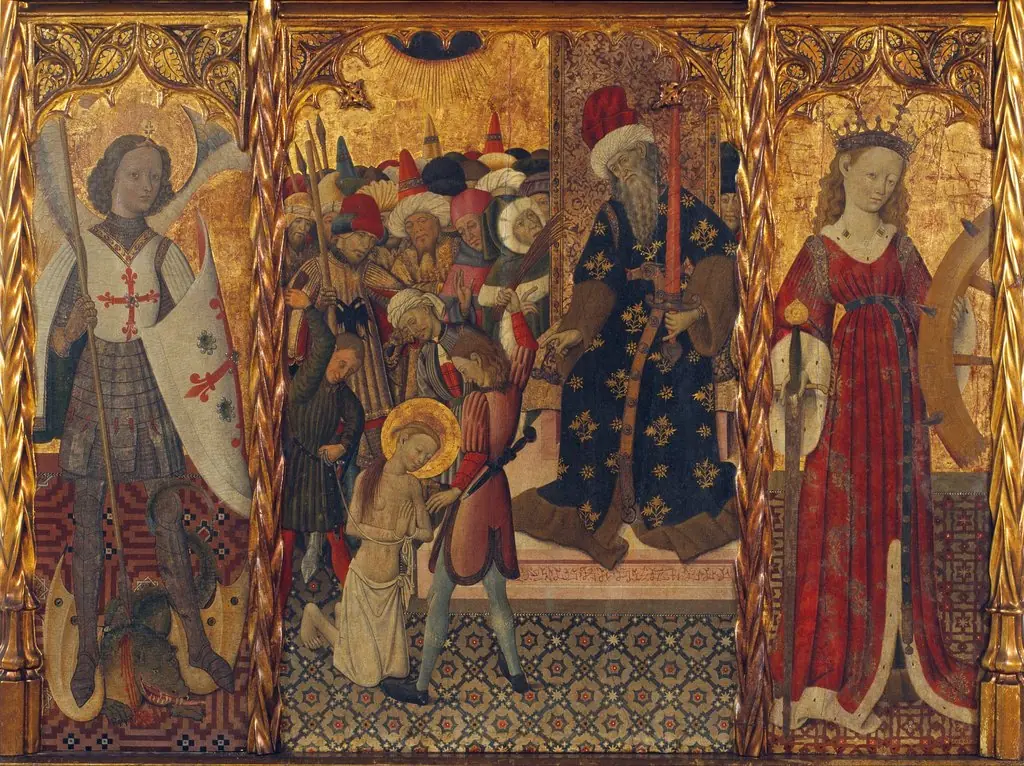 Saint Michael, Martyrdom of Saint Eulalia and Saint Catherine
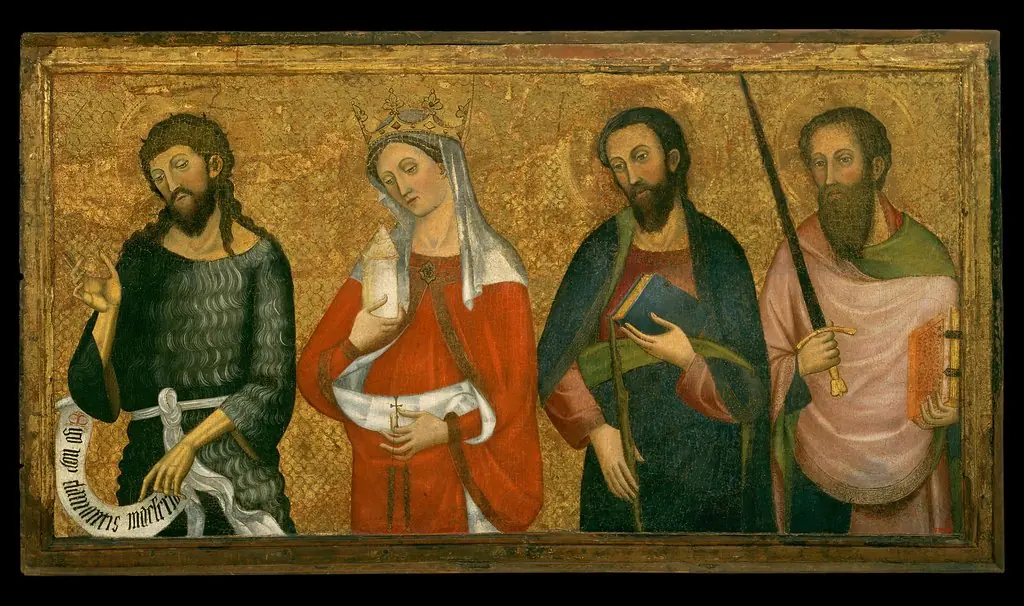 Saint John the Baptist, Saint Mary Magdalene, Saint James the Minor, Saint Paul
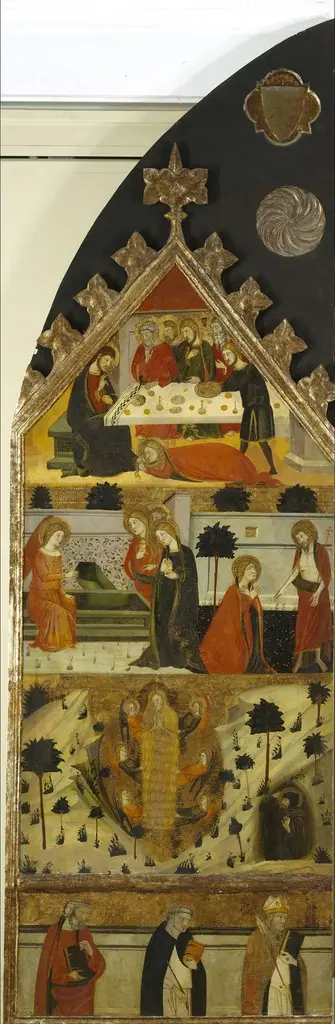 Episodes from the Lives of Mary Magdalen and Saint John the Baptist