Artwork
Pieter Barbiers II, Painter
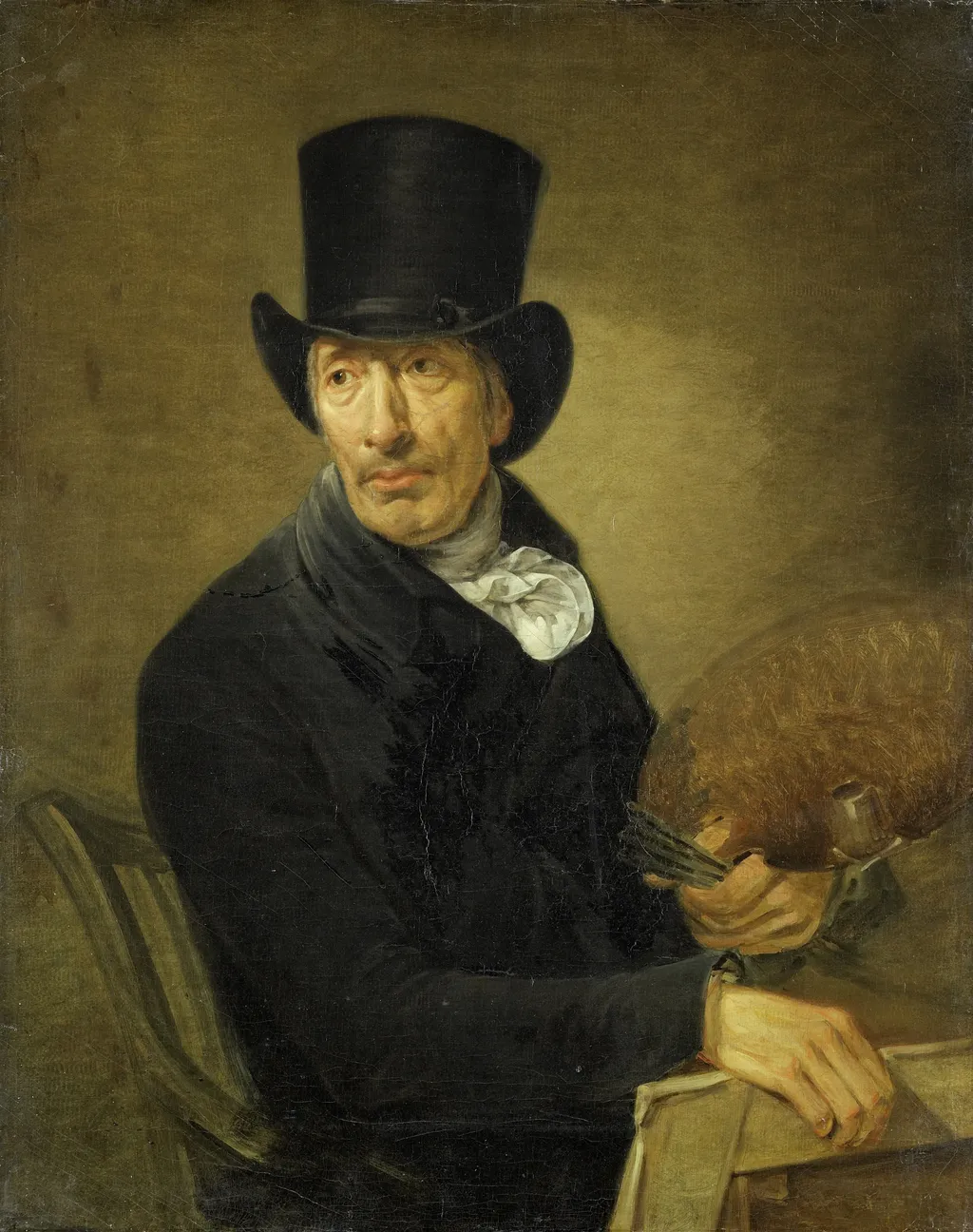
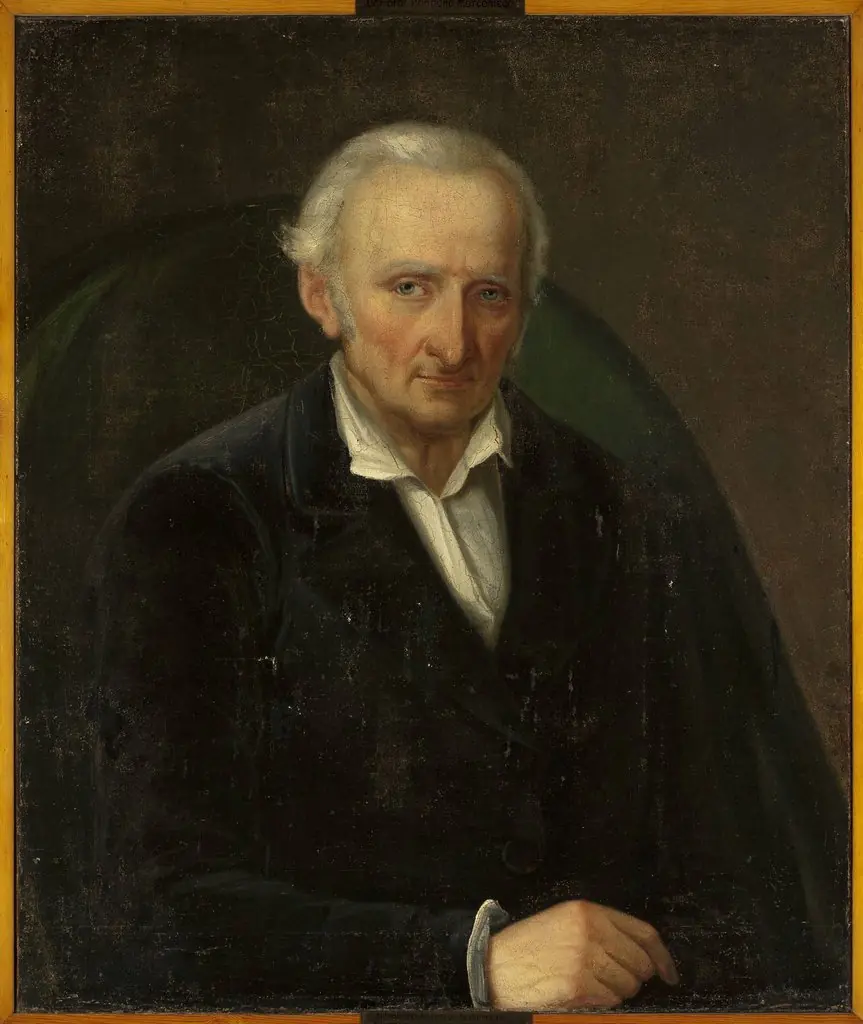
Pieter Barbiers II, Painter is an oil painting by the French Romanticist artist Jean Augustin Daiwaille. It dates from 1820 and is held in the collection of the Rijksmuseum.
About this work
Subject & Meaning
The work’s composition emphasizes dignity and civic pride, reflecting contemporary ideals of paternal authority and intellectual refinement.
The painting portrays Pieter Pietersz Barbiers II as a distinguished figure, rendered with meticulous attention to costume and posture that underscores his status within 19th-century Dutch society. The work’s composition emphasizes dignity and civic pride, reflecting contemporary ideals of paternal authority and intellectual refinement. Subtle details in attire and setting function symbolically, referencing the sitter’s family heritage and professional identity, thereby conveying themes of lineage and social responsibility.
Technique & Style
The 1820 portrait of Pieter Barbiers II by Jean Augustin Daiwaille is executed in oil paint on canvas, a standard support for early nineteenth-century Dutch portraiture. The work measures 78.3 cm in height by 62.3 cm in width, a modest upright format consistent with a single-figure portrait of an artist. According to the catalogue record, the medium is classified simply as oil paint, and the picture is held by the Rijksmuseum in Amsterdam.
No further details about handling, brushwork, condition, or stylistic characterization are documented in the available sources.
History & Provenance
The portrait of Pieter Pietersz Barbiers II painted by Jean Augustin Daiwaille in 1820 is part of the Rijksmuseum collection and is recorded under the inventory number SK-A-1875. It has been displayed in the museum’s exhibitions dedicated to Dutch portraiture from the early nineteenth century.
Context
The painting was created in 1820 by Jean Augustin Daiwaille and depicts Pieter Pietersz Barbiers II, reflecting the portrait genre popular in early nineteenth-century Dutch art. It is housed in the Rijksmuseum and was part of the collection of the Royal Dutch Antiquarian Society, underscoring its significance within the artist's oeuvre and the broader cultural institutions of the period
Scholarly attention to this work highlights its role in documenting the social stature of the Barbiers family, with Daiwaille's technical mastery demonstrated through his use of oil on canvas to achieve realistic portraiture. The artwork's provenance and display at the Rijksmuseum have contributed to ongoing discussions about the evolution of portraiture in the Netherlands, situating it within the artistic movements that preceded and influenced later developments in European painting
Legacy
Pieter Pietersz Barbiers II emerged as a notable portrait subject in early nineteenth-century Dutch art, particularly through his depiction by Jean Augustin Daiwaille. The 1820 portrait, housed in the Rijksmuseum, contributed to the sitter’s contemporary reputation as a figure of bourgeois prominence, and the work’s enduring presence in the museum’s collection has reinforced his historical visibility. Art historians reference this painting when discussing the evolution of Dutch portraiture, noting its technical execution in oil on canvas and its role within the broader narrative of Dutch Golden Age legacy reinterpretations.
Overview
Created in 1820, this oil portrait by Jean Augustin Daiwaille presents the Dutch artist Pieter Pietersz Barbiers II. The work is part of the Rijksmuseum’s collection and measures the sitter seated, attired in a dark coat and top hat, with the tools of his trade, palette and brush, prominently displayed.
Own this work as a print
Artist & collection

 Man in a Hat
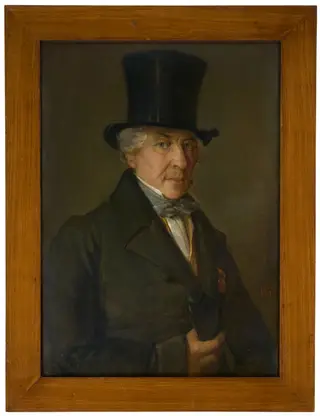 Brustbild von Nikolaus Dold
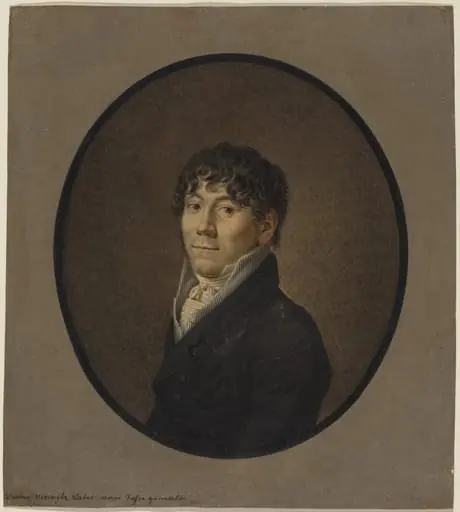 Portrait of the Artist's Father
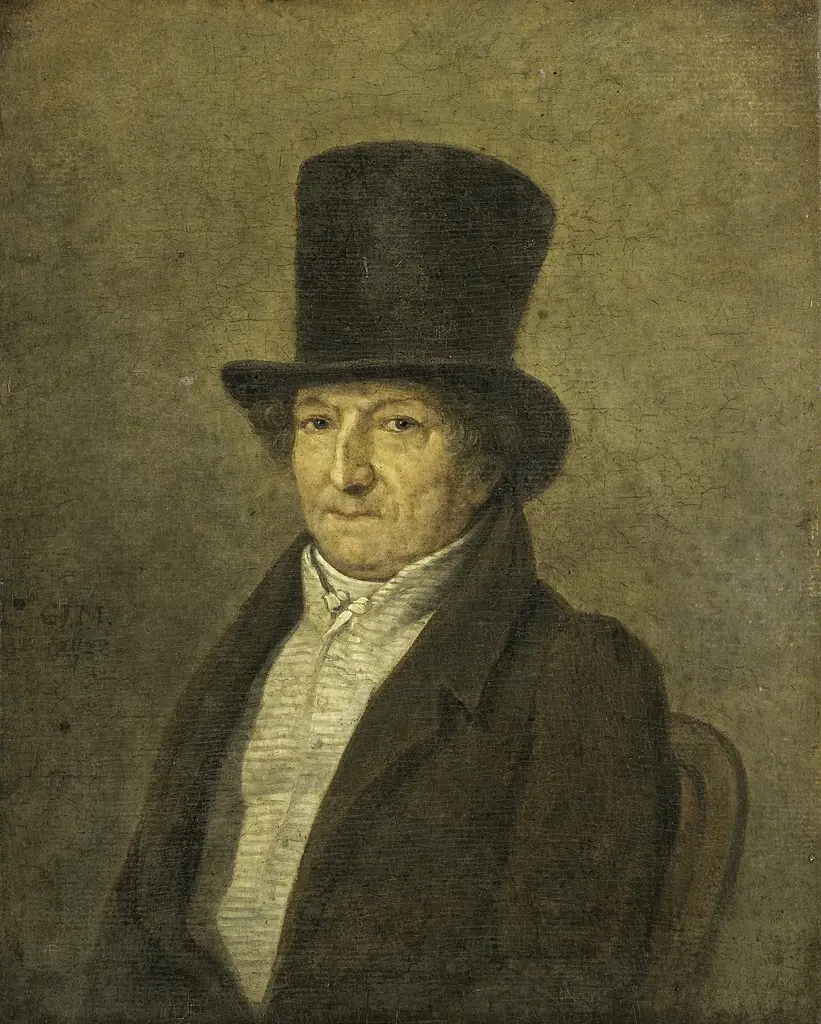 Portrait of Jean Bernard, Art Collector and Painter in Amsterdam
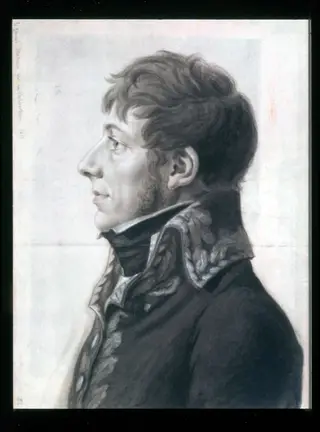 Jean-Victor Moreau
 Portrait of Walenty Sobolewski (1724–1800) or Maciej Leon Sobolewski (1724–1804)
 Portret van een man
 Portrait of the Artist´s Cousin and Brother-in-Law, the Grocer Christian Petersen
 Portrait of Albertus Henricus Wiese, Governor-General of the Dutch East Indies
 Portrait of Théophile Van Robais
 Self-portrait
- Jan Pietersz Zomer (1641-1724). Amsterdam Art Dealer