Artwork
Saint Sebastian Succored by the Holy Women
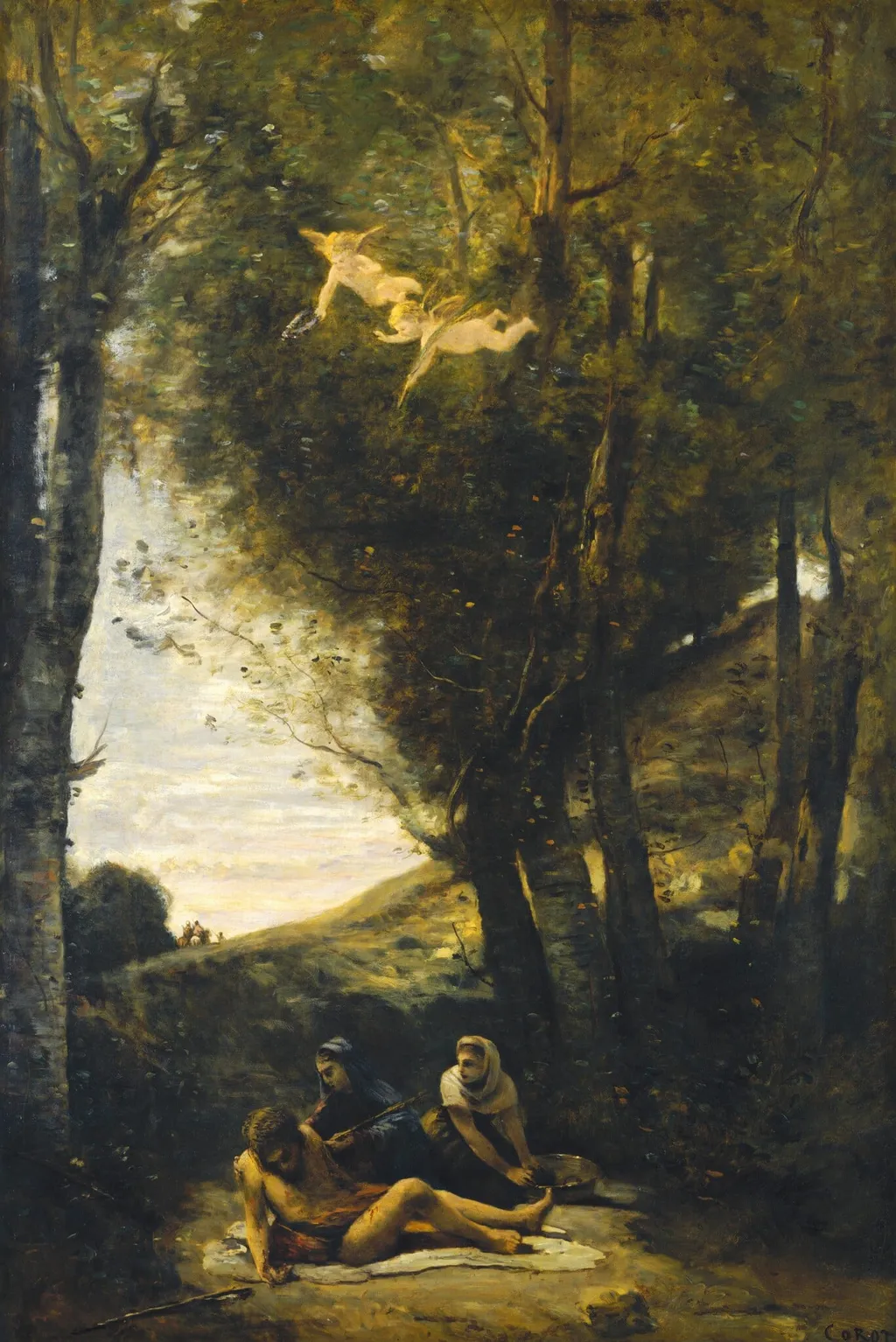
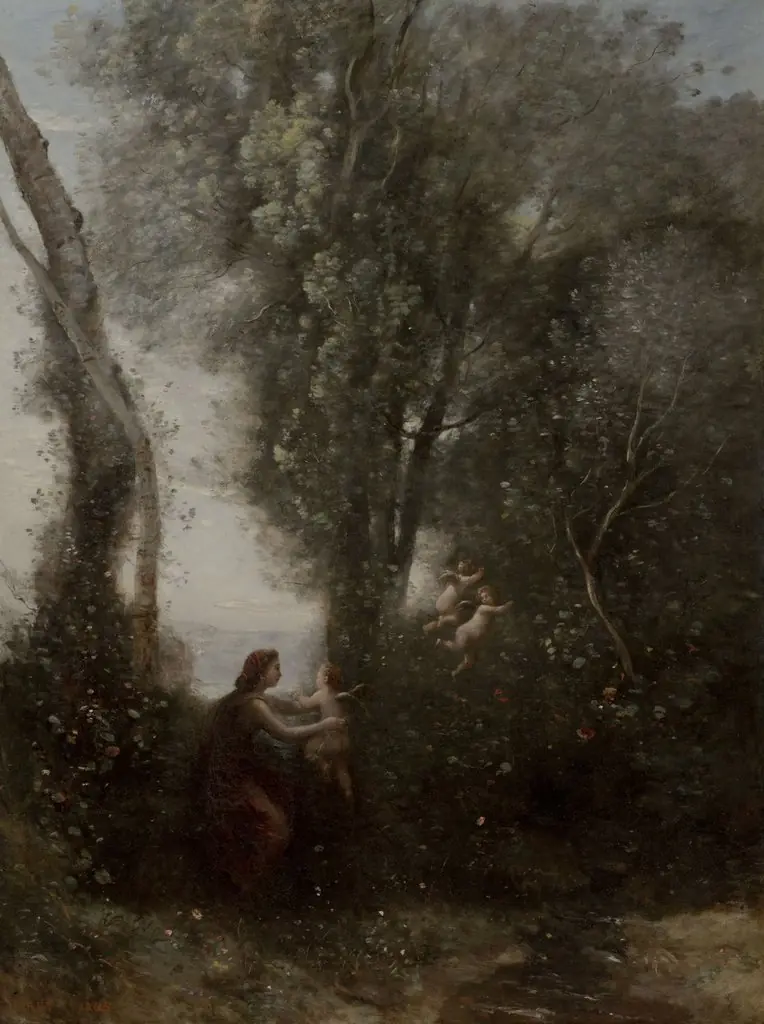
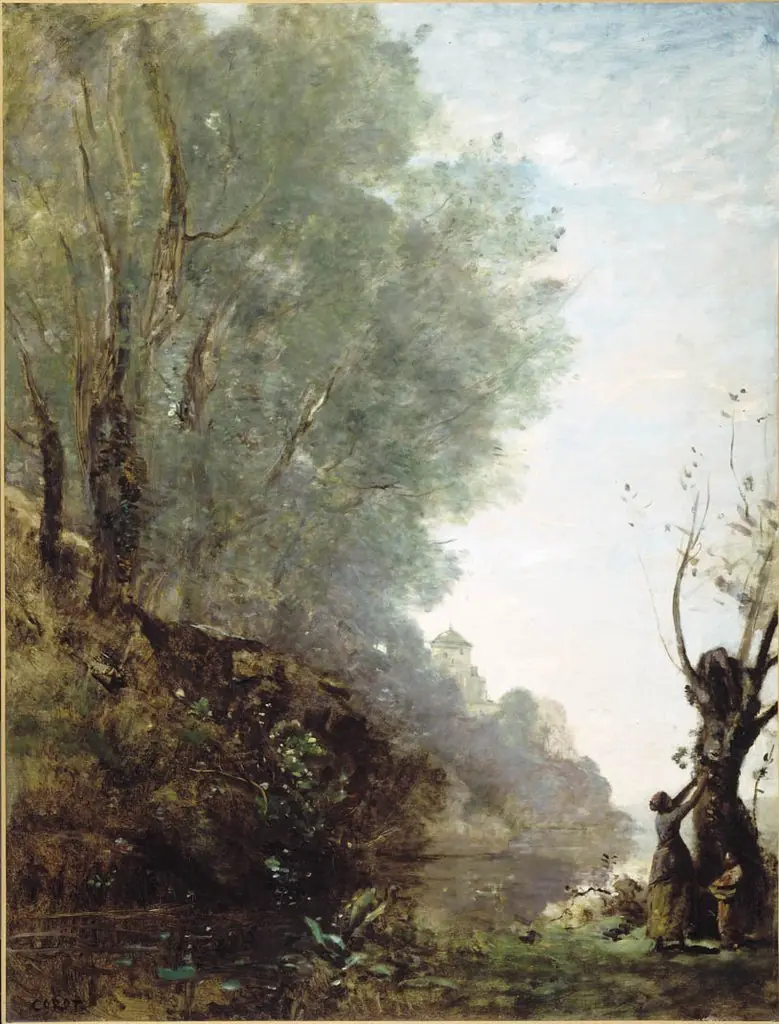
Saint Sebastian Succored by the Holy Women is an oil painting by the Impressionist artist Jean Baptiste Camille Corot. It dates from 1874 and is held in the collection of the National Gallery of Art.
- Inscription
- Inscribed:lower right: COROT
About this work
Subject & Meaning
Corot’s rendering thus transforms the traditional martyr narrative into a tender, almost intimate encounter, underscoring the protective role of the holy women.
The painting shows Saint Sebastian in the company of holy women, a scene identified in the work’s cataloguing as ‘Saint Sebastian tended by Saint Irene.’ The composition includes a tree, a visual element noted in the descriptive record, which together evoke the saint’s martyrdom and the divine aid he receives. As a religious subject, the work emphasizes the moment of succor rather than the more common depiction of Sebastian’s arrows or execution, highlighting themes of compassion and heavenly intercession.
Corot’s rendering thus transforms the traditional martyr narrative into a tender, almost intimate encounter, underscoring the protective role of the holy women.
Technique & Style
Saint Sebastian Succored by the Holy Women is executed in oil on canvas, a medium Corot handled with characteristic softness in his late career. The support measures 130.1 by 86 centimeters, providing a vertical format suited to the standing figure of the saint beside the tree. The work is classified as a religious painting and depicts Saint Sebastian tended by Saint Irene within a wooded setting.
While the sources confirm the medium, dimensions, and subject, they offer no specifics regarding Corot's brushwork, palette, underdrawing, or current conservation condition.
History & Provenance
The painting Saint Sebastian Succored by the Holy Women was executed by Jean‑Baptiste‑Camille Corot in 1874 as an oil on canvas. It was in the collection of Gellinard by 1878 and was lent to the Universal Exposition of that year. After Gellinard’s sale at Hôtel Drouot on 19 March 1888 for 15,000 francs, the work passed to Victor Desfosses, whose estate sold it on 26 April 1899 for 48,000 francs.
Subsequent owners included the dealers Arnold & Tripp, New York collector Edward Fullerton Milliken (d.1906), Cottier and Co., Arthur Tooth and Sons, and Thomas Williams before entering the Timken family; William R. Timken held it until his death, after which it went to his widow Lillian Guyer Timken and was bequeathed to the National Gallery of Art in 1960.
Saint Sebastian Succored by the Holy Women is held by the National Gallery of Art in Washington, D.C., as part of the museum's collection. The painting entered the NGA in 1960 through the bequest of Lillian Guyer Timken, widow of William R. Timken, who had owned the work. Earlier exhibition activity includes its loan by Gellinard to the Universal Exposition of 1878 in Paris.
The provenance also records multiple auction appearances: the Gellinard sale at the Hôtel Drouot, Paris, on 19 March 1888; the Victor Desfosses estate sale in Paris on 26 April 1899; the Edward Fullerton Milliken sale at the American Art Association, New York, on 14 February 1902; and the Arthur Tooth and Sons sale at the American Art Galleries, New York, on 19 February 1925.
Context
The 1874 oil on canvas 'Saint Sebastian Succored by the Holy Women' by Jean‑Baptiste‑Camille Corot portrays the martyred saint attended by Saint Irene. It was displayed at the 1878 Universal Exposition in Paris, a notable contemporary exhibition. Corot, best known for his lyrical landscapes, also produced a small number of religious subjects, of which this work is an example, situating it within his broader devotional oeuvre.
The painting’s provenance, showing sales in 1888, 1899, 1902 and 1925 before its bequest to the National Gallery of Art in 1960, reflects a documented trajectory of ownership that underscores its recognized significance.
Overview
This oil on canvas painting, titled Saint Sebastian Succored by the Holy Women, depicts a moment of quiet solace following the saint's ordeal. Corot renders the scene with a notable sense of tranquility, focusing on the compassionate interaction between Sebastian and his female attendants. The composition, featuring a prominent tree, establishes a calm backdrop for the subdued drama unfolding. This work exemplifies the artist's capacity to infuse traditional religious subjects with a contemplative and serene atmosphere.
Own this work as a print
Artist & collection
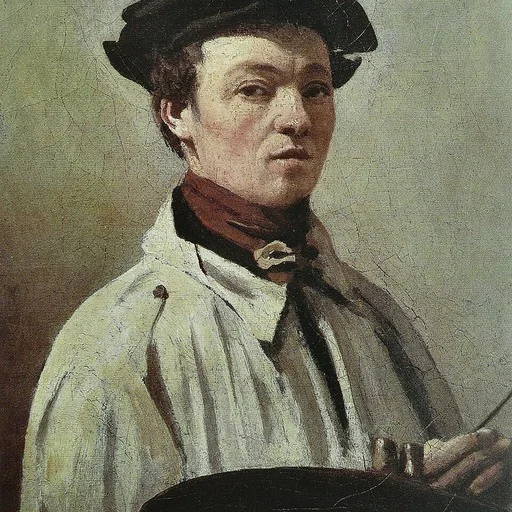
Artist
Jean-Baptiste-Camille Corot (UK: KORR-oh, US: kə-ROH, kor-OH; French:; 16 July 1796 – 22 February 1875), or simply Camille Corot, was a French landscape and portrait painter as well as a printmaker in etching.