Artwork
Ville-d'Avray
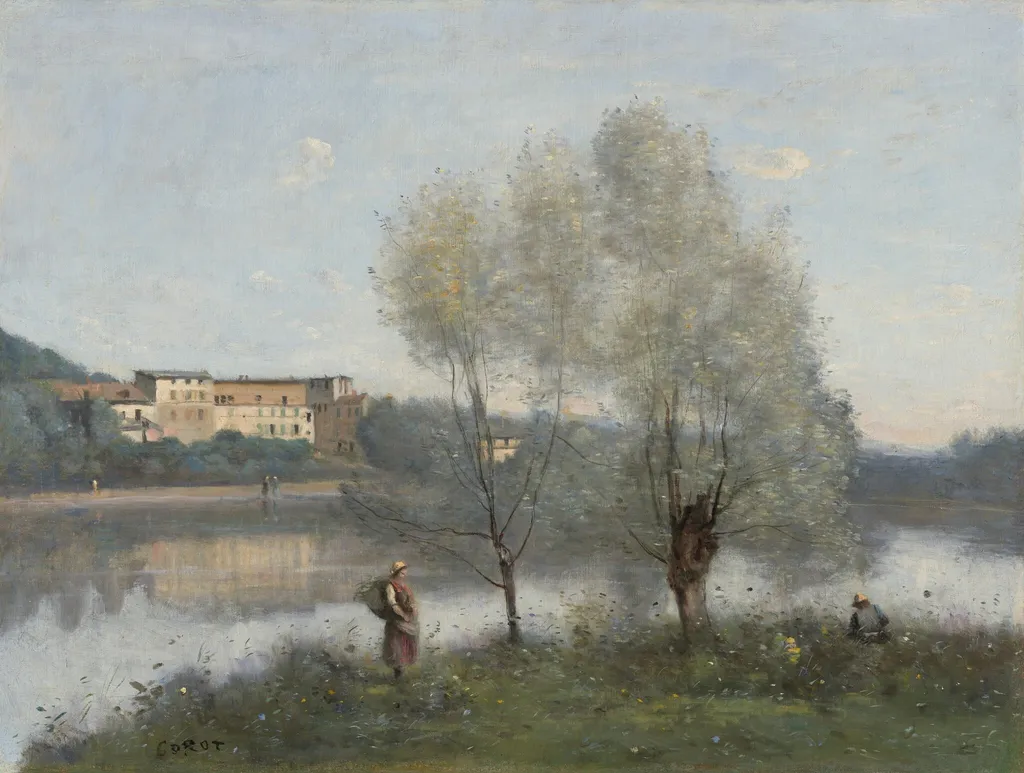
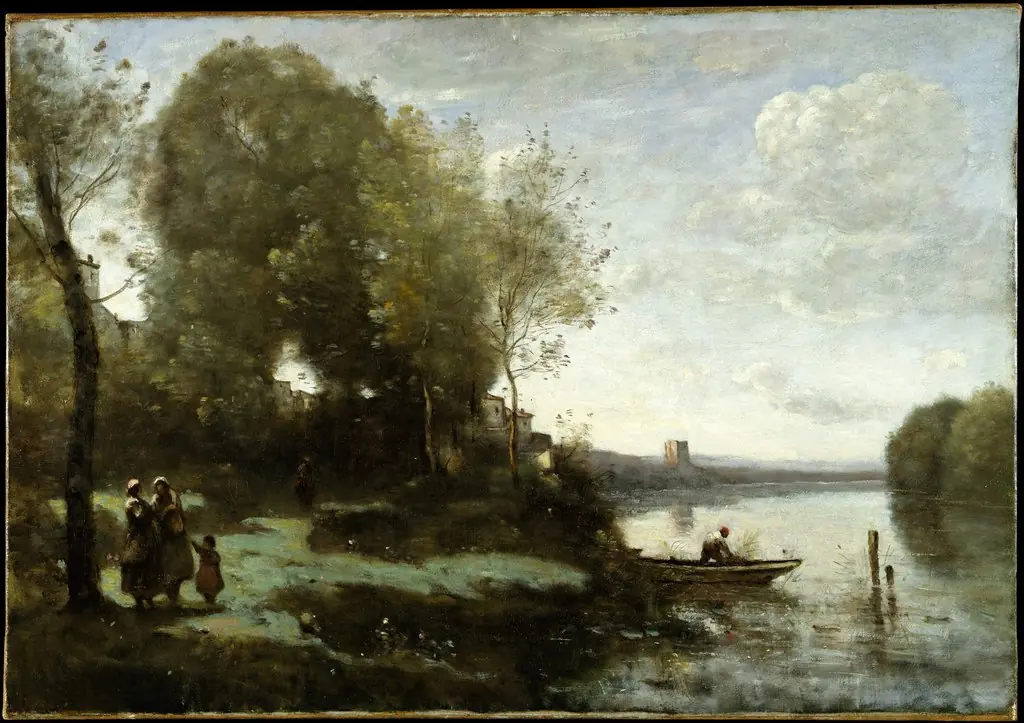
Ville-d'Avray is an oil painting by the Barbizon school artist Jean Baptiste Camille Corot. It dates from 1865 and is held in the collection of the National Gallery of Art.
- Inscription
- Inscribed:lower left: COROT
About this work
Subject & Meaning
While the subject matter consists of prosaic, everyday elements, the work transforms this setting into a representation of peace and tranquility.
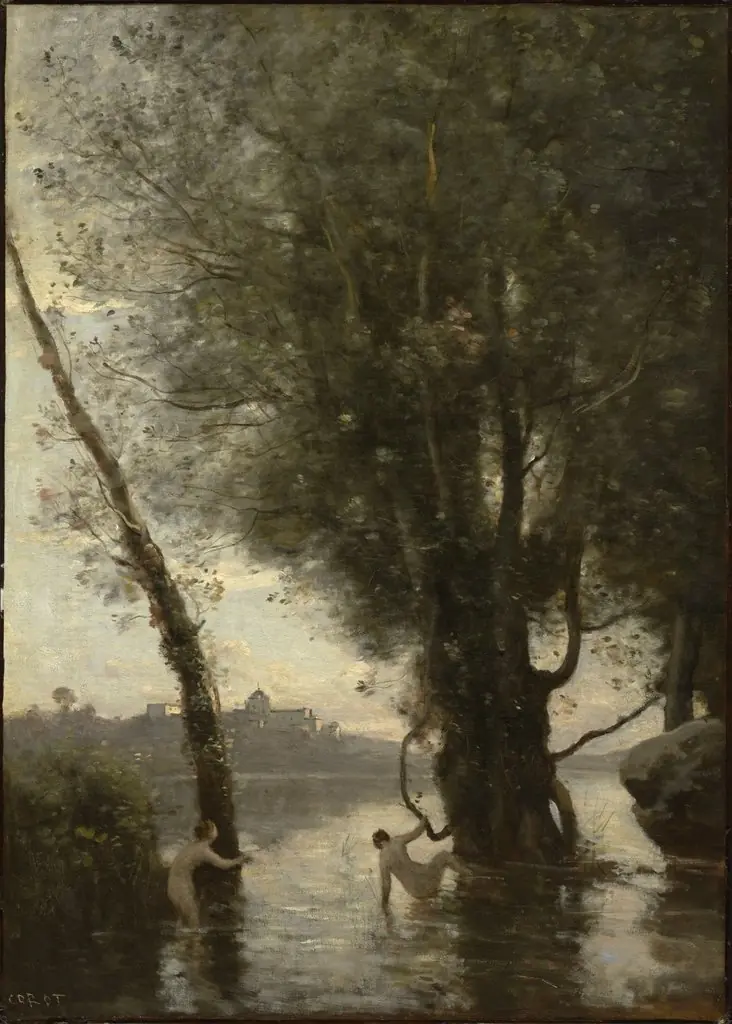
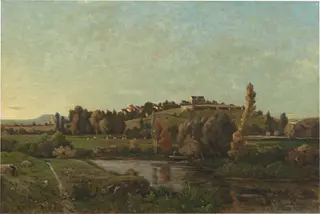
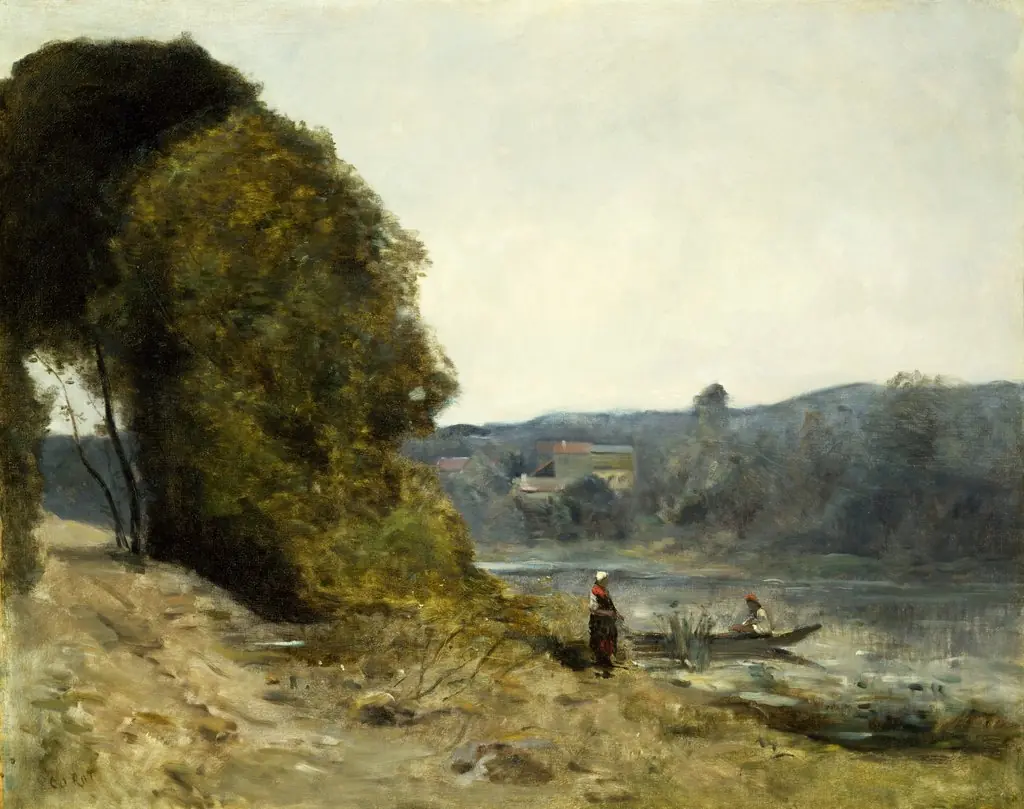
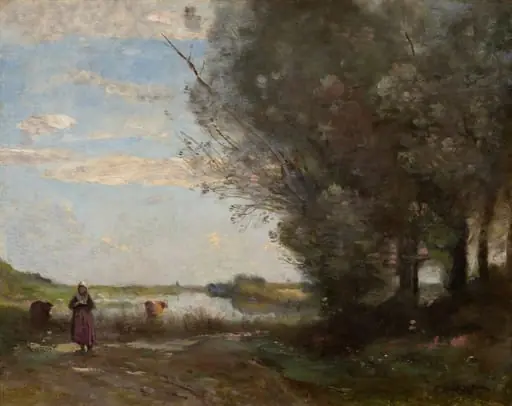
The painting depicts a tranquil landscape at Ville-d'Avray, featuring a calm pond surface, buildings on the far shore, and peasants engaged in ordinary activities. Prominent in the foreground are willow trees, a recurring motif for the artist. The scene evokes a drowsy atmosphere of early morning through gentle pastel tones and a pale, silver sky.
While the subject matter consists of prosaic, everyday elements, the work transforms this setting into a representation of peace and tranquility. The interplay of light and air creates a sense of graceful dissolution into nature, mirroring the significance Ville-d'Avray held for Corot as a personal sanctuary comparable to the Fontainebleau Forest for the Barbizon school. The reflection of houses in the water and the soft illumination recall the artist's earlier Italian sketches.
Technique & Style
Ville-d'Avray is an oil painting on canvas, a medium Corot employed consistently in his mature landscapes. The work is characterized by a soft, pastel palette that creates a drowsy, early‑morning atmosphere; the sky is described as silver and pale, while houses and trees are gently reflected in the calm pond. Corot’s handling emphasizes tranquil light and air, with delicate rendering of foliage, likely willows, and peasant figures integrated into the landscape, producing a sense of peaceful dissolution in nature.
History & Provenance
Jean-Baptiste-Camille Corot painted Ville-d'Avray in 1865, depicting the pond and surrounding countryside near the country house his father acquired in 1817 at Ville-d'Avray, a site he treated as a personal atelier akin to Fontainebleau for the Barbizon school. The work first entered the Paris trade via Theodore Bonjean, was sold to Boussod Valadon et Cie. in 1890, returned to Bonjean, then passed to Monsieur Bruneau before entering the collection of Ferdinand Blumenthal and, after his death, to his son Count Cecil Pecci‑Blunt. The painting remained in the Blunt family until 1955, when it was gifted to the National Gallery of Art in Washington, D.C.
The painting is held by the National Gallery of Art in Washington, D.C., where it entered the collection in 1955 as a gift from Count Cecil Pecci-Blunt, the son of the previous owner Ferdinand Blumenthal of Paris. Earlier in its ownership history, the work had been lent by Monsieur Bruneau of Paris to the Exposition de centenaire de Corot at the Palais Galliéra in 1895 (exhibition no. 23), and in 1941 Pecci-Blunt, through the dealer Jacques Seligmann, lent it to The Functions of Color in Painting at the Phillips Memorial Gallery in Washington.
Context
Ville-d'Avray belongs to the body of landscape work Jean-Baptiste-Camille Corot produced around the suburban locality of the same name, where his father acquired a country house in 1817. The site functioned for Corot as the Fontainebleau Forest did for the Barbizon artists, and he returned to it repeatedly across his career. The 1865 canvas is one of several views of the ponds and surroundings that he painted over the decades, typically featuring still water, distant buildings, peasant figures absorbed in ordinary tasks, and his favored willow trees in the foreground.
Its muted pastel palette and silvery, early-morning light have been linked to the picturesque sketches he had made earlier in Italy, situating the work within the lyrical late manner that secured his reputation. The painting entered the National Gallery of Art in 1955 as a gift from Count Cecil Pecci-Blunt, and is documented in Alfred Robaut's 1905 catalogue of Corot's oeuvre (no. 1505).
Overview
Jean-Baptiste-Camille Corot's 'Ville-d'Avray,' painted in 1865, depicts a serene landscape near the village of Ville-d'Avray, a location the artist frequented and where he maintained a studio. The composition centers on a large, leafy tree in the foreground that anchors the scene, with a quiet village street and modest dwellings receding into the middle ground. Corot employs his characteristic tonal harmony, utilizing a muted palette of greens, grays, and earth tones to evoke a specific atmospheric mood rather than strict topographical detail.
The interplay of light and shadow, particularly the dappled sunlight filtering through the foliage, creates a sense of depth and tranquility. This work exemplifies Corot's mature style, bridging the gap between the structured Neoclassical tradition and the emerging Impressionist interest in natural light. Created late in his career, the painting reflects his enduring focus on the poetic qualities of the French countryside, prioritizing emotional resonance and the unity of the scene over narrative complexity.
It stands as a testament to his influence on the Barbizon School and his pivotal role in the evolution of modern landscape painting.
Own this work as a print
Artist & collection
Artist
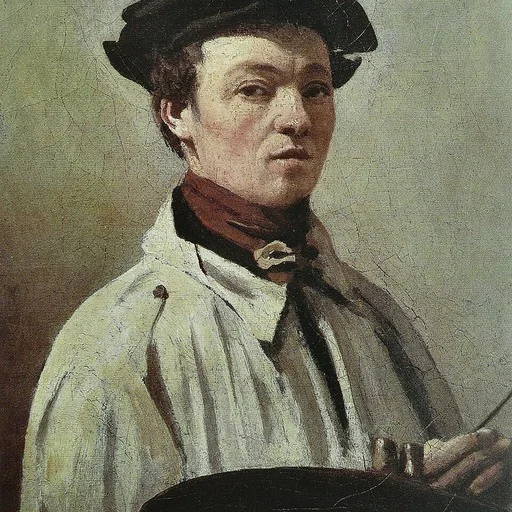
Jean-Baptiste-Camille Corot (UK: KORR-oh, US: kə-ROH, kor-OH; French:; 16 July 1796 – 22 February 1875), or simply Camille Corot, was a French landscape and portrait painter as well as a printmaker in etching.