Artwork
Reverie
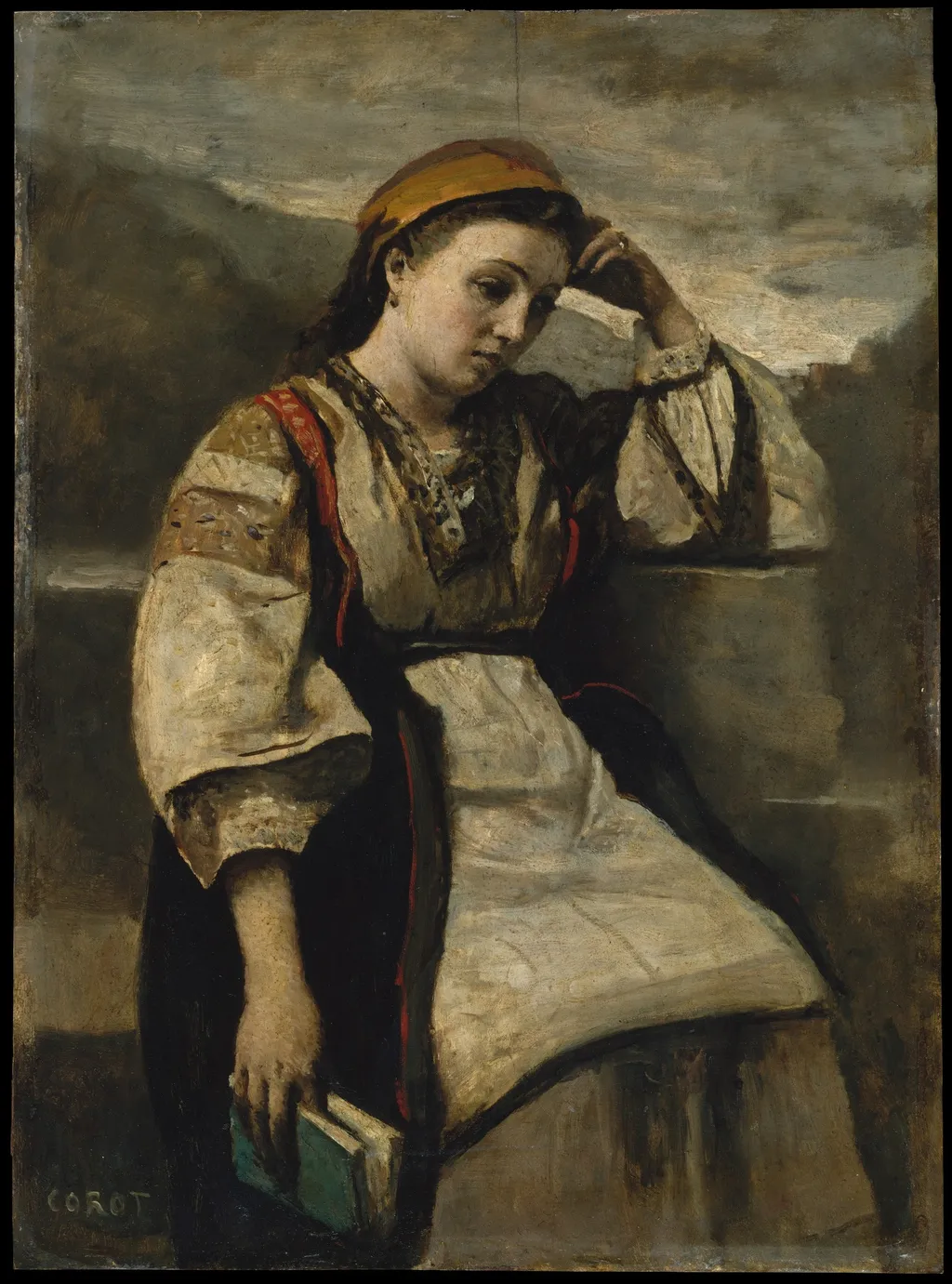
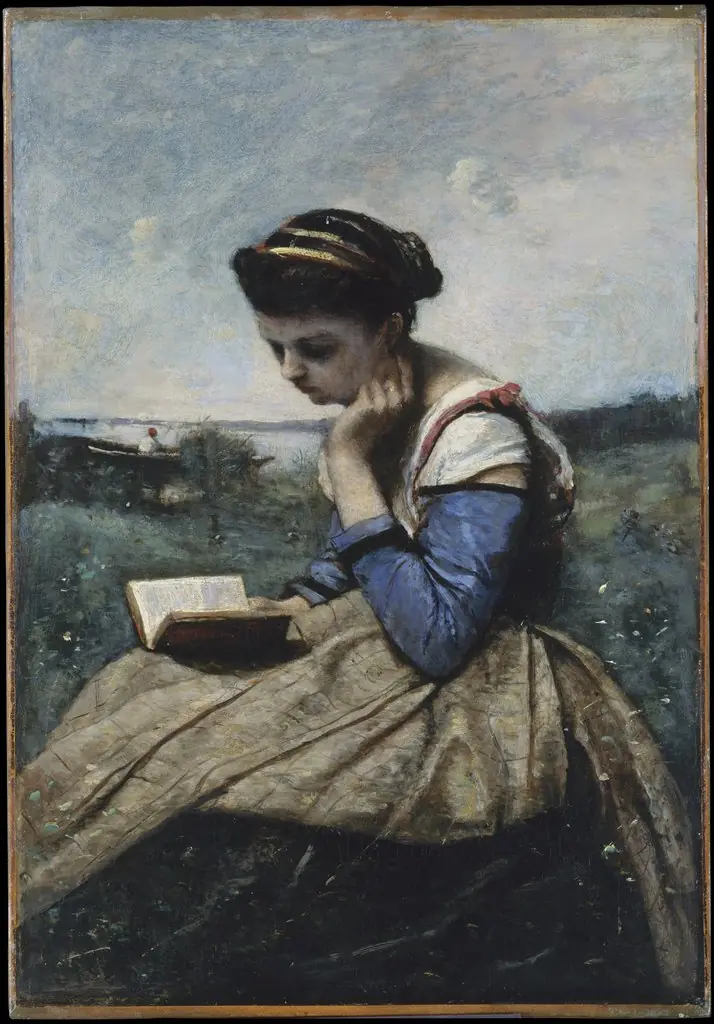
Reverie is an oil painting by the Barbizon school artist Jean Baptiste Camille Corot. It dates from 1860 and is held in the collection of the Metropolitan Museum of Art.
About this work
Subject & Meaning
The title directly informs the iconography, presenting the female form not merely as a portrait but as an evocation of the meditative state itself.
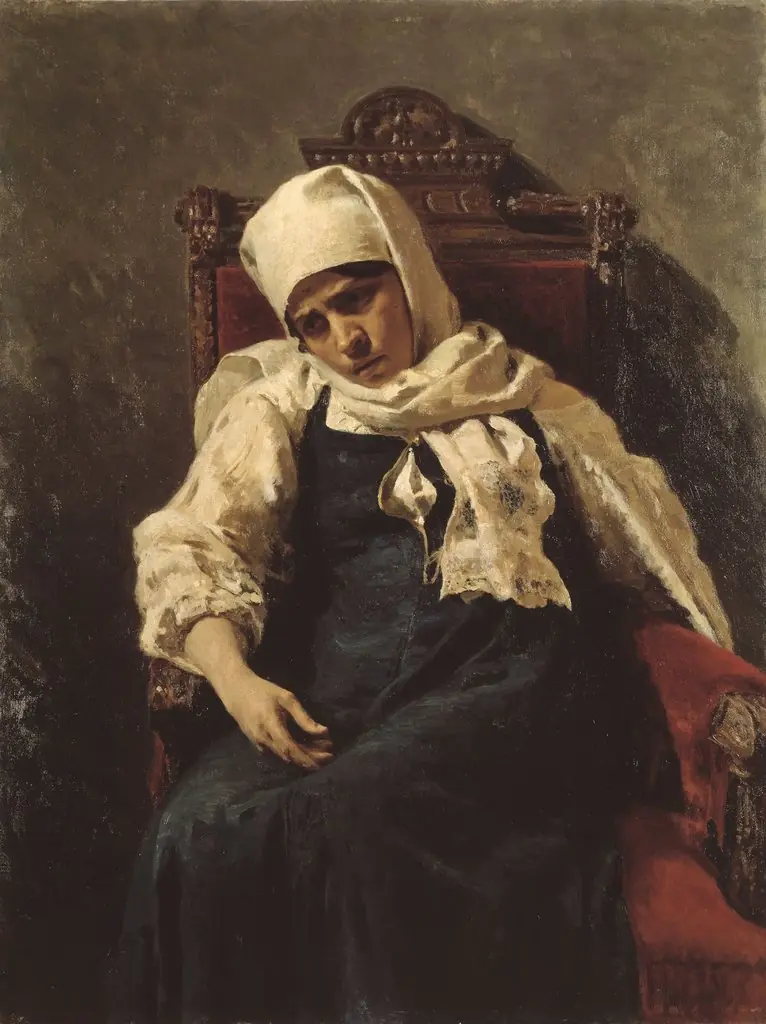
Painted in 1860, this oil work by Jean-Baptiste Camille Corot depicts a solitary woman engaged in a state of deep contemplation. The composition focuses entirely on the figure, utilizing her pensive demeanor to embody the concept of reverie. By isolating the subject without specific narrative attributes or background context, the artist emphasizes the internal psychological experience of dreaming or reflection over external action.
The title directly informs the iconography, presenting the female form not merely as a portrait but as an evocation of the meditative state itself.
Technique & Style
Executed in 1860, Reverie is an oil painting by Jean-Baptiste Camille Corot created on a wood panel support. The work measures 49.8 cm in height and 36.5 cm in width. Stylistically, the composition focuses on a solitary female figure engaged in a state of contemplation, a subject matter consistent with the title's implication of dreamy reflection.
The application of oil paint on panel allows for the specific textural qualities characteristic of Corot's mature period.
History & Provenance
Reverie is an oil painting by Jean-Baptiste Camille Corot dated 1860. The work entered the collection of Louisine Havemeyer and is now held by the Metropolitan Museum of Art, which lists it within its holdings as an oil-on-panel work from that year.
Overview
Jean-Baptiste-Camille Corot's Reverie, an oil painting from 1860, captures a solitary female figure lost in thought. This work exemplifies the artist's recurring interest in depicting quiet introspection within serene settings. It also aligns with the Barbizon School's emphasis on naturalistic portrayals, even in its focus on a human subject.
The painting is housed in the collection of The Metropolitan Museum of Art, showcasing Corot's distinctive approach to both portraiture and landscape.
Context
Created in 1860, Reverie reflects Corot's position as a transitional figure in French art, bridging Neo-Classical traditions with the emerging plein-air painting techniques. While not a landscape, its naturalistic rendering of the figure and atmospheric quality connect it to the Barbizon School movement, which championed direct observation of nature. This painting reflects Corot's ongoing exploration of figures immersed in a reflective, often melancholic, mood.
Own this work as a print
Artist & collection
Artist
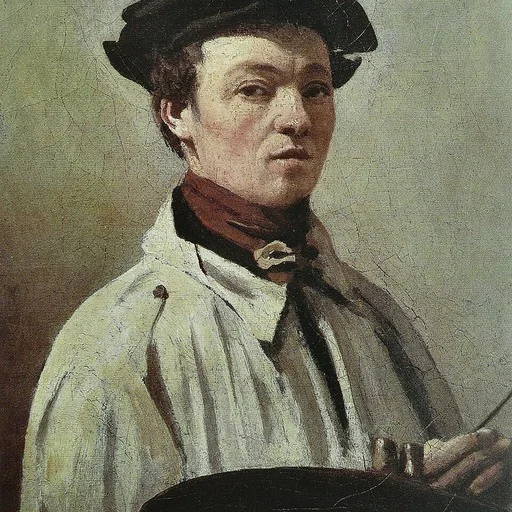
Jean-Baptiste-Camille Corot (UK: KORR-oh, US: kə-ROH, kor-OH; French:; 16 July 1796 – 22 February 1875), or simply Camille Corot, was a French landscape and portrait painter as well as a printmaker in etching.

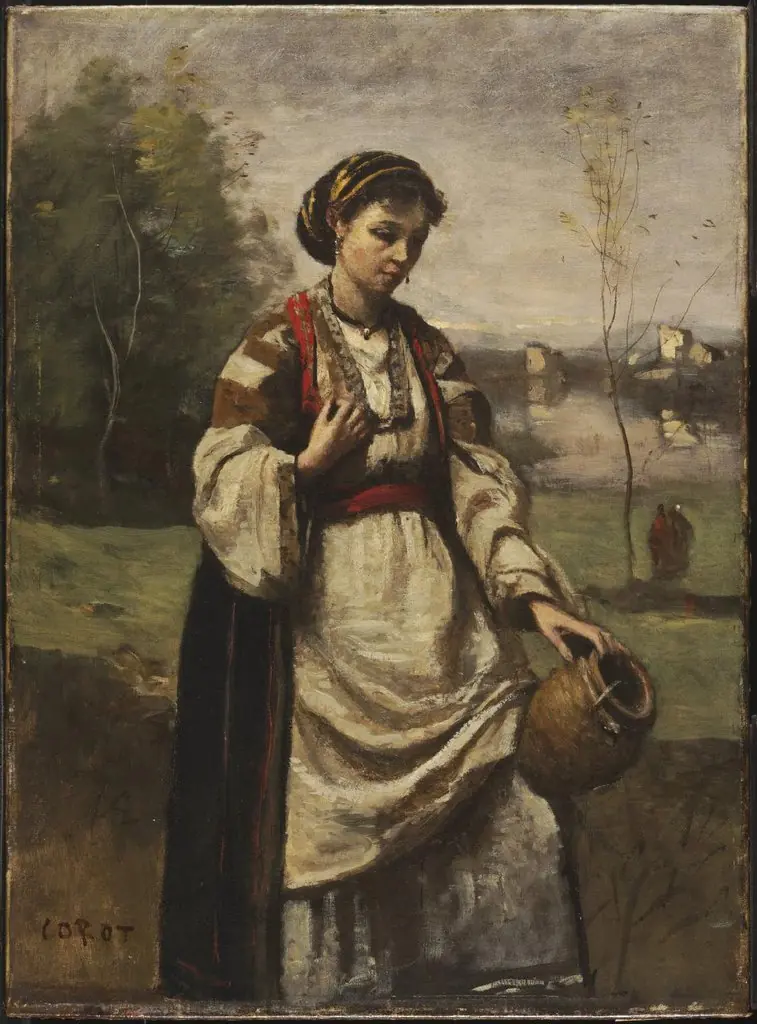 Gypsy Girl at a Fountain
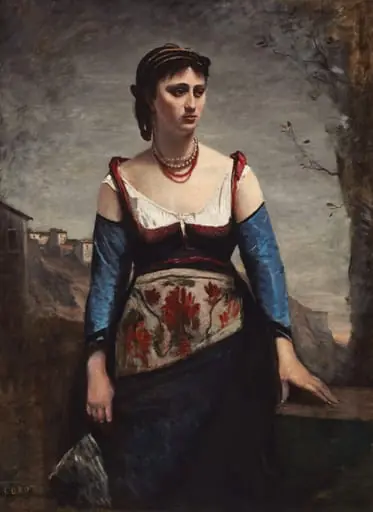 Agostina
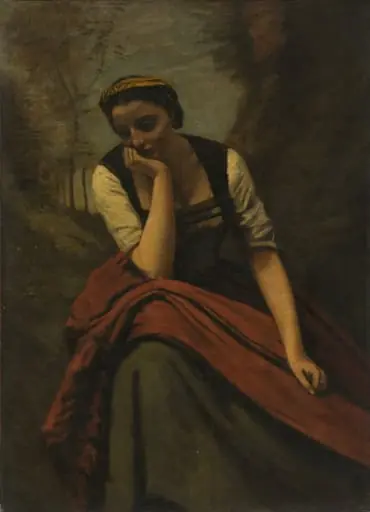
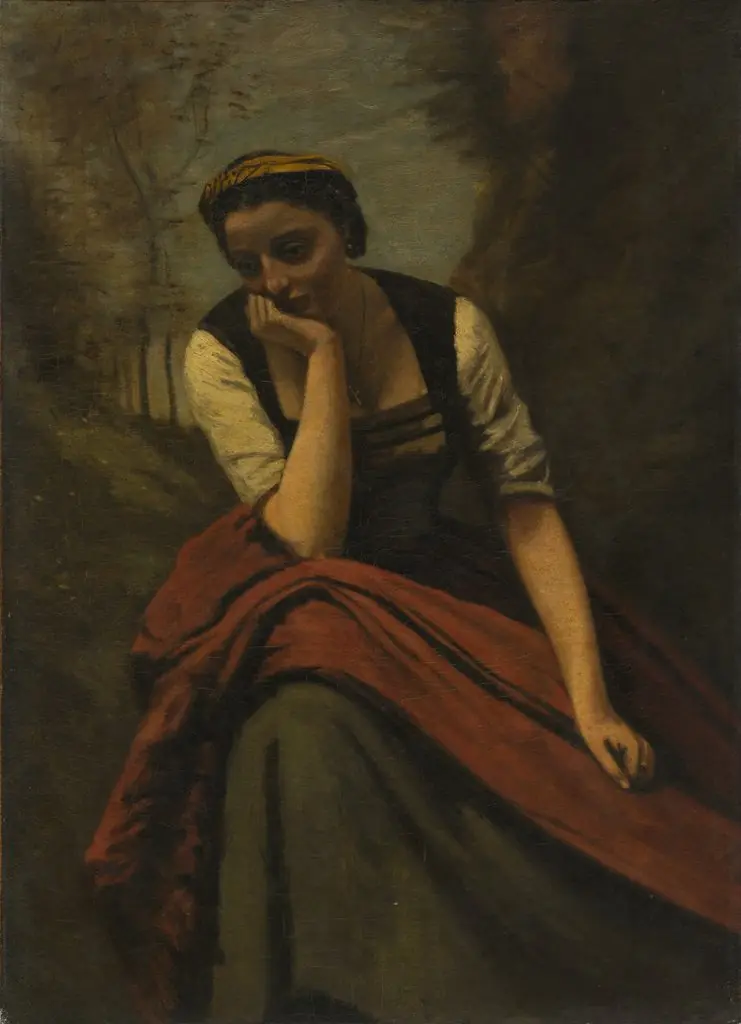 Woman Meditating
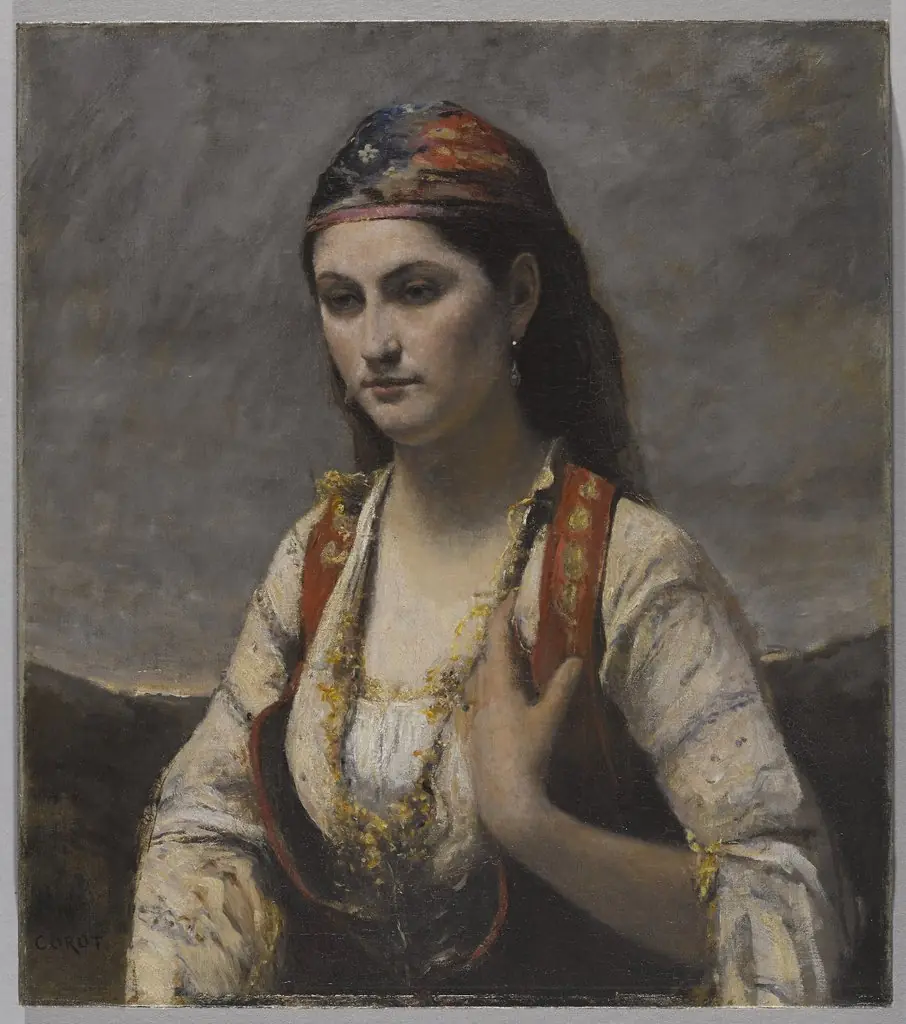 The Young Woman of Albano (L'Albanaise)
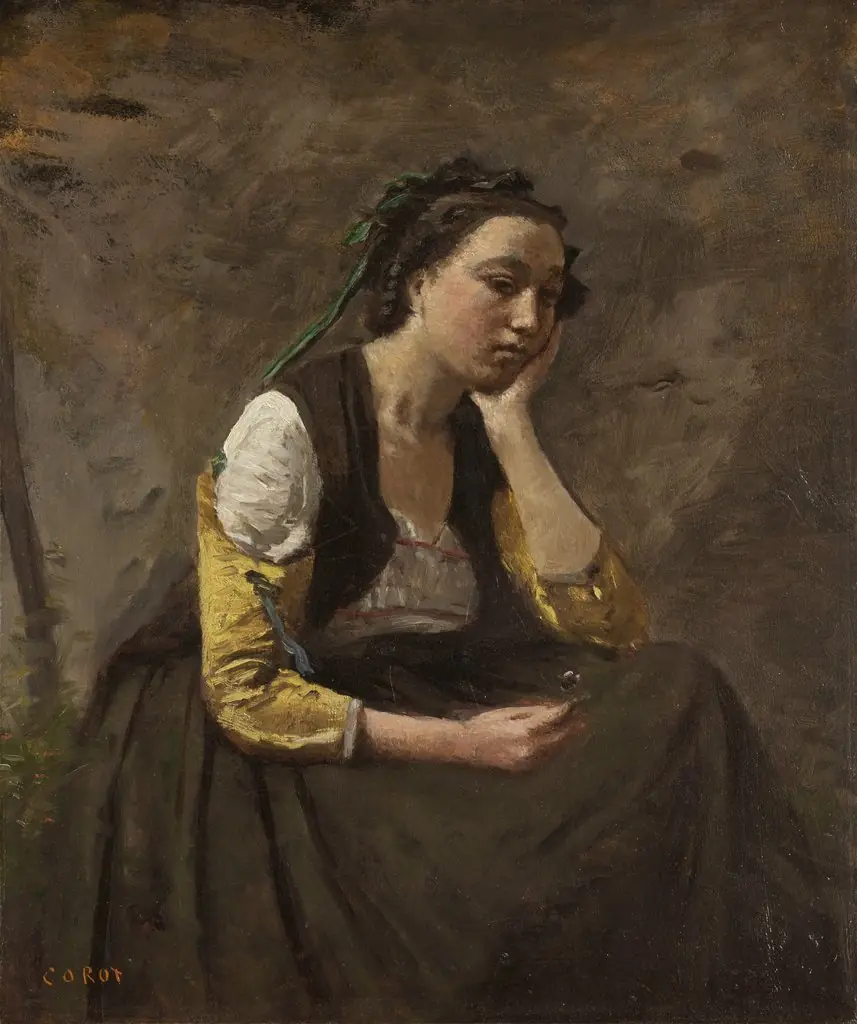 Woman Resting on Her Elbow
 Woman Meditating
 The Muse: History
 Lucrezia Borgia; Portrait of a Roman woman in white tunic and red robe
 Eugenia: Head of a Roman Girl
 Portrait of actress Pelageya Antipevna Strepetova in the role of Elizabeth