Artwork
The Muse: History
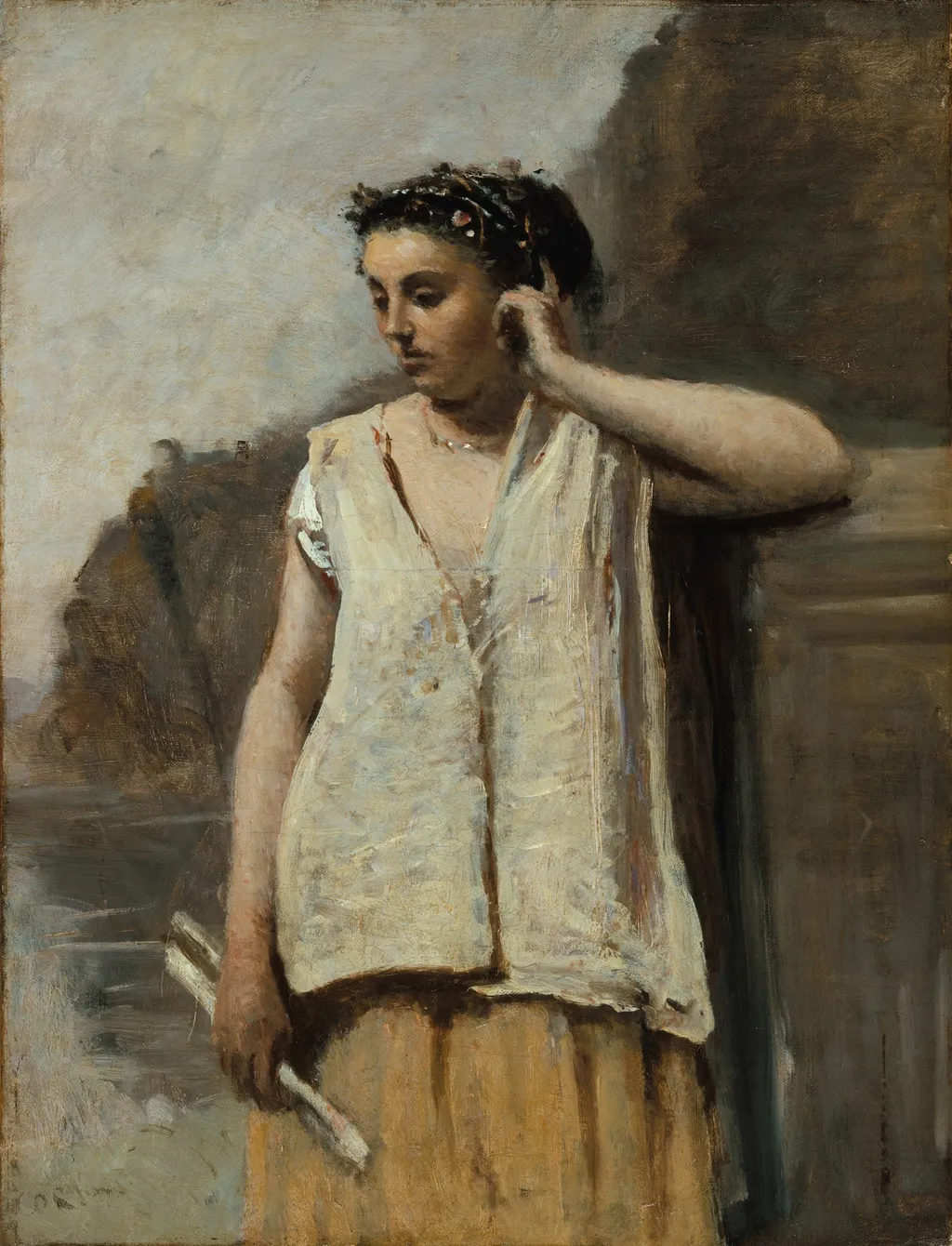
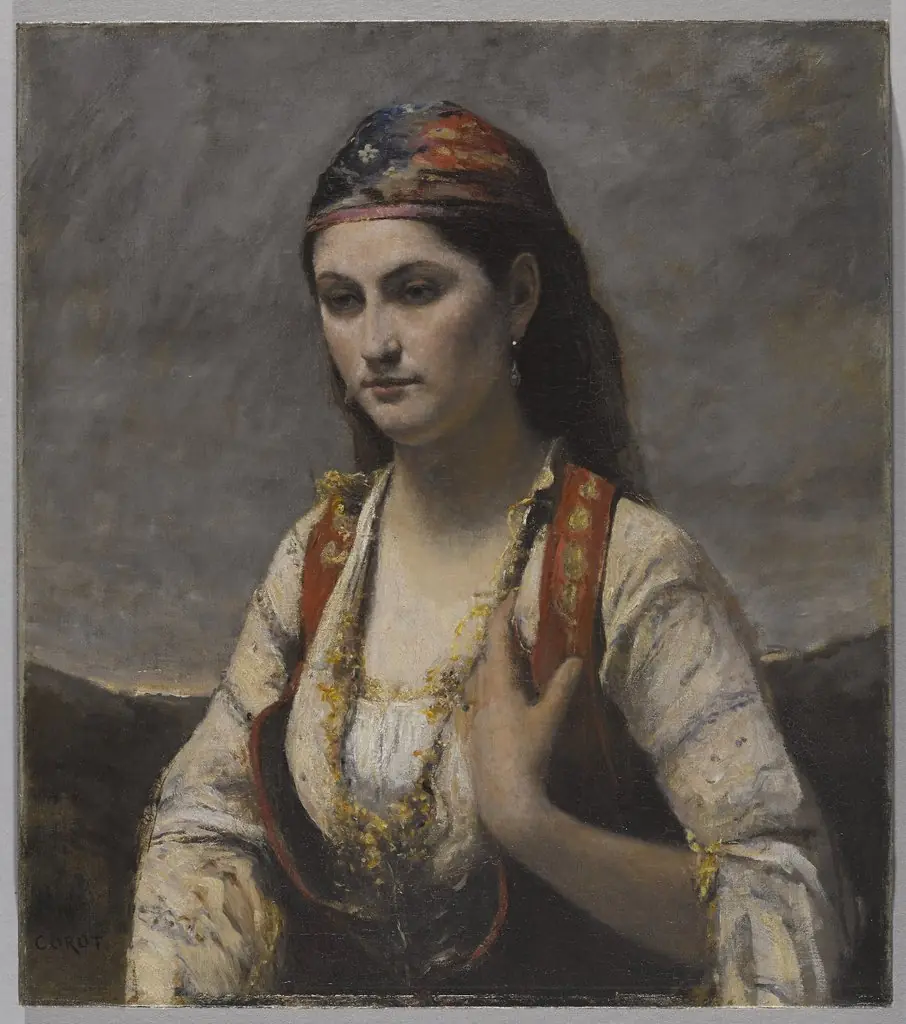
The Muse: History is an oil painting by the French Romanticist artist Jean Baptiste Camille Corot. It dates from 1865 and is held in the collection of the Metropolitan Museum of Art.
About this work
Subject & Meaning
Jean-Baptiste-Camille Corot's 1865 oil painting, The Muse: History, functions as an allegorical representation rather than a literal historical narrative.
Jean-Baptiste-Camille Corot's 1865 oil painting, The Muse: History, functions as an allegorical representation rather than a literal historical narrative. The work depicts a solitary female figure who personifies the concept of the Muse, specifically embodying the domain of History. As an allegory, the subject serves as a symbolic vessel for the abstract idea of historical record-keeping and inspiration.
The classification of the piece as history painting underscores its intent to elevate the depiction of this female figure beyond a simple portrait, positioning her as the intellectual and creative force behind the chronicling of past events. The iconography relies on the traditional association of women with the nine Muses of Greek mythology, here narrowed to represent the specific gravity and memory inherent to History.
Technique & Style
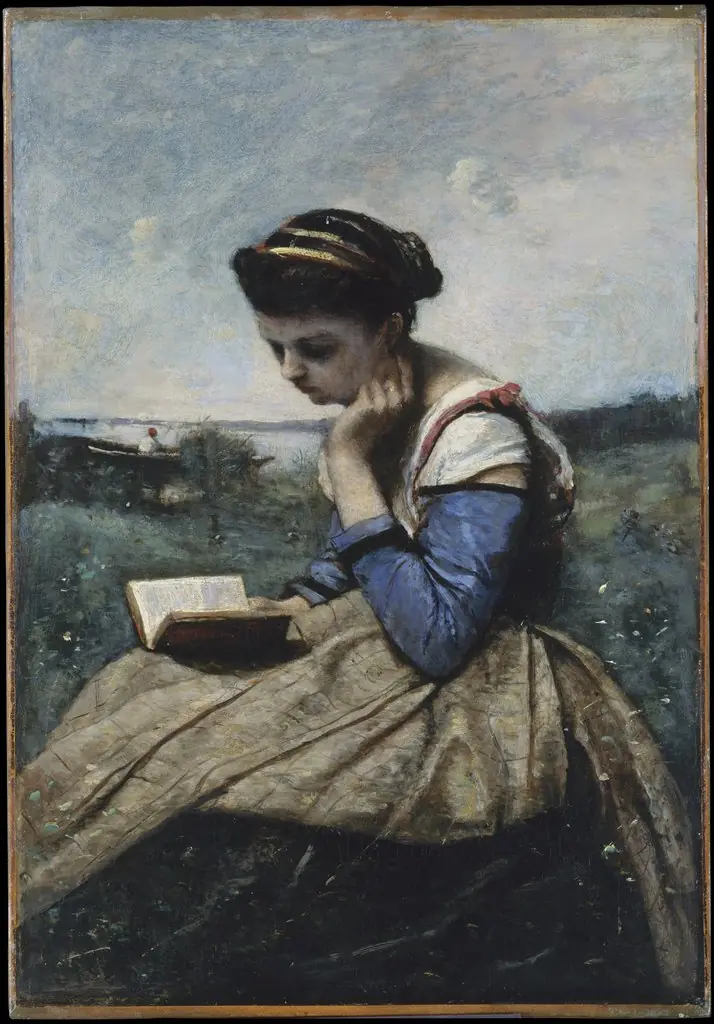
The Muse: History is executed in oil paint on canvas, a standard medium for Corot's easel paintings of the mid-1860s. The canvas measures 46 by 35.2 centimeters, a modest, vertically oriented format suited to a single allegorical figure. Classified as a history painting by the artist and catalogued as an allegory, the work belongs to Corot's late style, in which he softened classical themes with atmospheric, silvery tonalities and feathery handling.
The painting depicts a Muse as a woman, treated with the lyrical, idealized restraint characteristic of Corot's figure work, where loose, vaporous brushwork lends the subject a dreamlike presence rather than crisp academic finish.
History & Provenance
Painted in 1865, The Muse is a history painting by Jean-Baptiste Camille Corot. The work entered the collection of Louisine Havemeyer, whose ownership is recorded in the painting’s provenance. By 1909 it was part of the Havemeyer holdings before later passing to the Metropolitan Museum of Art, where it is currently located.
The painting was included in the exhibition Corot: The Painter and his Models, documenting its public display history during the early twentieth century.
The Muse: History, an 1865 oil on canvas by Jean-Baptiste Camille Corot, is currently held in the collection of the Metropolitan Museum of Art. While the work was formerly owned by Louisine Havemeyer, it is now part of the museum's permanent holdings. Specific inventory or accession numbers are not provided in the available records.
The painting has been featured in at least one documented exhibition titled "Corot. The Painter and his Models." The work measures 46 cm in height and 35.2 cm in width and depicts a female figure identified as a muse within the allegorical genre.
Overview
Jean-Baptiste-Camille Corot's The Muse: History, an oil painting from 1865, depicts a solitary female figure embodying the concept of history. This work by the French artist, who is recognized for his transitional style between classical traditions and outdoor painting, aligns with the history genre and French Romanticism. It is currently housed in The Metropolitan Museum of Art.
Context
Created in 1865, The Muse: History reflects Jean-Baptiste-Camille Corot's unique position in 19th-century French art. While the subject matter aligns with the academic history genre and elements of French Romanticism, Corot's approach also hints at his broader artistic practice. His career often saw him bridging the formal compositions of Neo-Classical art with the direct observation and naturalistic effects associated with plein-air painting.
Own this work as a print
Artist & collection
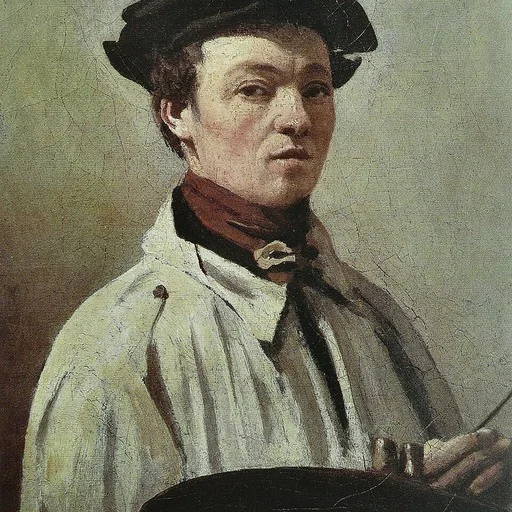
Artist
Jean-Baptiste-Camille Corot (UK: KORR-oh, US: kə-ROH, kor-OH; French:; 16 July 1796 – 22 February 1875), or simply Camille Corot, was a French landscape and portrait painter as well as a printmaker in etching.