Artwork
Madame Jean-Baptiste Isabey (Jeanne Laurice de Salienne, died 1829)
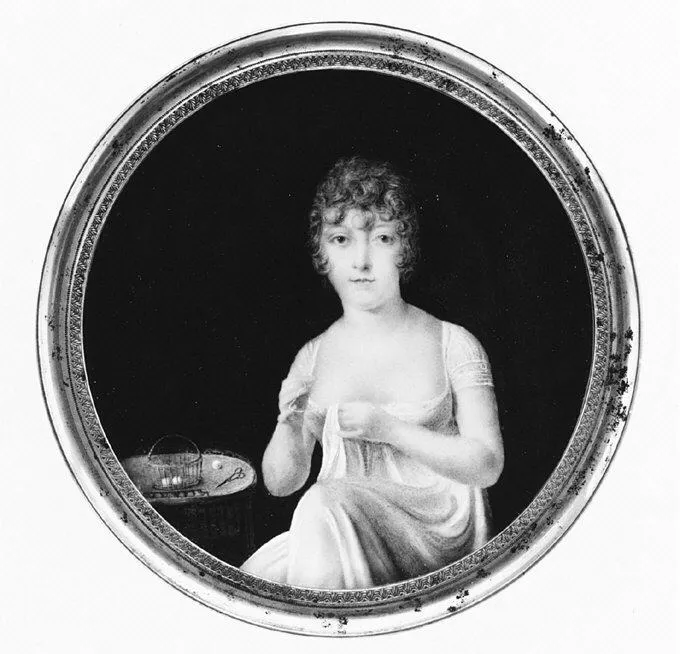
Madame Jean-Baptiste Isabey (Jeanne Laurice de Salienne, died 1829) is an unspecified painting by the Neoclassicist artist Jean-Baptiste Isabey. It dates from 1798 and is held in the collection of the Metropolitan Museum of Art.
About this work
History & Provenance
Created during the late 18th century, the painting eventually entered the collection of the Metropolitan Museum of Art, where it is currently held.
Jean-Baptiste Isabey executed this portrait of his wife, Jeanne Laurice de Salienne (also identified as Justine Laurisse de Salienne), in 1796. The work depicts the subject engaged in sewing. Created during the late 18th century, the painting eventually entered the collection of the Metropolitan Museum of Art, where it is currently held.
The specific circumstances regarding its original commission or the details of its ownership chain between its creation in 1796 and its acquisition by the museum are not detailed in the available records, though the date of inception and the artist's identity are firmly established.
The portrait of Jeanne Laurice de Salienne, painted by Jean‑Baptiste Isabey in 1796, is part of the Metropolitan Museum of Art’s collection. The work is catalogued under the museum’s standard accession system, listed as belonging to the institution’s holdings of 18th‑century French portraiture, though the precise accession number is not disclosed in the available records. The painting has not been noted in any documented exhibition catalogues within the supplied sources, indicating that its public display history remains unrecorded in the provided documentation.
Overview
This portrait, titled Madame Jean-Baptiste Isabey (Jeanne Laurice de Salienne, died 1829), was completed in 1798 by the French artist Jean-Baptiste Isabey. It depicts his wife, Jeanne Laurice de Salienne, engaged in a domestic activity. The work is a significant example of Neoclassical portraiture from the late 18th century and is currently part of The Metropolitan Museum of Art's collection.
Subject & Meaning
The painting presents Jeanne Laurice de Salienne, the artist's wife, seated with her hands gently resting on a piece of fabric, suggesting an interrupted moment of sewing. Her posture conveys a sense of quietude and domesticity. Dressed in a simple white gown, her calm expression and neatly styled hair reinforce an image of refined modesty, aligning with the virtues often celebrated in portraiture of the era.
Technique & Style
Isabey rendered this portrait in a Neoclassical manner, characterized by its clarity and restrained elegance. The composition emphasizes the sitter's serene presence against a muted, dark background, which subtly reveals a small table with a basket. The artist's focus on precise forms and a subdued palette highlights the simplicity of Madame Isabey's attire and the gentle contours of her face, typical of the period's aesthetic preferences.
Artist & collection

Artist
Jean-Baptiste Isabey (French pronunciation:; 11 April 1767 – 18 April 1855) was a French artist during both the First Empire and the Restoration.

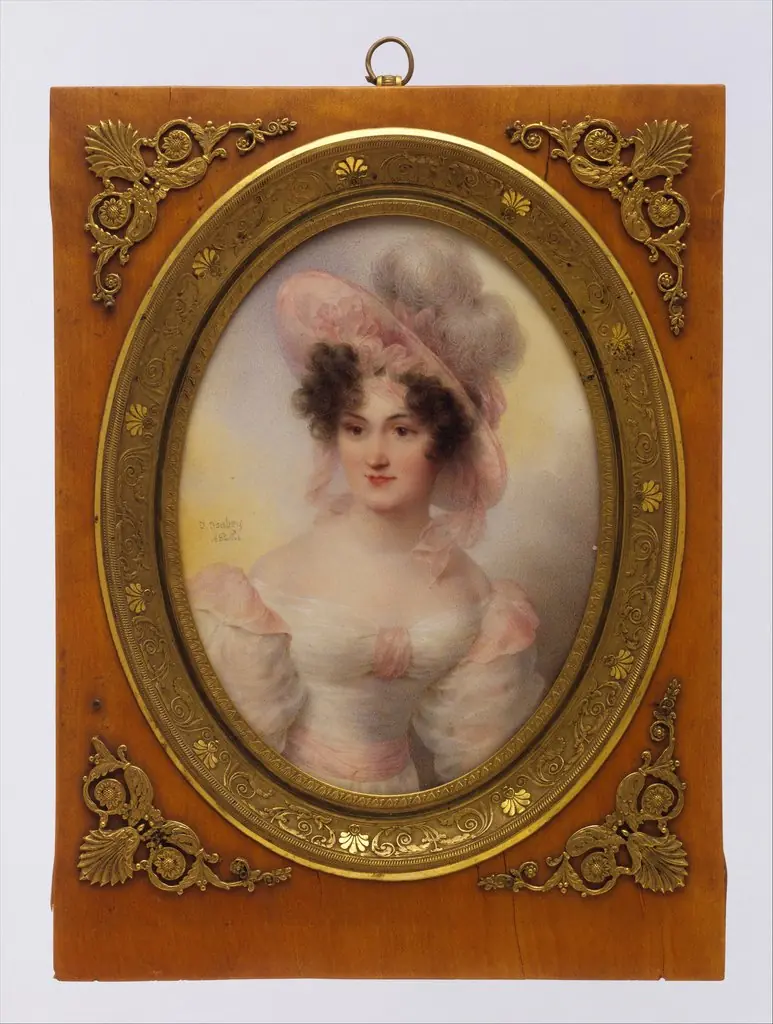
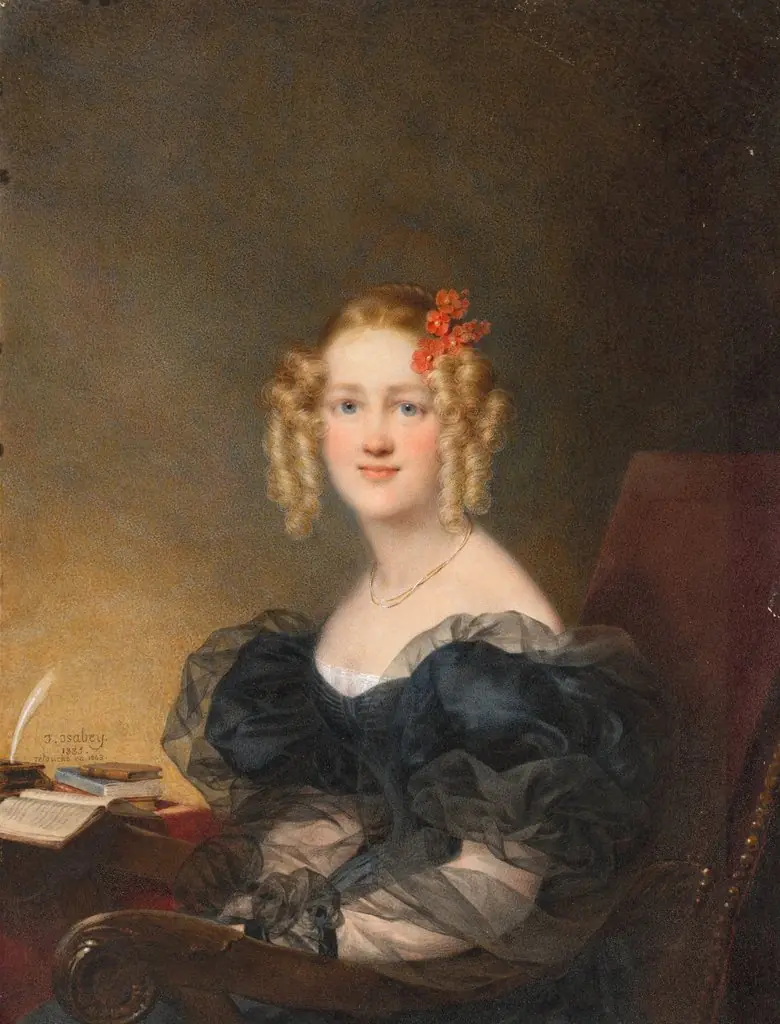
- Portrait of a Woman
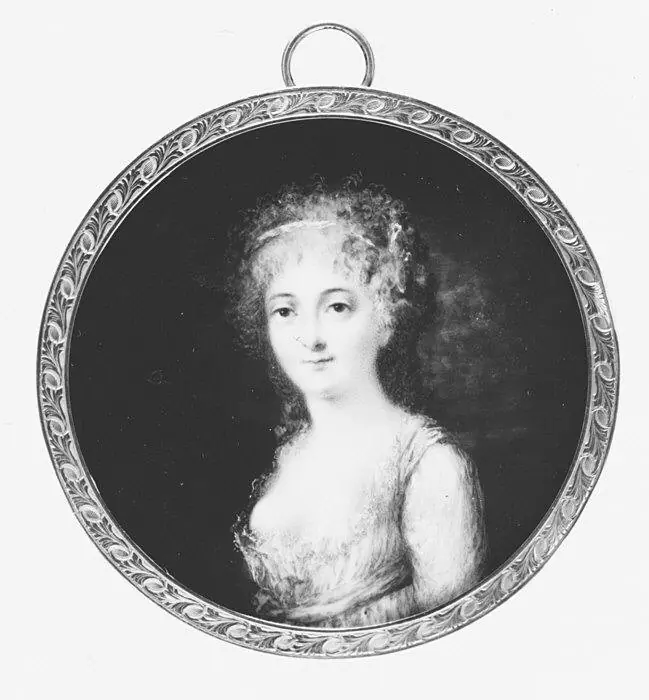 Portrait of a Woman, Said to Be the Comtesse de Guiche
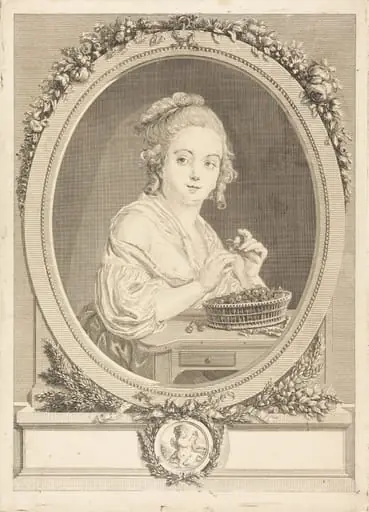 Les cerises
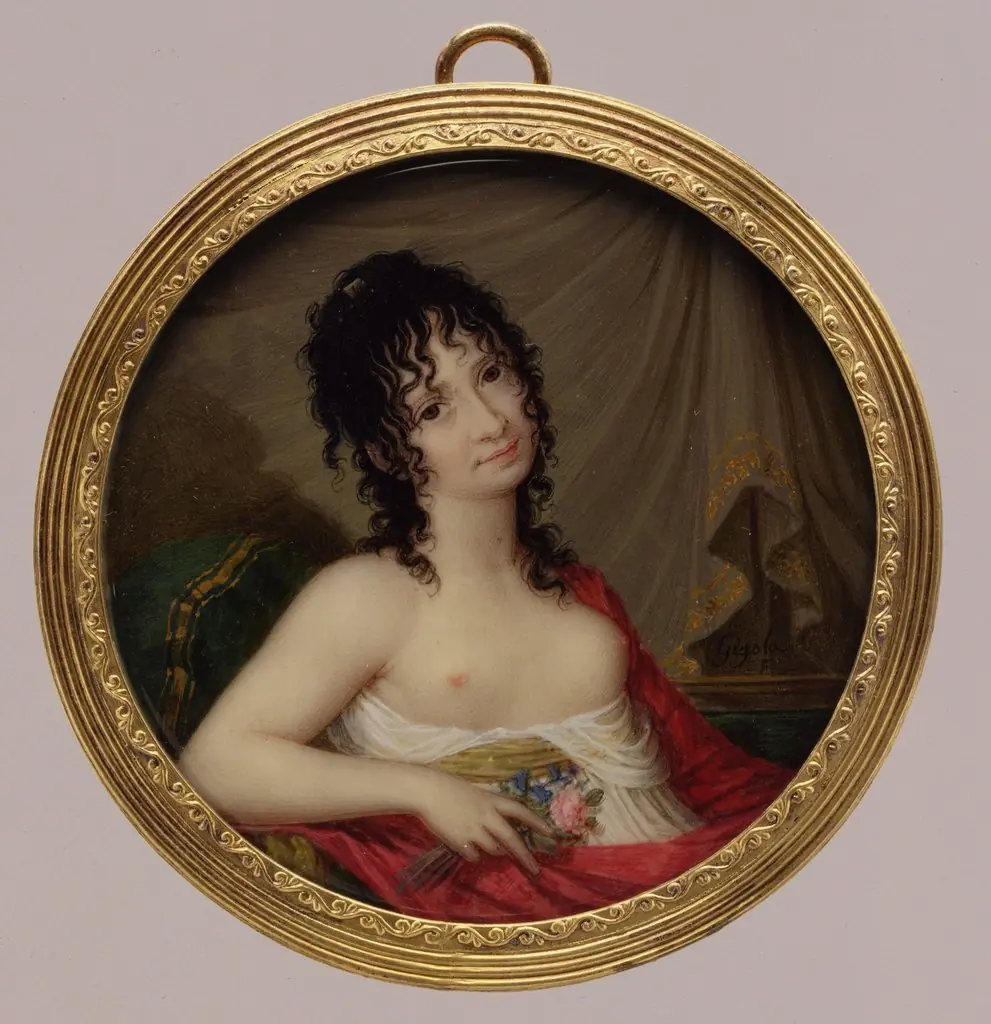 Francesca Ghirardi Lechi
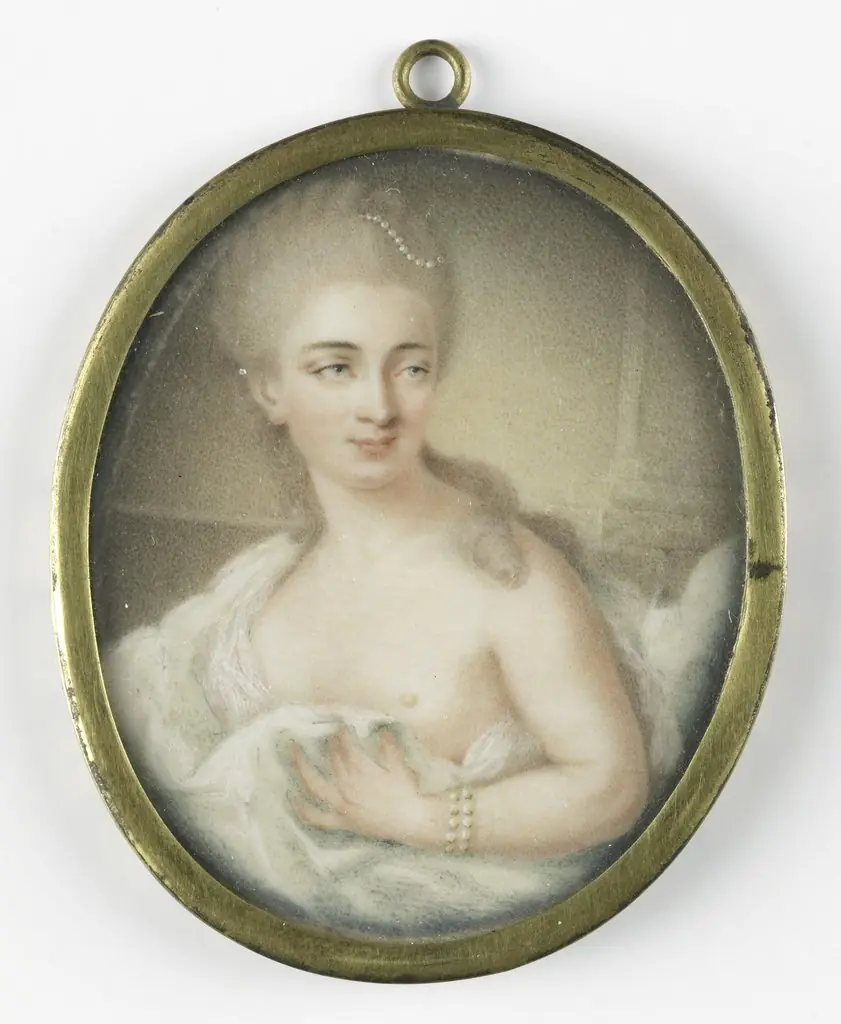 Portret van een jonge vrouw
 Kvindelig figur forestillende "Efter høsten"
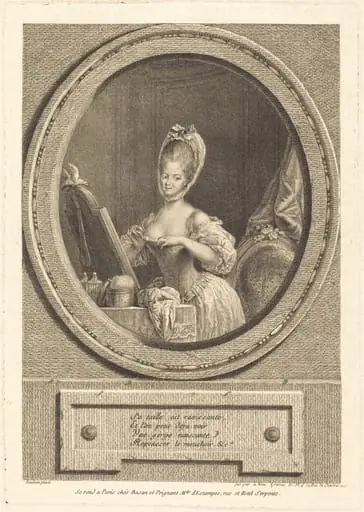 Sa taille est ravissante
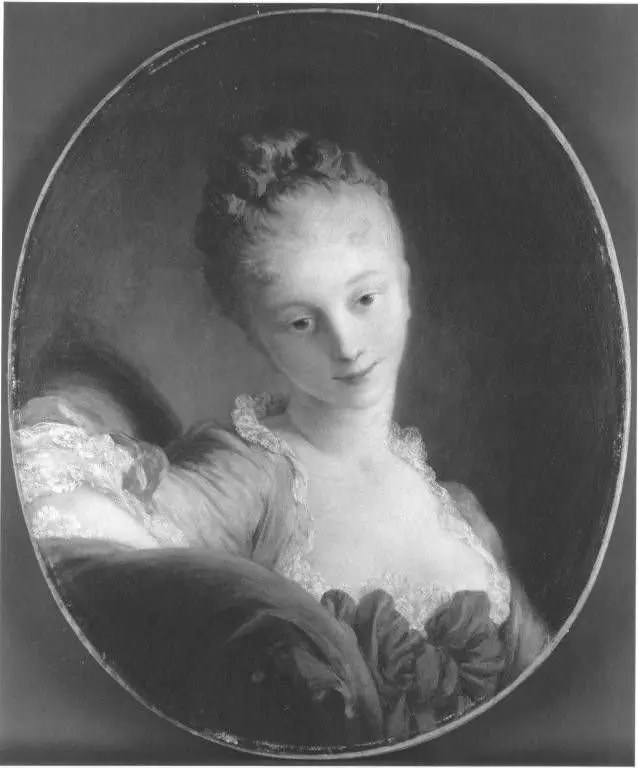 Bildnis einer jungen Dame (Marie-Madeleine Guimard ?)
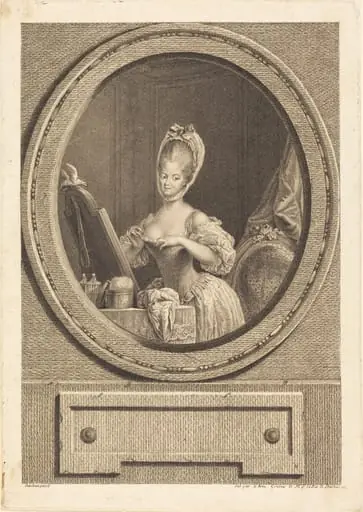 Sa taille est ravissante
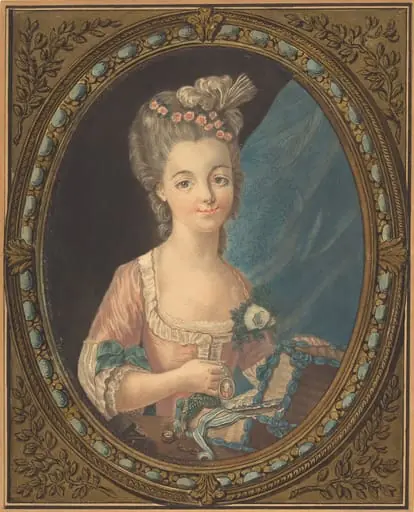 The Marriage Presents
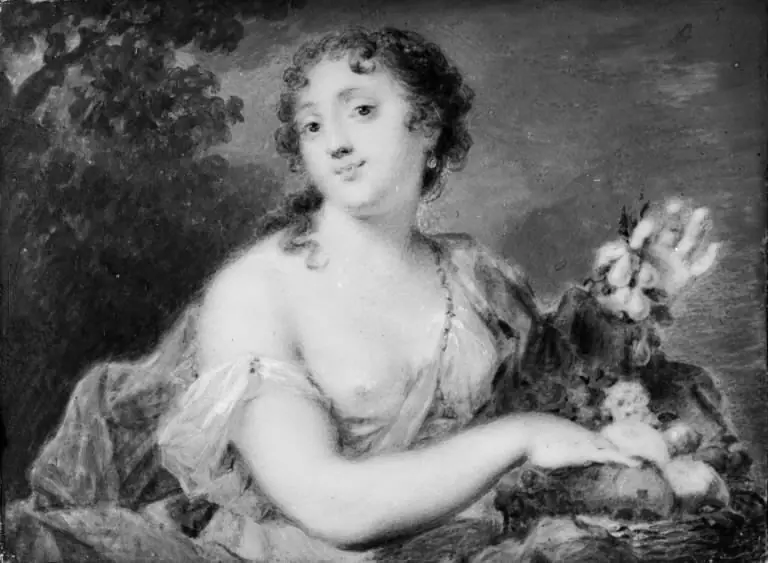 Kvindelig figur forestillende "Efter høsten"