Artwork
The Death of Harmonia
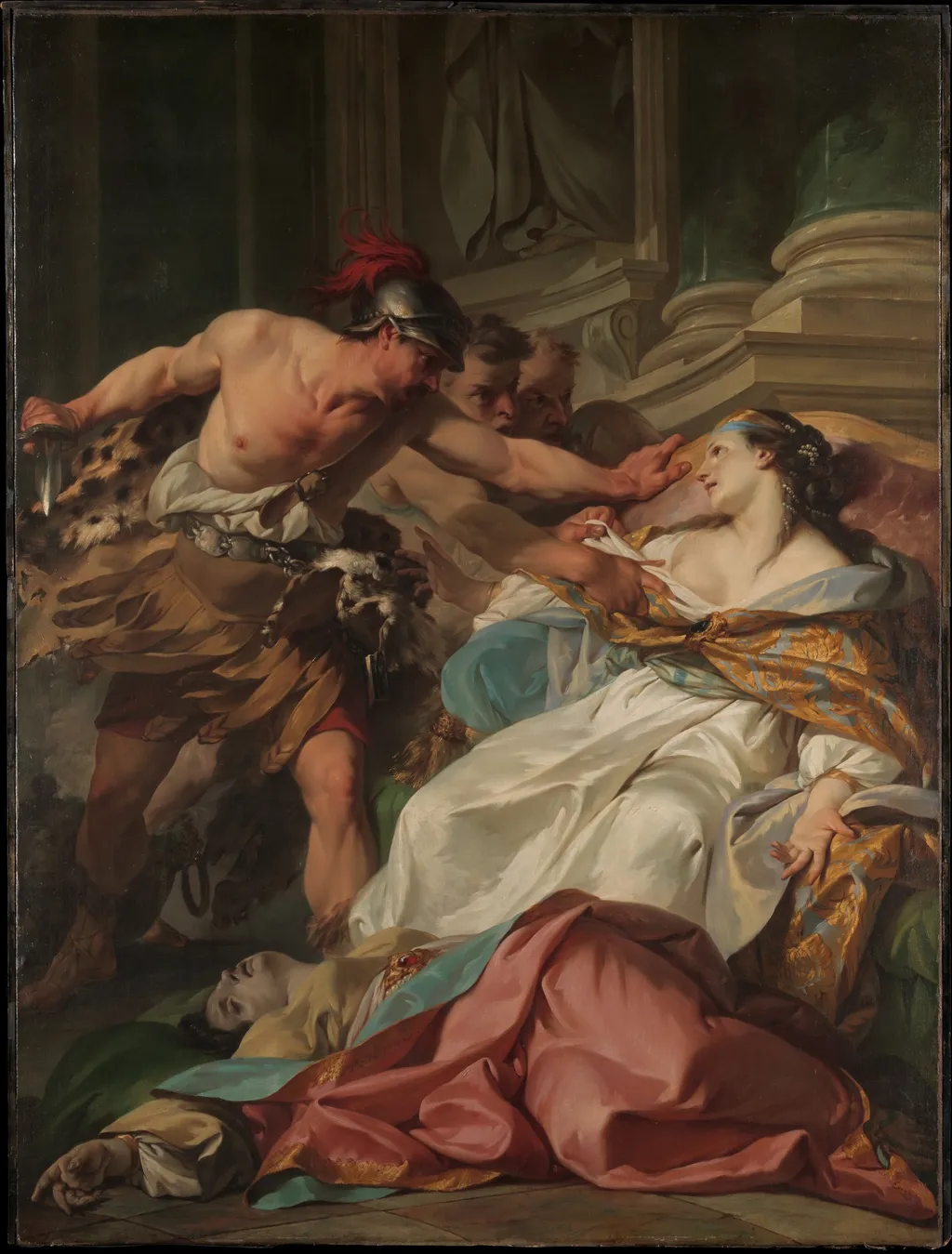
The Death of Harmonia is an oil painting by the Rococo painting artist Jean-Baptiste Marie Pierre. It dates from 1740 and is held in the collection of the Metropolitan Museum of Art.
About this work
Subject & Meaning
The work visually interprets this sequence of self-sacrifice and fatal recognition, focusing on the figures of the woman and the act of death.
Jean-Baptiste Marie Pierre's 1740 oil painting illustrates the tragic demise of Harmonia, the daughter of Gelon II, King of Syracuse. The narrative captures a specific historical moment from 214 B.C. wherein conspirators threatened the princess. In an attempt to preserve her life, Harmonia's governess swapped her royal attire with that of a slave girl.
This deception resulted in the mistaken murder of the slave, who was killed while wearing the princess's clothes. Overcome by remorse upon witnessing this error, Harmonia revealed her true identity to the assassins, leading to her own execution. The work visually interprets this sequence of self-sacrifice and fatal recognition, focusing on the figures of the woman and the act of death.
Technique & Style
The Death of Harmonia is executed in oil paint on canvas, a standard support for mid-eighteenth-century French history painting. The canvas measures 196.9 cm in height by 148 cm in width, an imposing vertical format suited to the tragic narrative. Pierre's handling reflects the academic tradition of his period, with the work produced in 1740 and exhibited at the Salon of 1751 at the Louvre.
The composition depicts the death of Harmonia, daughter of Gelon II of Syracuse, alongside figures of a man, a woman, and the motif of death itself. The painting remains in the collection of the Metropolitan Museum of Art, where it is displayed in Gallery 632, indicating its preserved condition.
History & Provenance
The Death of Harmonia was painted by Jean‑Baptiste Marie Pierre in 1740 as an oil on canvas work. It was first shown at the 1751 Salon in Paris, after which the painting entered the collection of the Metropolitan Museum of Art, where it remains on view in Gallery 632. The composition portrays the mythological figure Harmonia of Syracuse at the moment of her death, a subject drawn from her historical narrative.
The work’s creation date, medium, and exhibition history provide the primary points of its provenance and creation history.
The painting The Death of Harmonia, an oil on canvas work by Jean‑Baptiste Marie Pierre completed in 1740, is held by the Metropolitan Museum of Art in New York. It is part of the museum’s collection, though a specific accession or inventory number is not listed in the available documentation. The work was first exhibited at the 1751 Salon in the Louvre, Paris, and is currently displayed in Gallery 632 of the Met.
Its dimensions measure 196.9 cm by 148 cm, and it portrays the mythological scene of Harmonia of Syracuse’s death. The piece is referenced in standard scholarship on 18th‑century French painting.
Overview
Jean-Baptiste Marie Pierre's 18th-century oil painting, "The Death of Harmonia," captures a dramatic moment from ancient history. This canvas depicts the tragic demise of Harmonia of Syracuse, a narrative of sacrifice and mistaken identity. It was first presented to the public at the prestigious Salon of 1751 in Paris.
Own this work as a print
Artist & collection
Artist
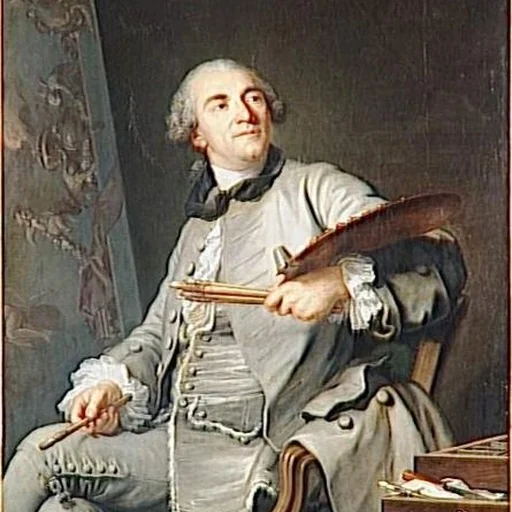
Jean-Baptiste Marie Pierre (1714–1789) was a French artist, born in Paris.

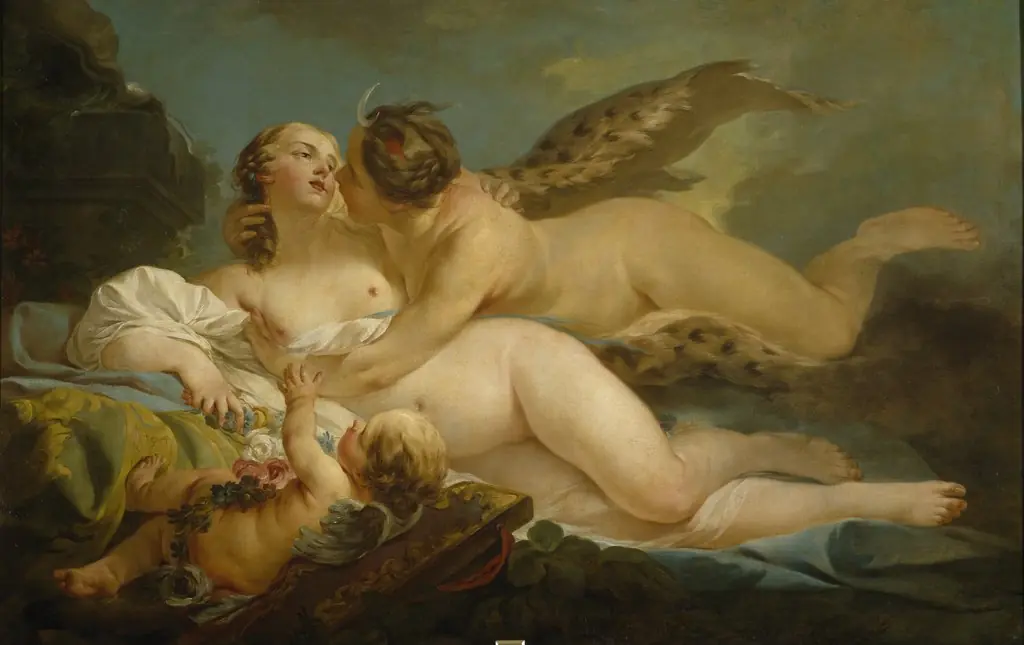
- Death of Messalina
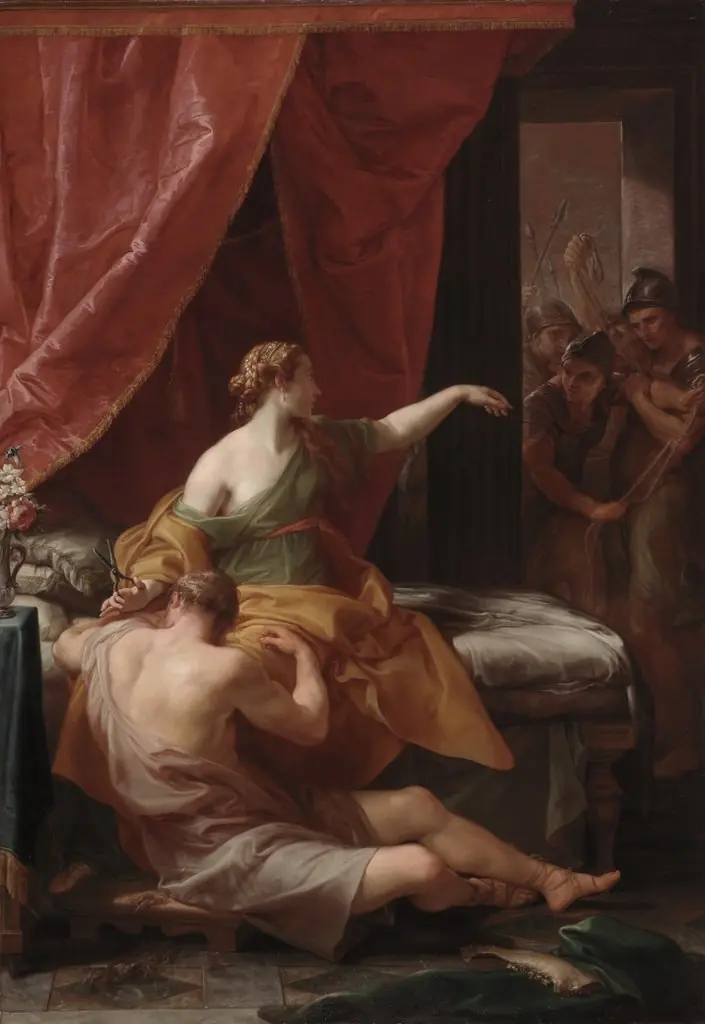 Samson and Delilah
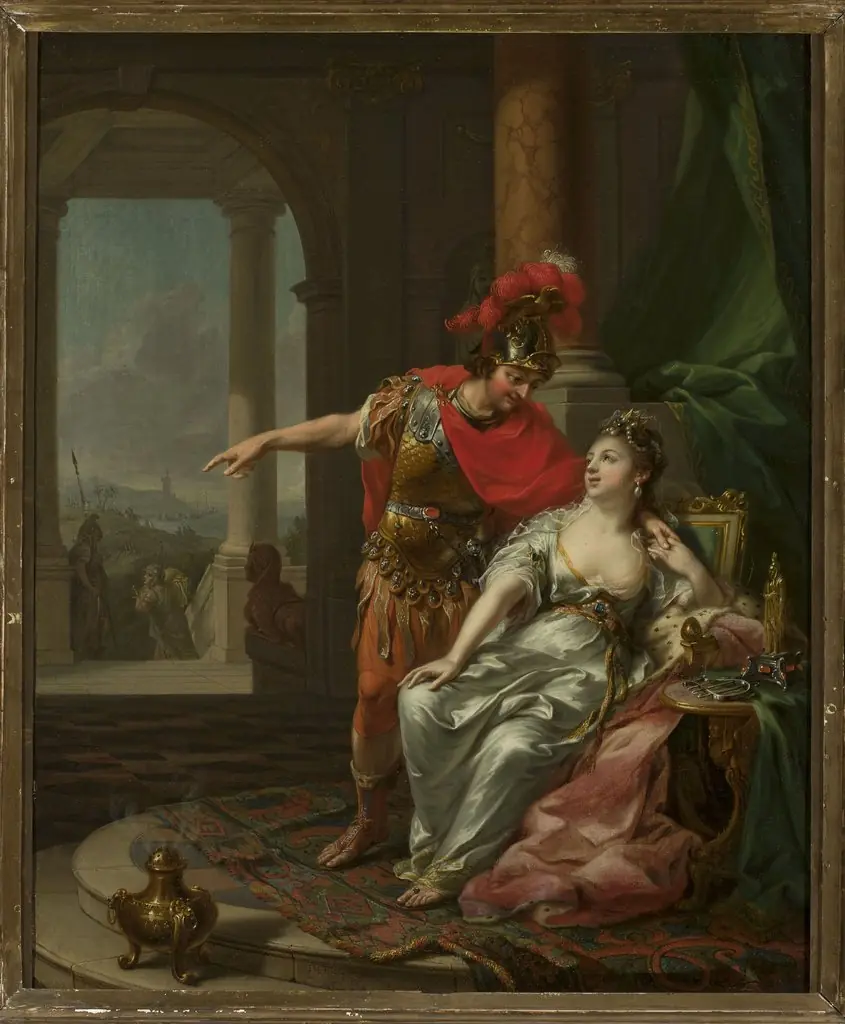 Antony and Cleopatra
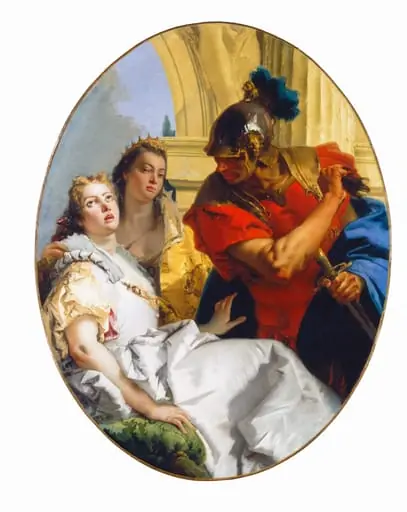 Scene from Ancient History
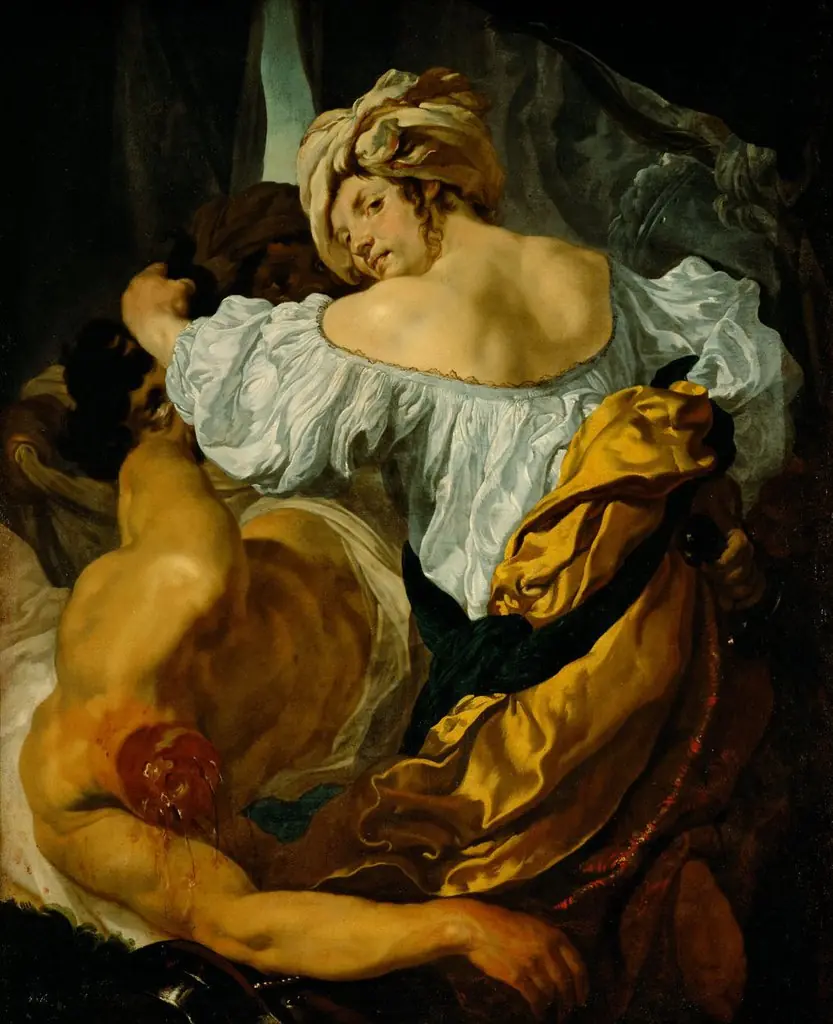 Judith and Holophernes
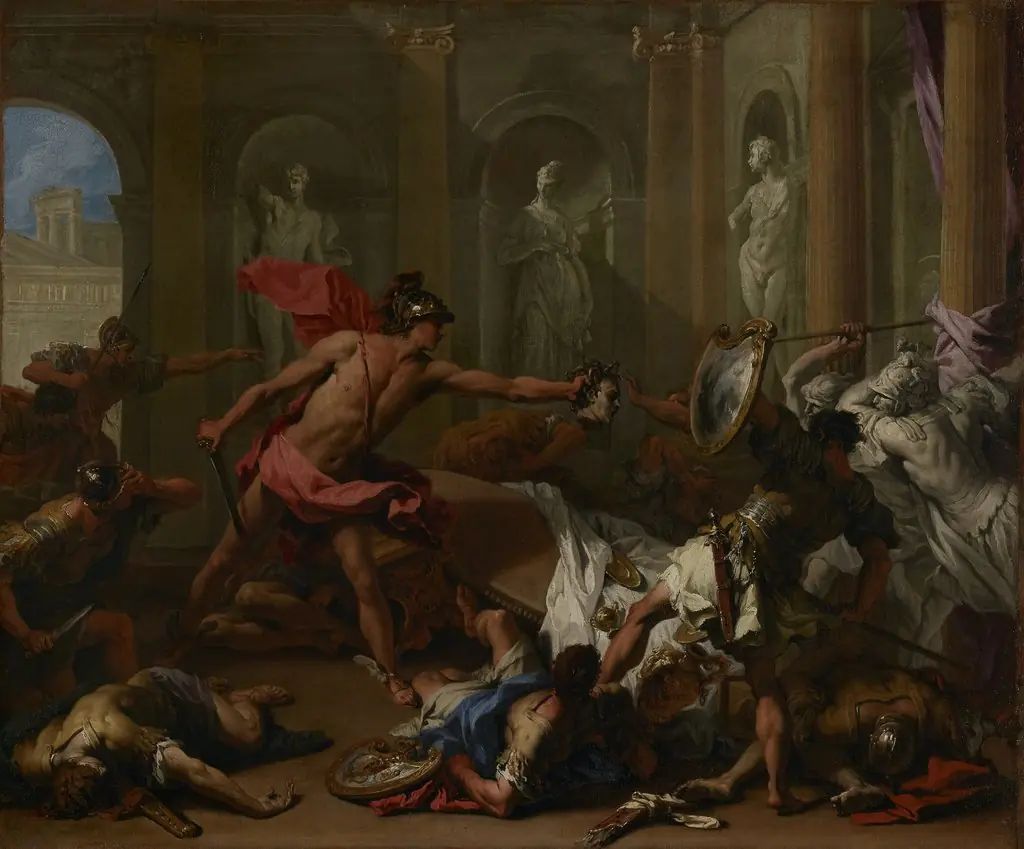 Perseus Confronting Phineus with the Head of Medusa
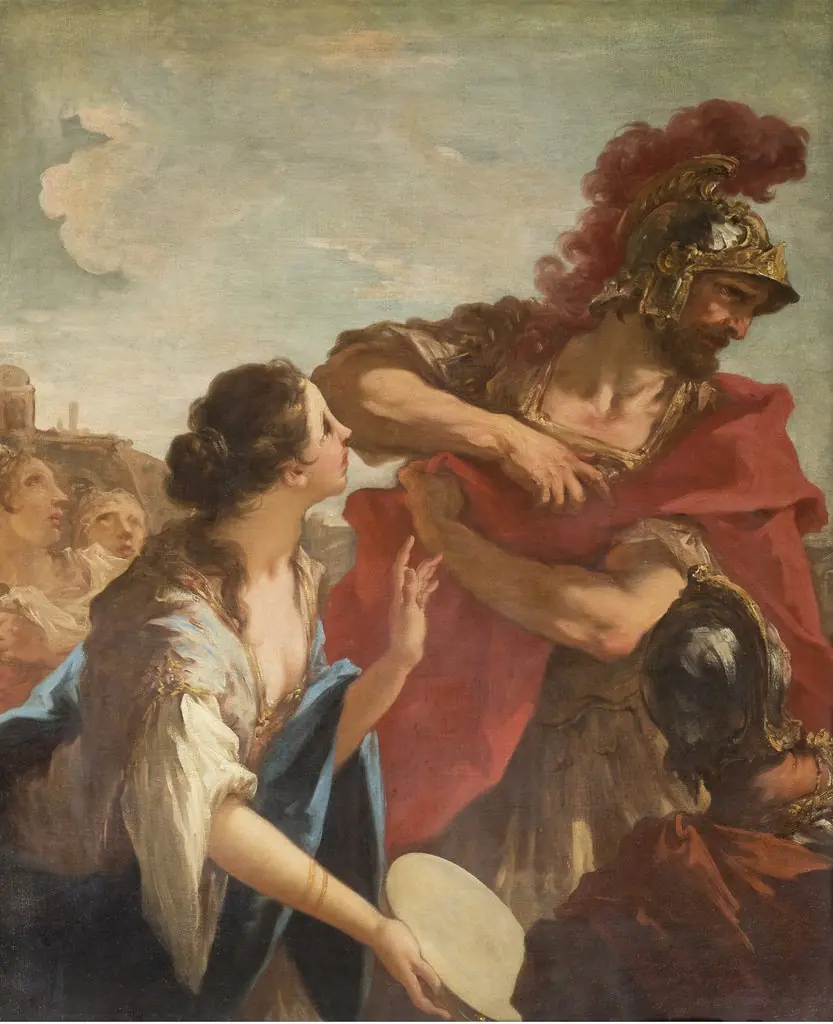 Jephthah returning from Battle is greeted by his Daughter
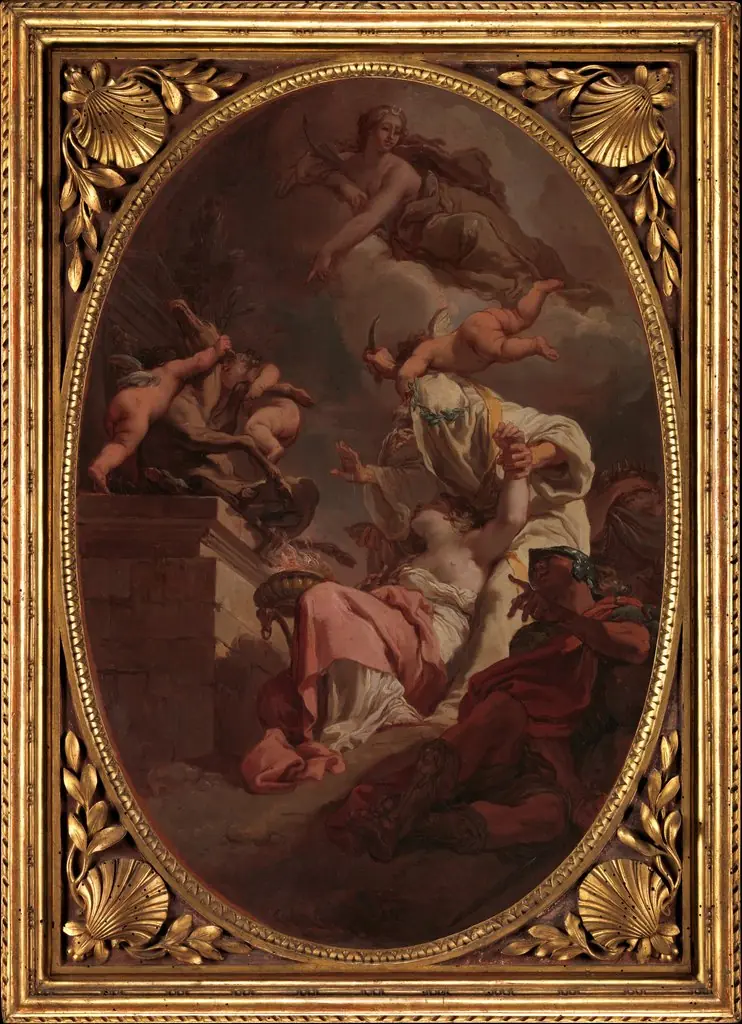 The Sacrifice of Iphigenia
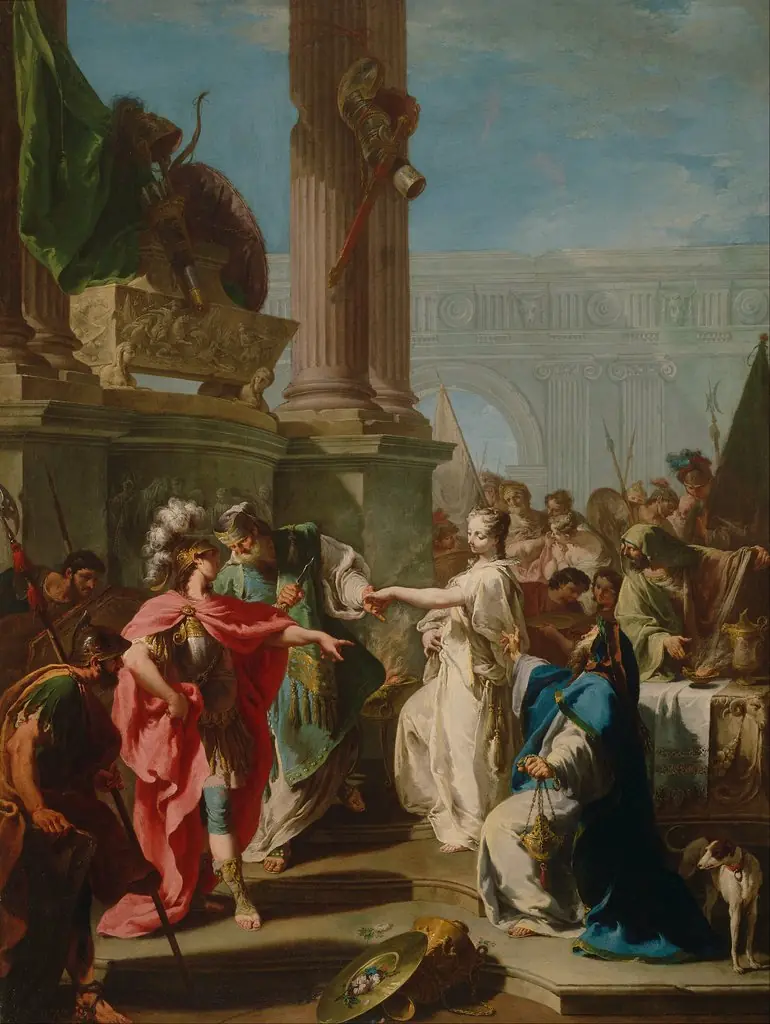 The Sacrifice of Polyxena in Malibu
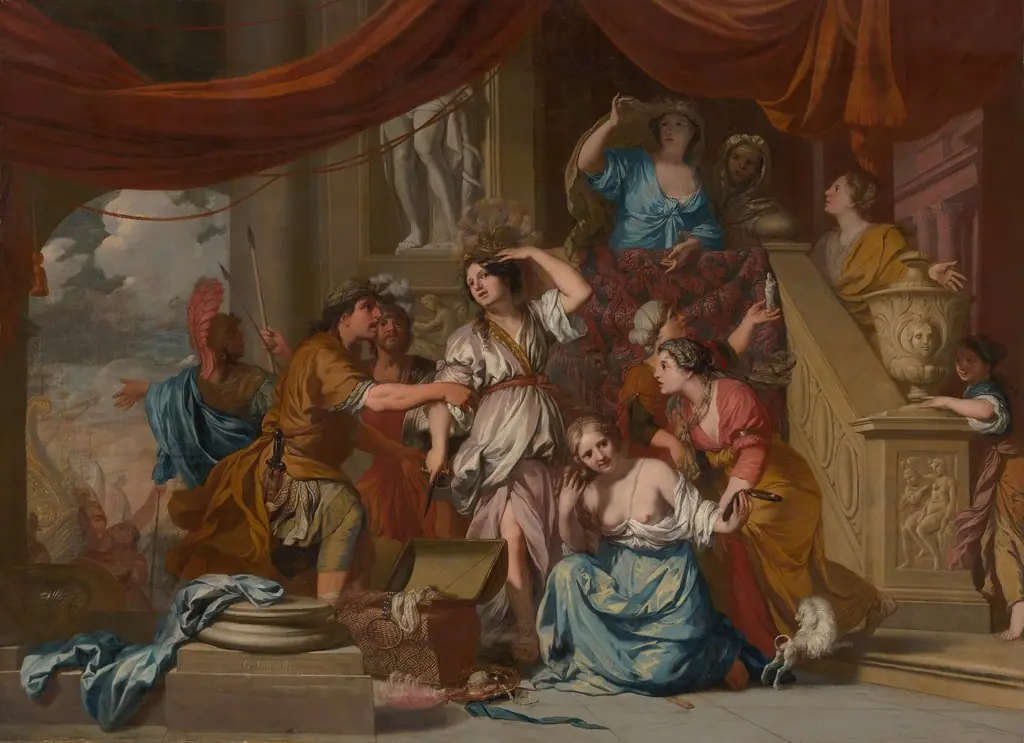 Achilles Discovered among the Daughters of Lycomedes
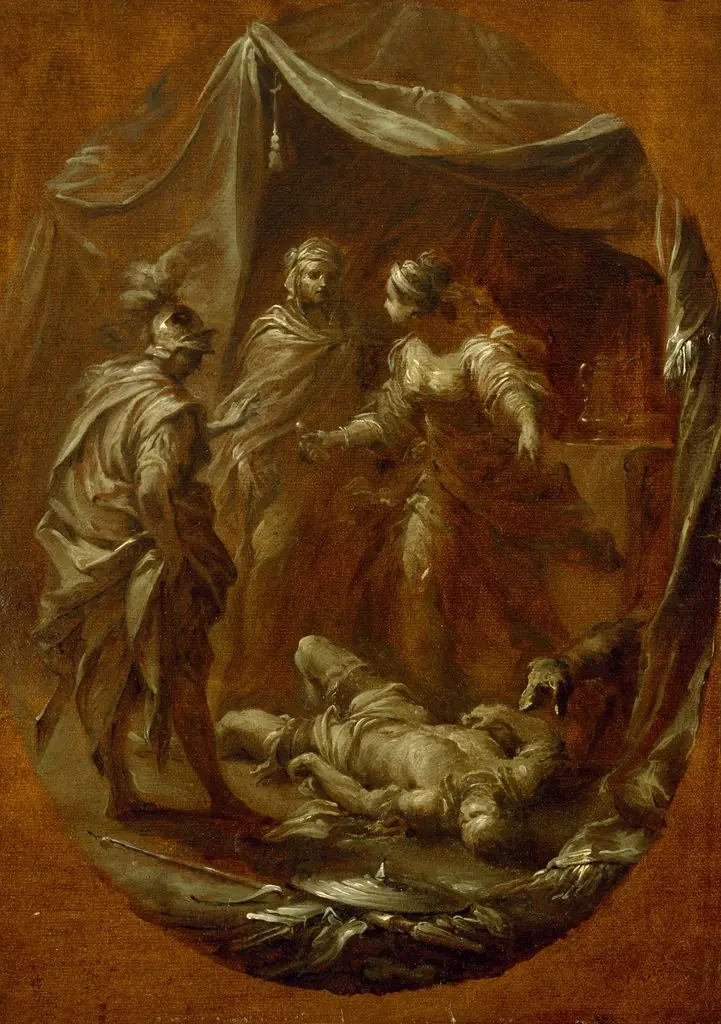 Jael and Sisera
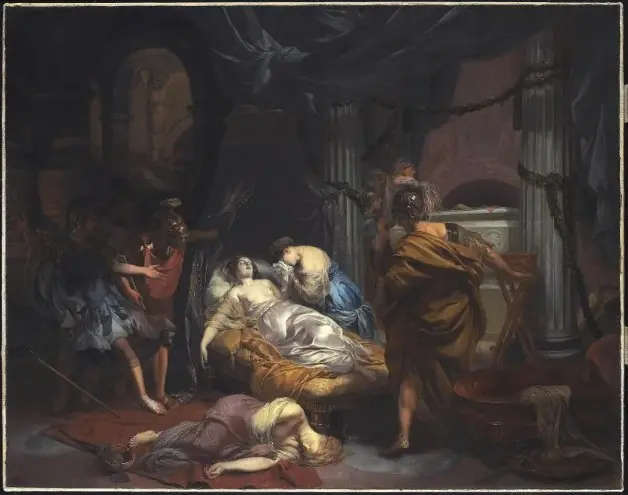 The Death of Cleopatra