Artwork
Scene from Ancient History
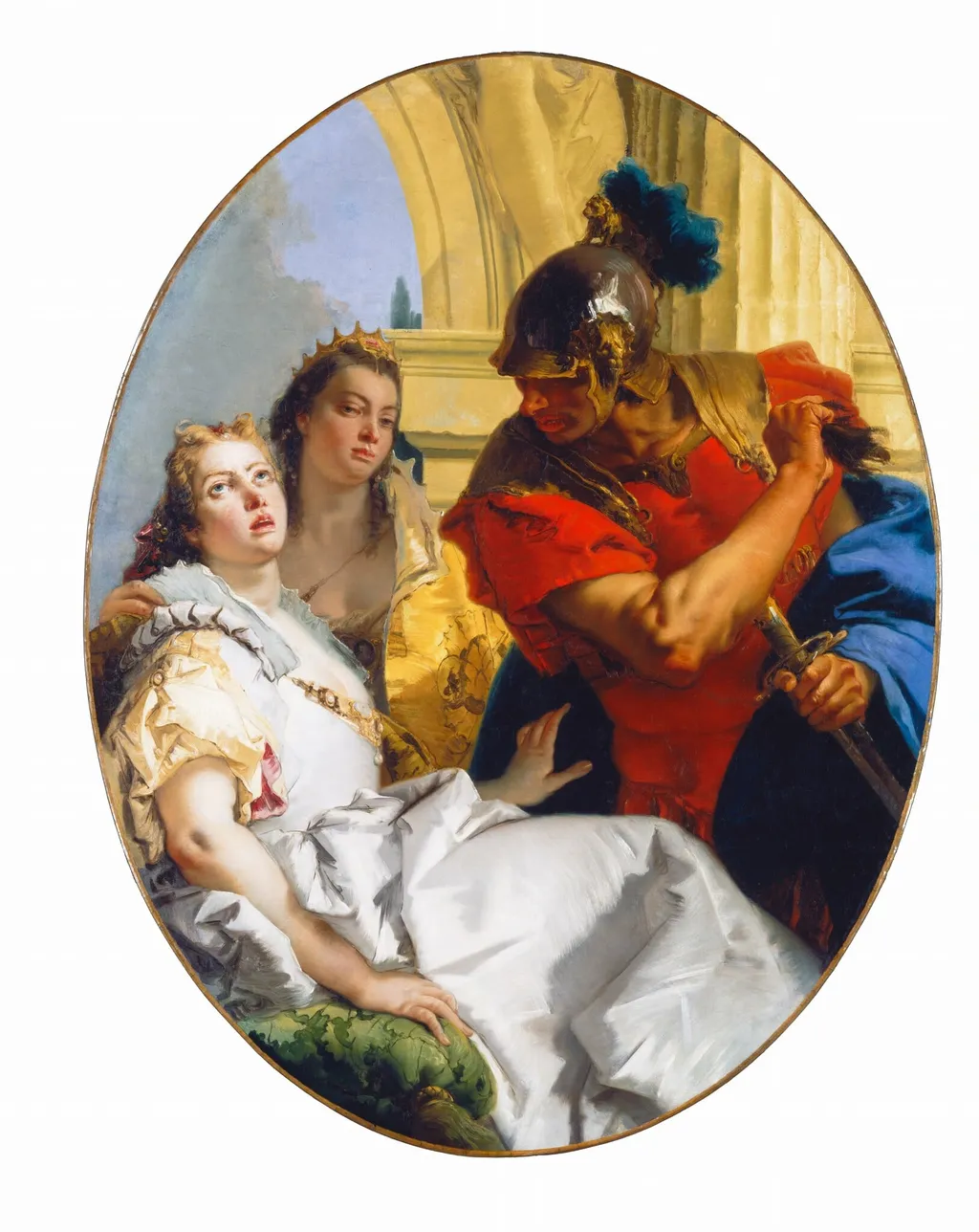
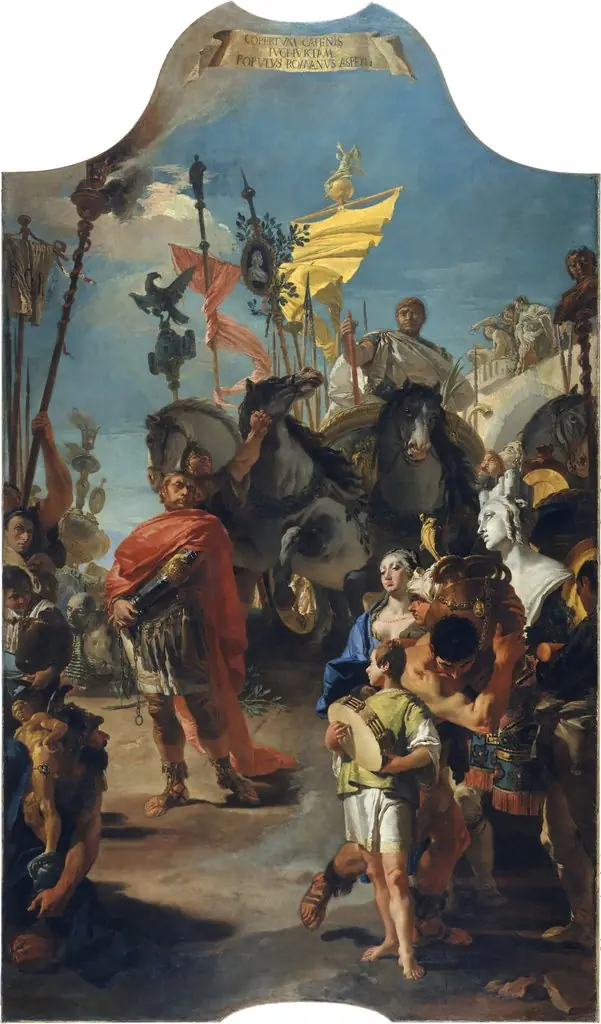
Scene from Ancient History is an oil painting by the Rococo painting artist Giovanni Battista Tiepolo. It dates from 1750 and is held in the collection of the National Gallery of Art.
About this work
Technique & Style
Thin, layered glazes articulate the scene’s theatrical lighting, while broader, opaque strokes define costume and architecture.
Executed in oil on canvas, the work exemplifies Giovanni Battista Tiepolo’s fluid handling of oil paint to render luminous flesh, silken drapery, and atmospheric space. Thin, layered glazes articulate the scene’s theatrical lighting, while broader, opaque strokes define costume and architecture. The composition balances dynamic diagonals, descending from the seated figure at left to the standing elder at right, with a centralized void that focuses attention on the central group, a device Tiepolo used to heighten narrative tension.
The condition is recorded as stable, with no structural issues noted in conservation files at the National Gallery of Art.
History & Provenance
The work was commissioned by the Barbaro family of Venice and remained in their possession until the mid-nineteenth century. By 1866 it had passed to Elissa Bassi, sister of Marc Antonio Barbaro, and was sold to a French dealer before being acquired at the Palazzo Barbaro sale in Paris on 9 February 1874.
It entered the collection of Isaac, comte de Camondo, whose sale in 1893 transferred it to Eugène Féral and later to Baron Adolph Carl de Rothschild at the Château de Pregny. After subsequent owners in Vienna, including Dr. Joseph Kranz and Stefan von Auspitz, it was handled by K.W. Bachstitz in The Hague before being purchased by the Samuel H. Kress Foundation in 1937 and gifted to the National Gallery of Art, Washington, D.C., in 1939.
The painting Scene from Ancient History is held by the National Gallery of Art in Washington, D.C., as part of the Samuel H. Kress Collection. The work entered the museum's holdings in 1939 as a gift from the Samuel H. Kress Foundation, which had purchased it in 1937 from the K.W. Bachstitz gallery in The Hague. Prior to its acquisition by the foundation, the canvas passed through several prominent European collections, including those of Baron Adolph Carl de Rothschild at Château de Pregny and Dr. Joseph Kranz in Vienna.
The artwork's provenance traces back to the Barbaro family in Venice, with a documented sale at the Hôtel Drouot in Paris in 1874. No specific exhibition history is detailed in the provided sources.
Overview
Created around 1750, this oil on canvas work by Giovanni Battista Tiepolo belongs to the Rococo tradition of history painting. Executed by one of Venice’s most active 18th‑century artists, the composition combines a lively narrative with the decorative elegance typical of the period.
Subject & Meaning
The canvas depicts a bustling episode drawn from antiquity, populated by numerous figures caught in dynamic poses. The arrangement of bodies and gestures generates a palpable sense of tension, suggesting a moment of conflict or decisive action within the ancient story.
Context
During the mid‑18th century, Tiepolo’s career spanned commissions throughout Italy, as well as major projects in Germany and Spain. This work reflects his ability to adapt the lighthearted, ornate qualities of Rococo to grand historical subjects, aligning with contemporary tastes for theatricality and visual splendor.
Own this work as a print
Artist & collection

Artist
Giovanni Battista Tiepolo, also known as Giambattista Tiepolo, was an Italian painter and printmaker from the Republic of Venice who painted in the Rococo style, considered an important member of the 18th-century Venetian school.


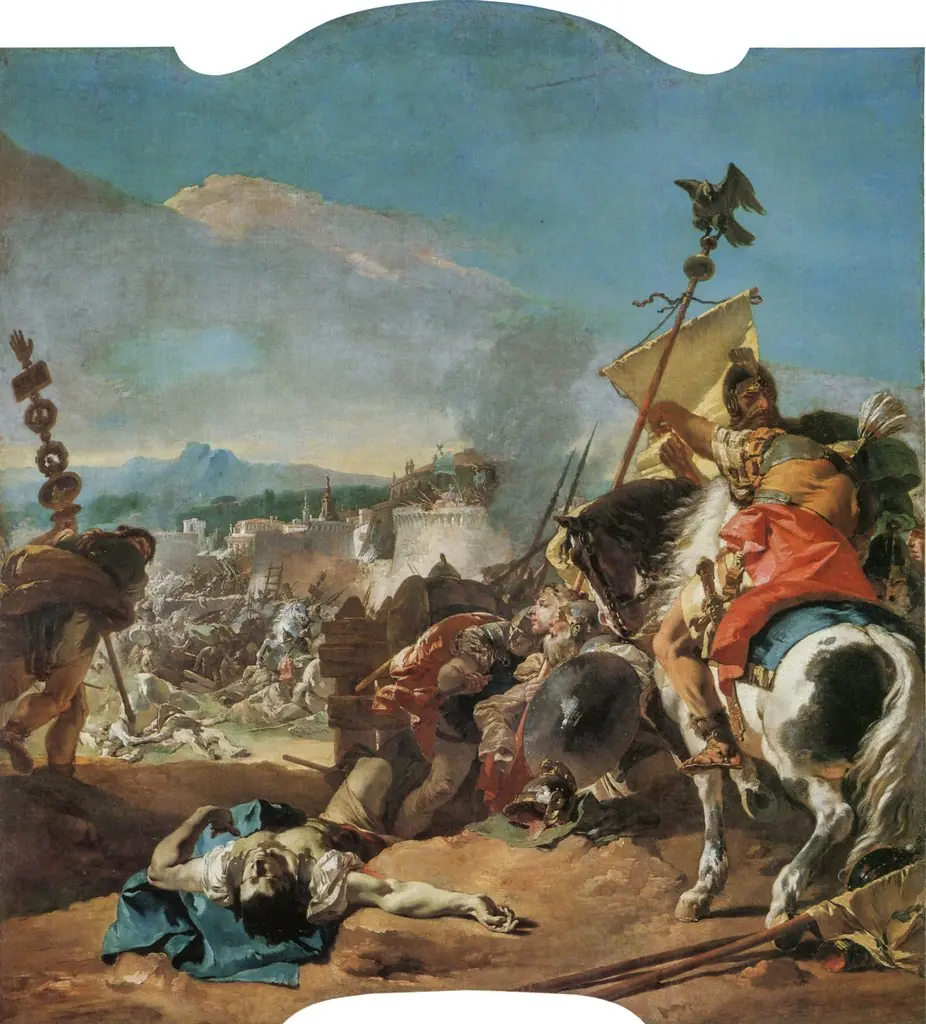
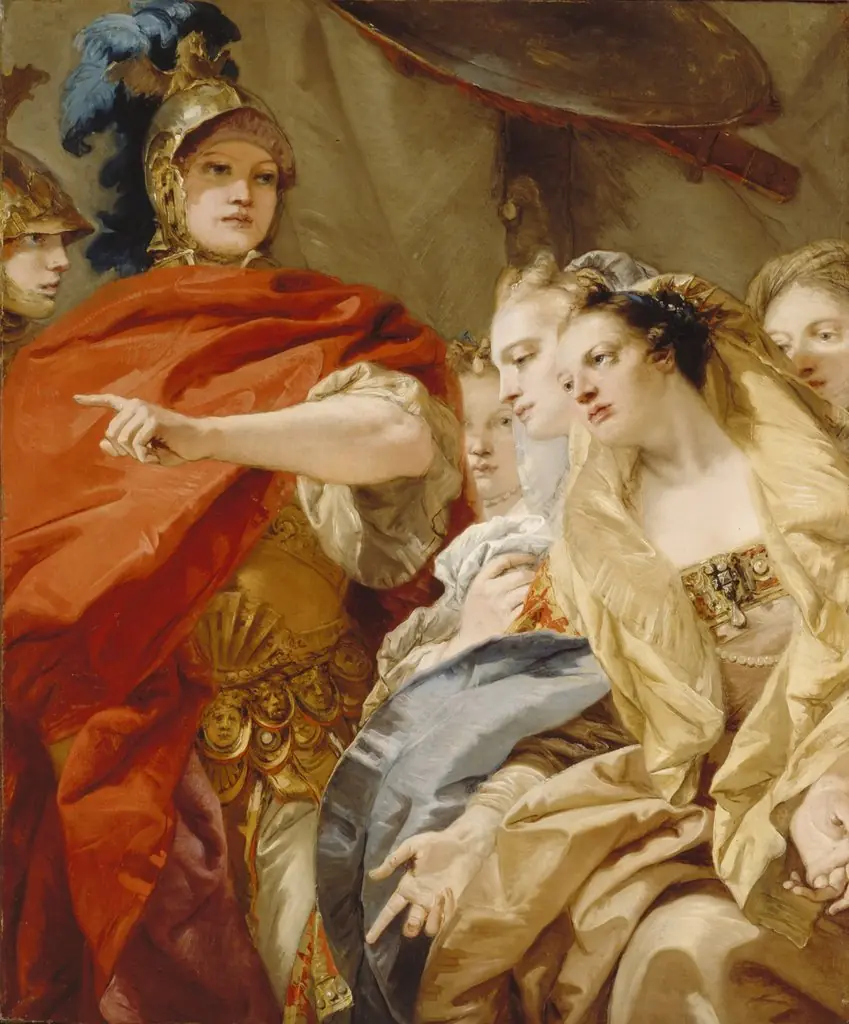
- The Women of Darius Invoking the Clemency of Alexander
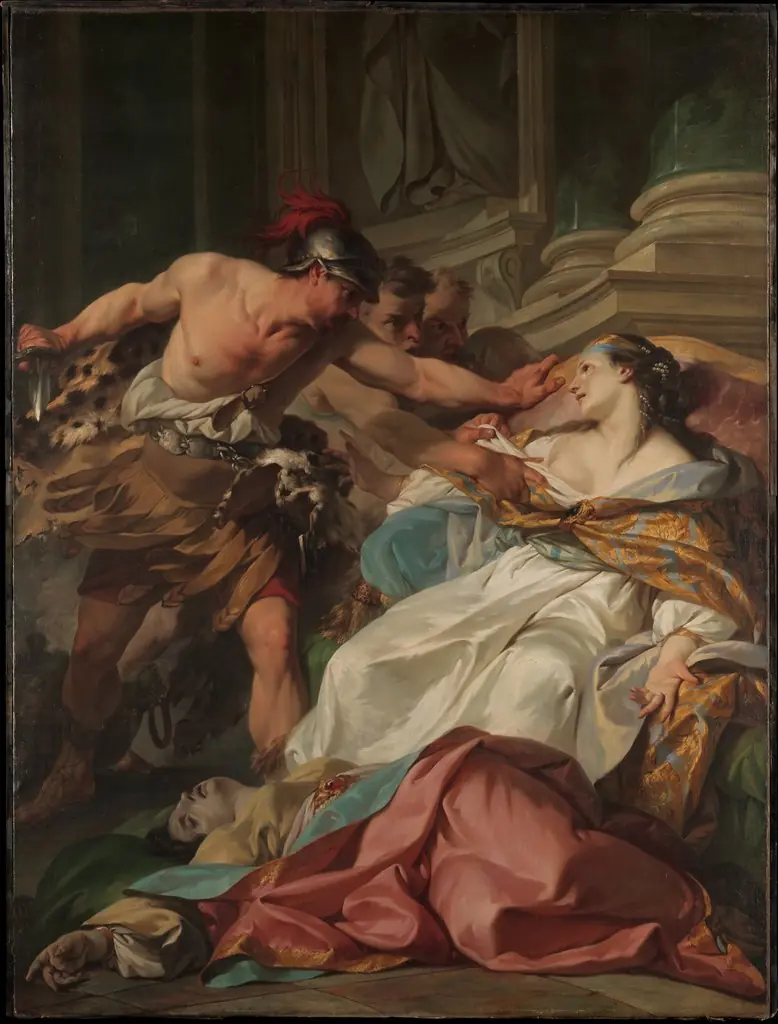 The Death of Harmonia
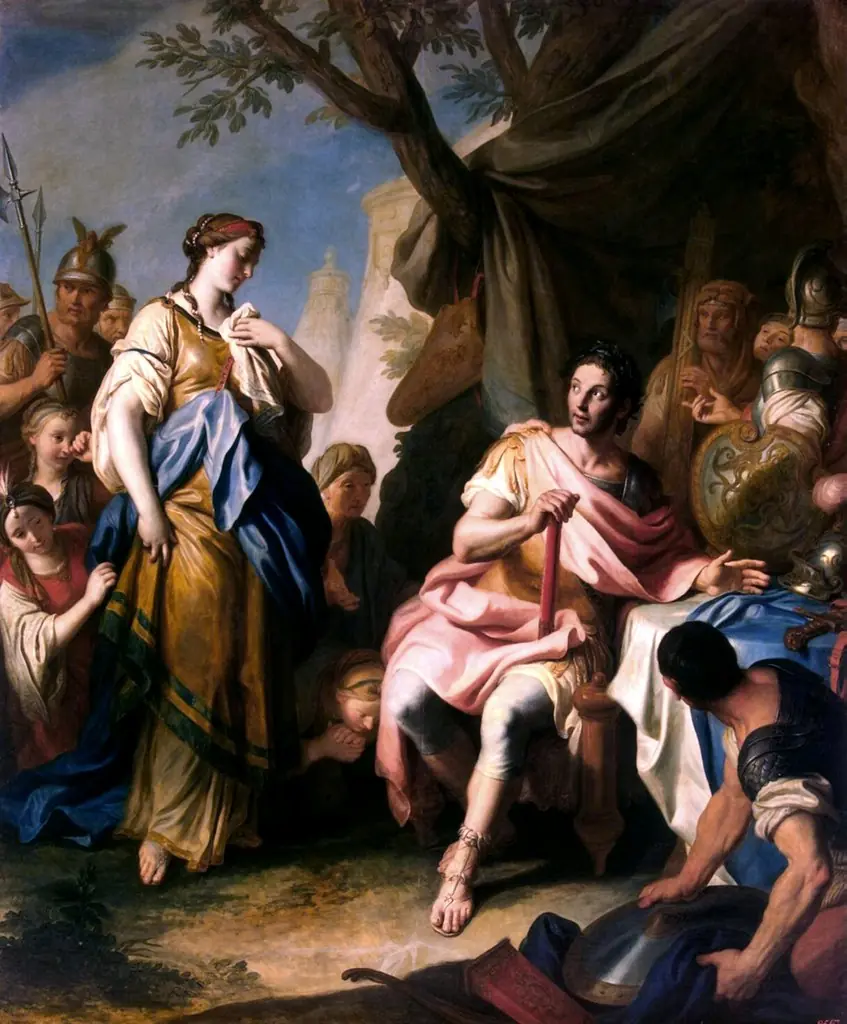 Alexander the Great and Roxana
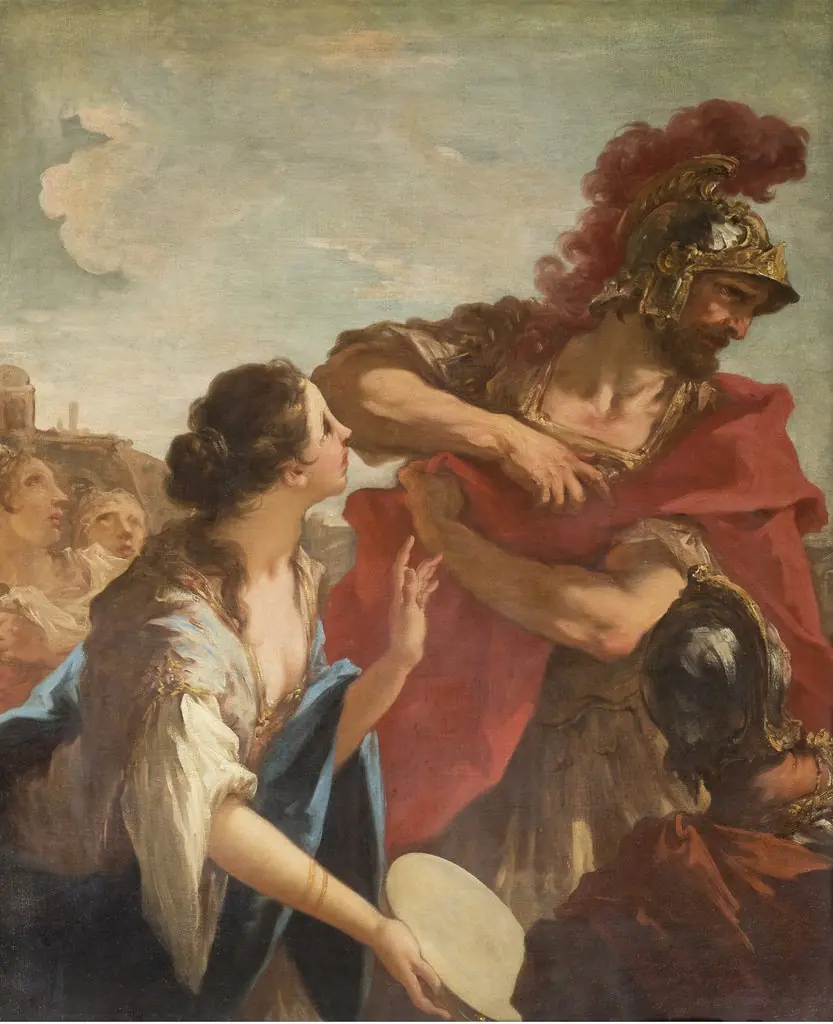 Jephthah returning from Battle is greeted by his Daughter
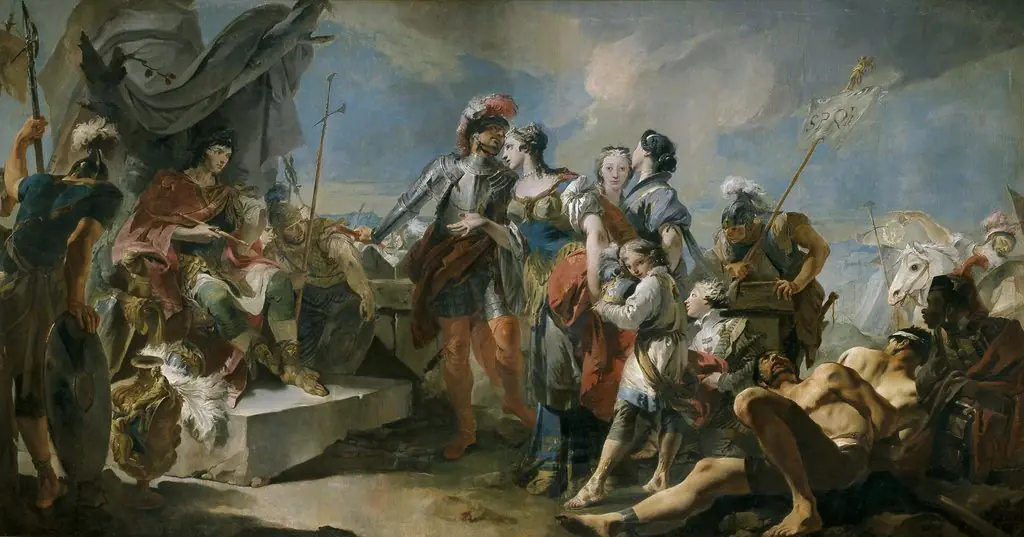 Queen Zenobia before the Emperor Aurelian
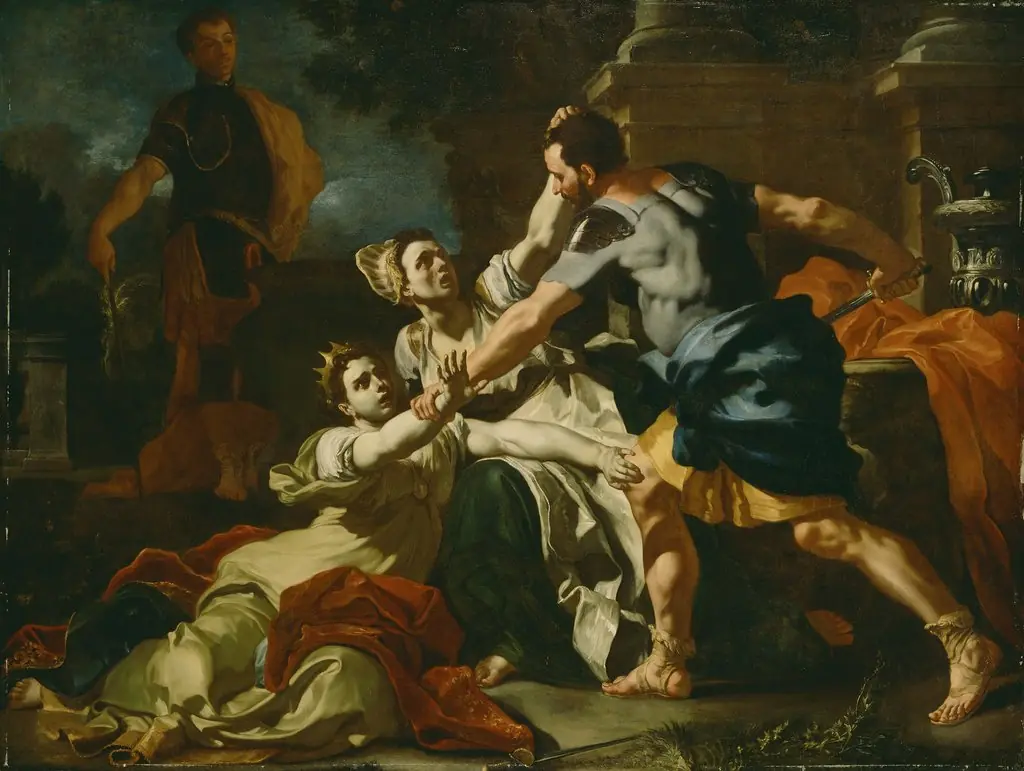 Death of Messalina
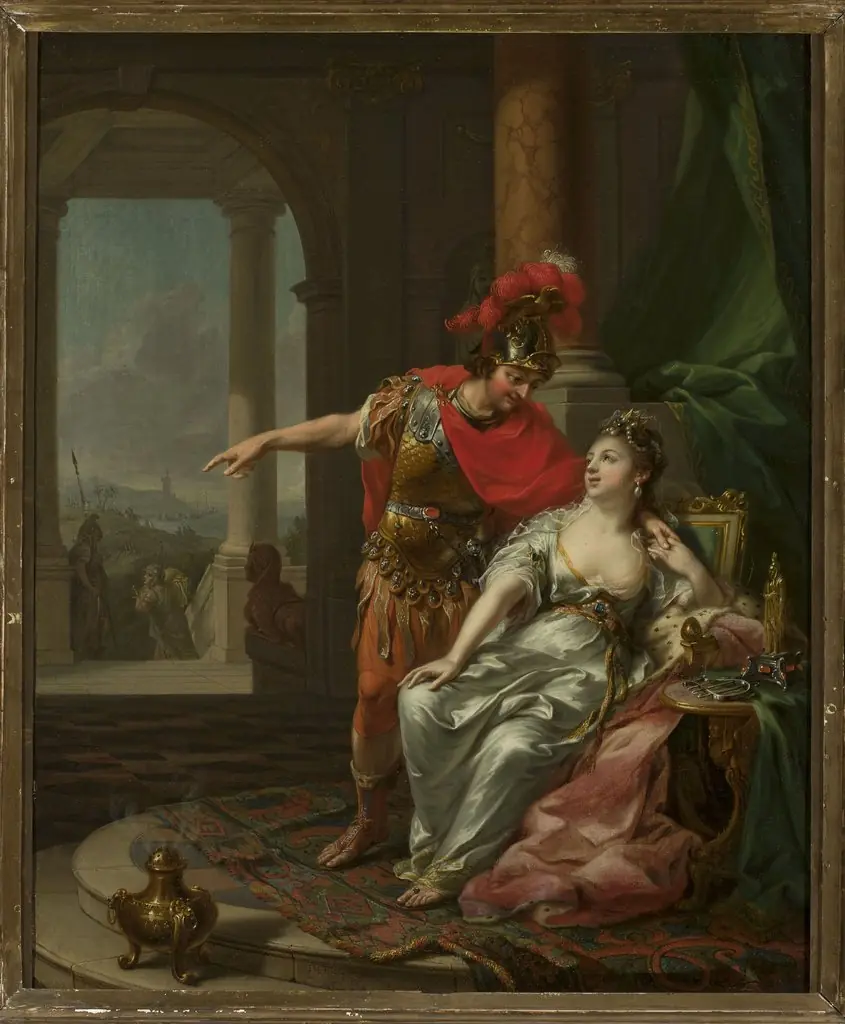 Antony and Cleopatra
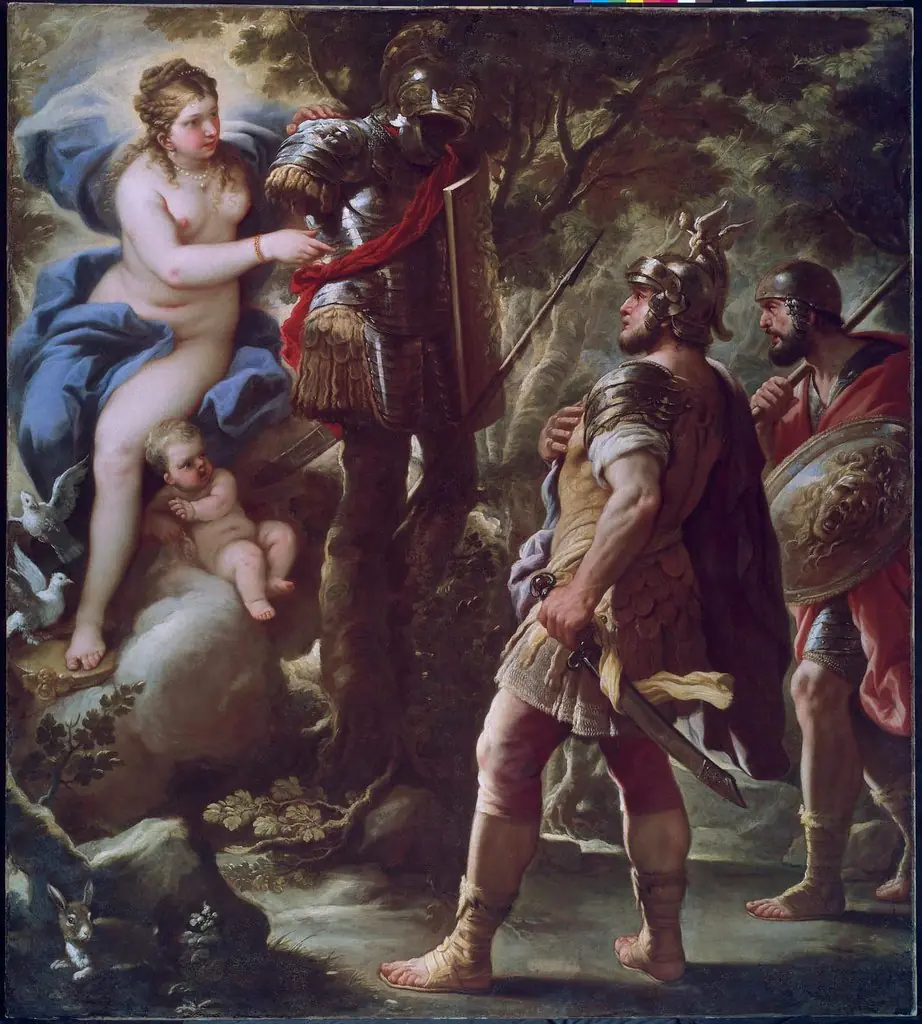 Venus Giving Arms to Aeneas
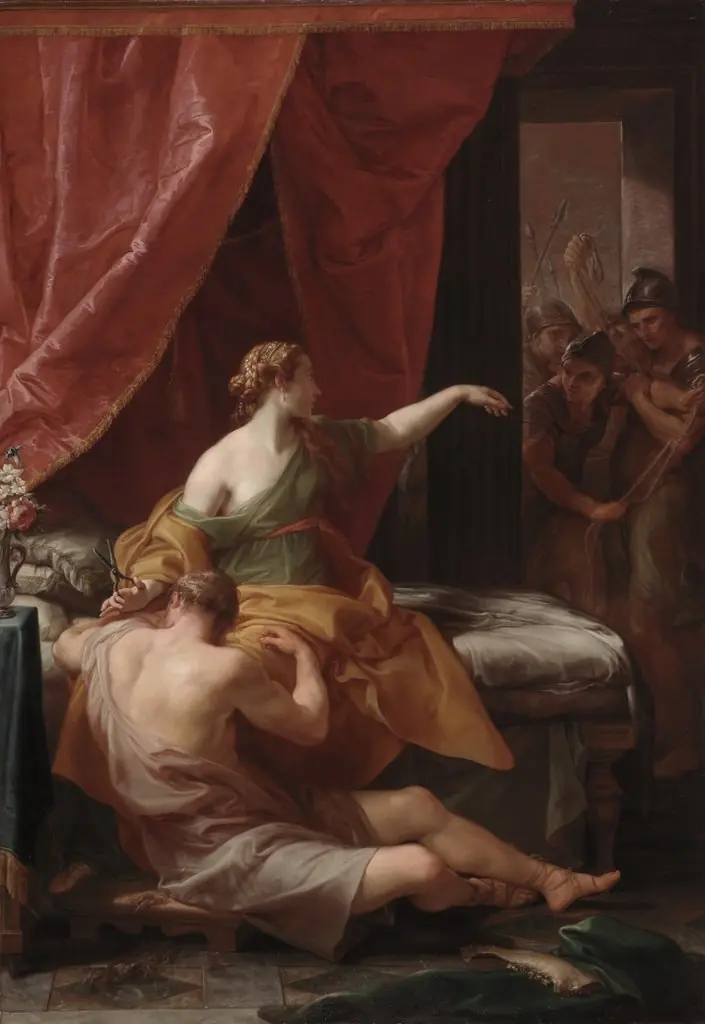 Samson and Delilah
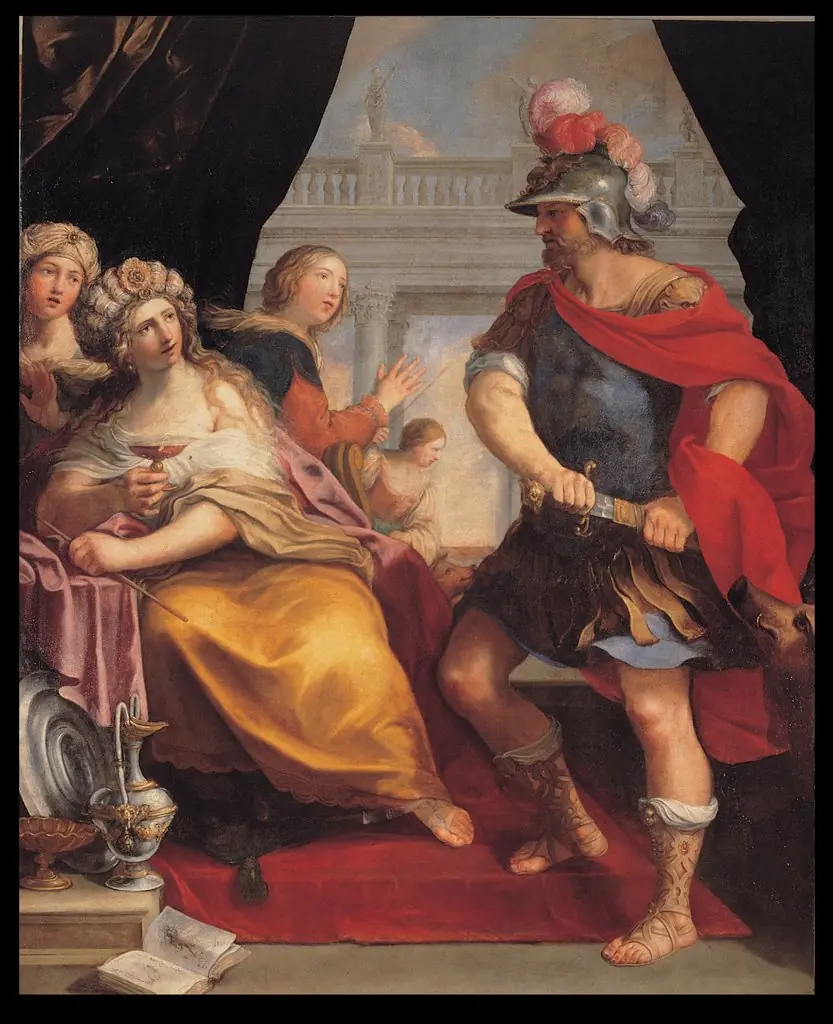 Ulysses and Circe
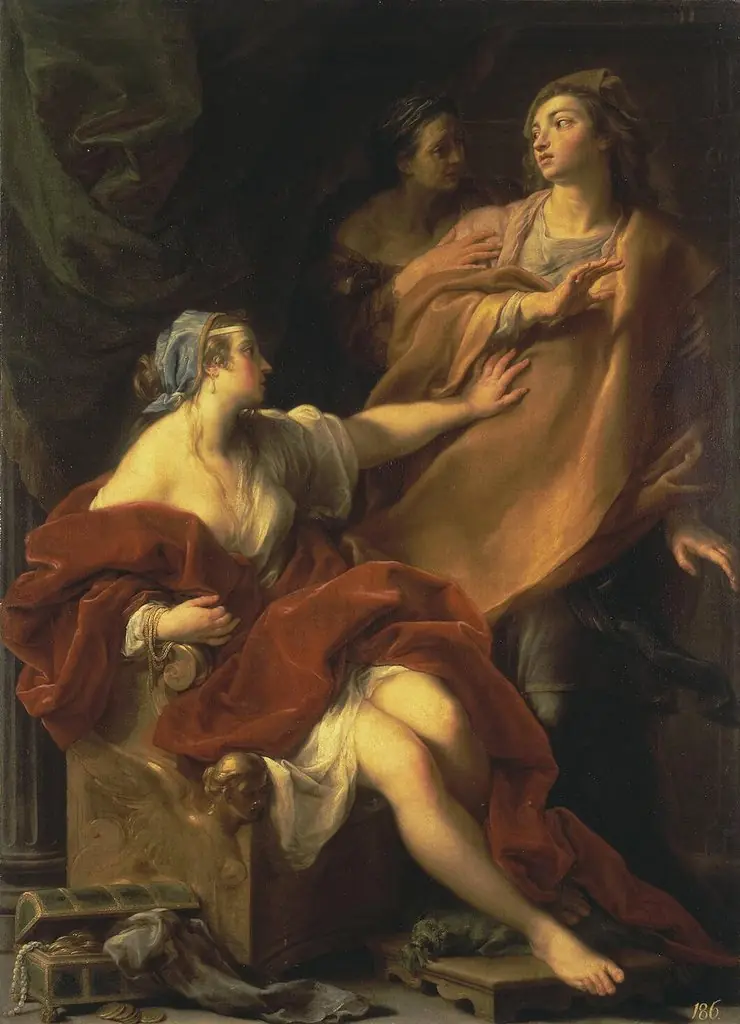 Allegory of Sensuality
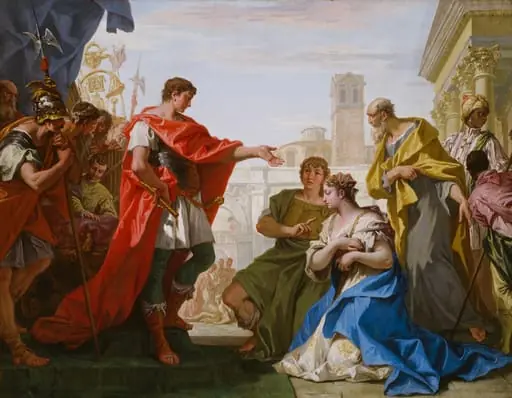 The Continence of Scipio