Artwork
Cornelis Calkoen on his Way to his Audience with Sultan Ahmed III
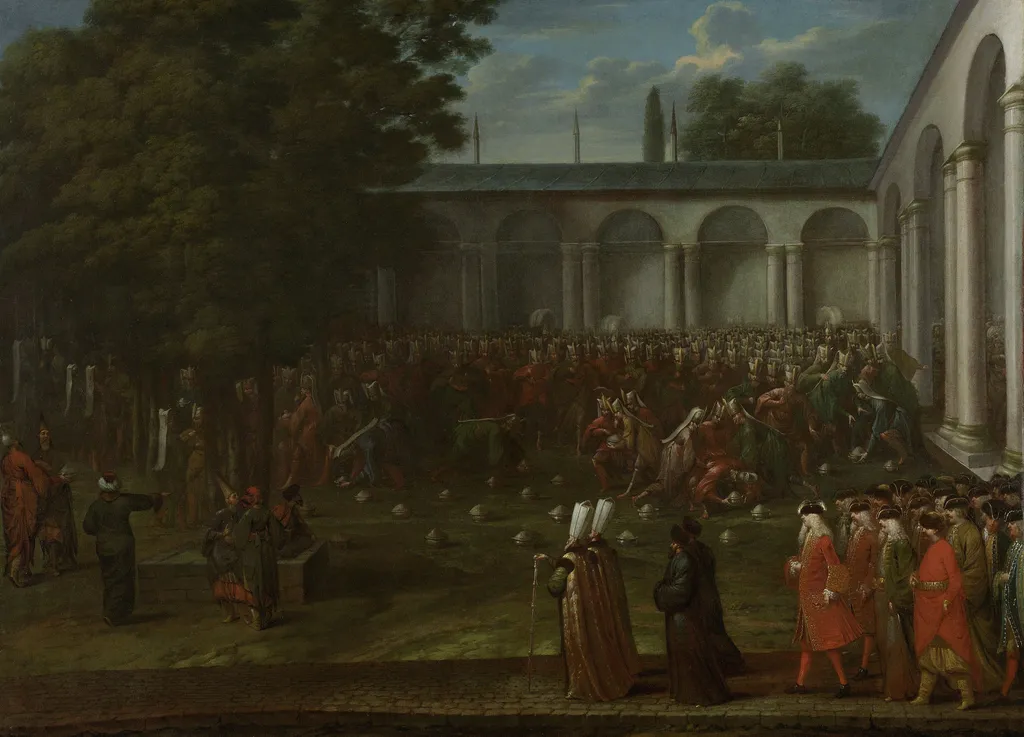
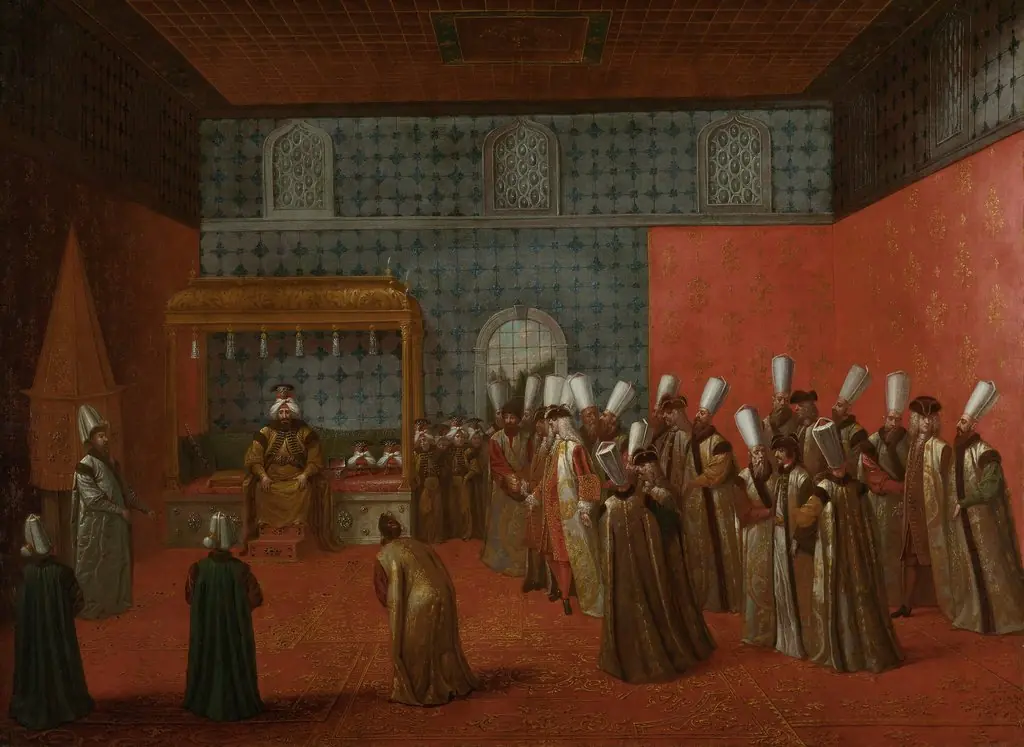
Cornelis Calkoen on his Way to his Audience with Sultan Ahmed III is an oil painting by the Rococo painting artist Jean Baptiste Vanmour. It is held in the collection of the Rijksmuseum.
About this work
Subject & Meaning
The work functions as a visual record of this high-level encounter, emphasizing the status of the Dutch envoy and the formal nature of the meeting.
The painting depicts Cornelis Calkoen proceeding to an official audience with Sultan Ahmed III. As the central figure, Calkoen is shown in the act of approaching the Ottoman ruler, capturing a specific diplomatic moment between the Dutch Republic and the Ottoman Empire. The work functions as a visual record of this high-level encounter, emphasizing the status of the Dutch envoy and the formal nature of the meeting.
By portraying the journey toward the Sultan rather than the audience itself, the composition highlights the anticipation and protocol inherent in such international relations during the eighteenth century.
Technique & Style
Created in 1750, this work is an oil painting executed on a canvas support. The piece measures 91.5 cm in height and 125 cm in width. As a formal example of Jean Baptiste Vanmour's output, the painting depicts the historical figure Cornelis Calkoen en route to an audience with Sultan Ahmed III.
The medium and dimensions are consistent with the classification of the work as a painting held within the Rijksmuseum collection.
History & Provenance
Created in 1750, this oil painting on canvas was commissioned to depict Cornelis Calkoen en route to an audience with Sultan Ahmed III. The work was originally owned by Calkoen himself before passing to Nicolaas Calkoen. Over time, the painting entered several significant Dutch collections, including the Directie van de Levantse handel en de Navigatie op de Middellandse Zee, the Koninklijk Kabinet van Zeldzaamheden, and the Nederlandsch Museum voor Geschiedenis en Kunst. It is currently held in the collection of the Rijksmuseum.
The painting Cornelis Calkoen on his Way to his Audience with Sultan Ahmed III is held in the collection of the Rijksmuseum in Amsterdam. It is part of the museum's holdings related to the Directie van de Levantse handel en de Navigatie op de Middellandse Zee, as well as the Koninklijk Kabinet van Zeldzaamheden and the Nederlandsch Museum voor Geschiedenis en Kunst. The work, created in 1750, depicts Cornelis Calkoen and Sultan Ahmed III.
No specific accession or inventory number is provided in the available sources, nor is any exhibition history recorded for this piece.
Context
The painting reflects 18th-century diplomatic exchanges between the Dutch Republic and the Ottoman Empire, with its creation tied to the prominence of Jean Baptiste Vanmour, a French artist active in Istanbul who documented Ottoman court life for European audiences. Its depiction of Cornelis Calkoen illustrates the role of Dutch merchants and envoys within the Levant trade network, a context central to the operational history of the Dutch East India Company and the broader colonial enterprise. The work’s presence in the Rijksmuseum collection underscores its significance as a material artifact of early modern cross-cultural encounters and European representations of Ottoman authority.
Overview
Around 1750, Jean Baptiste Van Mour, a Flemish‑French artist active in the early eighteenth century, painted an oil work that records a diplomatic encounter in the Ottoman capital. The canvas captures Cornelis Calkoen, a Dutch envoy, as he proceeds toward an audience with Sultan Ahmed III during the period known as the Tulip Era.
Own this work as a print
Artist & collection
Artist
Jean Baptiste Vanmour or Van Mour (9 January 1671 – 22 January 1737) was a Flemish-French painter, remembered for his detailed portrayal of life in the Ottoman Empire during the Tulip Era and the rule of Sultan Ahmed III.

 Die Grundsteinlegung des Concordiatempels in Laxenburg
 Market with temple and maypole
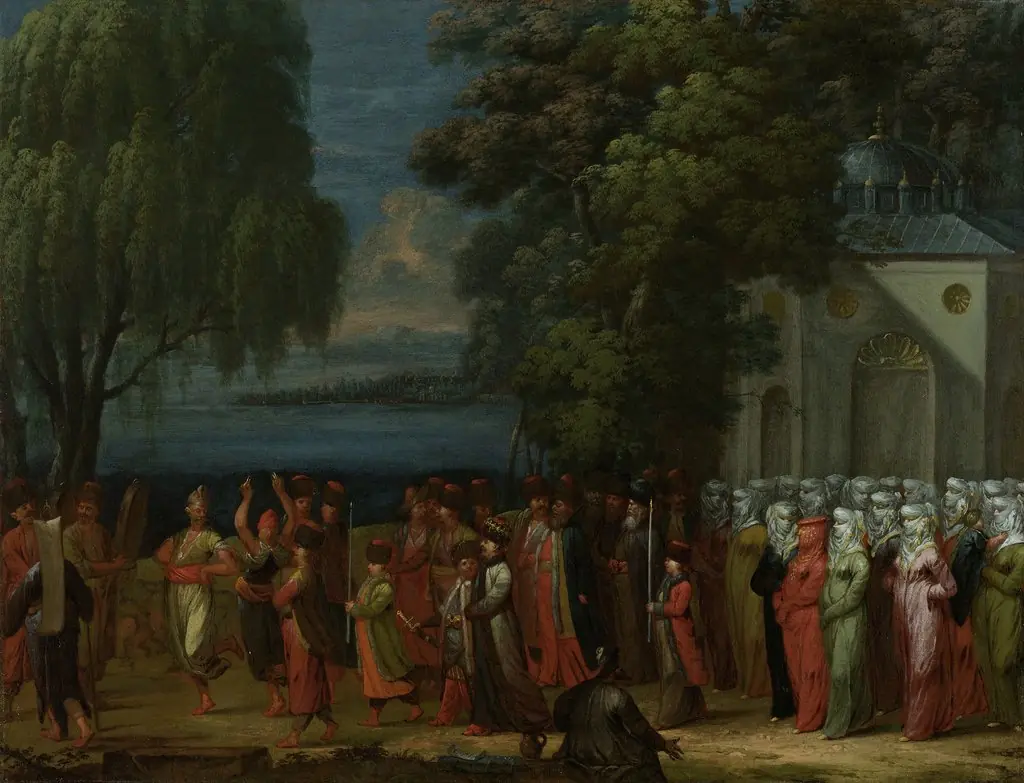 Armenian Wedding
 Fairground with Crenellated Keep
 El xarlatà
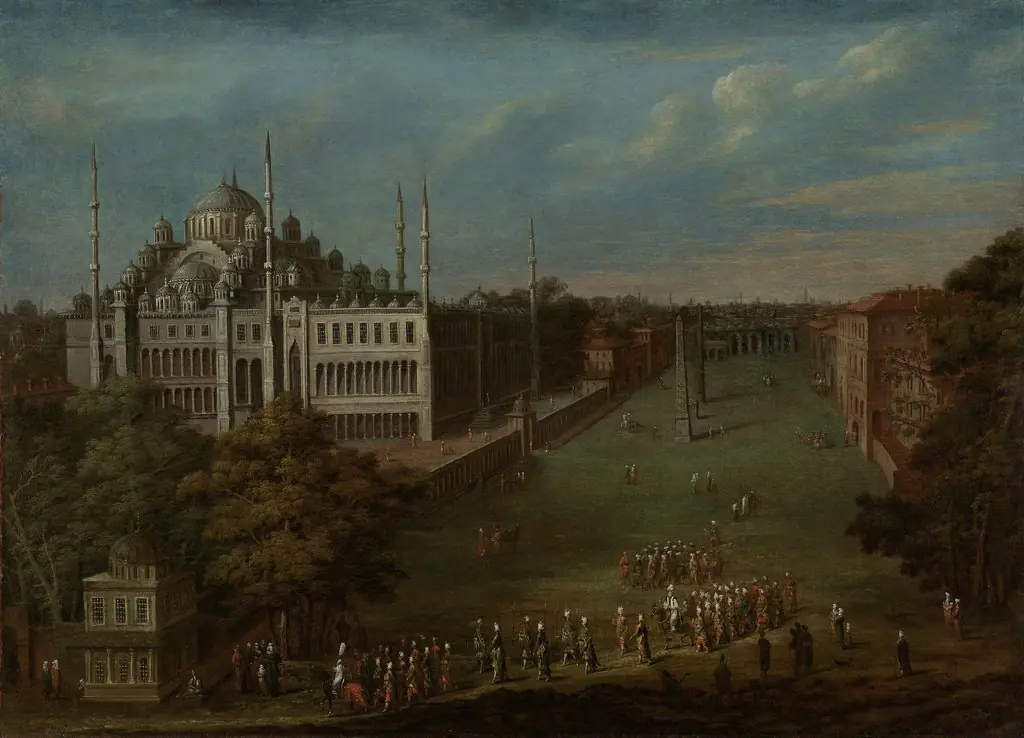 The Grand Vizier Crossing the Atmeydanı (Horse Square)
 Ansicht von Neapel vom Palazzo di Capodimonte (Im Vordergrund Ferdinand IV. als Kind mit Gefolge beim Ausritt)
 "Madrid Fair in Cebada Square"
 Cavalcade of the Knights of the Golden Fleece leaving the Palace of Brussels