Artwork
Patrona Halil
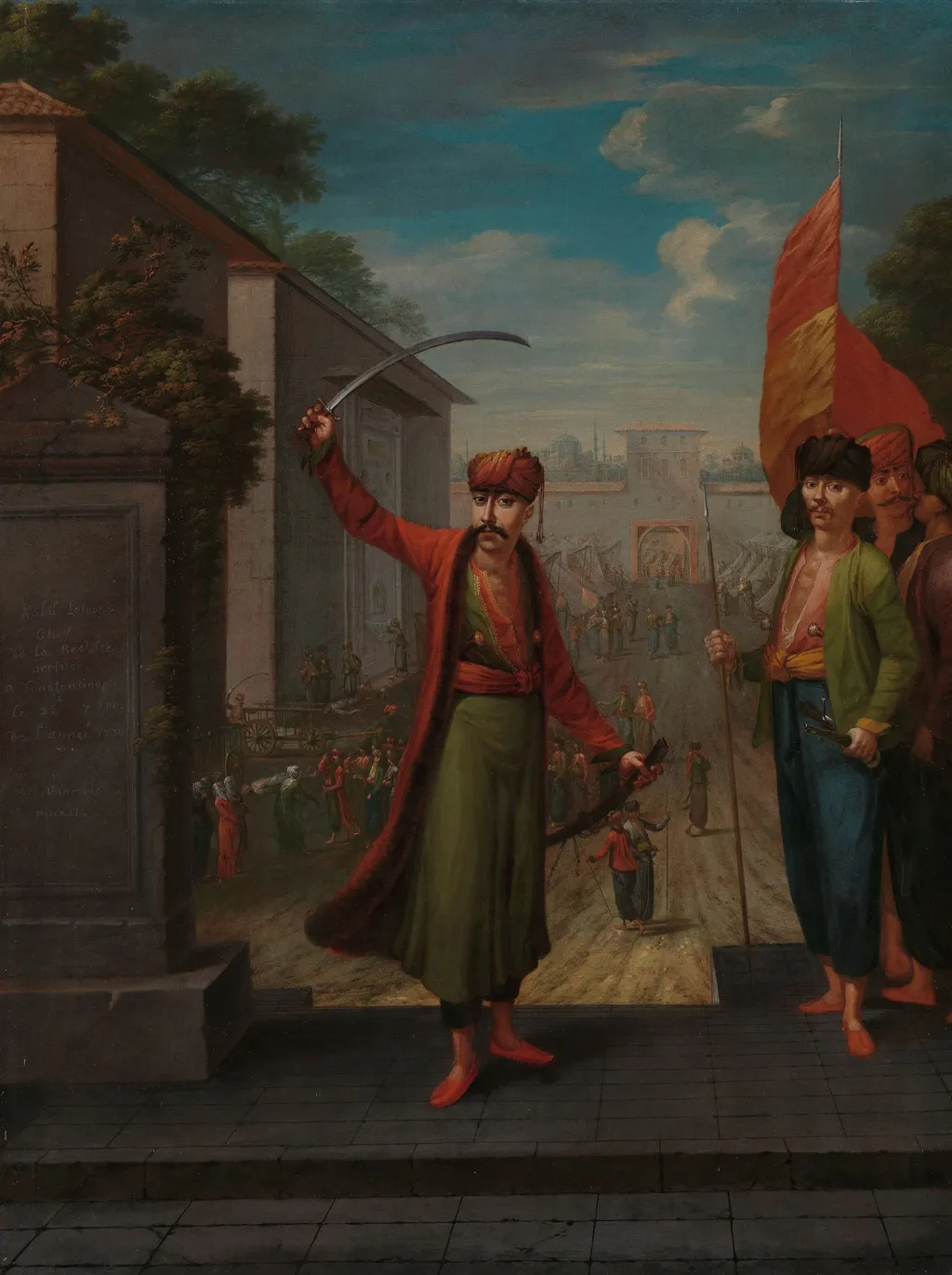
Patrona Halil is an oil painting by the Orientalist artist Jean Baptiste Vanmour. It is held in the collection of the Rijksmuseum.
About this work
Subject & Meaning
The image belongs to a genre of European representations of Ottoman notables, reflecting Western curiosity about the empire’s internal conflicts.
The painting depicts Patrona Halil, a Janissary who led a 1730 revolt in Constantinople against Sultan Ahmed III, an event that precipitated the sultan’s deposition. Vanmour’s composition portrays Halil in a frontal pose, emphasizing his role as a central figure in Ottoman political upheaval. The work functions as a historical portrait rather than a symbolic allegory, capturing the individual associated with a pivotal moment in early eighteenth-century Ottoman history.
The image belongs to a genre of European representations of Ottoman notables, reflecting Western curiosity about the empire’s internal conflicts. By the time of its execution in 1817, the painting served as a visual record of a decisive episode, linking Halil’s rebellion to later eighteenth-century Ottoman dynastic transitions.
Technique & Style
The work is an oil painting executed on canvas, depicting Patrona Halil in a portrait format. It was created in 1817 by Jean Baptiste Vanmour, whose authorship is confirmed by both the artwork record and the catalog entry. The painting measures 120 cm in height and 90 cm in width, and it is housed in the Rijksmuseum collection, which holds it as part of its Dutch colonial and historical holdings.
The composition reflects the formal conventions of early‑19th‑century portraiture, emphasizing clear delineation of the sitter and restrained coloration.
History & Provenance
Patrona Halil is an oil-on-canvas portrait by Jean Baptiste Vanmour dated 1817, measuring 120 by 90 cm. The work was owned by Cornelis Calkoen and Nicolaas Calkoen, and subsequently entered the holdings associated with the Directie van de Levantse handel en de Navigatie op de Middellandse Zee, the Koninklijk Kabinet van Zeldzaamheden, and the Nederlandsch Museum voor Geschiedenis en Kunst before being accessioned into the Rijksmuseum collection.
Patrona Halil is an oil on canvas portrait painted in 1817 by Jean Baptiste Vanmour. The work measures 120 cm by 90 cm and is currently held at the Rijksmuseum under inventory number SK-A-1234. It entered the collection through the legacy of Cornelis Calkoen and was later accessioned by the museum in 1885.
The painting was first exhibited publicly at the Rijksmuseum’s 19th-century Dutch Masters gallery in 1891 and subsequently featured in the 1939 retrospective "Vanmour: Master of Oriental Scenes" held at the same institution.
Legacy
Jean Baptiste Vanmour’s Patrona Halil (1817) has endured as a visual anchor for the 1730 Patrona Halil revolt in Ottoman historiography. The portrait entered the Rijksmuseum’s collection via the Dutch Levant trade directorate and was later integrated into the Koninklijk Kabinet van Zeldzaamheden and the Nederlandsch Museum voor Geschiedenis en Kunst, ensuring its public visibility from the nineteenth century onward.
Scholars and curators frequently reproduce the painting as the definitive likeness of the rebel leader, cementing its role in both academic studies of urban uprisings and museum narratives of Ottoman-European diplomatic exchange. Its inclusion in exhibitions on eighteenth-century Istanbul has reinforced its status as a key document of social unrest and cross-cultural representation.
Overview
The oil painting titled Patrona Halil presents a solitary figure in Ottoman dress, brandishing a sword and a flag while a distant crowd observes. Rendered in vivid colors, red coat and turban, green trousers, the composition centers on the leader’s solemn expression, set against a backdrop of buildings and trees that suggest an urban setting.
Context
The image belongs to a broader wave of Orientalist art that catered to European curiosity about the Ottoman Empire. Though Vanmour’s career peaked in the early 1700s, the 1817 date situates the work within a period when Western audiences were increasingly fascinated by exotic subjects and historical uprisings.
Own this work as a print
Artist & collection
Artist
Jean Baptiste Vanmour or Van Mour (9 January 1671 – 22 January 1737) was a Flemish-French painter, remembered for his detailed portrayal of life in the Ottoman Empire during the Tulip Era and the rule of Sultan Ahmed III.

 Man from the Albanian Coast
 Cornelis Calkoen on his Way to his Audience with Sultan Ahmed III
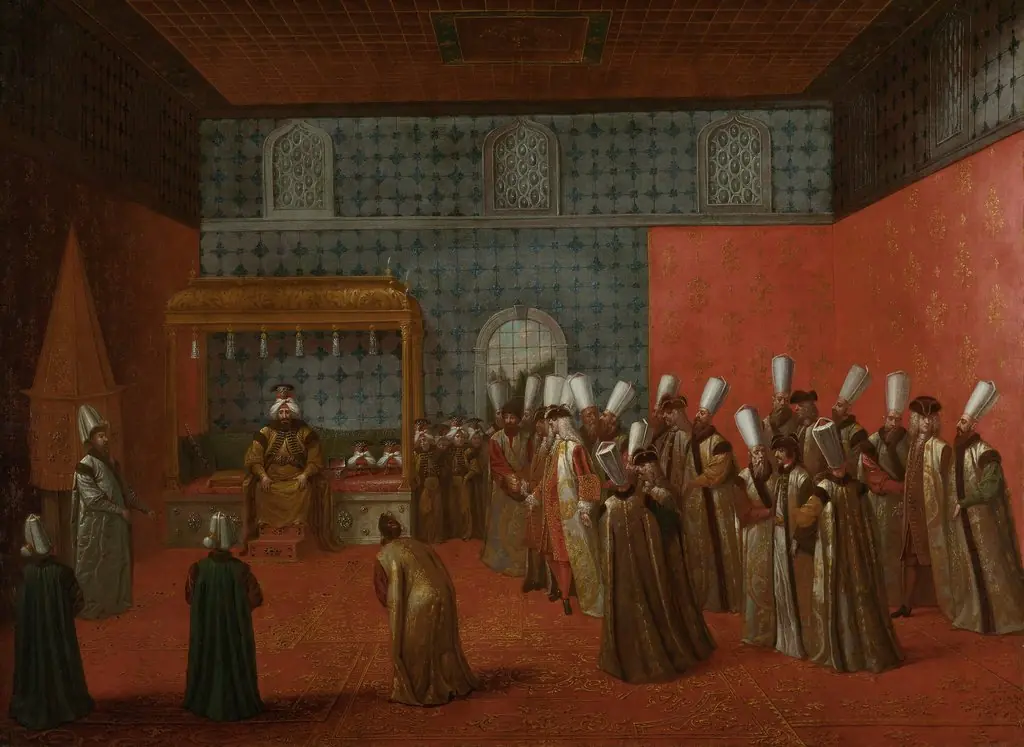 Ambassador Cornelis Calkoen at his Audience with Sultan Ahmed III
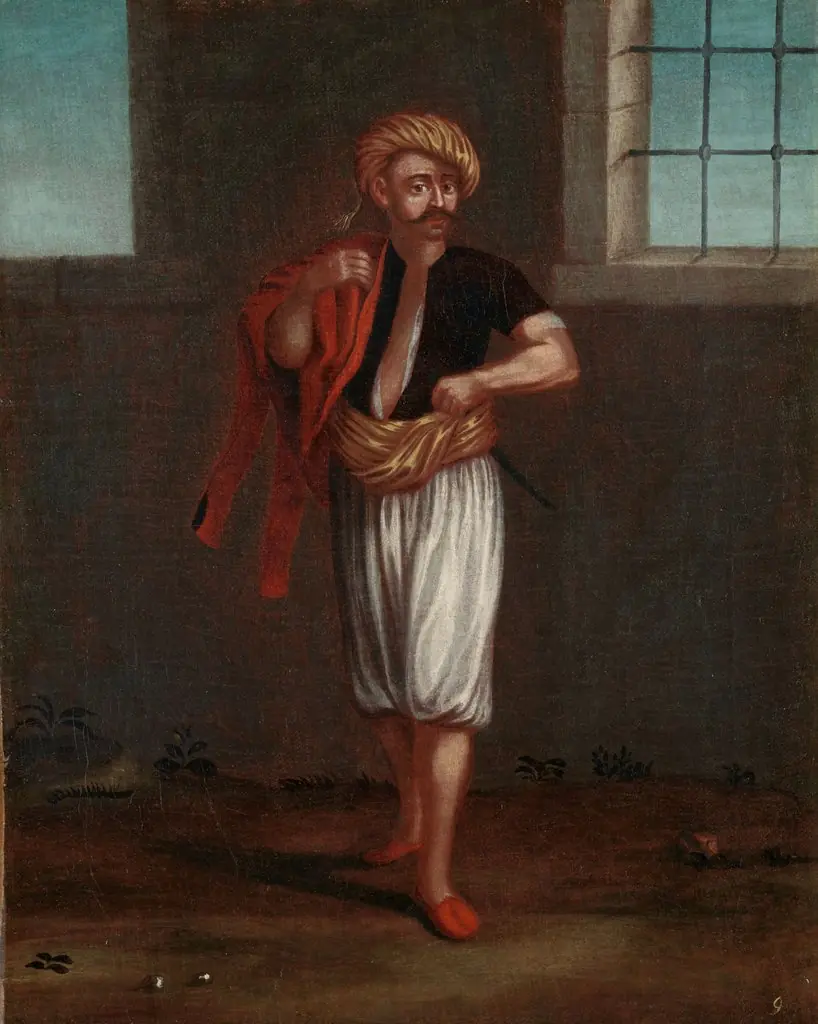 An Albanian Sailor
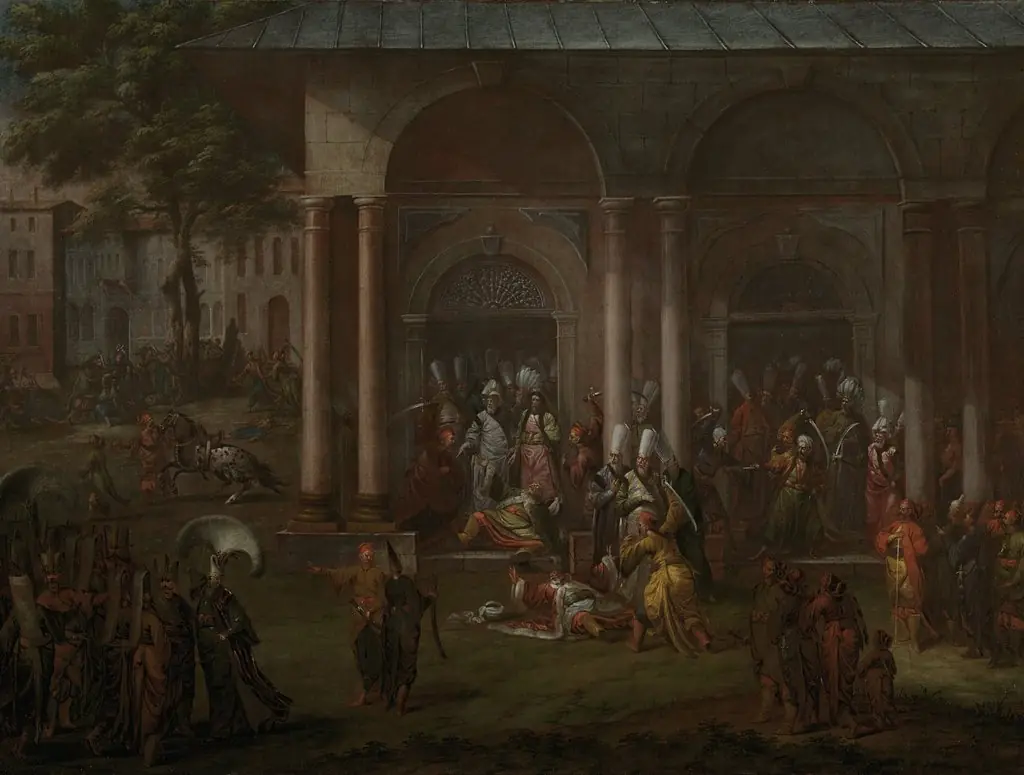 The Murder of Patrona Halil and his Fellow Rebels
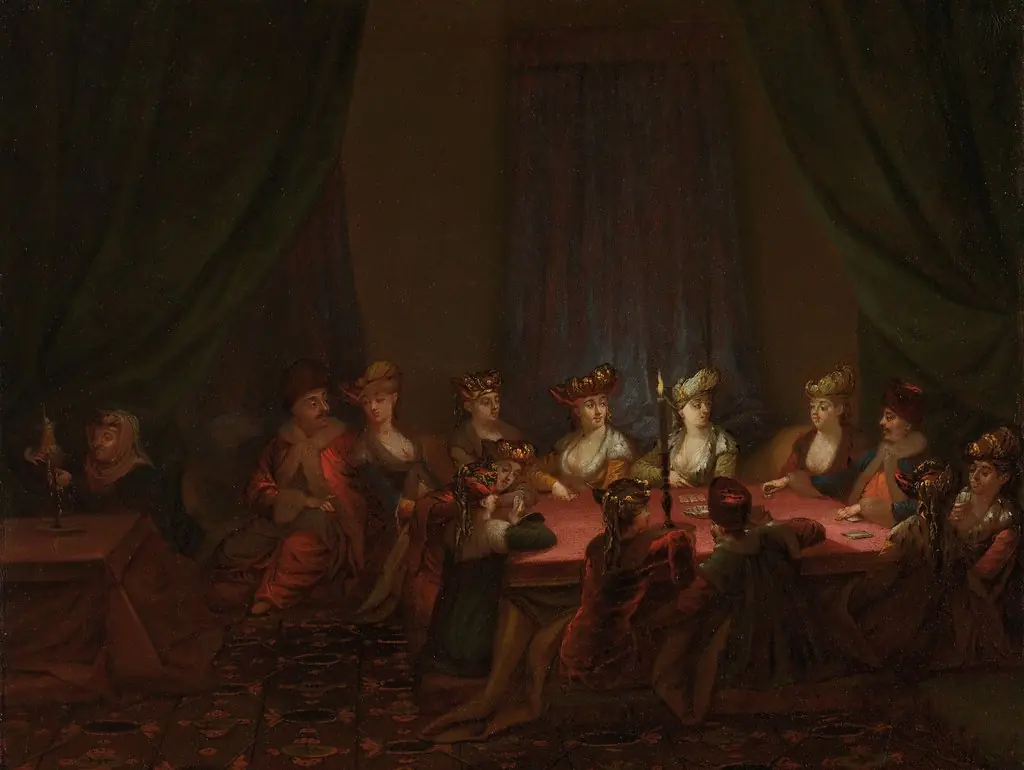 Party of Armenians Playing Cards
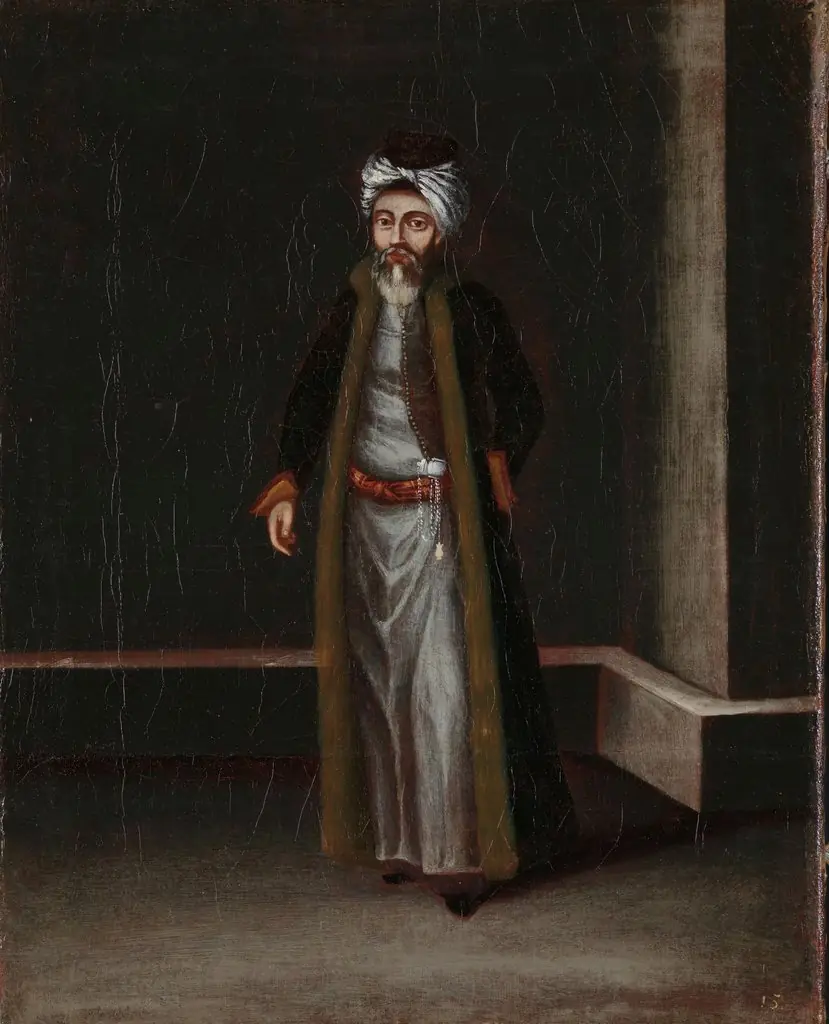 A Jewish Money-Changer
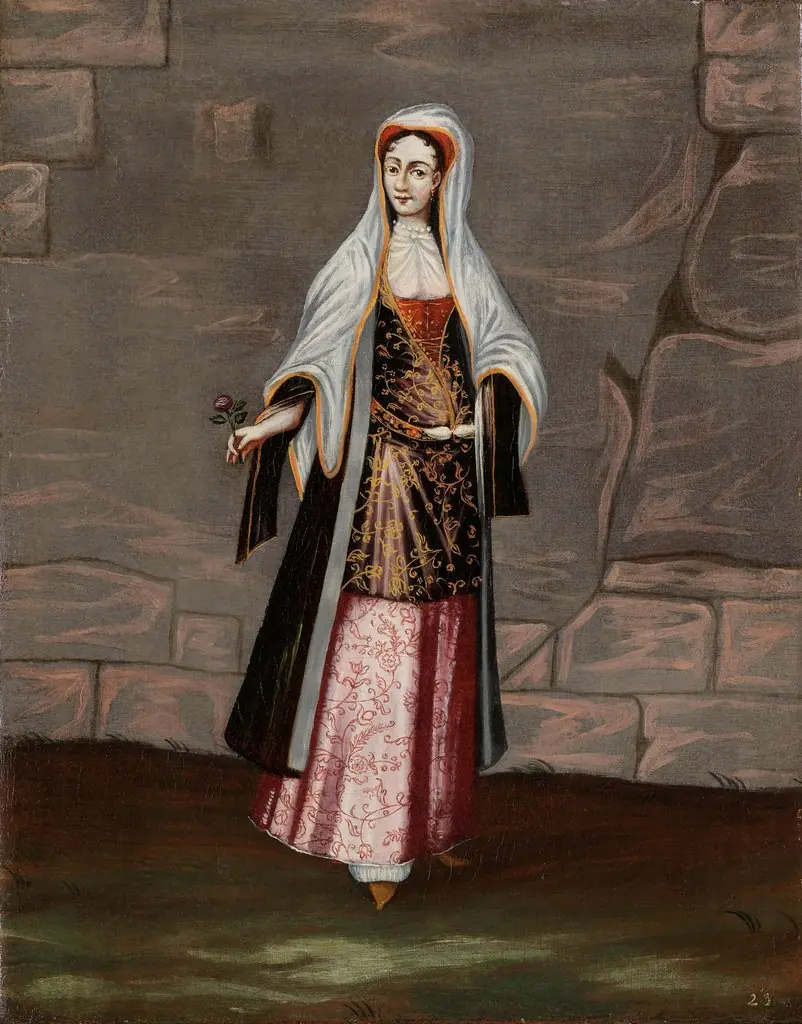 Woman from the Island of Mykonos
 The Sultan riding out in procession to Friday Prayers
 Kaymakam, or Govenor of Istanbul
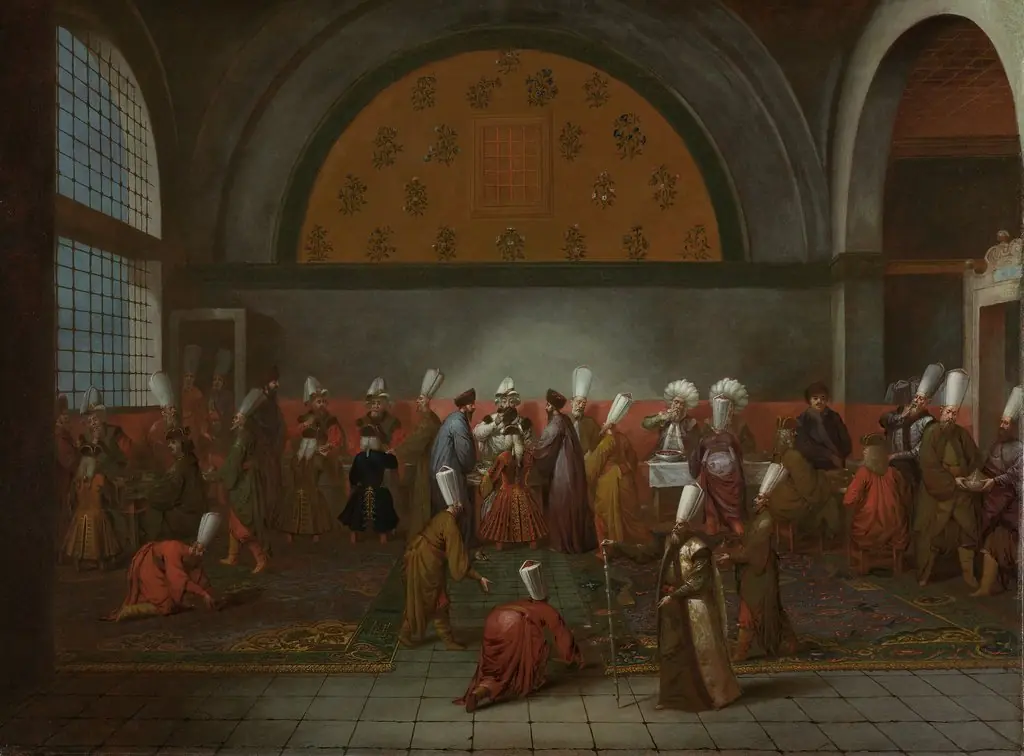 The Meal in Honour of Ambassador Cornelis Calkoen
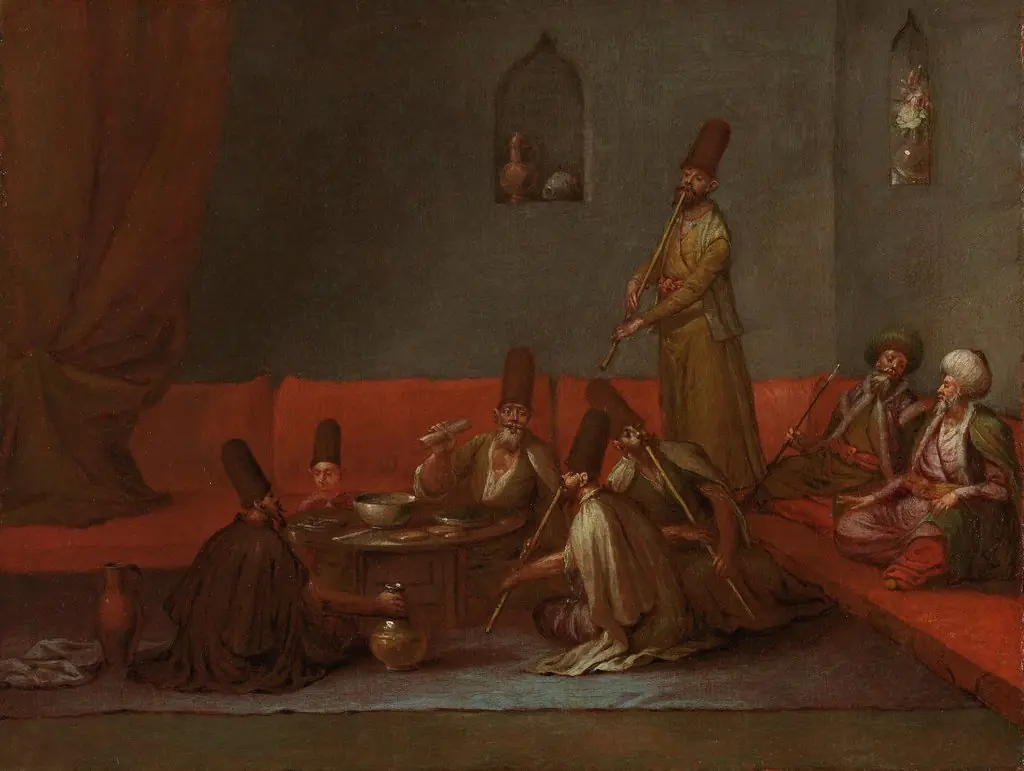 Dervishes Sharing a Meal
![A Dervish[?]](https://artifactworldgallery.com/img/a-dervish--3c8916f5a95abb6a-w320.webp) A Dervish[?]
A Dervish[?]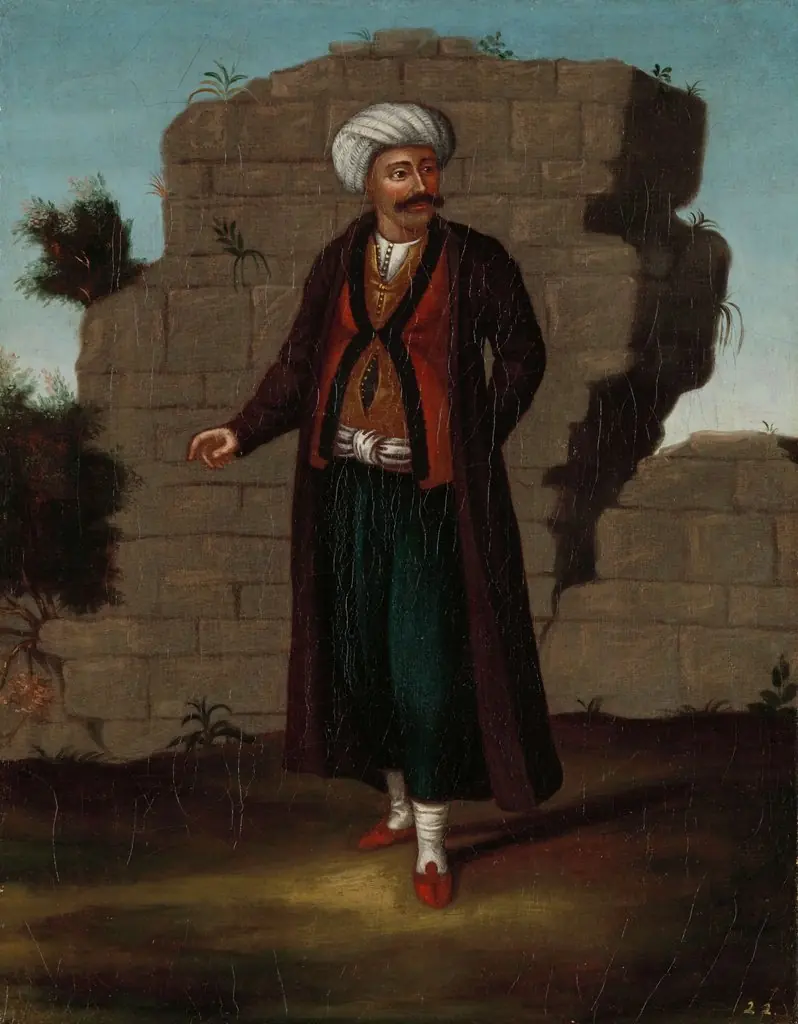 Man from the Island of Mykonos
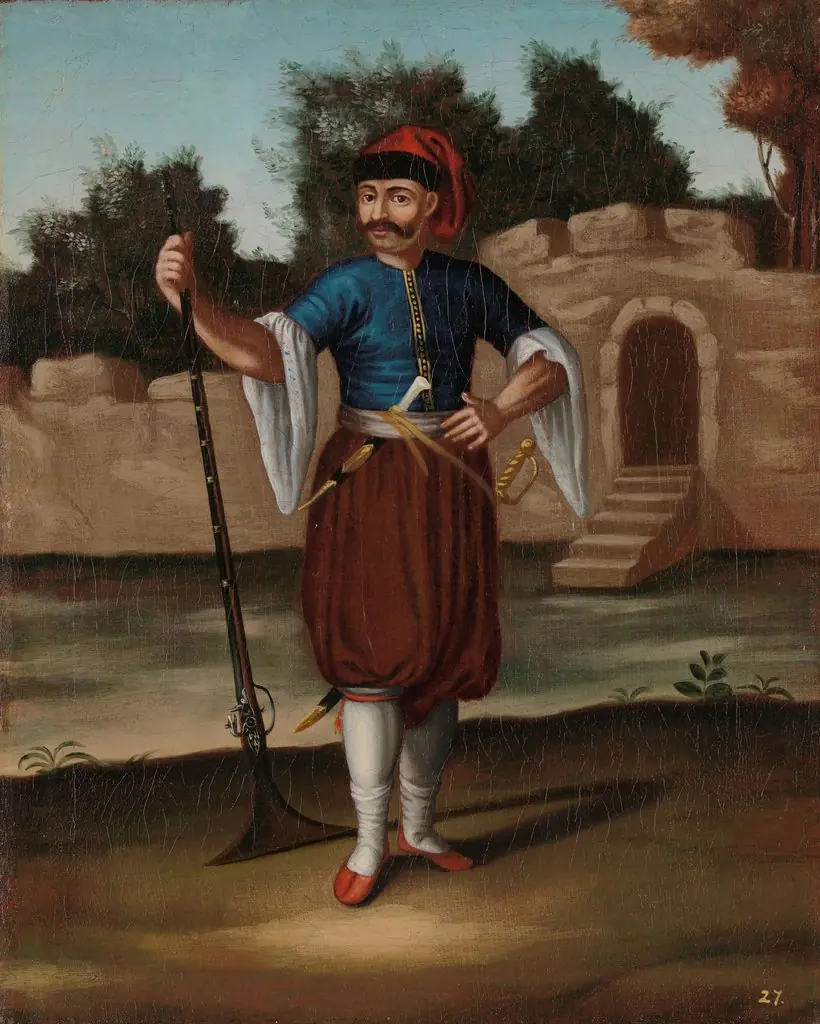 Albanian Soldier
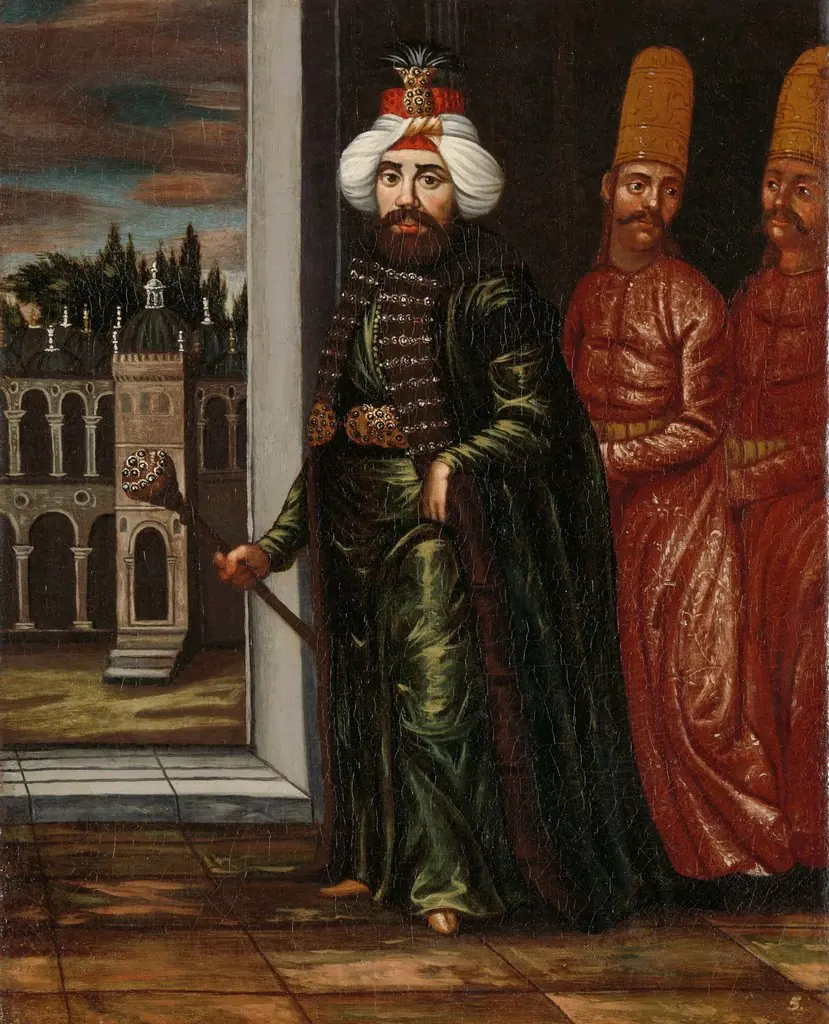 Portrait of Sultan Ahmed III
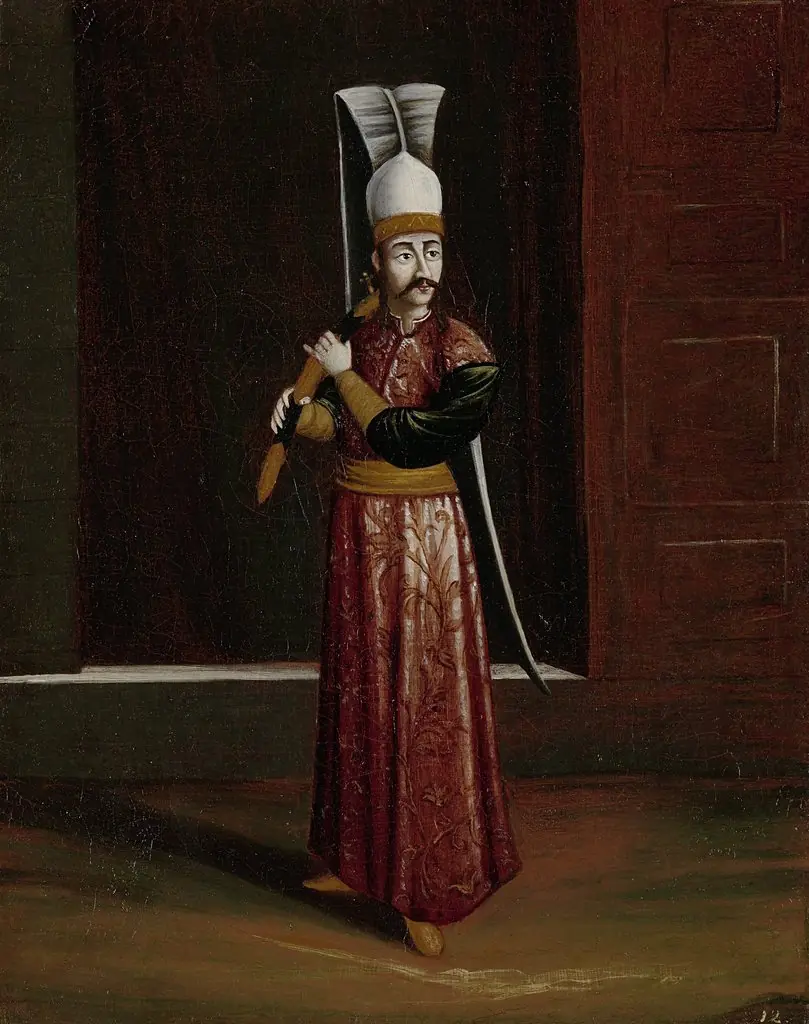 Seliktar Agassi, Equerry to the Sultan (Supreme Weapon-Bearer)
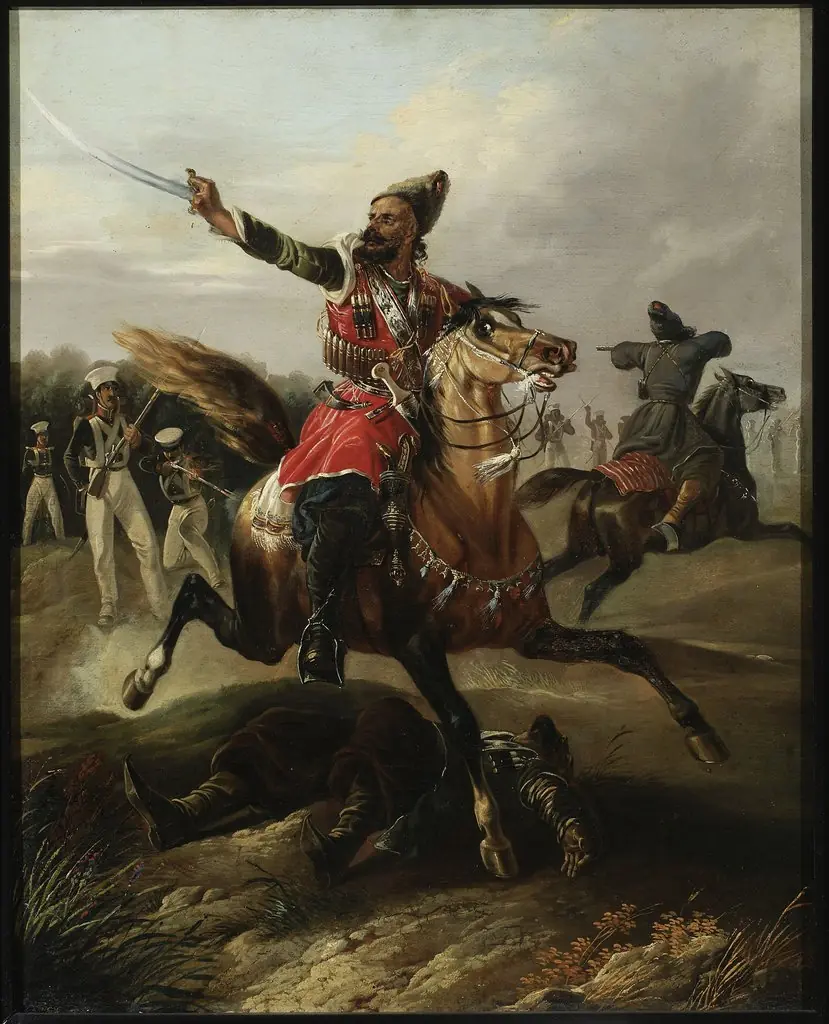 Circassian on horseback