Artwork
Deer in Japanese Landscape
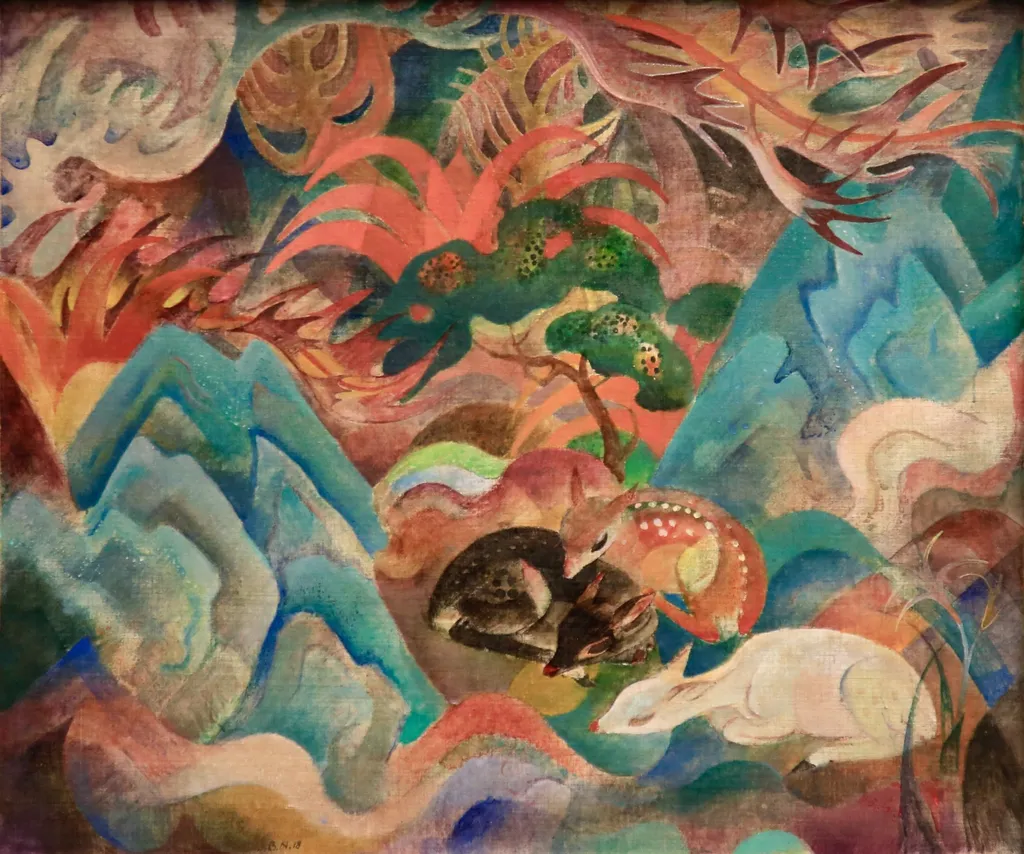
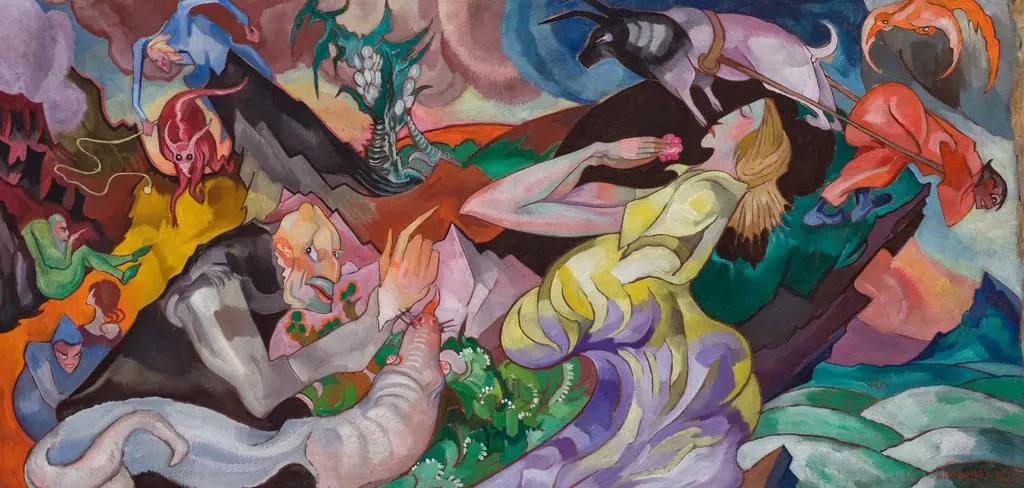
Deer in Japanese Landscape is an oil painting by the Japonisme artist Jean-Bloé Niestlé. It dates from 1918 and is held in the collection of the Städel Museum.
About this work
Overview
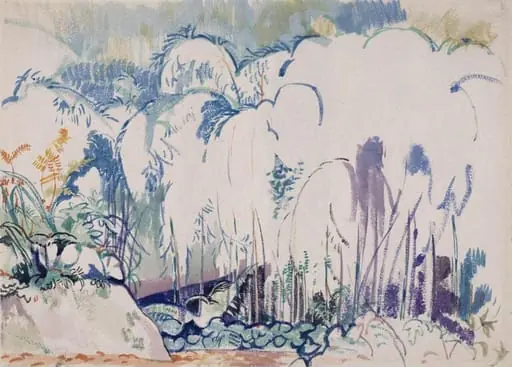
Jean‑Bloé Niestlé’s 1918 oil painting titled Deer in Japanese Landscape presents a tranquil natural scene. The composition places a group of deer in the foreground, set against distant mountains and a forested backdrop. The work balances the figures with the surrounding environment, creating a unified visual field that emphasizes calm and order.
Subject & Meaning
The central focus of the canvas is a herd of deer, rendered in varied postures that suggest gentle movement within the stillness of the landscape. By juxtaposing the animals with a stylized Japanese‑inspired setting, Niestlé evokes themes of harmony between wildlife and nature, inviting contemplation of the serene coexistence of fauna and terrain.
Technique & Style
Executed in oil on canvas, the painting employs a restrained palette of muted greens, earth tones, and soft blues. Niestlé manipulates light and shadow to model the forms, giving the deer a three‑dimensional presence while imparting atmospheric depth to the distant mountains. The brushwork remains smooth, contributing to the overall sense of compositional balance.
History & Provenance
Created in the aftermath of World War I, the work entered the collection of the Städel Museum in Frankfurt, where it remains on display. Its acquisition reflects the museum’s broader interest in early twentieth‑century European landscape painting and the cross‑cultural influences evident in Niestlé’s oeuvre.
Own this work as a print
Artist & collection