Artwork
Improvisation 27 (Garden of Love II)
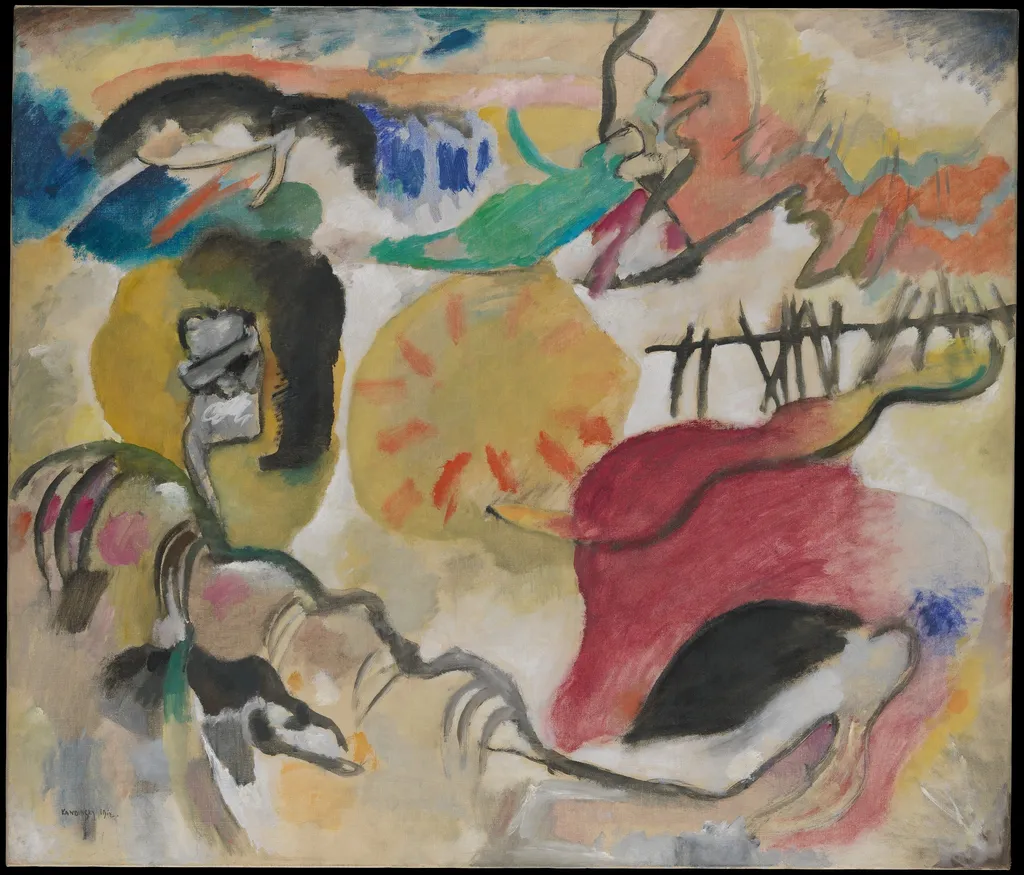
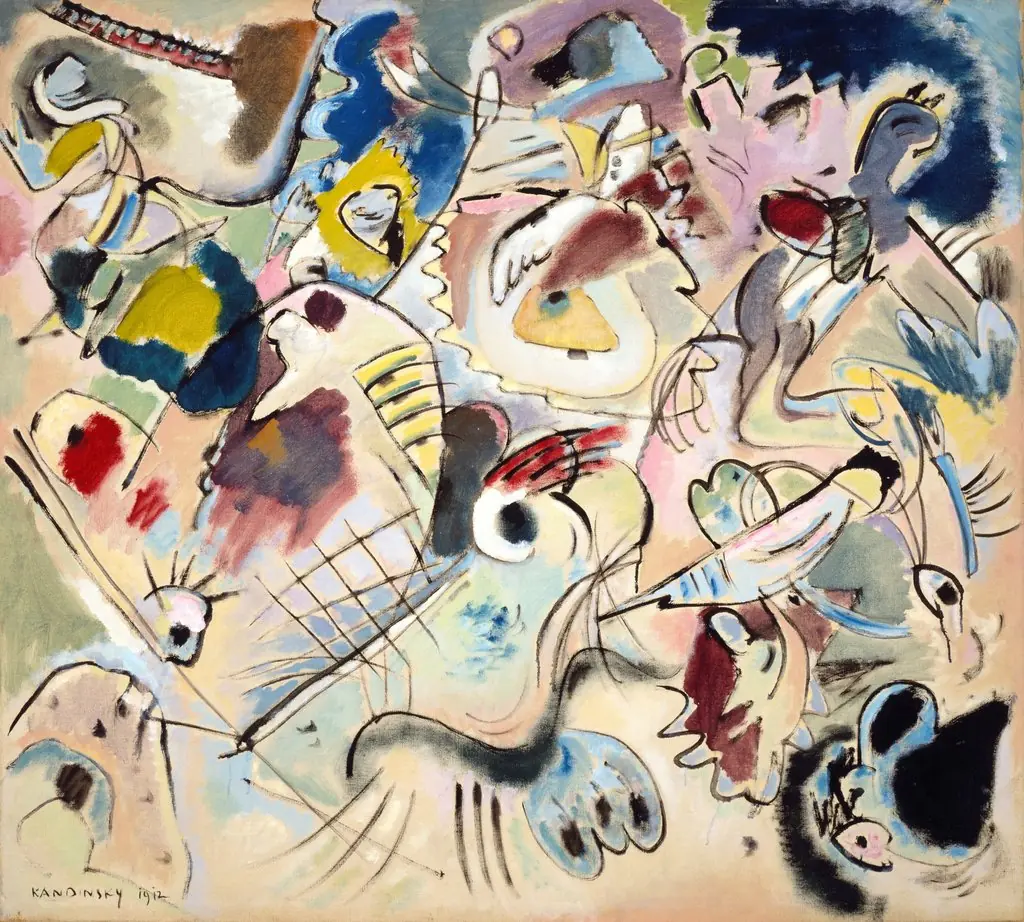
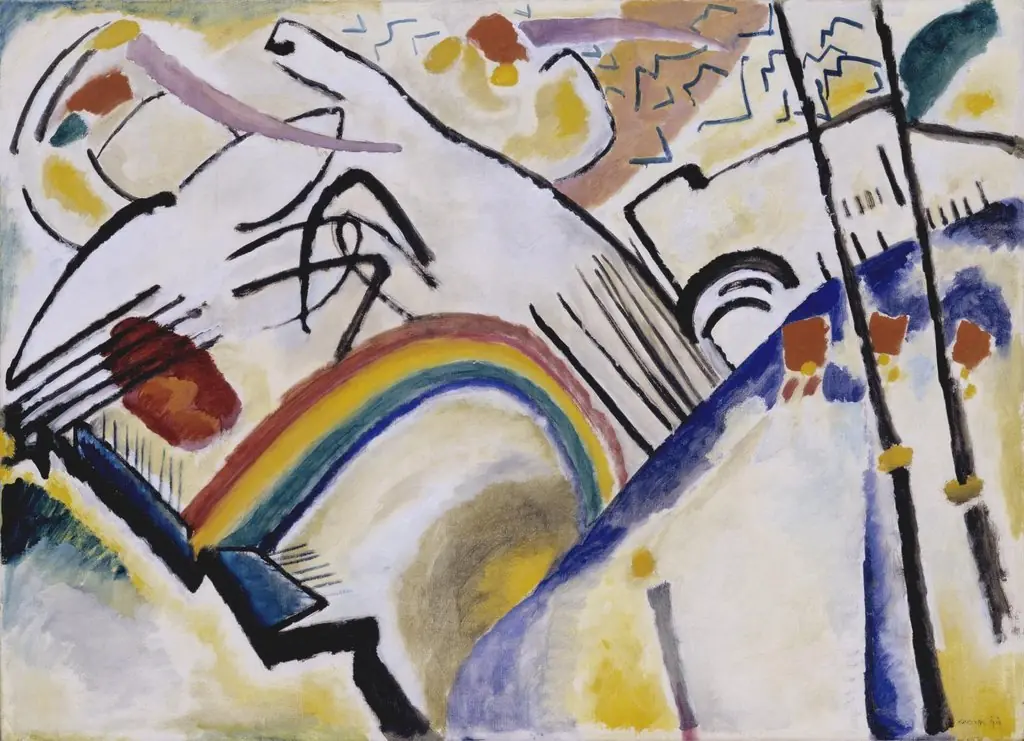
Improvisation 27 (Garden of Love II) is an oil painting by the Abstract Expressionist artist Wassily Kandinsky. It dates from 1912 and is held in the collection of the Metropolitan Museum of Art.
About this work
Subject & Meaning
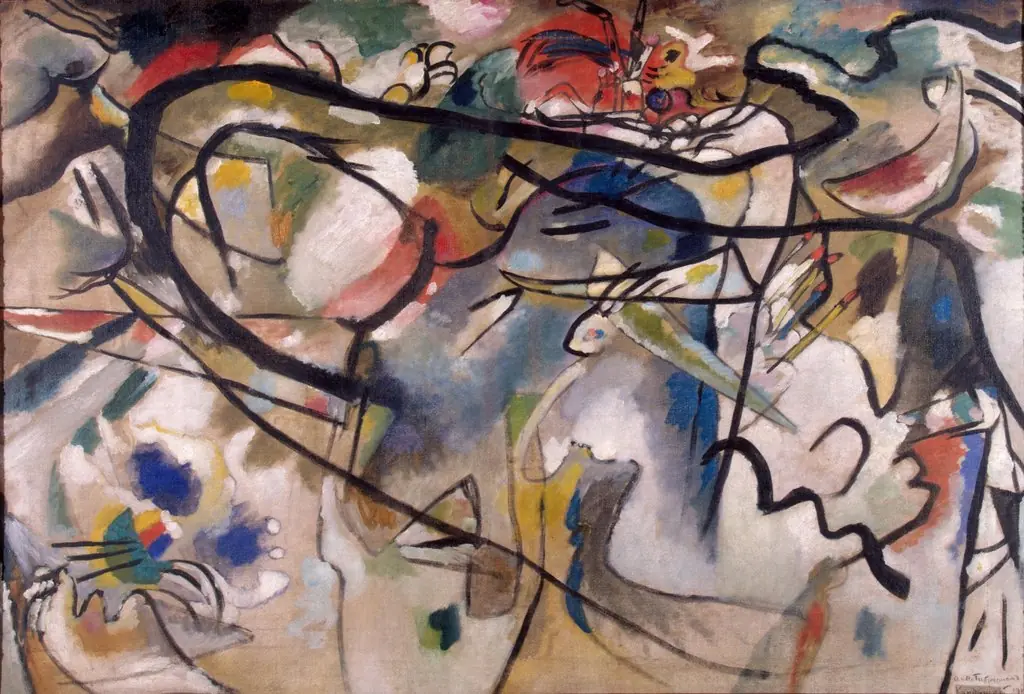
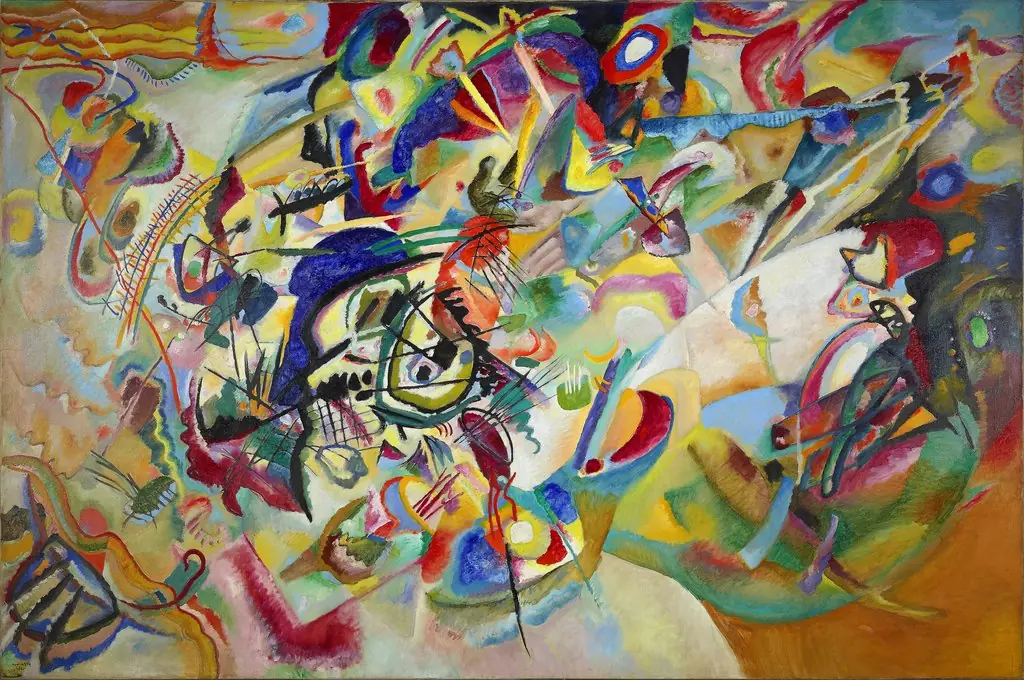
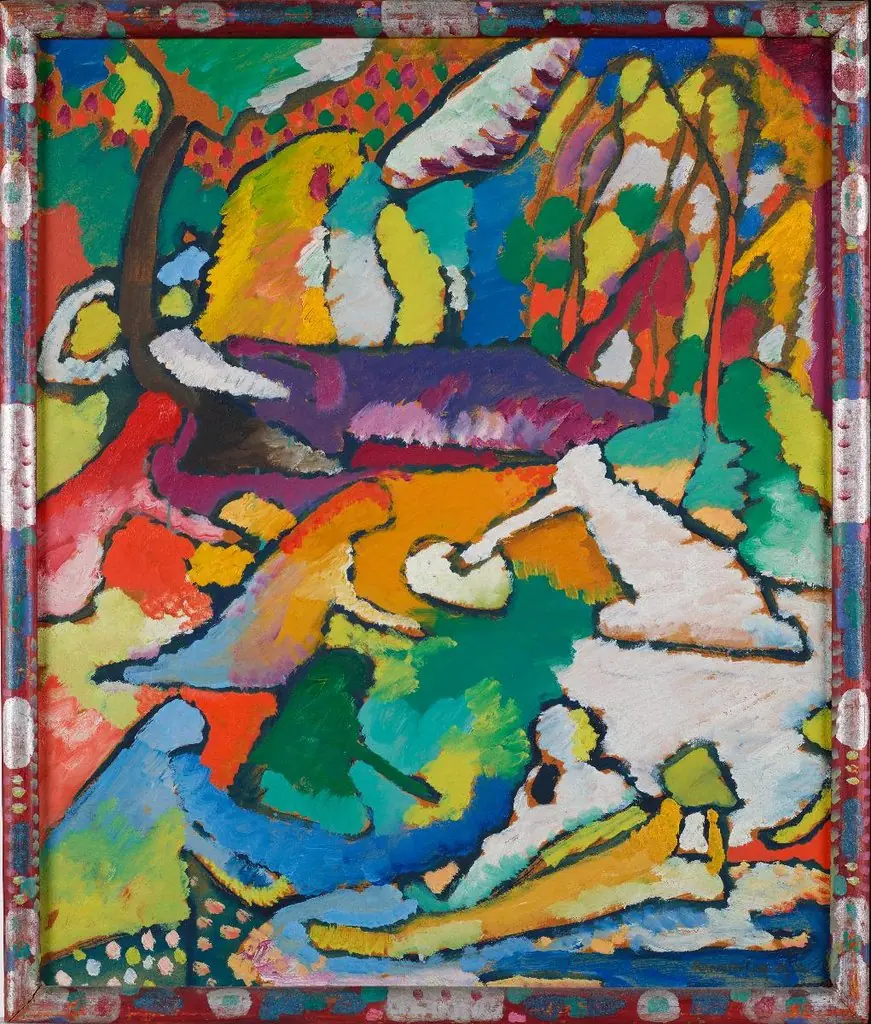
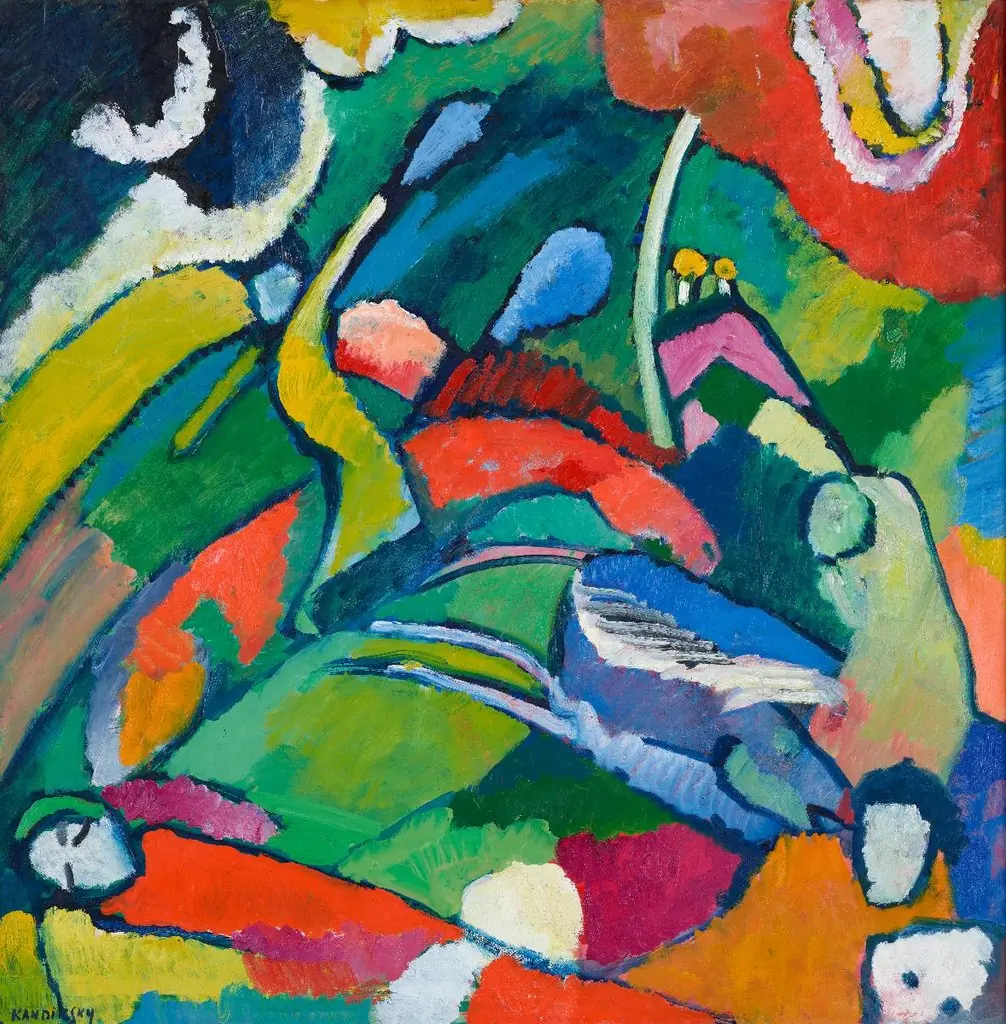
The painting shows a dominant yellow sun emitting red rays, around which three couples are arranged, a composition that alludes to the biblical Garden of Eden.
The painting shows a dominant yellow sun emitting red rays, around which three couples are arranged, a composition that alludes to the biblical Garden of Eden. Rather than rendering figures literally, Kandinsky suggests humans and animals through abstract forms that merge into unified shapes, embodying the notion of a garden of love without explicit representation. The central sun functions as a symbolic source of divine light, while the surrounding motifs, possibly a serpent, horse, and dog, remain hinted rather than defined.
Kandinsky conceived the work as a visual equivalent of music, using line and color to convey spiritual love and abstract meaning beyond naturalistic reference.
Technique & Style
Improvisation 27 (Garden of Love II) is an oil painting on canvas executed in 1912 by Wassily Kandinsky. The work employs a fluid handling of oil paint to render a composition dominated by large, simplified forms and dynamic color fields. A prominent yellow sun radiates red rays at the center, while schematic couples are suggested rather than delineated, dissolving into unified shapes that resist naturalistic description.
The palette features saturated hues, yellows, reds, and blues, applied in broad, gestural strokes that emphasize chromatic harmony over descriptive detail. The painting’s abstract idiom privileges line and color as autonomous carriers of emotional resonance, aligning with Kandinsky’s belief in a visual language akin to music. Its stylistic qualities reflect the artist’s transition toward non-objective abstraction, relying on intuitive arrangement and rhythmic balance to evoke the titular garden without literal depiction.
History & Provenance
Created in 1912, Improvisation 27 (also titled Garden of Love II) is an oil on canvas painting by Wassily Kandinsky. Shortly after its completion, the work was exhibited at the Der Sturm gallery in Berlin during the same year as part of the Blaue Reiter exhibition. In 1913, it was the sole Kandinsky piece included in the Armory Show in New York.
There, photographer and dealer Alfred Stieglitz viewed the painting and promptly acquired it for his private collection. The artwork remained in private hands until 1988, when it was acquired by the Metropolitan Museum of Art, where it is currently held. The piece reflects Kandinsky's interest in expressing emotion through abstract forms rather than naturalistic representation, utilizing a visual language comparable to music.
Improvisation 27 (Garden of Love II) is held by the Metropolitan Museum of Art, where it has been part of the collection since 1988, when the museum acquired the work. Its exhibition history begins shortly after its 1912 creation, when it was included in the important Blaue Reiter exhibition at Herwarth Walden's newly opened Der Sturm gallery in Berlin that same year. In 1913, it was the only Kandinsky painting shown at the Armory Show in New York, where Alfred Stieglitz saw it and promptly acquired it for his private collection, where it remained until the Met's 1988 purchase.
Context
Improvisation 27 (Garden of Love II) was shown shortly after completion in the Blaue Reiter exhibition at Herwarth Walden’s Der Sturm gallery in Berlin in 1912, aligning it with the group’s synesthetic ambitions to fuse sound, color, and emotion. The work’s inclusion in the 1913 Armory Show in New York positioned it at the center of early transatlantic debates on abstraction, where Alfred Stieglitz promptly acquired it for his private collection. Kandinsky’s use of musical titles, here “Improvisation”, reflects his belief that abstract form could function like music, conveying pure emotional content independent of naturalistic reference.
By 1988 the painting entered the Metropolitan Museum of Art, cementing its place in modernist canons and continuing to exemplify Kandinsky’s pivotal role in moving painting from representation toward a self-sufficient visual language.
Overview
Wassily Kandinsky's Improvisation 27 (Garden of Love II), painted in oil in 1912, exemplifies the artist's pioneering work in abstract art. This vibrant composition, now part of The Metropolitan Museum of Art's collection, showcases non-representational forms and a dynamic interplay of color. It reflects a period when Kandinsky was actively exploring the expressive potential of pure abstraction, moving away from objective reality to convey inner spiritual states through visual means.
Own this work as a print
Artist & collection
Artist
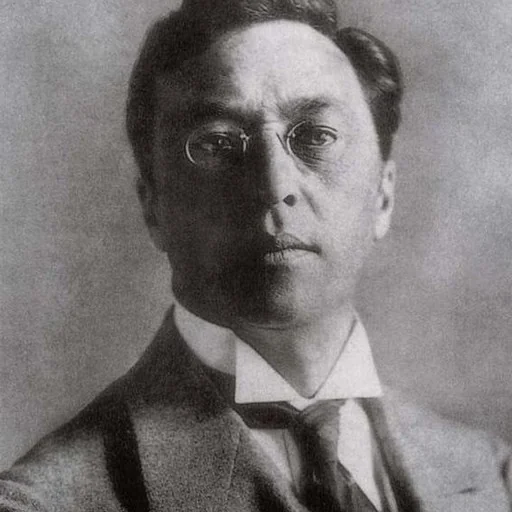
Wassily Wassilyevich Kandinsky (16 December 1866 – 13 December 1944) was a Russian painter and art theorist active in Germany during the late Belle Époque and Interwar eras.