Artwork
The Nativity
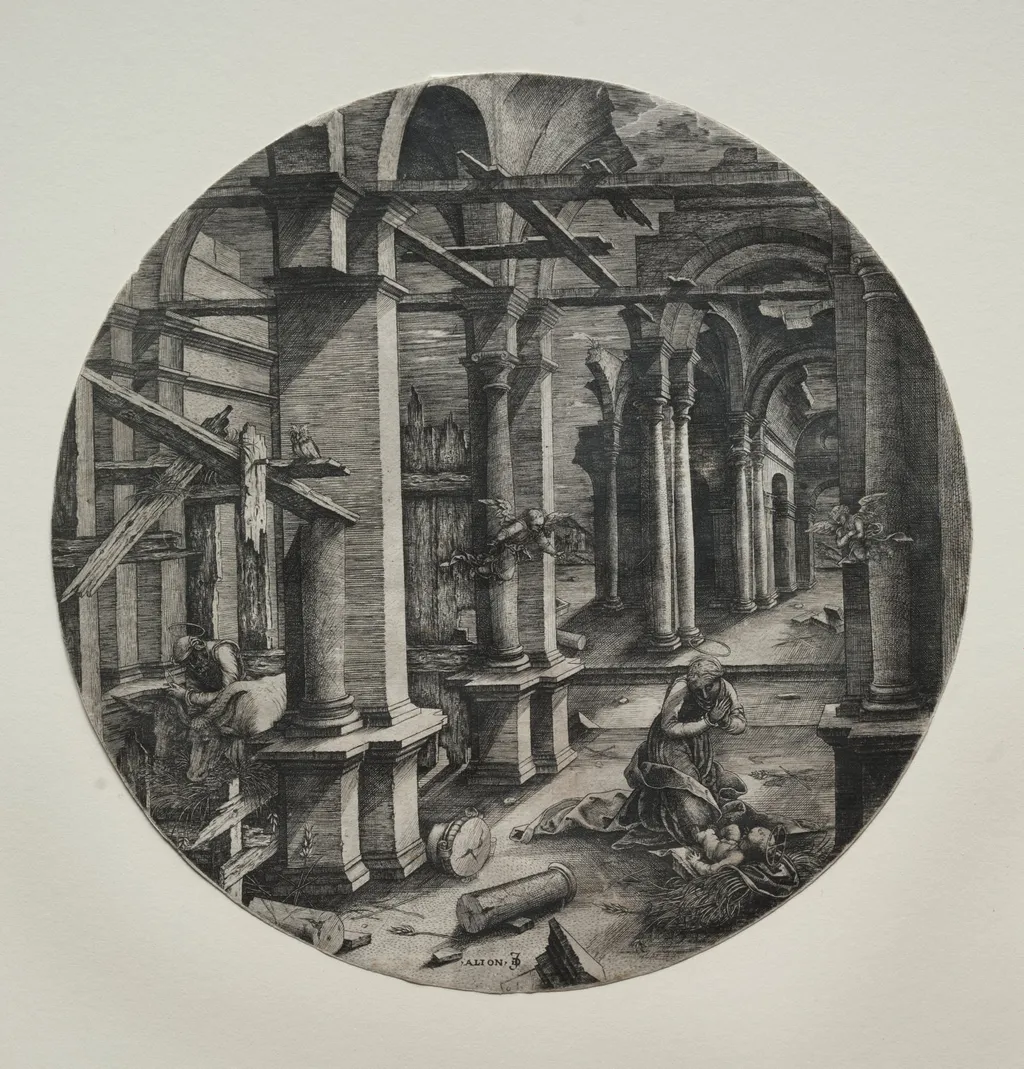
The Nativity is a print by the Renaissance artist Jean de Gourmont. It dates from 1530 and is held in the collection of the Cleveland Museum of Art.
- Accession no.
- 1922.475
- Credit line
- Gift of Leonard C. Hanna Jr.
About this work
Overview
Jean de Gourmont's 1530 engraving, The Nativity, presents a nocturnal religious scene characterized by dramatic chiaroscuro and intricate linear detail.
Jean de Gourmont's 1530 engraving, The Nativity, presents a nocturnal religious scene characterized by dramatic chiaroscuro and intricate linear detail. The composition centers on the Virgin Mary kneeling in adoration before the Christ Child, who lies in a manger illuminated by a divine light source. To the right, a seated female figure, likely Saint Elizabeth or a midwife, observes the event with a downward gaze.
The background introduces a complex narrative layer: a cross-shaped structure bearing a figure, possibly a foreshadowing of the Crucifixion, stands behind the holy group, while two angels hover in the upper register. Uniquely, the foreground floor is strewn with secular objects, including carpentry tools and an open drum, which may allude to the instruments of Christ's future passion or the mundane world overshadowed by the sacred event. Executed during the French Renaissance, this print demonstrates Gourmont's skill in translating painterly effects into the graphic medium of engraving.
The work reflects the artist's engagement with Northern European artistic traditions while maintaining a distinct French sensibility in its spatial arrangement and emotional restraint. It stands as a significant example of 16th-century French religious printmaking, combining devotional intensity with symbolic complexity.
Subject & Meaning
The central focus is the infant in the cradle, attended by a kneeling woman and another seated figure who gazes downward, suggesting reverence and contemplation. In the background, a cross‑shaped structure supports a suspended figure, while two angels hover above, reinforcing the theological significance of the birth of Christ and the presence of the divine.
Technique & Style
Gourmont employs a pronounced chiaroscuro, contrasting deep shadows with illuminated faces and hands to guide the viewer’s attention. The stark lighting creates a sense of depth, with shadows falling across stone walls and columns, while scattered tools and an open drum on the floor add narrative detail and reinforce the work’s tactile realism.
History & Provenance
The print has remained in the public domain since its creation in the early 1500s, eventually entering the holdings of the Cleveland Museum of Art. Its attribution to Jean de Gourmont is based on stylistic analysis and historical records linking the artist to religious prints of this period.
Own this work as a print
Artist & collection

- The Apocalpse: St. John Summoned to Heaven
 Democritus
 Christ at the Mount of Olives
 St. John the Baptist Surrounded by the Evangelists and Four Fathers of the Latin Church
 Christ in Gethsemane (Agony in the Garden)
 Roundel with Adoration of the Kings
 The Infant in the Gallery
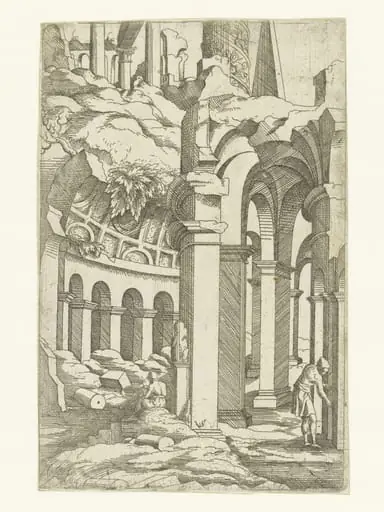 Ruins with a seated draftsman
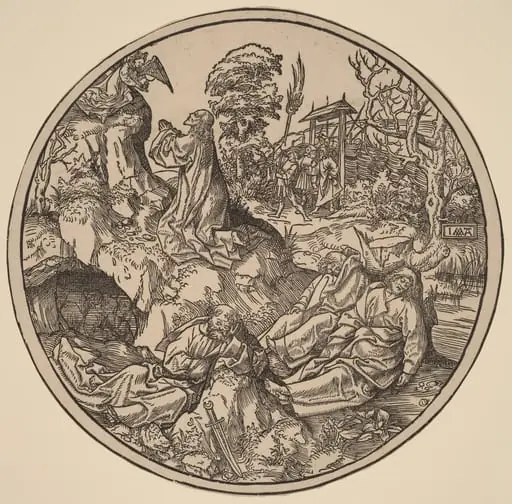 The Agony in the Garden
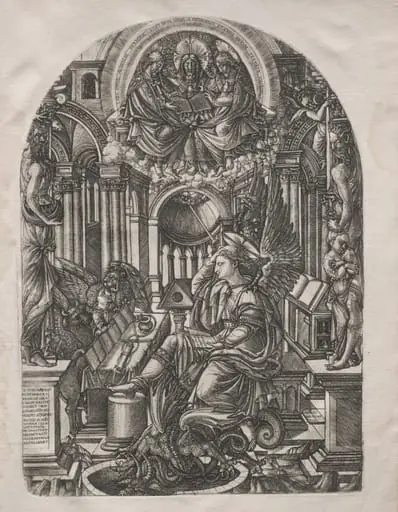 The Apocalypse: St. John on the Island of Patmos
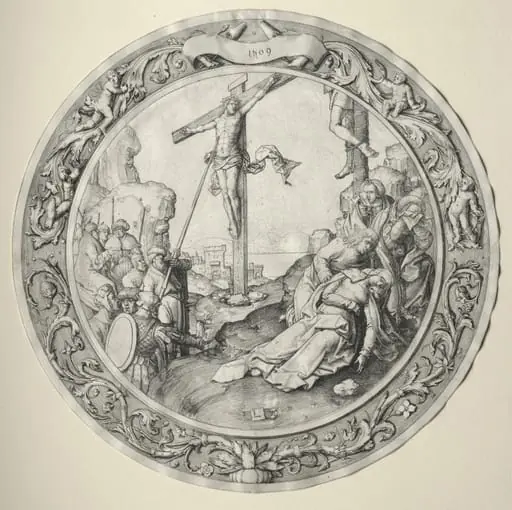 The Round Passion: The Crucifixion
 A Mountain Cave