Artwork
Roundel with Adoration of the Kings
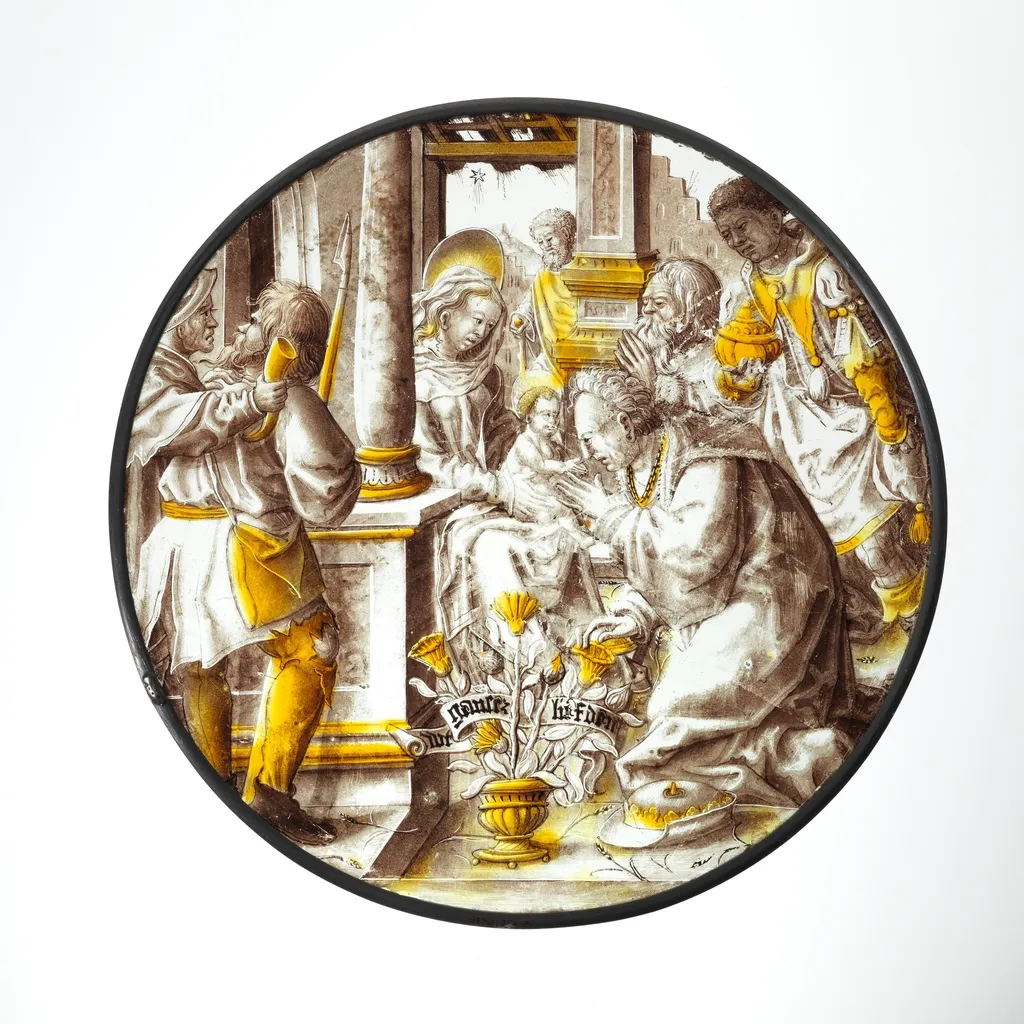
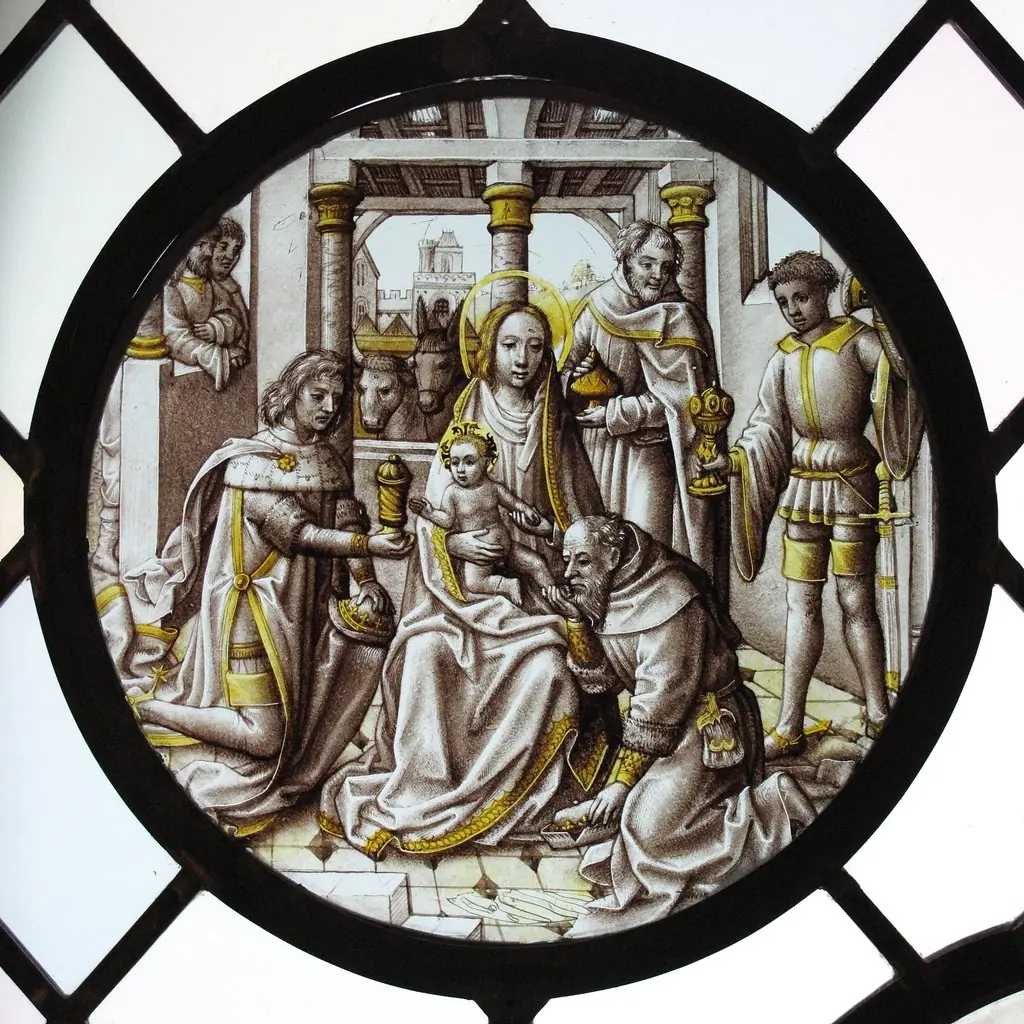
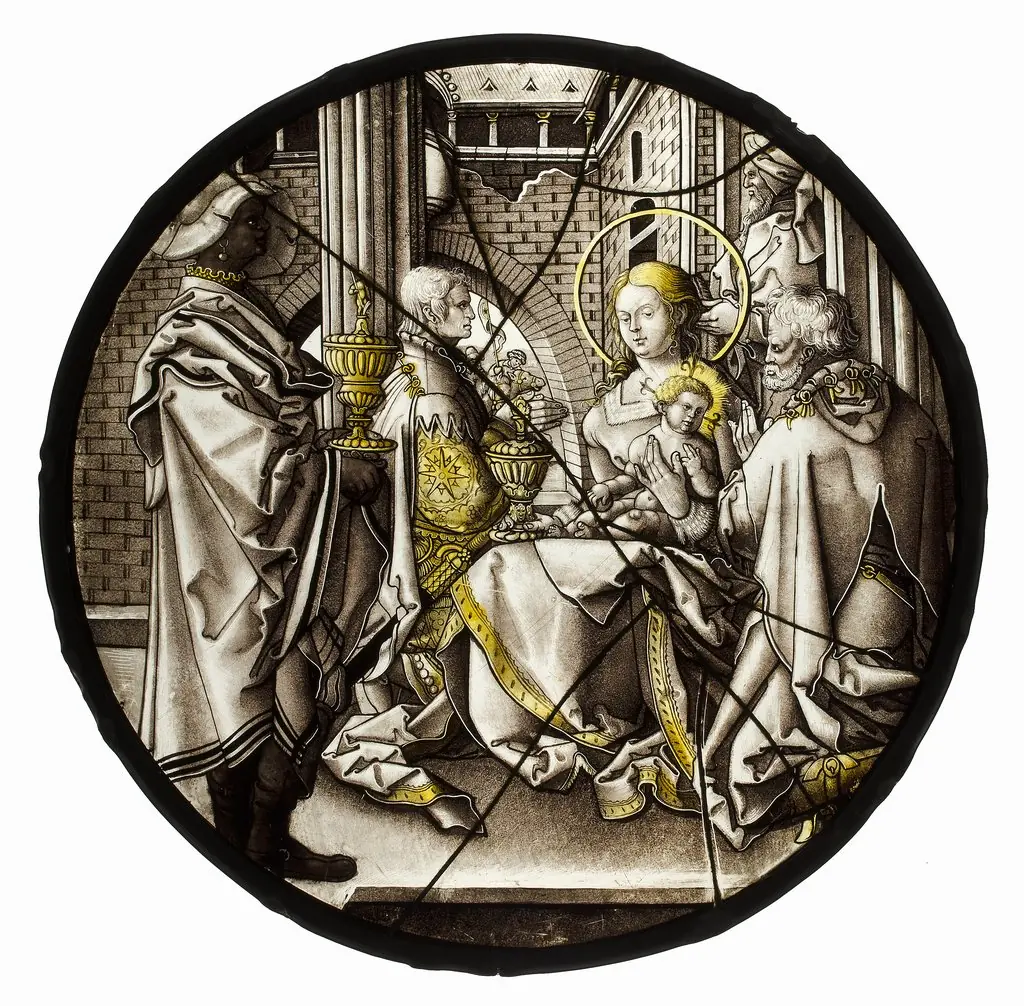
Roundel with Adoration of the Kings is an unspecified painting. It dates from 1515 and is held in the collection of the Metropolitan Museum of Art. This circular painting depicts the biblical scene of the Adoration of the Kings.
About this work
Subject & Meaning
The roundel portrays the Adoration of the Magi, depicting the Madonna and Child with the visiting wise men. This religious subject, rendered in a painting from circa 1515, emphasizes the sacred interaction between the holy family and the kings who present gifts. The work is attributed to an anonymous artist and is part of the Metropolitan Museum of Art’s collection.
History & Provenance
The Roundel with Adoration of the Kings was created in 1515 as a religious painting depicting the Adoration of the Magi and the Madonna and Child.
The Roundel with Adoration of the Kings was created in 1515 as a religious painting depicting the Adoration of the Magi and the Madonna and Child. The work is attributed to an anonymous artist and is classified within the genre of religious art. Currently, the piece is held in the collection of the Metropolitan Museum of Art, where it serves as a significant example of early 16th-century devotional imagery.
While the specific commission details and original ownership chain prior to its arrival at the museum are not detailed in the available records, the work's inception is firmly dated to the year 1515. Its provenance leads directly to its current location at the Metropolitan Museum of Art, marking the culmination of its known ownership history.
Context
The roundel dated 1515 portrays the Adoration of the Magi with the Madonna and Child, exemplifying early sixteenth‑century devotional imagery in the Low Countries. Its anonymous authorship reflects workshop practices common in the period, while the subject’s prominence underscores the continued importance of Marian devotion in religious art. Catalogued as a painting in the Metropolitan Museum of Art, the work is studied as a representative example of anonymous panel production, offering insight into the stylistic conventions and patronage patterns of the era.
Scholars cite its compositional balance and symbolic detail as indicative of the transitional phase toward more naturalistic representations in the early Renaissance.
Overview
This circular painting depicts the biblical scene of the Adoration of the Kings. A central group gathers around a mother and child, with figures presenting offerings. The composition emphasizes the sacred moment through its focused arrangement and the interplay of light and shadow, which illuminates the main subjects against a subdued architectural setting. The artwork's round format contributes to its intimate and self-contained presentation.
Technique & Style
The artist employs a distinctive use of strong contrasts between light and dark to create a dramatic effect, causing the central figures to appear luminous against a deeper background. This technique, often referred to as chiaroscuro, enhances the three-dimensionality and emotional intensity of the scene. The palette predominantly features rich golds, whites, and browns, with deep shadows contributing to the overall visual depth and solemn atmosphere.
Artist & collection

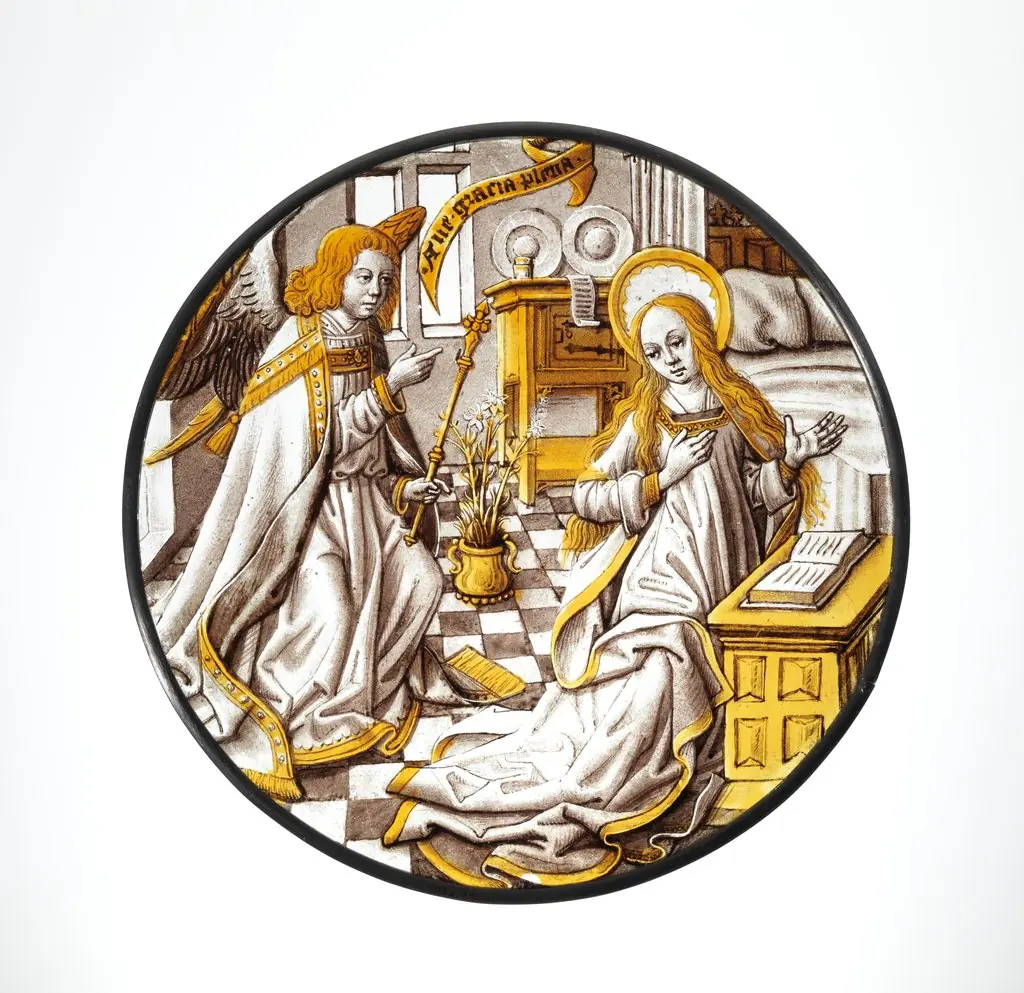 Roundel with Annunciation to the Virgin
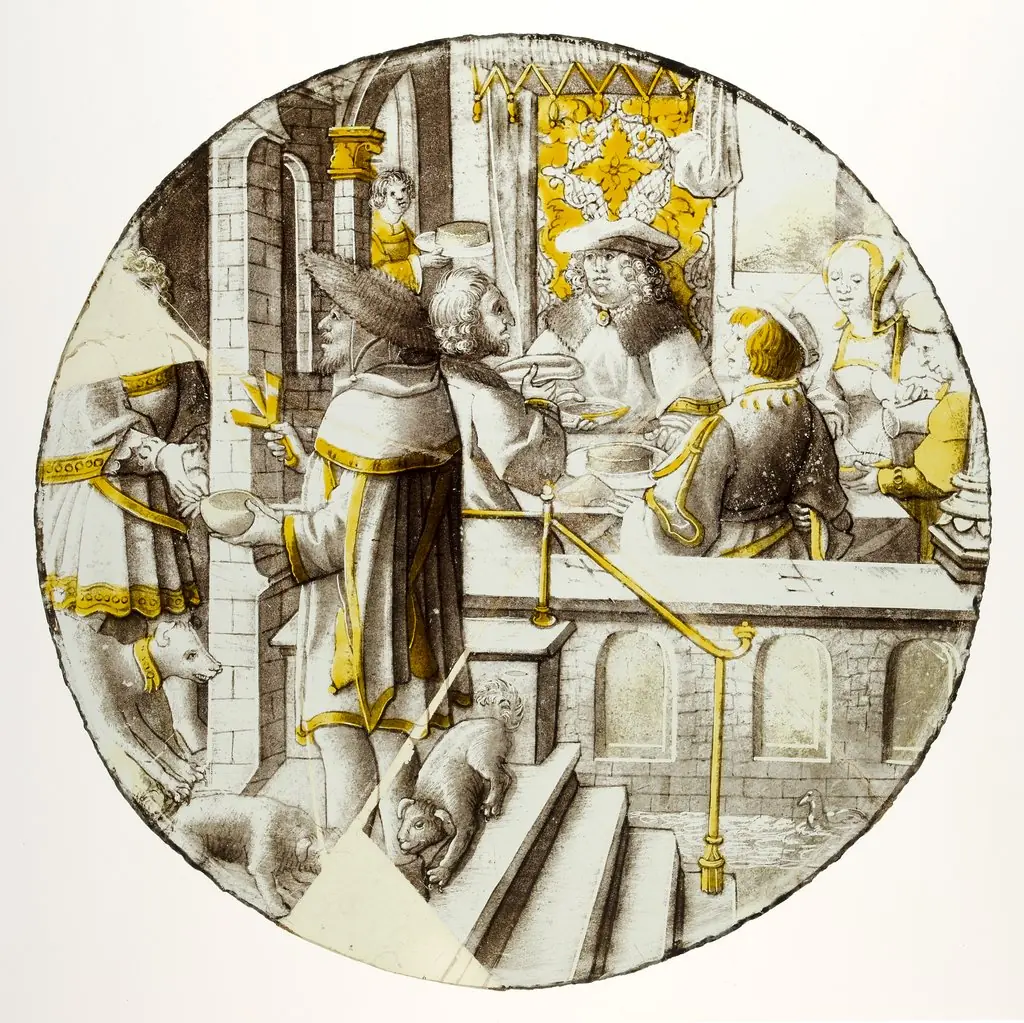 Roundel with Lazarus at the House of Dives
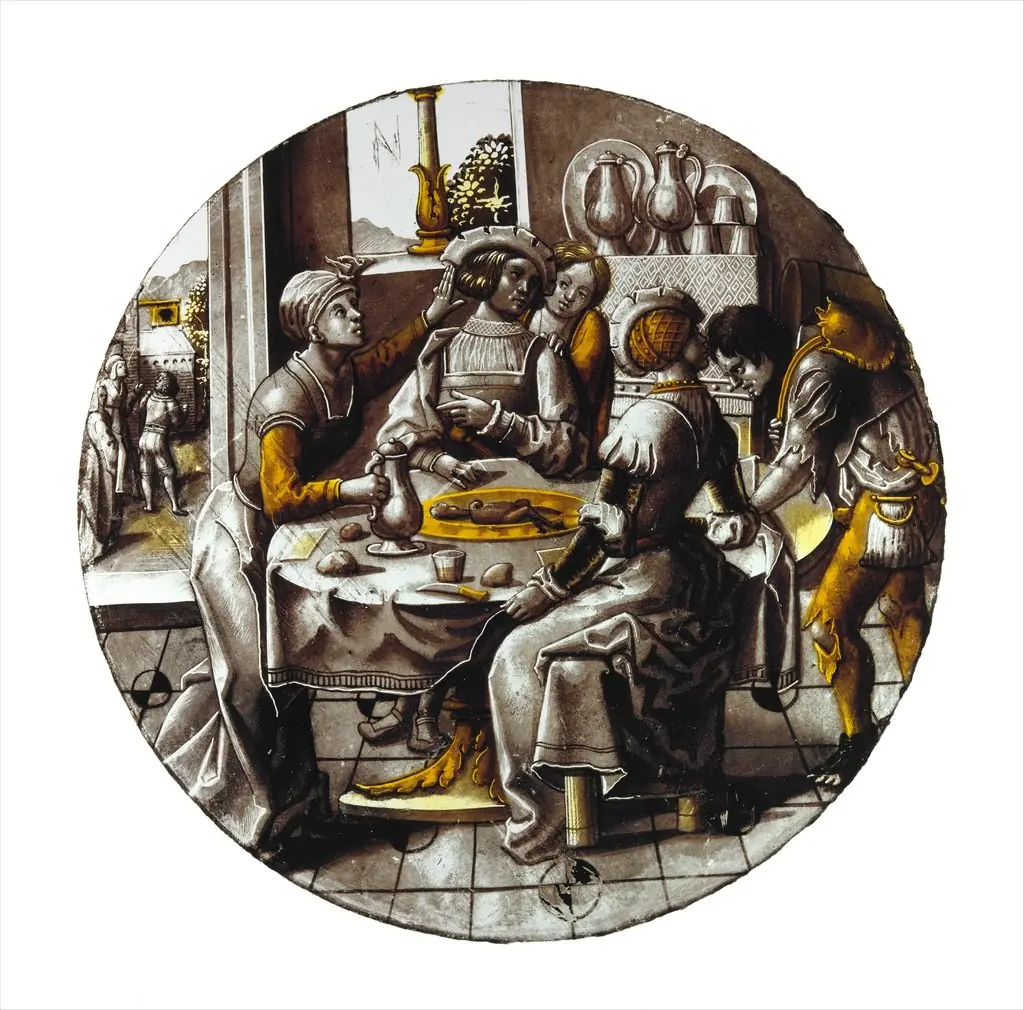 Roundel with Sorgheloos ("Carefree") with Easy Fortune
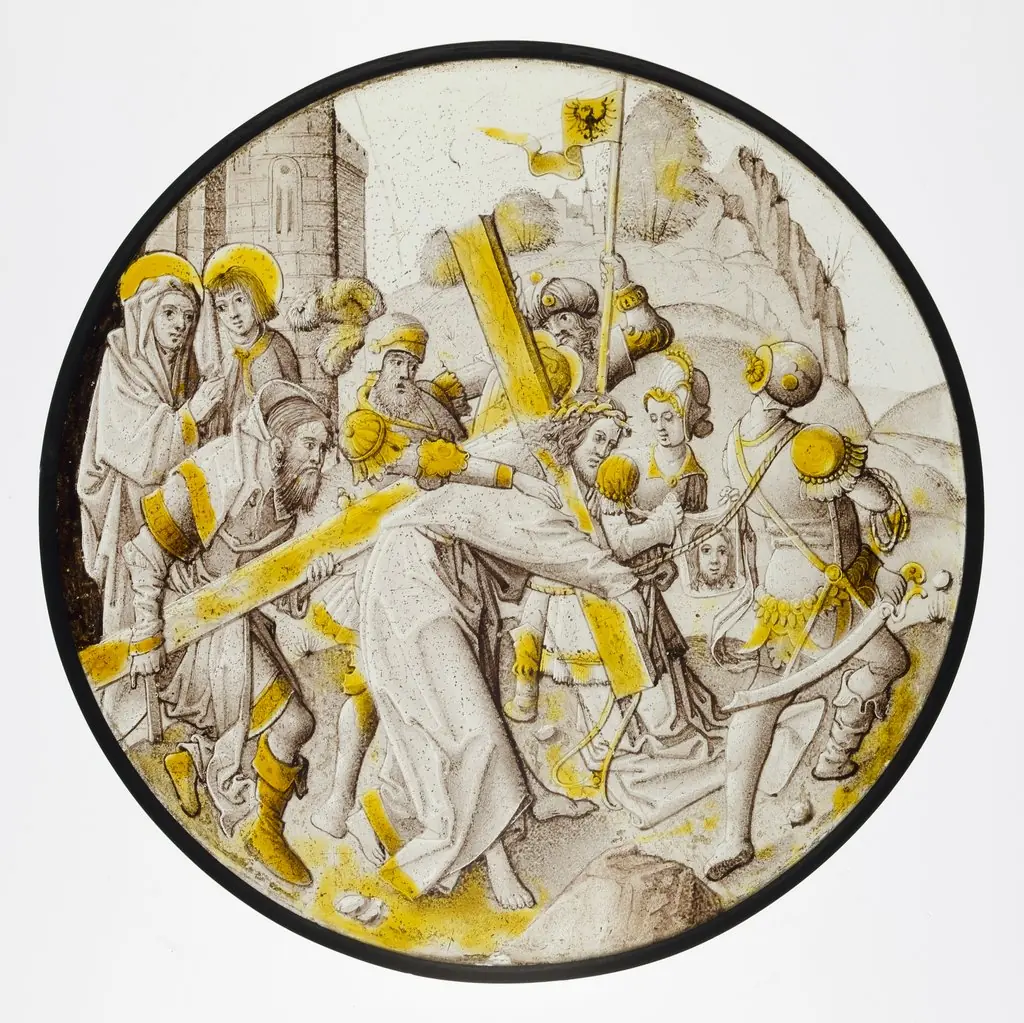 Roundel with Christ Carrying the Cross with Saint Veronica
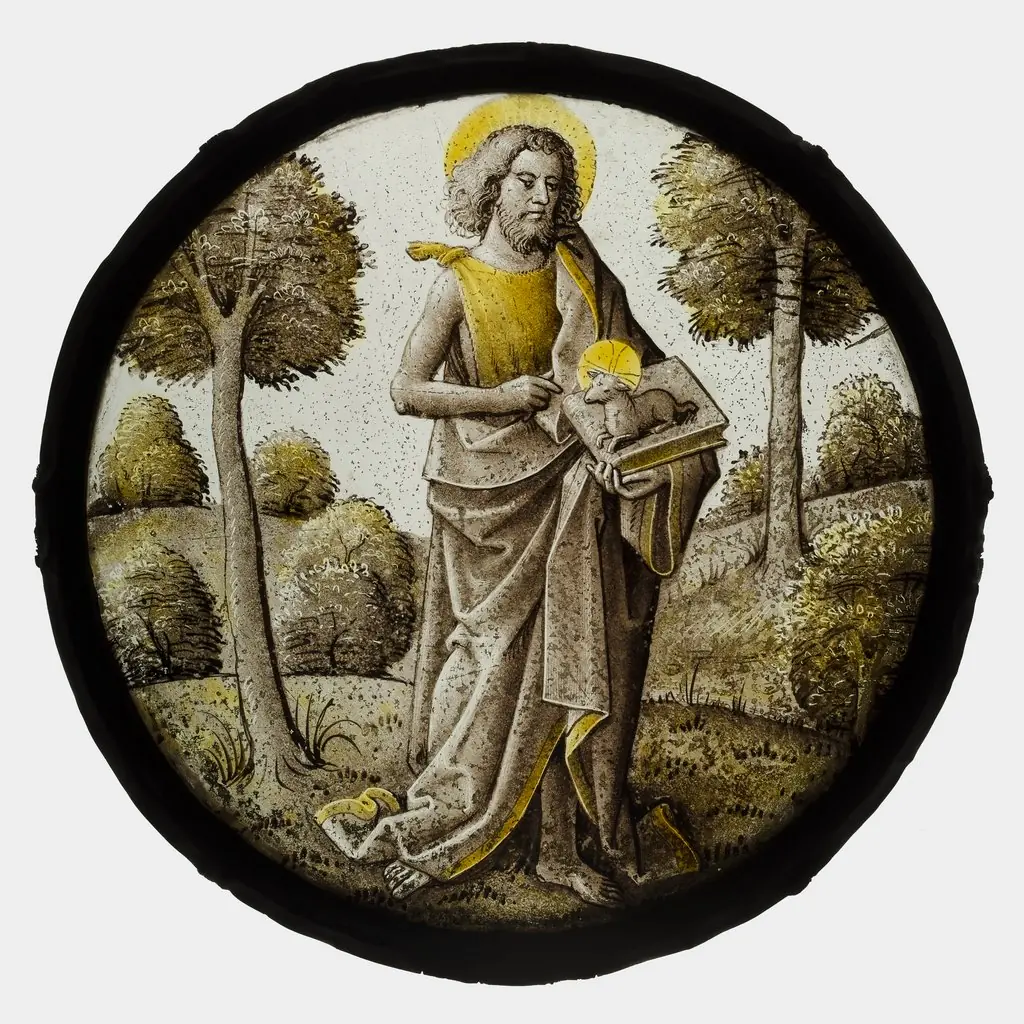 Roundel with Saint John the Baptist
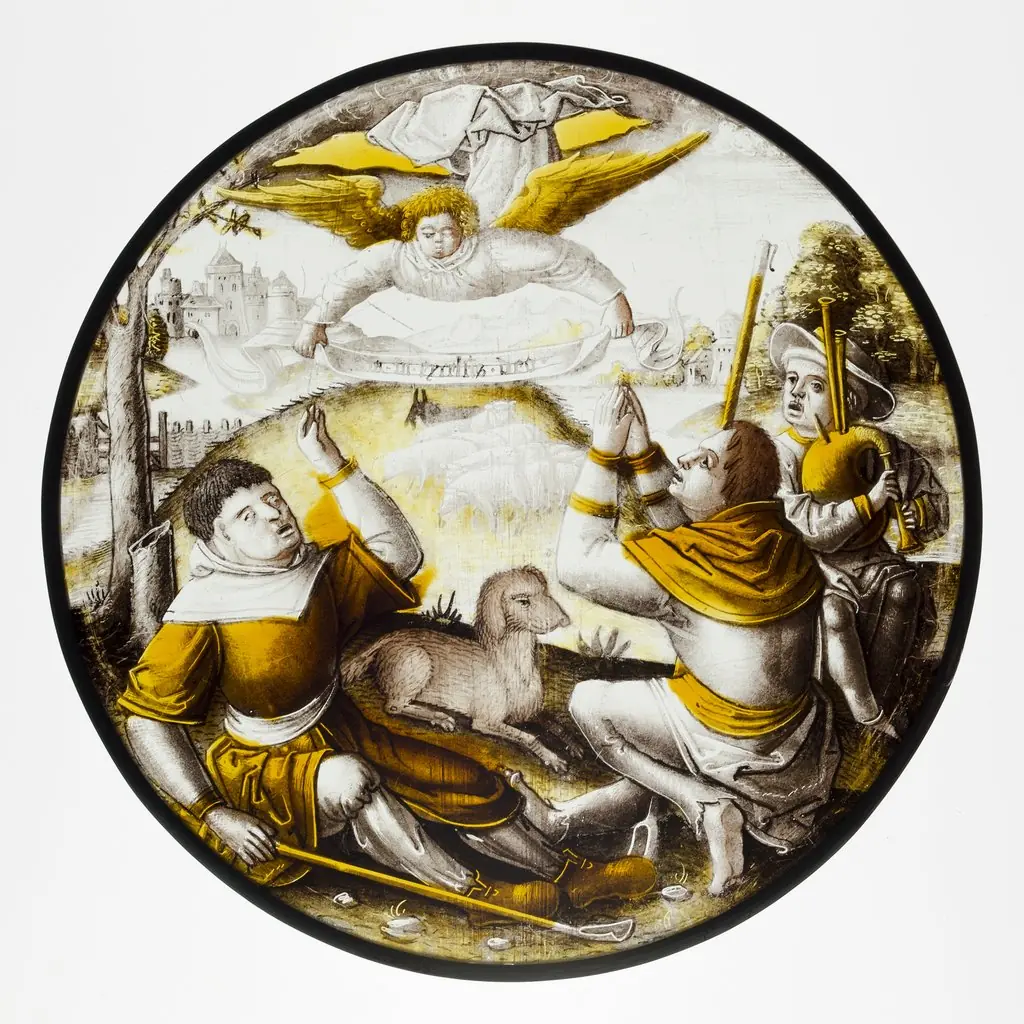 Roundel with Annunciation to the Shepherds
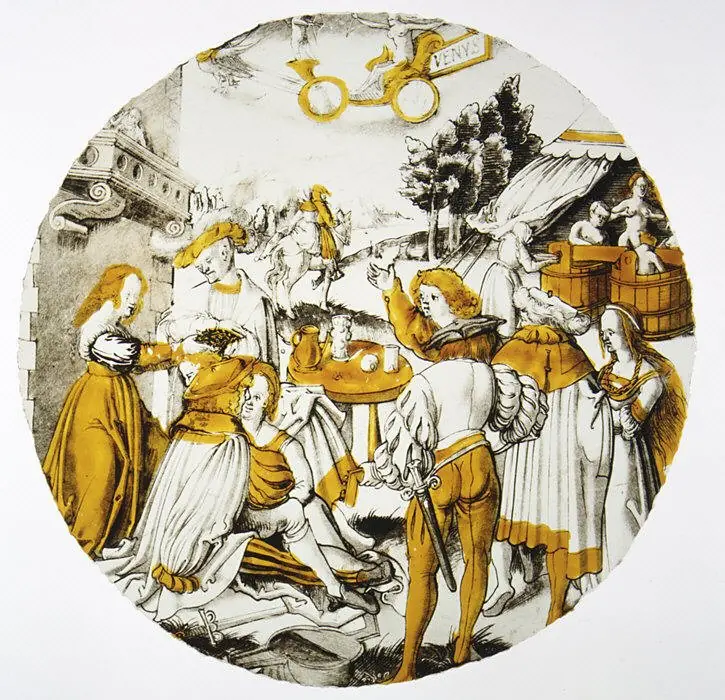 Roundel of The Planet Venus and Her Children
 Roundel with Saint John on Patmos with Apocalyptic Vision