Artwork
The Apocalypse: The Measurement of the Temple
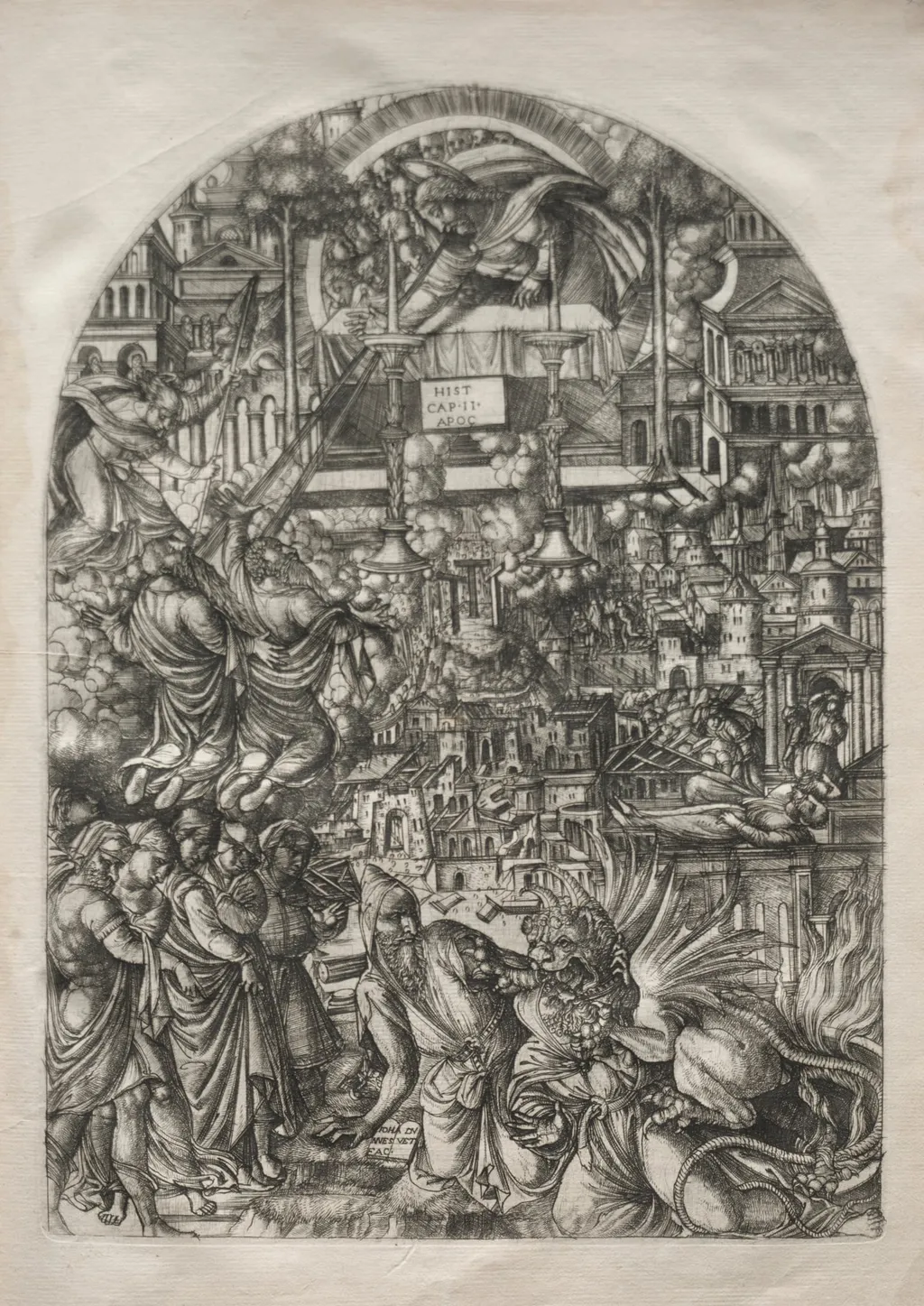
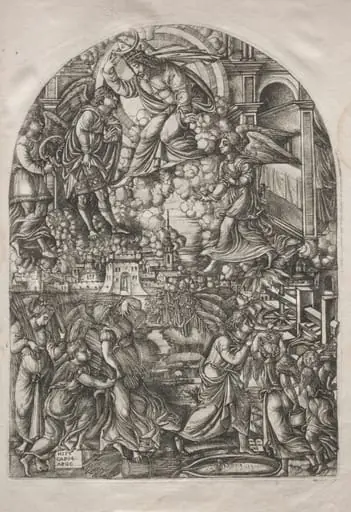
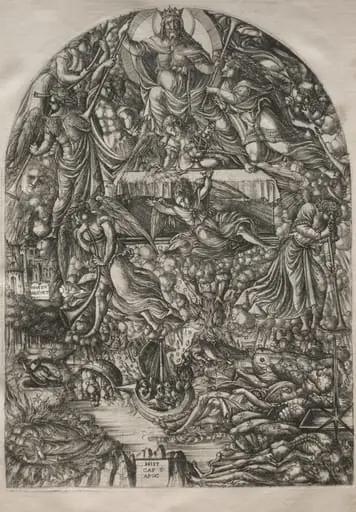
The Apocalypse: The Measurement of the Temple is a print by the Renaissance artist Jean Duvet. It dates from 1551 and is held in the collection of the Cleveland Museum of Art.
- Accession no.
- 1953.213.17
- Credit line
- Gift of the Hanna Fund
About this work
Overview
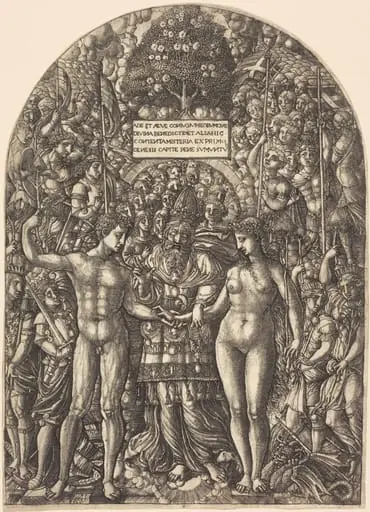
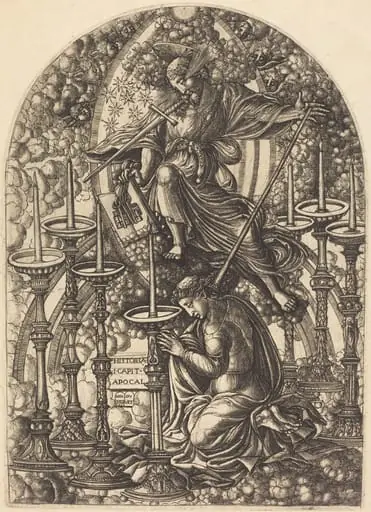
The print belongs to a bound collection of twenty‑three engravings that visualise the narrative of the Apocalypse as described in the Book of Revelation. This particular plate illustrates the episode known as the Measurement of the Temple. The Cleveland Museum of Art holds one of only seven complete sets of the series, a rarity among surviving examples.
Subject & Meaning
The image depicts the biblical scene in which angels measure the sacred precinct, a moment that has traditionally symbolised divine judgement and the impending end of the world. By rendering this episode, the artist engages with the apocalyptic anxieties of the sixteenth century, offering a visual meditation on prophecy and salvation.
Technique & Style
Executed as an engraving, the work showcases densely packed figures rendered with a strong sense of volume, reflecting the influence of Italian High Renaissance models. Yet the composition abandons conventional perspective, favouring ornamental surface treatment and a crowded, almost theatrical arrangement that is characteristic of the artist’s distinctive, highly artificial style.
History & Provenance
The Cleveland Museum’s set is among a handful of complete collections known to survive.
Created over several years by Jean Duvet, a pioneering French printmaker active in the provincial town of Langres, the series represents the pinnacle of his career. Duvet’s exposure to Italian prints, especially those of Marcantonio Raimondi, informed his approach, while his own innovations set him apart from contemporaries. The Cleveland Museum’s set is among a handful of complete collections known to survive.
Context
In the early 1500s, French art was still largely provincial, but the circulation of printed works introduced artists like Duvet to Renaissance ideas. His engravings merge this external influence with local sensibilities, resulting in a hybrid visual language that bridges Northern detail and Southern classicism.
Own this work as a print
Artist & collection
Artist
Jean Duvet (1485 – after 1562) was a French Renaissance goldsmith and engraver, now best known for his engravings.

 The Apocalypse: The Winepress of the Wrath of God
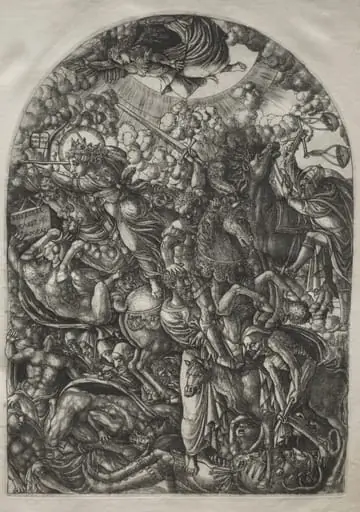 The Apocalypse: St. John Sees the Four Riders
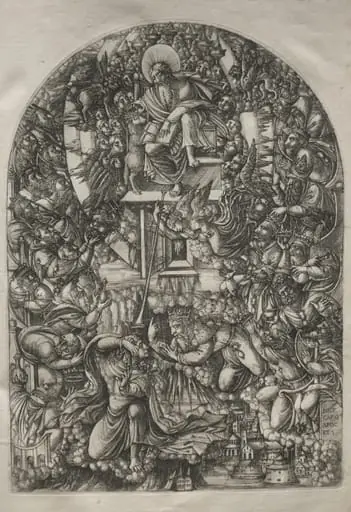 The Apocalypse: St. John Summoned to Heaven
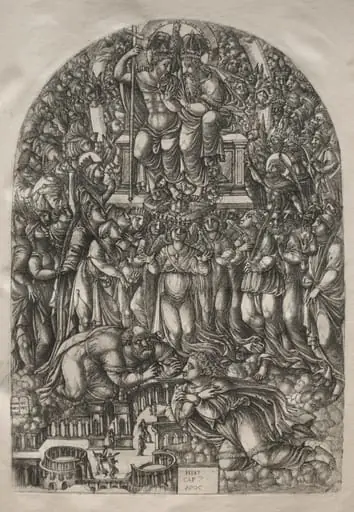 The Apocalypse: An Innumerable Multitude Which Stand before the Throne
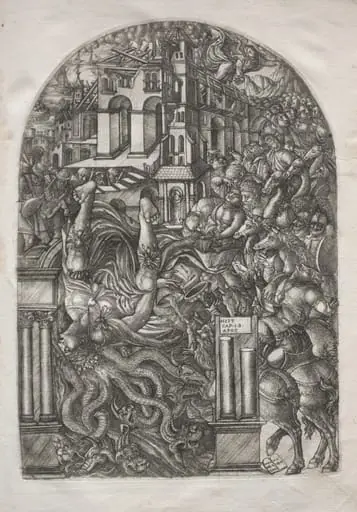 The Apocalypse: The Fall of Babylon
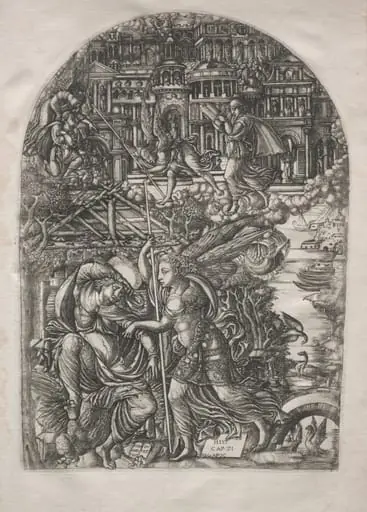 The Apocalypse: The Angel Shows St. John the New Jerusalem
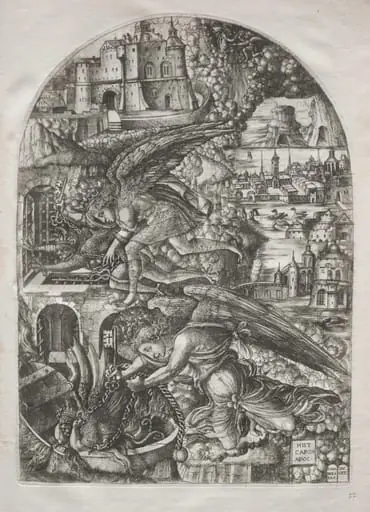 The Apocalypse: Satan Bound for a Thousand Years
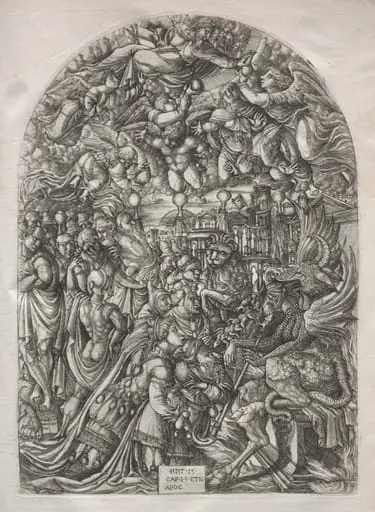 The Apocalypse: The Dragon with Two Horns and the Beast with Seven
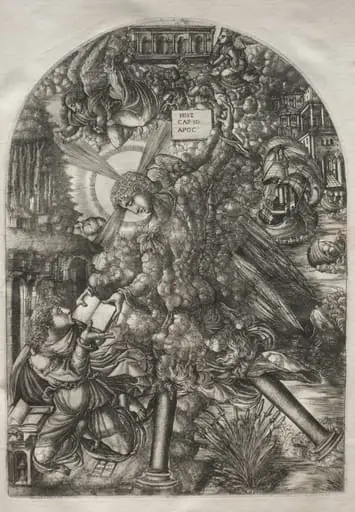 The Apocalypse: The Angel Gives St. John the Book to Eat
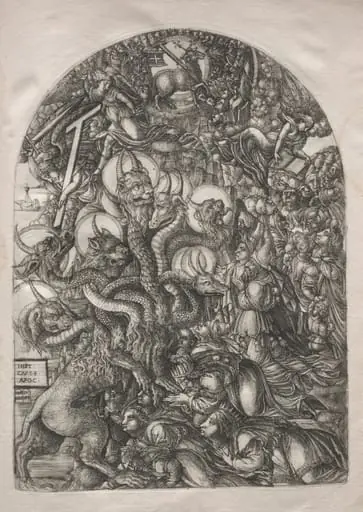 The Apocalypse: The Beast with Seven Heads and Ten Horns
 The Apocalypse: The Opening of the Seventh Seal