Artwork
The Apocalypse: The Beast with Seven Heads and Ten Horns
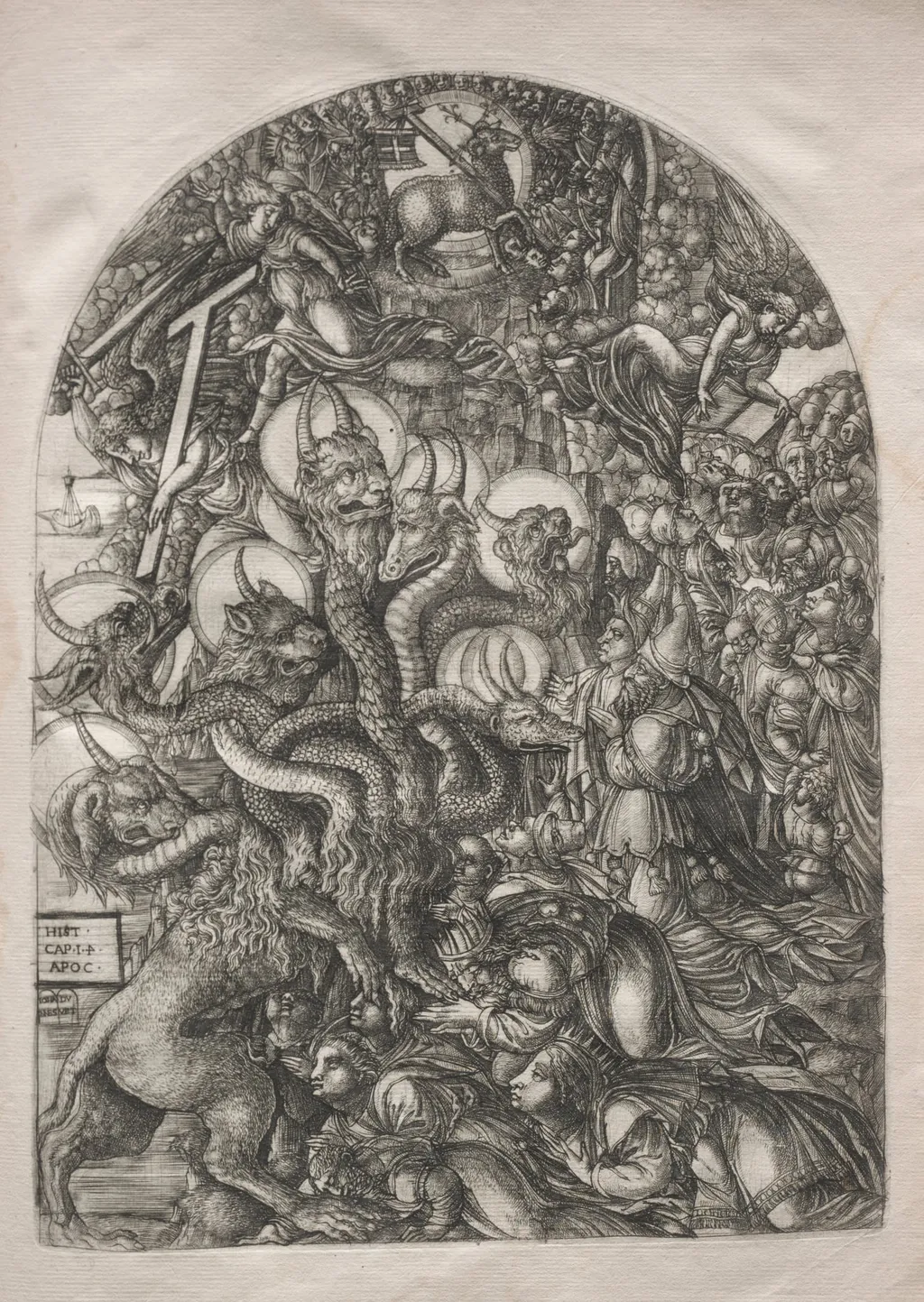
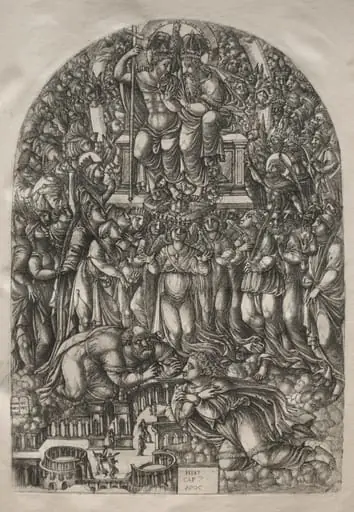
The Apocalypse: The Beast with Seven Heads and Ten Horns is a print by the Renaissance artist Jean Duvet. It dates from 1551 and is held in the collection of the Cleveland Museum of Art.
- Accession no.
- 1953.213.22
- Credit line
- Gift of the Hanna Fund
About this work
The painting shows a beast with seven heads and ten horns. It's an engraving from a series illustrating the Apocalypse. The series took the artist many years to complete and is based on the Bible's Revelation of Saint John.
The Cleveland Museum of Art has one of the few complete sets of these engravings. Check out the work of artist Jean Duvet (French, 1485–1561) for more.
Overview
This engraving, 'The Beast with Seven Heads and Ten Horns,' is one of 23 prints in a rare, complete series illustrating the Apocalypse from the Revelation of Saint John. Only seven complete sets of this series are known to exist, with The Cleveland Museum of Art housing one.
Subject & Meaning
Depicting a monstrous beast with seven heads and ten horns, the work visually interprets a key apocalyptic vision from the Bible, conveying the chaotic and ominous themes present in Saint John's narrative.
Technique & Style
Characterized by crowded compositions and ornamental surface patterns, the engraving showcases Jean Duvet's idiosyncratic style. Despite being influenced by Italian High Renaissance figures (noted in the solid modeling of human forms), Duvet's work ignores traditional spatial logic.
History & Provenance
Created by Jean Duvet, a pioneering French printmaker of the 16th century, this series represents his magnum opus, spanning several years of his career in Langres. The museum's set is one of only seven complete known sets.
Context
Though based in provincial Langres, Duvet's awareness of Italian art, particularly through Marcantonio Raimondi's prints, influenced his work. This blend of French innovation with Italian Renaissance elements marks his unique contribution to 16th-century art.
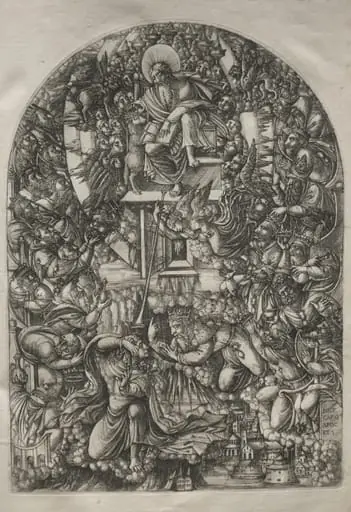
Own this work as a print
Artist & collection
Artist
Jean Duvet (1485 – after 1562) was a French Renaissance goldsmith and engraver, now best known for his engravings.

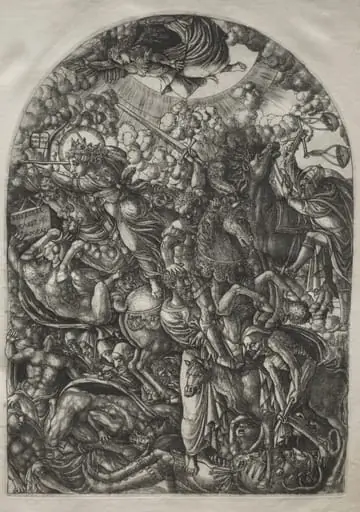 The Apocalypse: St. John Sees the Four Riders
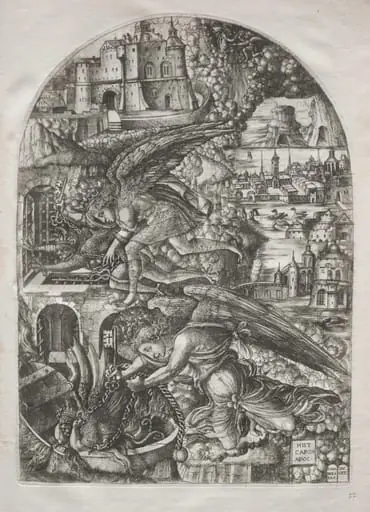 The Apocalypse: Satan Bound for a Thousand Years
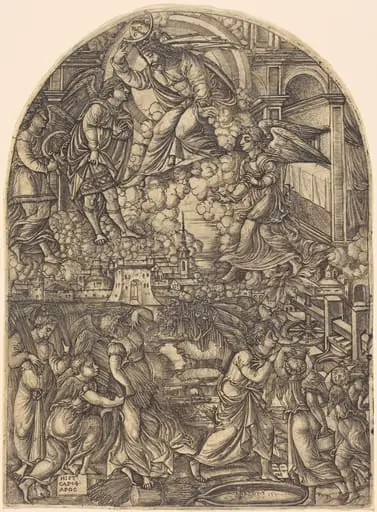
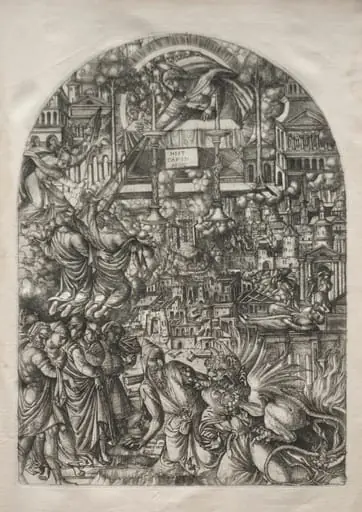 The Apocalypse: The Measurement of the Temple
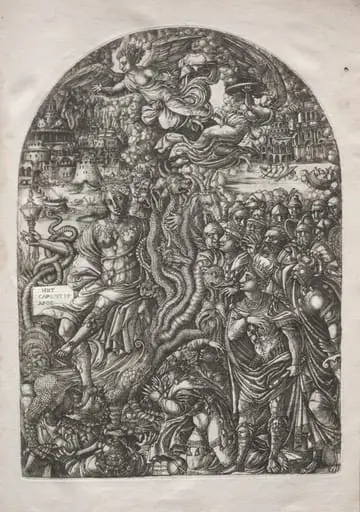 The Apocalypse: Babylon the Harlot, Seated on the Seven-headed Beast
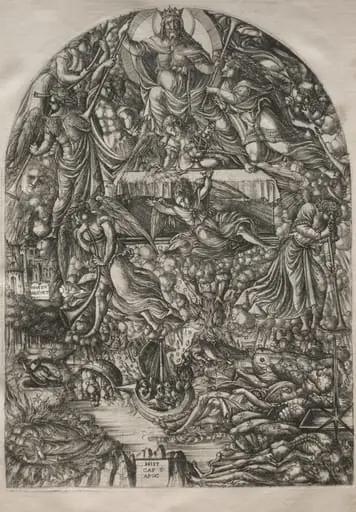 The Apocalypse: The Opening of the Seventh Seal
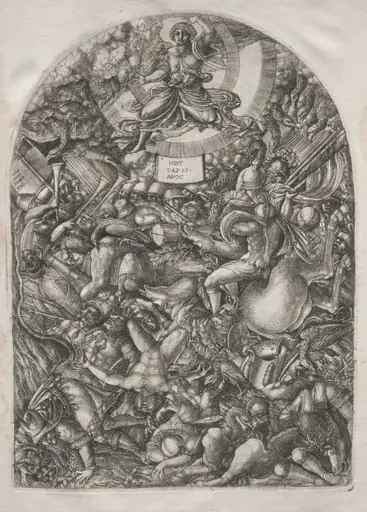 The Apocalypse: The Angel in the Sun Calling the Birds of Prey
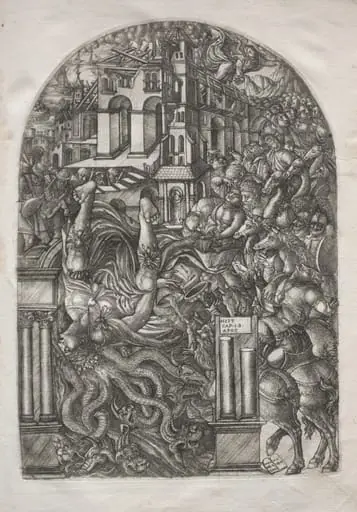 The Apocalypse: The Fall of Babylon
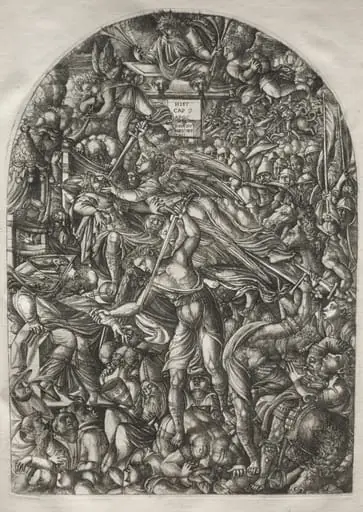 The Apocalypse: The Angel Sounding the Sixth Trumpet
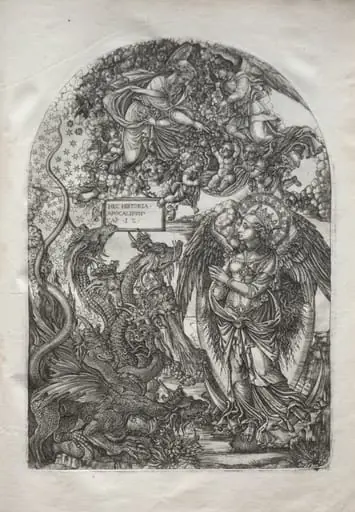 The Apocalypse: St. Michael and the Dragon
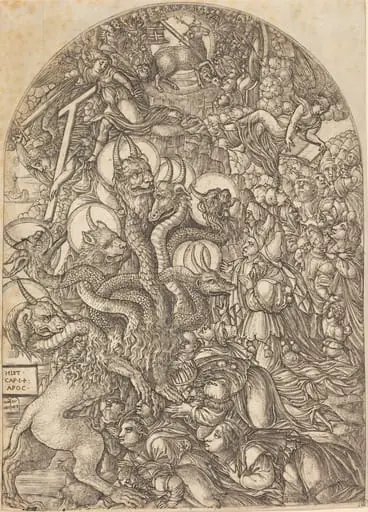
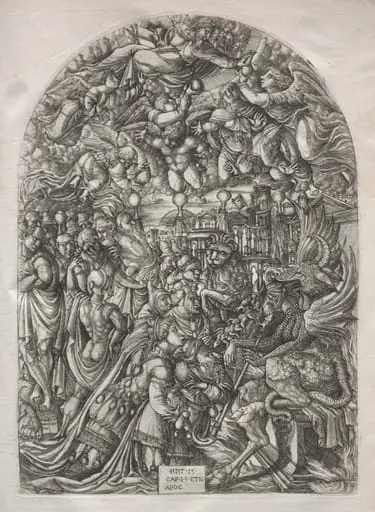 The Apocalypse: The Dragon with Two Horns and the Beast with Seven
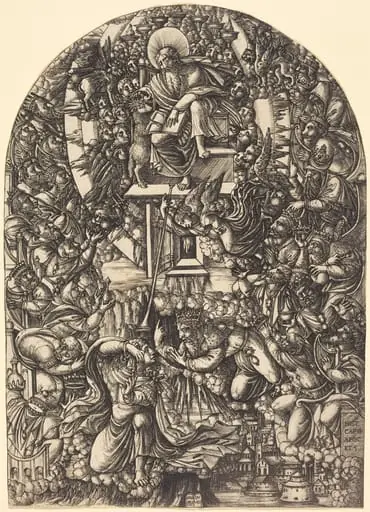
 The Apocalypse: An Innumerable Multitude Which Stand before the Throne