Artwork
Seated Peasant Resting on a Hoe
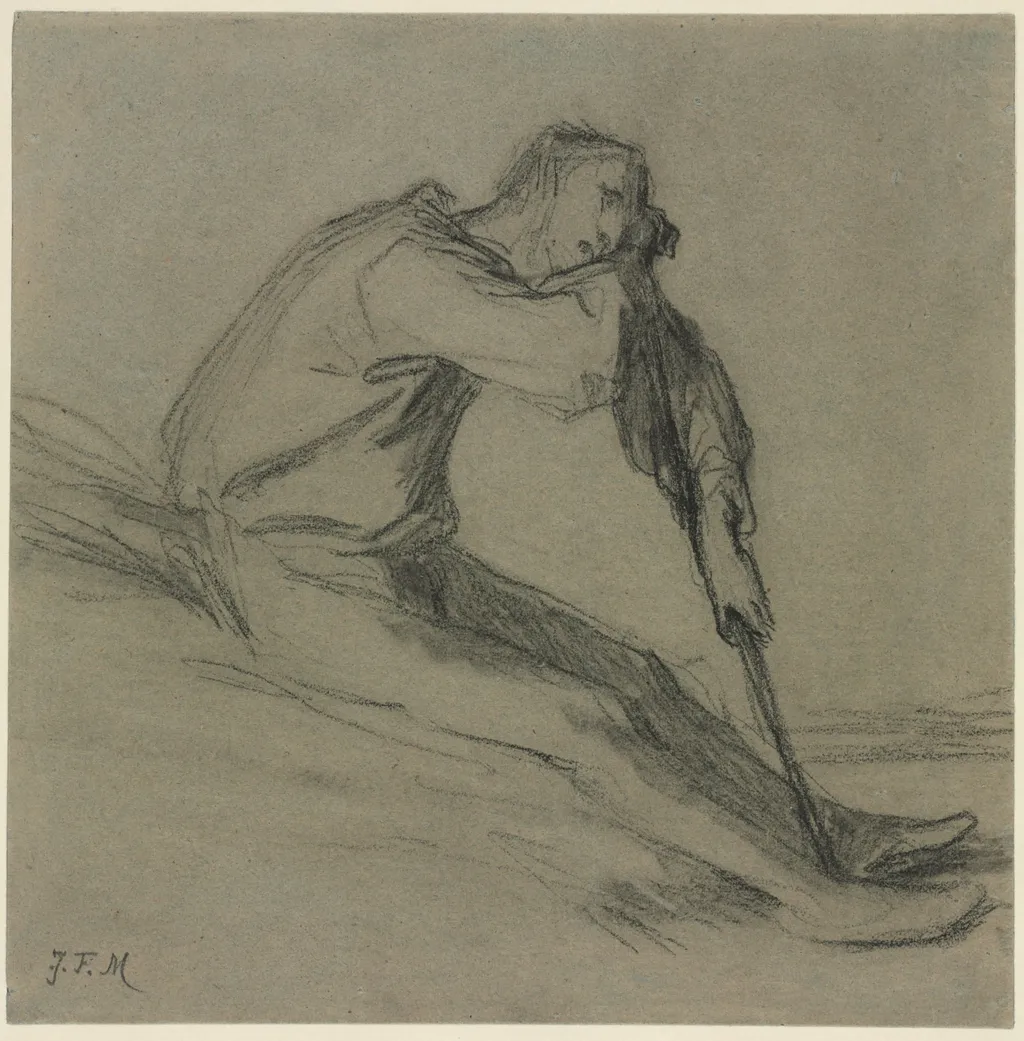
Seated Peasant Resting on a Hoe is a drawing by Jean François Millet. It dates from 1854 and is held in the collection of the Cleveland Museum of Art. Created around 1854, this drawing by Jean-François Millet captures a rural laborer at rest, leaning on a hoe.
- Accession no.
- 2009.133
- Credit line
- Bequest of Muriel Butkin
About this work
Overview
Executed in pencil and charcoal, it belongs to a series of studies Millet made of peasants in the fields near Barbizon.
Created around 1854, this drawing by Jean-François Millet captures a rural laborer at rest, leaning on a hoe. Executed in pencil and charcoal, it belongs to a series of studies Millet made of peasants in the fields near Barbizon. Unlike grand historical scenes favored by academic art, this work elevates an ordinary moment of pause, reflecting Millet’s commitment to depicting the quiet dignity of agricultural life.
Subject & Meaning
The figure, a peasant seated on the earth, embodies physical exhaustion and quiet reflection. His posture, slumped yet grounded, suggests the weight of daily toil. The absence of narrative detail focuses attention on the individual’s inner state, neither idealized nor pitied, but presented with unembellished humanity. The hoe, both tool and support, becomes a symbol of labor’s permanence in rural existence.
Technique & Style
Millet employs chiaroscuro through layered pencil strokes and smudged charcoal to model the figure’s form against a muted background. Strong contrasts define the contours of the body and clothing, lending volume and weight without relying on color. The rough texture of the paper and the deliberate smudging enhance the sense of earthiness, aligning the medium with the subject’s lived reality.
History & Provenance
The drawing entered the Cleveland Museum of Art’s collection in the early 20th century, acquired as part of a broader interest in 19th-century French drawings. It was likely made during Millet’s formative years in Barbizon, when he was developing his focus on peasant subjects. Its preservation reflects early recognition of Millet’s drawings as significant works, not merely preparatory studies.
Context
In mid-19th-century France, urban audiences increasingly viewed rural life through sentimental or exotic lenses. Millet resisted this trend, choosing instead to observe peasants with quiet attention. His work aligned with Realism’s broader rejection of romanticism, offering a visual record of labor that was both socially aware and formally restrained, resonating with emerging democratic ideals.
Legacy
Millet’s drawings of laborers influenced later generations of artists, including the Social Realists and early 20th-century modernists who valued emotional authenticity over ornamentation. This piece, like others in his oeuvre, helped shift the artistic canon to include the working class as worthy subjects of serious art, challenging traditional hierarchies of subject matter.
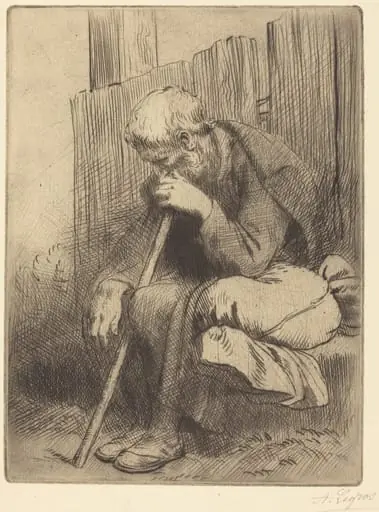
Own this work as a print
Artist & collection
Artist
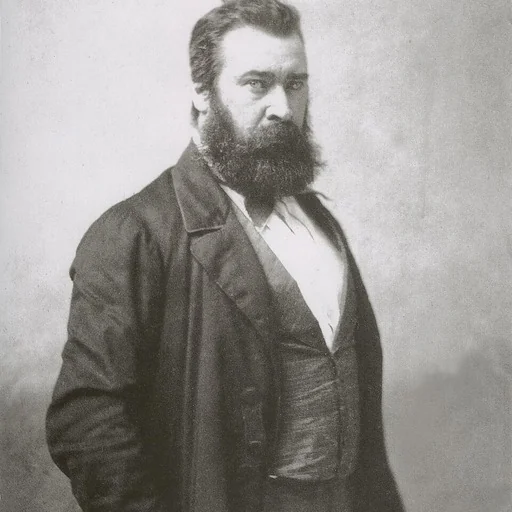
Jean-François Millet (French pronunciation:; 4 October 1814 – 20 January 1875) was a French painter and one of the founders of the Barbizon school in rural France.

- Thinker (Le penseur)
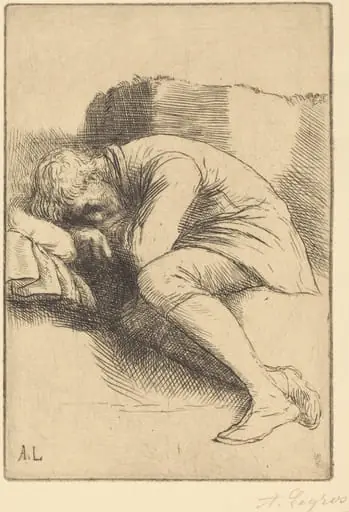 Sleeper (Un dormeur)
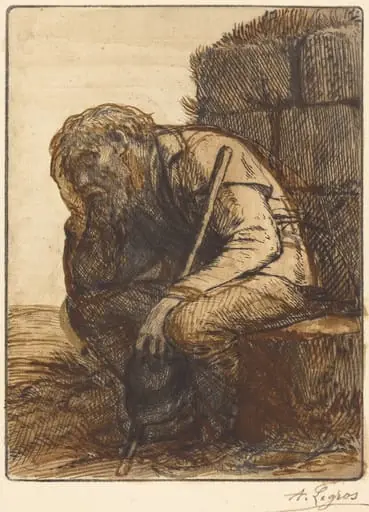 Desperate Man (Le desespere)
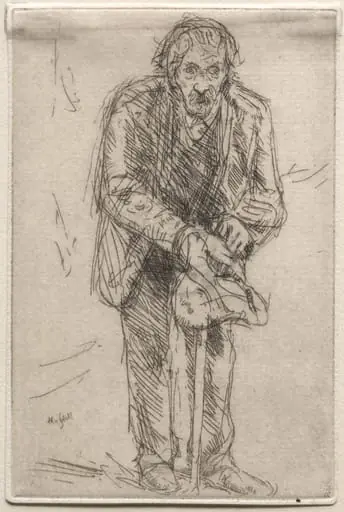 Paris: The Old Lunatic
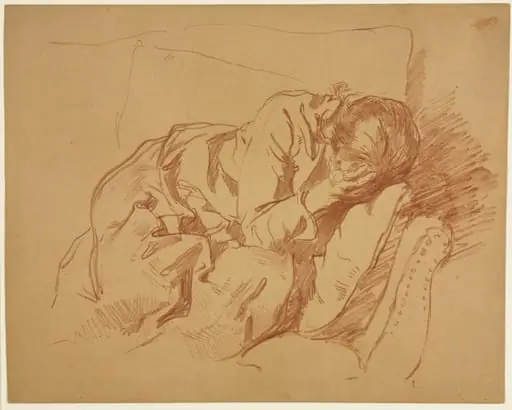 Lamenting Woman (Sarah H. Crone)
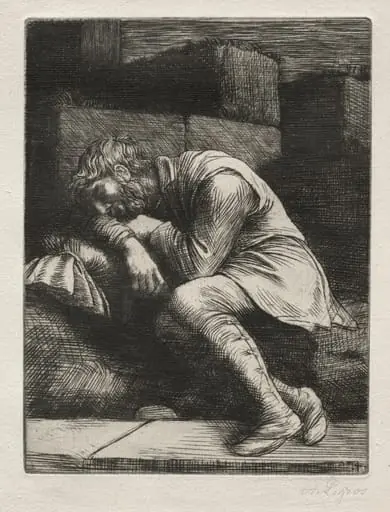 The Sleeping Beggar
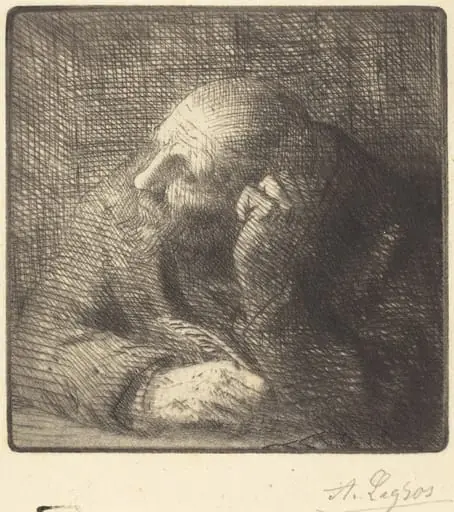 Meditation (La meditation)
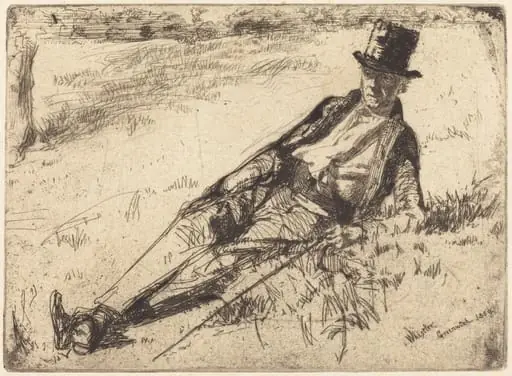 Greenwich Pensioner
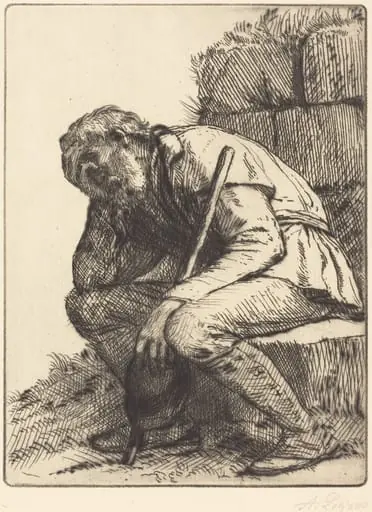 Desperate Man (Le desespere)
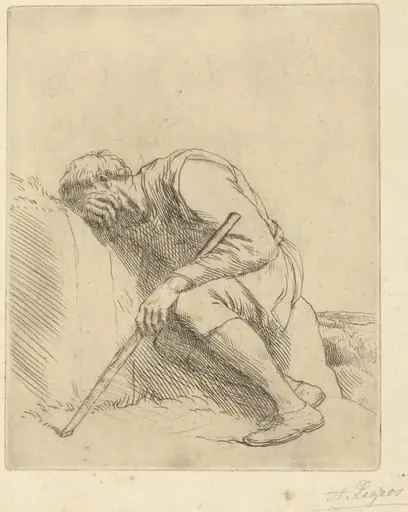 Sinbad the Sailor (Sinbad le marin)
 Job, 2nd plate
 Peasant with a Crooked Back Leaning on a Stick