Artwork
Shepherdess Seated on a Rock
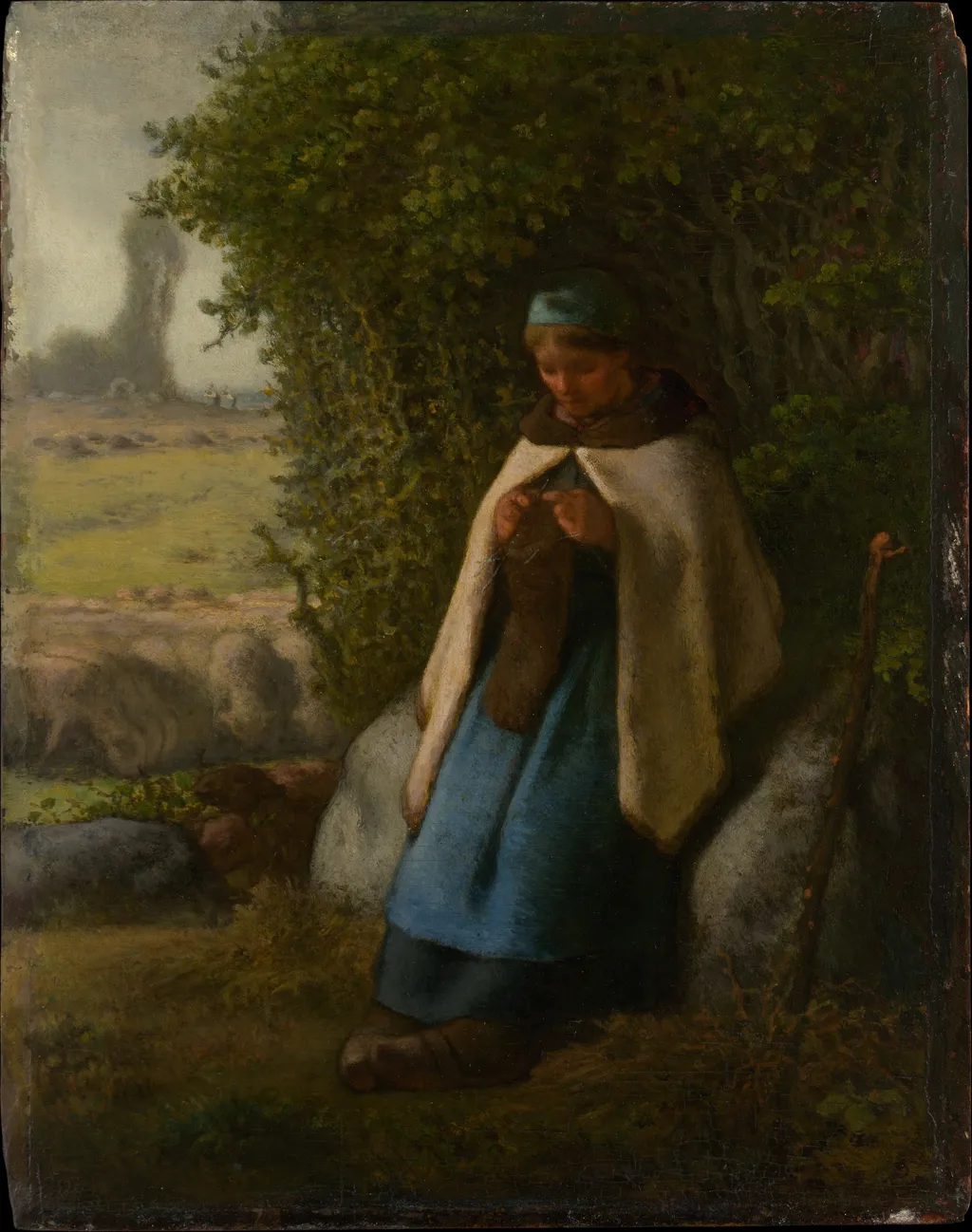
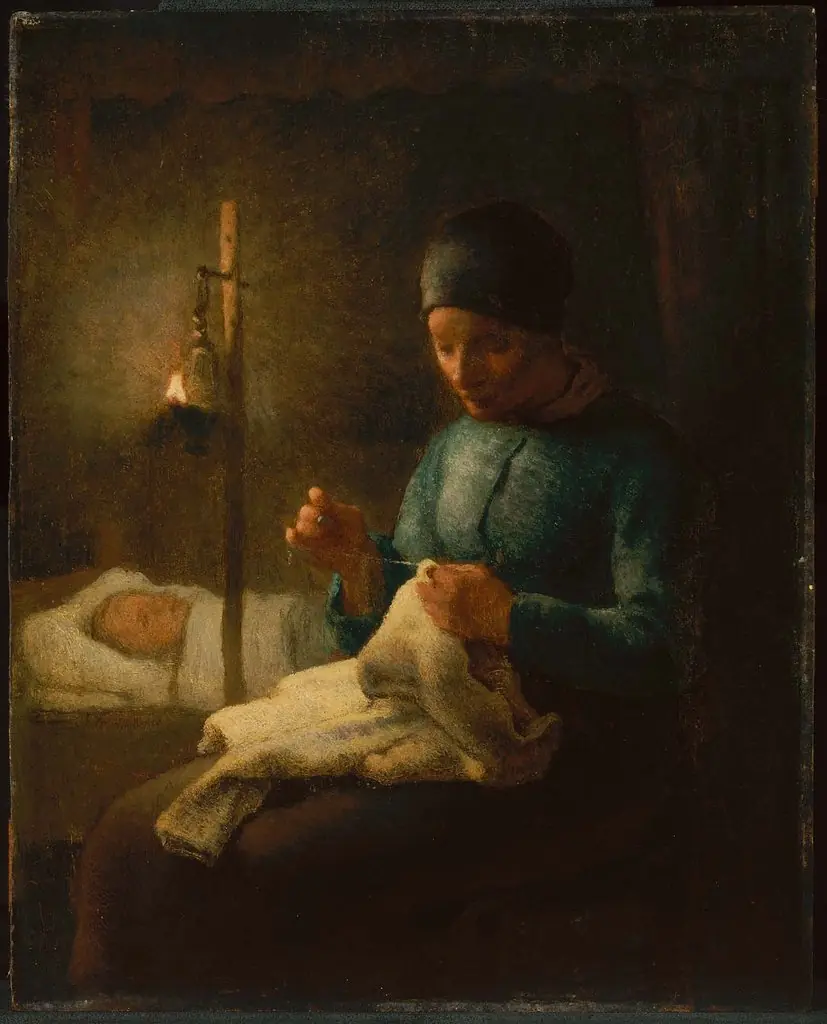
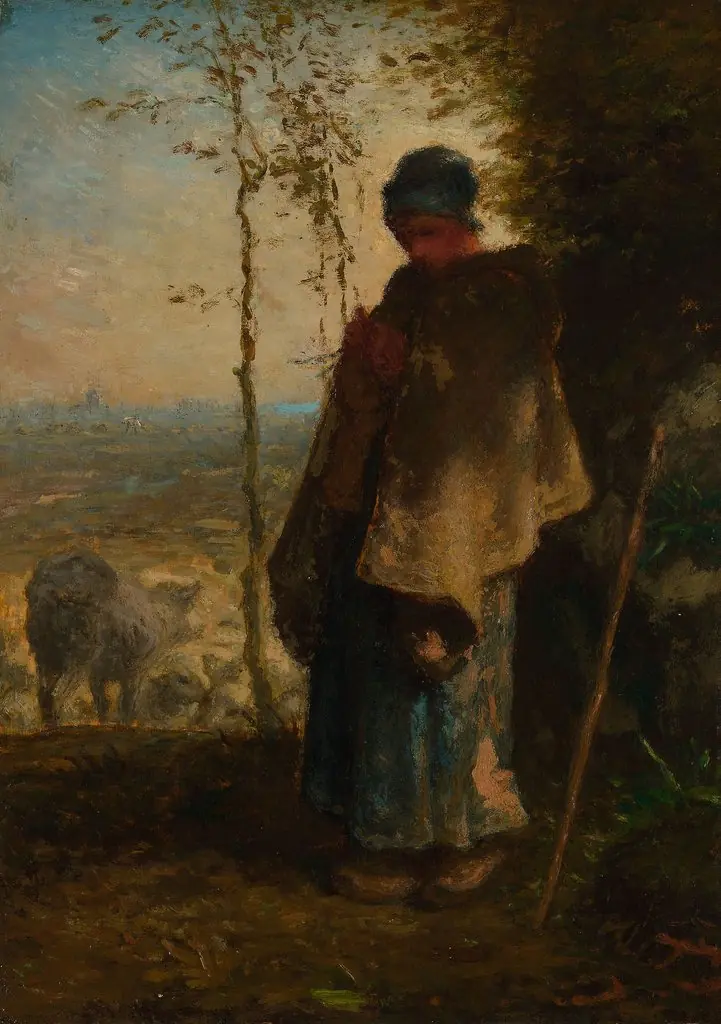
Shepherdess Seated on a Rock is an oil painting by the Realist artist Jean François Millet. It dates from 1856 and is held in the collection of the Metropolitan Museum of Art.
About this work
Shepherdess Seated on a Rock is a painting by Jean François Millet. It's an example of a genre scene.
The painting was created in 1856. It's also known by other names, such as The Knitter or Shepherdess Knitting, which gives a hint about what's happening in the scene.
You can learn more about the artist and his work by looking up Jean François Millet.
Subject & Meaning
The work stands as a testament to Millet's role in reinvigorating landscape and genre painting through his unidealized portrayal of the countryside.
Executed in 1856, this work depicts a solitary shepherdess engaged in the act of knitting, a detail reflected in its alternative titles, The Knitter or Shepherdess Knitting. The figure is clothed in a white cloak and linen hood, attire characteristic of peasant women in the north-central French communities associated with the Barbizon school. By focusing on this rural laborer, Jean-François Millet exemplifies the realist ethos of the Barbizon movement, elevating the daily lives of agricultural workers to the status of serious artistic subject matter.
The painting's focus on the quiet dignity of peasant existence resonated deeply with contemporaries and later artists; notably, Millet's depictions of shepherdesses were admired by and inspired Vincent van Gogh. The work stands as a testament to Millet's role in reinvigorating landscape and genre painting through his unidealized portrayal of the countryside.
Technique & Style
Executed in 1856, Shepherdess Seated on a Rock is an oil painting on a wood panel support. The work exemplifies the Barbizon school's commitment to realism through its depiction of rural life. Millet portrays the subject wearing a linen hood and white cloak, typical attire for peasant women in north-central France, with attention given to the texture of her knitted fabric.
The composition derives from a preparatory drawing held by the National Gallery of Scotland. This version is virtually identical to a duplicate Millet made after receiving an offer for the first painting, the only instance in which he duplicated a painting. The piece measures approximately 35.9 cm in height and 28.3 cm in width, and is in the collection of the Metropolitan Museum of Art.
History & Provenance
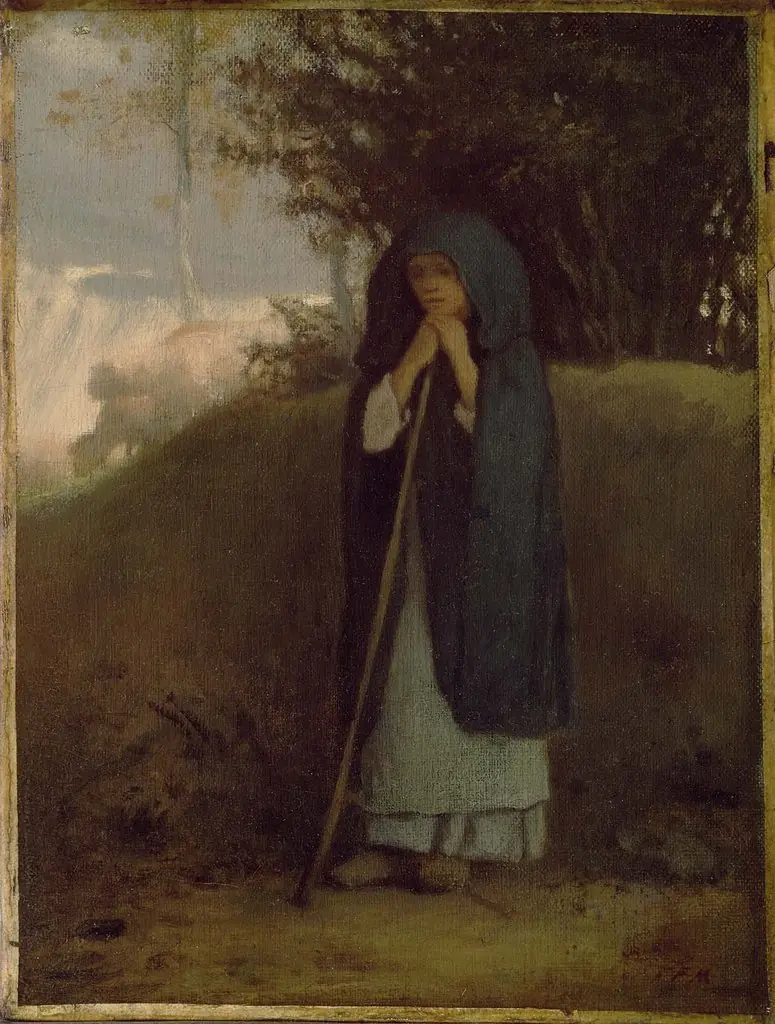
Jean-François Millet created Shepherdess Seated on a Rock in 1856 as an oil-on-wood painting. Its creation history is marked by a unique duplication event: while Millet was executing the first version he received an offer for it; having already promised that painting to another party, he proceeded to paint a second, virtually identical version. This represents the only known time Millet duplicated one of his own paintings.
Prior to producing the two paintings, the artist composed a preparatory drawing, now held by the National Gallery of Scotland in Edinburgh. One of the resulting paintings entered the collection of the Metropolitan Museum of Art in New York, while the duplicate is housed at the Cincinnati Art Museum. The work depicts a shepherdess wearing attire typical of peasant women in north-central France.
Context
Created in 1856, this work exemplifies Jean-François Millet's leadership within the Barbizon school, a movement defined by its commitment to realism and the revitalization of landscape painting through depictions of peasant life. The subject's attire, specifically the linen hood and white cloak, reflects the traditional dress of women in north-central French communities like Barbizon. Art historical records highlight this painting's unusual status as the sole instance in which Millet produced a duplicate of his own composition; he painted a second version, now at the Cincinnati Art Museum, after receiving an offer for the original while it was still promised to another party. A preparatory drawing held by the National Gallery of Scotland underscores the work's compositional development.
Legacy
Jean-François Millet's depictions of shepherdesses garnered significant admiration during his era, establishing a legacy that influenced subsequent generations of artists. Most notably, they inspired Vincent van Gogh, who paid homage to Millet in his own work. Millet produced numerous compositions featuring knitting shepherdesses, though these are distinct works rather than copies.
The enduring reputation of Shepherdess Seated on a Rock is further reflected in its standing as the only painting Millet is known to have duplicated, a second version of which is held by the Cincinnati Art Museum.
Overview
Jean-François Millet's "Shepherdess Seated on a Rock," painted in 1856, is an oil-on-wood work housed at the Metropolitan Museum of Art. Also known as "The Knitter," it exemplifies Millet's commitment to depicting rural life with realism. The painting portrays a peasant woman engaged in knitting, reflecting the artist's focus on the everyday activities of agricultural workers, a hallmark of the Barbizon school, which he helped lead.
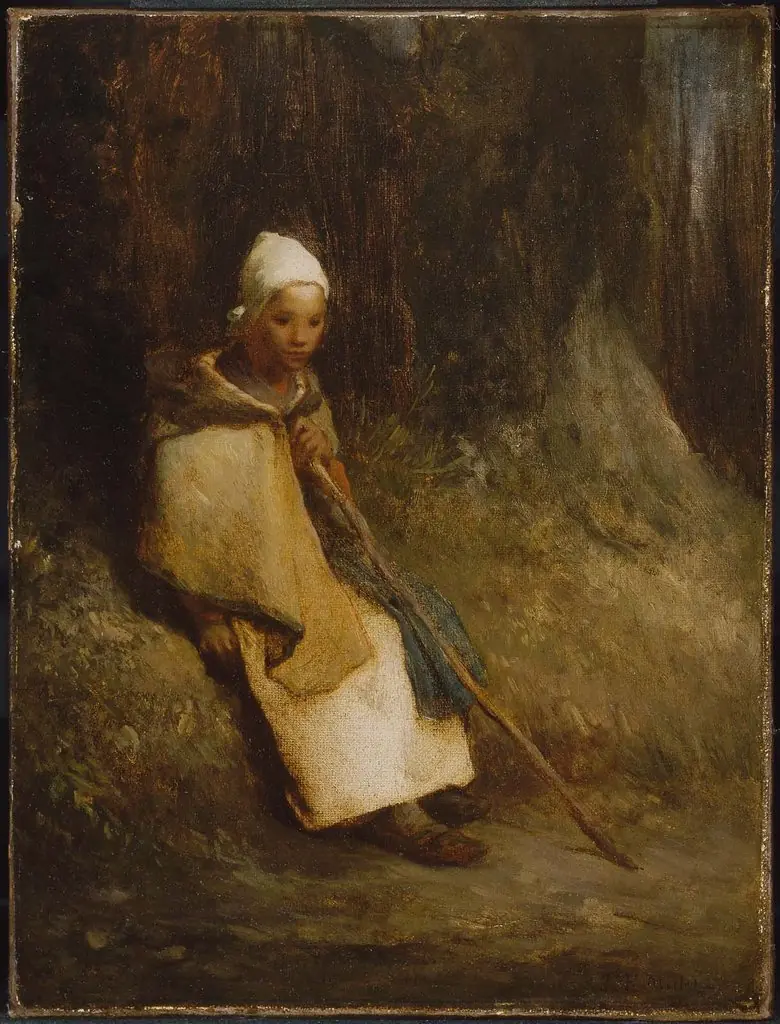
Own this work as a print
Artist & collection
Artist
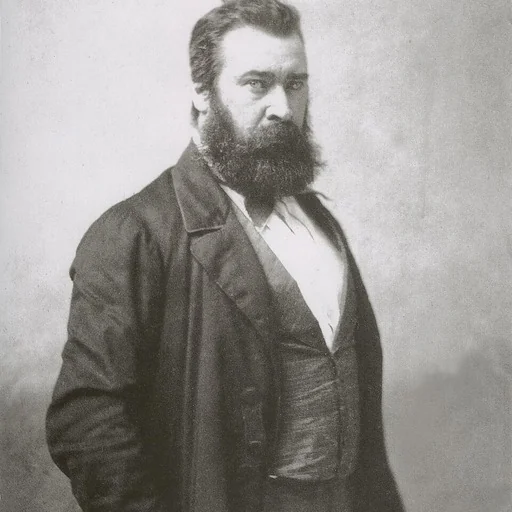
Jean-François Millet (French pronunciation:; 4 October 1814 – 20 January 1875) was a French painter and one of the founders of the Barbizon school in rural France.